No hot water anywhere?
Check display power, breaker or disconnect, gas shutoff position, water isolation valves, and any displayed error code.
A Rinnai tankless water heater that is not heating usually needs the same first split: no hot water anywhere, brief heat then cold, or one fixture only. Check power, gas shutoff position, water flow, and the display code before buying parts.
Low flow through the heater, a dirty inlet screen, a closed valve, or a gas or vent lockout beats a failed board on most no-heat calls. Stop and call a licensed gas tech if the next check means opening gas, burner, vent, or ignition parts.
Use the first minute to sort house-wide loss from fixture trouble, then stay on exterior checks.
Don’t start with: Skip the control board until the easy clues are checked: display power, valve position, hot-side flow, inlet-screen debris, and lockout codes. If you smell gas, leave and call the gas utility or a licensed gas tech.
Check display power, breaker or disconnect, gas shutoff position, water isolation valves, and any displayed error code.
Look for weak flow, a dirty inlet screen, scale restriction, or a lockout after failed ignition.
Work at that fixture first. A clogged aerator, low-flow showerhead, or mixing cartridge can starve the heater or blend cold water in.
Write down the code and the sequence: fan, clicking, brief flame, then shutdown. That pattern belongs with a licensed gas tech because it can involve gas supply, venting, ignition, or flame sensing.
Recheck the water valves and gas shutoff handle that were touched. A service valve left out of position is easier to prove than a failed board.
A no-heat call on a tankless heater gets clearer when you can see the lower service area. Check the red and blue valve handles, cold-water inlet screen, and hot-side flow before blaming the board.
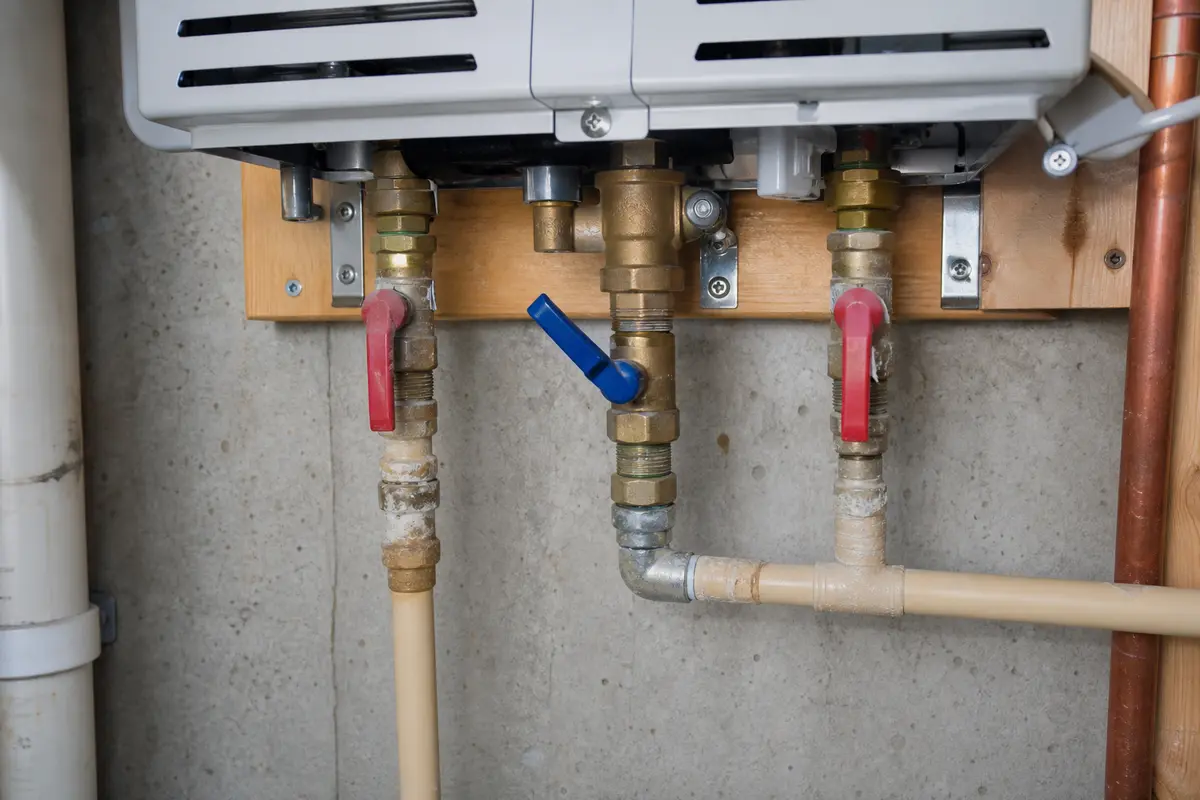
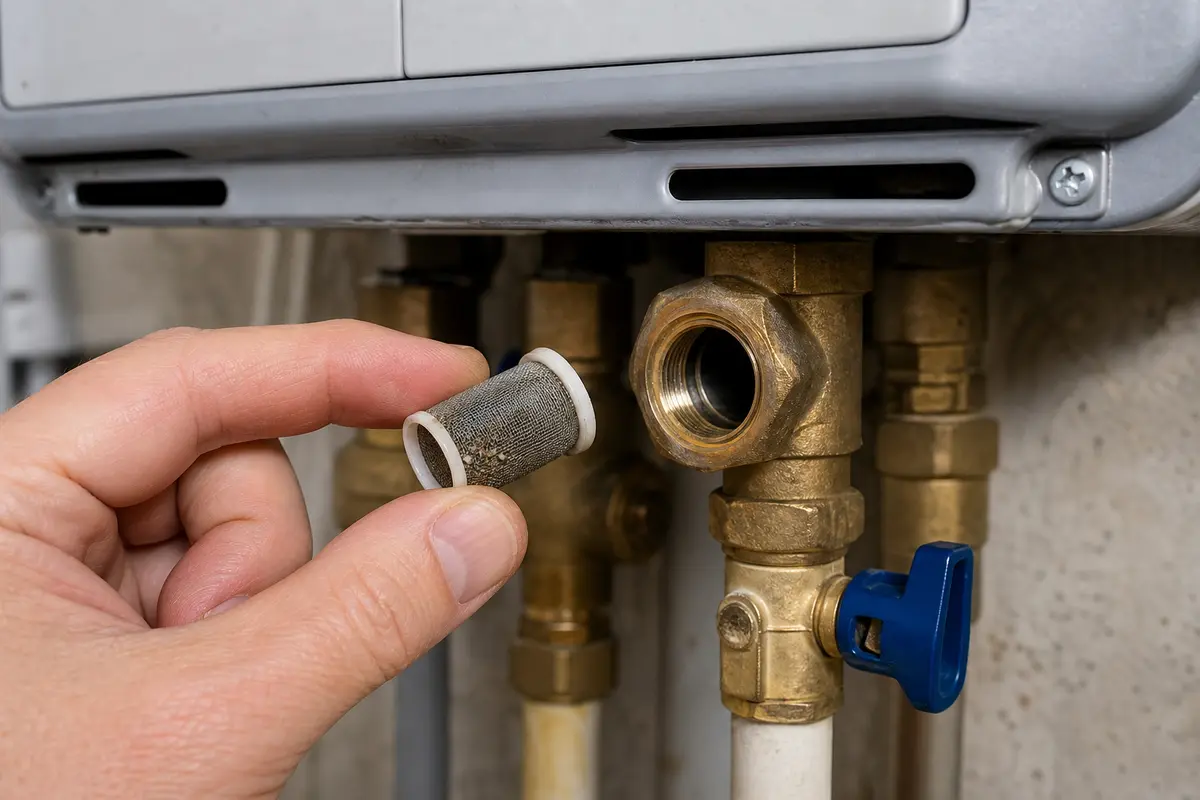
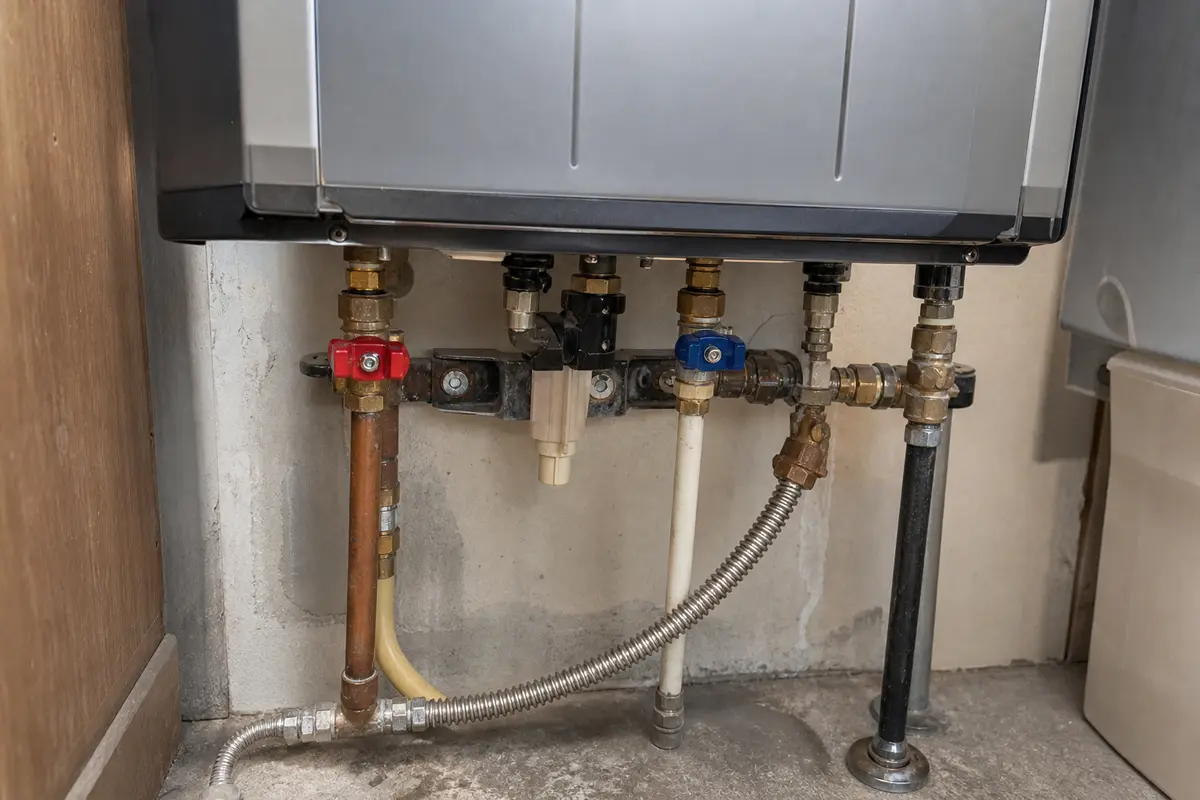
Run two fixtures, check valve position, and inspect the accessible inlet screen before ordering anything. Then copy the exact model number from the heater label; the part should match the clue, the model, and the service manual diagram.
Most no-heat calls on a tankless unit come down to an input the heater needs before it can fire: power, gas shutoff position, water flow, or clear combustion airflow. Start with the display, the fan sound, and whether the water warms briefly before it quits.
Do not turn a supply or flow problem into a parts-shopping problem. Stay with visible water-side checks: valve handles, inlet-screen debris, hot-flow strength, and the displayed code. Leave sealed gas and combustion areas to a licensed gas tech.
Work from the house side toward the heater. You are trying to prove whether the call is whole-house, one-fixture, supply, flow, or a lockout that needs service.
The result matters more than the first guess. Use what changed after each check before moving deeper into the unit.
| What you see | What it usually means | What to check next |
|---|---|---|
| Display is blank | The heater may not have power | Check breaker, disconnect, plug, or outlet; call for electrical help if power will not stay on |
| Hot flow is weak at several fixtures | The water path is restricted | Check valve position, inlet screen debris, and scale history |
| Only one fixture is cold or weak | The fixture may be mixing or restricting flow | Clean the aerator or showerhead and check the cartridge before touching heater parts |
| Fan runs and clicking repeats | Ignition, gas supply, flame sensing, or venting needs a licensed gas tech | Write down the code and call a licensed gas tech instead of opening gas-side parts |
| Heat returns after cleaning the screen | Flow was too restricted for reliable firing | Retest at two fixtures and plan maintenance if debris or scale comes back |
A single cold shower can look like a dead tankless heater, especially when the fixture limits flow or mixes in cold water. Most of the time, the clue is that another sink can still call for hot water normally.
Once power, valves, and simple flow checks are done, the remaining no-heat paths are usually maintenance or service work. Look for timing, sound, and error-code behavior.
Use tools only for visible, water-side checks. If the work turns into gas, combustion, vent repair, or live electrical diagnosis, stop and call the right pro.
Paid links. As an Amazon Associate I earn from qualifying purchases. Repair Riot may earn a commission at no extra cost to you.
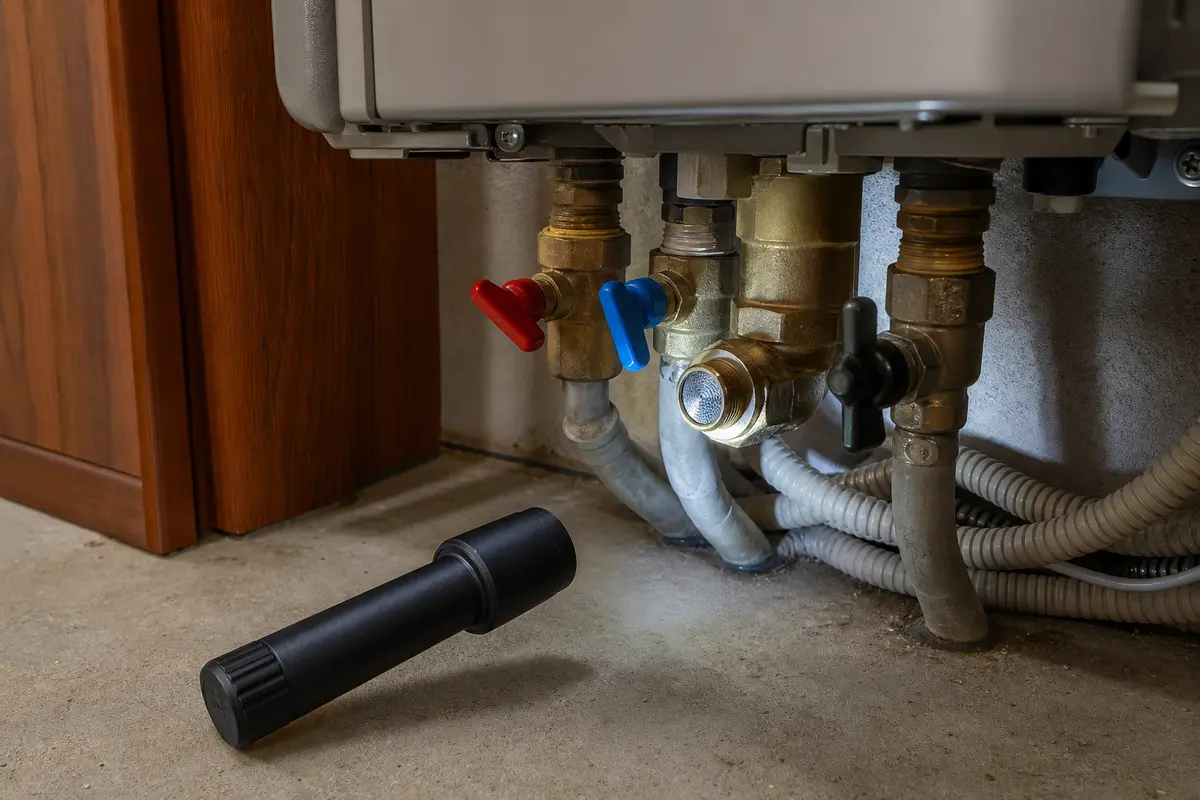
Helps when: You need to read valve handles, see the display, inspect the inlet-screen area, and look for drips after restoring water.
Skip it when: The check requires opening sealed combustion areas, reaching live wiring, or working near a gas smell.
Compare inspection flashlights on Amazon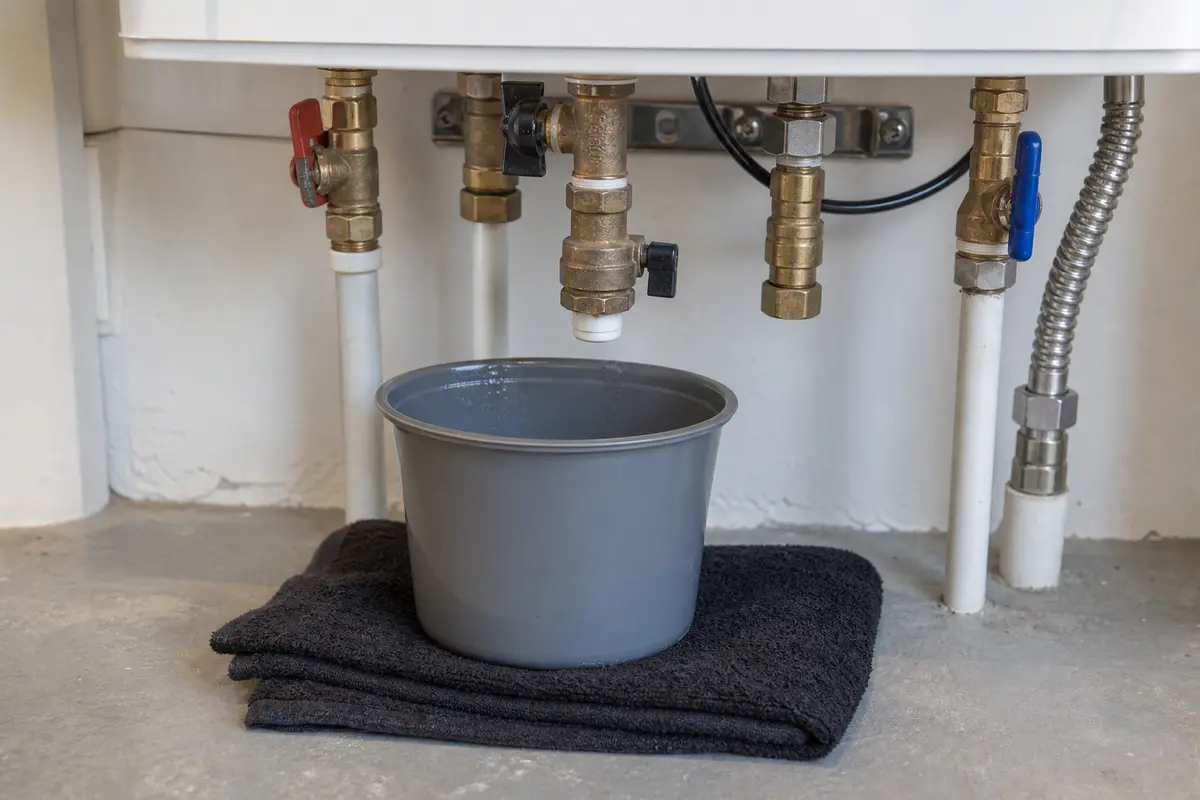
Helps when: You can safely isolate water and need to catch the small amount released when the screen fitting is opened.
Skip it when: Water will not shut off cleanly, the fitting is seized, or water appears inside the heater cabinet.
Compare buckets and towels on Amazon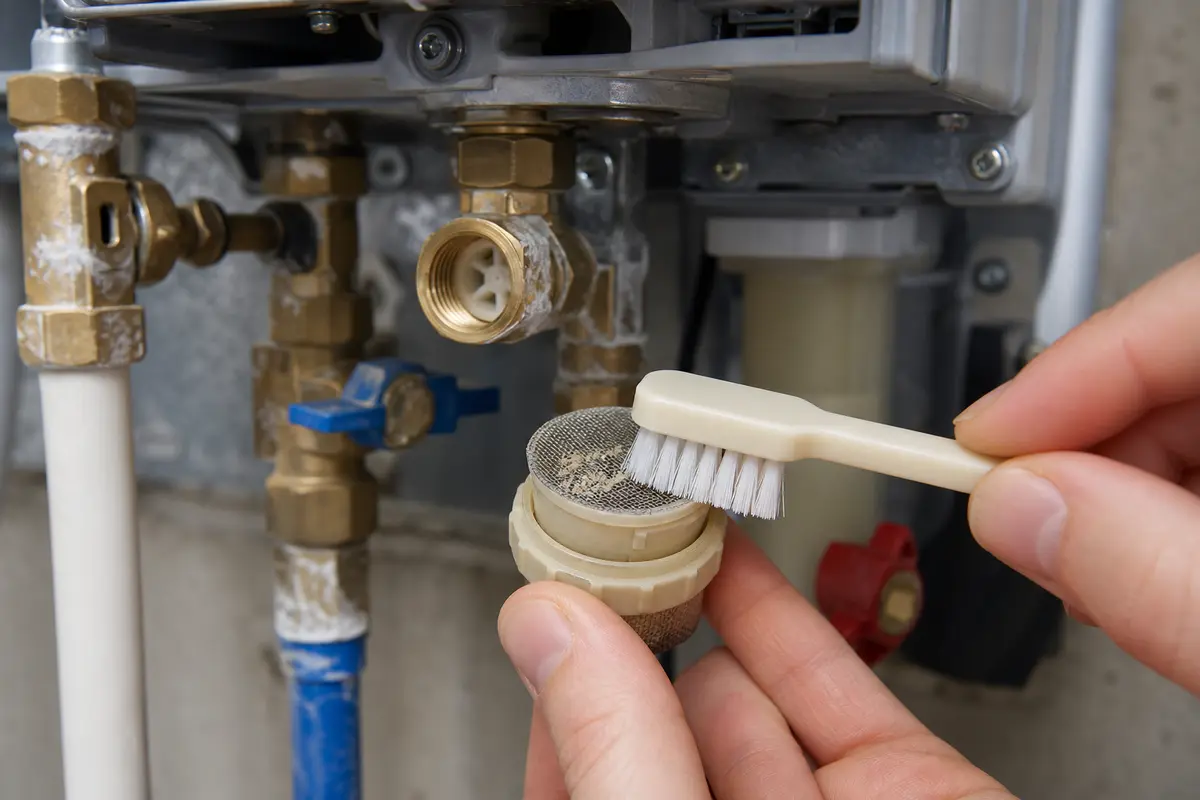
Helps when: The removed inlet screen is intact but has grit or light mineral debris that needs gentle cleaning.
Skip it when: The mesh is torn, crushed, missing, or the screen cap will not loosen without force.
Compare soft brushes on AmazonBuy parts only after the symptom points there. For this page, the only homeowner-level part to consider early is a model-matched inlet screen, and only when the old one cannot be reused.
Paid links. As an Amazon Associate I earn from qualifying purchases. Repair Riot may earn a commission at no extra cost to you.
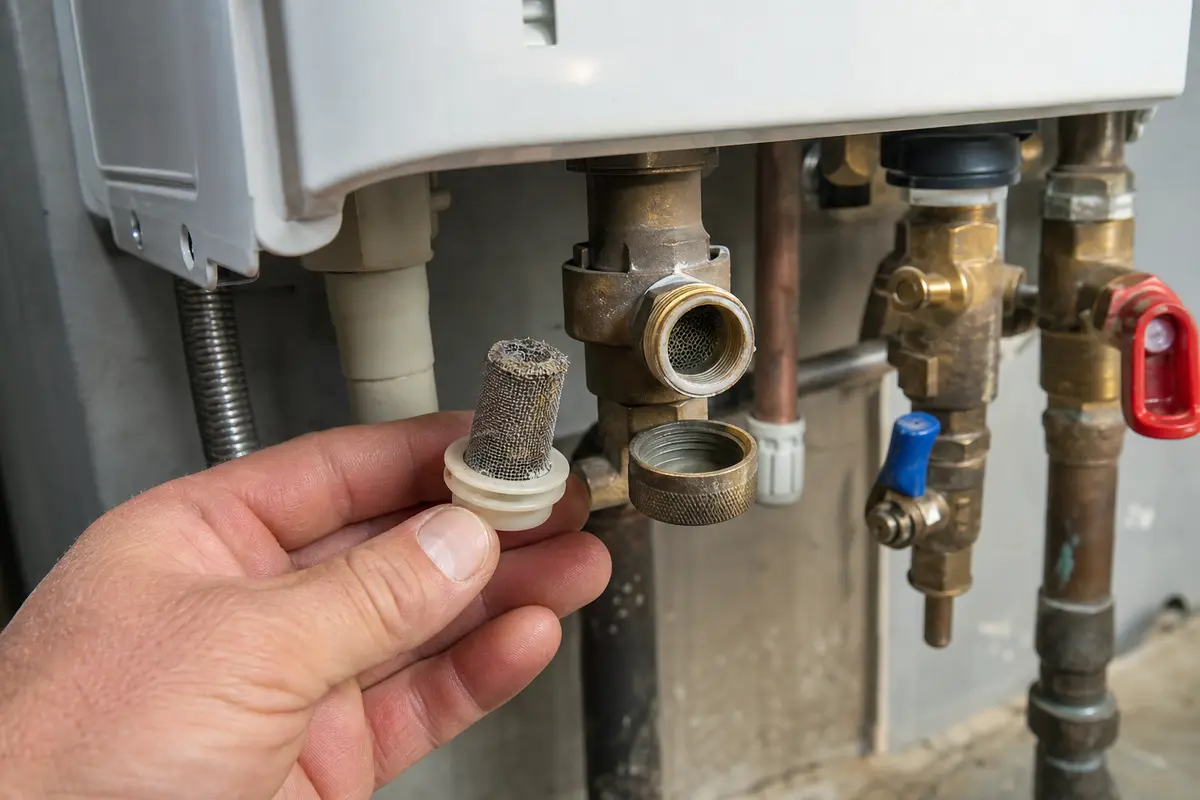
Helps when: You removed the screen and found torn mesh, a crushed frame, missing parts, or debris that will not clean out well enough to reinstall.
Skip it when: The screen rinsed clean, sealed normally, and the heater still will not heat after valve, flow, and maintenance checks.
Compare Rinnai inlet screens on AmazonA live display with no heat usually points to gas supply, water flow, inlet-screen debris, scale, venting, ignition, or a lockout code. Start with valve position, hot-flow strength, inlet-screen debris, and the displayed behavior before buying parts; call a licensed gas tech for gas, venting, or ignition diagnosis.
Brief heat followed by cold water often means the heater starts, then loses the condition it needs to keep firing. Check hot-flow strength, the inlet screen, and scale history first; if the display points to ignition lockout, call a licensed gas tech instead of opening the burner area.
Yes. A clogged cold-water inlet screen can reduce flow enough that the burner does not light or only runs briefly. Turn power off, isolate water, relieve pressure, and clean only the accessible water-side screen.
One reset after correcting a valve, flow, or power issue is reasonable. Repeated resets are not a repair. A returning code means the heater still sees a real condition.
Yes. A clogged aerator, low-flow showerhead, or mixing cartridge can keep one fixture cold while the heater works elsewhere. Test another fixture before touching the heater.
No. Some supply and flow problems may give weak or cold water without a clear code. Use the display, startup sounds, water flow, and fixture split together.
Not from the symptom alone. A board belongs in the conversation only after power, gas supply, flow, inlet screen, scale, venting, and ignition checks point past the basics.
Call for service when you smell gas, suspect exhaust indoors, see repeated error codes, or hear repeated clicking with no sustained heat. Gas, venting, ignition, flame-sensing, and live electrical diagnosis belong with a licensed gas tech or qualified electrical pro.
Repair Riot built this page around homeowner-visible checks first: display power, valve-handle position, whole-house versus one-fixture symptoms, inlet-screen debris, scale clues, and the stop points for gas, venting, ignition, and electrical work. If a check moves past the water side, call a licensed gas tech.