Did code 63 start after flushing or plumbing work?
Put valve position first. Confirm isolation valves are fully open and service valves are back in normal operating position.
Rinnai tankless water heater code 63 usually points to poor circulation or abnormal water flow, not a failed burner or control board. Check isolation valves, incoming flow, the cold-water inlet screen, scale history, and recirculation pump behavior first.
If code 63 started right after flushing or plumbing work, check each service valve first. A valve left out of position or grit in the cold-water inlet screen can weaken hot flow.
When the code returns after basic flow and descaling checks, stop there and have the pump, check valve, sensors, and internal water path diagnosed.
Don’t start with: Do not buy a control board or open gas-side parts while code 63 still points at the water path. Check valve position and the inlet screen first. If you smell gas, hear hissing, or see scorch marks, stop and call the gas utility or a licensed pro.
Put valve position first. Confirm isolation valves are fully open and service valves are back in normal operating position.
Look for a restricted inlet screen, hard-water scale, or poor circulation through the heat exchanger loop.
Clean that fixture's aerator or showerhead before blaming the tankless heater.
The pump, return-loop valves, air in the loop, or a stuck check valve becomes the better path.
Stop at maintenance-level work and schedule service for pump, sensor, check-valve, or internal water-path diagnosis.
Code 63 is easier to sort when you look at the valves, inlet screen, and recirculation piping as one water path. These are the areas to inspect before you price electronics.
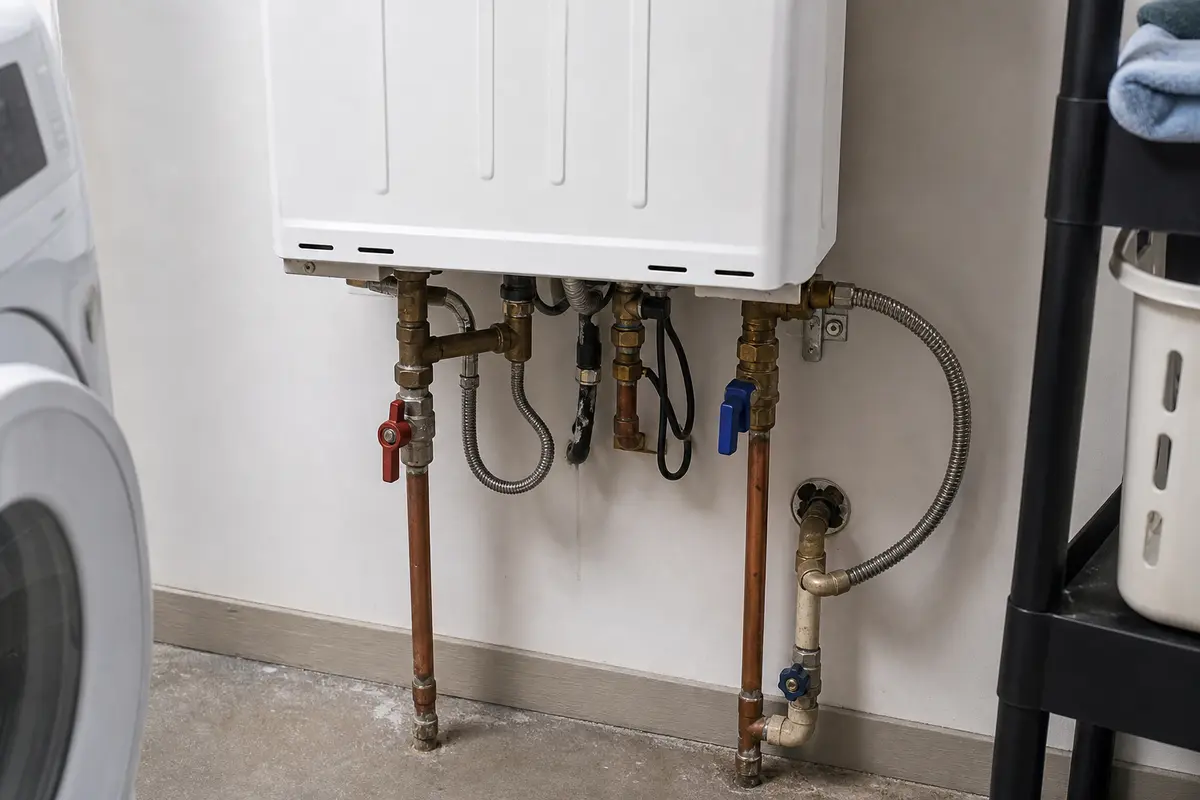
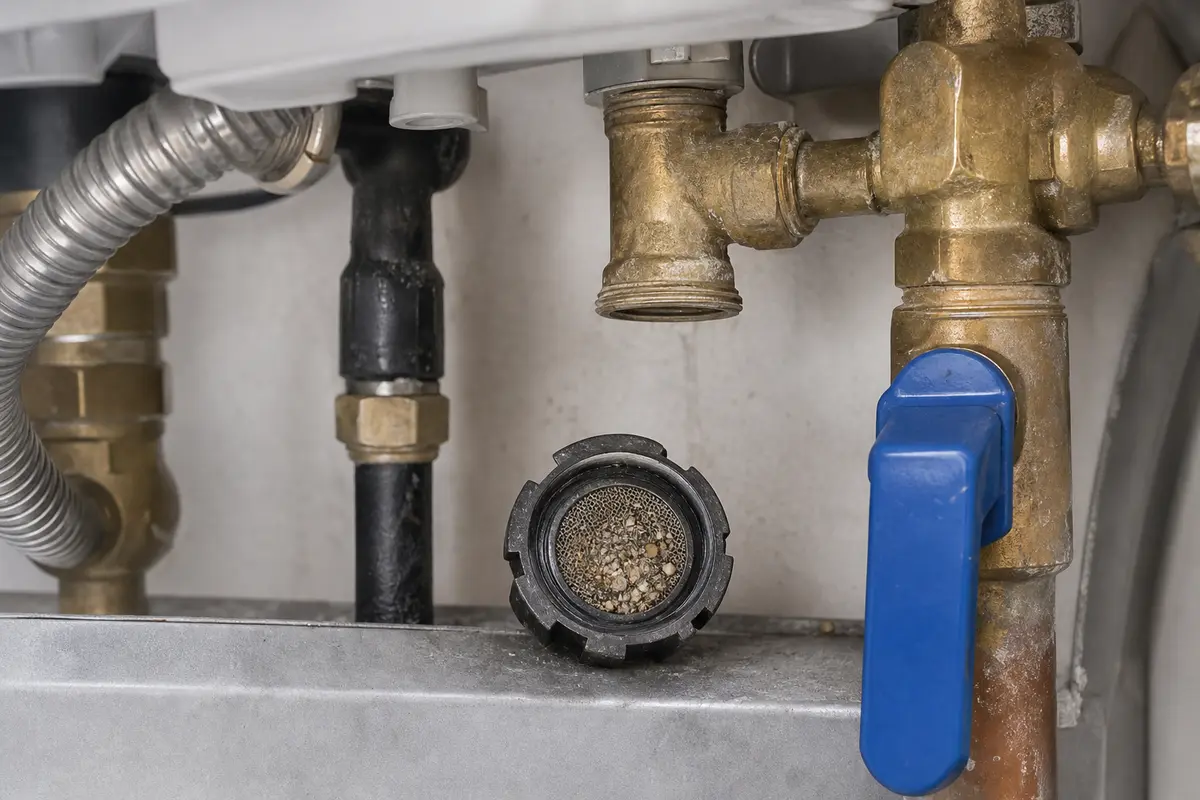
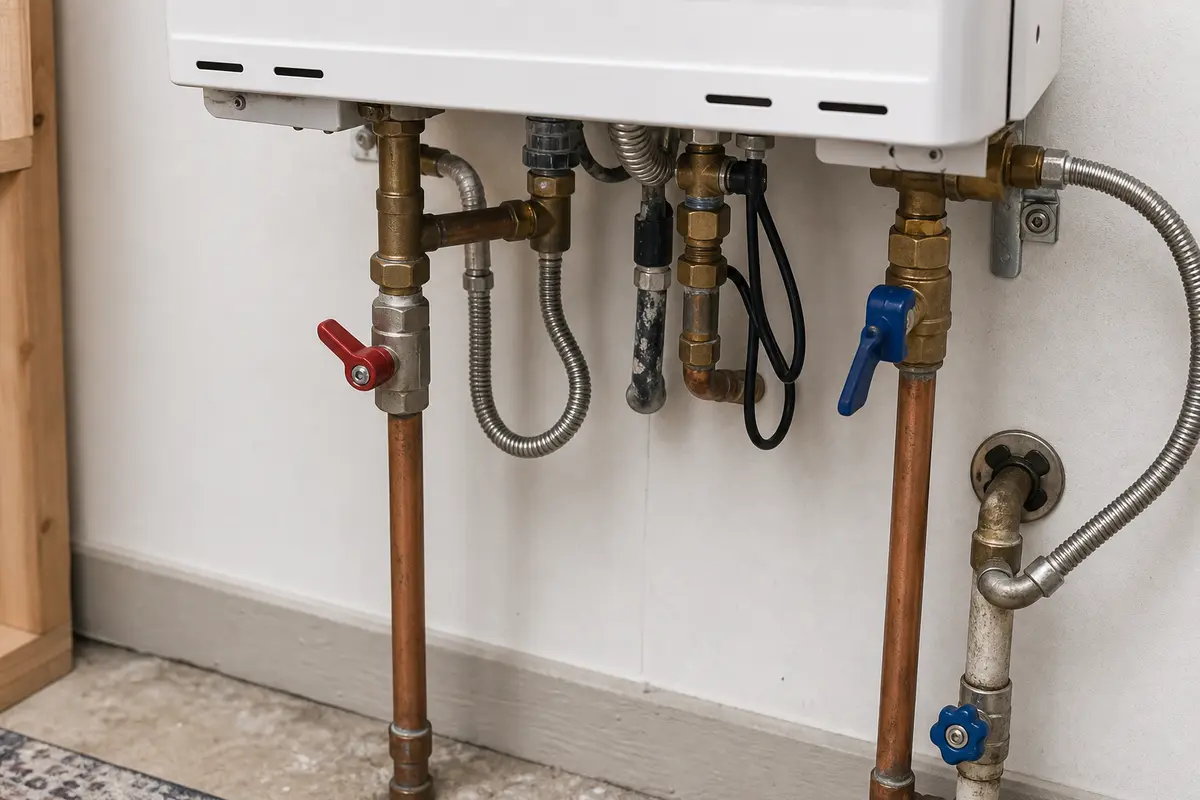
Match the full model number before ordering a screen, pump, valve, or sensor. Code 63 by itself is not enough to justify a control board, and a recirculation part only makes sense after the flow checks point there.
Code 63 usually means the heater is not seeing enough water move through the heater or recirculation loop. If hot-water flow is weak at more than one fixture, check valve position and the cold-water inlet screen first.
Treat code 63 as a flow clue, not an electronics verdict. After valve, screen, or scale checks, watch whether hot water steadies out or the same fault returns under normal use.
Start where you can prove the result without buying parts. Check valve position, run a full-flow hot fixture, then inspect the inlet screen only after power is off, water is isolated, and pressure is relieved. The change after each step points toward the heater, the house plumbing, or the recirculation loop.
A good clue is whether the symptom changes after each safe check. Use the result before moving deeper into the unit.
| What you see | What it usually means | Next move |
|---|---|---|
| Code started right after service | Valve position or stirred-up debris is likely | Recheck service valves, then inspect the inlet screen |
| Screen has grit or scale flakes | Incoming water is restricted at the heater | Clean the screen, restore pressure, and run a full hot-water draw |
| Screen is clean but hot water fades | Scale inside the water path is more likely | Perform or schedule a proper tankless descaling service |
| Only one fixture acts weak | The restriction may be at that faucet or shower | Clean the aerator or showerhead and retest another fixture |
| Recirculation mode triggers the code | The return loop, pump, air, or check valve needs attention | Stop before disassembly and call for loop-side diagnosis |
A recirculation system can make a good heater look bad. The heater may be reacting to poor movement through the loop rather than a failed control part.
Use these only for visible water-side checks: check valve handles, catch relieved water, and gently clean an accessible inlet screen. If the job turns into gas work, live electrical diagnosis, or a stuck fitting, stop and call a pro.
Buy parts only after the water-path checks support them. A model-specific screen is a reasonable purchase when the old one is damaged; pumps, sensors, and boards need a firmer diagnosis.
It usually points to a circulation or water-flow problem through the heater or recirculation loop. Check weak hot-water flow, valve position, inlet-screen debris, and whether the code returns during recirculation.
One reset after correcting valve position is reasonable. Repeated resets are not a repair. When the fault returns, the heater is still seeing a restriction, scale issue, or circulation problem.
Scale moves up the list when the heater is overdue for a flush and hot-water flow has grown weaker or less steady over time. If the fault started after plumbing work, check valve position and rinse inlet-screen debris first.
Inspect the screen when code 63 starts after plumbing work, hot-water flow is weak at more than one fixture, or the removed screen has grit, rust flakes, or mineral debris. Replace it only if the mesh is torn, crushed, or cannot seal; match the exact model.
Yes. Weak incoming flow can make the heater read poor circulation. Compare hot and cold flow at more than one fixture before you blame the tankless unit.
Yes, especially when the code appears mainly during recirculation operation, after idle periods, or with pump noise but poor hot-water delivery. Pump and check-valve diagnosis is usually service work.
Not usually. Check the water side first: valve position, inlet-screen debris, scale, and recirculation flow. If you smell gas, hear hissing, see scorch marks, or notice abnormal combustion sounds, stop testing and call the gas utility or a licensed pro.
Not from the code alone. Rule out valve position, inlet blockage, fixture restriction, and scale first. A pump, sensor, or board only makes sense after the flow path has been checked and the symptom still points there.
Repair Riot built this page around visible checks before parts: check valve position, inspect inlet-screen debris, review overdue flushing, and watch recirculation behavior. The references below set manufacturer support and stop points for gas smell, carbon monoxide, or combustion work.