Is the display blank or scrambled?
Check the outlet, transformer, cord, and any switched receptacle first. If the outlet is live but the screen stays blank, the power supply or control path needs model-specific diagnosis.
A Rheem water softener error code usually means the control lost position, a motor or switch signal is missing, or the board sees a valve fault. Start with power, bypass position, and one clean reset before parts.
If the display works and house water still runs, sort reset trouble from valve movement trouble. A repeated Err code needs wiring, motor, switch, cam, leak, and brine clues checked in order.
Clear it once, watch the next recharge, and stop for heat, wet controls, repeat trips, or water stuck running to drain.
Don’t start with: Do not start with a control head or board. Those parts are expensive and model-specific, and a loose connector, wet valve area, stalled motor, salt issue, or drain/brine fault can point a different direction.
Check the outlet, transformer, cord, and any switched receptacle first. If the outlet is live but the screen stays blank, the power supply or control path needs model-specific diagnosis.
Set the clock and basic settings, then watch one recharge. If the display stays readable and the code does not return while the valve advances, treat it as a power or position glitch.
Write down the exact code and model number. With power disconnected, look for the clue that comes with it: a loose connector in a dry control area, a motor that only hums, or a valve that will not advance.
Check salt bridging, drain restrictions, brine line kinks, and whether the brine level changes during recharge before treating it as only an electronics problem.
Put the softener in bypass, keep water away from the control area, and stop if normal controls will not shut the flow down.
Err07, Err08, and Err09 point to the RHW42 motorized shutoff-valve path. If the unit is an RHW42 and those codes return, check for a shutoff valve that stays stuck or will not advance. Use the manual or Rheem support guidance before guessing at salt, brine, or a generic board.
On Rheem cabinet-style softeners, the error code is only one clue. The display, outlet, bypass handle, salt tank, brine tube, drain line, and dry control area all matter before a board or valve part makes sense.
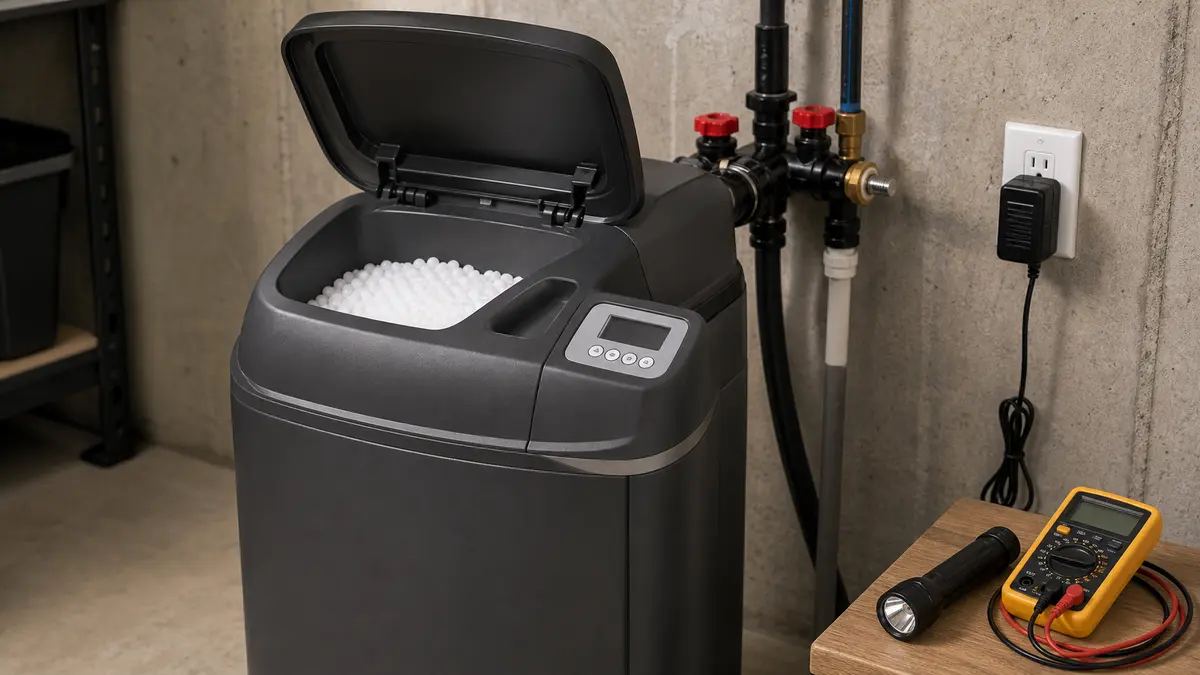
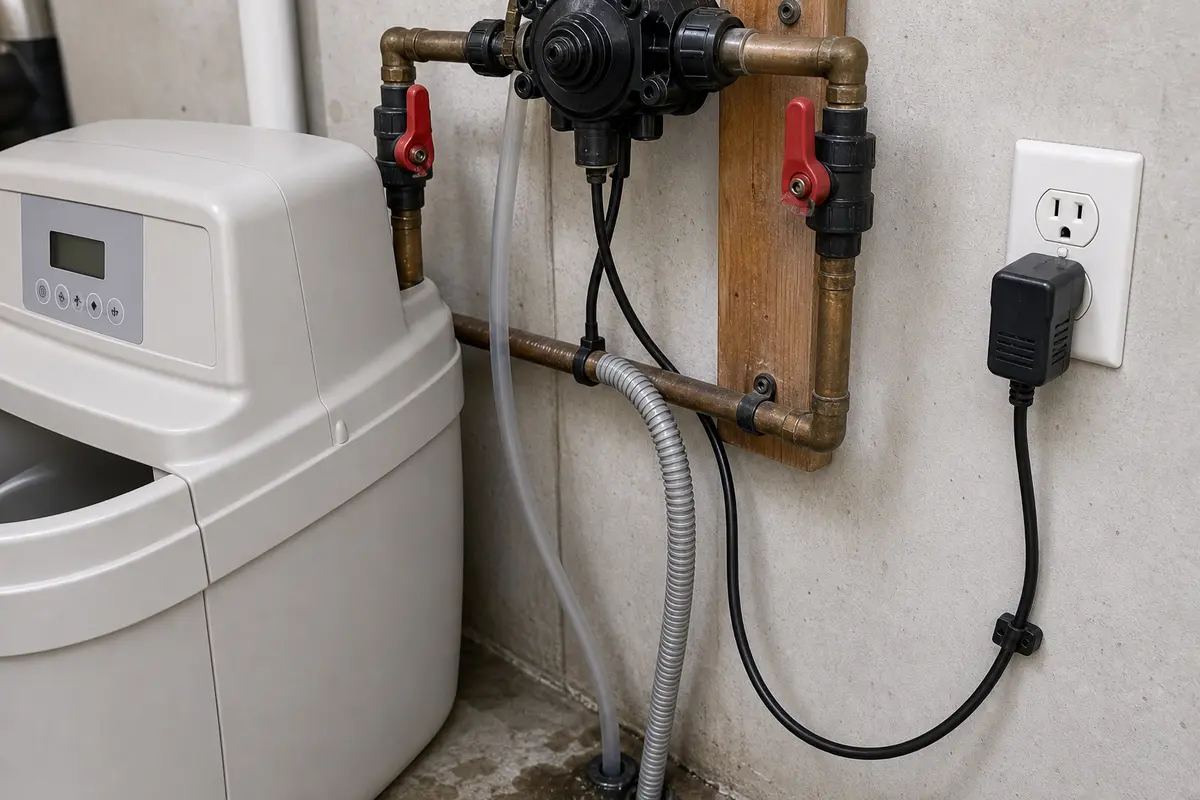
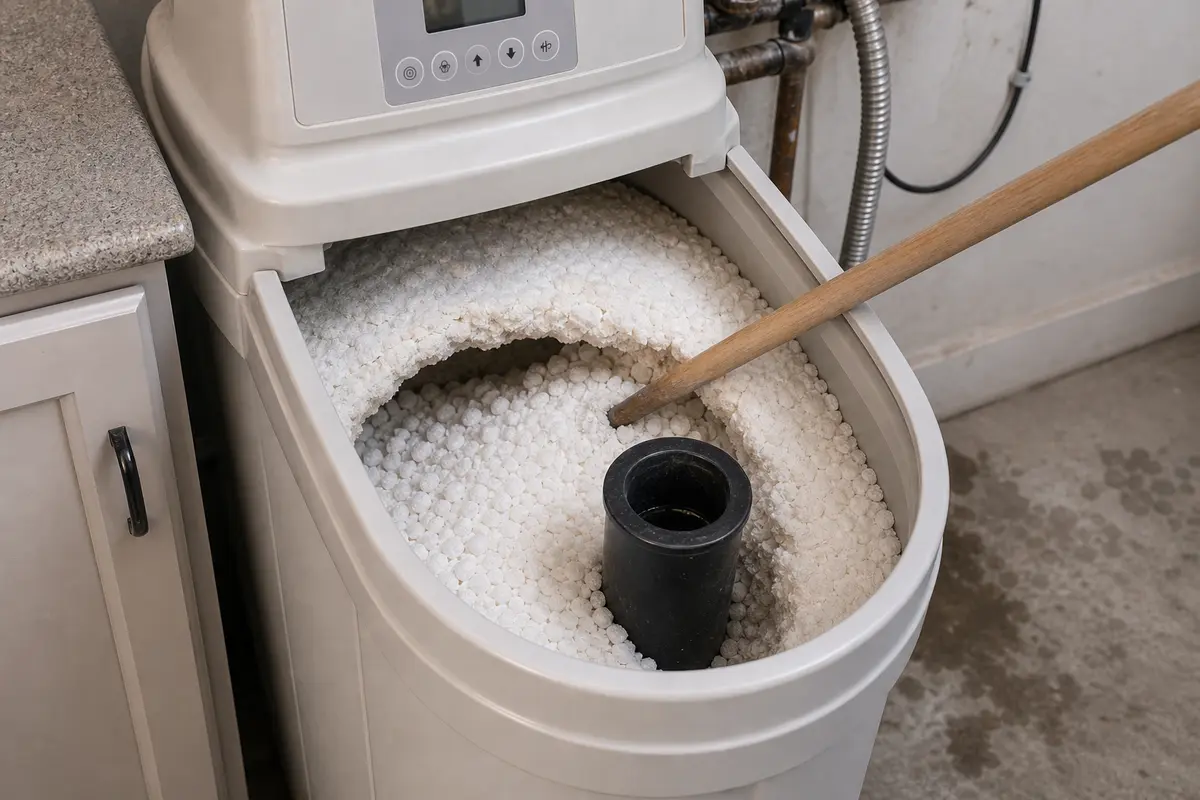
Write down the exact Rheem model number, the exact Err code, and what the display does after one reset. Note whether the motor tries to move, and whether the salt tank, brine tube, drain line, or control area is wet. Control boards, motors, switches, rotor/seal kits, transformers, and shutoff-valve parts are model-specific.
A Rheem error code starts with the code on the display, but the cabinet clues decide the branch. Look at power, dry controls, salt condition, brine draw, drain flow, and whether the valve moves before calling it a board, feedback, or valve-movement problem.
Do not let one code turn into a cart full of parts. The softener needs a short, clean diagnosis before money is spent.
Work from safe outside checks toward model-specific parts. If the softener gives you a stop clue, stop there.
Use the result, not the first guess. This table keeps the repair branch from drifting.
| What you find | Likely branch | Next move |
|---|---|---|
| Blank screen with a dead outlet. | House power or switched receptacle. | Restore safe outlet power before softener parts. |
| Blank screen with a live outlet. | Transformer, wiring, or control path. | Check dry connectors and exact model before parts. |
| Code clears and stays gone. | Power blip, lost settings, or temporary valve position. | Set the clock and watch the next recharge. |
| Err01, Err03, or Err04 returns. | Harness, switch, valve movement, or motor path. | Look for loose dry connectors, then move to model-specific testing. |
| Err05 returns. | Possible control board fault. | Rule out power, wet controls, and loose connectors before buying a board. |
| Motor hums but the valve does not move. | Motor, cam/gear, rotor/seal, or valve binding. | Stop before forcing parts; use model-specific service guidance. |
| Salt tank water is above the salt or brine never draws down. | Drain, brine line, brine valve, or internal seal path. | Fix the water-movement clue before blaming the display. |
A real Err code can still show up beside a plain brine problem. Look for the water-side clue before the repair turns into electronics.
Use these for basic inspection and cleanup. They are not permission to probe energized wiring or open parts you cannot put back together.
Paid links. As an Amazon Associate I earn from qualifying purchases. Repair Riot may earn a commission at no extra cost to you.
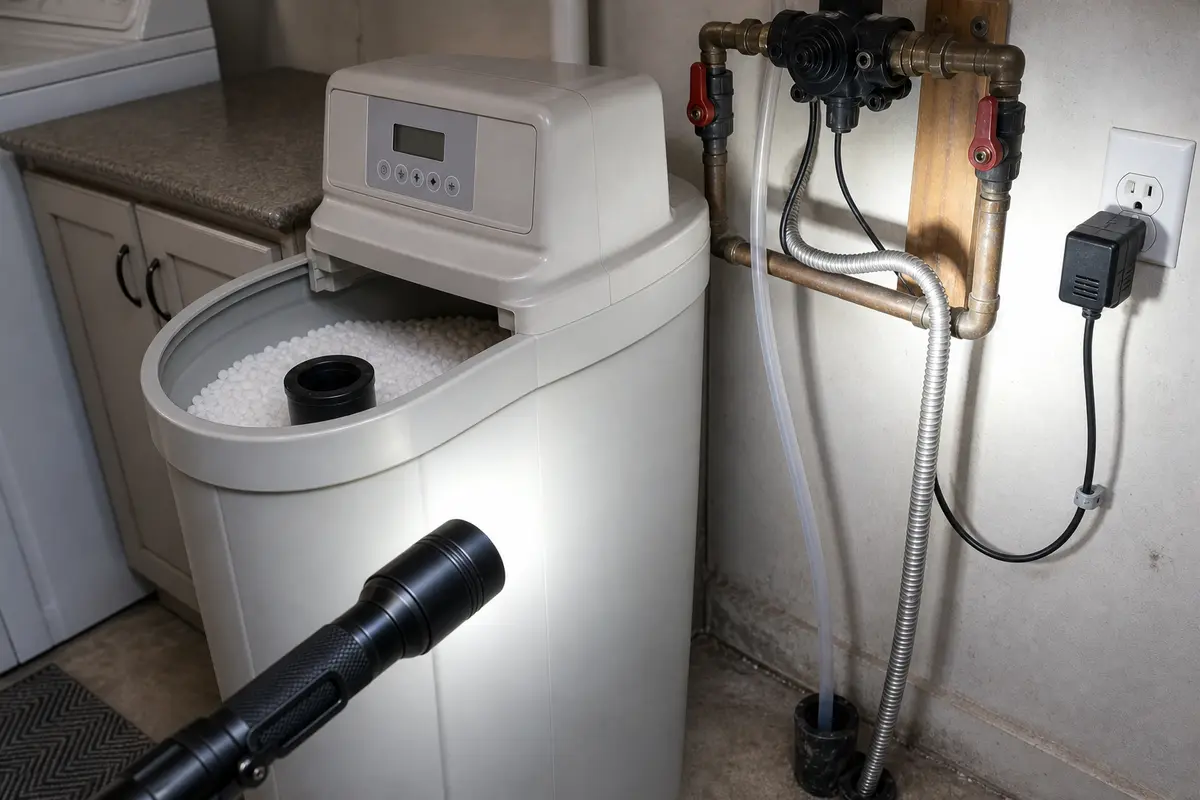
Helps when: You need to see the outlet, transformer, bypass handle, top-cover area, brine tube, drain line, or salt tank without pulling the softener apart.
Skip it when: The check would put your hands near wet controls, damaged wiring, or powered internal parts.
Compare inspection flashlights on Amazon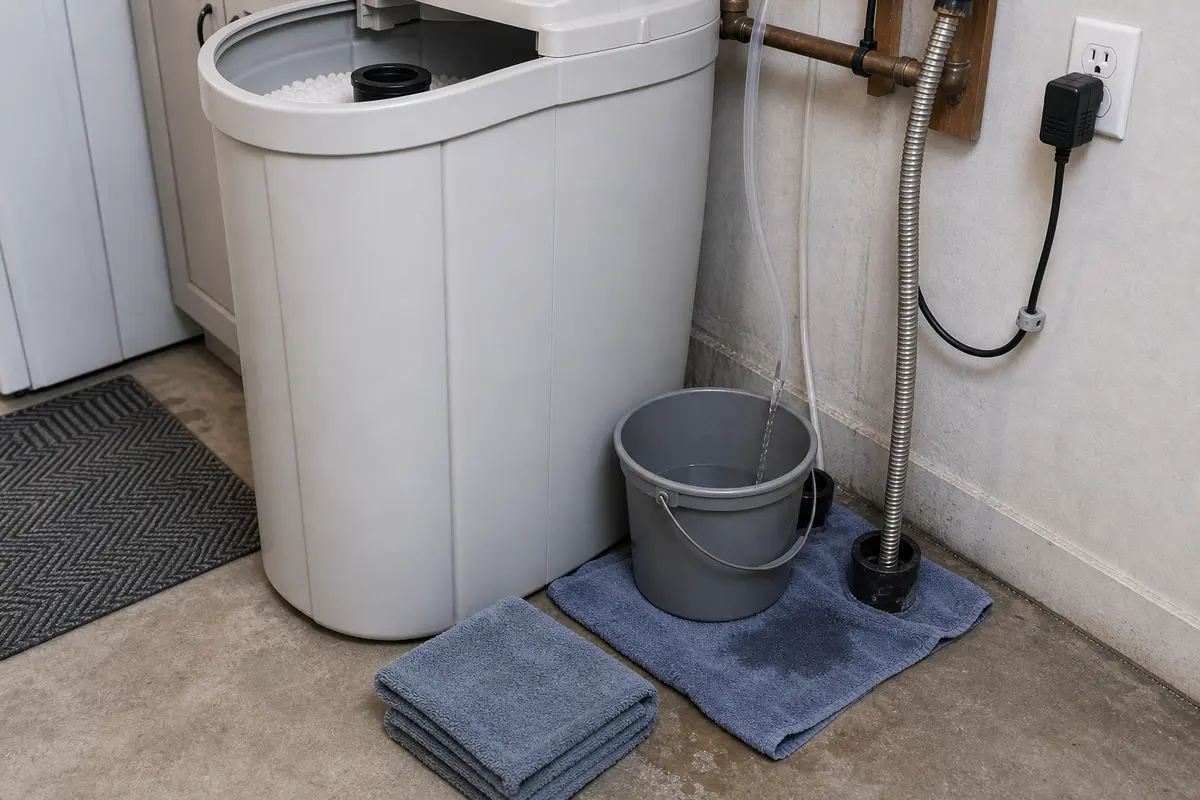
Helps when: You are drying the floor, catching a small drip near tubing, or keeping water away from the outlet and control housing.
Skip it when: Water is spraying, the softener will not stop draining, or water has reached electrical parts.
Compare cleanup supplies on Amazon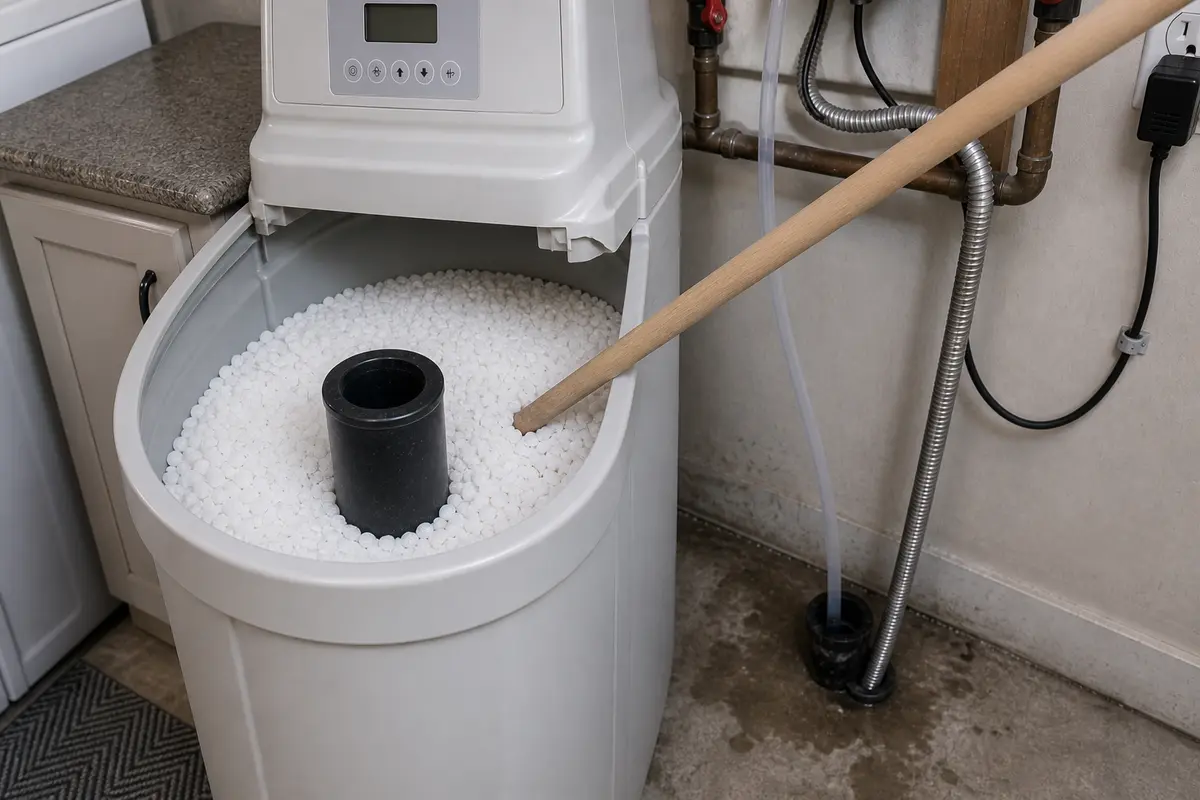
Helps when: You need to check for a salt bridge without reaching deep into the salt tank or hitting the cabinet walls.
Skip it when: The brinewell, float, or internal tank parts are loose, cracked, or in the way.
Compare wooden handles on Amazon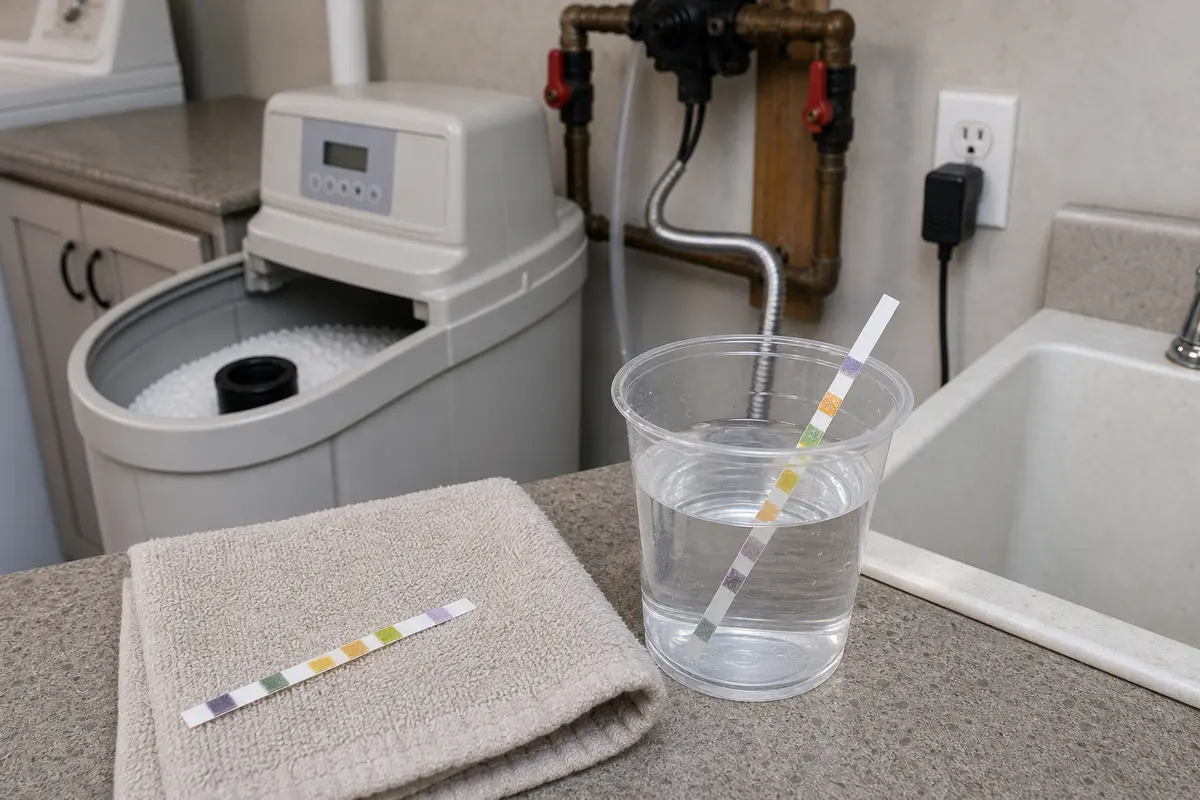
Helps when: You want to check whether the water improves after a completed recharge and a short flush at a nearby faucet.
Skip it when: You are trying to identify an electrical code or board fault. Hardness strips prove water result, not control diagnosis.
Compare hardness test strips on AmazonBuy only after the code, symptom, or test result points to a part and the exact Rheem model number and valve design match. A lookalike softener part can still be wrong, so compare before ordering.
Paid links. As an Amazon Associate I earn from qualifying purchases. Repair Riot may earn a commission at no extra cost to you.
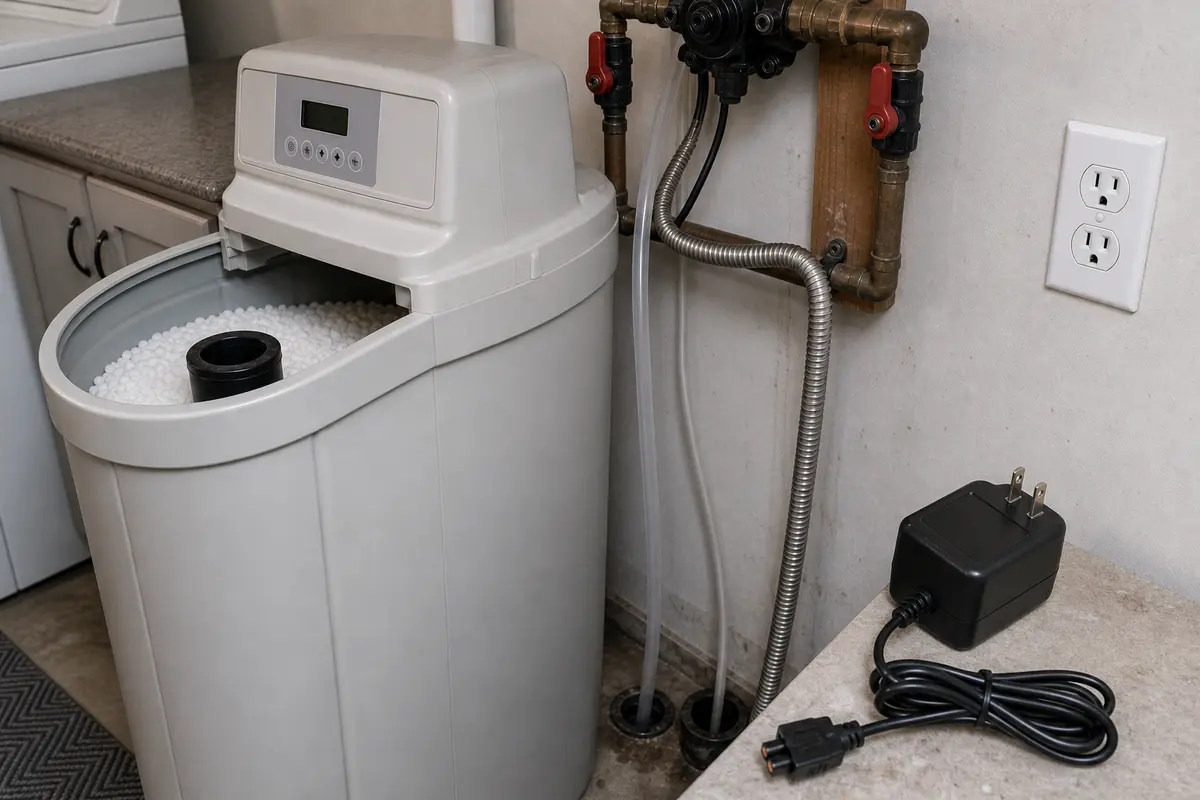
Helps when: The outlet is live, the cord is dry, connectors look intact, and model-specific diagnosis points to a failed power supply or transformer.
Skip it when: The outlet is dead, wet controls are present, or the display works and the code points to valve movement instead.
Compare softener transformers on Amazon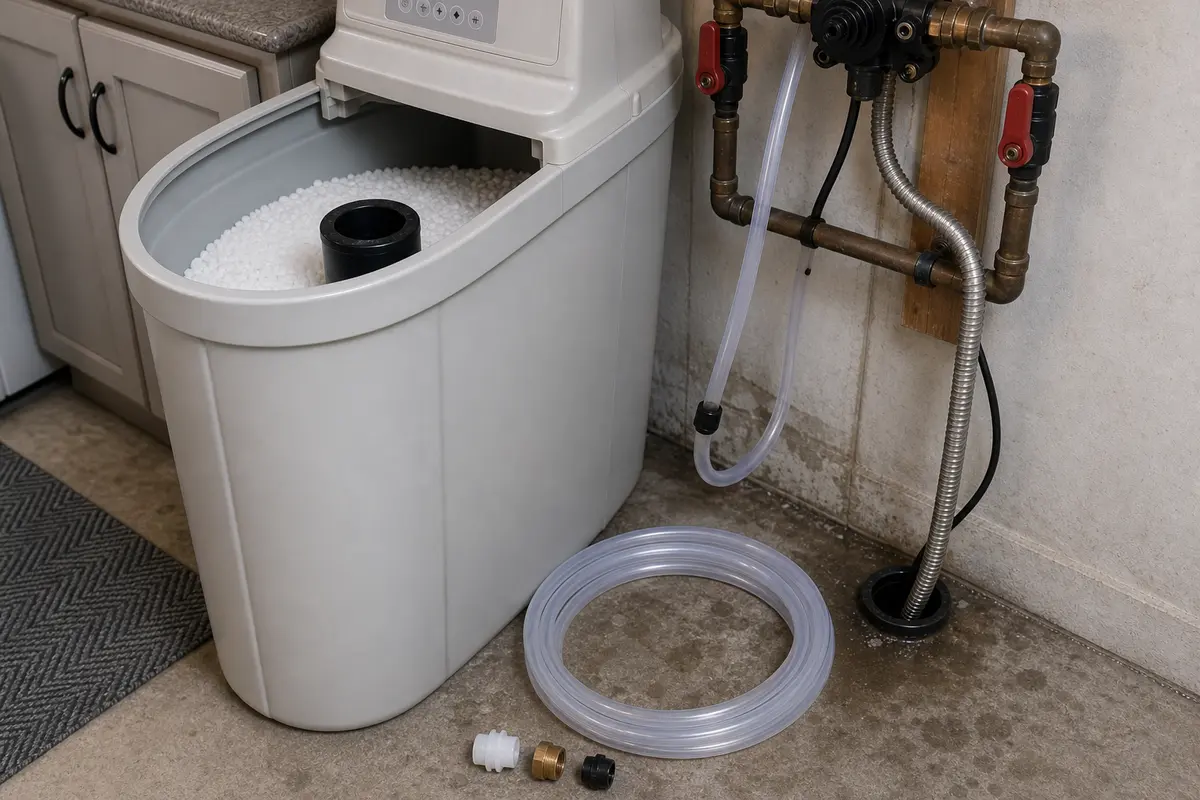
Helps when: The brine tube is kinked, cracked, brittle, loose at the fitting, packed with salt, or pulling air during recharge.
Skip it when: The line is clear and dry, or the exact problem is a motor, switch, board, or shutoff-valve code.
Compare brine lines on Amazon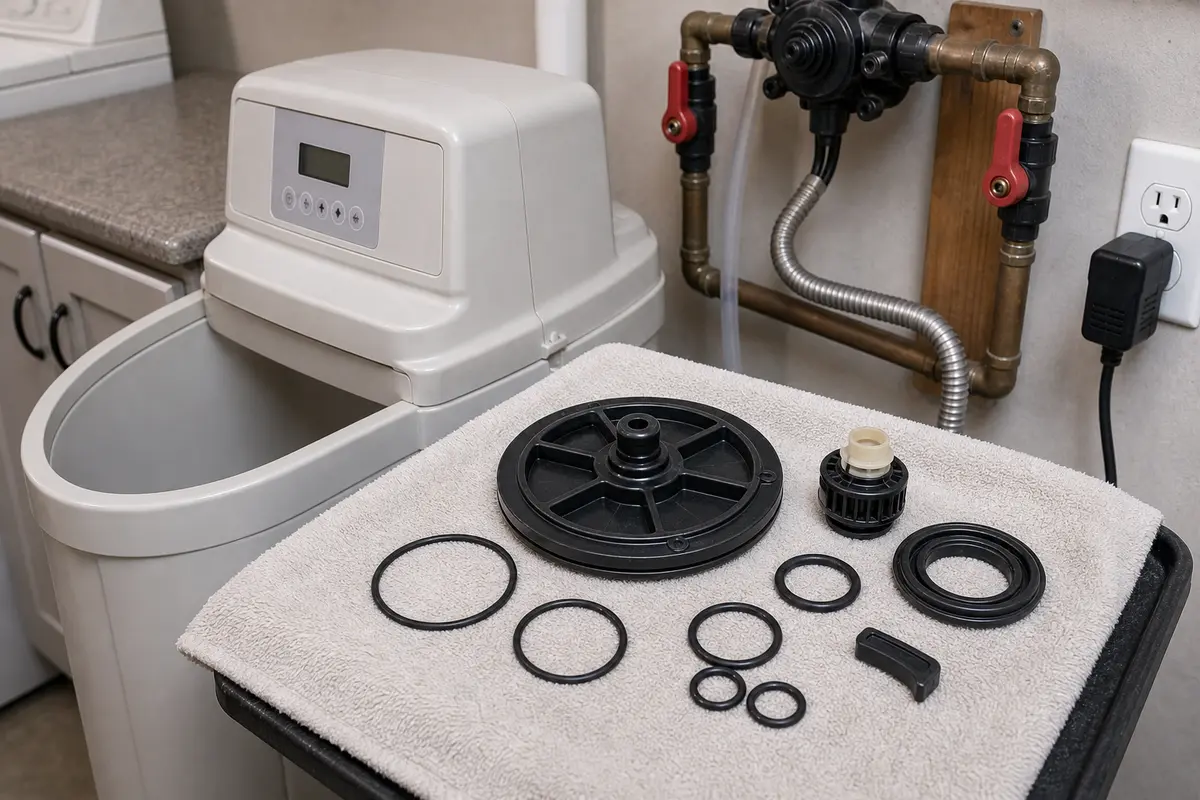
Helps when: Power, connectors, salt, drain, and brine checks are clean but the valve sticks, leaks internally, misroutes water, or will not complete recharge.
Skip it when: You have not matched the exact model and valve design, or the problem is a blank display or RHW42 shutoff-valve code.
Compare rotor and seal kits on Amazon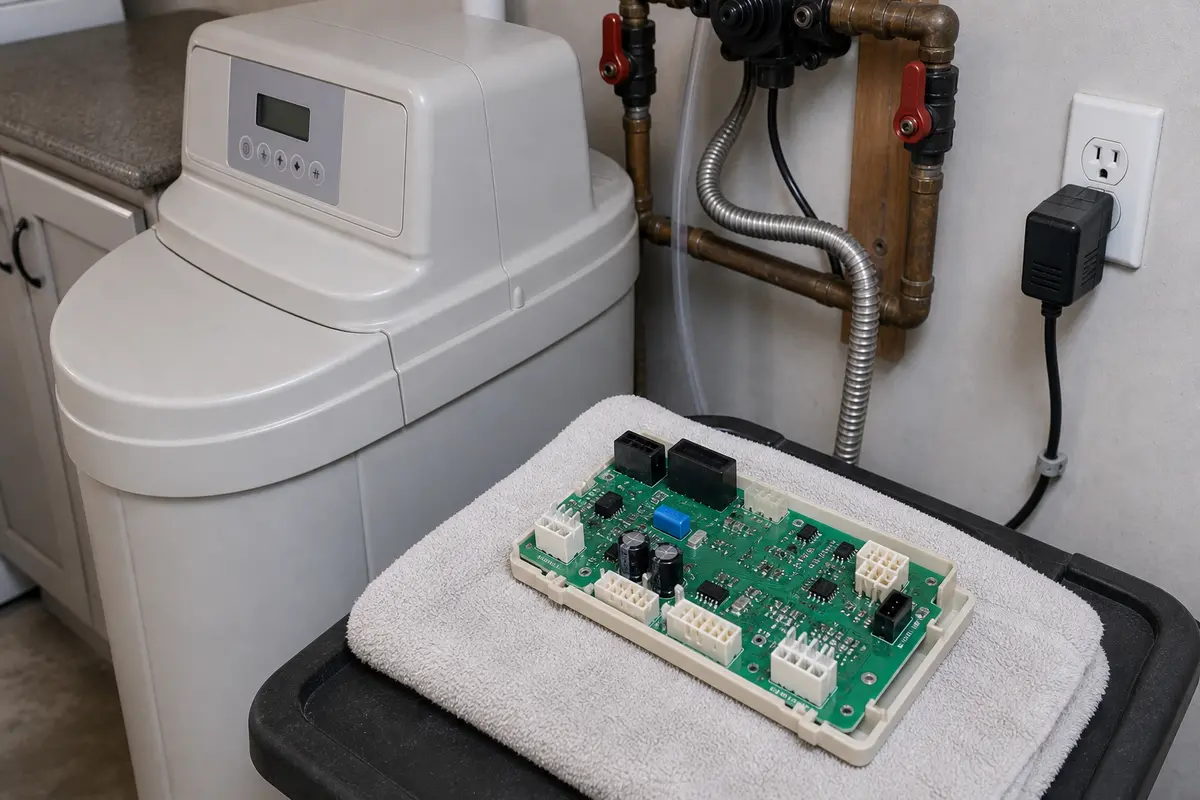
Helps when: Buy a control board only if Err05 returns or the screen stays blank after you check steady power, dry controls, connector seating, and repeat behavior. Match warranty status and the exact model number before ordering.
Skip it when: You are buying because any Err code appeared, or because salt, drain, brine, motor, and switch clues have not been checked.
Compare control boards on AmazonClear it once using the normal reset or recharge sequence, then watch what happens next. If the same code comes back during idle time or recharge, treat it as a real operating fault instead of a random display glitch.
A brief outage can leave the control out of position or wipe out time settings. Check the outlet and transformer first, then reset the clock and run one observed recharge before buying electrical parts.
No. Rheem error-code troubleshooting also points at wiring, switch feedback, valve movement, motor behavior, water in the control area, and model-specific shutoff-valve faults. A board belongs in the cart only after the easier clues stop explaining the code.
Some water at the bottom of the salt tank can be normal, but water above the salt is a different clue. Check the drain path, brine line, and whether the tank draws down during recharge before treating the code as only an electronics issue.
Consider a rotor and seal kit only after power, connectors, drain path, brine line, and salt condition are checked and the unit still sticks, misroutes water, leaks internally, or cannot complete recharge. Match the exact model and valve design.
Only after checking for a salt bridge or packed salt. Adding more salt on top of a hard crust can make the problem worse and hide the real issue.
Rheem groups those codes around the wiring harness or switch, valve trouble, or motor operation. Start with dry, unplugged connector checks and visible water or corrosion clues before moving into motor or valve diagnosis.
Rheem describes Err05 as a possible control-board malfunction. Possible is the key word: confirm steady power, dry controls, secure connectors, exact model number, warranty status, and repeat behavior before ordering a board.
Those codes are tied to the motorized shutoff valve on RHW42-style models. Use the RHW42 manual or Rheem support path for that branch rather than treating it like a basic salt or brine-line problem.
You can listen for the motor and watch whether the valve advances during a normal recharge. Stop before powered open-cover testing unless you are trained and equipped; unplug before removing covers or touching wiring.
Call for service if the outlet trips again, the transformer or plug feels hot, or water reaches the control area. Also stop if the unit will not stop draining, the motor hums without moving, or the exact replacement part is not clear.
Repair Riot built this page from Rheem's public troubleshooting paths, owner-manual pages, and homeowner-safe checks. The order is dry power first, one reset, exact code and model, then brine/drain and valve movement before parts.