Did code 29 start after wind, rain, snow, or freezing weather?
Go outside first. Look for leaves, lint-like buildup, wind-blown plastic, nesting, snow, or ice at the vent termination.
Rheem tankless water heater code 29 usually points to a venting or condensate-drain problem. Start outside at the vent termination, then check the condensate line for kinks, sludge, trapped water, or a sag that can back up into the unit.
Weather debris, ice, a blocked vent screen, or a backed-up condensate line are the homeowner-level clues to check first.
Use the first few minutes to sort visible airflow, drain, and moisture clues. One reset after checks is enough; repeated resets are not a repair.
Don’t start with: Do not buy a control board, fan, gas valve, or burner part from code 29 alone. Stop before sealed venting, combustion parts, or gas connections.
Go outside first. Look for leaves, lint-like buildup, wind-blown plastic, nesting, snow, or ice at the vent termination.
Leave power off. Check the condensate hose and connection area, then stop if moisture is near wiring, gas parts, or sealed combustion sections.
A partial drain restriction or vent issue under load is more likely than a random control-board failure.
Now the problem moves away from homeowner cleanup and toward hidden venting, internal condensate, sensing, or combustion diagnosis.
Shut the heater down, leave the area if gas odor is present, and contact the gas utility or a licensed technician.
Stop. Repeated resets can hide a real venting or condensate problem and do not prove the heater is safe to run.
The useful code 29 checks are visible and physical. Use these views to separate an outside blockage, a condensate backup, and a deeper service problem.
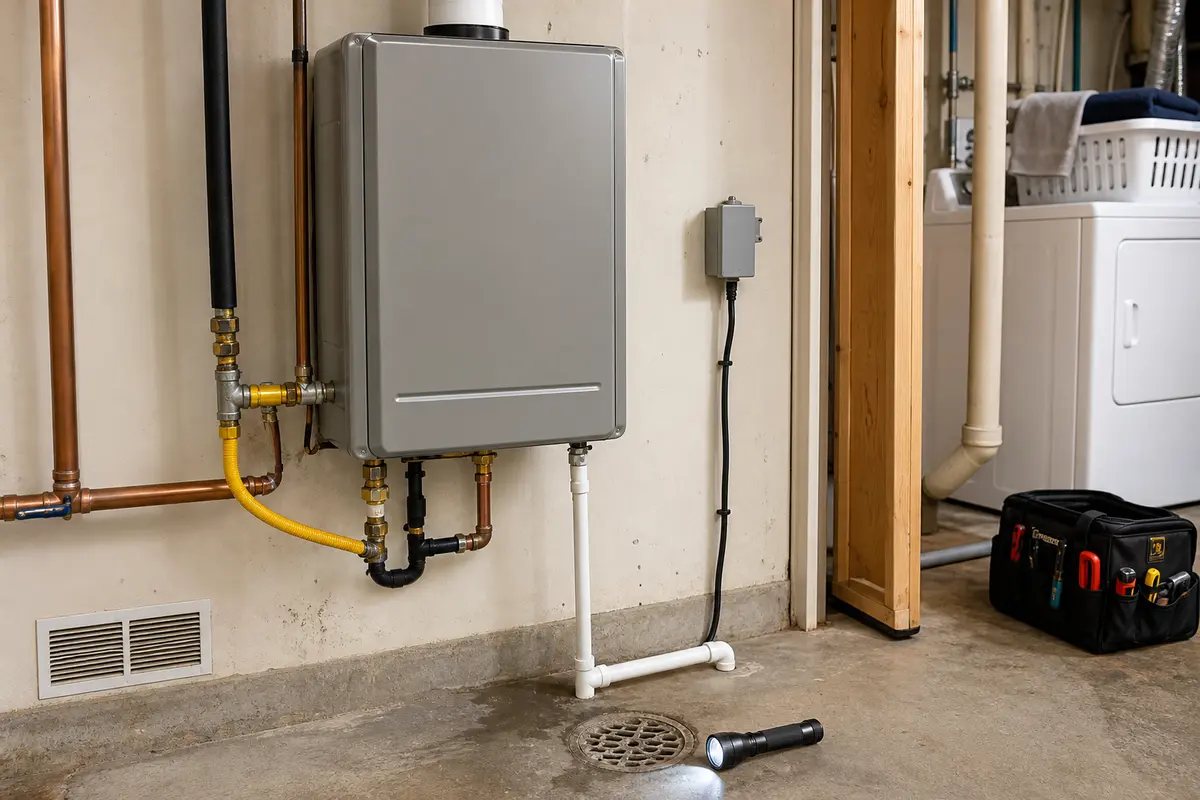
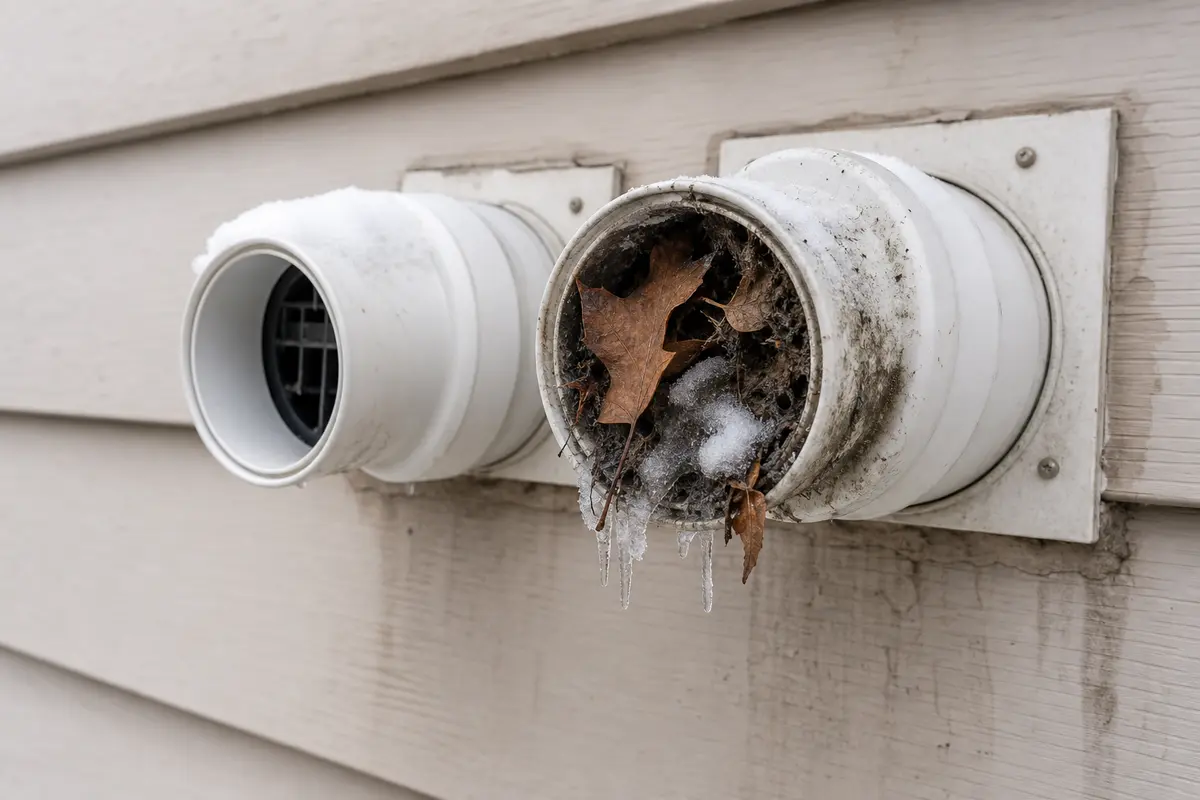
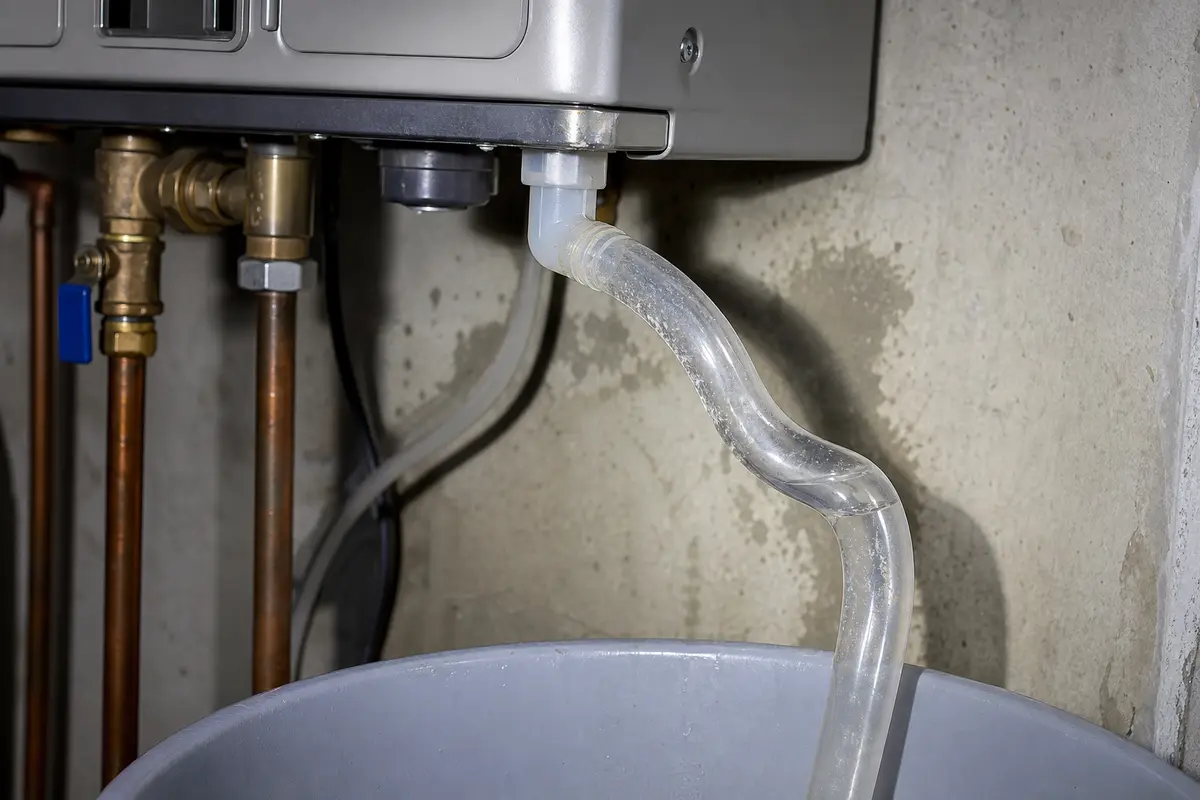
Do not order a control board, fan, gas valve, sensor, or burner part from code 29 alone. Stop before gas-side work; if gas odor is present, leave the area and follow utility guidance. Copy the full Rheem model number, prove the vent opening and condensate path are clear, and buy only a drain part that is visibly cracked, kinked, or model-matched.
Treat code 29 as a vent-and-condensate warning first. The heater is locking out because the airflow, exhaust, or moisture path does not look right to the controls.
Use this table after the first look. The goal is to turn the error into a visible next move.
| What you see | What it usually means | Next move |
|---|---|---|
| Vent termination has leaves, lint, nesting, snow, or ice | The heater may not be moving intake air or exhaust correctly. | Clear loose blockage or let ice thaw, then test hot water once. |
| Condensate line is kinked, sagging, or holding water | Condensate may be backing up into the unit or drain trap path. | Correct the reachable hose route and flush only where water cannot enter the cabinet. |
| Water, rust trails, or white residue appears inside the cabinet | Moisture is getting where it should not, or condensate is not leaving cleanly. | Leave power off if wiring or gas parts are wet and call for service. |
| Code clears, then returns during the same hot water draw | A partial blockage or hidden vent problem may show up only under load. | Record the timing and stop after one controlled retest. |
| Vent and drain look clear, but code 29 returns immediately | The remaining issue is likely internal venting, sensing, combustion, or model-specific diagnosis. | Schedule qualified service instead of buying a board, fan, or gas-side part. |
The outside termination is a good first check because it is visible, fast, and safer than opening the heater.
A condensing tankless heater has to drain acidic condensate while it runs. When that path backs up, code 29 can return even after the vent end looks clean.
Moisture changes the risk level. A dry hose kink is one problem; water inside the cabinet is another.
If code 29 returns after one reset, stop resetting. Check the vent opening and drain hose again before any shopping.
These are for the visible checks only. Skip tool work if the heater shows gas odor, exhaust odor, loose venting, internal moisture, or heat damage.
Paid links. As an Amazon Associate I earn from qualifying purchases. Repair Riot may earn a commission at no extra cost to you.
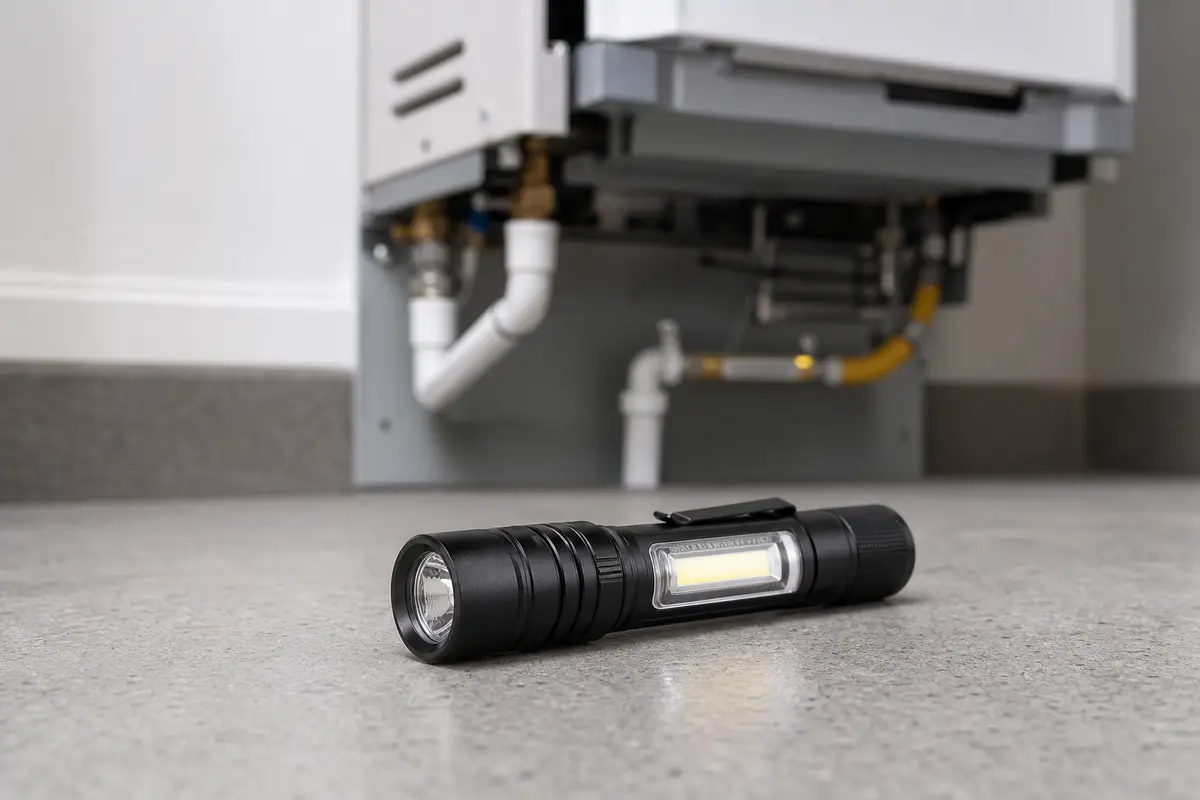
Helps when: You need to see inside the vent termination, under the cabinet, or along the condensate hose route.
Skip it when: The next step would require opening sealed combustion parts or touching wiring.
Compare inspection flashlights on Amazon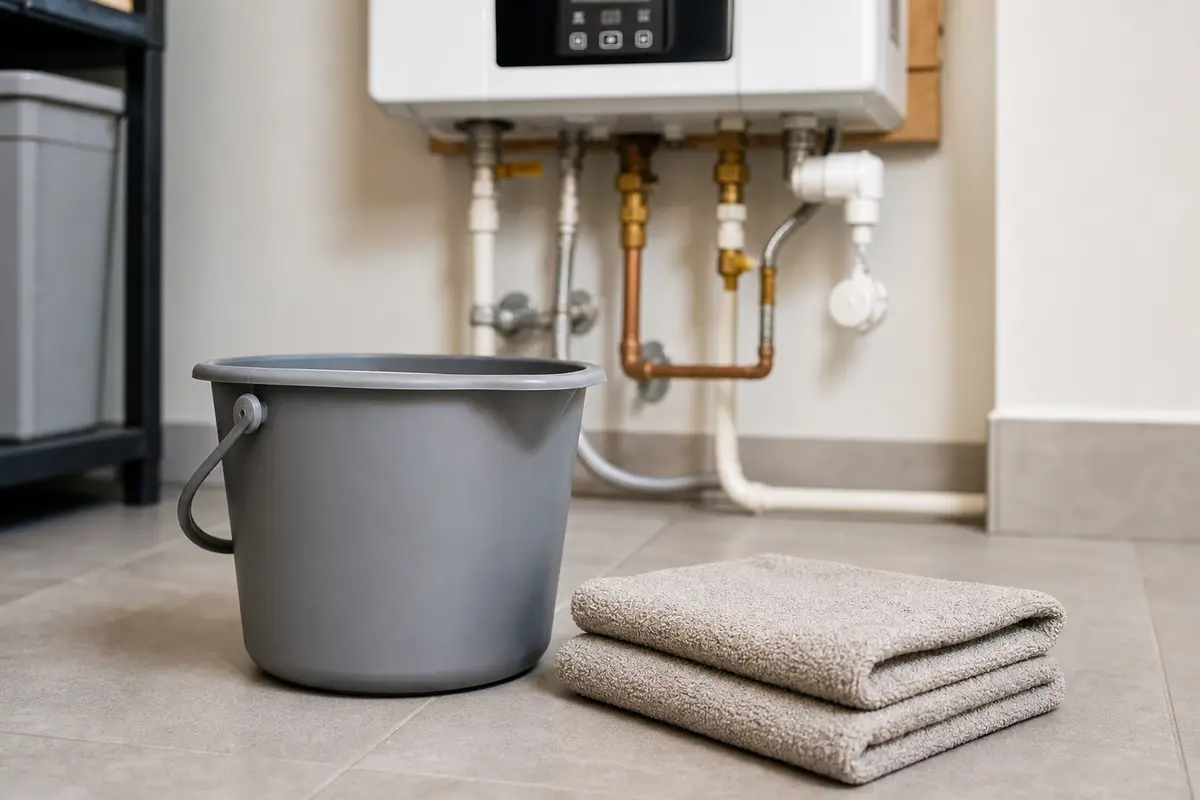
Helps when: An accessible condensate hose can be drained or flushed without sending water back into the heater.
Skip it when: Water is already inside the cabinet or near electrical and gas components; stop and leave the heater off for qualified service.
Compare small buckets and towels on Amazon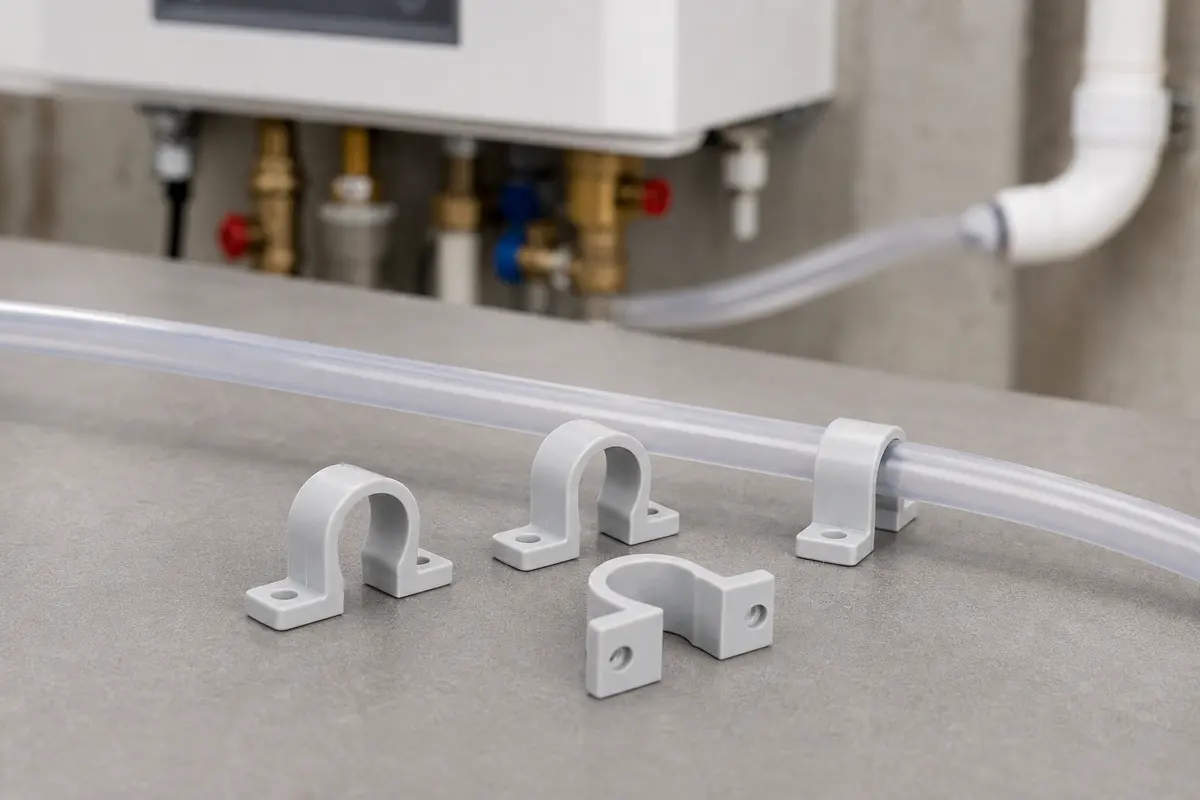
Helps when: The condensate line is intact but needs support so it keeps a downhill path without a water-holding sag.
Skip it when: The tubing is brittle, cracked, routed through a neutralizer you do not understand, or attached to a condensate pump.
Compare tubing support clips on AmazonCheck the visible drain setup before shopping. Look for a split hose, a permanent kink, a low sag full of water, a brittle connector, or a neutralizer or pump that is actually installed on your unit. If the hose clears and holds a steady downhill path, do not buy internal gas, fan, board, or burner parts from code 29 alone.
Paid links. As an Amazon Associate I earn from qualifying purchases. Repair Riot may earn a commission at no extra cost to you.
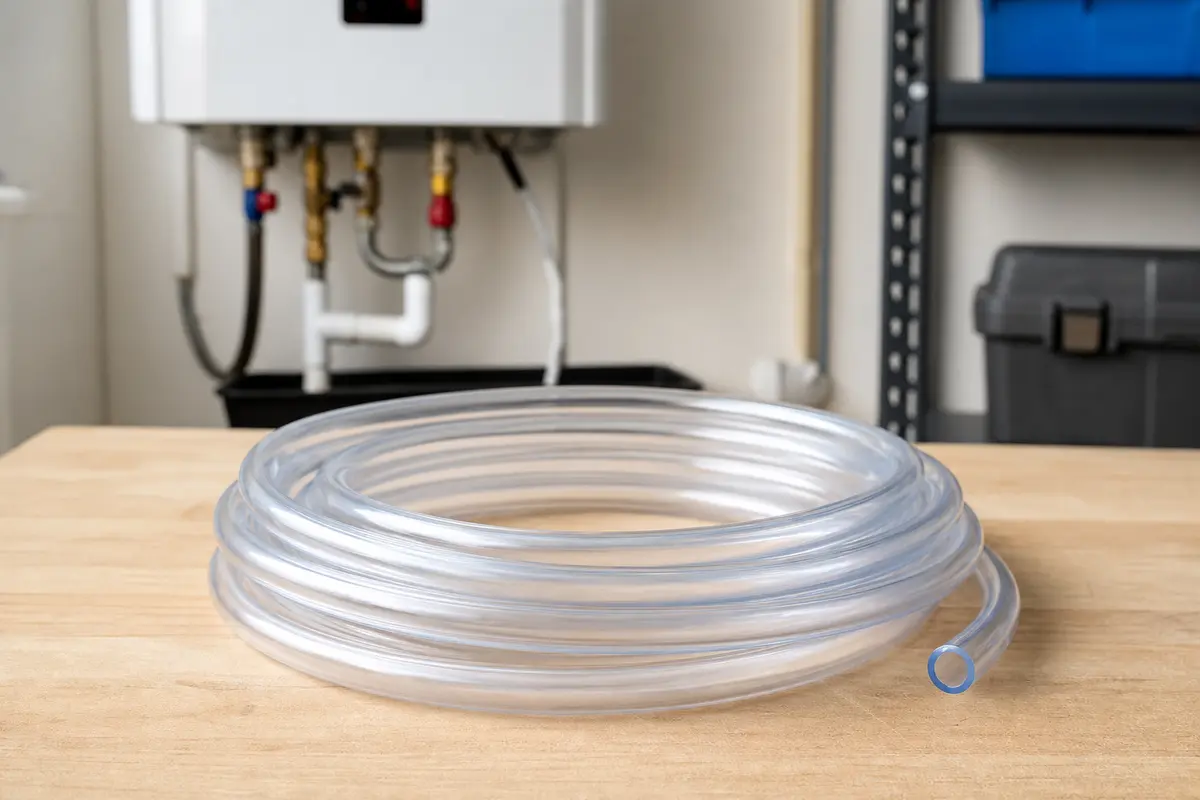
Helps when: The existing tubing is cracked, kinked beyond reuse, or cannot hold a proper downhill route after correction.
Skip it when: The line only needed clearing, the blockage is inside the heater, or you have not matched the model and tubing size.
Compare condensate drain tubing on AmazonStart with what you can see: a blocked outside vent, trapped water in the condensate hose, or fresh moisture under the cabinet. Check those points before suspecting internal parts.
Use one reset only after you have checked the visible vent and condensate path. If the code returns, stop resetting and treat it as an active fault.
No. Before a control board, look for a blocked vent opening, water in the condensate line, or moisture under the cabinet. Those clues come first.
Ice can block the vent termination or freeze trapped condensate in a sagging drain line. Check the outside vent first, then trace the condensate tubing.
Wind-driven debris, water at the vent termination, or moisture entering a weak vent path can trigger the fault. Look for debris, staining, fresh drips, or a shifted vent cap.
Yes, if the line is easy to access and you can drain or flush it without sending water into the heater cabinet. Stop if the connection is brittle, hidden, or tied into a pump or neutralizer you do not understand.
Replace it only after you see a crack, permanent kink, brittle end, or hose run that will not stay connected or sloped downhill. Clear and reroute an intact hose first.
Call for service if the vent and drain are clear but the code returns, if moisture is inside the cabinet, if the vent is damaged, or if gas or exhaust odor is present.
Share the full model number, when the code appears, recent weather, whether you found vent blockage or condensate backup, and whether the fault returned immediately or after a short run.
Repair Riot built this page around homeowner-visible code 29 clues: outside vent blockage, condensate backup, moisture, startup timing, and the point where gas or combustion work leaves DIY.