What is probably happening
A refrigerator that runs constantly is usually trying to shed heat or recover cold air it keeps losing. Check the clues you can prove: warm groceries or hot weather, a loose gasket, dust-packed condenser coils, food tight against vents, or heavy frost on the rear freezer panel.
- Long run time after warm groceries, hot weather, or repeated door openings can be normal for several hours.
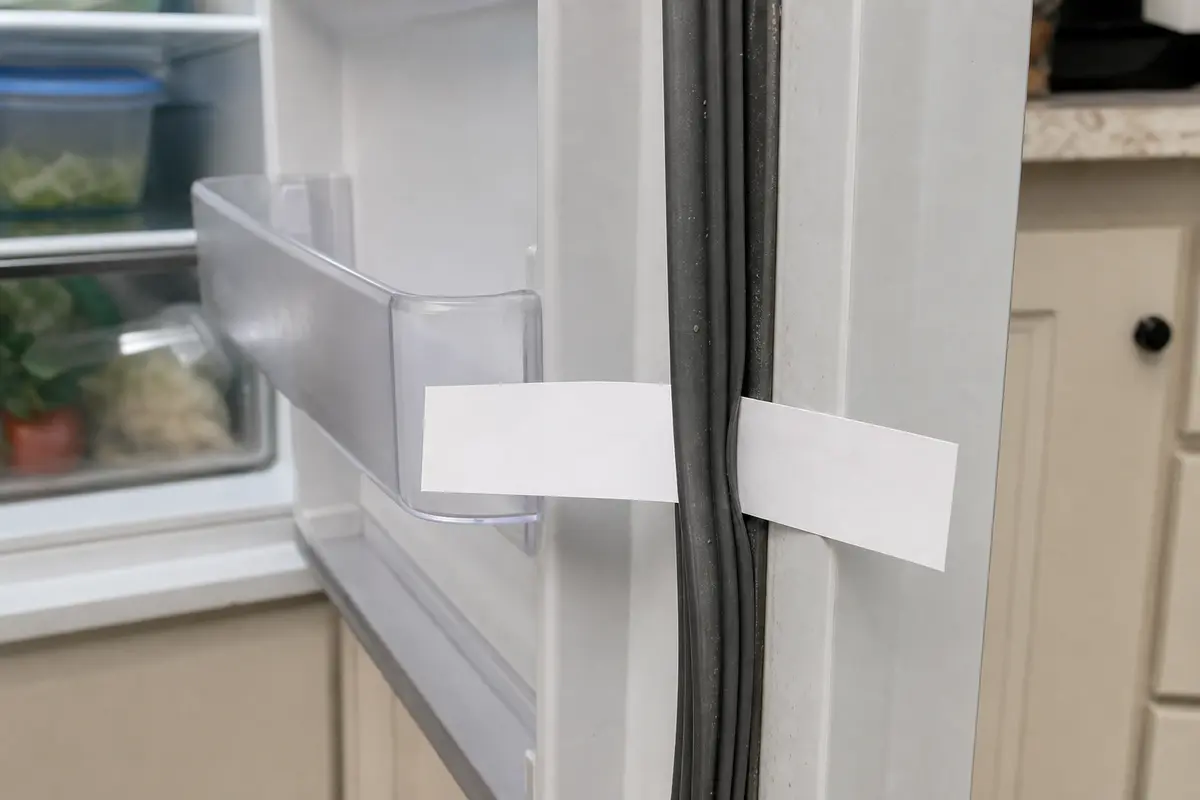
- A loose gasket, sagging door, or bin that holds the door open lets warm humid air in all day.
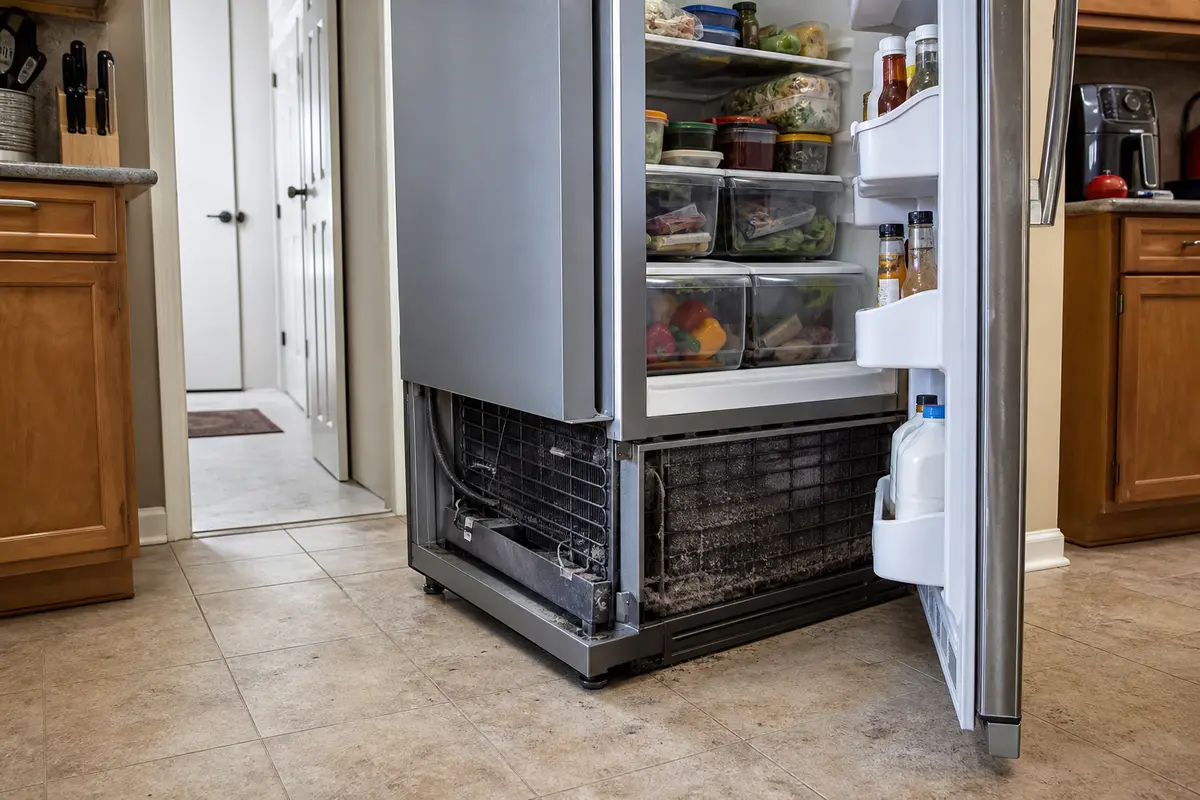
- Dust-packed condenser coils make the compressor work longer to move the same heat out of the cabinet.
- Food pushed tight against vents can starve the fresh-food section even while the freezer seems cold.
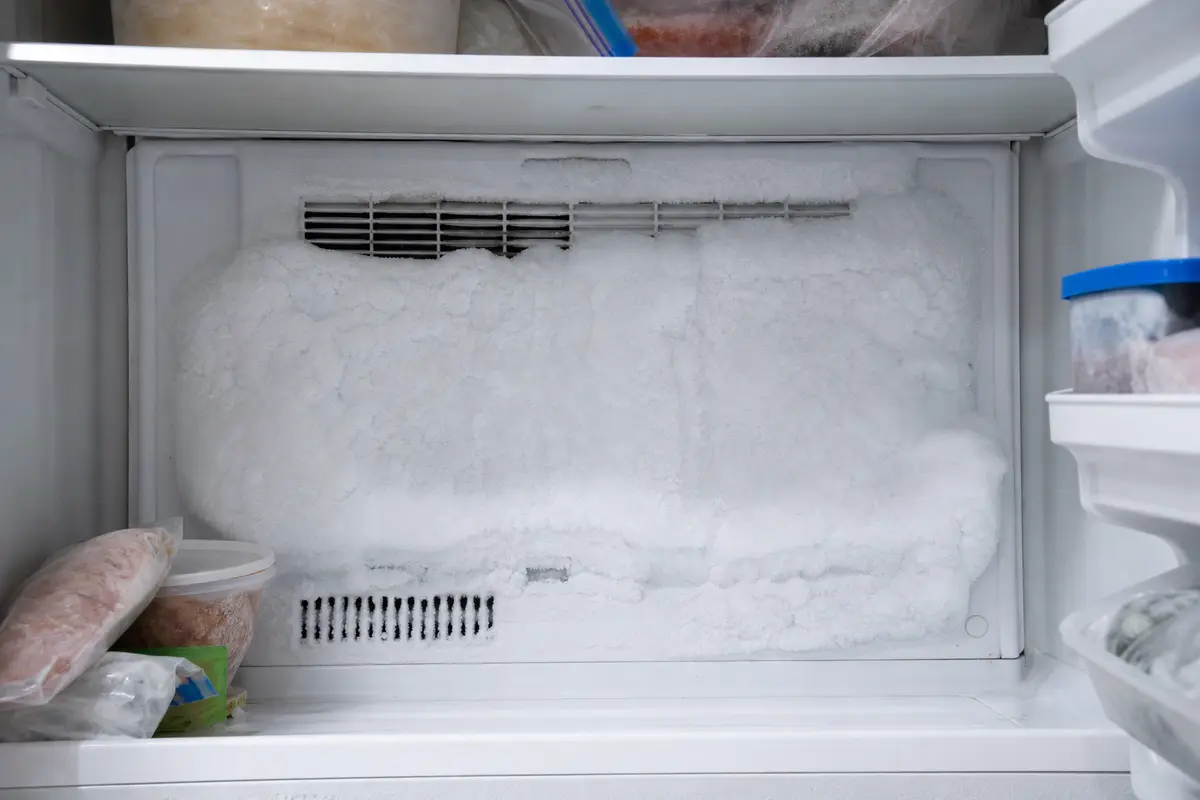
- Heavy frost on the rear freezer panel usually means the evaporator is iced over and airflow is being choked.
- A hot compressor area with poor cooling, clicking, or no useful frost pattern is not a good guess-and-buy repair.
What not to do first
The costly mistake is treating noise as diagnosis. A refrigerator can sound busy because the conditions are bad, not because the expensive parts are bad.
- Do not turn the controls to the coldest setting to make it catch up. That usually extends run time.
- Do not order a compressor, thermostat, inverter, or control board because the cabinet has been humming all day. Those parts come later, after clean coils, open vents, good seal tests, and frost or fan clues still do not explain the run time.
- Do not replace a gasket until you have cleaned it, cleared door-bin interference, checked leveling, and found the paper pulling loose in the same spot more than once.
- Do not scrape freezer ice with sharp tools or high heat. Meltwater is safer than punctured tubing or warped plastic.
- Do not keep packing food against interior vents after you clear them. Air has to move through the cabinet.
- Do not judge food safety by smell if the refrigerator has been warm. Use time and temperature.
Constant-run result map
Run the refrigerator at a normal setting, look at the physical clues, and use a thermometer for the cabinet. The result usually tells you which repair path deserves attention.
- Give a recently loaded refrigerator time to recover before calling the run time a failure.
- Check the fresh-food section and freezer separately. One warm section matters more than the hum by itself.
- Look for the first clue you can prove without opening sealed or energized parts.
| What you see | What it usually means | Next move |
|---|
| Cold cabinet after groceries or a hot day | Normal recovery may be stretching the run time. | Leave the controls at a normal setting and recheck after the refrigerator stabilizes. |
| Paper slips loose at the gasket or door pops open | Warm humid air is entering the cabinet. | Clean the gasket, clear bin interference, level the refrigerator, then retest the seal. |
| Coils are matted with dust or pet hair | The condenser cannot shed heat well. | With power off, brush and vacuum the coil area, then restore clearance. |
| Fresh-food airflow is weak but vents are packed | Cold air is being blocked before it reaches the section that needs it. | Move food away from vents and give the cabinet time to even out. |
| Rear freezer panel is snowy or bulged with ice | The evaporator may be iced over from defrost trouble or a door leak. | Protect the food, thaw safely, and look for the cause before buying a defrost part. |
| Poor cooling, clicking, heat, or no clear frost pattern | Compressor, control, or sealed-system diagnosis may be needed. | Stop replacing visible parts and schedule appliance service. |
Start with doors, settings, and loading
Warm air is the easiest load to prove. Handle this before parts because a good refrigerator can run nearly nonstop when the doors leak or the cabinet is packed wrong.
- Set the refrigerator and freezer controls near the normal middle range unless the manual gives a specific setting.
- Check shelves, crispers, and door bins for anything that keeps either door from closing flat.
- Wipe the gasket and cabinet sealing surface with warm water and mild dish soap, then dry both surfaces.
- Close a sheet of paper in several spots around each door after cleaning the gasket and cabinet face. If the paper pulls loose again in the same spot, check door-bin interference and leveling before blaming the seal or alignment.
- Leave space around interior vents so air can move from the freezer side into the fresh-food section.
- A good clue: run time improves after the door closes cleanly, the gasket grips evenly, and the vents stay open.
Clean the heat-rejection path
The condenser is where the refrigerator dumps heat into the room. When that area is buried in dust or boxed in tight, the compressor has to work longer for the same cooling.
- Disconnect power before reaching underneath, behind the toe grille, or near the rear machine compartment.
- Use a vacuum and soft coil brush to pull lint from the coils without bending fins or tugging wires.
- Clean the floor and air path around the compressor compartment before reinstalling covers or grilles.
- Make sure the refrigerator has the clearance the manual calls for, especially at the back and top.
- Listen for a condenser fan only if your model uses one. A silent or rough fan near the compressor is a stronger clue after dust and debris are cleared.
- Give the refrigerator several hours after cleaning. Heat-load fixes may take hours to show up, not just the first few minutes.
Read the frost and fan clues
Weak airflow and heavy frost can look like the same kitchen problem. The back freezer panel, vent strength, and freezer fan sound keep the diagnosis from turning into parts guessing.
- Hold the freezer door switch closed and listen for the evaporator fan. It should sound steady, not rough, stalled, or intermittent.
- Feel for airflow at the fresh-food vents after the freezer fan is running. If the freezer is cold but the vent air is weak, clear packed vents and look at the rear freezer panel for frost before pricing a fan.
- Look at the rear freezer panel for an even blanket of frost, snow, or a bulged icy surface.
- A frosted panel plus weak airflow usually means ice is blocking the evaporator. A safe thaw may bring airflow back; if the frost returns, look for a door leak or defrost problem before buying a defrost part.
- Little frost, poor cooling, and constant compressor run time can point away from a simple fan or gasket repair.
- Stop before forcing panels off. Ice-packed covers can hide wiring, plastic tabs, and tubing.
Tools You May Need
These tools support the safe checks on this page. Skip tool work if you find hot electrical smells, damaged wiring, or cooling that is getting worse while the compressor clicks.
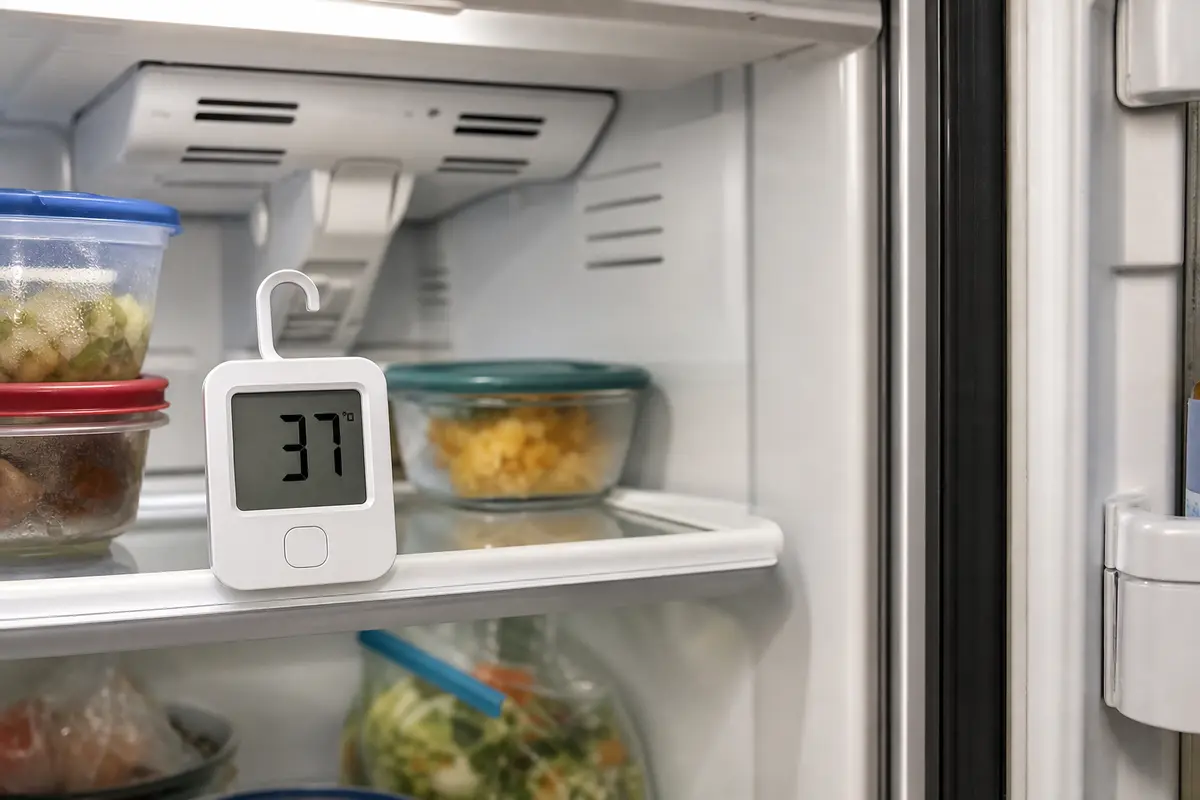
Refrigerator thermometer
Helps when: Shows whether the fresh-food section is truly warming or simply recovering after a load.
Skip it when: The refrigerator already has confirmed unsafe temperatures and food needs to be moved first.
Compare refrigerator thermometers on Amazon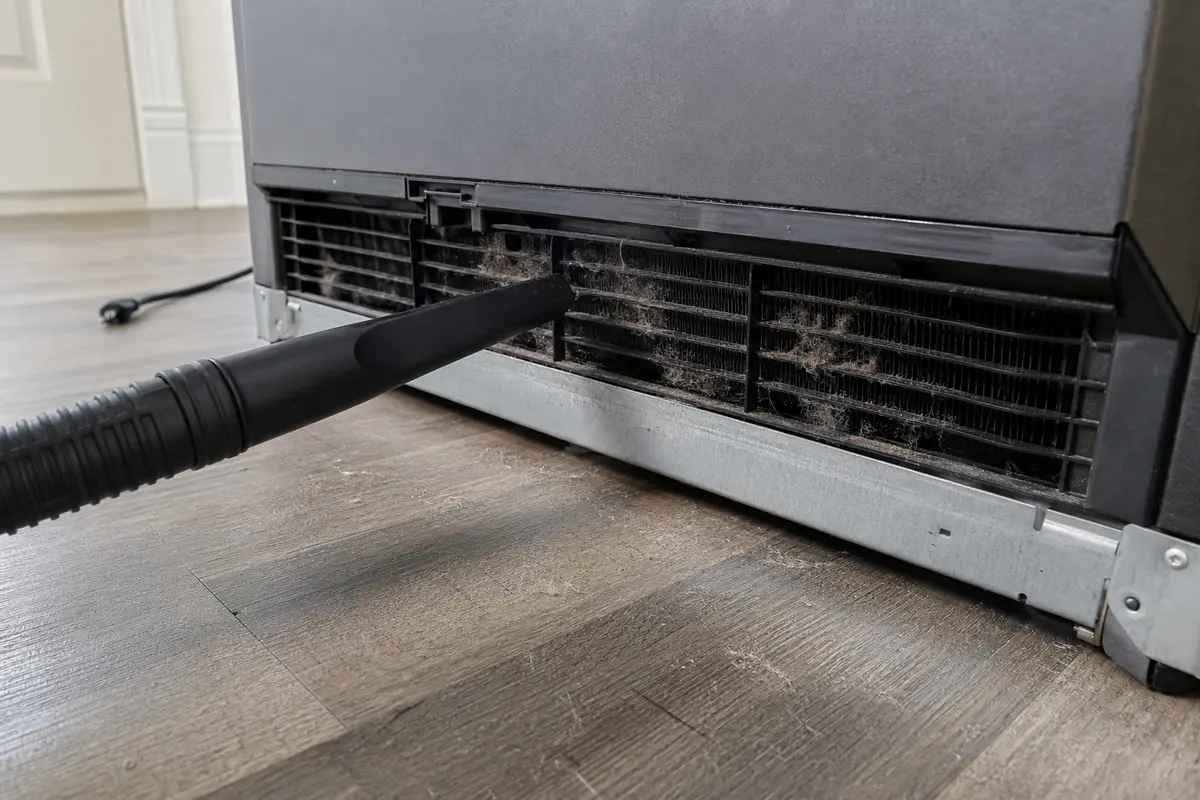
Vacuum crevice attachment
Helps when: Pulls dust and pet hair from the condenser area after the refrigerator is unplugged.
Skip it when: Panels are jammed, wiring is exposed, or you cannot reach the coil area without straining tubing.
Compare vacuum crevice attachments on Amazon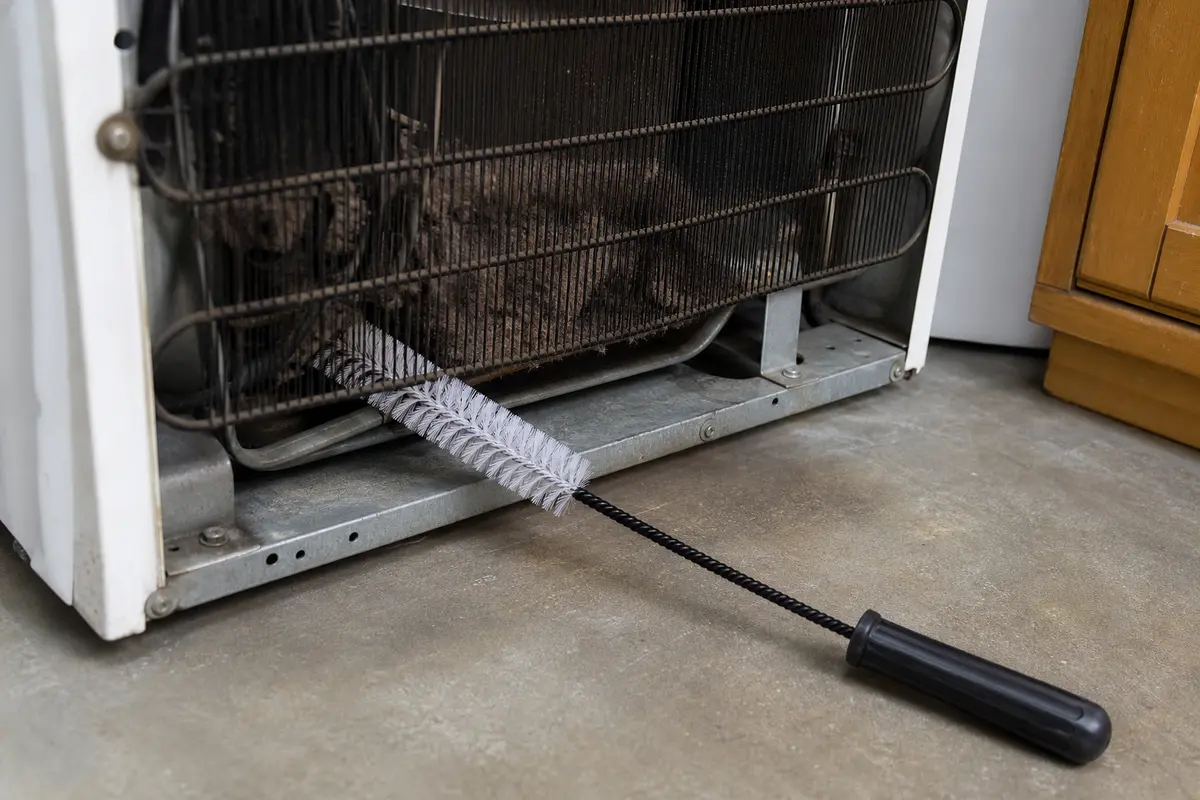
Soft condenser coil brush
Helps when: Reaches lint packed between condenser fins where a vacuum nozzle misses.
Skip it when: The coil design is sealed, inaccessible, or the manual warns against homeowner coil access.
Compare refrigerator coil brushes on Amazon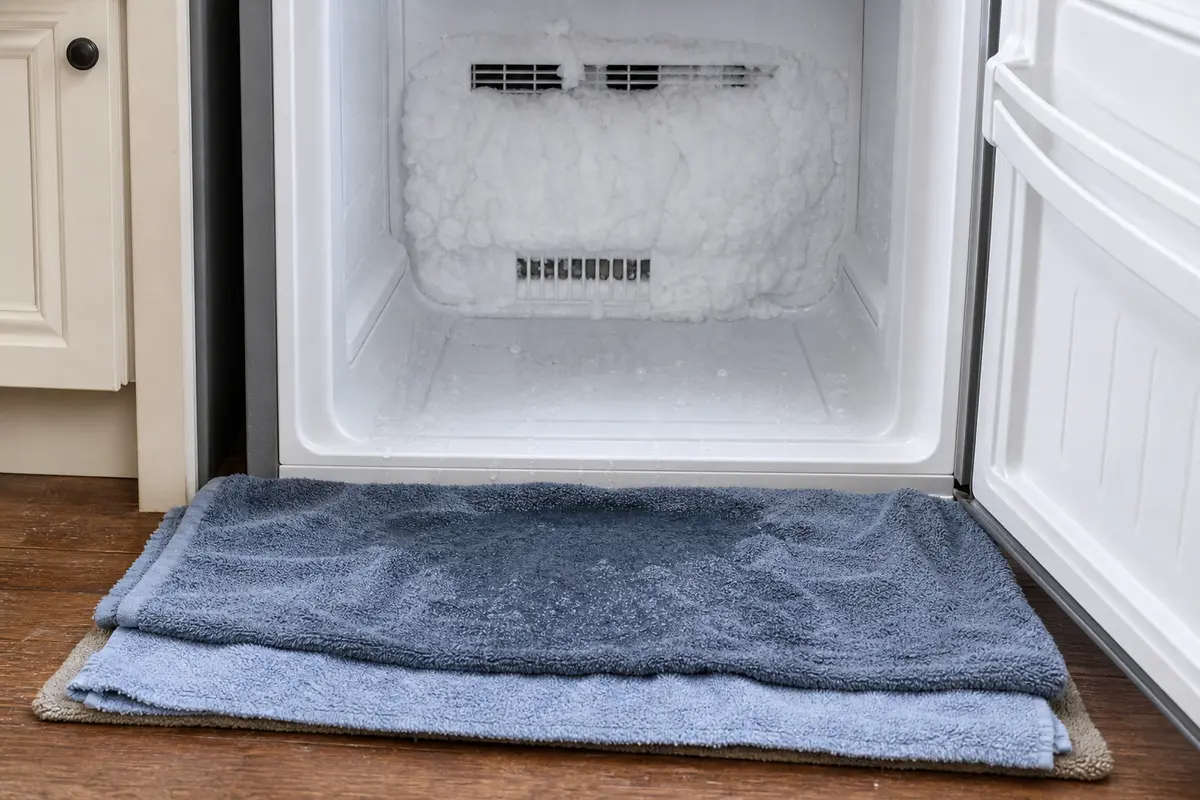
Towels for manual thaw
Helps when: Catches meltwater if a frosted freezer panel has to thaw with the refrigerator unplugged.
Skip it when: Food cannot be kept cold elsewhere or panels are frozen so tightly that they would need prying.
Compare utility towels on AmazonAs an Amazon Associate I earn from qualifying purchases. Repair Riot may earn a commission at no extra cost to you.
Replacement Parts
Parts belong in the cart only after the clue repeats. Use the model tag and the old part shape, connector, mounting style, and door location before assuming a similar refrigerator part will fit.
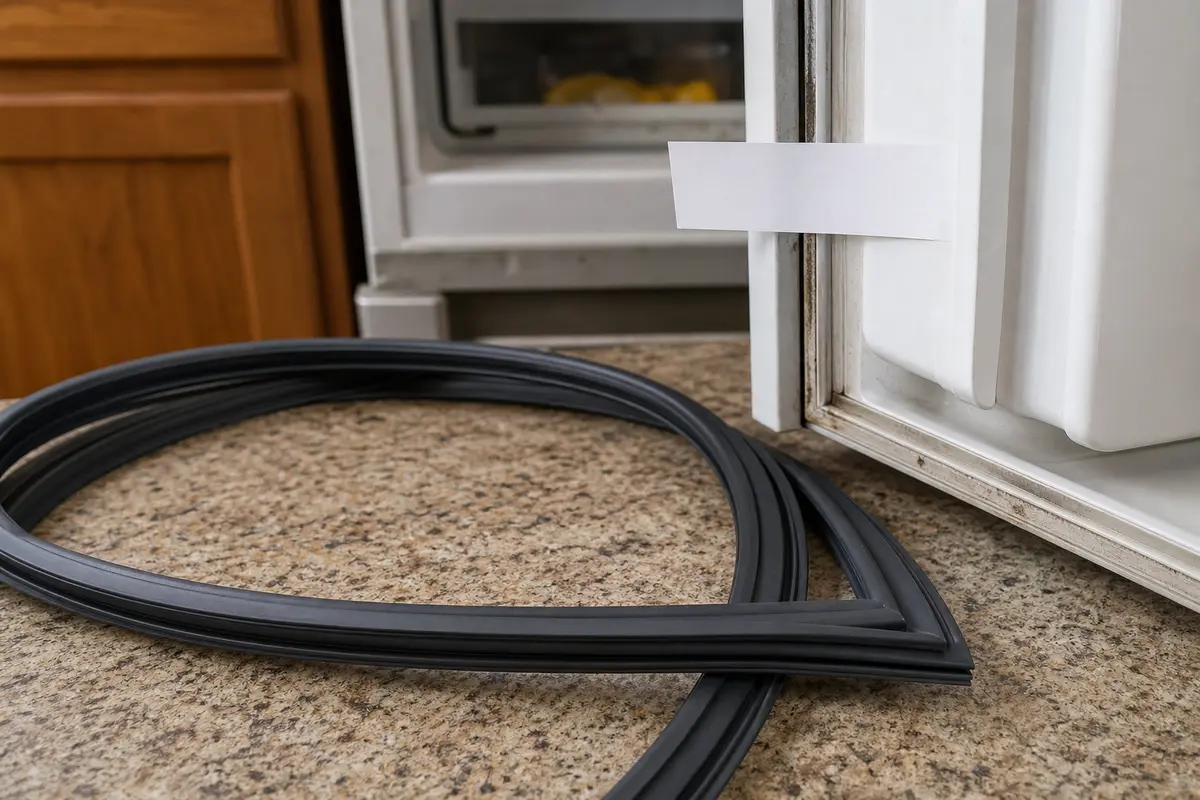
Refrigerator door gasket
Helps when: The gasket stays torn, warped, loose, or weak on the paper test after cleaning and alignment checks.
Skip it when: The door seals evenly and the real clue is frost, weak fan airflow, or dirty condenser coils.
Compare refrigerator door gaskets on Amazon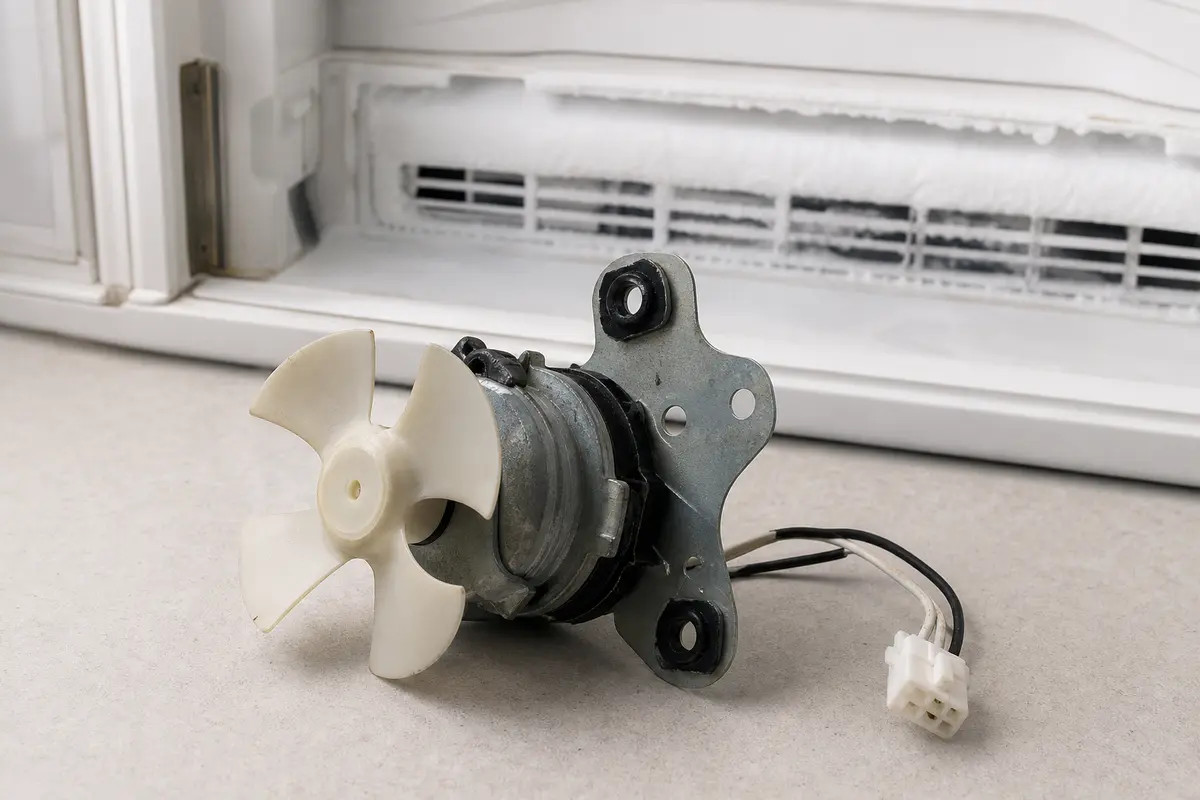
Refrigerator evaporator fan motor
Helps when: The freezer fan is silent, rough, or intermittent while the refrigerator is calling for cooling.
Skip it when: Airflow is weak because vents are blocked or the freezer rear panel is buried in frost.
Compare refrigerator evaporator fan motors on Amazon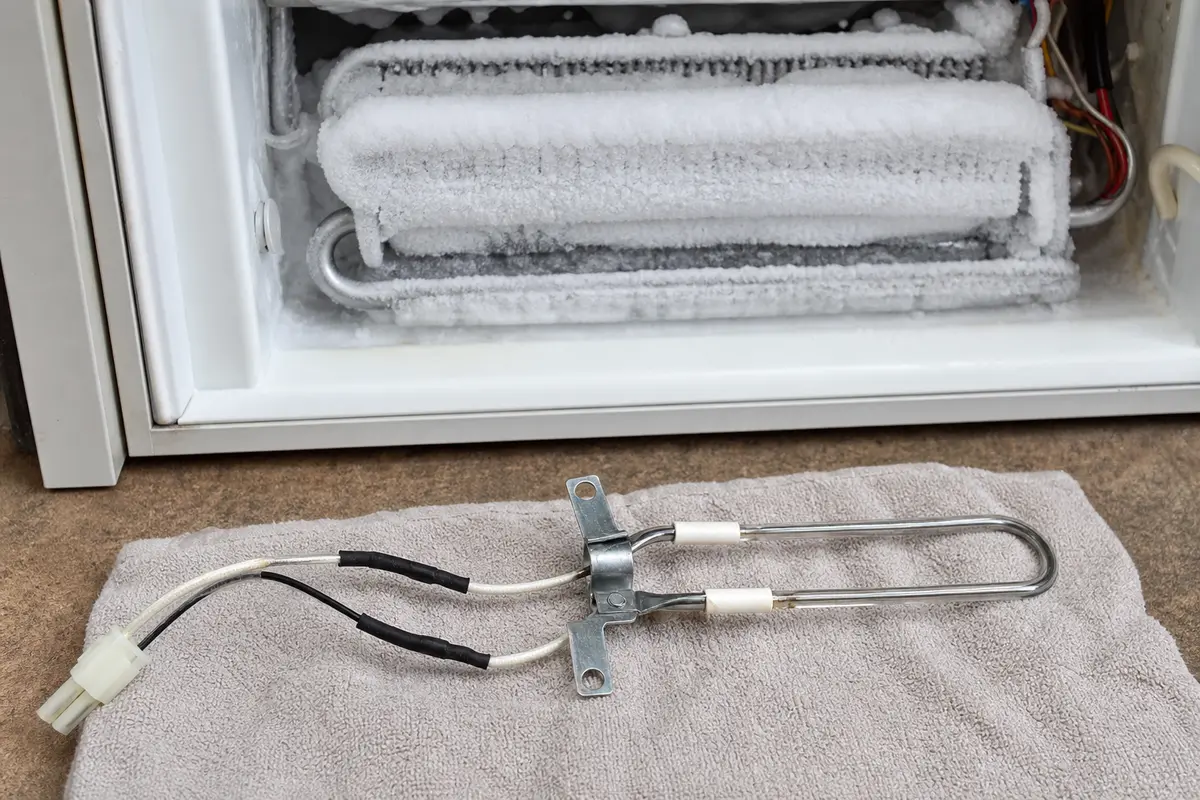
Refrigerator defrost heater
Helps when: The evaporator repeatedly ices over and airflow returns only after a safe thaw.
Skip it when: The frost came from a door left open, a leaking gasket, or food blocking the air path.
Compare refrigerator defrost heaters on Amazon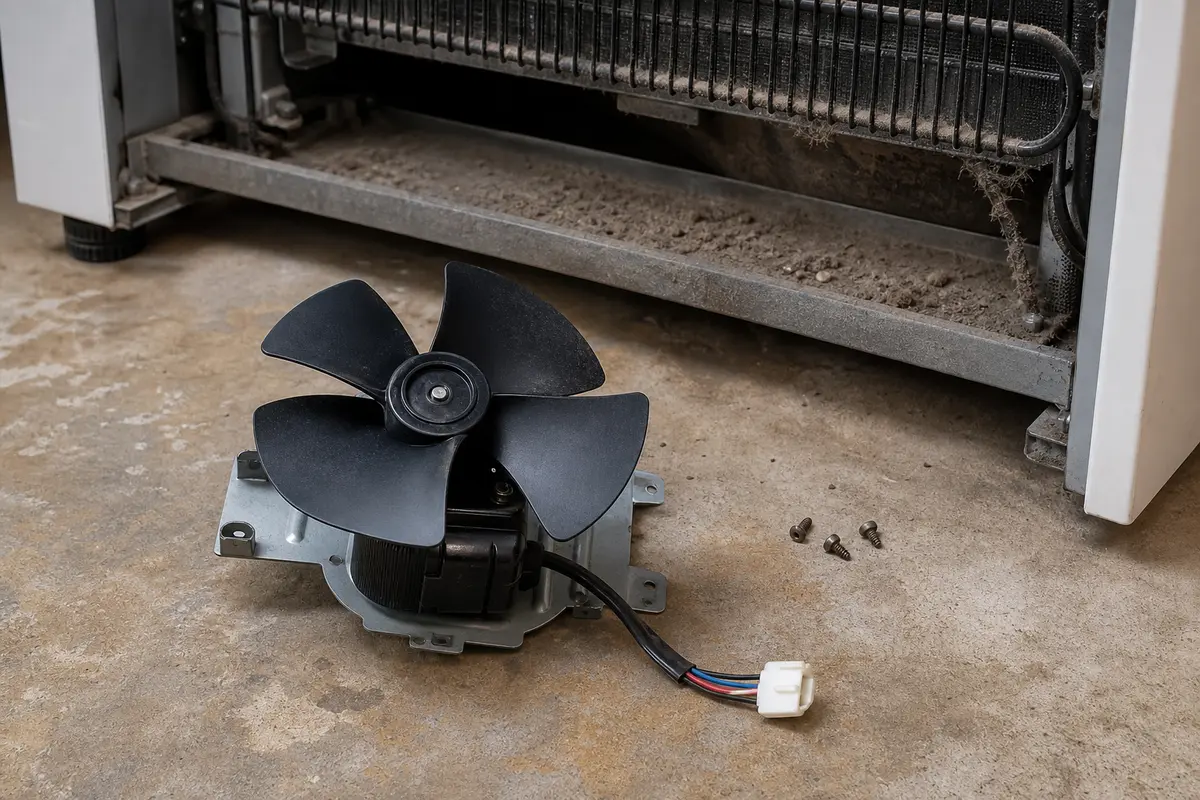
Refrigerator condenser fan motor
Helps when: Your model uses a condenser fan and that fan is not running or sounds rough after debris is cleared.
Skip it when: Your refrigerator has a static condenser design or the fan runs normally while coils and clearance are clean.
Compare refrigerator condenser fan motors on AmazonAs an Amazon Associate I earn from qualifying purchases. Repair Riot may earn a commission at no extra cost to you.
FAQ
Is it normal for a refrigerator to run all the time?
Sometimes. A refrigerator can run for hours after warm groceries, hot weather, a long door-open stretch, or a power outage. Day-after-day nonstop running under normal conditions deserves gasket, airflow, coil, frost, and fan checks.
How long should a refrigerator run after loading groceries?
Several hours can be normal, especially if the food was warm or the doors stayed open during loading. Leave the controls at a normal setting, check the fresh-food section and freezer with a thermometer, and judge the refrigerator after it has had time to stabilize.
Will dirty condenser coils make a refrigerator run constantly?
Yes. Dust, lint, and pet hair make it harder for the refrigerator to dump heat into the room, so the compressor stays on longer to do the same job.
Can a bad refrigerator door gasket cause nonstop running?
Yes. A small gasket leak lets warm humid air enter all day. That adds heat load and can create extra frost, especially around the freezer side.
What does frost on the back freezer panel mean?
Heavy frost or snow on the rear freezer panel usually means the evaporator area is iced over. Protect the food, thaw safely, and then look for the cause: a defrost problem, a door-seal problem, or too much humid air entering the cabinet.
Should I turn the refrigerator colder if it keeps running?
No. A colder setting usually makes the refrigerator run longer. Keep the controls near normal. Check whether the gasket grips paper, feel for airflow at the vents, look for frost on the rear freezer panel, and listen for a steady fan.
Can blocked vents make a refrigerator run constantly?
Yes. When food blocks freezer or fresh-food vents, cold air cannot move where the controls expect it. The refrigerator may keep calling for cooling even though the freezer seems cold.
Does constant running mean the compressor is bad?
Usually not. Compressors get blamed too early. First prove the simple load checks: dust on the coils, loose paper-test spots at the gasket, blocked vents, a rough or silent fan, or heavy frost on the rear freezer panel.
When should I call a technician for a refrigerator that runs constantly?
Call when you hear repeated compressor clicking, smell hot electrical odor, see damaged wiring, get poor cooling with little frost pattern, or the next step would involve sealed-system or live-voltage diagnosis.
Is the food safe if the refrigerator has been running constantly?
Use a thermometer, not the hum. If perishable food has been above 40 F for more than two hours, follow food-safety guidance; do not judge it by smell or taste.
How this page was built
Repair Riot built this page around visible refrigerator clues: door leakage, condenser dust, blocked vents, freezer frost, fan sound, and stop points for sealed-system work. The source links support temperature, seal, coil, and airflow context; the repair sequence is original guidance.