Does one vent change when you touch it?
Work on that register or grille first. Snug the screws, reseat the face flat, and test with the damper fully open.
Rattling ductwork usually starts at the room opening: a loose register, bent grille, chattering damper lever, or sheet metal that flexes when blower pressure changes. Start where the sound is loudest, then check airflow before you touch equipment panels.
If pressing one corner of the vent changes the sound, start with the register face or damper lever. If the pop comes from exposed metal at startup, look for a loose hanger, shifted joint, or duct panel that flexes.
Sort the sound by location first: one vent, several rooms, exposed duct, or hidden wall cavity. That split keeps the repair small.
Don’t start with: Leave furnace and air-handler panels closed for this check. Prove the noise at the register, filter, or visible duct first, and do not tape over vents or buy dampers until the sound follows that part.
Work on that register or grille first. Snug the screws, reseat the face flat, and test with the damper fully open.
Listen for a deeper pop from exposed ductwork. Sheet metal flex or a loose hanger moves higher than the room cover.
Check airflow before parts. Replace a dirty filter, open closed registers, and clear blocked returns or supply vents.
Prove the room-side cover first. Do not cut drywall unless the location is consistent and the duct path is understood.
Note the mode and fan timing. Airflow speed and metal expansion can expose a loose spot that stays quiet in the other mode.
Stop the DIY checks, shut the system off if you can do it safely, and call an HVAC pro or the utility as appropriate.
Use the visible room opening first. A loose register, chattering damper, or blocked airflow clue is easier to prove than a hidden duct repair.
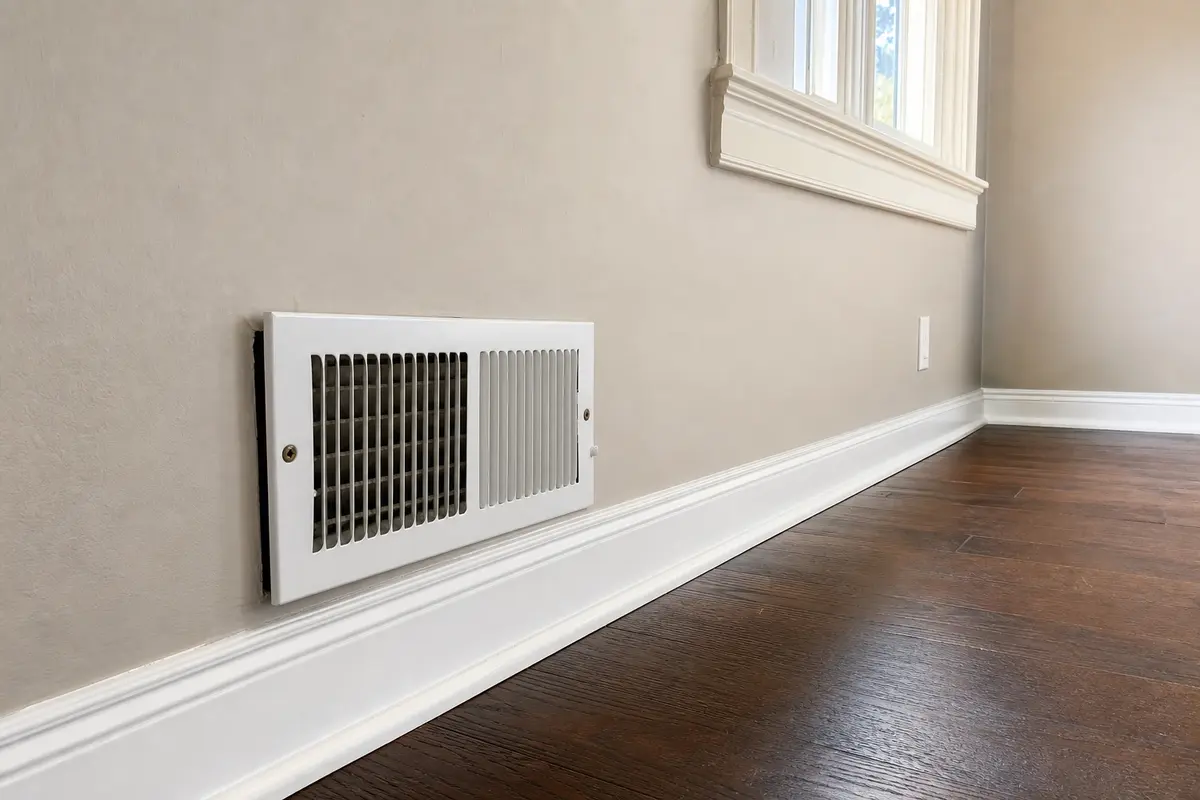
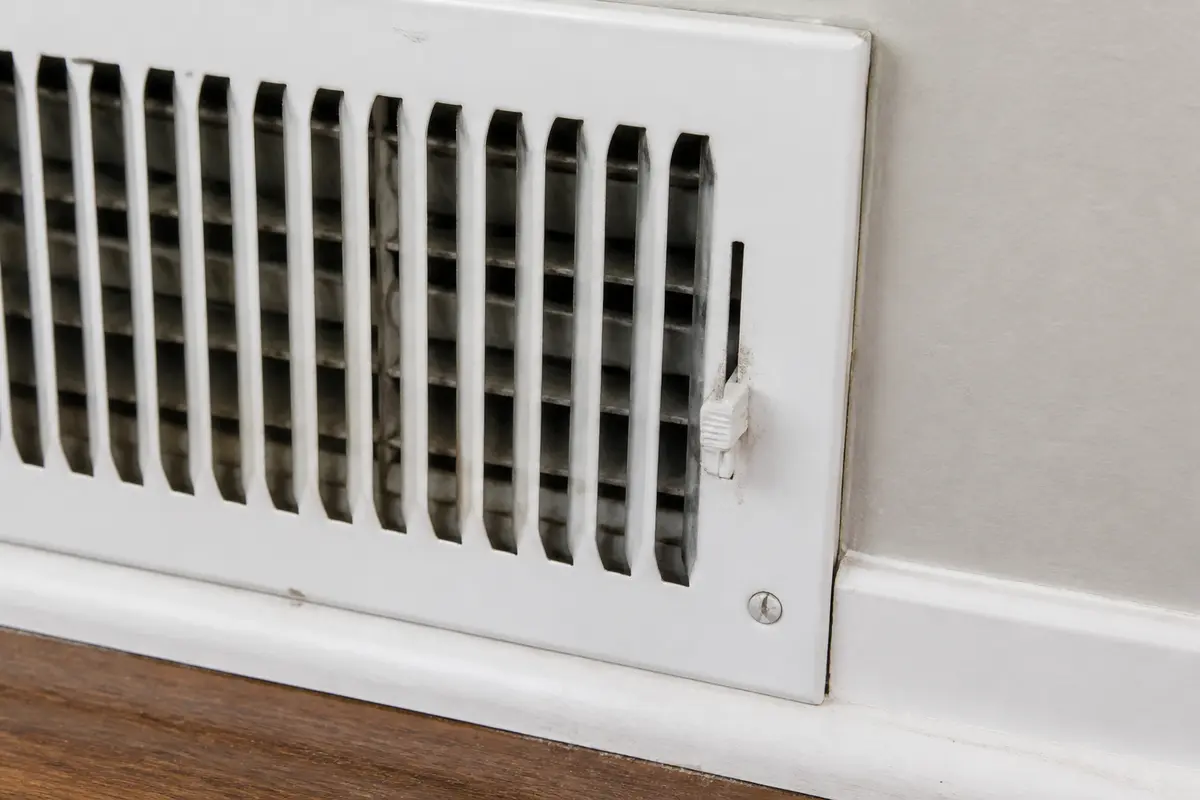
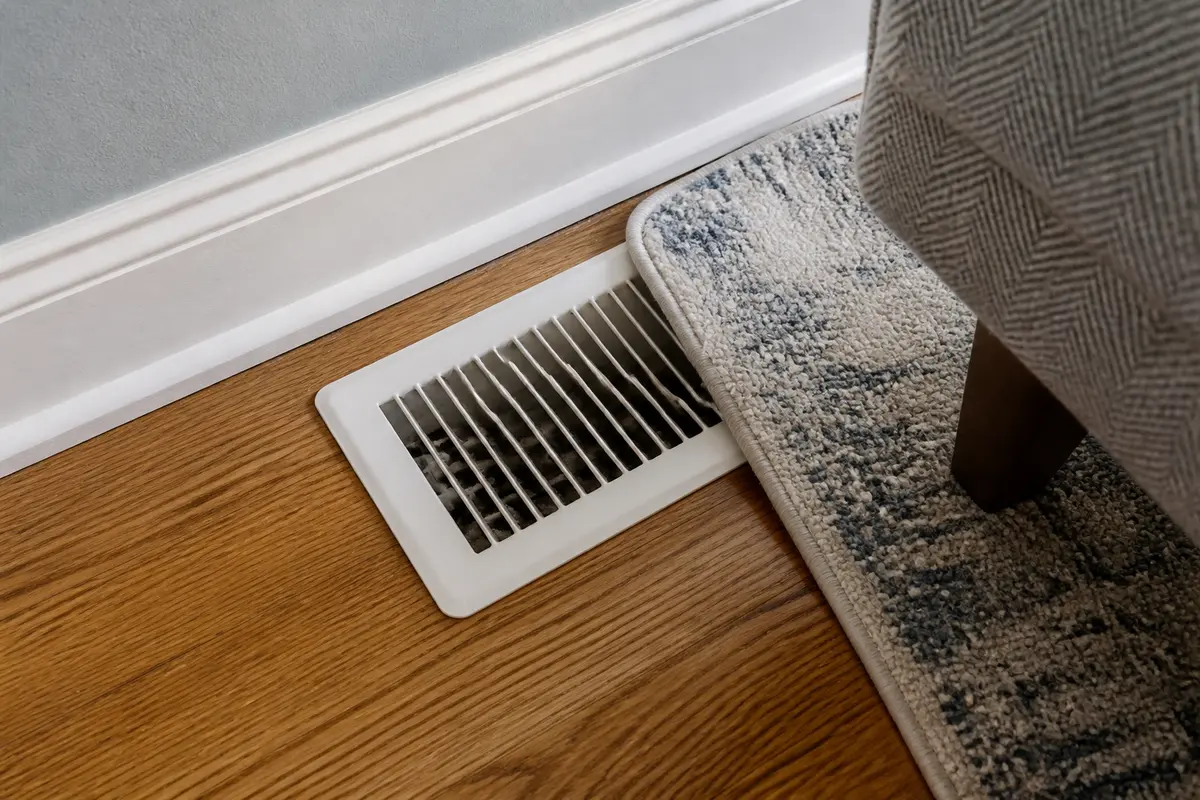
Buy a register, grille, filter, or damper only after the sound follows that part. Match the exact opening size, face style, screw spacing, floor/wall/ceiling use, filter size, and damper type before ordering.
The first useful clue is location. Duct noise can travel through metal, but a rattle that reacts to one cover gives you a much smaller target.
The wrong shortcut can bend a good register, restrict airflow, or send you into equipment panels that do not need to be opened for this symptom.
Most homeowner wins happen at the visible vent. Keep the test simple: touch, snug, reseat, open the damper, then listen again.
Airflow problems rarely create a metal rattle by themselves. They can make a loose register, damper blade, or duct panel loud enough to notice.
| Check | What the result means | Next move |
|---|---|---|
| Filter is dirty, collapsed, or overdue | Restricted return airflow may be making weak metal chatter. | Replace the filter with the correct size, then retest the noisy vent. |
| Several supply registers are closed | Pressure may be shifting the rattle to the weakest cover or duct section. | Open the registers and leave balancing changes to a pro if comfort gets worse. |
| Furniture, rugs, or curtains block vents | The sound may be airflow turbulence instead of a failed part. | Clear the opening and listen for the same startup and shutdown rattle. |
| Only one register reacts to hand pressure | The visible cover or damper is still the better target. | Reseat or replace that register before chasing hidden ductwork. |
| No airflow change affects the noise | A loose boot, hanger, trunk, or hidden duct joint moves up the list. | Stop buying vent parts and plan a more careful duct access check. |
A boot, short duct run, or exposed trunk can rattle even when the visible cover is solid. The goal is to find proof without guessing into hidden metal.
Use the test result, not the noise alone. Press the cover, move the damper lever, check the filter, and measure the opening before shopping.
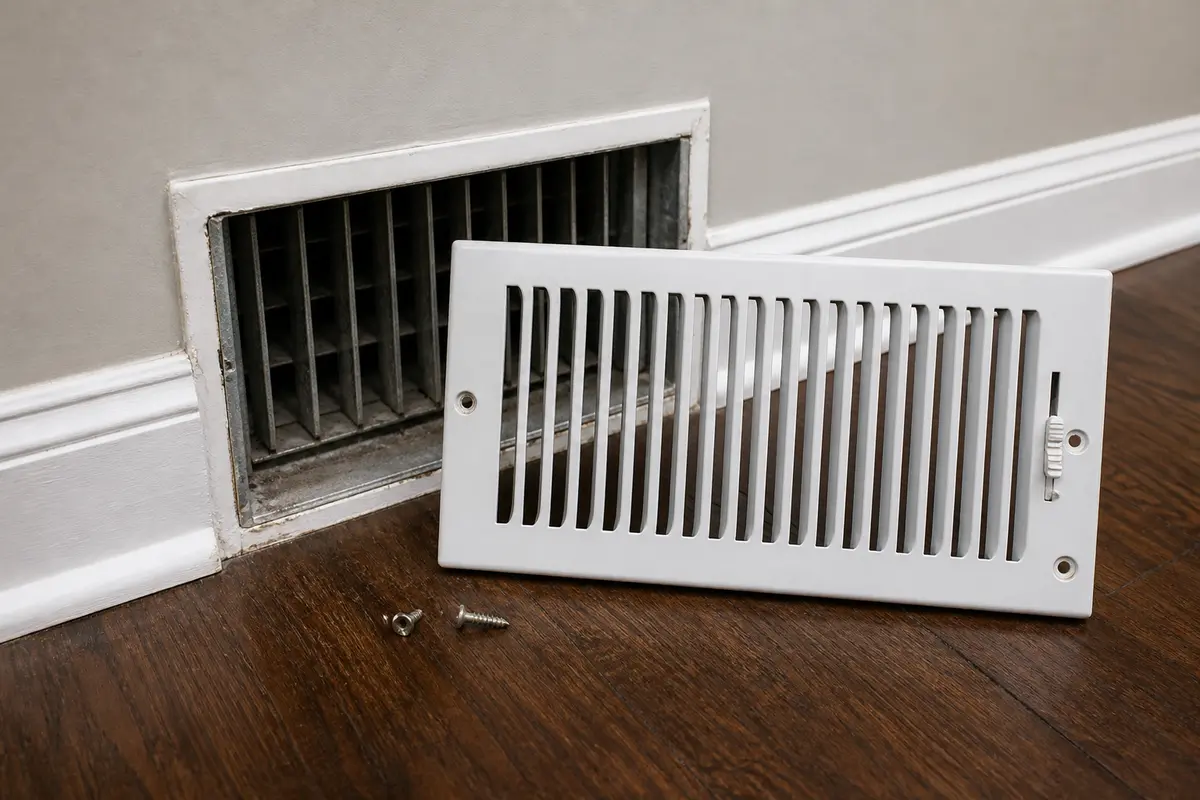
Helps when: The rattle stops or changes when you press the register face, reseat it, or move the built-in damper lever.
Skip it when: The sound stays behind the wall, comes from a trunk line, or airflow checks change the noise more than the cover does.
Compare supply registers on Amazon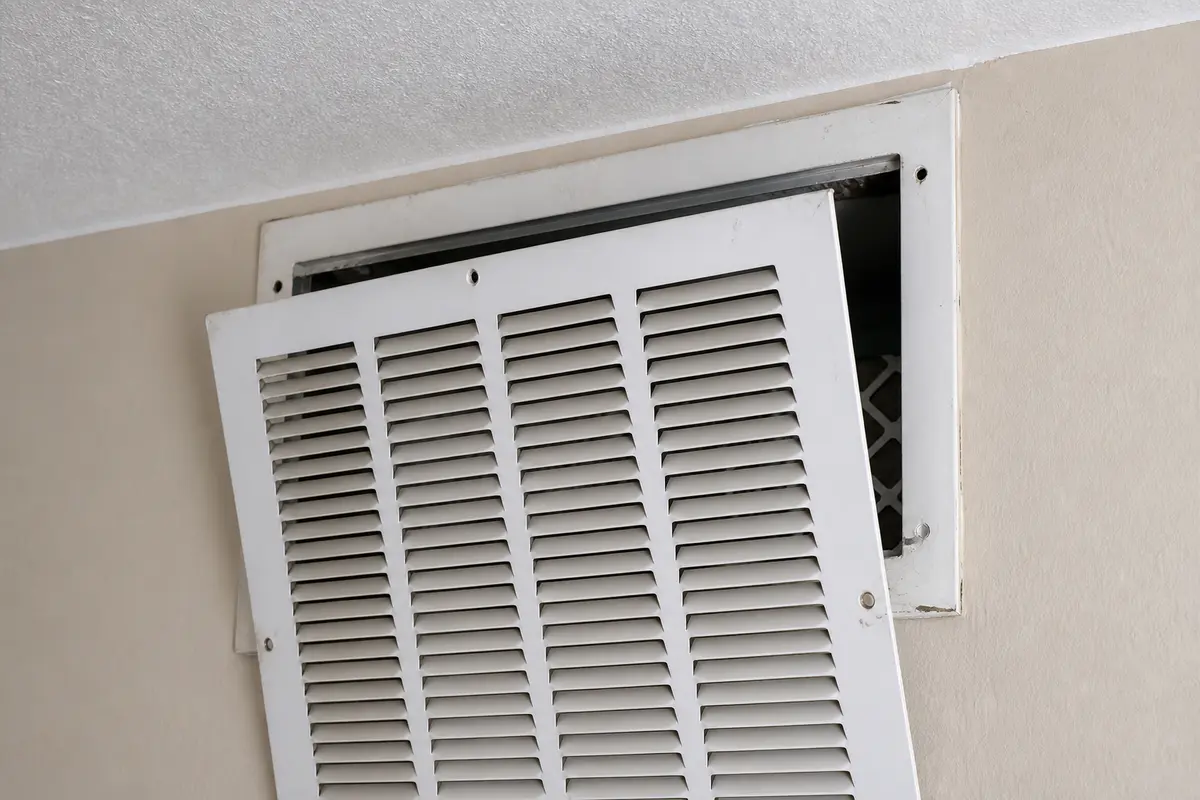
Helps when: The visible grille buzzes, bends away from the wall or ceiling, or screw holes no longer hold it flat.
Skip it when: The noisy part is a supply register damper, hidden boot, or exposed metal duct joint rather than the grille face.
Compare return grilles on Amazon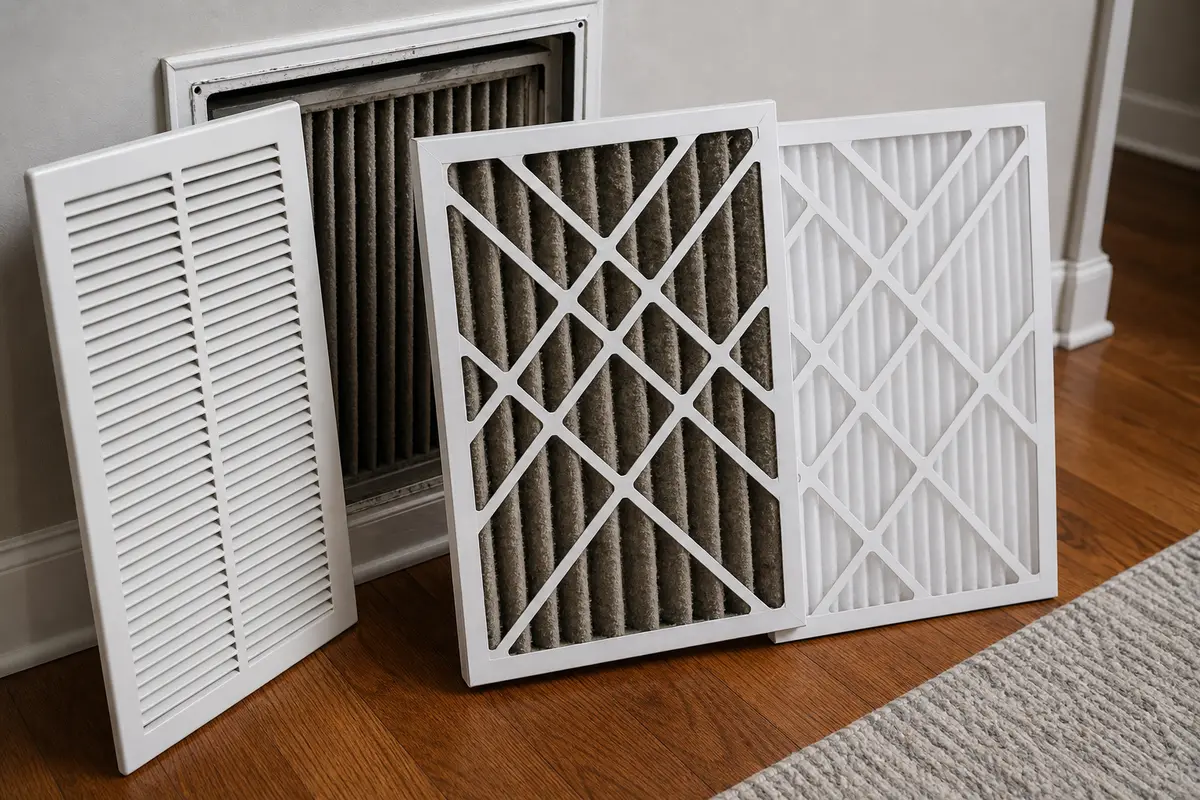
Helps when: The filter is dirty, collapsed, the wrong size, or overdue and the rattle gets quieter after normal airflow returns.
Skip it when: Your filter is clean and correctly fitted, or the noise follows one loose register no matter how airflow changes.
Compare HVAC air filters on AmazonAs an Amazon Associate I earn from qualifying purchases. Repair Riot may earn a commission at no extra cost to you.
These tools support the safe checks at the room opening and visible ductwork. Skip any tool that would pull you into equipment panels or unsafe access.
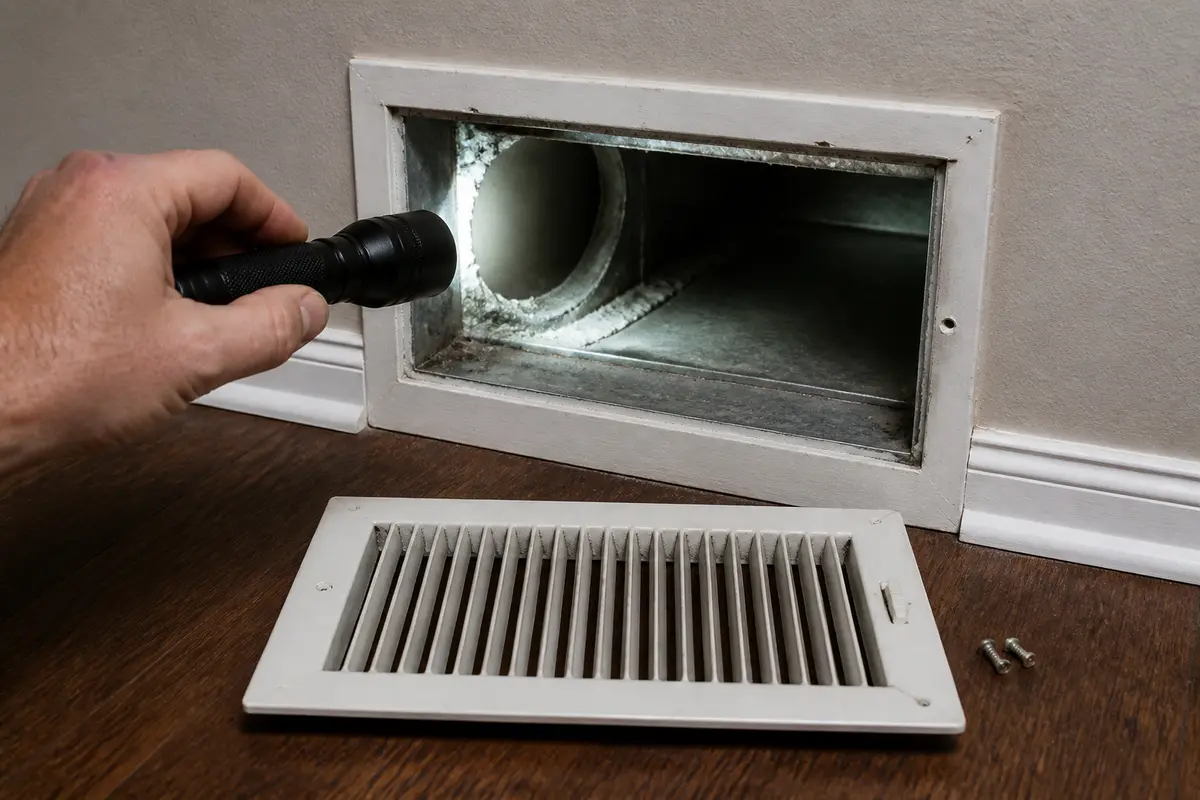
Helps when: You need to look inside a vent opening, spot a loose boot edge, or see a hanger on exposed ductwork.
Skip it when: The vent is too high to reach safely or the rattle is hidden in a finished wall cavity.
Compare inspection flashlights on Amazon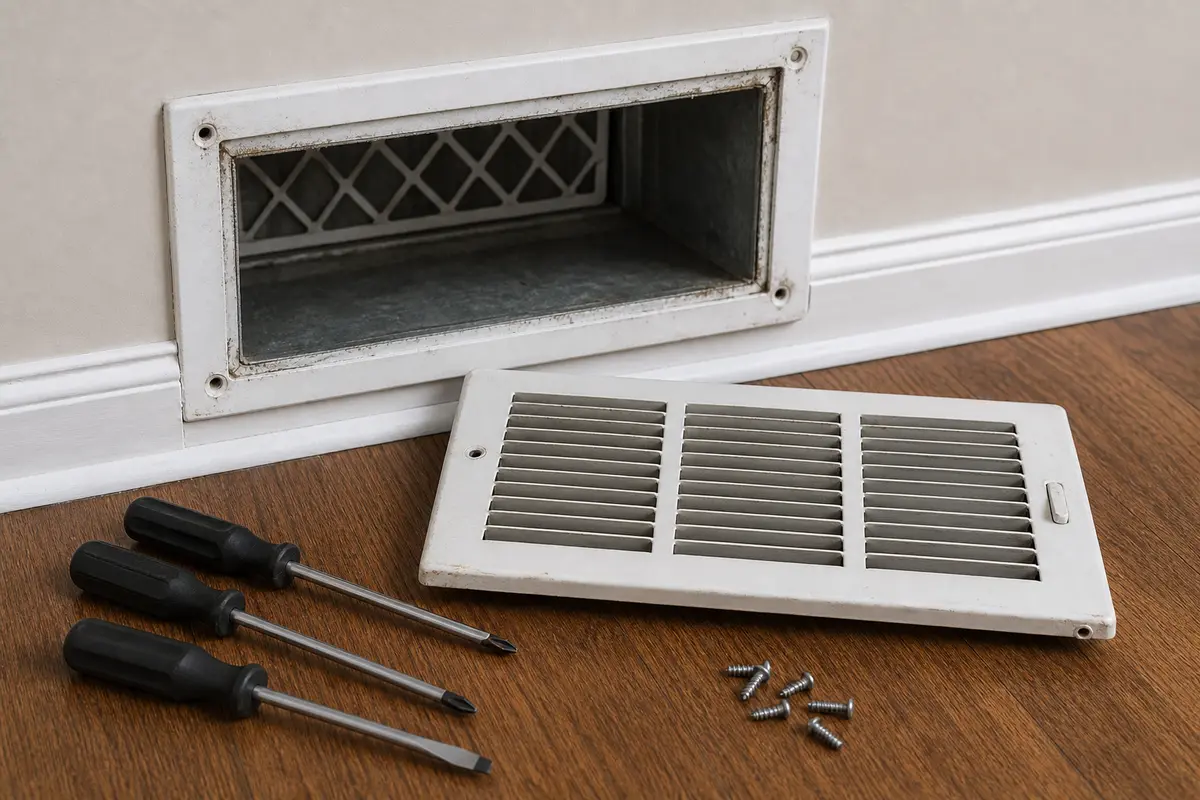
Helps when: The register or grille screws are loose and the cover needs to be removed, reseated, or snugged by hand.
Skip it when: The screws are painted in place, stripped into damaged drywall, or the cover starts tearing the surface.
Compare screwdriver sets on Amazon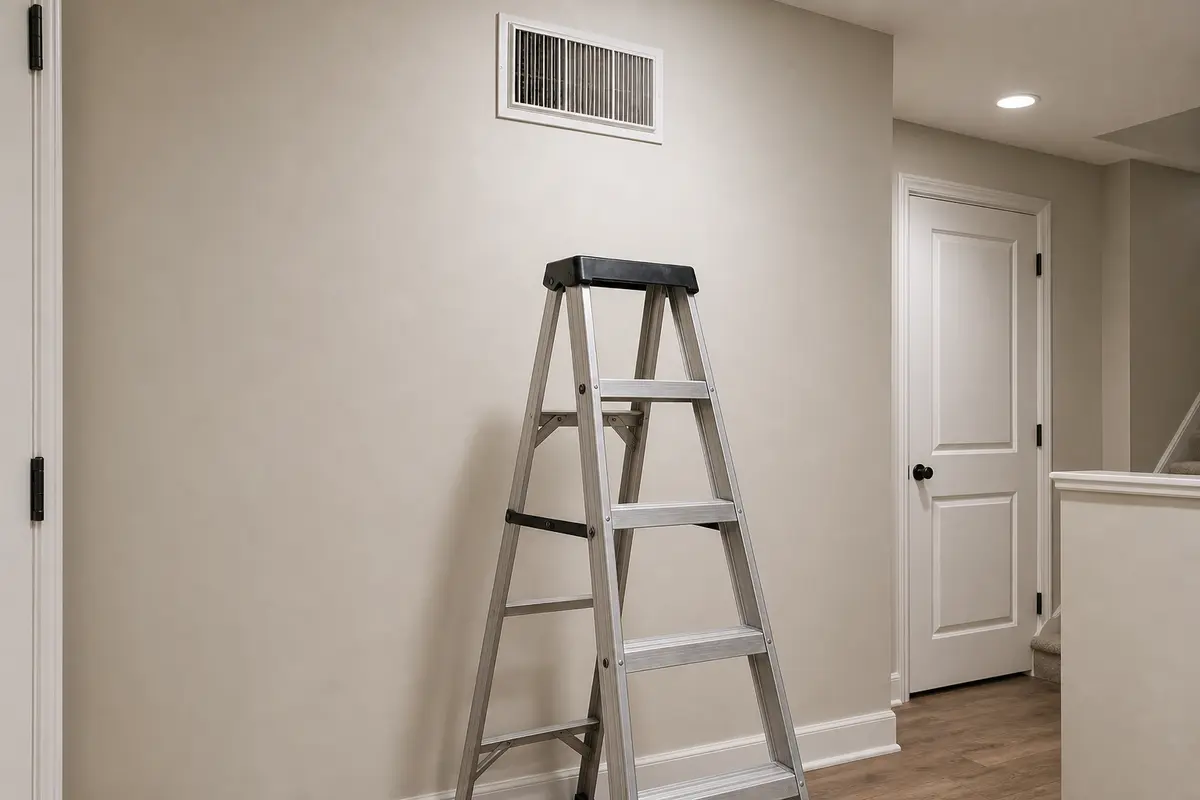
Helps when: A ceiling or high-wall vent is reachable only with a stable ladder and both feet planted.
Skip it when: The vent still requires sideways reaching, attic walking, or working above equipment you cannot safely avoid.
Compare step ladders on AmazonAs an Amazon Associate I earn from qualifying purchases. Repair Riot may earn a commission at no extra cost to you.
Rattling ductwork is a homeowner check until access, safety, or system behavior stops being simple. Those limits matter more than saving one service visit.
Cooling often runs the blower at a speed that makes loose metal easier to hear. Start at the loudest register, open the damper, check the filter, and listen during the first few seconds of startup.
Heat can make sheet metal expand and expose a loose cover. Press the noisy register face, open its damper fully, and listen again at blower startup before blaming the furnace.
Most duct rattles are annoying, not dangerous. Stop the DIY checks for gas smell, burning odor, smoke, sparks, breaker trips, a sagging duct run, or a loose section near hot equipment.
A dirty filter usually does not create a metal rattle by itself, but it can reduce airflow enough to make a weak register, damper, or duct panel louder. Replace an overdue filter before buying vent parts.
No. Closing vents can increase pressure in other parts of the duct system and make the rattle worse. Keep registers mostly open while you find the loose part.
Listen for a tinny buzz or fast chatter at one room opening. Press each register corner, check the screws, and move the damper lever fully open; if the sound changes, repair that cover or damper first.
Do not tape over a vent opening to hide noise. A visible exposed duct seam that has separated needs proper duct sealing materials and support, and hidden or high-access ductwork is a service call.
Replace it only after the sound follows the visible cover. Good clues are a warped face, stripped screw holes, a damper blade that chatters, or a buzz that stops when the cover is reseated flat.
Call when the source is hidden in a finished wall or ceiling, or when exposed duct is sagging, separated, or scraping framing. Also stop if filter and register checks do not change the noise.
Repair Riot built this page around safe homeowner checks: register fit, damper chatter, airflow restrictions, visible duct support, and clear stop points. The sources support duct and filter context; the repair sequence is original guidance.