Is the wood hard when you press it with a screwdriver tip?
Hard, dry wood with shallow tooth marks can usually be scraped, filled with exterior wood filler, primed, and painted.
If the trim is hard, dry, and only lightly gnawed, repair the surface with exterior filler, primer, and paint. If the lower board is soft, split, loose, stained, or chewed out of shape, replace that trim board before water gets behind it.
Most cases are either shallow animal chewing on sound trim or one lower exterior casing board that needs replacement.
Start at the bottom corner and press the chewed edge with a screwdriver tip. If the wood is hard, dry, and only shallowly marked, patch it. If you find softness, staining, gaps, or a missing profile, replace the board and check where water is getting in.
Don’t start with: Do not cover wet, soft, or loose trim with caulk or filler. First prove the wood is sound and the joint still sheds water.
Hard, dry wood with shallow tooth marks can usually be scraped, filled with exterior wood filler, primed, and painted.
Treat it as rot or moisture exposure. Do not patch over it; find the wet area and plan board replacement.
Replacement is usually cleaner than building a large corner out of filler, especially where rain and splashback hit.
Check for water entry before repairing the chewing. Animal damage may have exposed an older failed joint.
Replace just that board when probing shows the frame and sill structure are firm, the flashing is not disturbed, and the nearby siding is sound.
Stop the DIY repair and call a carpenter, window repair pro, or exterior repair contractor before opening more wall.
Look low first. Rabbit chewing usually shows at the bottom edge, where exposed end grain, wet mulch, and open joints can turn cosmetic damage into a water problem.
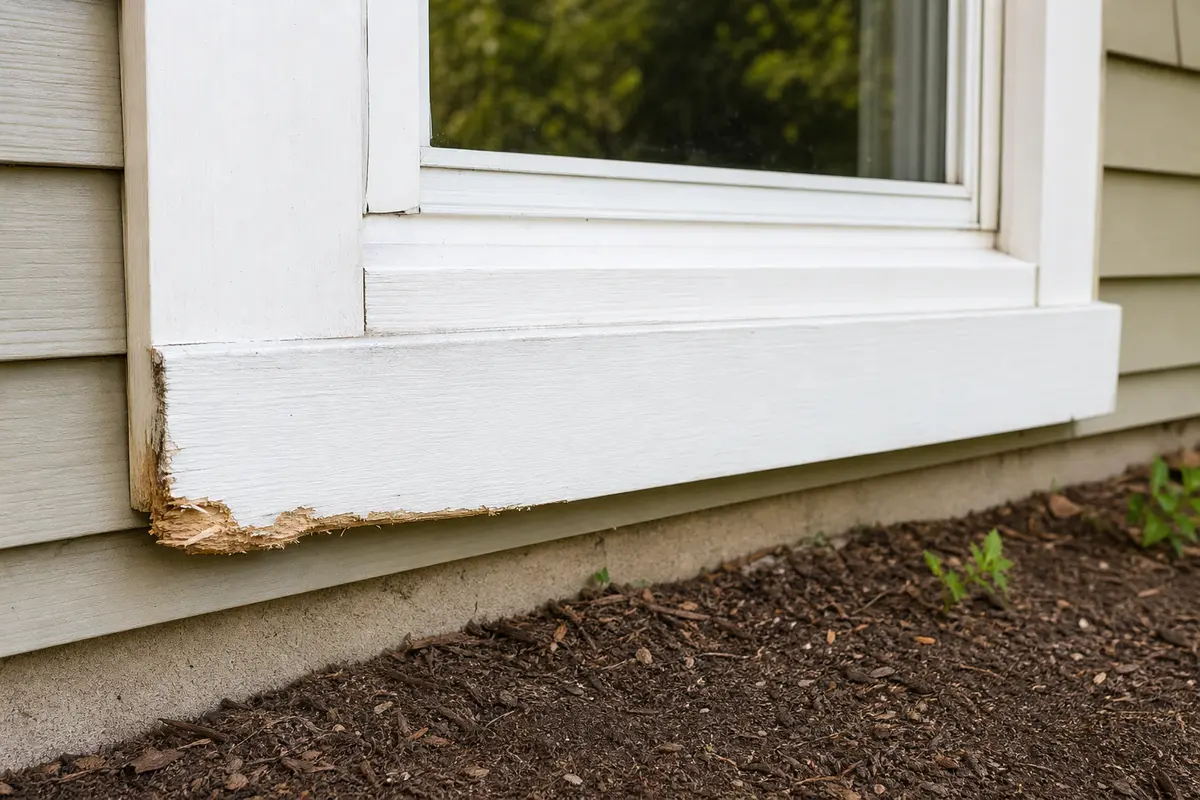
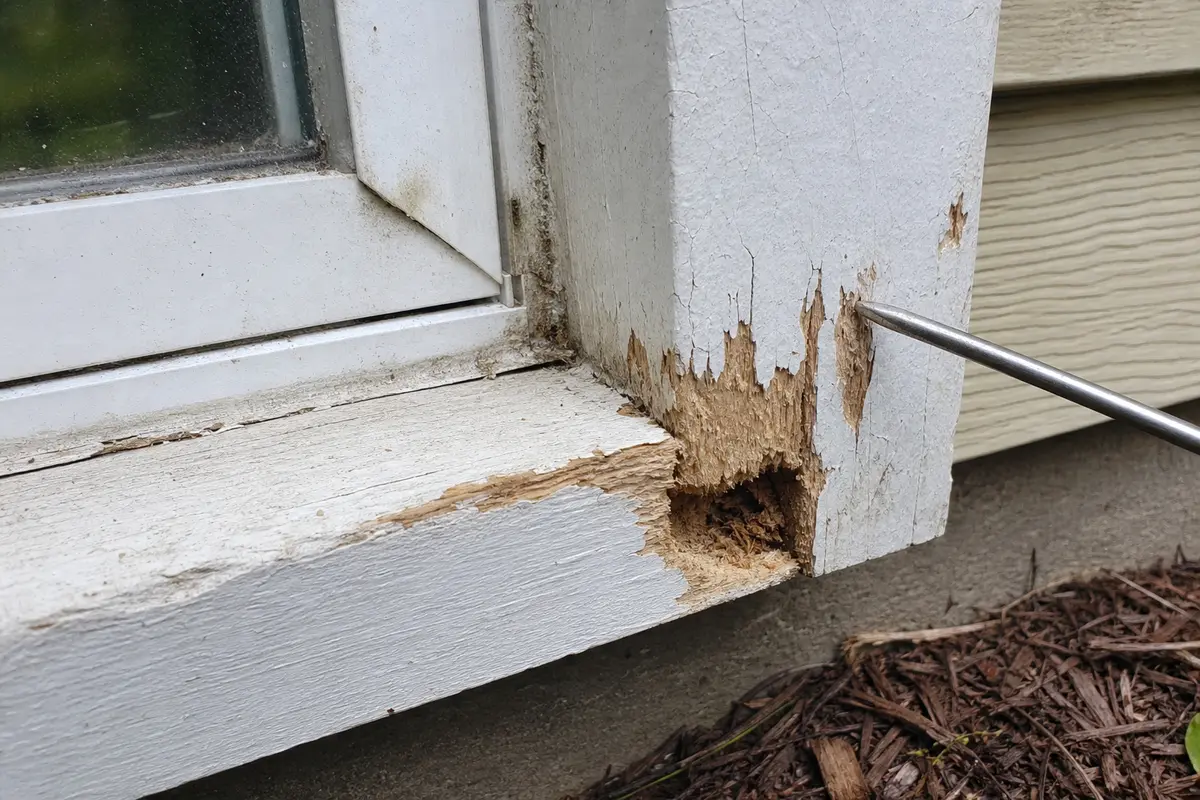
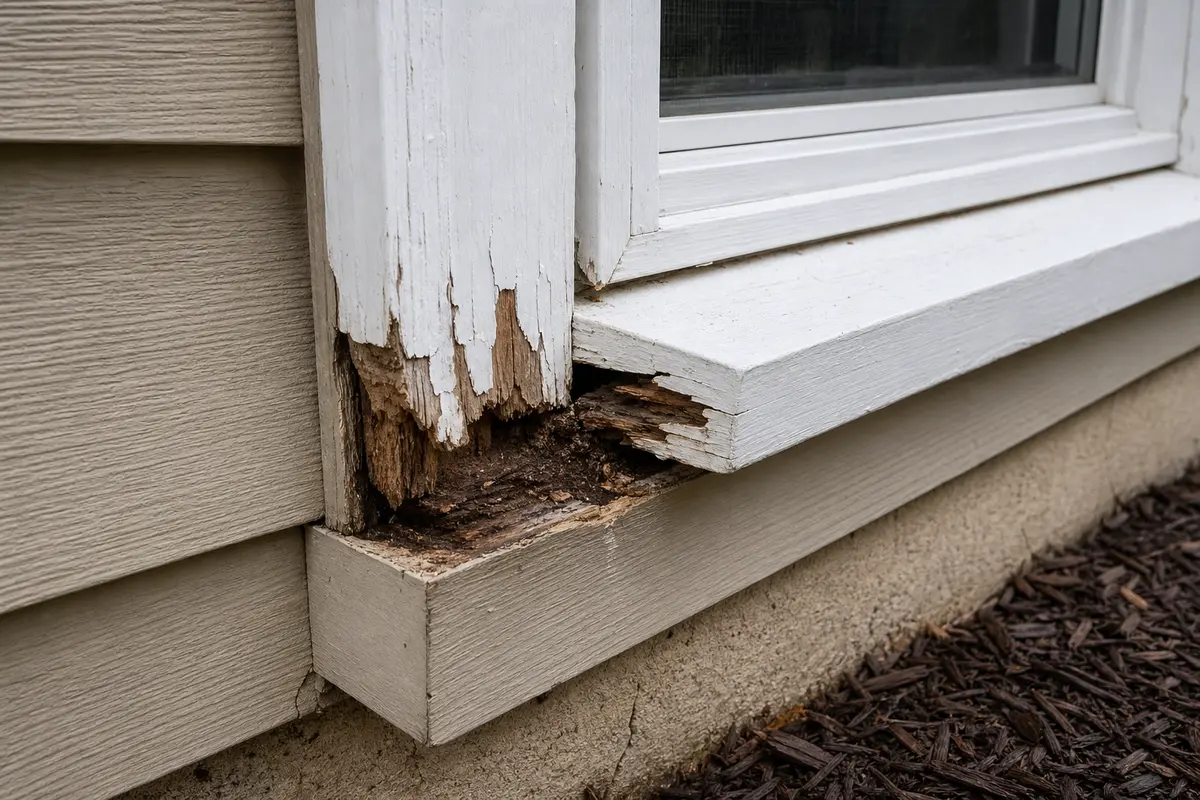
Match the exact repair path first: filler belongs only on hard, dry, shallow damage. A replacement board needs the exact thickness, width, profile, material, and cut-end sealing plan so the new piece sheds water like the old trim.
Rabbit chewing usually starts as low trim damage, but the board condition decides the repair.
The fast-looking repair is the one that usually fails outside.
This one check keeps you from patching rot and calling it rabbit damage.
Use filler only when the repair is shallow enough that the board still does the real work.
Paid links. As an Amazon Associate I earn from qualifying purchases. Repair Riot may earn a commission at no extra cost to you.
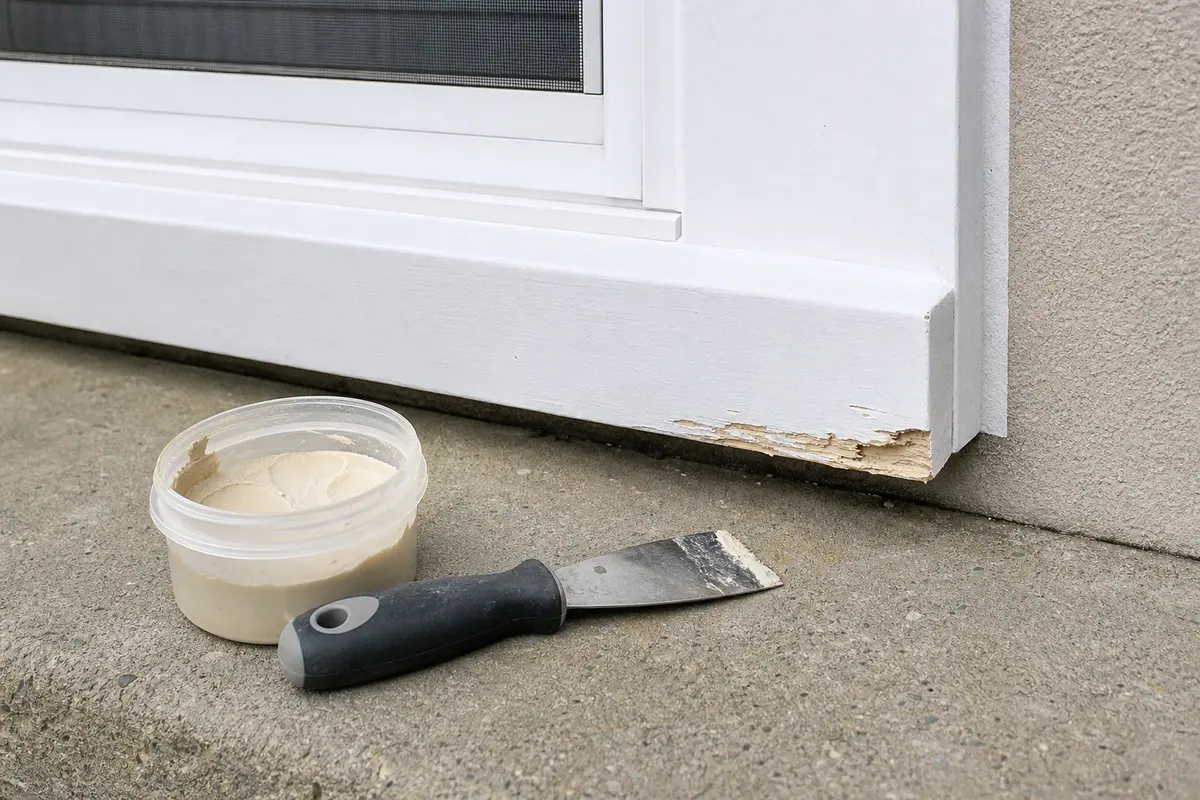
Helps when: The trim is hard, dry, and only shallow tooth marks need rebuilding before primer and paint.
Skip it when: The board is soft, split, loose, deeply notched, or stained at the lower joint.
Compare exterior wood filler on Amazon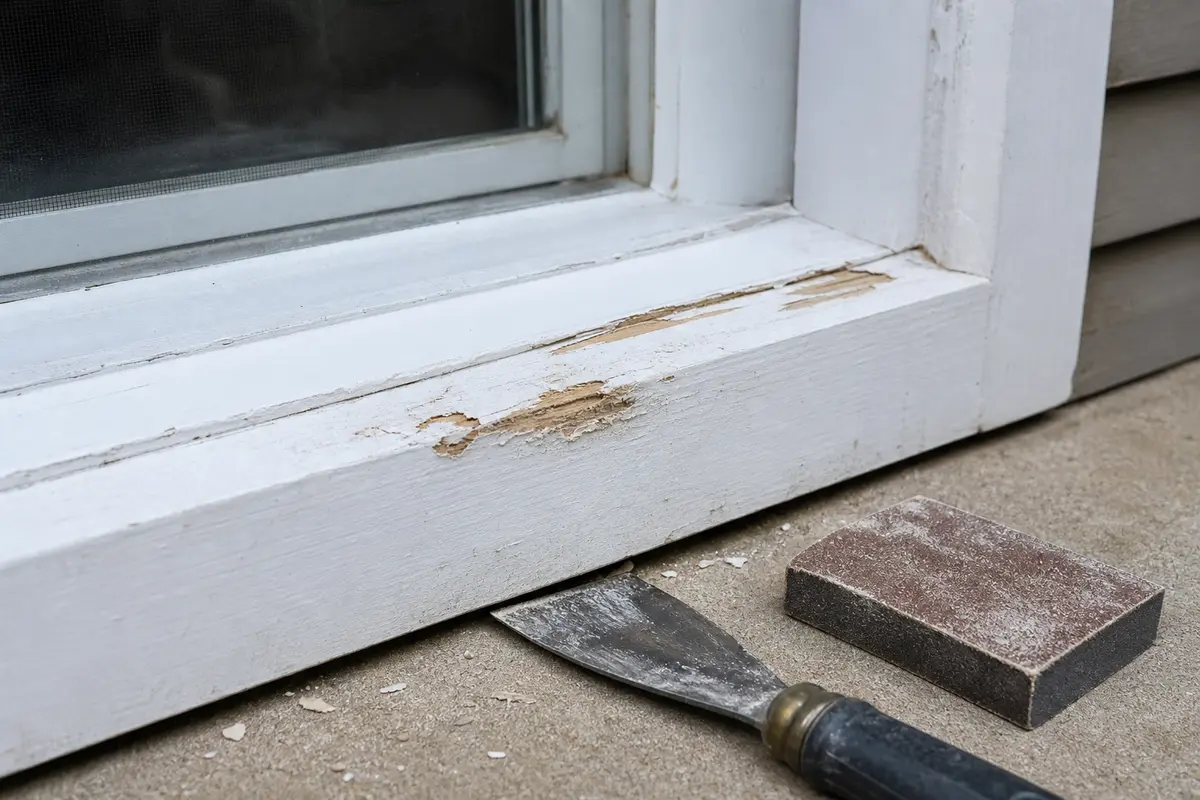
Helps when: You need to remove loose fibers and smooth a small exterior patch after it cures.
Skip it when: Old paint may contain lead and you do not have a lead-safe dust plan.
Compare trim prep tools on AmazonA new trim board is often less fussy than trying to sculpt a missing exterior corner.
The repair lasts longer when the bottom of the window stays dry and less sheltered.
Good notes make the service call shorter and keep the diagnosis focused.
No for missing wood. Caulk belongs in small joints after the board is sound and dry. Use exterior wood filler for shallow solid gouges, and replace the board if it is soft, loose, or deeply chewed.
Probe it with a screwdriver tip. Sound trim feels hard and resists pressure. Rotten trim feels soft, crumbly, or spongy, and the softness often extends past the visible tooth marks.
Usually not. First check whether the chewing stops at the removable exterior casing board. Whole-window replacement only comes into the picture if the actual frame, sill structure, or surrounding wall is soft, cracked, wet, or damaged.
Use an exterior window trim board that matches the old piece's thickness, width, profile, and reveal. Dry-fit it before fastening; it should sit flat, meet the sill and wall cleanly, shed water, and finish like the surrounding trim.
Paint protects the wood, but it does not reliably stop chewing by itself. After the repair cures, check for damp mulch or cover at the base. Pull that back, keep drainage open, and add a simple barrier if fresh marks show up.
Not always. If weather can reach raw wood, exposed end grain, or soft trim, move the repair up the list. Probe the lower corner and check it after the next rain; if it stays damp or stains again, fix the water path before you repaint.
Filler can work when the board still has a firm edge, the gouges are shallow, and the patch can be shaped without leaving a water-catching shelf. If the corner profile is gone, the patch would be thick, or the lower end is open to water, replace the board.
PVC can make sense for one replacement board if it matches the existing thickness, width, and profile and can be detailed to shed water. Do not switch materials if it leaves a proud edge, open joint, or mismatched reveal.
Look for fresh staining, damp trim, swollen paint edges, or a musty smell inside near the window. If the area gets wet again, fix the water path before repainting or adding more filler.
This page separates animal chewing from exterior trim failure with checks a homeowner can make without opening a wall. Start with wood hardness, missing profile, open joints, and staining, then confirm whether the damaged piece is separate casing or part of the window frame.