Water spills from a yard grate
The basin fills and water rolls across the lawn or driveway during heavy rain.
Start here: Clear the grate and basin first, then prove the outlet or pop-up emitter opens.
If storm drains overflow near your home, first decide whether you are dealing with your private yard drain or a public storm drain. Clear safe debris from private grates and outlets, check the pop-up emitter or discharge point, and stop if water is moving fast, the street inlet is involved, or the drain may be city-maintained.
The most common homeowner-side causes are a leaf-packed grate, a catch basin full of silt, an outlet buried in mulch or turf, or a pop-up emitter stuck shut.
Overflow during a hard rain does not always mean the pipe failed. It can be a blocked inlet, blocked outlet, partial pipe restriction, or a system that is simply undersized for the storm. Work from visible and safe checks first.
Don’t start with: Do not start by digging up pipe or opening a street storm drain. Prove the visible inlet and outlet are open, and call public works for curb inlets or municipal drains.
Start with the parts you can see. A blocked grate, full basin, buried outlet, or stuck pop-up emitter can mimic a failed buried drain.
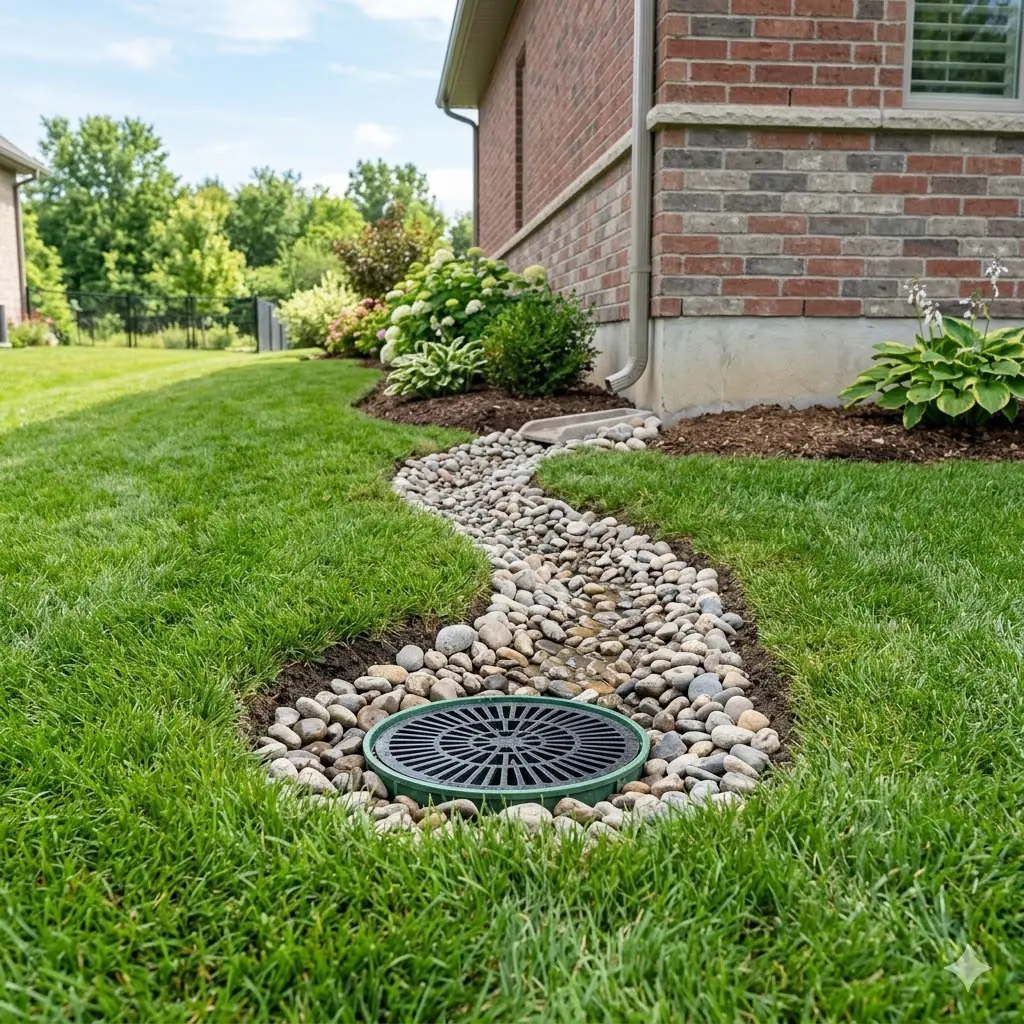
The basin fills and water rolls across the lawn or driveway during heavy rain.
Start here: Clear the grate and basin first, then prove the outlet or pop-up emitter opens.
Water is coming out of a public curb inlet or city storm drain.
Start here: Keep clear of moving water and contact the local stormwater or public works department.
The drain eventually empties, but it cannot keep up during the storm peak.
Start here: Look for partial restriction and capacity limits before assuming the buried pipe collapsed.
The inlet fills up even though the grate is clear, and the discharge end is covered by mulch, turf, leaves, or mud.
Start here: Find the outlet and clear it before assuming the buried line is collapsed.
This is the most common field problem. Water cannot enter fast enough, so it ponds and spills over even if the pipe itself is mostly open.
Quick check: Lift or inspect the grate and look for a leaf blanket, roof grit, mulch, mud, or landscape fabric blocking the opening or basin sump.
A blocked outlet makes the whole line back up from the far end. Storm water has nowhere to go, so the basin can fill from below and spill at the grate.
Quick check: Find the discharge point and look for no flow, weak dribbling, a stuck pop-up emitter, or an outlet buried in soil, sod, mulch, or washed-in debris.
If the drain stays full after rain or works only briefly before backing up, the line may be holding water and sediment in one section.
Quick check: After the storm, check whether the basin still has standing water and whether probing or flushing meets resistance partway through the run.
When the system only fails in major storms and clears afterward, the line may be open but overwhelmed by roof water, slope runoff, or too few inlets.
Quick check: Notice whether the outlet flows strongly during the storm but the yard still ponds because more water is arriving than the drain can move.
A buried drain cannot work if the opening is matted over with leaves, mulch, or roof grit. This is the fastest, least destructive check.
If water now enters freely and the basin no longer ponds in ordinary rain, the problem was at the inlet. If the basin fills quickly or backs up even with a clean top, move to the outlet next.
A clean grate with poor drainage usually points downstream, not at the surface opening.
The outlet is the other common failure point. If it is buried or blocked, the whole buried drain acts clogged.
If the outlet was buried or jammed and now flows strongly, you likely found the main problem. If little or no water reaches the outlet, the restriction is likely in the line or the system is holding water in a low spot.
A dead or weak outlet with a clean inlet usually means the buried run is restricted or damaged somewhere between the two ends.
These two look similar during a storm, but the fix is different. A clog needs cleaning or repair. A capacity problem needs water-path changes, not random parts.
If the pattern clearly points to overload, focus on redirecting water, adding surface relief, or reducing what enters this one line. If the pattern still looks like a restriction, keep working the line before changing the yard layout.
Once the inlet and outlet are ruled out, the next likely problem is a section underground that is packed with sediment, invaded by roots, or holding water in a belly.
If you identify one short trouble spot, you can target that area for repair instead of replacing the entire drain. If you cannot isolate the section or the line appears collapsed, root-packed, or badly settled, bring in a drainage contractor with inspection equipment.
Once you know whether the trouble is at the grate, outlet, or one short section of line, the fix gets a lot simpler and cheaper.
A good result: If the basin drains cleanly and the outlet runs strong, the repair path is confirmed.
If not: If overflow returns even after a clear inlet, open outlet, and localized repair, the system likely needs a layout or capacity redesign rather than another random replacement.
The right fix depends on where the water is getting trapped. Repair the exact choke point, then retest before adding more drainage hardware.
As an Amazon Associate I earn from qualifying purchases. Repair Riot may earn a commission at no extra cost to you.
Usually because the line cannot move water out as fast as it arrives. That can be from a partially blocked outlet, a line that is only partly open, or simply too much runoff being sent to one drain during cloudbursts.
Not automatically. A clear grate with overflow often points to the outlet first. Many buried drains back up because the discharge end is buried in mud, mulch, or turf, not because the whole line has failed.
Watch what happens after the storm. If the basin stays full for a long time, think restriction. If it drains down fairly soon and the outlet runs hard during the event, the line may be open but overwhelmed by the amount of runoff.
Yes, for basic testing and light debris. A hose is useful for proving whether water reaches the outlet and whether the basin drops normally. If water quickly backs up, bubbles out of the grate, or the line stays full, stop short of forcing the issue and move toward targeted repair or professional inspection.
Usually no. Start with the grate, basin, and outlet, then look for one localized bad section. Full replacement makes sense only after you know the line is broadly collapsed, badly settled, or too small for the runoff it handles.
That usually means the water path across the yard is the problem, not just the drain hardware. The inlet may be too high, too small, or receiving more sheet flow than one point drain can capture. Fix the grading or runoff path instead of adding random pipe.