Code started after snow, wind, rain, or yard work?
Check the outdoor intake and exhaust ends first. Debris, snow, ice, lint, or a blocked screen can trigger E110 quickly.
Navien E110 is an abnormal-air-pressure shutdown. Start outside: turn the heater off, check the intake and exhaust terminations for debris, ice, or a packed screen, then look for condensate backup or visible vent damage before buying parts.
A blocked termination, clogged intake screen, backed-up condensate path, or sagging vent pipe fits the code better than a failed board.
Use the code as a sorting tool: outside blockage first, drainage second, visible vent condition third, internal airflow diagnosis last.
Don’t start with: Do not keep resetting, alter vent pipe, open sealed combustion parts, or touch gas components. Gas smell or exhaust smell means stop and call a pro.
Check the outdoor intake and exhaust ends first. Debris, snow, ice, lint, or a blocked screen can trigger E110 quickly.
Stop resetting. A repeat code with clear vent ends points to condensate, vent slope, pressure sensing, blower, or combustion-side diagnosis.
Look for a partial vent restriction, condensate drainage problem, or sagging visible vent run before suspecting a control part.
Check for a kinked tube, full neutralizer, blocked outlet, or vent low spot. Stop if water reaches wiring or the cabinet interior.
Do not label openings by pipe direction. Compare wall penetrations, elbows, and opening direction with the exact model's termination diagram. If they do not match, leave the heater off and call a qualified tech.
Shut the heater down, leave the area if fuel odor is present, and call a pro. Do not restart for another test.
The vent pictures are representative two-pipe examples, not an identification guide. Use your exact model manual to identify intake and exhaust before clearing anything; keep the heater cabinet closed.
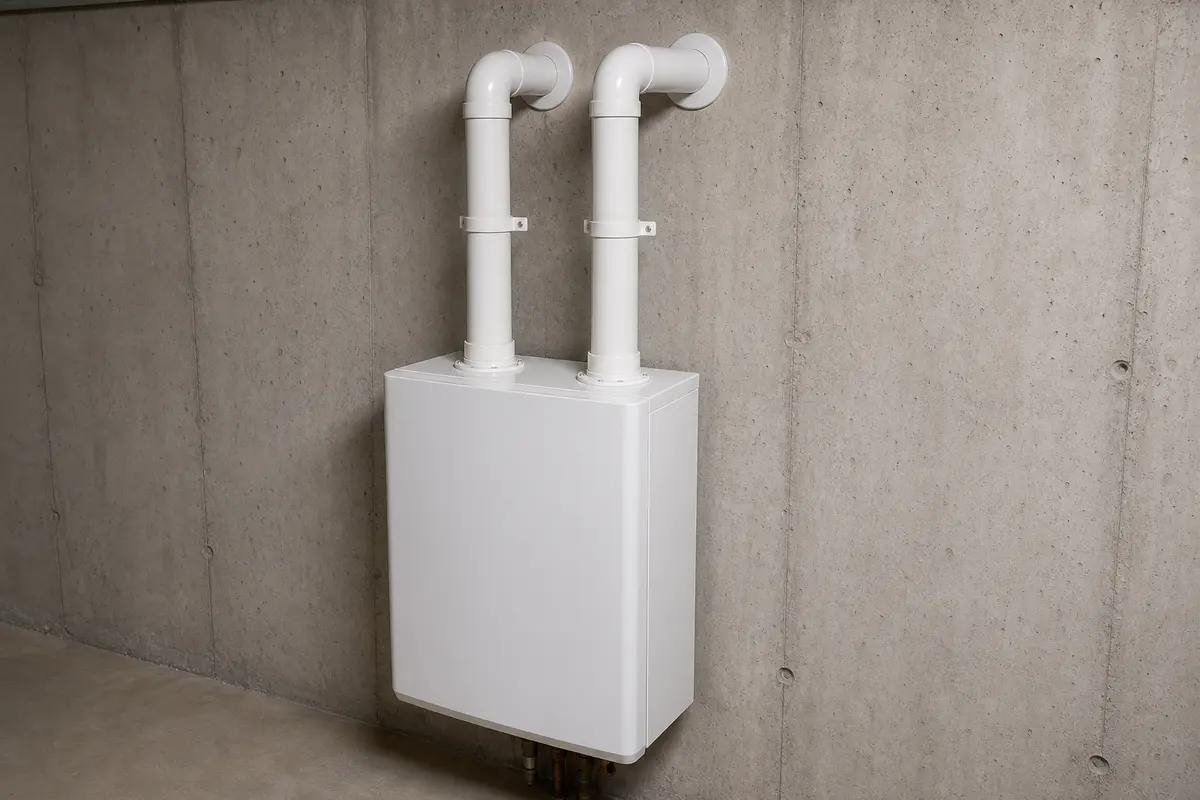
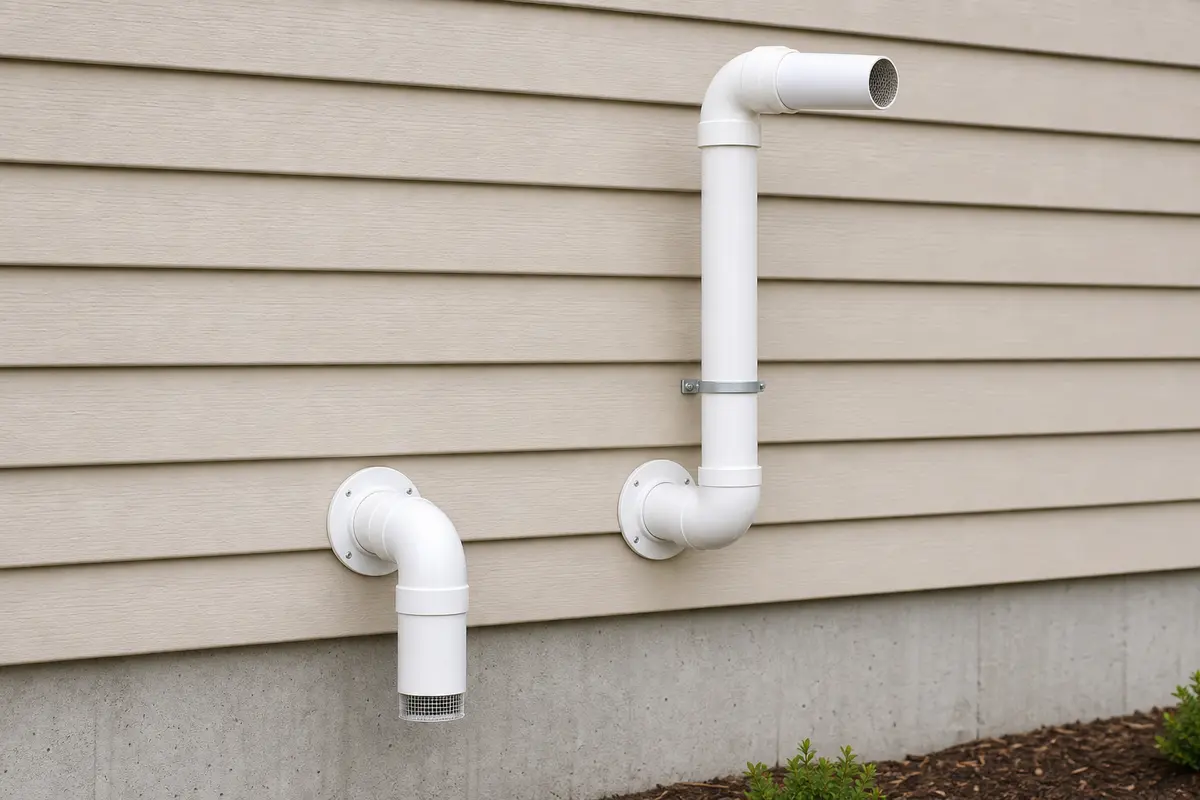
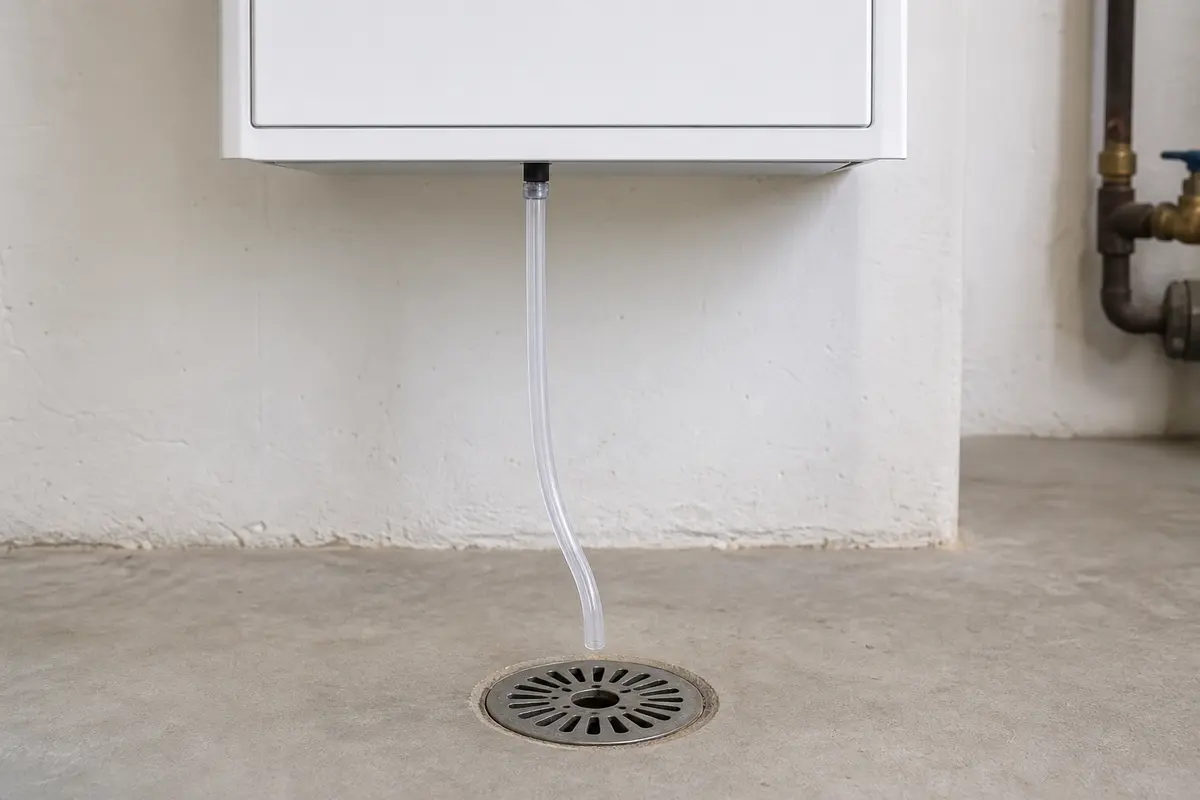
Match the exact Navien model and the confirmed diagnosis. E110 does not mean a blower, board, or sensor should go in the cart. Buy maintenance items only after a visible test points there: blocked vent end, kinked condensate tube, spent neutralizer media, or a confirmed service finding.
Navien E110 is about air pressure and combustion airflow, not a random electronics failure. A good clue is timing: weather, yard debris, or recent vent work points outside before parts.
Usually, the safe move is to treat E110 as an airflow shutdown, not a combustion-appliance repair experiment. Gas smell during any check means stop and call a pro.
Stay with checks you can do with the heater off and the cabinet closed. Watch for debris, water marks, and shifted vent supports before the clue moves into service work.
The result should tell you whether this was a simple outside restriction or a service call. Do not use repeated resets as a test method.
| What you find | What it means | Next move |
|---|---|---|
| Debris, snow, ice, lint, or nest at vent end | Likely intake or exhaust restriction | Clear only reachable loose material, restart once, and watch for repeat E110. |
| Kinked condensate tube or blocked neutralizer outlet | Condensate may be backing up into the wrong path | Correct only simple visible kinks or blocked outlets; call service if water is inside the heater. |
| Termination differs from the picture, or intake and exhaust are unclear | The two-pipe example is not enough to identify your vent layout | Match the exact model manual; if the openings are still unclear or unsafe to reach, leave the heater off and call qualified service. |
| Vent sag, loose joint, scorching, or melted pipe | Unsafe venting or exhaust issue | Leave heater off and call a qualified tankless service tech. |
| Vent ends look clear but E110 returns | Internal pressure, blower, sensor, or hidden vent issue | Stop buying parts and schedule diagnosis. |
| Fuel odor or carbon-monoxide alarm | Immediate life-safety issue | Leave the area and call emergency services, the utility, or a qualified pro. |
These tools are for visual inspection and gentle exterior clearing. They do not make combustion, vent, or fuel-system repairs DIY-safe; call a pro for those.
Call sooner when the clue touches gas, exhaust, carbon monoxide, hidden venting, or internal pressure sensing.
A real fix clears the code without repeated resets and leaves the vent, condensate, and combustion paths safe.
No. Do one restart only after checking the outdoor vent openings and obvious condensate clues. If E110 returns, leave the heater off and schedule service.
Not by itself. Blocked vent terminations, condensate trouble, or visible vent issues come first. A blower or pressure-sensing fault needs diagnosis before parts are ordered.
Yes. Snow, ice, wind-driven debris, and frozen condensate can block airflow or drainage. Check the vent ends from the ground before opening the heater.
No. The code is tied to combustion airflow or exhaust movement. Treat it as a safety shutdown until the cause is found and corrected.
Do not keep testing. Leave the area, avoid switches or flames, and call the gas utility or call a pro.
Leave the building and call emergency services. Do not troubleshoot the heater indoors while a carbon-monoxide alarm is active.
You can clear loose debris at a safe ground-level termination with the heater off. Do not reach deep into the pipe, climb onto a roof, or alter the venting.
Tell them when E110 started, whether it followed weather or vent work, what you found at the vent ends, whether condensate looked backed up, and whether one restart changed anything.
This page uses Navien manual context, combustion-airflow safety rules, and public carbon-monoxide safety guidance. Sources are used for diagnosis boundaries, not copied wording.