Is water visible on the floor?
Shut off both supply valves, unplug only with dry hands, dry the floor, and find the first wet edge before restarting.
A Miele washer Waterproof System Activated message usually means the base leak tray found water, not that the control board failed. Look for a seeping fill hose, drain-hose splash, dispenser suds, or a pump-filter cap that was not seated cleanly.
The usual clues are a seeping fill hose, drain-hose splash-out, dispenser overflow from suds, or a pump-filter cap that is not seated cleanly.
If the floor, outlet, or plug is wet, shut off water and power first. Then dry the area and watch for the first fresh mark during fill.
Don’t start with: Do not start with a control board, drain pump, or random reset. Find the wet path first.
Shut off both supply valves, unplug only with dry hands, dry the floor, and find the first wet edge before restarting.
Watch the inlet hose couplings, wall valves, rear inlet area, and detergent drawer. Fill-time leaks usually leave fresh beads or soap tracks.
Watch the drain hose, standpipe or laundry sink, lower pump-filter access, and floor under the front corners.
Clean the drawer and cavity, reduce detergent, and run a controlled empty rinse before buying parts.
Treat it as an active or hidden leak. Stop resets and schedule internal inspection if outside checks stay dry.
The display tells you the washer is protecting itself from a leak condition. The repair starts with visible water clues: floor trail, pump-filter seep, hose connection, standpipe splash, or dispenser overflow.
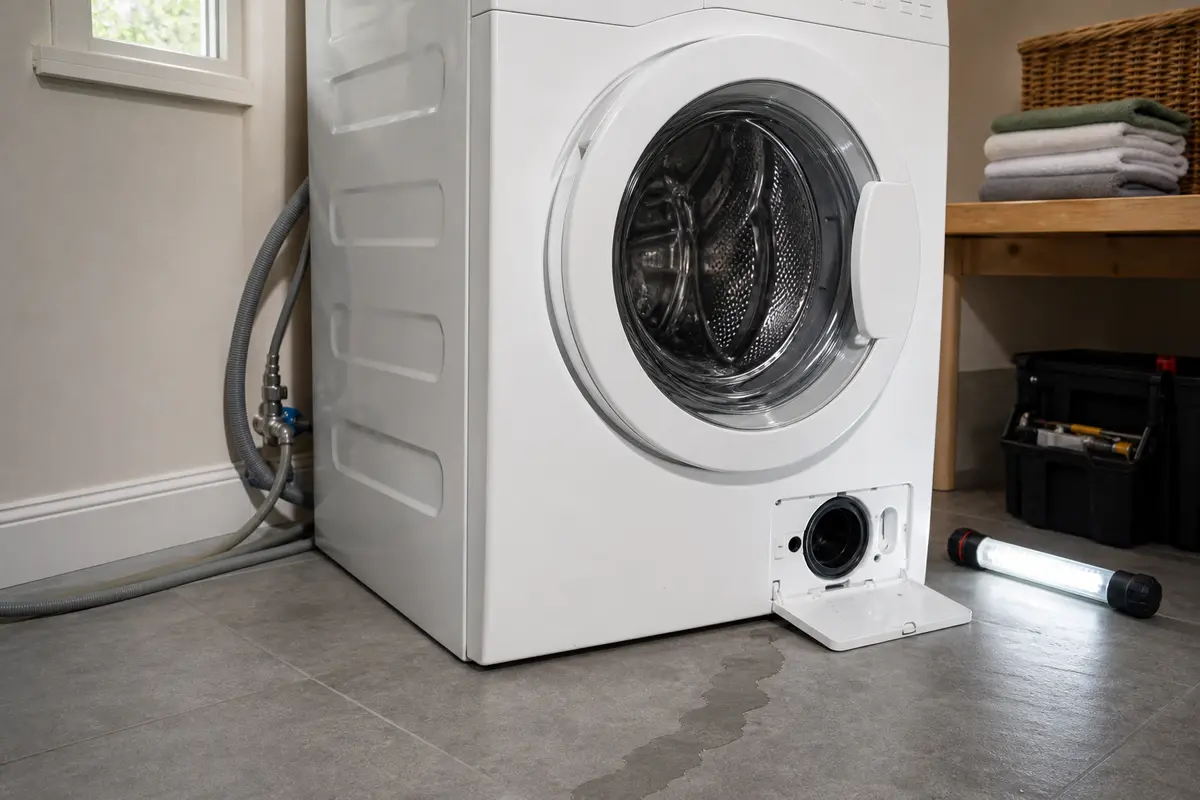
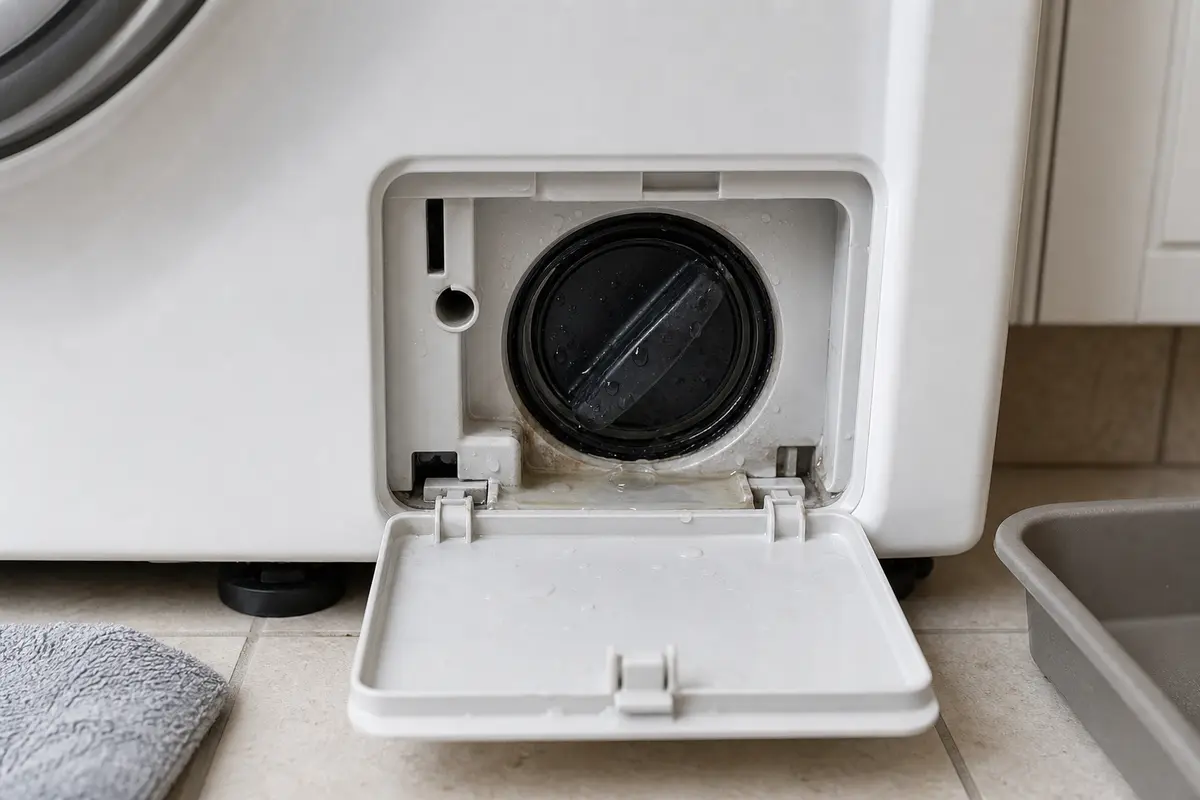
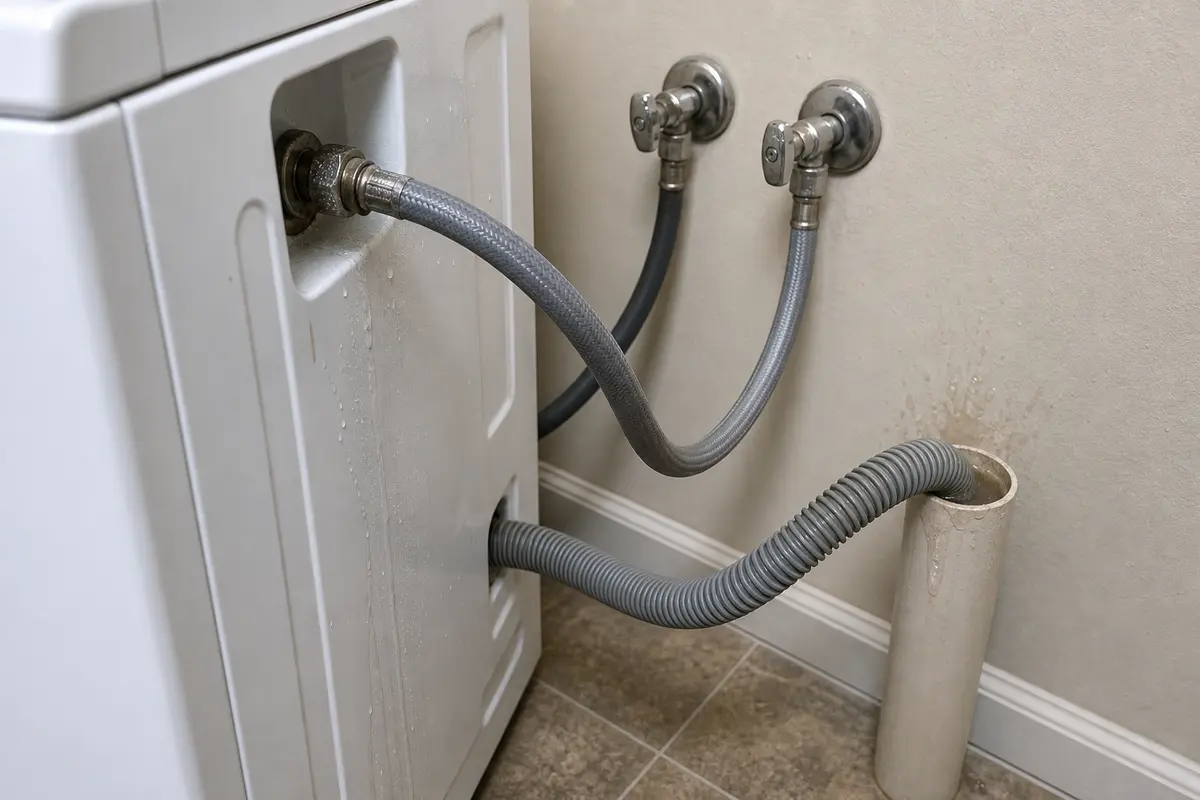
Copy the full Miele model number first. Hoses, caps, seals, and internal leak parts vary by model, and this warning often comes from water in the wrong place rather than a failed electronic control. Dry the area, watch when the warning returns, and buy only when the wet mark names the part: fill-hose beads, drain-time splash, dispenser overflow, or pump-filter seepage.
Treat Waterproof System Activated as a leak-protection message, not a random code to clear. The machine is telling you to prove where water went before you run another load.
A waterproof warning gets expensive when the first move is parts shopping or repeated resets. Keep the first pass slow, dry, and visible.
Work from the outside in. Most homeowner-safe clues are visible without opening the cabinet.
The minute the warning appears matters. A watched empty rinse can separate fill, suds, drain, and hidden-leak clues without guessing.
| When it happens | What it usually points toward | Next move |
|---|---|---|
| Right as the washer fills | Fill hose coupling, wall valve, rear inlet area, or dispenser overflow | Dry the fittings, watch for fresh beads, and clean the drawer path |
| After suds build up | Too much detergent, wrong detergent, or dispenser buildup | Clean the drawer, reduce detergent, and retest with an empty low-suds rinse |
| During drain or spin | Drain hose leak, standpipe splash-out, pump-filter cap, or lower pump area | Watch the drain route and lower access area through the whole pump-out |
| Immediately after drying and restart | Water still in the base pan or a hidden internal leak | Stop repeated resets and schedule service if outside points stay dry |
| With water supply still off | Moisture may still be triggering the base sensor, or the sensor area needs inspection | Leave it off and let service inspect the base and leak-sensing area |
Once the visible cause is corrected, the washer may still need time for trapped moisture to dry. The second result is the useful one.
These tools support visible leak checks. They are not a reason to open sealed panels, touch wet electrical parts, or run the washer with guards removed.
Only after the floor, hoses, dispenser area, drain path, and pump-filter area are dry and checked. A reset without a leak check can put water back into the base and bring the warning right back.
Water can be sitting inside the washer base pan instead of out on the floor. A short dispenser overflow, pump-filter seep, or small hose drip may be enough to trip the float or leak sensor.
Yes. Oversudsing can push foam and water out of the dispenser or vent paths. Look for soap tracks below the drawer and retest later with the correct detergent dose.
Do not tip it aggressively. Miele washers are heavy, hoses can kink, and water can move toward electrical areas. Dry what you can reach safely, then call service if the warning will not clear.
Not automatically. A drain pump belongs on the list only after the pump-filter cap is seated, the hose route is dry, and the leak timing points to the lower pump area.
Fill-time trouble usually points toward the inlet hose connections, water valve area, dispenser overflow, or suds pushing water forward. Dry the area and watch the first fill closely.
Drain-time trouble points more toward the drain hose, standpipe splash-out, pump-filter cap, or lower pump area. Watch the full drain path instead of starting with a control board.
Run one small watched test load first. If the floor, hose connections, dispenser front, and lower access area stay dry, the event may have been a one-time overflow. Stop again if any moisture returns.
Call service if water reaches wiring or the outlet, the warning returns after visible checks, a supply valve will not shut off, or the repair needs cabinet teardown or leak-sensor access.
Repair Riot built this page around the homeowner-visible checks that change the repair decision: active water, fill timing, drain timing, suds overflow, pump-filter seepage, and whether the warning returns after drying. The sources below support washer-use, moisture, and indoor-air context; exact Miele access steps still depend on the model tag.