Does one pan fail everywhere?
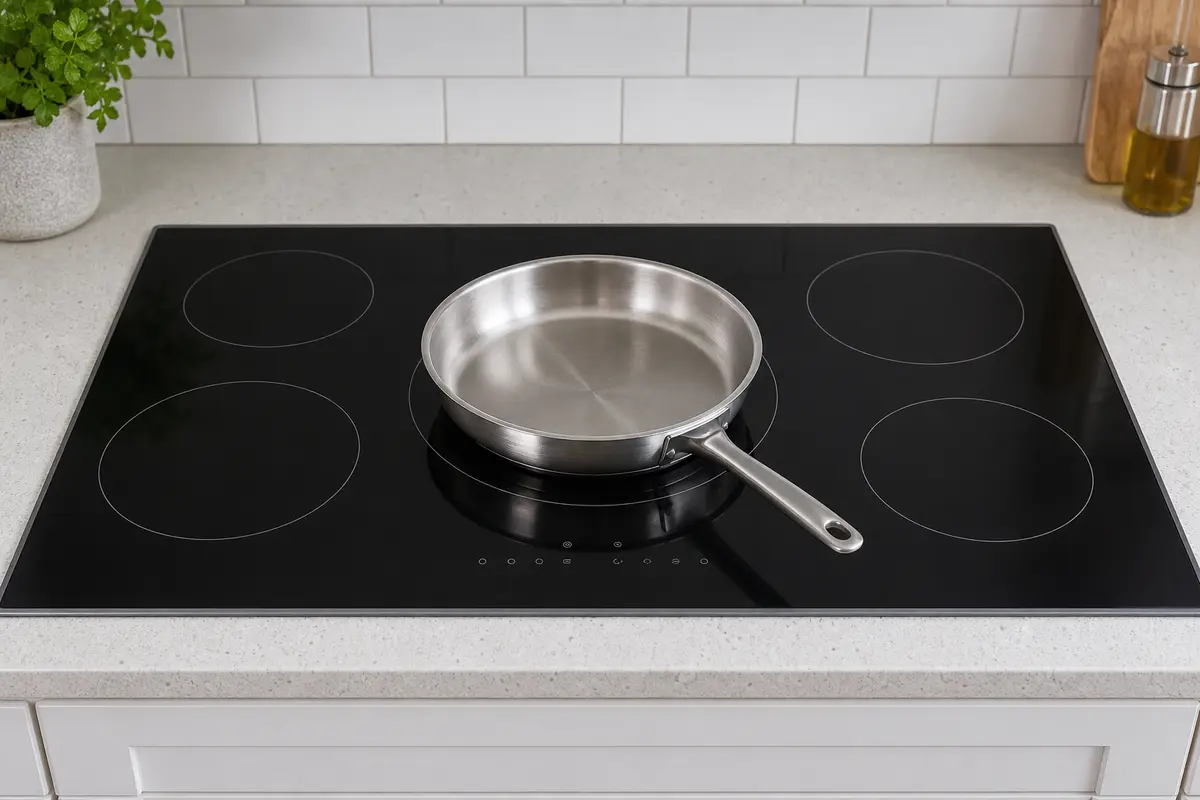
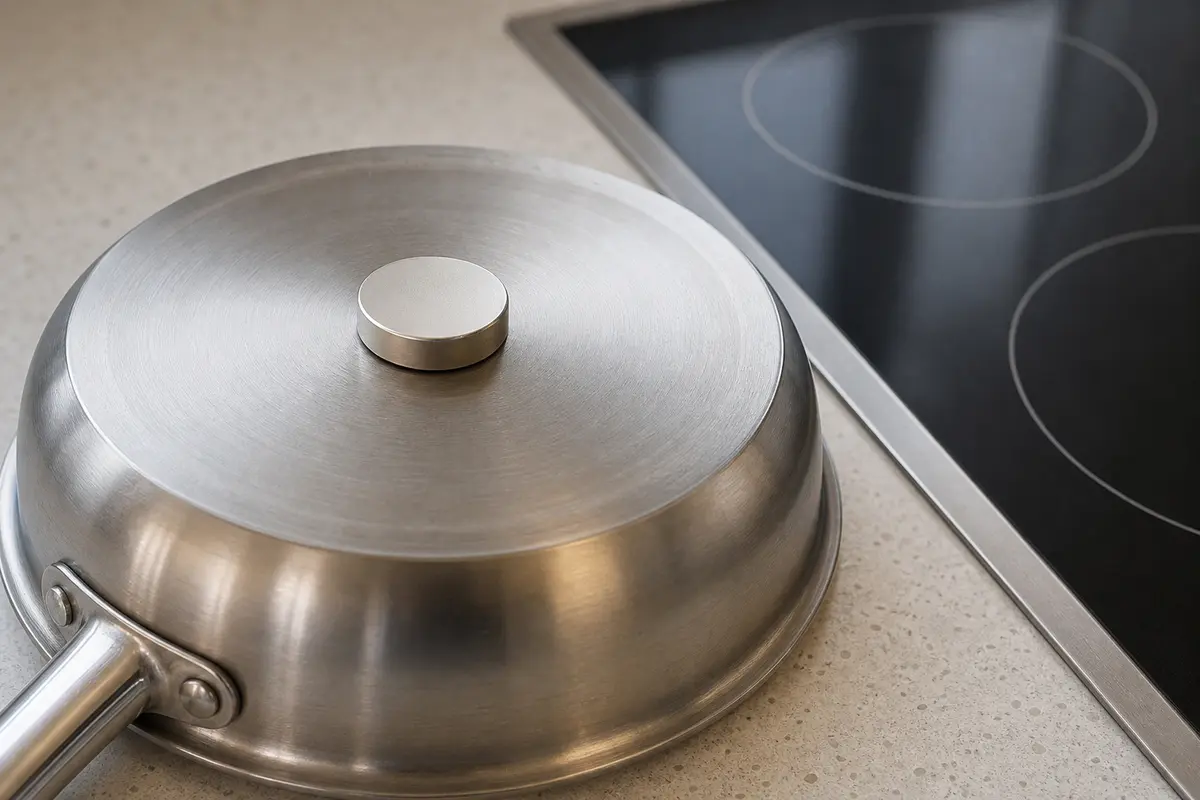
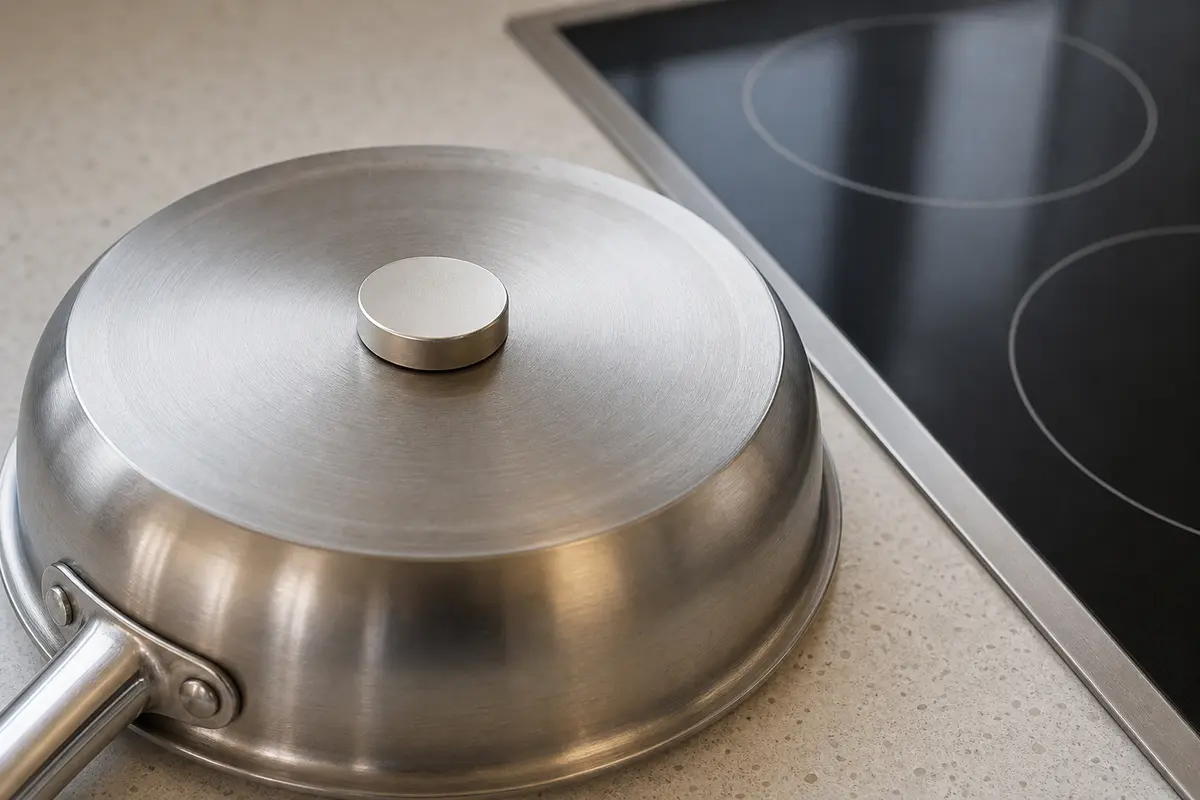
The pan is the suspect. Check magnet pull, flatness, diameter, and whether the base matches the marked zone.
If a Miele induction zone will not detect a pan, prove whether the failure follows the pan or stays with the zone. A good clue is simple: the same flat magnetic pan should work on another clean, dry zone.
Wrong cookware, a small or warped pan, wet residue on the glass, control lock, or a one-zone burner/sensing failure after the pan test.
Induction is strict about pan metal, zone size, and glass contact. Watch for weak magnet pull, a warped base, moisture, or one zone that rejects every good pan.
Don’t start with: Do not order a Miele induction burner, control switch, or board because one pan flashes no-pan. Make the symptom follow the zone before parts enter the conversation.
The pan is the suspect. Check magnet pull, flatness, diameter, and whether the base matches the marked zone.
Clean and inspect that zone, then compare with another flat magnetic pan. If only that zone still fails, the burner/sensing branch moves up the list.
Check control lock, power reset, and whether the cooktop accepts heat levels. A whole-cooktop failure is not solved by one burner part.
Look for moisture, sliding cookware, a pan that rocks, residue on the glass, or a pan that is barely large enough for the zone.
Let the cooktop cool, dry the controls and glass, remove film gently, and retest with the same known-good pan.
Stop before buying a burner. The control path, power supply, or electronics may need service diagnosis.
The best first clue is whether the no-pan message follows one pan, stays with one zone, or shows up across the whole cooktop. Start with a flat magnetic pan centered on clean dry glass, then compare zones before treating no-pan detection as a failed Miele part.
Do not buy a Miele induction burner, control switch, sensor, or board until the same known-good pan fails on the same zone after cleaning and reset checks. Match parts by the exact model and burner position, not by a photo.
A no-pan message means the zone is not seeing a strong magnetic connection through the glass. Check for weak cookware, poor contact on dry glass, a control setting, or one zone that still rejects good pans.
This is an easy symptom to turn into an expensive parts order. Let the cooktop prove which side of the glass the problem is on.
Use one fair test pan so the result means something. A medium, flat-bottom magnetic skillet is better than the pan that already caused the complaint.
| Test result | What it points to | Next move |
|---|---|---|
| Usual pan fails, test pan works | Cookware mismatch, small base, weak magnetism, or warping | Use a better-matched pan; no cooktop part is supported. |
| Same pan works on other zones but not one zone | Local zone, glass, sensing, or burner problem | Clean and inspect that zone, then retest before parts. |
| Every zone misses every known-good pan | Control lock, power/control fault, or cooktop-wide issue | Reset and check settings; stop if it does not recover. |
| Zone detects briefly, then drops out | Pan movement, moisture, residue, marginal pan size, or heat-related internal fault | Stabilize the pan and clean the surface; service if the same zone still drops good pans. |
Induction is not heating through the glass the same way a radiant element does, but pan contact still matters. A small ridge of burned-on spill can make a borderline pan fail.
A pan problem and a control problem feel similar from the counter. Watch whether the cooktop accepts the zone setting before it complains about the pan.
Parts belong after the visible checks point to the same place twice. Test two good pans on clean dry glass; if only one zone rejects them, the local burner or control path moves up the list.
Keep the tool list focused on safe surface checks. These items help prove cookware, residue, and visible damage; they do not make live electrical diagnosis a homeowner job.
Paid links. As an Amazon Associate I earn from qualifying purchases. Repair Riot may earn a commission at no extra cost to you.
Helps when: Use it to test whether the pan base is strongly magnetic across the area that sits on the induction zone.
Skip it when: Skip parts shopping if the magnet barely grabs or only sticks to a small ring on the pan.
Compare small magnets on Amazon
Helps when: Use them to remove grease film, moisture, and mild soap residue without scratching the ceramic glass.
Skip it when: Do not keep cleaning or testing if the glass is cracked, loose, or smells hot.
Compare microfiber cloths on Amazon
Helps when: Use a cooktop-safe cleaner for stubborn residue after the surface is cool and the manual allows that cleaner type.
Skip it when: Skip abrasive pads, heavy scraping, and any cleaner sprayed into seams or touch controls.
Compare glass cooktop cleaners on Amazon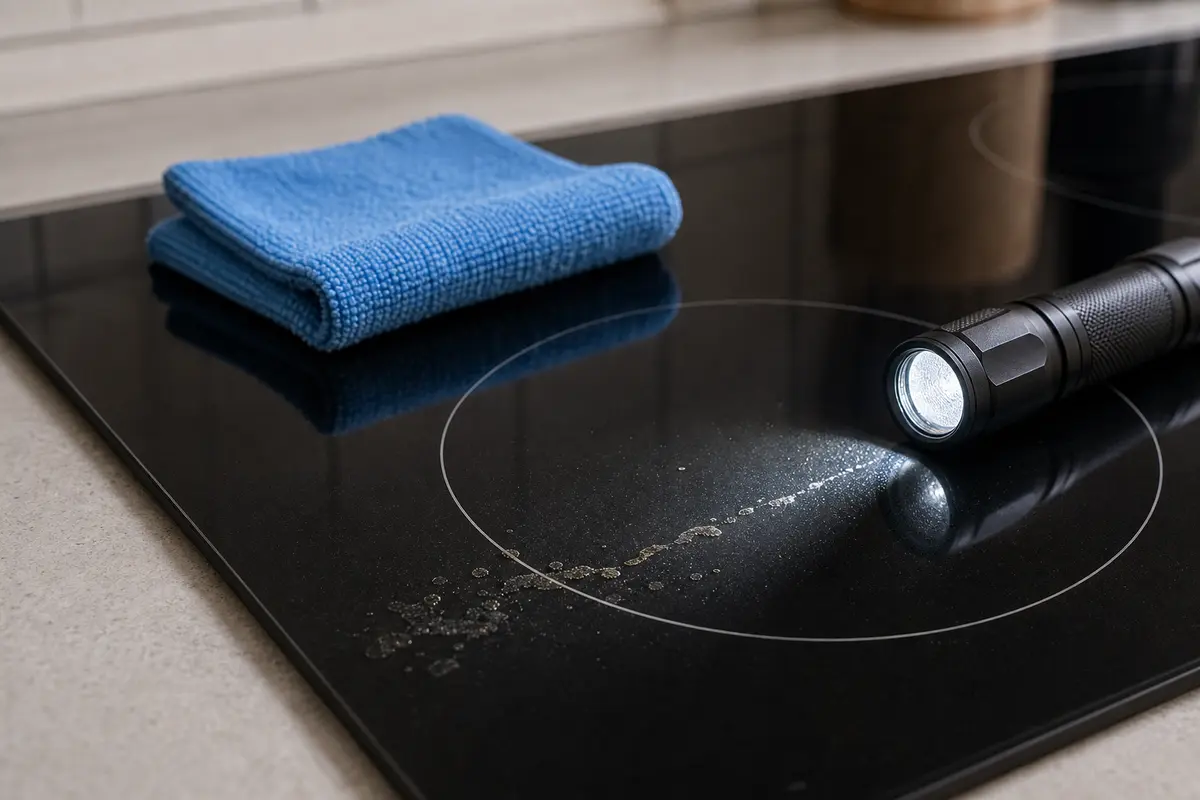
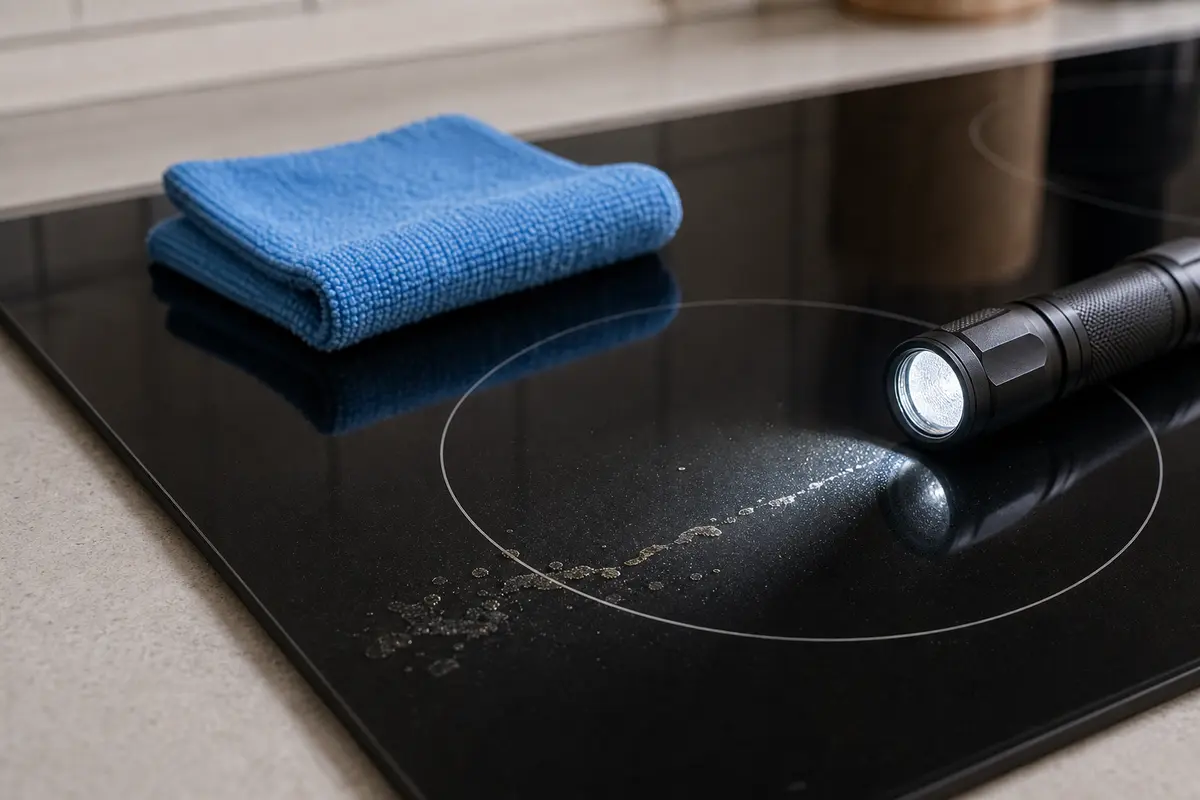
Helps when: Use a low-angle light to spot hairline cracks, chips, raised spill residue, or moisture around the failed zone.
Skip it when: Skip further DIY if the light reveals cracked glass, scorch marks, or damage near the cooktop edge.
Compare inspection flashlights on AmazonMiele cooktop parts are model- and zone-specific. Buy only after the same symptom repeats with known-good cookware and the visible surface and control checks are done.
Paid links. As an Amazon Associate I earn from qualifying purchases. Repair Riot may earn a commission at no extra cost to you.
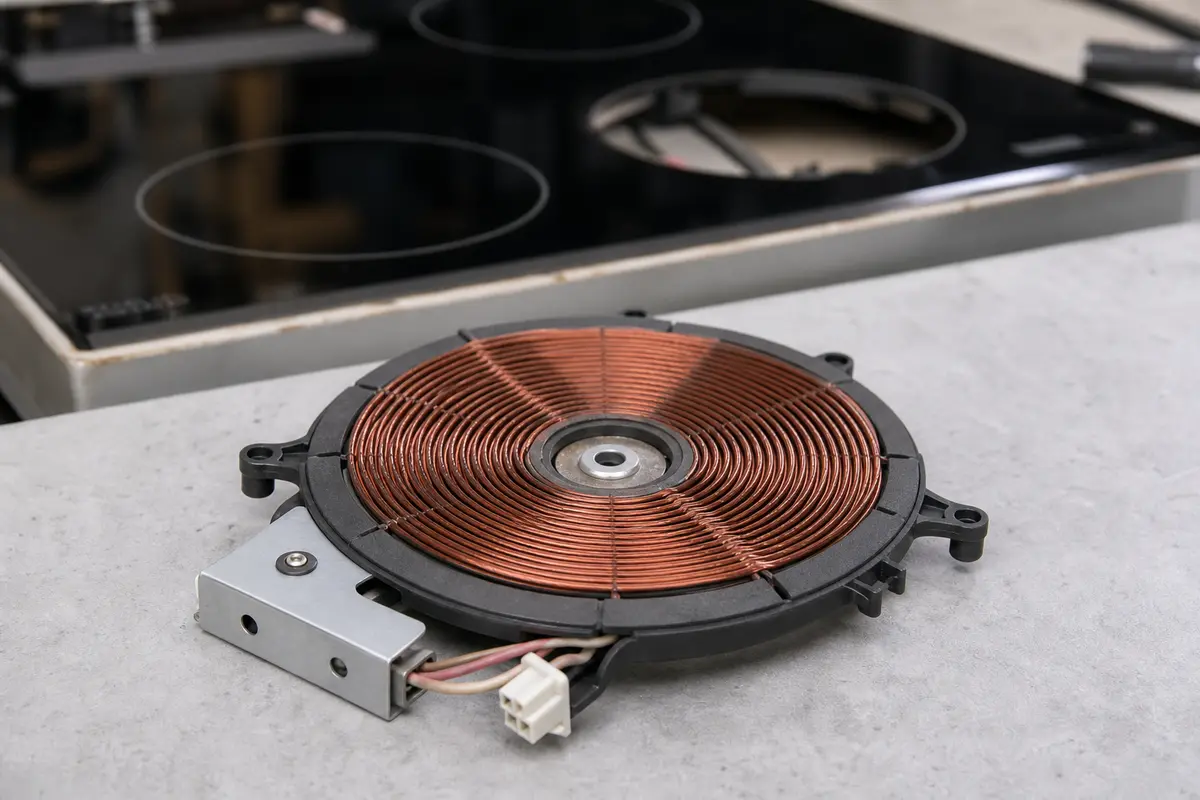
Helps when: Compare this only when one zone rejects two known-good pans while other zones heat those same pans normally.
Skip it when: Skip it when the problem follows one pan, the glass is dirty or damaged, or every zone is affected.
Compare induction burner modules on Amazon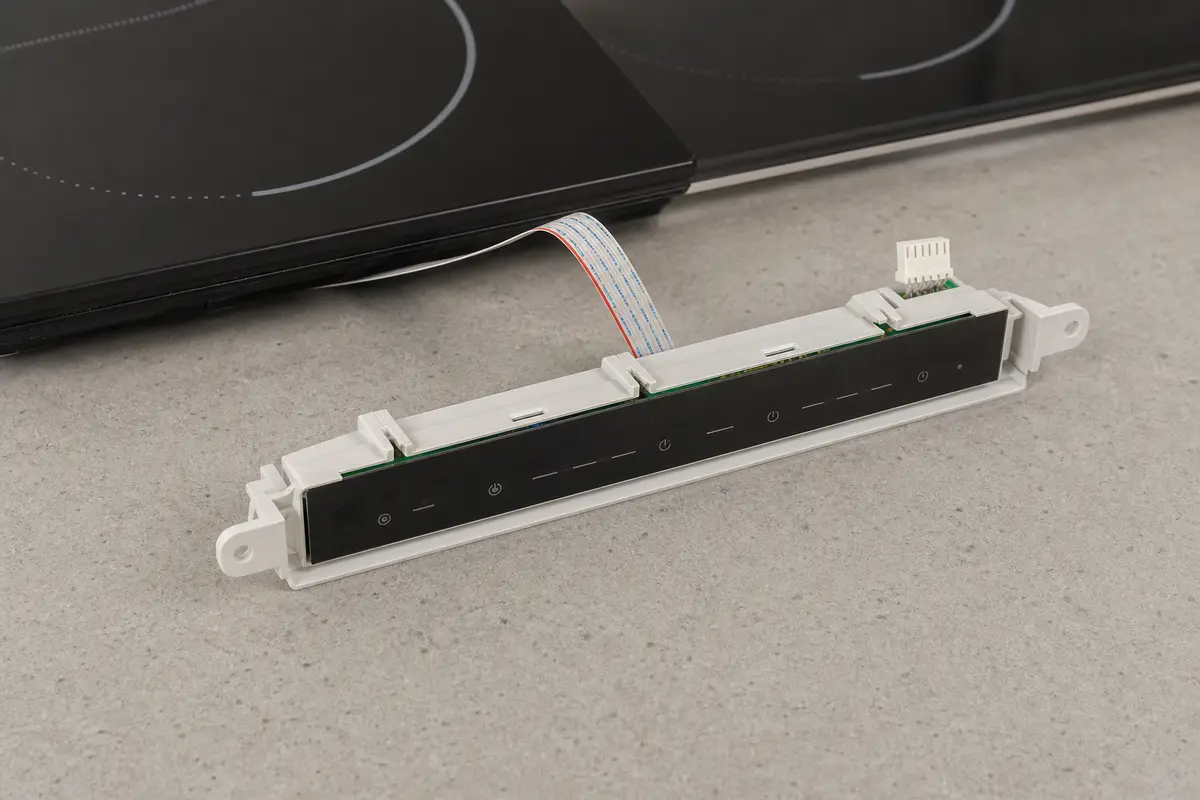
Helps when: Consider it when the affected zone's controls are also dead, inconsistent, or will not hold a heat setting.
Skip it when: Skip it when controls behave normally and the only clue is one untested pan.
Compare cooktop control switches on Amazon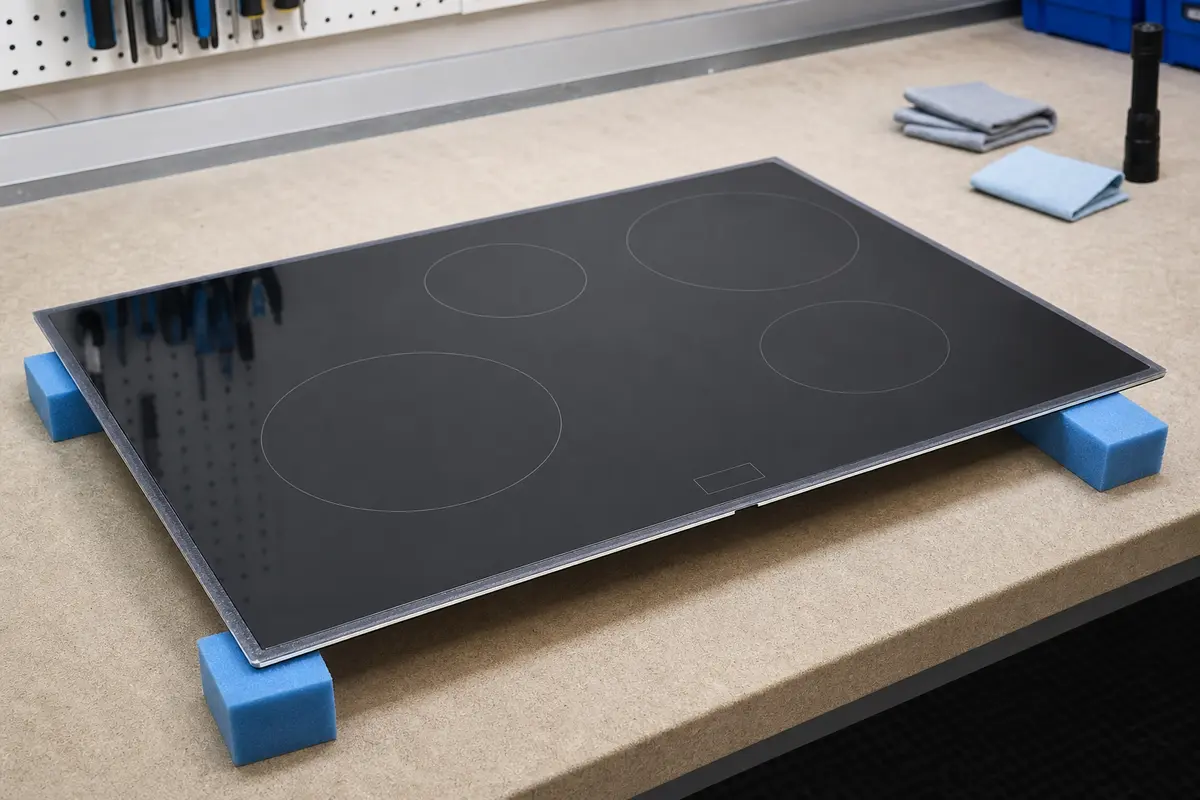
Helps when: Replacement is a service-level path when the ceramic glass is cracked, chipped through, or loose around the failed zone.
Skip it when: Skip normal use and parts guessing until damaged glass is evaluated; do not keep testing a cracked cooktop.
Compare cooktop glass options on AmazonUsually because the pan is not magnetic enough, too small for that zone, warped, off-center, or sitting on moisture or residue. Test with a medium flat magnetic pan on clean dry glass before blaming the cooktop.
Yes. A pan can work on one induction zone and fail on another if the base is small, weakly magnetic, warped, or barely covers the sensing area. Test a medium flat magnetic pan on the same clean zone; if it works, the original pan is the poor match.
It becomes plausible after the same known-good pan works on other zones, the suspect zone is clean and dry, and control lock or reset issues are ruled out. One-zone failure is a clue, not enough by itself to buy a burner.
It can make detection flaky, especially with a smaller or borderline pan. Grease film, dried starch, sugar residue, moisture, or a raised burned-on spot can keep the pan from sitting flat.
Do not choose either one first. A burner module makes more sense when the controls respond normally but that zone rejects known-good pans. A control switch or touch-control path makes more sense when the zone controls are also flaky.
Usually, yes, when the glass is intact, controls are stable, there is no hot electrical smell, and the breaker is not tripping. Keep the failed zone off. Watch for cracked or loose glass, sparking, or erratic controls.
Look for a pan that rocks, slides, is barely large enough for the zone, or has moisture under it. Center the pan, leave it still, and retest on a known-working zone; if two good pans drop out only on the same clean zone, internal service diagnosis starts making sense.
You do not need a Miele-branded pan, but the pan must be induction-compatible, flat, and sized for the zone. Use your manual for model-specific cookware guidance and zone behavior.
Use the rating-plate location in the owner manual or Miele manual lookup. Match the full model number and the exact burner position before comparing an induction burner, control switch, or glass part.
Repair Riot built this page around visible induction checks: test magnet pull, check pan size and flatness, dry the glass, and watch control response. Then see whether the failure follows one pan or one Miele zone. Internal parts stay later because induction cooktops use model-specific high-voltage components.