Is water collecting in the bucket?
Yes: the dehumidifier is making water, so move to the drain line and bucket fit. No: start with humidity, temperature, airflow, filter, or icing.
Usually, the pump is not the first suspect. Check the drain hose, bucket fit, float area, and a short hose draining into a bucket before opening the cabinet or buying parts.
If the bucket fills but the hose stays dry, start with the drain path and bucket seating. If the bucket is mostly dry too, check humidity, temperature, airflow, filter condition, and icing.
A good clue is where the water stops.
Don’t start with: Do not open the cabinet, force the float, blast air into the hose, or order internal parts before the outside checks are done.
Yes: the dehumidifier is making water, so move to the drain line and bucket fit. No: start with humidity, temperature, airflow, filter, or icing.
If water comes out with the hose beside the unit, the normal hose run is too high, kinked, clogged, or sagging.
Clean the bucket rails, reseat the bucket firmly, and watch whether pressing the bucket changes the warning.
Do not judge by sound alone. Watch the hose end. If a clear short hose stays dry while water is waiting in the unit, you may be past a hose-route issue.
Stop testing. Wet electrical areas, harsh buzzing, heat, or burning smell make this a service call.
The fastest useful test is simple: make the hose short, clean, visible, and low. If water comes out there, the pump is not the first thing to blame.
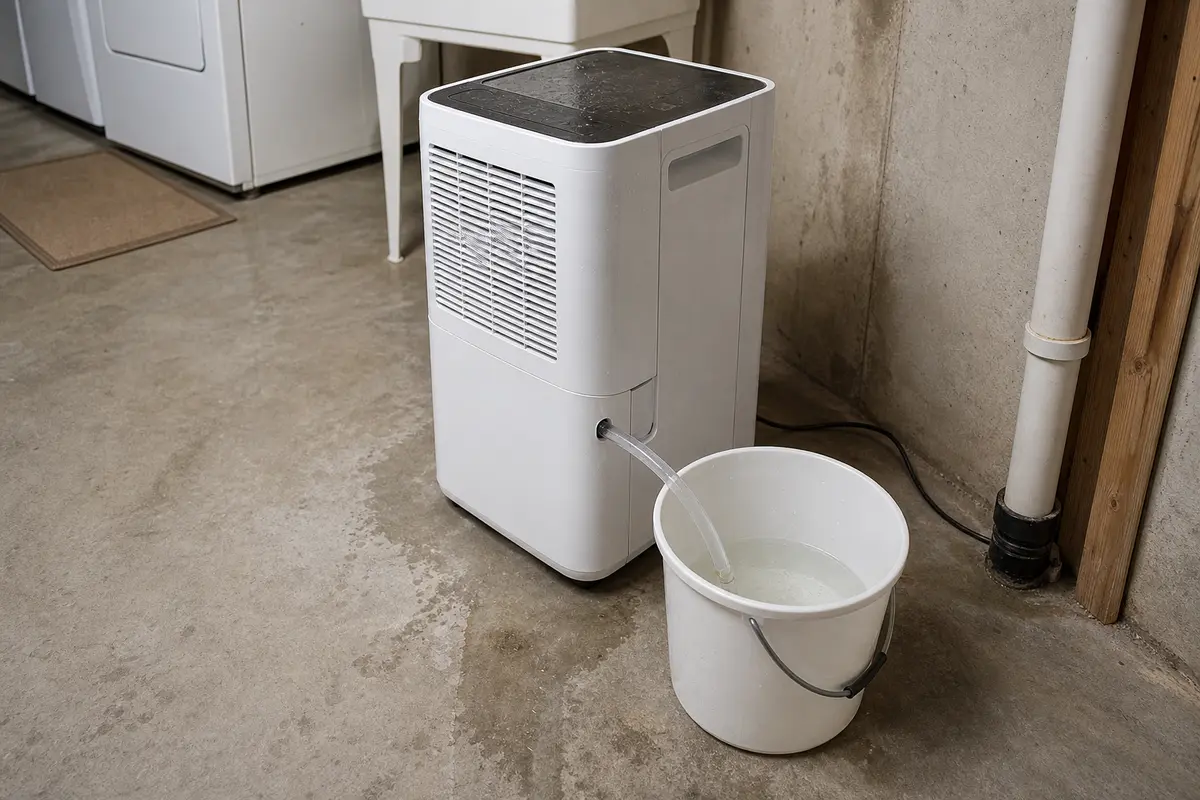
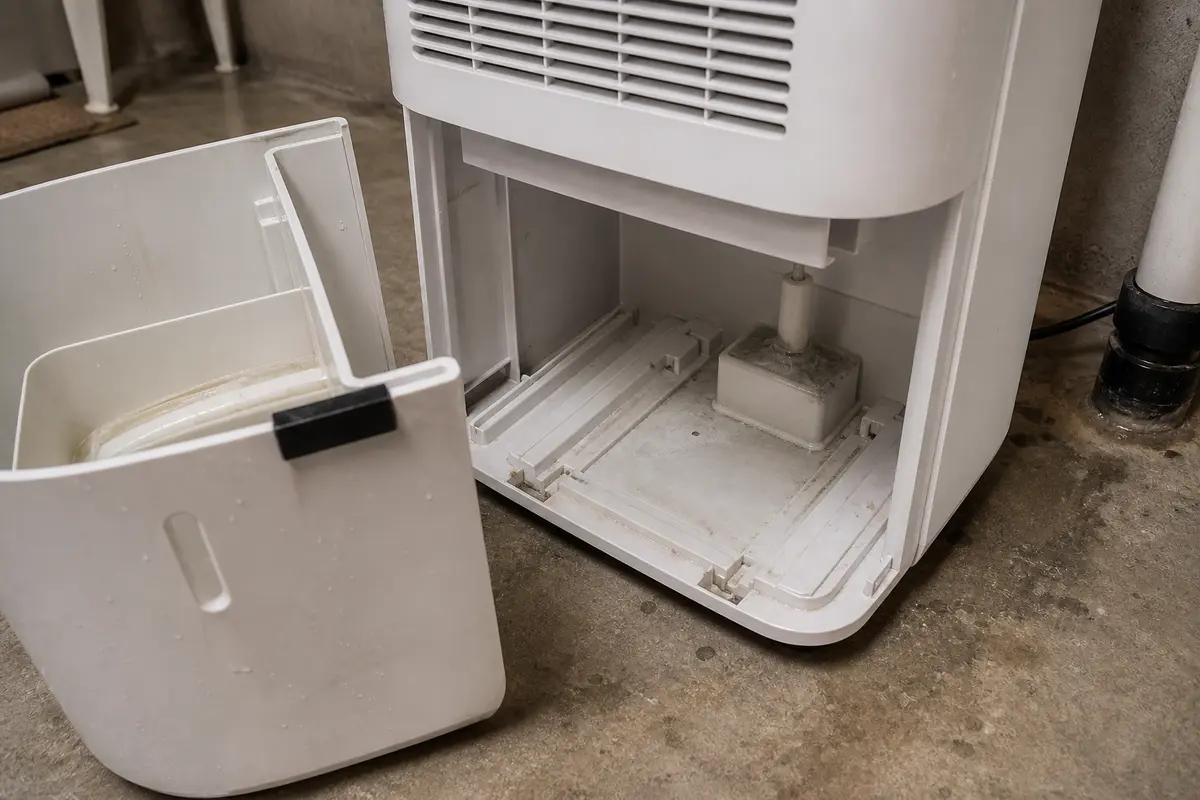
Before ordering a pump, switch, bucket, or hose, write down the exact Midea model number and make the symptom repeat in a simple setup. Most drain hoses, bucket switches, float switches, pump assemblies, and control parts are model-specific.
Most of the time, the pump gets blamed before the drain path has had a fair look. A Midea unit has to make water, seat the bucket cleanly, and push that water through a hose the small pump can actually handle.
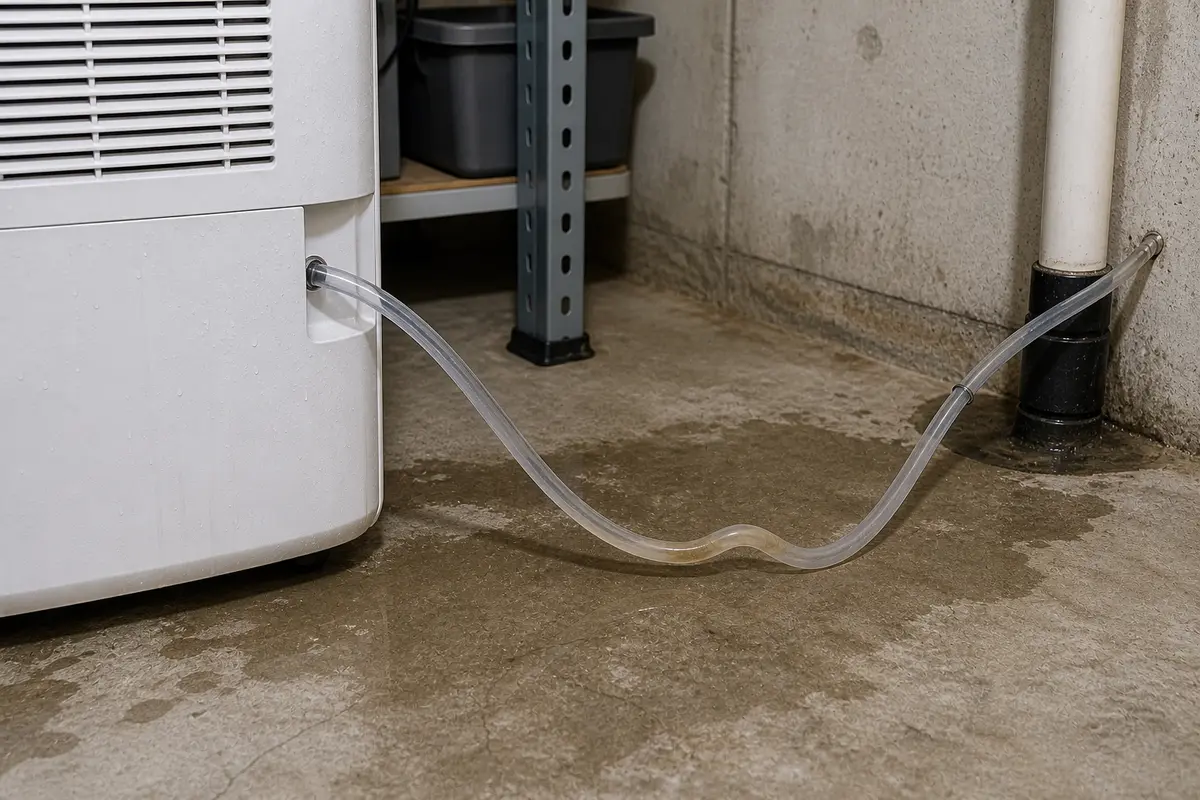
Do not turn an easy drain problem into an internal repair. The outside checks are faster, cheaper, and safer.
This is the best homeowner test on the page. Put a clean hose on the pump outlet, keep it short and low, and drain into a bucket where you can see the hose end.
| What you see | What it usually means | Next move |
|---|---|---|
| Water flows into the low bucket | The pump can move water; the normal hose route is the problem. | Rebuild the permanent run so it is shorter, cleaner, lower, and free of sags. |
| Bucket and hose both stay dry | The unit may not be making enough water to test the pump. | Check humidity, room temperature, filter airflow, and icing before buying drain parts. |
| Water is waiting in the unit but the short hose stays dry | The issue is more likely inside the pump, float, switch, or control path. | Stop guessing at hoses and price parts only by exact model number. |
| Water leaks from the base or cabinet seams | This is no longer a simple hose-routing problem. | Unplug the unit and stop before wet electrical areas or internal cabinet work. |
Check the bucket rails and float area after you empty it. If film makes the float stick or the bucket sits crooked, the bucket switch or float switch can misread a good machine.
Sometimes the pump is quiet because there is almost nothing to move. Cool rooms, low humidity, a dirty filter, poor airflow, or iced coils can all make the drain side look dead.
You do not need a full appliance kit for this. These are the simple items that make the hose, bucket, and float checks safer and easier to see.
Price parts only after the symptom repeats in a simple setup. If a short low hose works, compare the normal hose route; if a clean short hose stays dry with water waiting in the unit, write down the exact model number before shopping. Lookalike dehumidifier parts can still be wrong.
The usual causes are a kinked or clogged hose, a hose route the pump cannot handle, a loose hose connection, poor bucket seating, or a float area that is not moving cleanly. Check those before replacing the pump.
The pump is more suspect when the unit is making water, the bucket is seated, the float moves freely, the line is clear, and a short low hose still stays dry.
A hum with no discharge can be a blocked hose, trapped water in a sagging line, debris near the pickup, or a weak pump. Look at the discharge end during the short test; sound alone is not enough.
Only if your exact model supports that lift and the route stays within its limits. Test low first: if the hose pumps into a bucket beside the unit but stops when routed to the sink, lower, shorten, or straighten the permanent route before blaming the pump.
That often means the dehumidifier is not producing condensate. Check room humidity, room temperature, airflow, filter condition, and icing before chasing the pump.
Yes, if the unit is unplugged and you use warm water, mild dish soap, and a cloth. Do not force plastic parts or spray cleaner into the cabinet.
Do not start with either one. If pressing or reseating the bucket changes the warning, stay with the bucket switch or float area. If the bucket is seated and a clear short hose still stays dry, then price the pump assembly.
A controlled external hose test is reasonable with the panels installed and the water routed safely. Stop for a hot plug, burning smell, breaker trip, water leaking from the cabinet, or any wet electrical area.
Flushing the hose with warm water is safer for most homeowners. Compressed air can spray dirty water or debris where you do not expect it, especially if the hose is still connected.
Consider replacement if the machine is older, corroded, leaking from the cabinet, icing or failing to collect water, or needs an expensive pump plus other internal parts.
For this page, Repair Riot starts with the visible split: bucket fills, hose stays dry, pump hums, or no water collects at all. The references below support the model lookup, moisture context, and safety boundaries used before a hose, float switch, or pump part gets named.