Is the food still hard frozen?
Treat it as a recovery or lid-seal check first. Keep the lid closed, note any recent warm load, and look for a gap or frost at the rim.
A Midea chest freezer alarm usually means the cabinet is warming from a lid leak, recent warm load, rim frost, or poor heat clearance. Check food near the top first, then look for one lid corner sitting high or a gasket spot that has lost its grip.
Hard-frozen food points to recovery or a lid leak, so keep the lid closed and check the rim for frost or a loose paper-test spot. Soft food after hours closed points to real cooling trouble.
Do the cold-food check first, then inspect the gasket, frost line, and clearance before pricing parts.
Don’t start with: Do not start with a control board. Check food firmness, look at lid height and rim frost, then test gasket drag before you price controls.
Treat it as a recovery or lid-seal check first. Keep the lid closed, note any recent warm load, and look for a gap or frost at the rim.
Give the freezer several closed-lid hours to recover. A full or warm load can alarm before anything is broken.
Look for the air leak before parts. Clean the gasket and rim, dry both surfaces, and use the paper test around the lid.
Move tall packages, basket handles, and bags below the lid line. If the corner still rides high, check the hinge and gasket shape.
This is no longer just an alarm reset. Check clearance around the freezer and listen for normal compressor operation, then plan on service if cooling stays weak.
A lid gasket belongs on the shopping list only after cleaning, drying, and reseating do not restore even drag around the rim.
The useful evidence is at the top rim. Look for a package or basket handle holding one corner high, frost where warm air is entering, or one gasket spot that lets a paper strip slide out easily. Those clues matter more than the beep by itself.
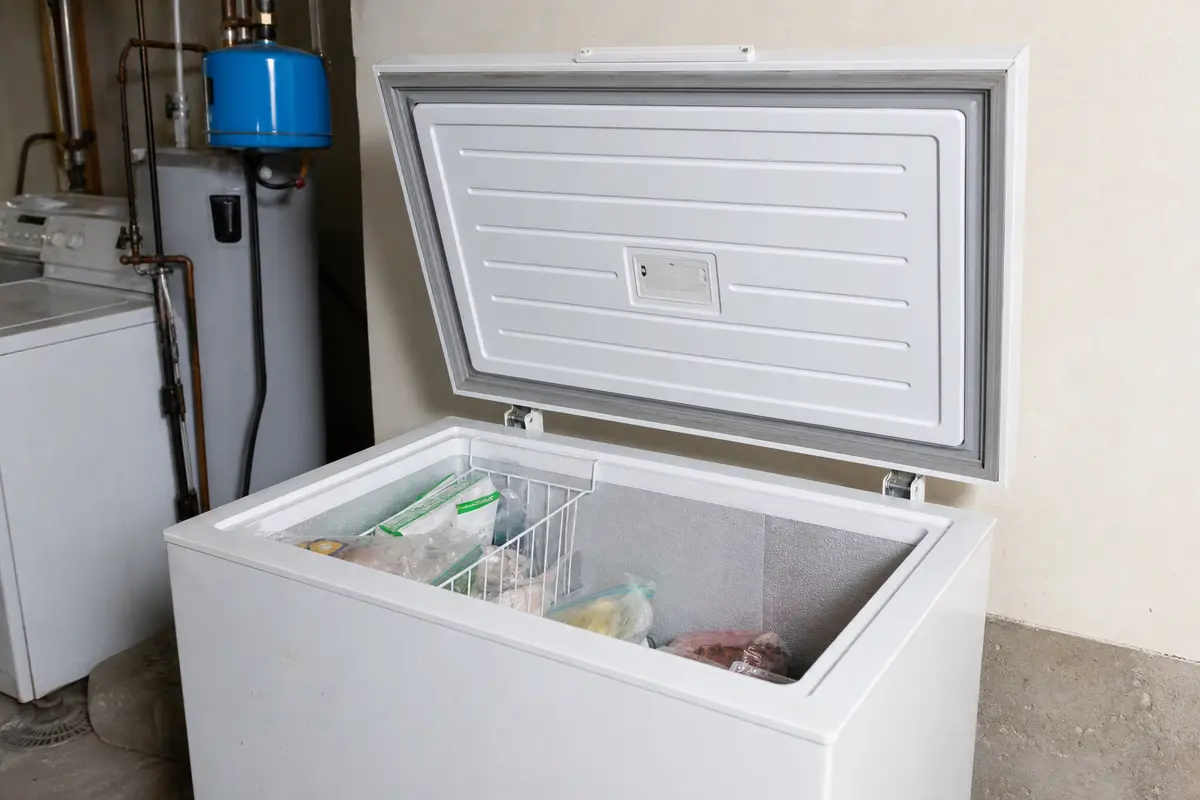
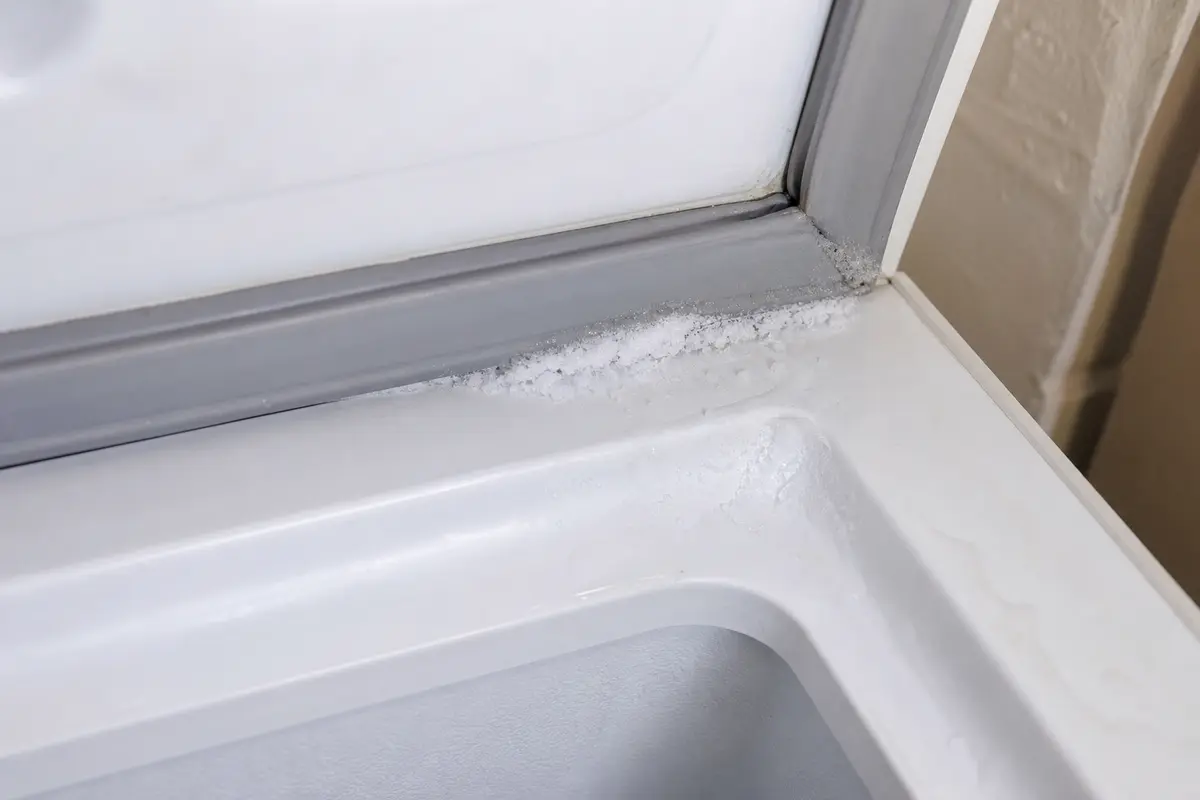
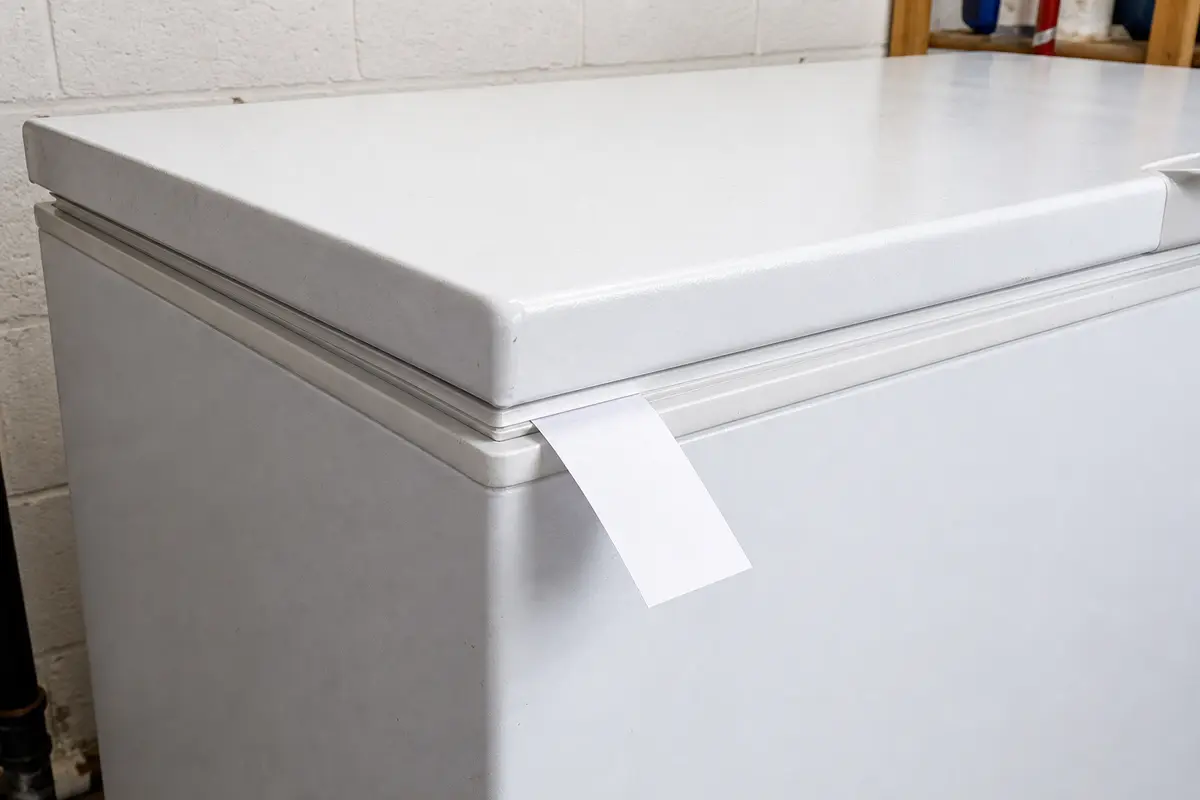
Copy the full Midea model number from the rating tag before shopping. A gasket makes sense only when one section is torn, hardened, warped, or still fails the paper test after cleaning and reseating. Skip control boards when the only evidence is beeping.
The alarm usually responds to temperature, not an alarm part. Check first: look for soft food near the top, one lid corner sitting high, rim frost, or stored items blocking cabinet heat.
A beeping freezer is easy to overreact to. Before buying parts, check food firmness, lid height, gasket drag, rim frost, and clearance. That keeps a seal problem from turning into a liner puncture or a wrong-part order.
Start with the checks that do not open the machine. The right result is a freezer that recovers with the lid closed, not just a silenced alarm.
Use the result to choose the next move. This is where the page separates a normal recovery alarm from a freezer that cannot hold temperature.
| What you found | What it usually means | Best next move |
|---|---|---|
| Food is hard and the alarm followed a grocery load | Temporary temperature recovery | Keep the lid closed and recheck after several hours. |
| One package or basket touches the lid | The lid is being held open slightly | Repack below the lid line and watch whether the alarm clears. |
| Paper slides out easily at one rim spot | Weak gasket contact or lid alignment at that point | Clean, warm gently by hand pressure, reseat, then retest before buying a gasket. |
| Frost keeps returning at one corner | Warm moist air is leaking there | Focus on gasket condition, cabinet rim damage, and hinge seating. |
| Compressor clicks repeatedly or never settles into a hum | Startup or compressor-side trouble | Leave deeper diagnosis to an appliance pro. |
| Food is soft after a long closed-lid recovery | The freezer is not removing enough heat | Check clearance and accessible dust, then call service if cooling stays weak. |
These are for basic lid, temperature, cleaning, and defrost checks. They are not for opening sealed refrigeration parts or working on energized wiring.
Paid links. As an Amazon Associate I earn from qualifying purchases. Repair Riot may earn a commission at no extra cost to you.
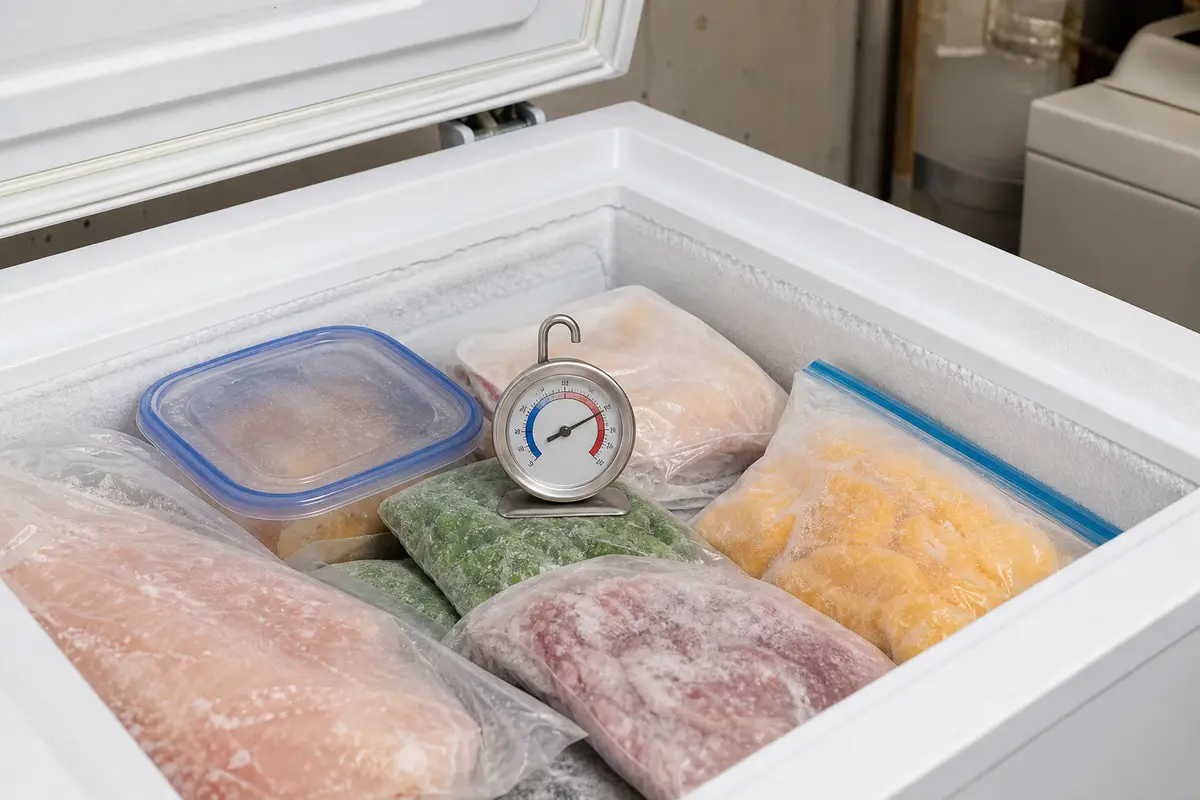
Helps when: You want to know whether the cabinet is actually recovering instead of judging by the beep alone.
Skip it when: Food is already soft and needs to be moved first, or the freezer has no cooling at all.
Compare freezer thermometers on Amazon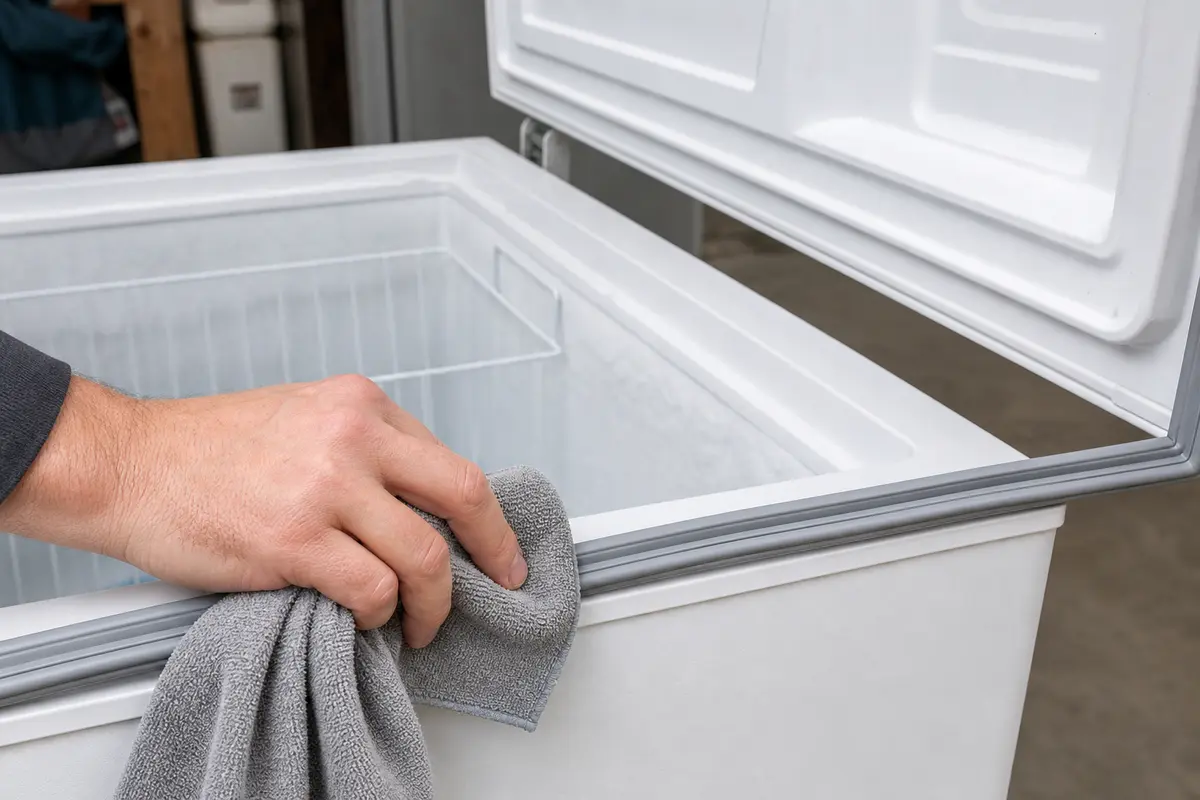
Helps when: The gasket and cabinet rim need to be clean and dry before the paper test means anything.
Skip it when: The gasket is torn, the lid frame is bent, or frost is too hard to clear without a full defrost.
Compare microfiber cloths on Amazon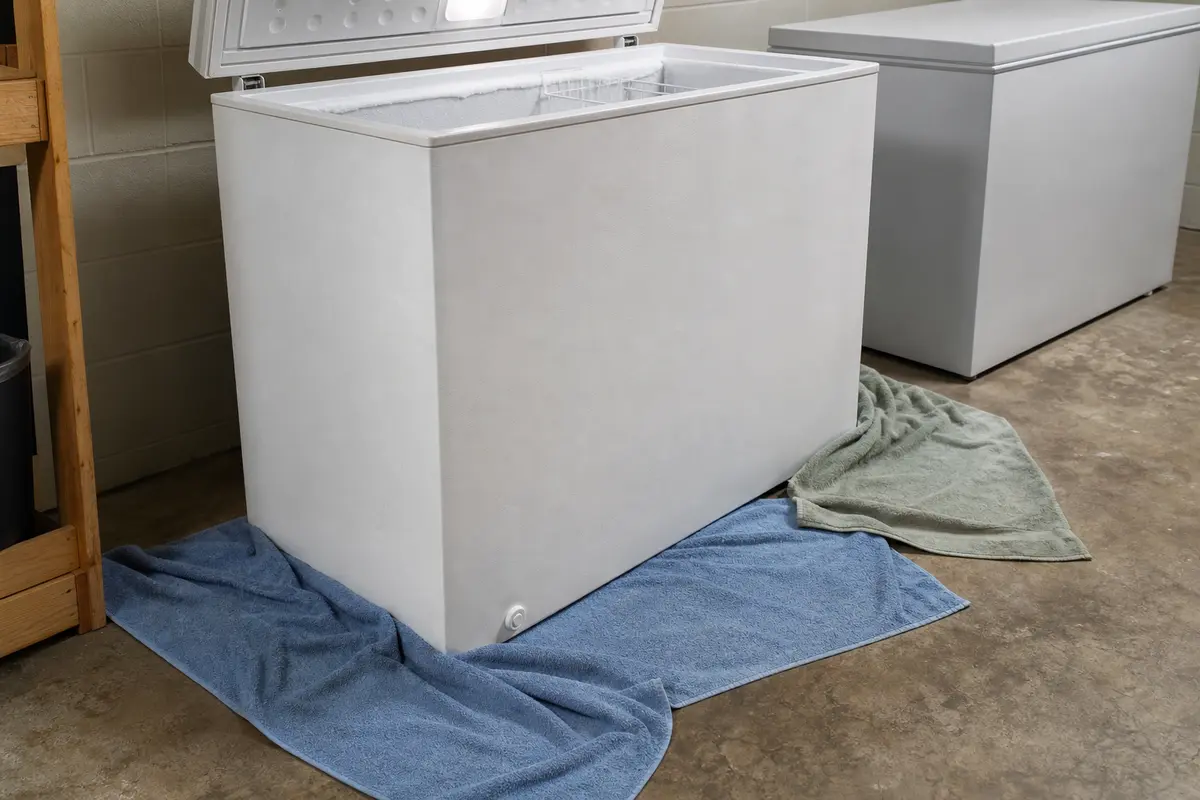
Helps when: You are doing a manual defrost and need to keep meltwater away from the floor, cord, and controls.
Skip it when: You cannot safely move the food or keep water away from nearby outlets.
Compare absorbent towels on Amazon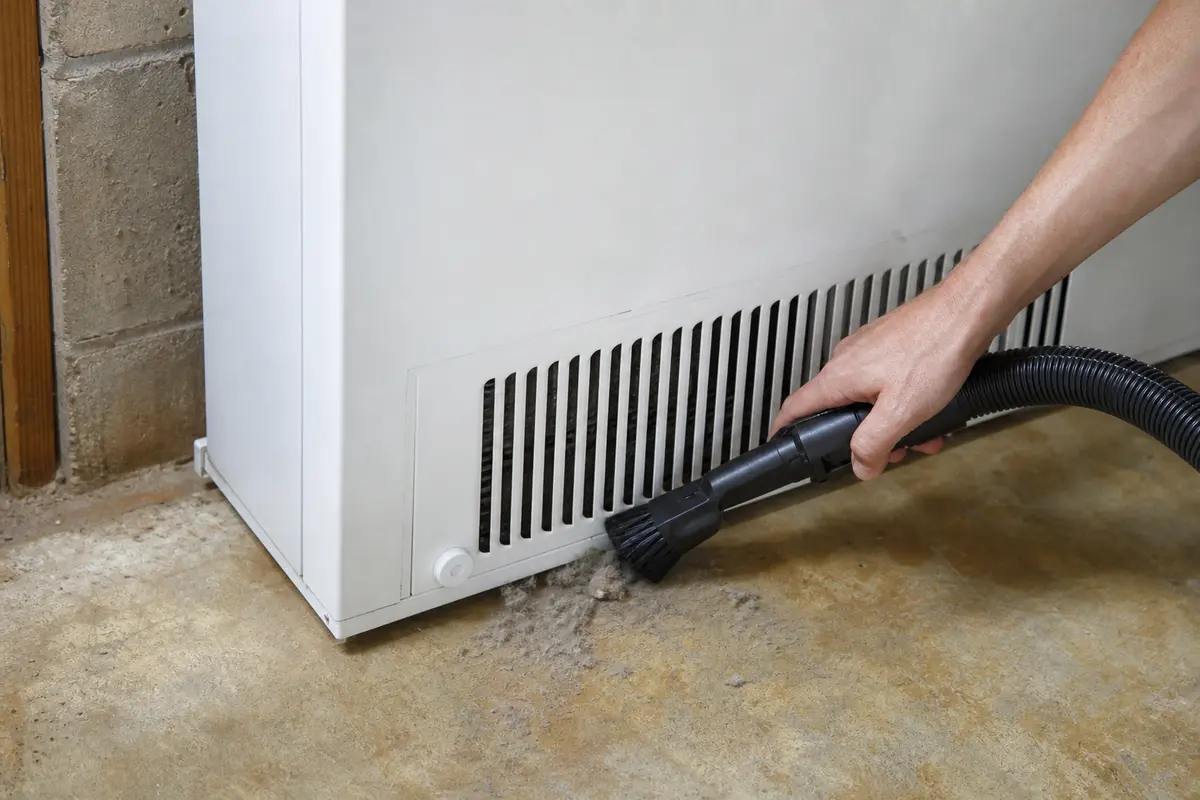
Helps when: Dust is blocking accessible exterior vents or condenser areas and the freezer needs room to shed heat.
Skip it when: Cleaning would require opening wiring covers, bending tubing, or reaching into an area you cannot see clearly.
Compare vacuum brush attachments on AmazonThe sensible homeowner part on this symptom is the lid gasket, and only after the seal test supports it. Cooling parts, compressors, and controls need a stronger diagnosis than a beeping alarm.
Paid links. As an Amazon Associate I earn from qualifying purchases. Repair Riot may earn a commission at no extra cost to you.
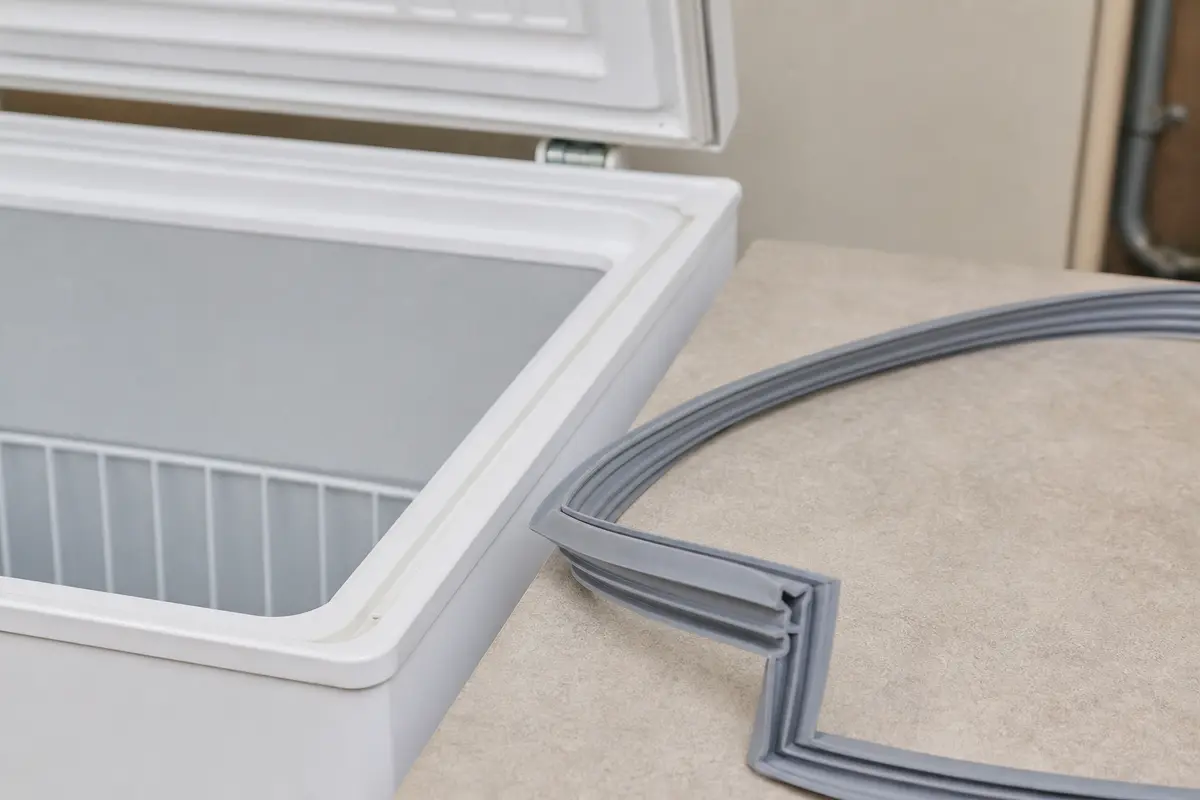
Helps when: One gasket section is torn, hardened, badly warped, or still fails the paper test after cleaning, drying, and reseating.
Skip it when: Food or a basket is holding the lid up. Frost clears after unplugged defrost and the paper test passes. The freezer is clicking, or the listing lacks the full Midea model number.
Compare chest freezer lid gaskets on AmazonGood notes make the service call shorter and keep you from repeating the same checks. Stop the DIY path when the freezer cannot recover with a clean, sealing lid.
It is usually warning that the cabinet is warmer than it should be. Check food near the top first. If it is still hard, look for a lid gap, rim frost, a loose gasket spot, a recent warm load, or blocked clearance before treating it as a cooling problem.
Yes. Food near the bottom can still feel hard while warmer air near the top or a leaking lid keeps the temperature high enough to restart the alarm.
A room-temperature load can take several hours to pull down. Keep the lid closed. Check a freezer thermometer or feel top food for a colder trend. Soft food after hours closed is different.
Unplug it for cleaning, frost removal, or manual defrosting. Do not use unplugging as the fix. If the cabinet is still warm, the alarm will come back when the freezer starts reading temperature again.
Clean and dry the gasket and cabinet rim, then close the lid on a thin sheet of paper in several spots. Light, even drag is good. One spot that slides out easily points to a leak or alignment issue.
Yes. Frost can hold the lid open, and frost at one corner can show where warm moist air has been leaking in. Unplug the freezer, let the frost soften, clear it with towels and patience, then paper-test that section instead of using sharp tools.
Replace it only when the gasket is torn, hardened, badly warped, or still fails the paper test after cleaning and reseating. Match it by the full Midea model number.
No. A control fault is possible, but it is not the first place to spend money. The lid seal, food load, rim frost, clearance, and compressor behavior give better clues.
Move the food first if safety is in doubt. Then check lid sealing and clearance. If the compressor clicks, stays silent while warm, or runs for hours with weak cooling, schedule appliance service.
Yes, if the food stayed safely frozen and the freezer holds temperature through normal use. Over the next day, recheck the rim for new frost and repeat the paper test at any loose-feeling gasket spot so the same air leak does not restart the problem.
Repair Riot built this page around homeowner-visible checks: food condition near the top, lid contact, gasket drag, rim frost, and heat clearance. Soft food or a clicking compressor moves the next step to service.