Is it in Timer, Demo, Control Lock, Delay Start, defrost, or low power?
Cancel the program, reset power once, choose a basic timed cook cycle at full power, and retest with 1 cup of water.
If a microwave runs but the 1-cup water test stays cold, make the outside checks in order: full-power timed cook, direct wall outlet, then a firm door close with clean latch openings. Stop before the cover comes off.
The best homeowner clues are a low power or demo setting, weak outlet setup, or loose latch click.
Run the same cup-of-water check after each outside step so the result is not guesswork.
Don’t start with: Do not remove the cover or test internal high-voltage parts. A microwave can hold a dangerous charge after it is unplugged.
Cancel the program, reset power once, choose a basic timed cook cycle at full power, and retest with 1 cup of water.
Move to power and door checks. A cold water test is stronger evidence than food that was frozen, dense, or uneven.
Plug a countertop unit directly into a wall outlet if you can do that safely. Stop if the outlet, cord, or plug looks hot or discolored.
Clean the door edge and latch area, then retest. A loose or crooked latch moves door hardware and interlock service higher on the list.
Let it cool, check exterior vents and over-the-range grease filters, and stop if the pattern repeats.
Stop at diagnosis. The likely fault is inside the high-voltage heating circuit and belongs with a qualified appliance tech or replacement decision.
A no-heat microwave can look normal from the outside. These photos keep the first pass on safe checks: water test, door closure, latch condition, and the result you can actually see.
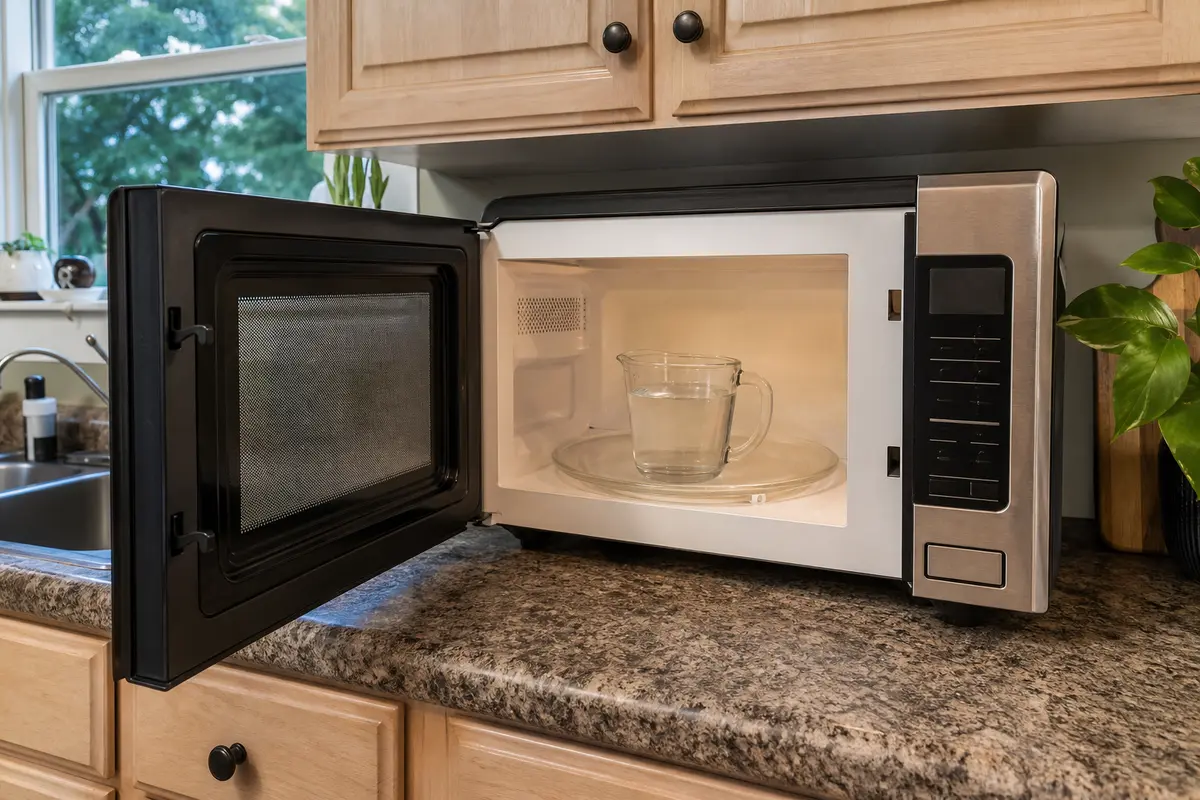
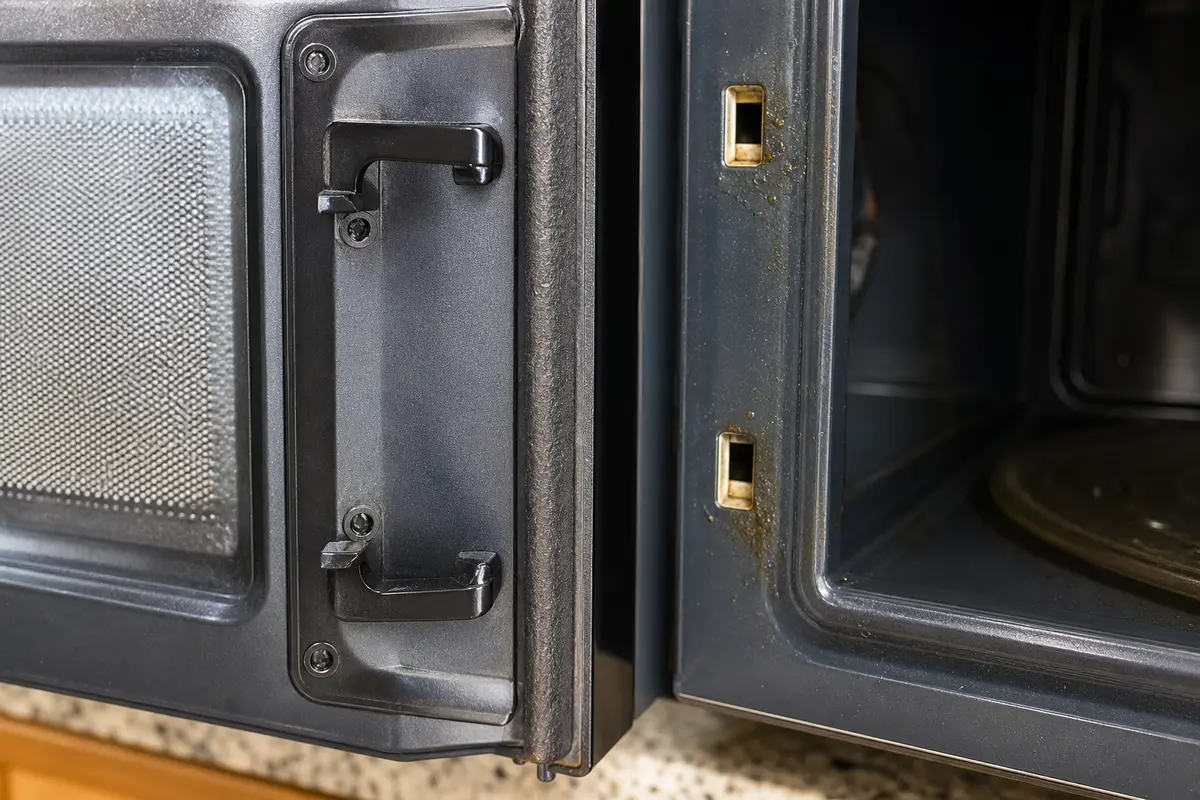
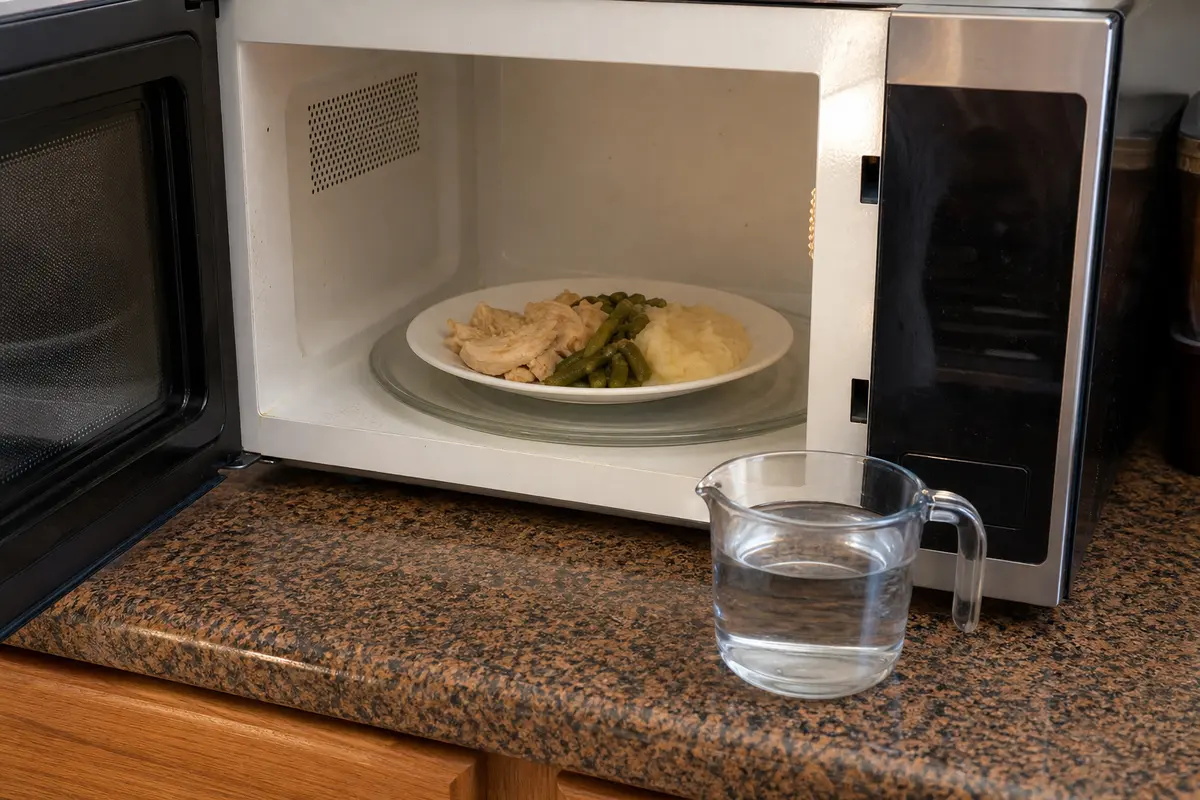
Do not buy a magnetron, diode, capacitor, transformer, control board, or door switch from a no-heat guess. Copy the exact model number and prove the symptom with the water check. Buy a door latch only when visible latch damage or poor fit points there.
A microwave can run the light, fan, and turntable while the heating side stays off. The outside clues decide whether this is a setting miss, a power-supply issue, a door-latch problem, or a stop point inside the cabinet.
The costly mistake is treating every no-heat microwave like a bad internal part. Keep the first pass outside the cabinet, and do not turn a safety interlock into a guess repair.
Run a plain full-power timed cycle with 1 cup of water, then compare the result. Use the same cup, water amount, and cook time each round so the clue stays clean.
| What you see | What it usually means | Next move |
|---|---|---|
| Water heats normally | The microwave can make heat. | Look back at food load, sensor cycle, defrost, low power, or a temporary control glitch. |
| Water stays cool, but the fan and light run | A true no-heat fault is more likely. | Check direct wall power and door latch feel before any part decision. |
| Heat returns after using a direct wall outlet | The original power setup may be weak or overloaded. | Avoid extension cords and power strips; have a questionable outlet or circuit checked. |
| Microwave works only after the door is pushed or reclosed | Door fit, latch hardware, or the interlock path is the better clue. | Stop using it until the latch path is repaired or verified safe. |
| It heats briefly, then stops heating | Airflow, overheating, or an internal heat-related fault is possible. | Clear exterior airflow and grease filters, then stop if the failure repeats. |
| No outside check changes the result | The remaining path is likely internal high-voltage diagnosis. | Do not open the cabinet. Compare professional repair cost with replacement. |
Work from the easiest outside proof to the harder stop point. A good clue is one that changes the water-test result without opening the microwave.
The door interlock is a safety system, so the homeowner check stops at visible fit and feel. Look for evidence at the latch area, not inside the control panel.
The clue is simple: the water check stays cold after mode, power, door, and airflow checks. At that point, the next safe move is service or replacement.
These are for the outside checks only. None of them makes internal microwave diagnosis safe.
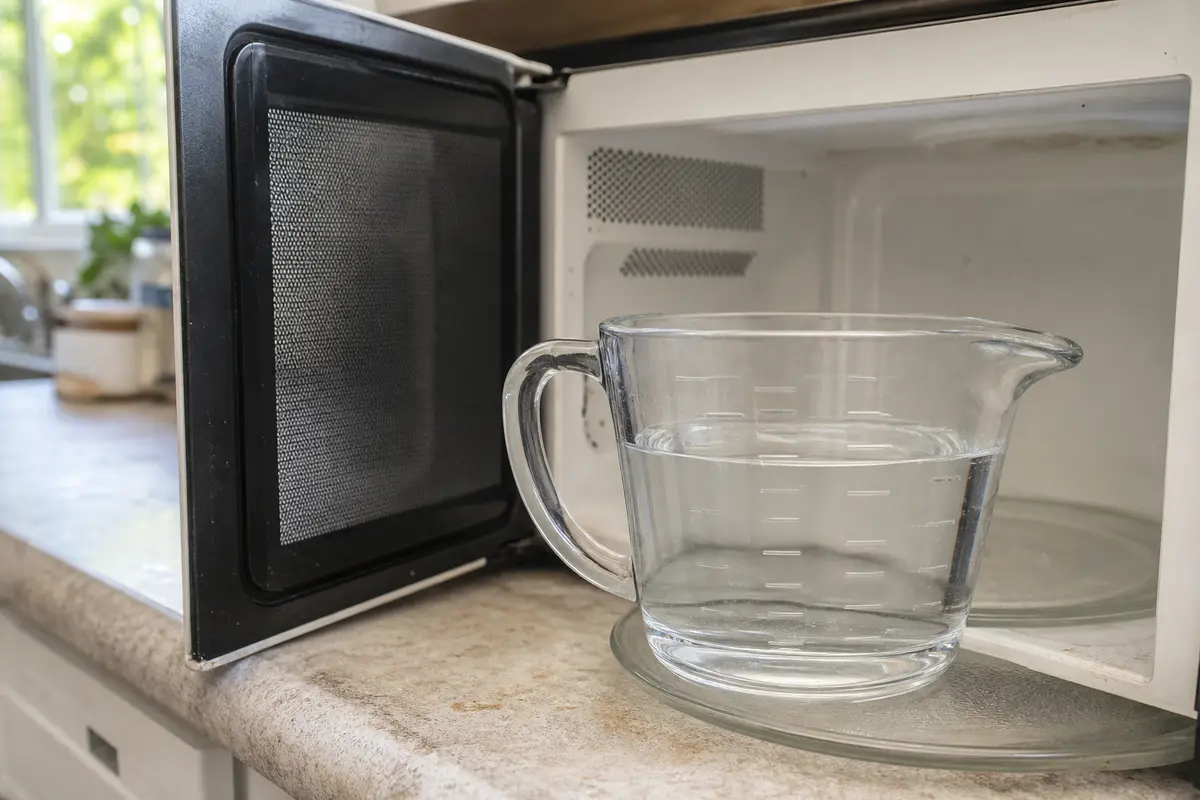
Helps when: You need a repeatable water check instead of judging heat by leftovers, frozen food, or a sensor cycle.
Skip it when: You already have a glass or ceramic cup that is clearly marked microwave-safe and easy to handle.
Compare microwave-safe measuring cups on Amazon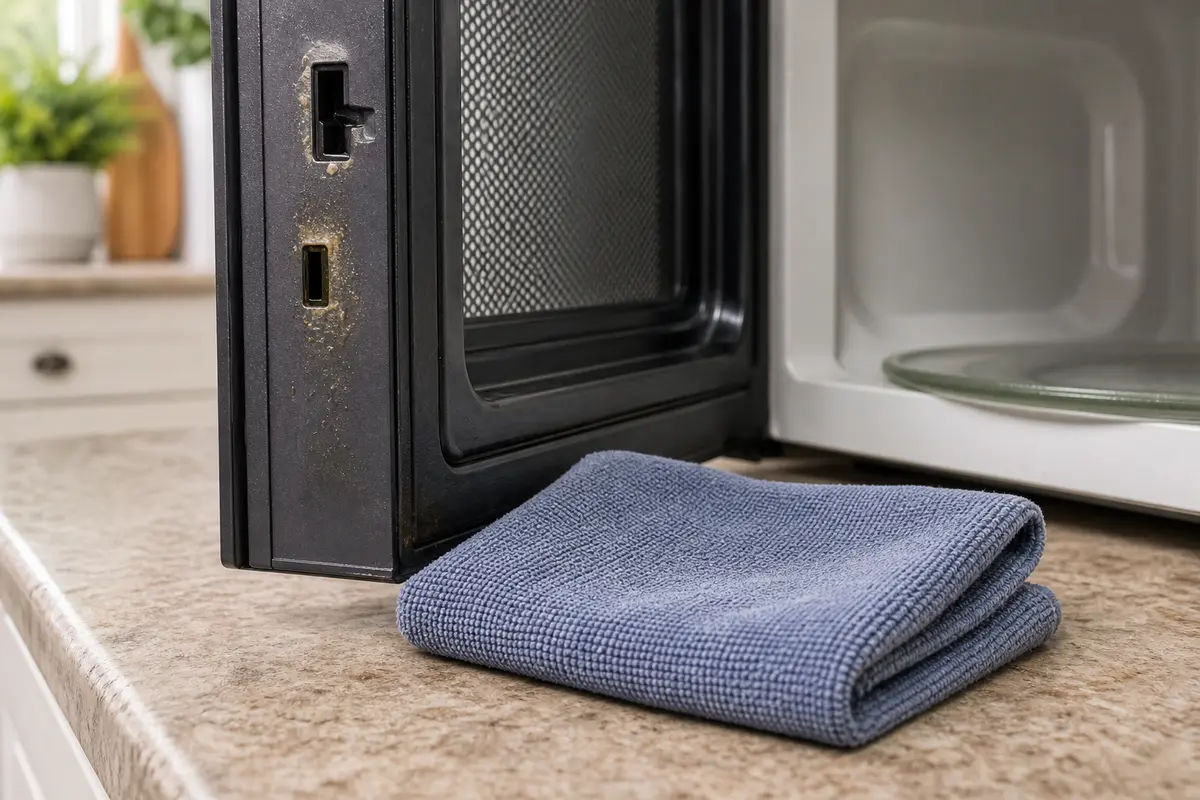
Helps when: Grease or food film around the door edge may keep the latch from closing with a clean feel.
Skip it when: The latch plastic is cracked, the door sags, sparks appear, or the problem points inside the cabinet.
Compare soft cloths on Amazon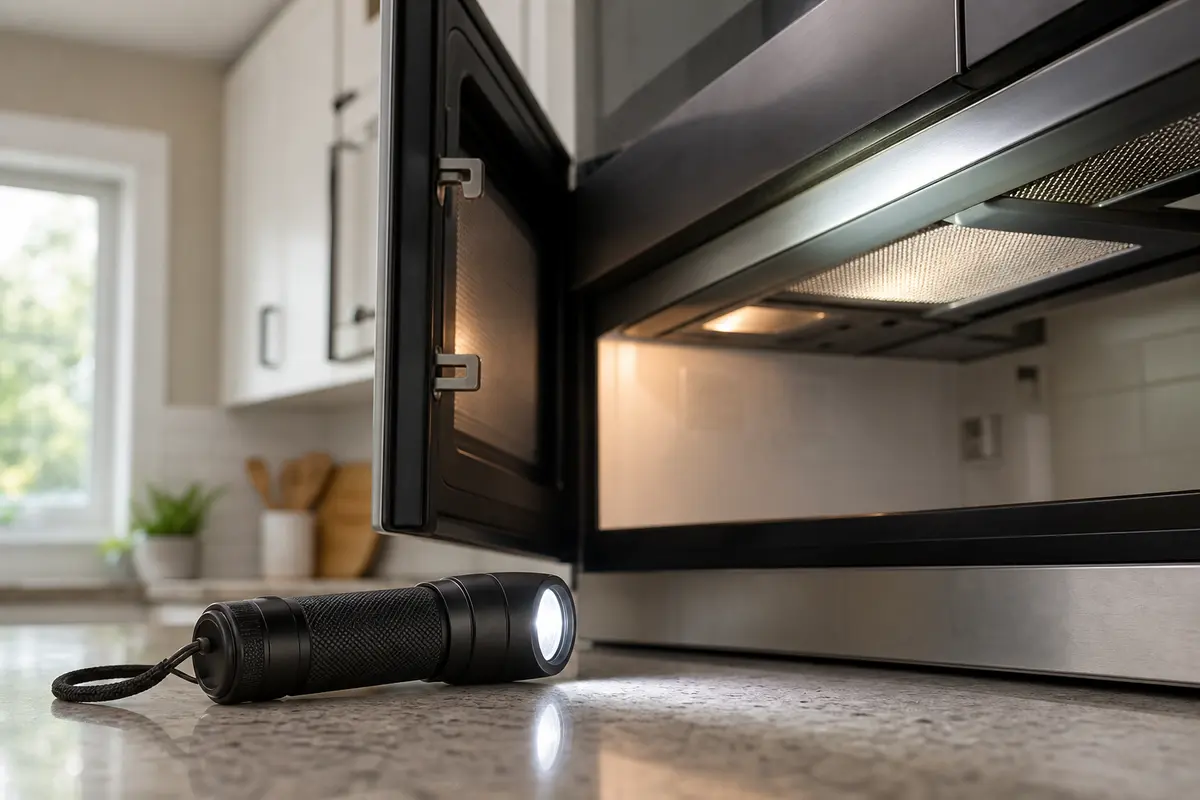
Helps when: You need to see latch hooks, latch openings, door edges, exterior vents, and over-the-range grease filters.
Skip it when: The microwave is built in or hard to access; do not force cabinet removal for a flashlight check.
Compare flashlights on AmazonAs an Amazon Associate I earn from qualifying purchases. Repair Riot may earn a commission at no extra cost to you.
Parts belong here only after the clue is visible. A no-heat microwave is not a reason to order internal high-voltage parts from a guess.
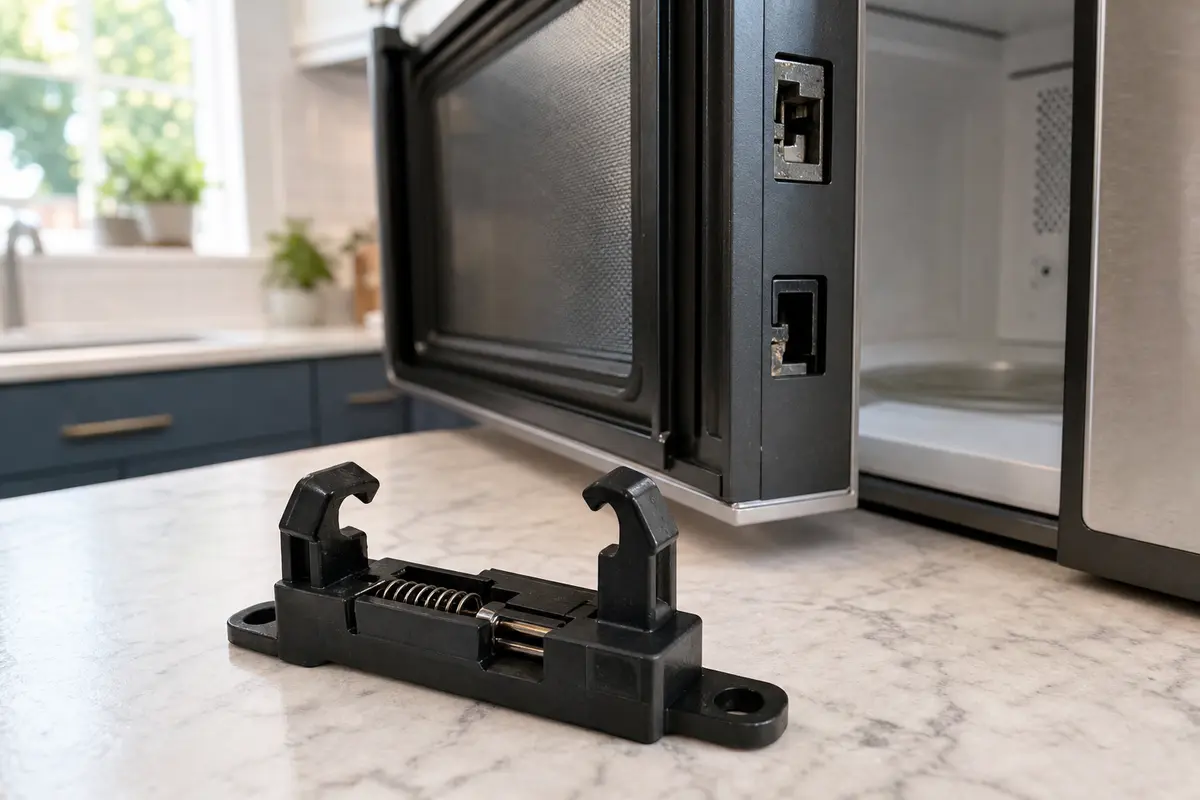
Helps when: Latch hooks are visibly cracked, the door will not close flush, or the exact model diagram shows a separately replaceable latch.
Skip it when: The door feels normal and the water check still fails. That points away from an outside latch part and toward service diagnosis.
Compare microwave door latches on Amazon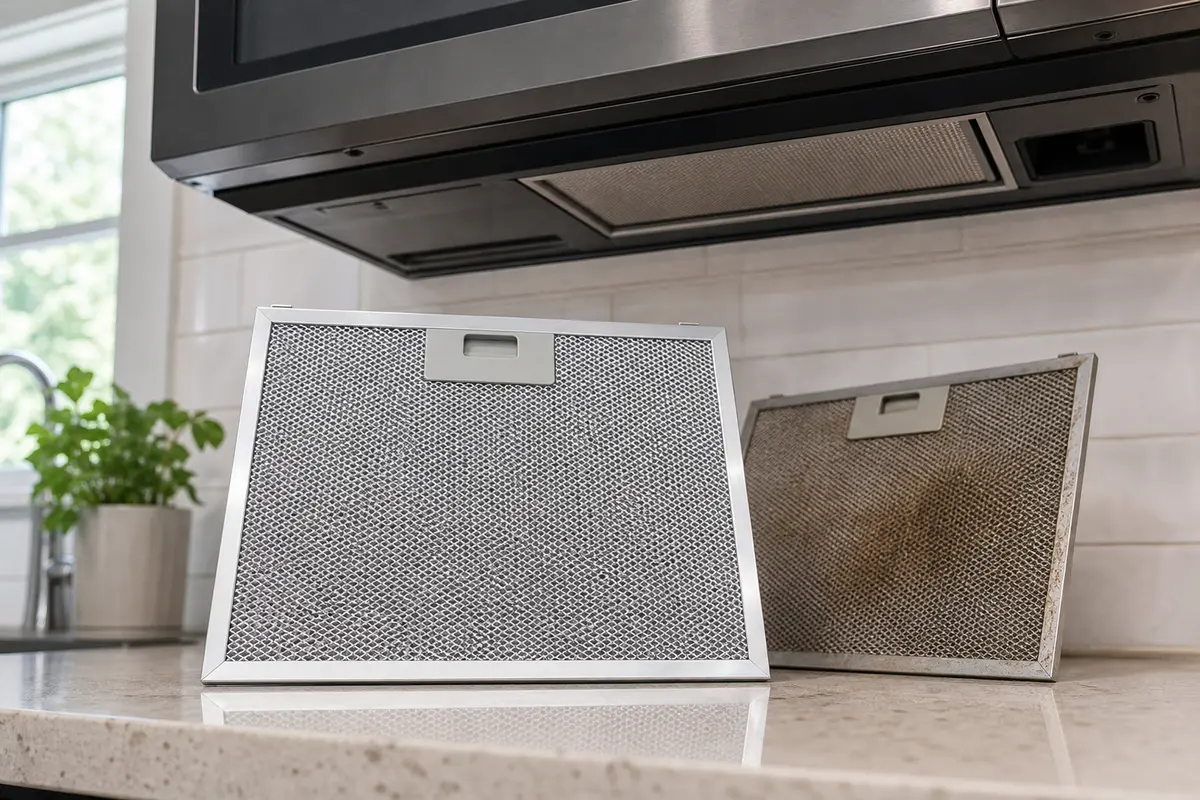
Helps when: An over-the-range microwave heats briefly, vents poorly, and the washable filter is damaged or too clogged to clean.
Skip it when: You have a countertop microwave or steady no-heat with normal airflow. A grease filter does not create microwave heat.
Compare microwave grease filters on AmazonAs an Amazon Associate I earn from qualifying purchases. Repair Riot may earn a commission at no extra cost to you.
The light, fan, and turntable can run while the heating side is off. Run a full-power 1-cup water test, check Demo or Timer mode, try direct wall power once, and feel for a clean door latch. If nothing changes, stop before the cover comes off and call a pro.
Yes. A loose, cracked, dirty, or misaligned latch area can keep the microwave from seeing a safe closed-door condition. From the outside, look for poor latch click, crooked door fit, or a symptom that changes when the door is reclosed.
Not as a guess. A magnetron is an internal high-voltage part, and a no-heat symptom can also come from a diode, capacitor, transformer, fuse, control, or interlock fault. Stop after the outside checks and compare professional diagnosis with replacement cost.
The turntable motor is separate from the heating circuit. A spinning plate only tells you that one low-voltage function is working. Use the water check, power check, and latch check before assuming any heating part has failed.
Yes. Low power, defrost, Demo mode, Timer mode, Control Lock, or Delay Start can make the appliance look active without doing a normal heating cycle. Cancel the program, reset power once, choose a basic timed cook cycle, and retest with water.
No. Intermittent heat, door-pressure behavior, buzzing, burning smell, smoke, or breaker trips are stop signs. Leave it off until the door and internal safety path are repaired or the microwave is replaced.
You can check door fit, latch click, cracks, and dirty latch openings from the outside. If the water test changes only when the door is lifted or reclosed, stop there; door-switch testing usually means wiring access and belongs with a qualified appliance technician.
Replacement often makes sense on an older countertop unit when the same water test stays cold after mode, outlet, door, and airflow checks. Repair is more reasonable when visible latch damage matches an available model-specific part, or when a built-in unit is worth professional service.
Repair Riot built this page around homeowner-visible microwave clues: water-test result, settings, direct power, door fit, latch condition, vent behavior, and the stop point before high-voltage service.