Does bake still heat normally?
A broil-only failure points first to the electric broil element, gas broil igniter, or broil-side wiring. Keep power off for inspection, and stop if you smell gas.
If your LG oven broiler is not working, first separate a broil-only failure from a whole-oven heat problem. Check whether bake heats, then compare the upper electric element or gas igniter behavior. If you smell gas or see burned wiring, stop and call a pro.
In practice, bake is the split point. Bake normal with dead broil points to the broil heat source; bake and broil both weak sends you back to breaker, sensor, or supply checks.
Watch for the first-minute pattern: no glow, uneven glow, glow without flame, or both bake and broil dead each send you to a different next step.
Don’t start with: Do not start with the oven control board or sensor unless the heating part, power, and visible wiring clues already point away from the broiler itself.
A broil-only failure points first to the electric broil element, gas broil igniter, or broil-side wiring. Keep power off for inspection, and stop if you smell gas.
Step back to the breaker, power supply, gas supply, error codes, and oven temperature behavior before buying broil-only parts.
With power off and the oven cool, inspect for blistering, a split sheath, sagging, or a burned-open spot.
That is a common weak-igniter clue. Stop if gas odor lingers or ignition keeps failing.
Look for broader temperature symptoms, sensor trouble, heat-damaged wiring, or a control circuit issue after the heat source is ruled out.
The top of the oven tells you more than the display. Look for an electric element that stays dark or damaged, or a gas igniter that glows without a clean burner light-off. If you smell gas, leave the oven off and call a pro.
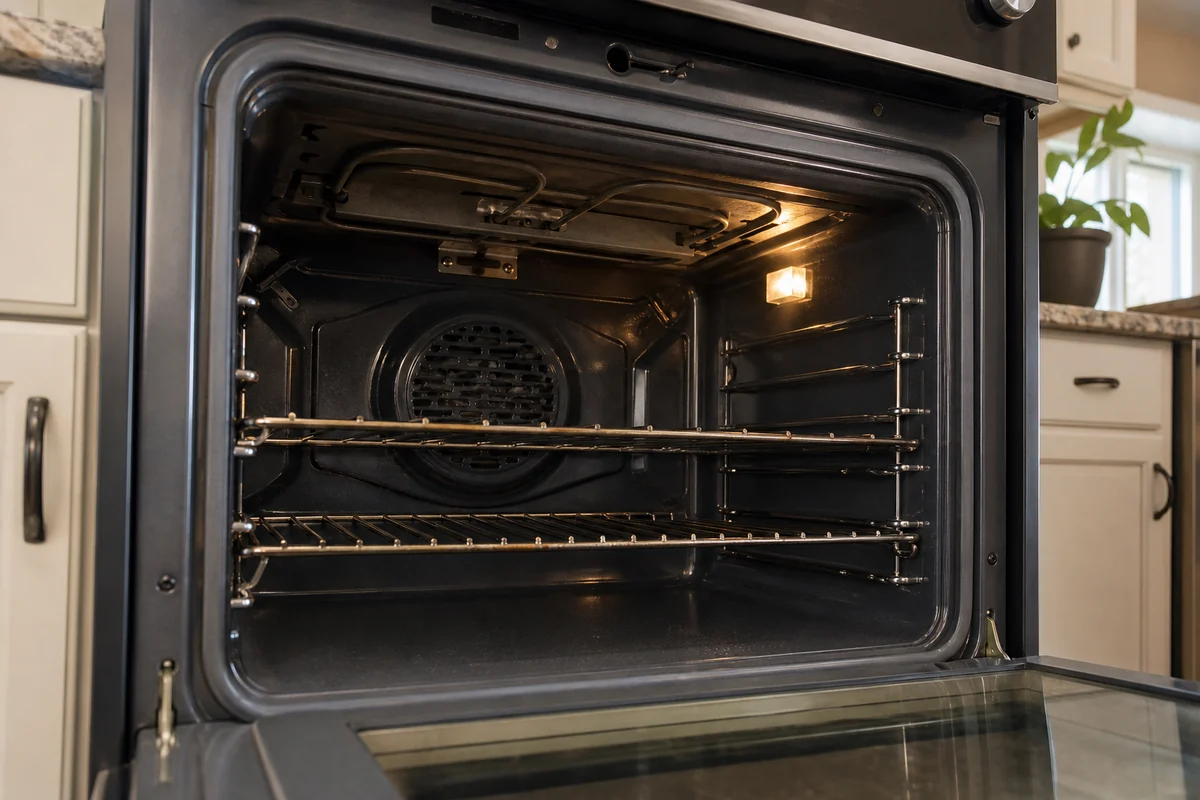
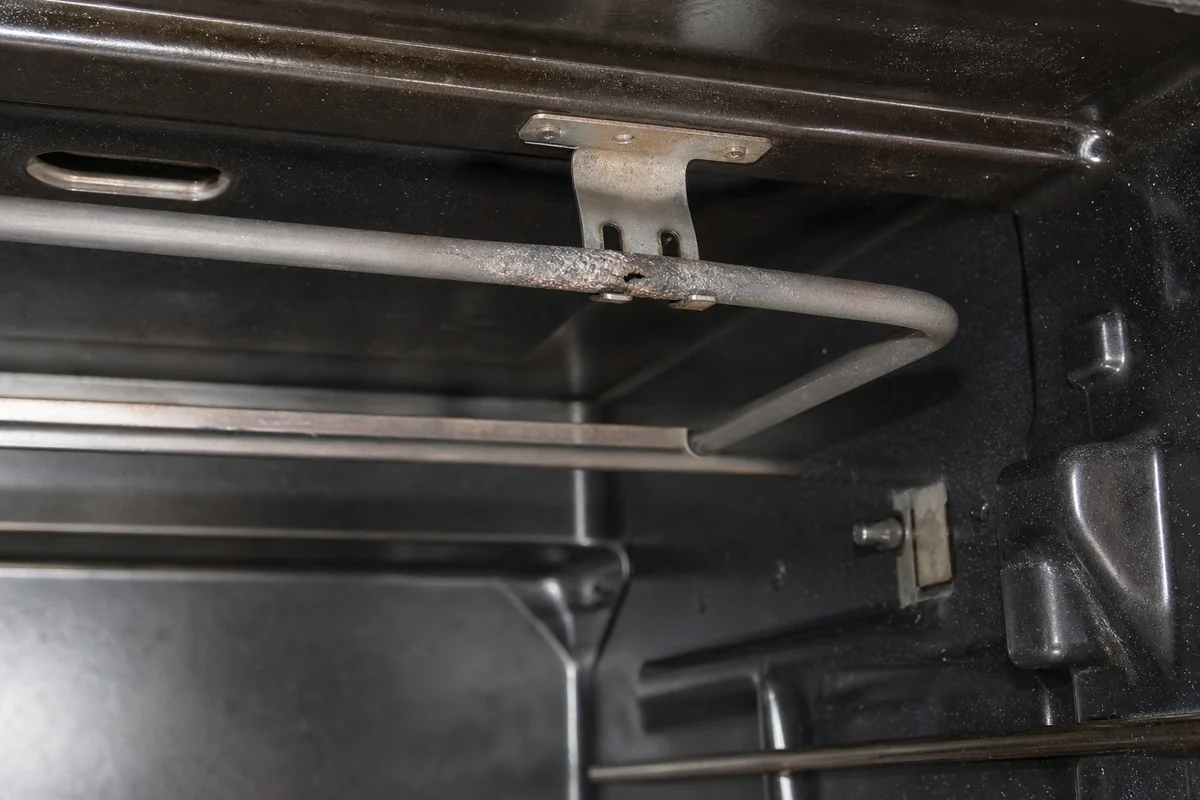
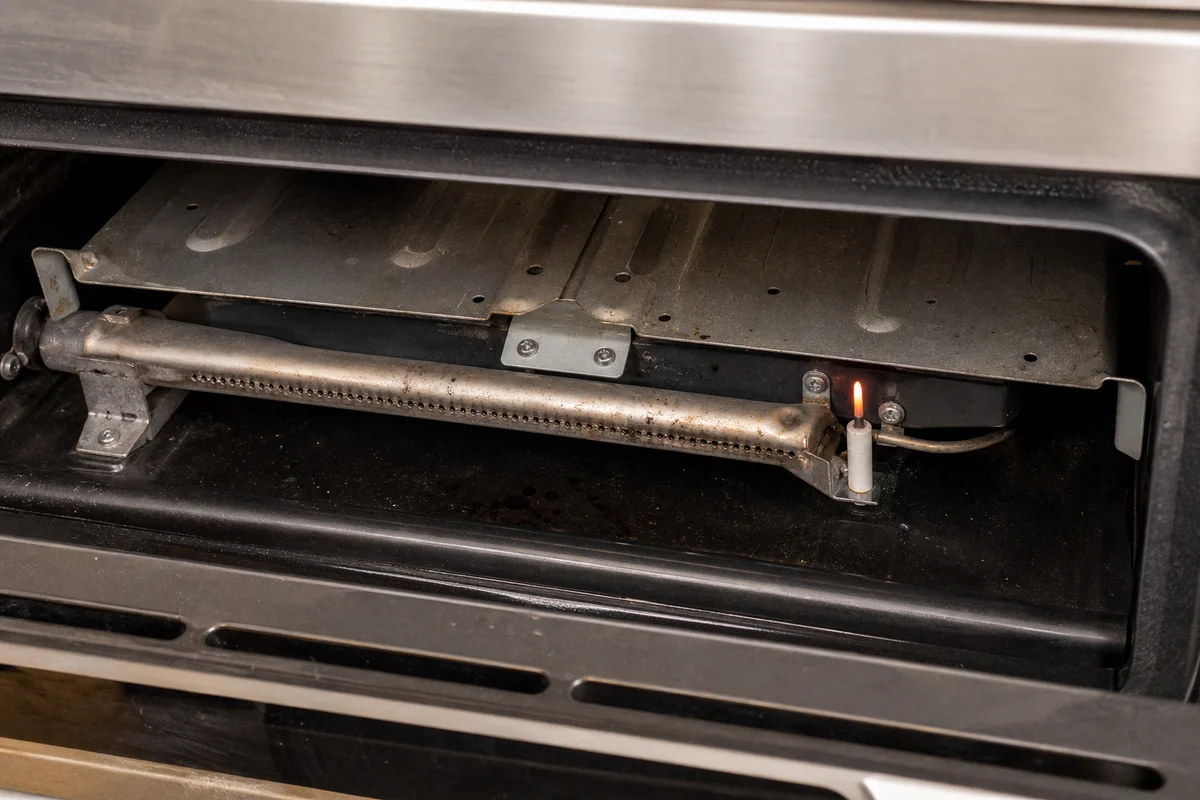
Copy the full model number from the oven frame, storage drawer area, or owner manual before comparing parts. LG ranges and wall ovens can use different broil elements, igniters, brackets, sensors, and connectors even when the symptom sounds the same.
Most LG broiler calls fall into one of three buckets: the oven was not actually set up to broil, the broil heat source failed, or the oven has a broader heating fault. What still works tells you where to look next.
The fastest way to waste money on this repair is to treat every cold broiler like an electronics failure. First look at the upper element, watch the igniter behavior, and write down whether bake still heats.
Work from the outside in. These checks keep you on homeowner-level ground: settings, visible heat, a power-off inspection, and then a parts decision only when the clue supports it.
Broil diagnosis gets much easier when you write down the first visible result. The failure pattern matters more than the simple fact that the broiler quit.
| What you see | What it usually means | Next move |
|---|---|---|
| Bake works, electric upper element stays dark | Broil element, broil wiring, or broil relay path | Inspect the element with power off; replace only if damage or testing supports it. |
| Electric element glows in one section or has a split spot | Partially failed oven broil element | Match the exact element shape and terminals before ordering. |
| Gas igniter glows but burner does not light promptly | Weak broil igniter is likely | Stop if gas odor lingers; replace the igniter only after matching the model. |
| Neither bake nor broil heats right | Power, supply, sensor, or control-side issue | Look beyond broil-only parts and call a pro if power or gas diagnosis is needed. |
| Broil starts, then quits too early | Sensor feedback, heat-damaged connection, or control issue | Note whether bake temperature is also off before buying a sensor. |
These tools support inspection and power-off testing. They are not a reason to work on energized wiring or loosen gas fittings.
Paid links. As an Amazon Associate I earn from qualifying purchases. Repair Riot may earn a commission at no extra cost to you.
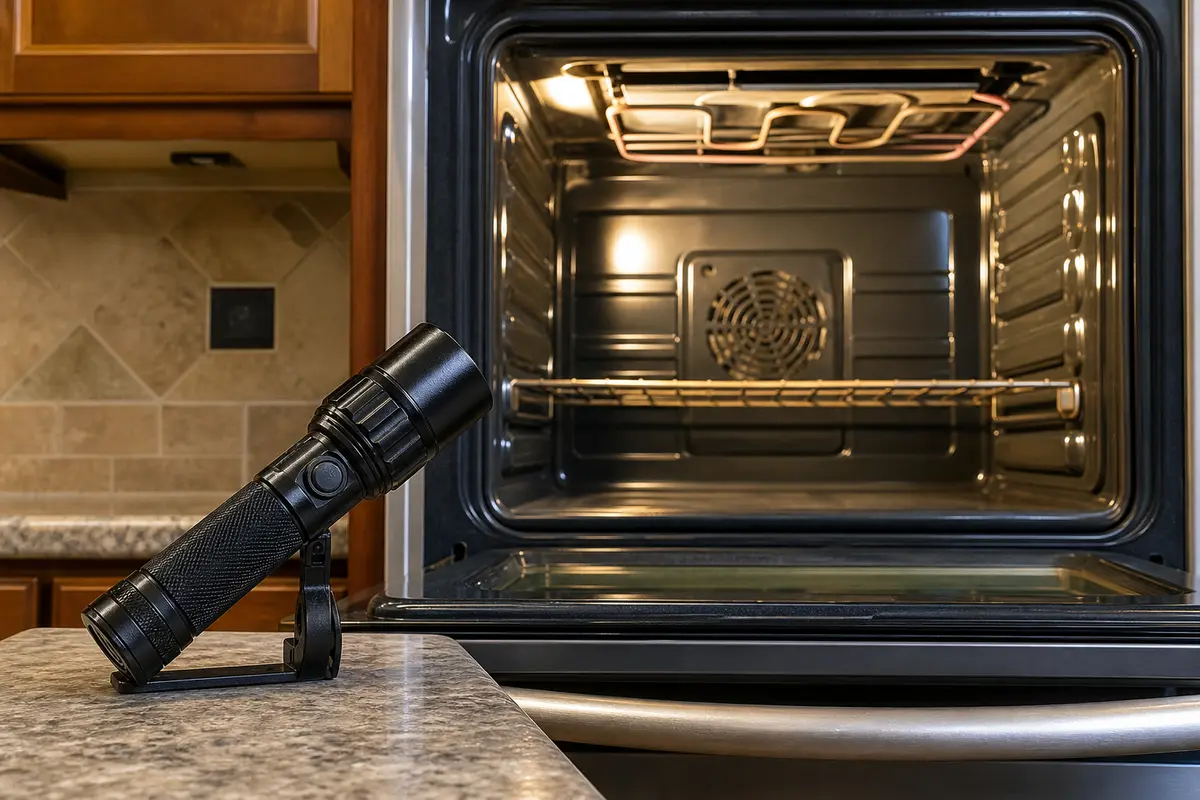
Helps when: You need to see the upper element, igniter area, burner ports, or model-number tag without reaching into a dark oven.
Skip it when: The broil area is hot, the oven is still powered for disassembly, or gas odor is present.
Compare flashlights on Amazon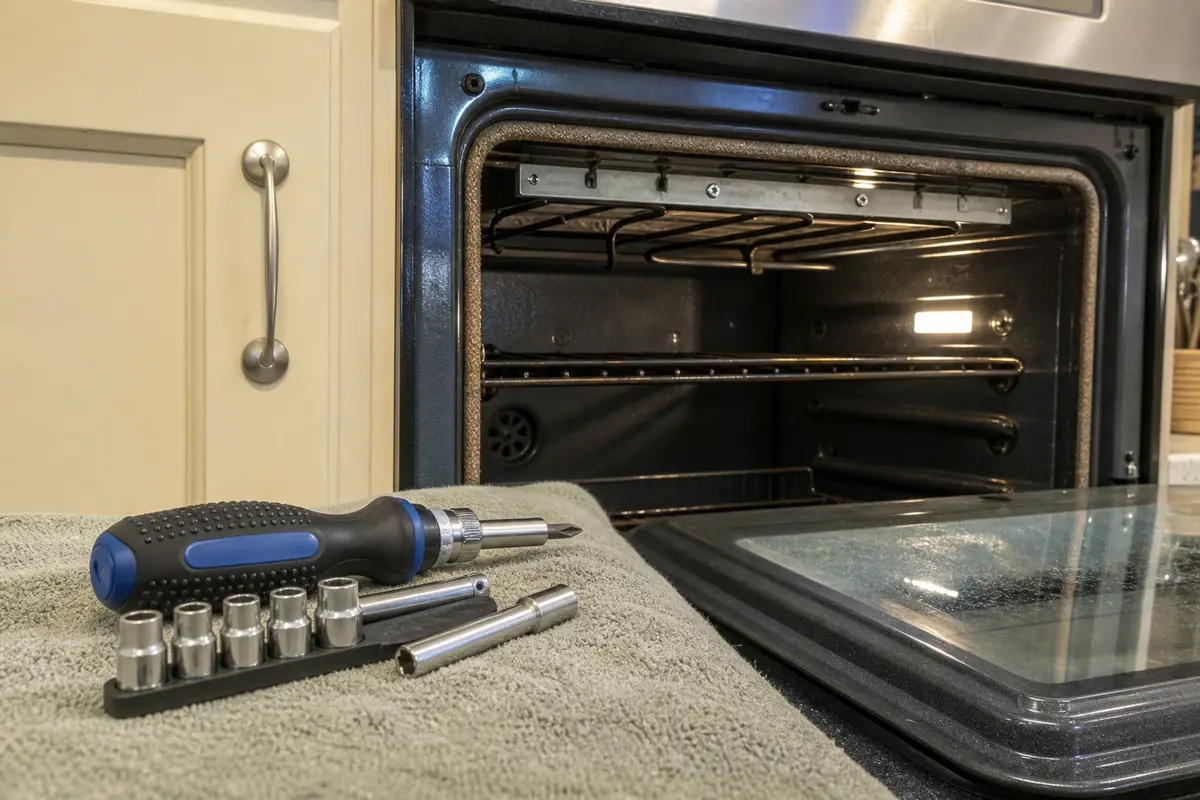
Helps when: You are removing racks, a permitted access cover, or element mounting screws after power is off.
Skip it when: The oven is hardwired, built in tightly, or the panel removal exposes wiring you are not trained to handle.
Compare driver sets on Amazon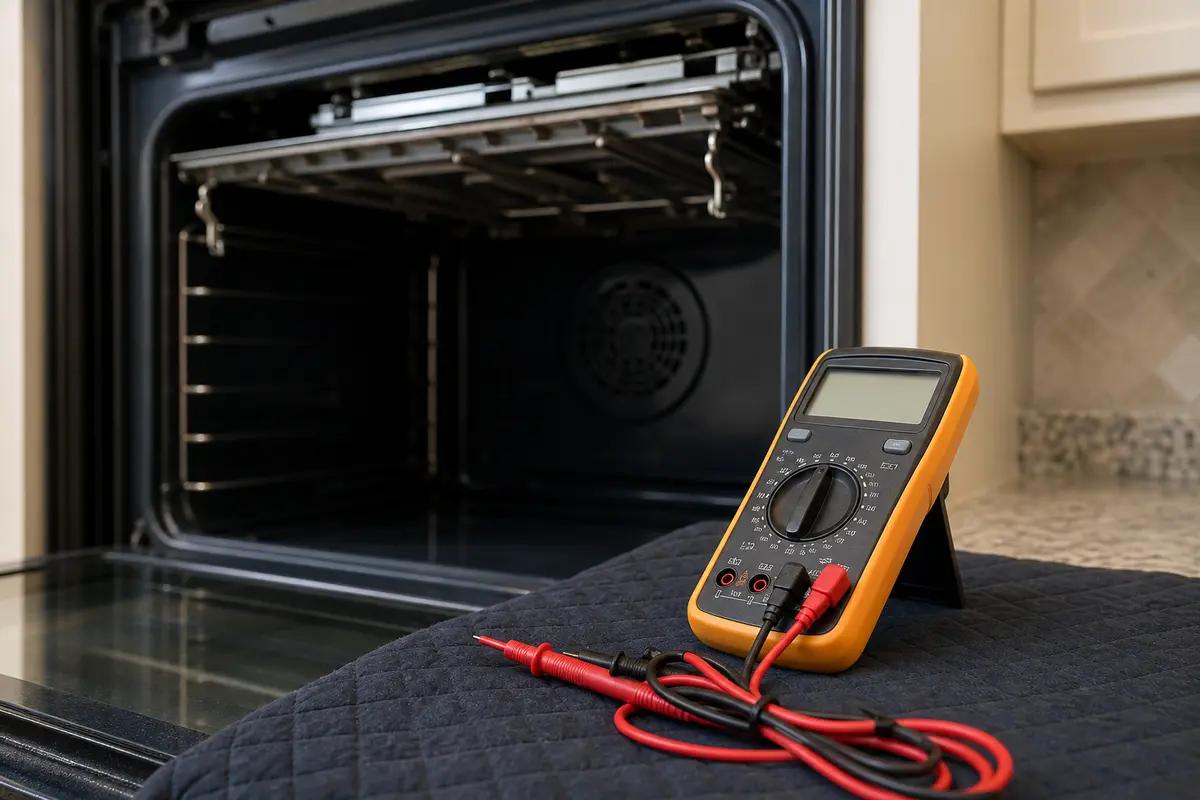
Helps when: You know how to test continuity on a disconnected broil element or sensor with the breaker off.
Skip it when: The next step would require energized measurements, gas-valve testing, or guessing what the meter reading means.
Compare multimeters on Amazon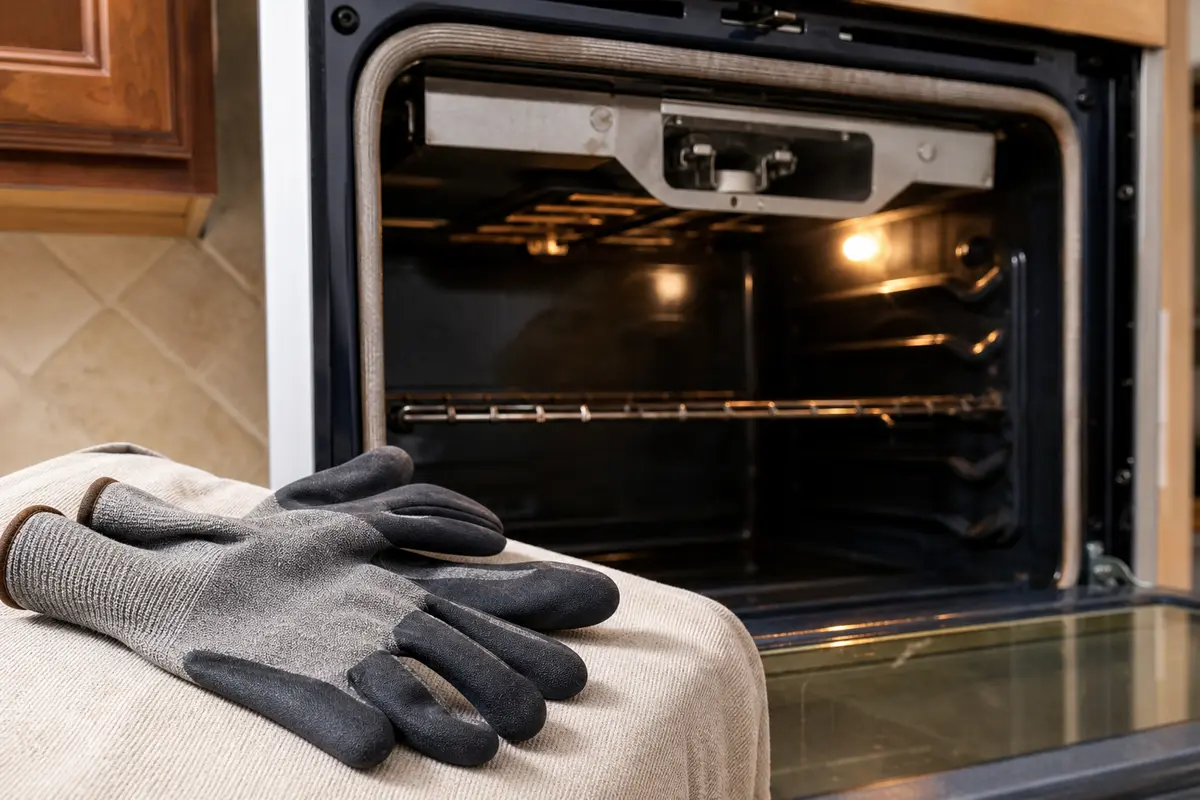
Helps when: You are handling racks, sharp sheet-metal edges, or brittle brackets after the oven is cool.
Skip it when: The job involves hot parts, exposed electrical terminals, or any gas leak concern.
Compare work gloves on AmazonPut parts in the cart only after the symptom points there. LG oven parts are model-specific, and lookalike elements or igniters can have the wrong bracket, lead length, connector, or terminal shape.
Paid links. As an Amazon Associate I earn from qualifying purchases. Repair Riot may earn a commission at no extra cost to you.
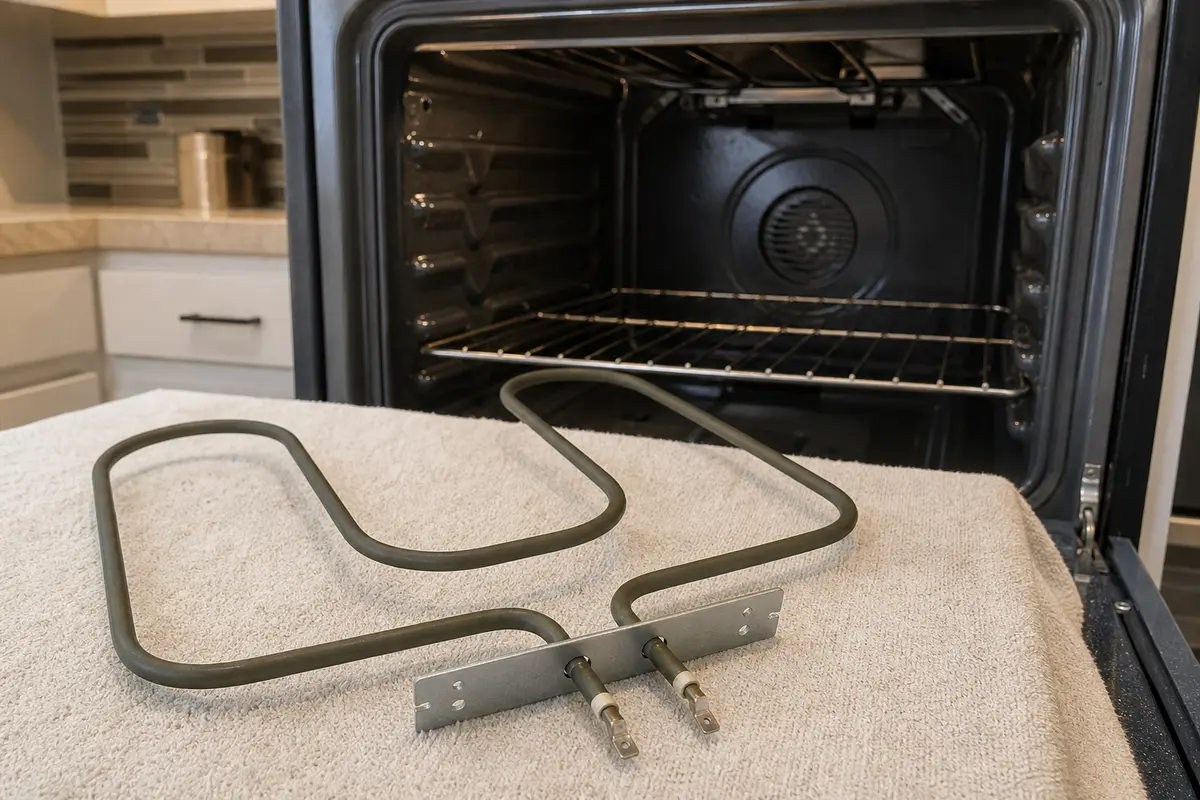
Helps when: An electric oven bakes normally, broil stays cold or heats in patches, or the upper element is blistered, split, or burned open.
Skip it when: Bake is also dead, the breaker trips again, or you have not inspected the element with power off.
Compare broil elements on Amazon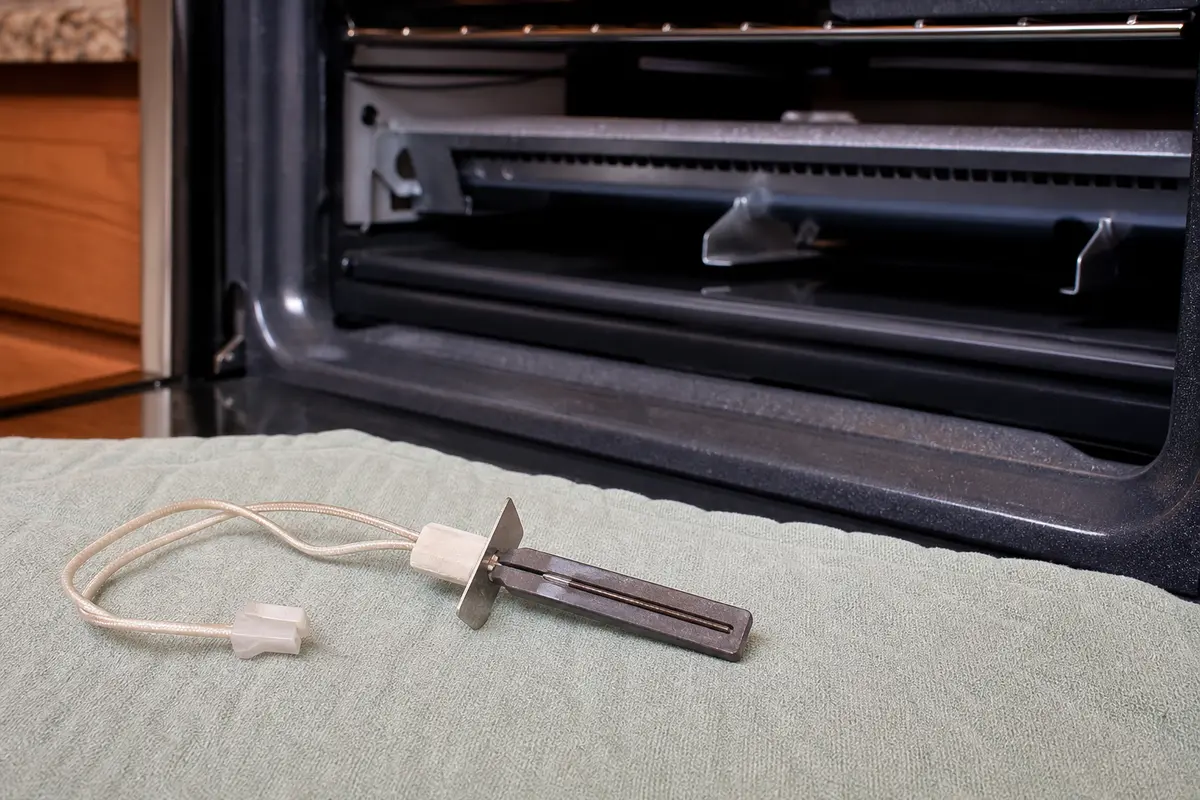
Helps when: A gas broiler igniter glows but the burner does not light promptly, lights late, or gives weak broil heat.
Skip it when: You smell gas that does not clear, the igniter area is not accessible safely, or the model match is uncertain.
Compare oven igniters on Amazon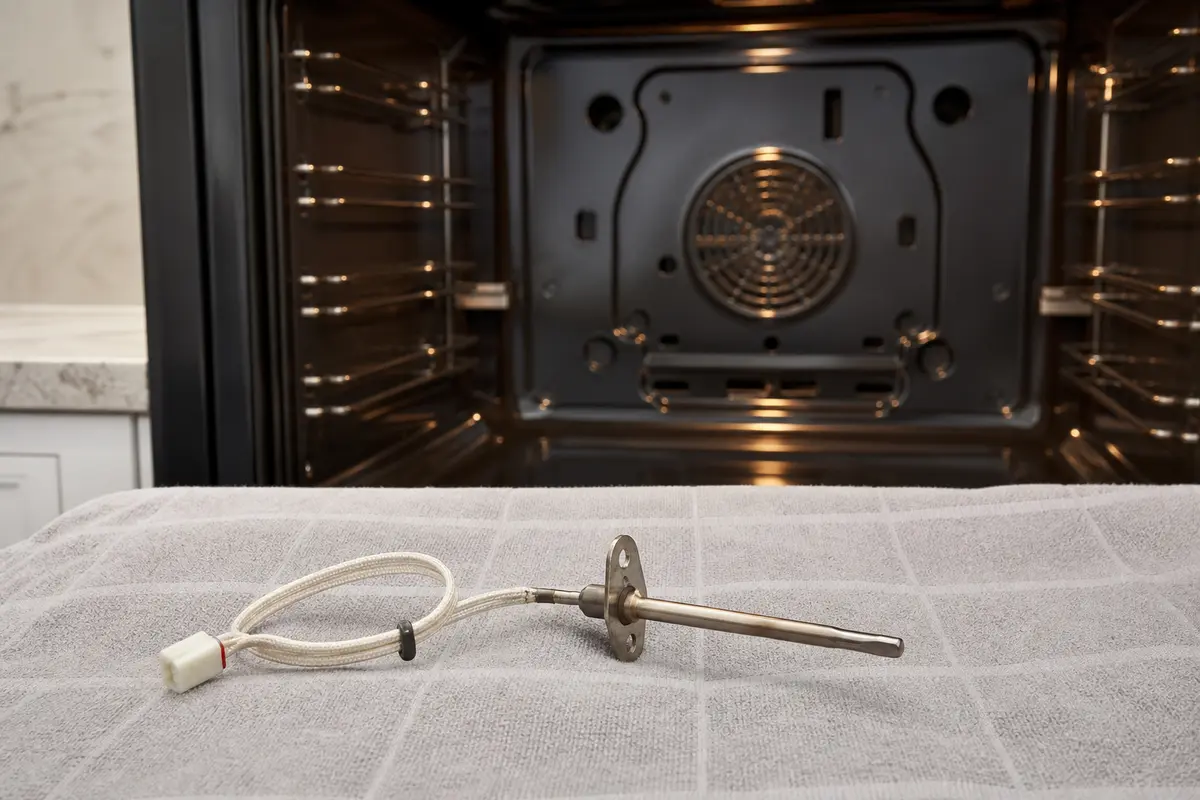
Helps when: Broil starts and quits early, bake temperatures are also off, and the broil element or igniter path does not explain the failure.
Skip it when: Only broil is dead and the heat source has not been inspected or tested yet.
Compare oven sensors on Amazon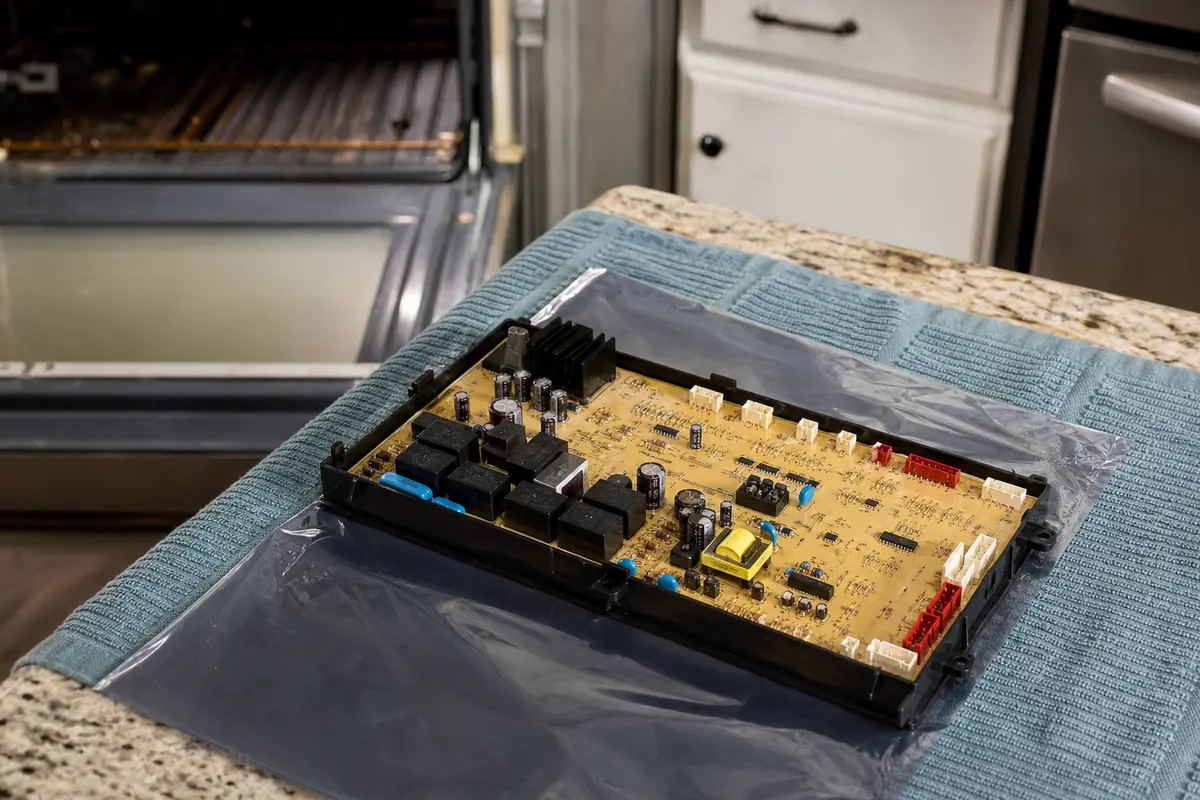
Helps when: A technician has traced the failure to the control circuit after the heat source, wiring, sensor, and power supply check out.
Skip it when: You are buying it as the first guess. Control boards are expensive and easy to misdiagnose.
Compare control boards on AmazonGood notes can save a service visit from turning into guesswork. The best details come from the first safe observation, not from taking the oven apart.
That usually means the failure is on the broil side, not the whole oven. On an electric model, the upper broil element or its connection is high on the list. On a gas model, the broil igniter is a common cause, but stop and call a pro if you smell gas.
With power off and the oven cool, look for blistering, a split sheath, sagging, or a burned-open spot on the upper element. During a safe broil observation, a bad element may stay dark or glow in only one section.
Yes. A weak igniter can glow and still fail to open the gas valve reliably. If it glows for a while but the broil burner does not light promptly, the igniter is usually a better suspect than the control board. Stop if gas odor lingers.
It can, but it is not the first part to buy. The oven temperature sensor moves up when broil starts and quits too early, bake temperatures are also wrong, or the heat source itself does not explain the symptom.
Usually no. A control board is a late diagnosis, not a first guess. Consider it only after settings, power, element or igniter behavior, sensor clues, and visible wiring have been ruled out.
Intermittent broil can come from a weak igniter, a cracked element that opens as it heats, a loose heat-damaged connection, or sensor feedback that cuts heat early. Write down whether bake is also affected before buying parts.
Yes. Some electric ranges can look partly alive while a power leg is missing. If the range uses a double breaker, reset it fully off and on once. If it trips again, leave it off and call for help.
If bake works normally and there is no gas odor, sparking, burning smell, breaker trip, or visible heat damage, bake may still be usable for a short time. Stop using the oven and call a pro if any safety clue appears.
Use the full model number and match the part diagram, connector, bracket, lead length, terminal shape, and element shape. A part that looks close in a photo can still be wrong for your oven.
Repair Riot built this page around visible oven behavior: mode and door checks first, then electric element, gas igniter, sensor, wiring, and control clues. Manufacturer and safety references shaped the model-number and stop-work guidance.