Does one burner stay high while others regulate?
Treat the surface burner switch for that position as the lead suspect after the knob check.
Turn the affected burner off and keep cookware away. If it keeps heating with the knob off, shut off range power. If only one burner ignores low or medium, prove the knob first, then the surface burner switch.
Watch for one burner ignoring low or medium while the others regulate normally. That points to the burner control switch before the element.
Treat a stuck-high burner as a fire risk first, then sort knob, switch, and element clues with the range powered off for access.
Don’t start with: the control board. First confirm one burner is affected, the knob is not stripped, and the element is not visibly damaged or loose in its receptacle.
Treat the surface burner switch for that position as the lead suspect after the knob check.
Pull it straight off only if it is designed to remove by hand. A stripped knob can make the setting lie.
That is still a control-switch clue on most electric ranges, not a control-board clue.
Let it cool, cut power, and inspect the element/receptacle fit before blaming the switch.
Stop using the range and have the power/control side checked. That is broader than one burner switch.
Shut off range power at the breaker and keep the appliance out of service until repaired.
The key clue is a mismatch: the knob is set low or off, but one electric burner keeps acting like high. Compare that burner with another position before buying parts.
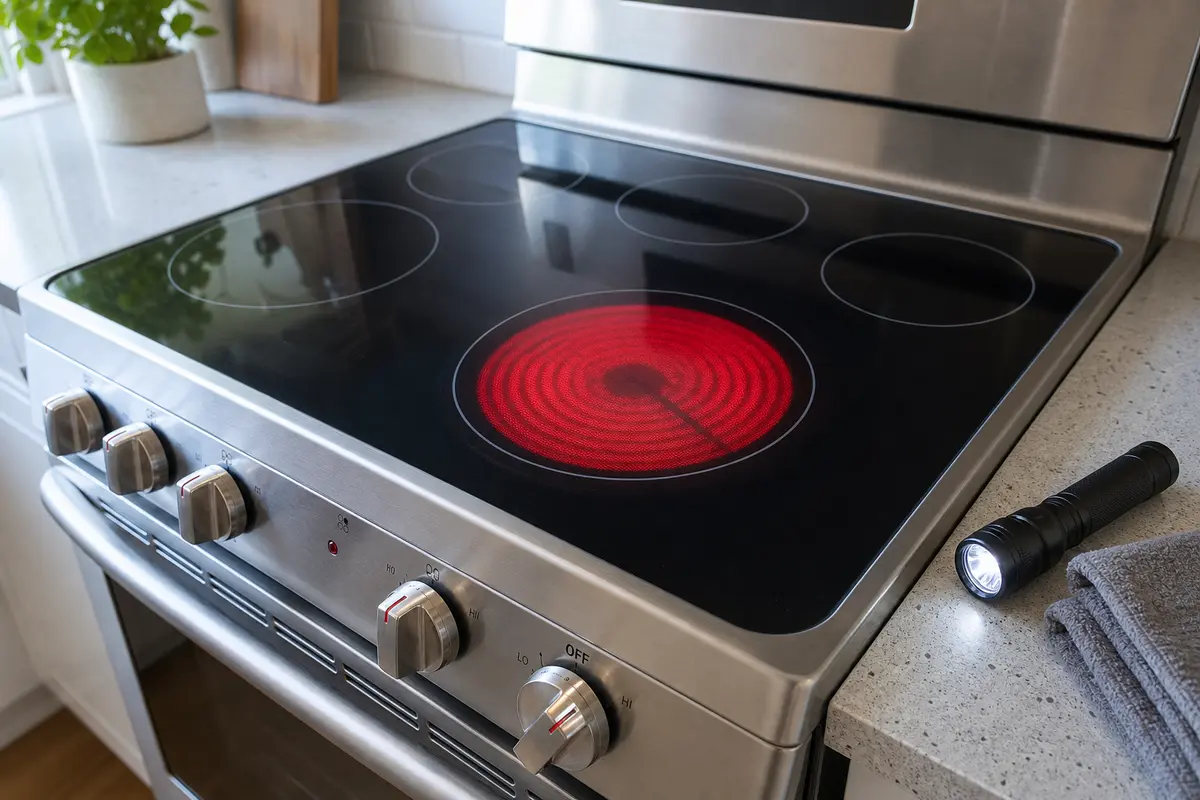
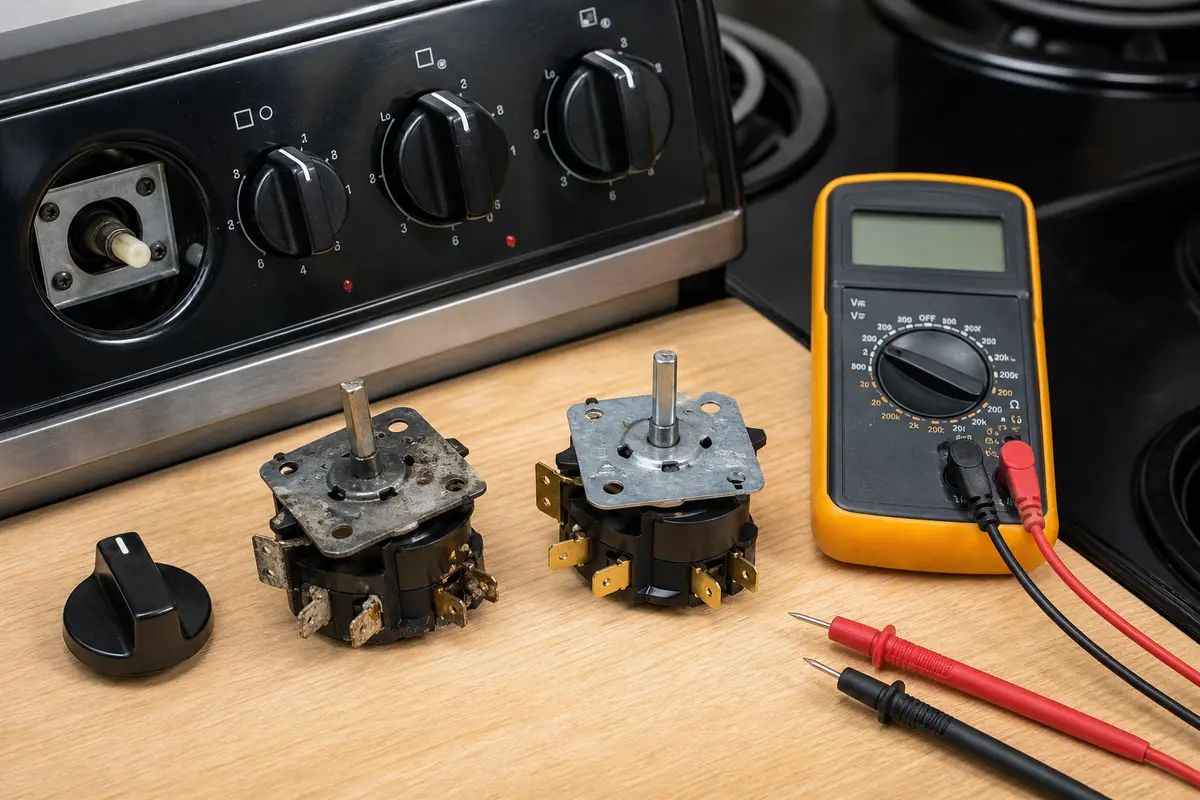
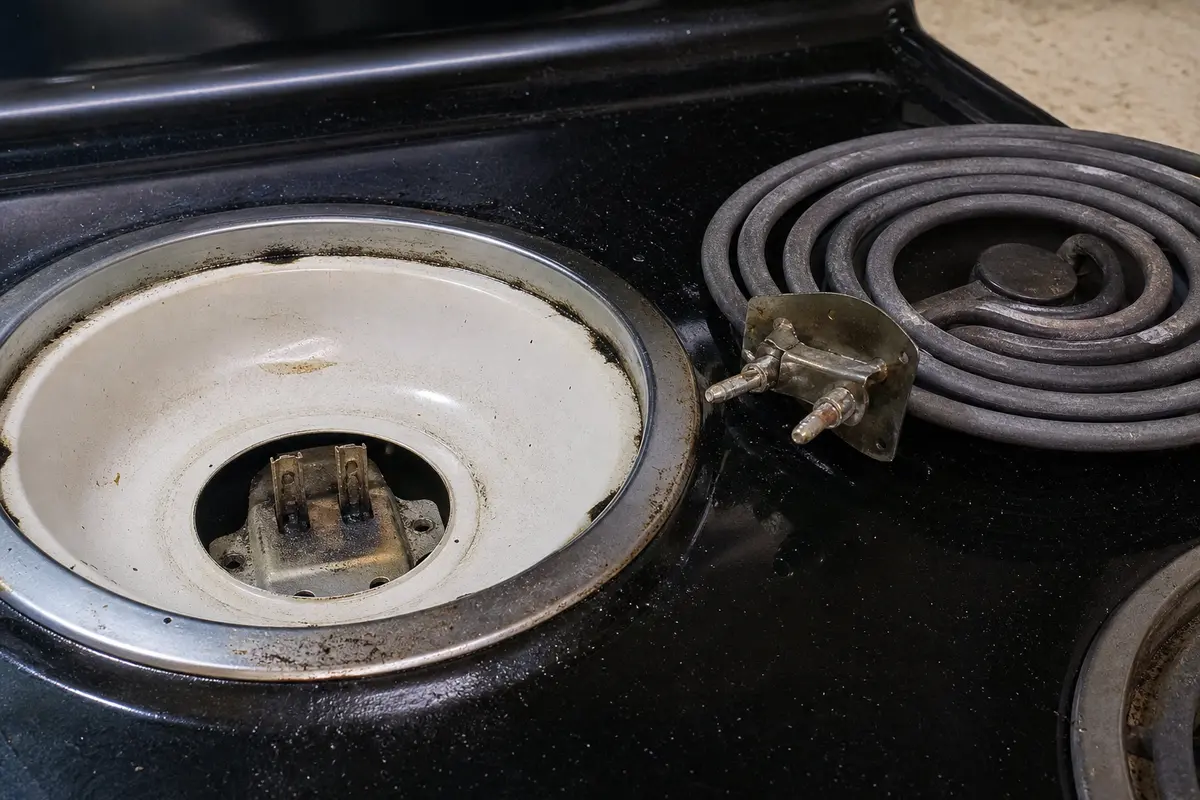
Before buying a surface burner switch, knob, surface element, or control board, identify the affected burner position and copy the full model number from the range tag. Match switch rating, shaft style, terminals, element size, and knob stem shape. A wrong switch can fit the panel and still control the wrong load.
On an electric range, the surface burner switch cycles power to the element. When one burner ignores low or medium but the others behave, the switch behind that knob moves to the top of the list.
A stuck-high burner is a safety problem before it is a parts order. If the burner keeps glowing after the knob is off, cut range power and stop there.
Let the burner cool, keep power off for access, and use the pattern to choose the next step.
| What you see | What it usually means | Next move |
|---|---|---|
| One burner stays high on every setting | The surface burner switch for that position is likely stuck. | Inspect knob fit, then match the switch by model, burner position, rating, shaft, and terminals. |
| Knob is cracked or loose on the stem | The setting indicator may not match the switch position. | Replace the knob only if the stem shape and pointer orientation match. |
| Element is warped, blistered, or has burned contacts | The element or receptacle may be unsafe or adding contact trouble. | Keep power off and replace only the damaged matching part. |
| Several burners ignore settings | This is broader than one burner switch. | Stop using the range and schedule service for wiring or control diagnosis. |
| Burner keeps heating with knob off | The burner is not safely controlled. | Shut off range power at the breaker and do not use the range until repaired. |
A bad knob is cheaper than a switch, but it has to show a real clue.
The switch should cycle power. A stuck switch can feed too much heat even though the knob moves normally.
These tools support inspection with the range cool and power disconnected. Skip tool work for melted wiring, repeated breaker trips, or a burner that will not shut off.
Use parts only after the symptom points there. Burner position, rating, stem shape, and terminal layout matter more than the symptom name.
The usual cause is a failed surface burner switch for that burner position. If the knob is sound and only one burner ignores low or medium, prove that switch before considering the control board.
No. Turn that burner off and keep cookware away. If it keeps heating after the knob is off, shut off range power at the breaker and do not use the range until repaired.
Yes. A cracked or stripped knob can point to low while the switch shaft is still near high. Check the knob shape before pricing electrical parts.
Sometimes, especially if it is warped, blistered, cracked, or has burned contacts. But one burner that simply ignores the control setting usually points first to the burner switch.
No. A single burner stuck high is usually local to that knob, switch, element, or receptacle. Control-board diagnosis moves up only when several burners or range functions act wrong.
Shut off range power at the breaker and stop using the appliance. A burner that will not turn off is a fire risk and needs repair before another test.
Only with power disconnected and only if you can identify the terminals safely. If the work requires powered testing, burned wiring repair, or unknown harness tracing, use a qualified technician.
Some radiant burners cycle during normal temperature control. The warning sign is one burner staying too hot for the setting or ignoring low and medium compared with another burner.
Copy the full model number, affected burner position, element size, switch rating, shaft style, terminal layout, and knob stem shape. Similar-looking electric range parts are often not interchangeable.
Repair Riot built this page around observable electric-range clues: one burner versus several, knob feel, element condition, whether heat shuts off, and whether power has to be cut. The source link supports cooking fire-risk context; the repair sequence and parts triage are original guidance.