Does the thump disappear when the drum is empty?
Treat it as load-related first. Check for shoes, heavy seams, coins, zipper pulls, bunched bedding, and a dryer that is rocking on its feet.
Start with a short empty run. When the thump disappears, the load or a loose item was doing it; when the same beat stays empty, unplug the dryer and inspect the drum rollers, belt path, and front lip.
Start with the stuff inside the drum: a shoe, zipper pull, coin, bunched towel, or heavy seam can hit once per turn. If the dryer still thumps empty and the drum feels lumpy by hand, inspect the rollers before buying parts.
Compare an empty run with damp towels. A changed beat points to the load; the same beat empty points to the drum lip or supports.
Don’t start with: Do not order a control board, motor, or random dryer kit for a clean thump. Check the drum lip with a flashlight, then hand-turn the unplugged drum before you spend money.
Treat it as load-related first. Check for shoes, heavy seams, coins, zipper pulls, bunched bedding, and a dryer that is rocking on its feet.
Disconnect power. Turn the drum by hand and inspect the drum lip, front felt area, rollers, and belt path before running full loads again.
That cold-start pattern points the inspection toward the support rollers. Unplug the dryer, turn the drum by hand, and feel for one lumpy spot before you open the cabinet.
Keep the belt and idler path in play. Look for fraying, glazing, cracks, belt edge wear, or a pulley area that does not spin cleanly.
Remove the loose object or repair the worn contact point before buying rollers. A local strike can mimic a support-part thump.
Leave the dryer off. That is no longer a simple load check; it needs support-part, drum, or alignment diagnosis before more use.
Use the photos in order: separate load noise from machine noise, look for a local strike at the drum lip, then inspect the roller only after the easy checks fail.
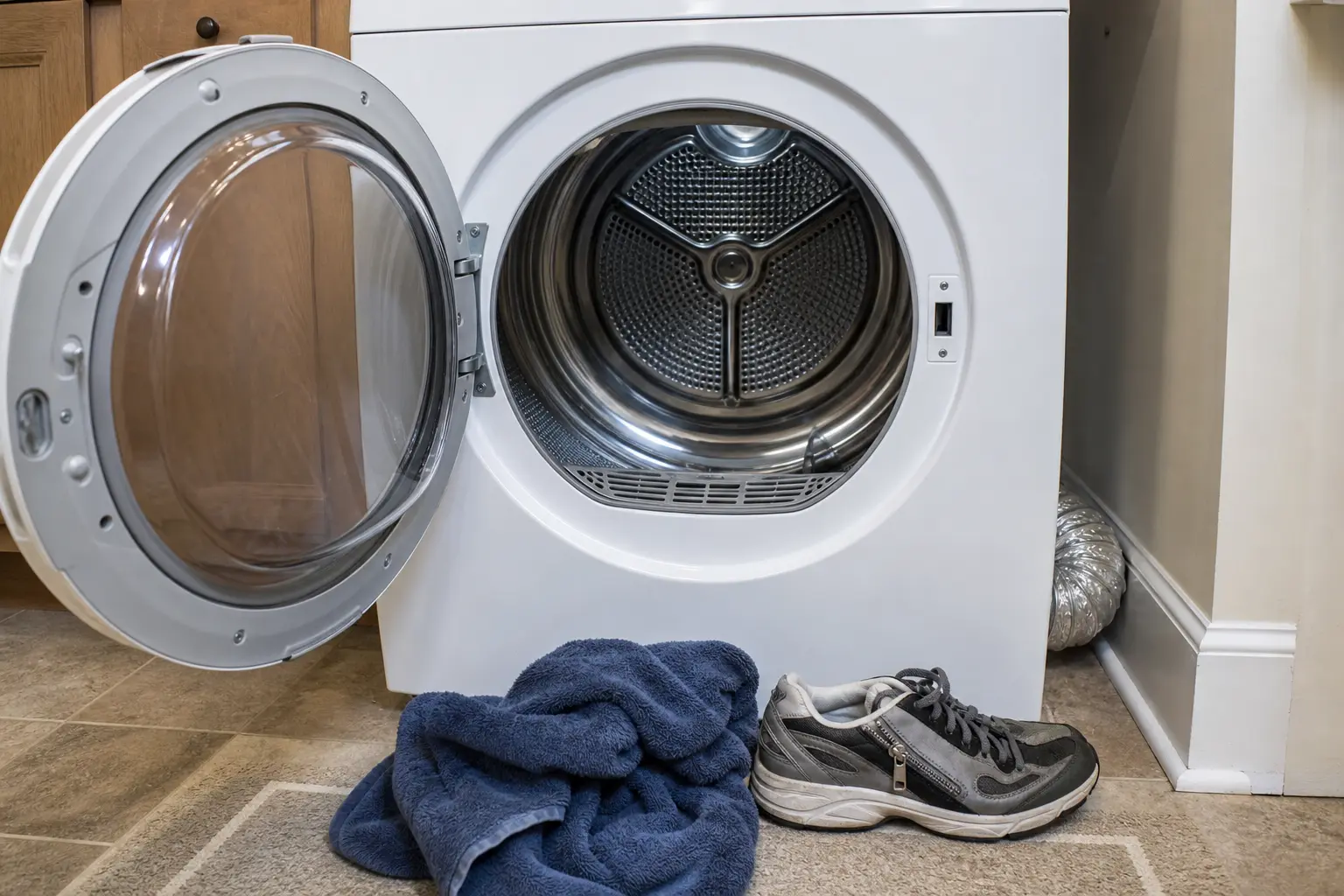
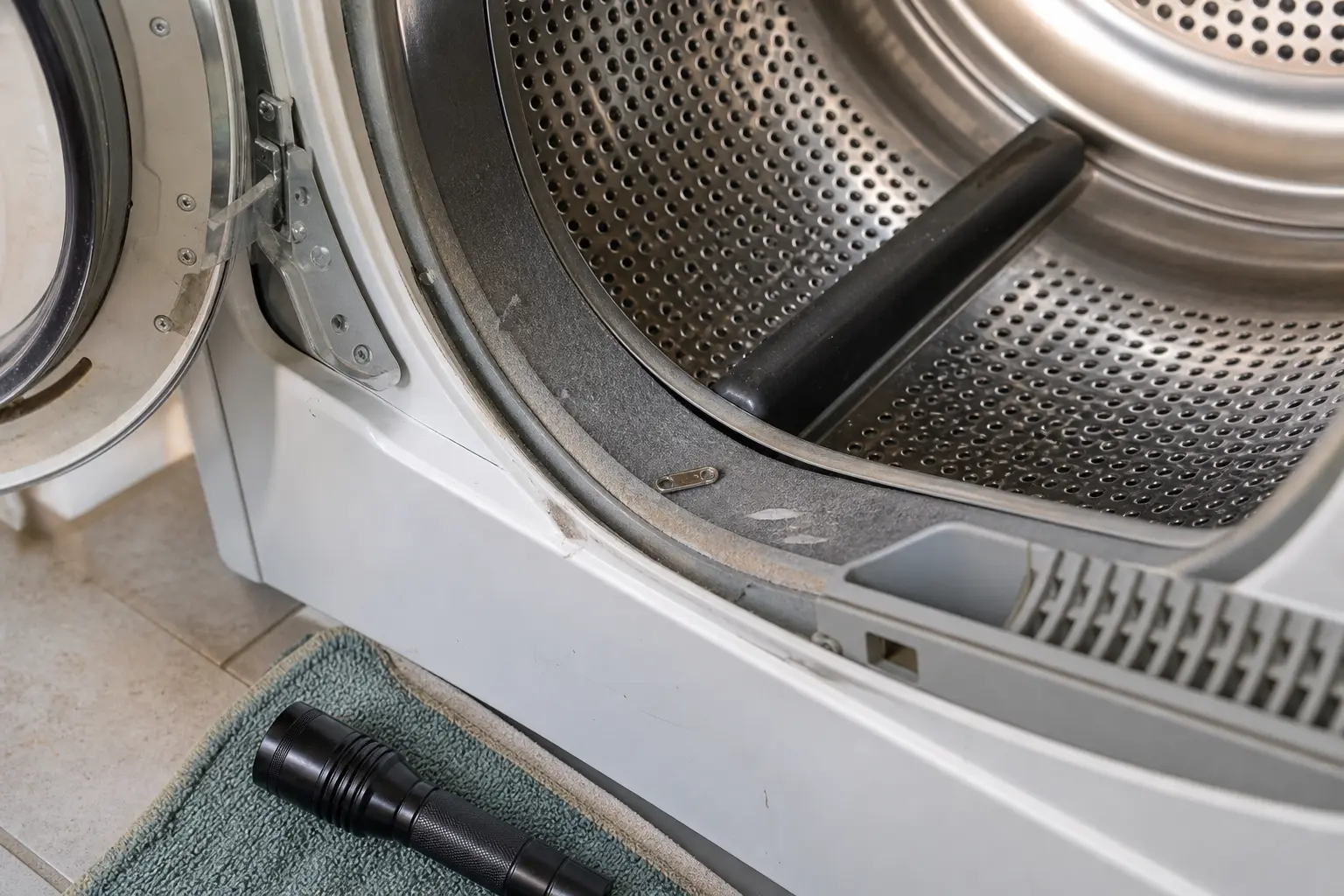
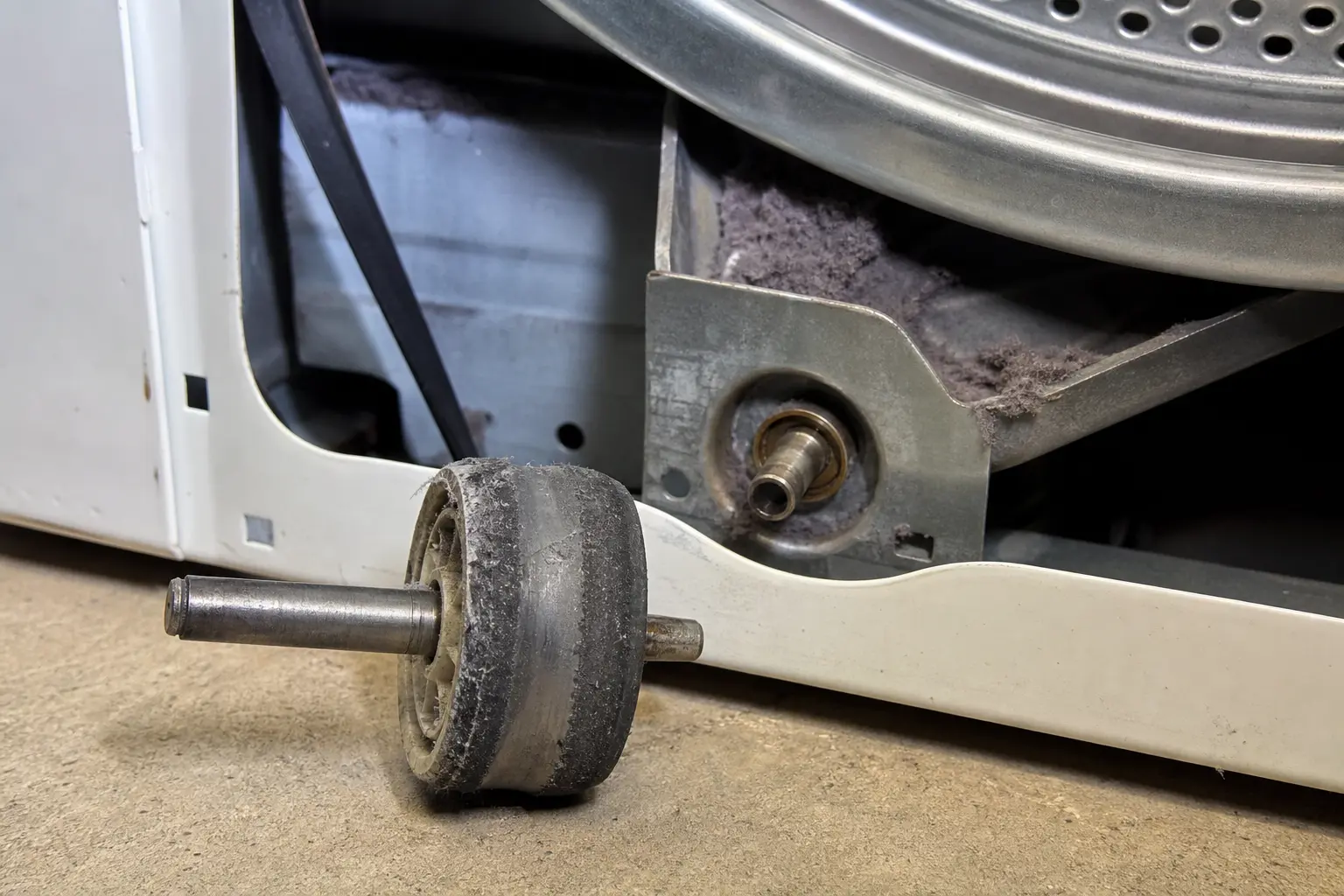
Copy the full LG model number from the door frame or cabinet tag before ordering rollers, belts, or front support parts. If the thump disappears empty, skip the roller cart; if a roller feels flat, rough, or wobbly by hand, then compare model-matched parts.
Sort the sound before you remove screws. If the thump changes with shoes, bedding, or a small towel load, start with the load; if it stays empty, move to the drum lip, rollers, and belt path.
Keep the first pass simple and controlled. Listen empty, check the drum lip, and stop for gas smell, scraping, hot rubber, or a drum that drags by hand.
Use this map before removing screws. A good clue is whether the sound changes with the load, follows drum speed, or appears with the drum empty.
| What you hear | Likely area | Next safe move |
|---|---|---|
| Thump only with shoes, bedding, or one heavy towel. | Load balance, hard item, or cabinet movement. | Run empty, then try three or four damp towels and level the feet. |
| Same dull bump with no clothes inside. | Drum support rollers, front support, drum lip, or belt path. | Disconnect power and turn the drum by hand before opening panels. |
| Worst at startup, then a little quieter. | Flat-spotted drum roller or rough support bearing. | Inspect rollers for flat spots, wobble, cracks, and rough hand-spin feel. |
| Sharp slap, chirp, squeal, or hot-rubber smell. | Belt, idler area, or belt tracking issue. | Look for fraying, glazing, cracks, edge wear, and rough pulley movement. |
| Scrape, grind, metal dust, or hard drag by hand. | Drum rubbing, support failure, alignment issue, or damaged shaft. | Leave it off until the rubbing part is found or a tech checks it. |
These checks keep the diagnosis outside the cabinet until the dryer proves the thump is still there without a load.
Buy parts only after two clues point to the same area. Match the sound to an empty-drum test, a hand-turn feel, or a visible rub mark.
These tools support inspection after the dryer is unplugged and the check calls for them. Do not disturb gas fittings for a noise diagnosis; if you smell gas or the connector looks strained, stop and call the gas utility or a qualified appliance pro.
Compare parts only after the sound and inspection agree. Use the full LG model number, not just the part photo or a generic dryer kit name.
A good repair removes the original beat empty and with a normal small load. Watch for a new scrape, squeal, hot smell, or cabinet wobble before full loads go back in.
That pattern points the inspection toward a flat-spotted drum roller, especially when the thump eases after a few minutes. Confirm it with a short empty run, then unplug the dryer and hand-turn the drum.
Run it empty for 30 to 60 seconds, then try three or four damp towels spread around the drum. If the sound disappears empty, check for shoes, coins, zipper pulls, bunched bedding, and loose feet. If it stays empty, inspect the drum lip and support path.
Yes. Shoes, a single soaked towel, bunched bedding, or heavy metal hardware can hit the drum in a steady rhythm. That is why the empty run comes before parts.
Yes, but belt noise often sounds like a slap, flap, chirp, or squeal instead of a deep drum thump. Replace the belt only when you can see fraying, cracks, glazing, edge wear, or wrong tracking.
A bad roller makes a rhythmic thump, rumble, or lumpy roll that follows drum rotation. It may be loudest at startup, then smooth out as the roller warms. A rough hand-spin or flat spot confirms the clue.
A mild load thump from shoes or one bulky item is different from a true empty-drum thump. Stop using it if the sound stays with no clothes, gets worse, turns into scraping, smells hot, or the drum is hard to turn by hand.
If one roller is flat-spotted or rough, inspect the matching rollers and shafts closely. Many homeowners replace rollers as a set while the dryer is open, but the reason should be confirmed wear and model fit, not guesswork.
Open the dryer door and look around the door frame, cabinet opening, or rating label area. Use the full model number when comparing rollers, belts, idler parts, or front support pieces.
Yes. A zipper pull, coin, screw, bra wire, raised seam, or worn felt spot can make one repeating knock. Inspect the drum lip, baffles, holes, and lint opening with a flashlight before opening the cabinet.
Call for service if you smell gas, see scorched wiring, find metal dust or a cracked drum, cannot turn the drum freely, or are not comfortable opening and reassembling the cabinet. Gas connection trouble and severe metal rubbing need a qualified appliance pro.
This page uses a visible-symptom path: load thump, empty-drum thump, drum-lip strike, roller clue, belt clue, and stop points for heat, gas, and metal rubbing. The sources below support model-number matching, official LG support paths, genuine-parts lookup, and dryer fire-safety boundaries.