Is the display completely dark?
Check breaker, cord, receptacle, and any accessible power shutoff. Stop for heat damage or a breaker that trips again.
If your LG dryer will not turn on, separate a dark display from a lit display that will not start. Check the breaker, receptacle, cord, control lock, door catch, and door switch before buying internal electronics.
A power-path problem, loose door closure, failed door switch, or open thermal fuse is more likely than a bad main board.
Use the first minute to sort dark display, lights-on no-start, door-pressure clues, or a shutdown after overheating.
Don’t start with: Do not buy a control board first. Prove power and the door/fuse path before opening the parts list.
Check breaker, cord, receptacle, and any accessible power shutoff. Stop for heat damage or a breaker that trips again.
Check Control Lock, cycle selection, door closure, catch, and the door-switch click.
Door catch, strike, hinge, or switch alignment is a stronger clue than a control board.
A thermal fuse may be open, but check the vent path that overheated it.
Stop guessing after door and fuse checks. Motor or board diagnosis needs better testing.
Leave the dryer off and call a qualified electrician or appliance technician.
Use the visible clue first. Power checks come before parts on a dark dryer; door and safety-switch clues come first when the display lights up.
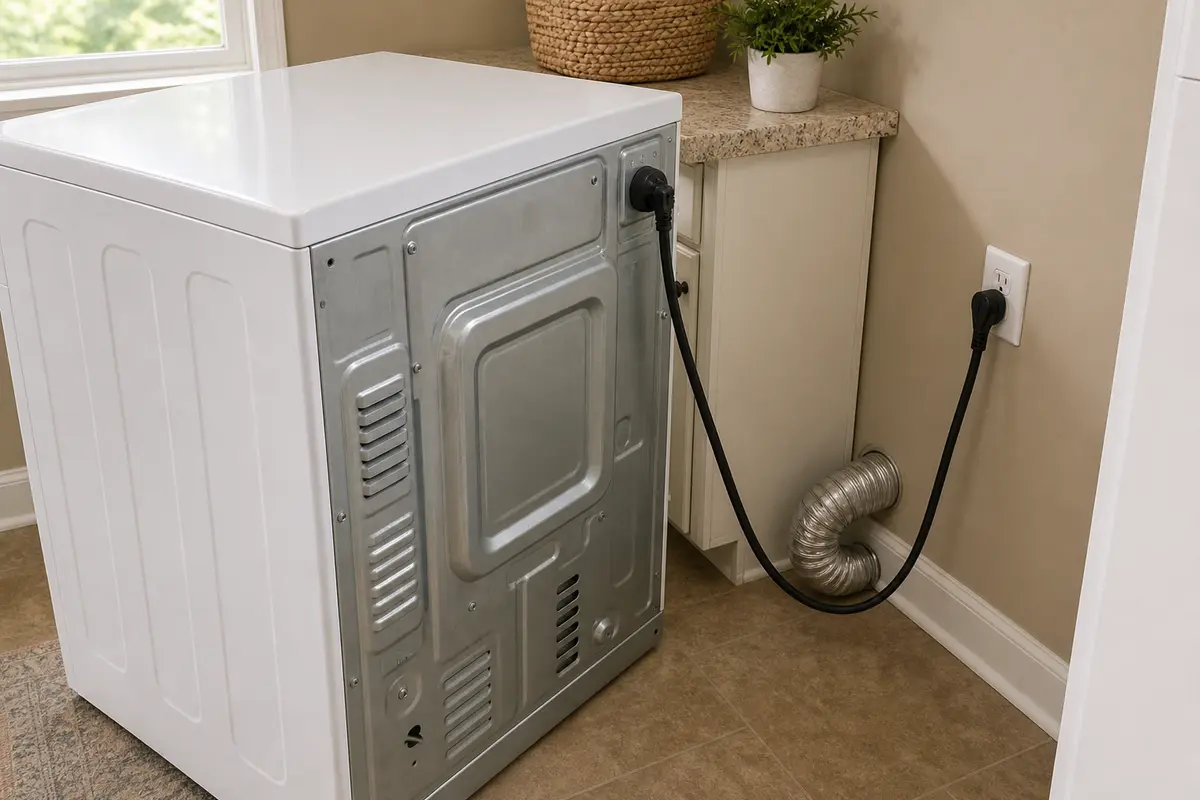
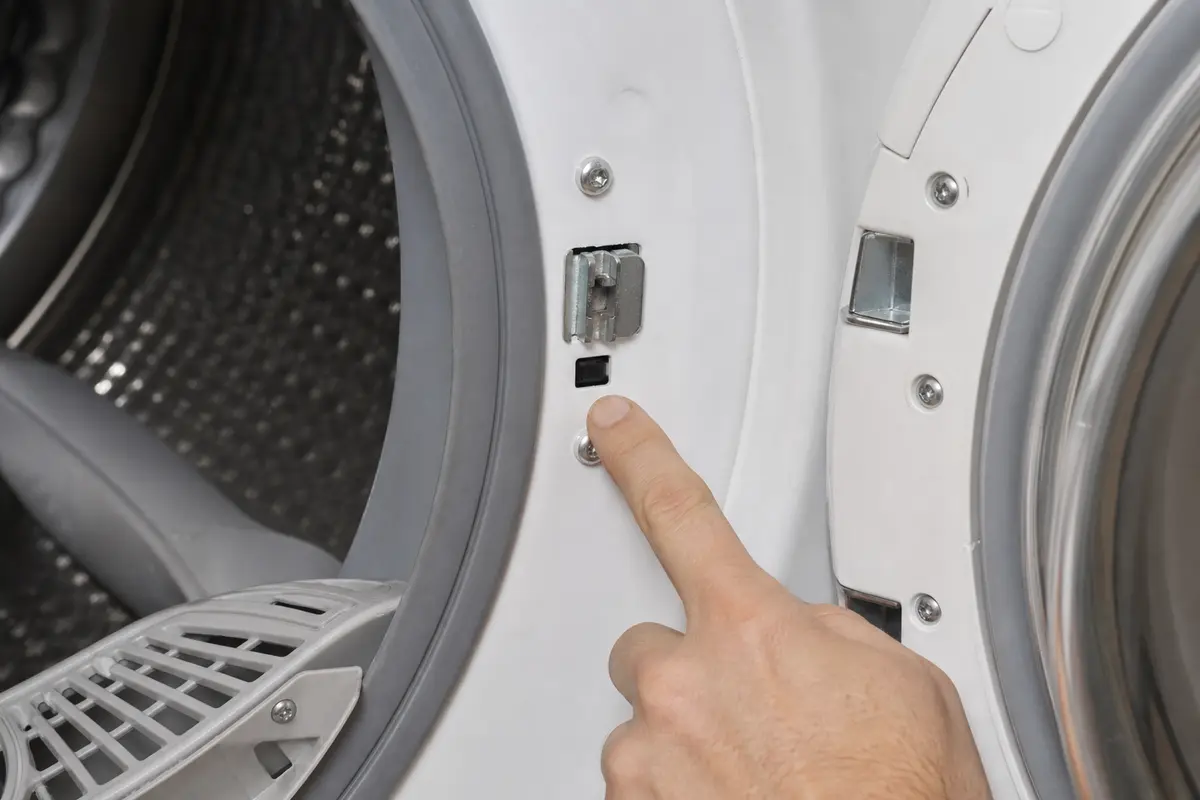
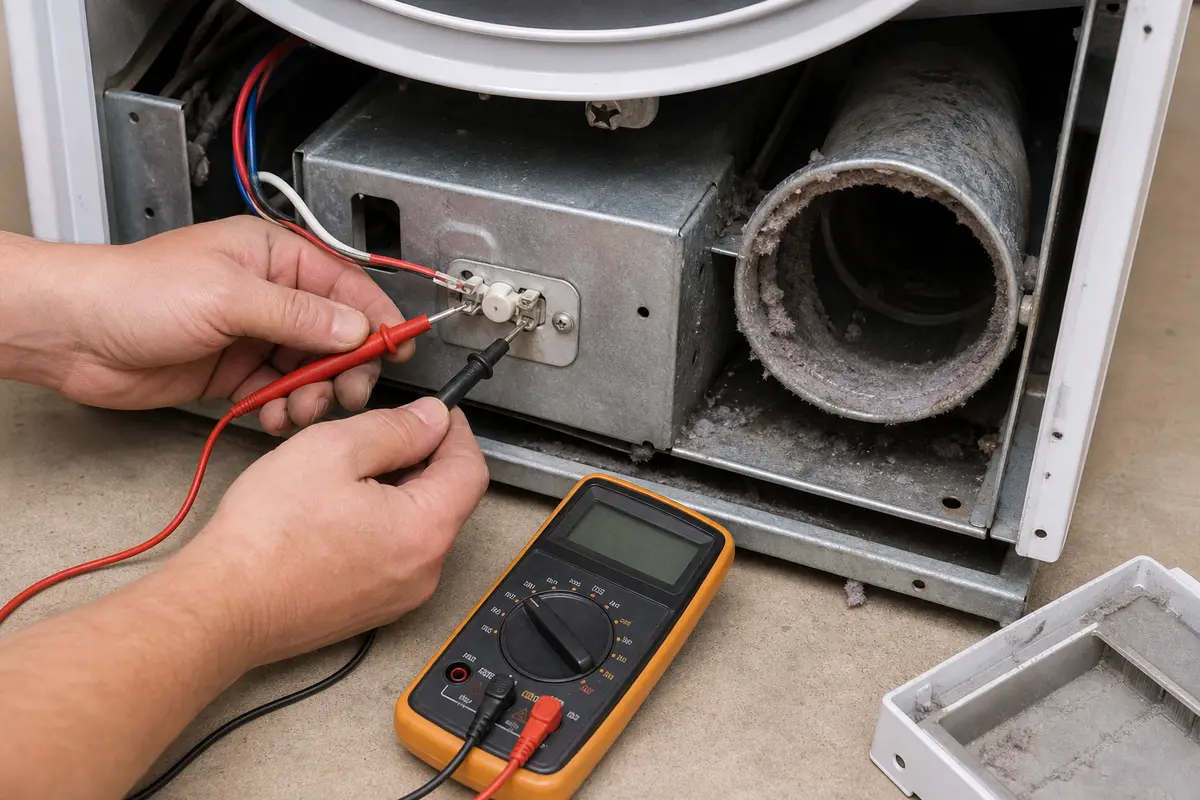
Copy the full LG model number before buying a door switch, catch kit, thermal fuse, or control part. Match connector style, mounting tabs, terminal layout, and ratings. If a fuse opened after overheating, fix airflow first.
A dryer that will not turn on is not one problem. A good clue is the display: dark points to power, while lights-on no-start points to lock, door, switch, fuse, or motor path.
Do not skip the visible clues. They save you from buying electronics for a power or door problem.
Use the first visible result to choose the next safe check.
| What you see | What it usually means | Next move |
|---|---|---|
| No lights or beeps | Power path is first. | Check breaker, cord, receptacle, and stop for heat damage. |
| Lights on but no start | Door/lock/start path is first. | Clear Control Lock and inspect catch, strike, and switch behavior. |
| Starts only with door pressure | Door catch, strike, hinge, or switch alignment is likely. | Inspect the latch area before buying electronics. |
| Died after overheating | Thermal fuse may be open. | Check airflow and test the fuse with the dryer unplugged. |
| Burned wiring or hot outlet | This is a safety stop. | Leave it off and call a qualified pro. |
Watch for a dark display, flicker, or breaker that will not stay set. Those clues are outside the cabinet.
A door that is almost closed can make a good dryer act dead. The useful clue is whether the dryer reacts to door pressure.
A thermal fuse is a safety clue, not just a part. It often opens because airflow or overheating came first.
These tools support unplugged checks. Skip tool work for a hot outlet, burned wiring, or any test you are not trained to do.
Paid links. As an Amazon Associate I earn from qualifying purchases. Repair Riot may earn a commission at no extra cost to you.
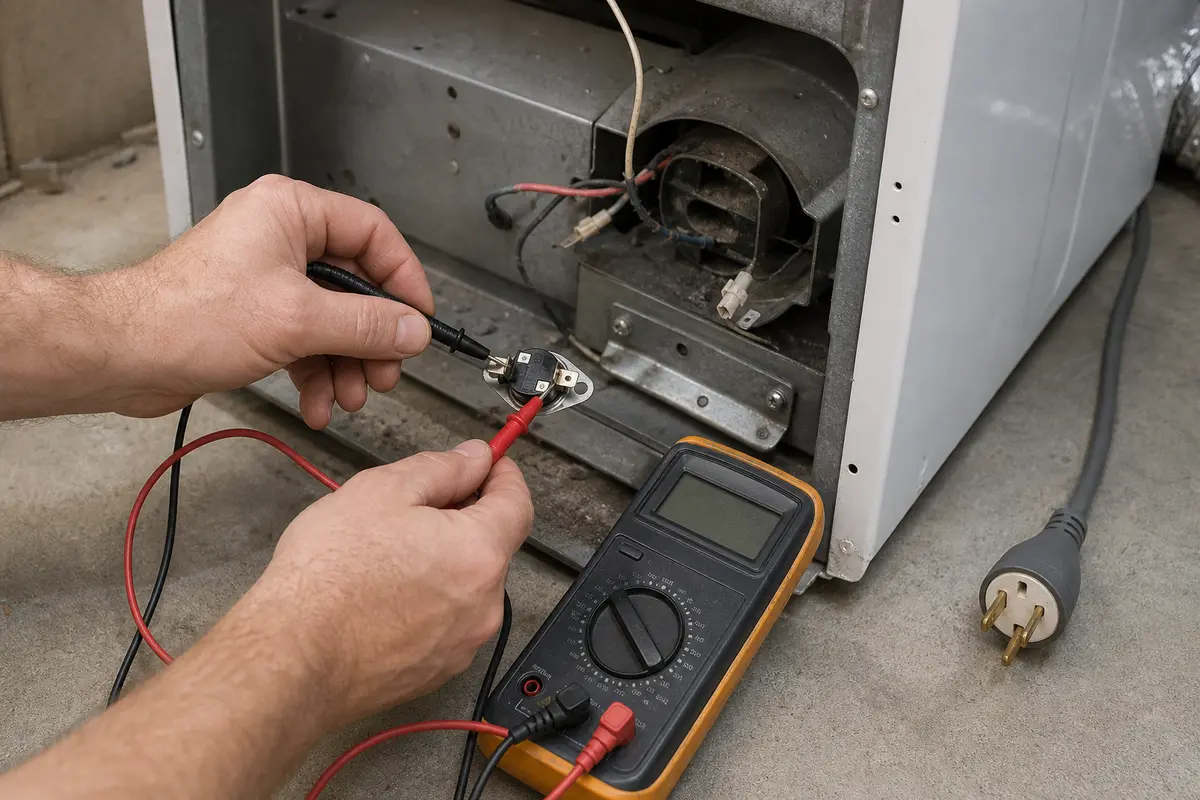
Helps when: You are checking continuity on an unplugged door switch or thermal fuse.
Skip it when: The next step requires receptacle testing, burned-wiring tracing, or internal powered-circuit checks.
Compare digital multimeters on Amazon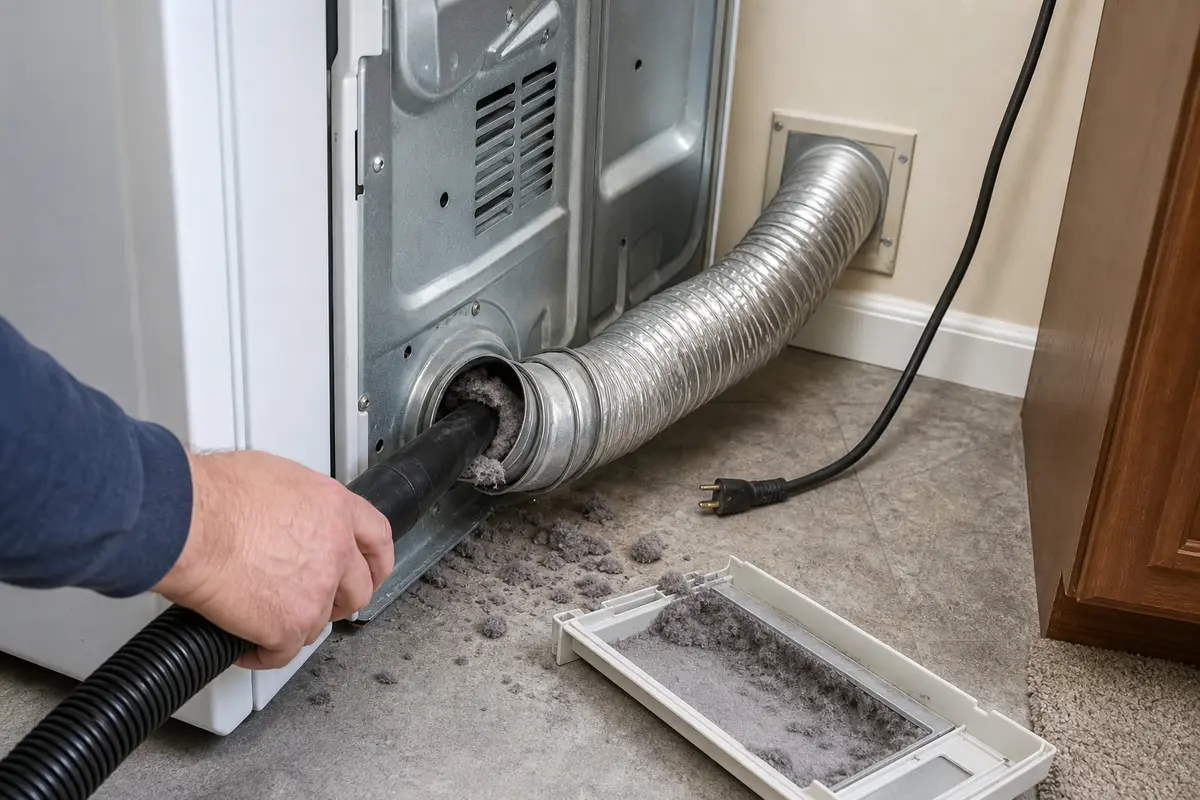
Helps when: Loose lint is visible near the rear outlet or lint path after a thermal-fuse failure.
Skip it when: The vent run is hidden in a wall, ceiling, crawlspace, or roof exit.
Compare vacuum hose attachments on AmazonUse these only after the result map points to them. Similar LG dryer switch and fuse parts can look close and still fit the wrong model.
Paid links. As an Amazon Associate I earn from qualifying purchases. Repair Riot may earn a commission at no extra cost to you.
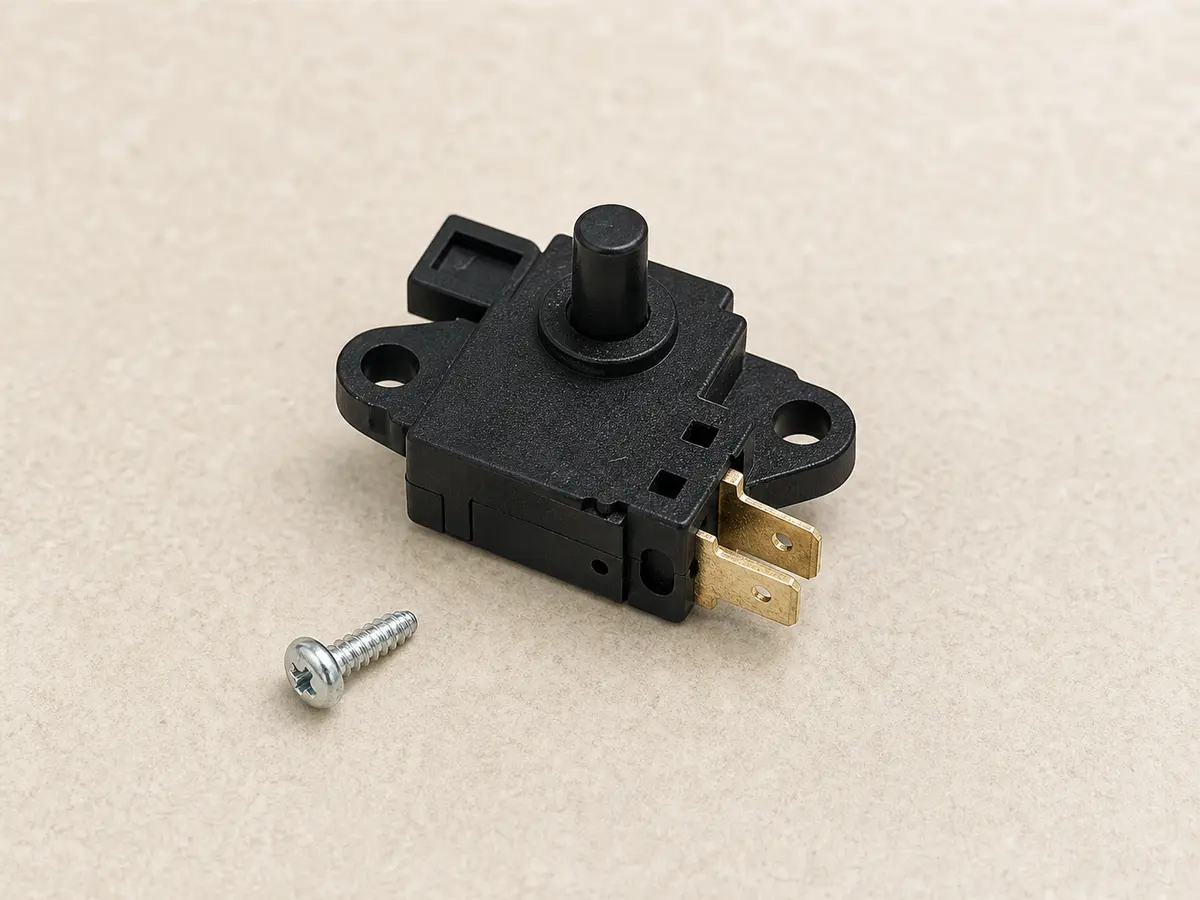
Helps when: The display works, the door closes, but the switch does not change continuity or the dryer reacts to door pressure.
Skip it when: The display is dark or the door catch is visibly broken instead.
Compare dryer door switches on Amazon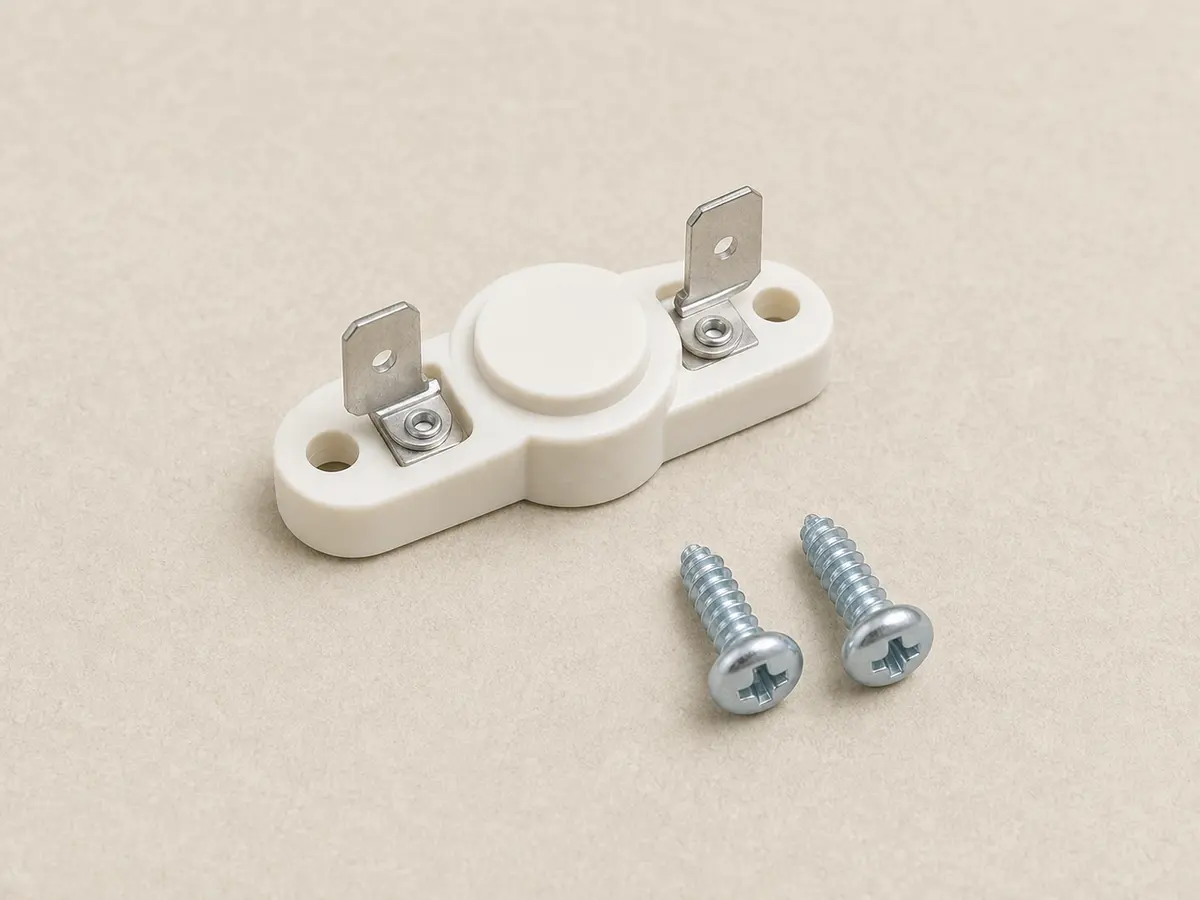
Helps when: The dryer is dead or no-start after overheating and the fuse tests open with the dryer unplugged.
Skip it when: Airflow has not been checked or the fuse tests good.
Compare dryer thermal fuses on Amazon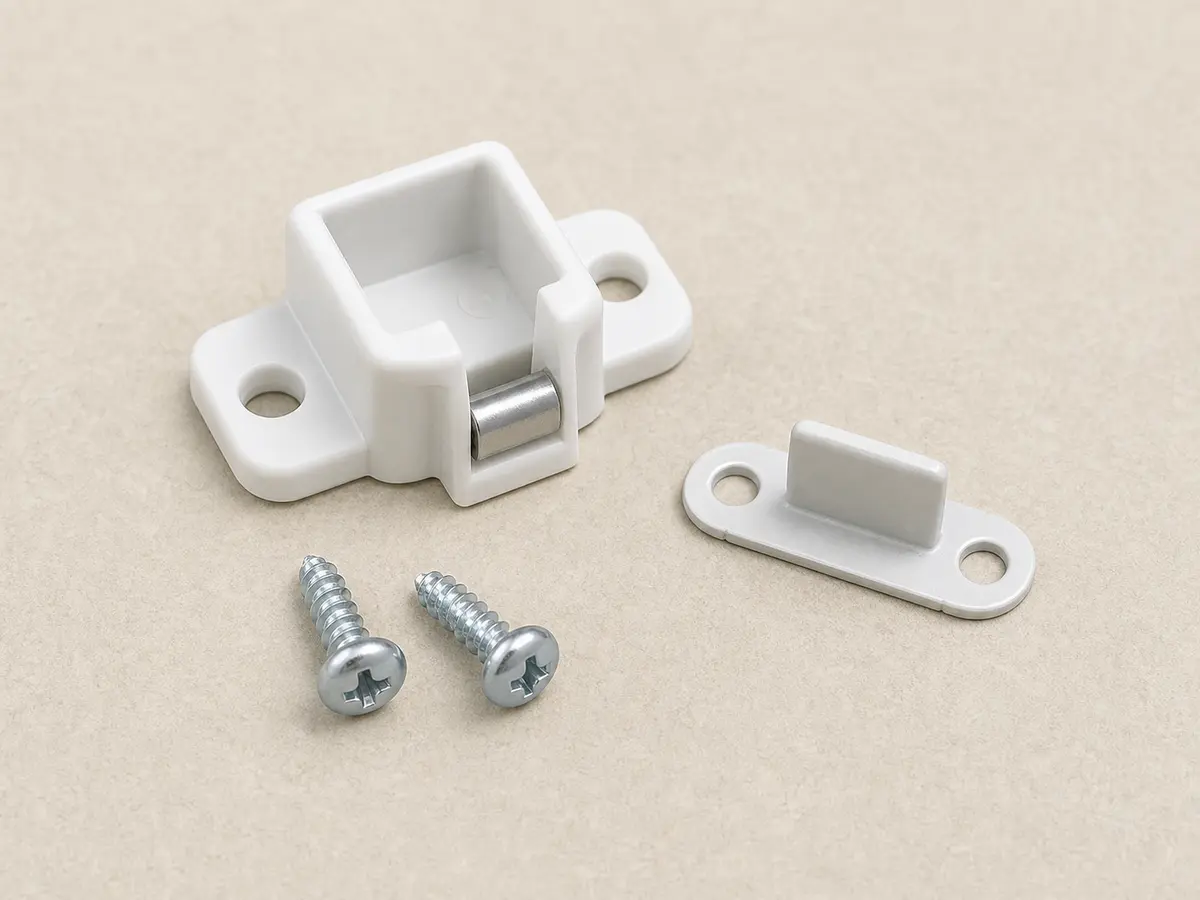
Helps when: The door feels loose, pops open, or the dryer starts only while the door is pressed.
Skip it when: The door latches firmly and the switch fails continuity instead.
Compare dryer door catch kits on AmazonStart with breaker, cord, and receptacle checks. Stop for heat damage, a hot outlet, or a breaker that trips again. If power is good, the thermal fuse and control power path move up.
Check Control Lock, cycle selection, door closure, catch, and door switch behavior before electronics.
Indirectly, yes. Poor airflow can overheat the dryer and open the thermal fuse, so the dryer may not start until that safety part is replaced and airflow is corrected.
No. A board is late in the path. Prove power, door-switch behavior, and thermal-fuse continuity first.
With the dryer unplugged, the switch should change continuity as the door opens and closes. Door-pressure clues also point toward the catch or switch area.
No. Replace failed safety parts and correct the cause. The thermal fuse and door switch protect the dryer and the home.
Leave the dryer off and call a qualified electrician or appliance technician. Do not keep testing the dryer on a heat-damaged connection.
Only if airflow is corrected. A new fuse can open again if the lint path, rear hose, wall duct, or exterior hood is still restricted.
Repair Riot built this page around homeowner-visible LG dryer clues: power, door behavior, airflow, load timing, heat-safety behavior, and model-matched parts. The source links support dryer lint, load, airflow, efficiency, and fire-risk context; the repair sequence is original guidance.