Does the outside flap barely open?
Start with lint, the rear hose, wall duct, and exterior hood. A heater cannot dry clothes when moisture cannot leave.
If your LG dryer tumbles but does not heat, start with airflow and power. Clean the lint screen, check the rear hose and outside flap, then confirm whether timed high heat stays cool before opening the cabinet.
Weak vent airflow, a lost heat supply on an electric model, or an overheated safety part beats a bad control board for most no-heat complaints.
Sort the no-heat path first: weak airflow, no heat with strong airflow, or heat that starts and then quits.
Don’t start with: A heating element, cutoff, thermostat, igniter, or control board belongs after the outside flap moves strongly and the no-heat clue points past airflow.
Start with lint, the rear hose, wall duct, and exterior hood. A heater cannot dry clothes when moisture cannot leave.
The house vent path is restricted. Fix that before shopping for heat parts.
Now separate an electric heat-circuit problem from a gas ignition problem. Keep power off for internal continuity checks.
Watch for overheating from restricted airflow, then test the thermal cutoff or high-limit thermostat only after the vent is corrected.
Stop testing. Shut the dryer off and call the gas utility or a qualified technician.
Stop using the dryer and call a qualified electrician or appliance technician before internal parts.
A no-heat dryer can be a heat-path failure, but airflow decides what to check next. Use the visual clues in order.
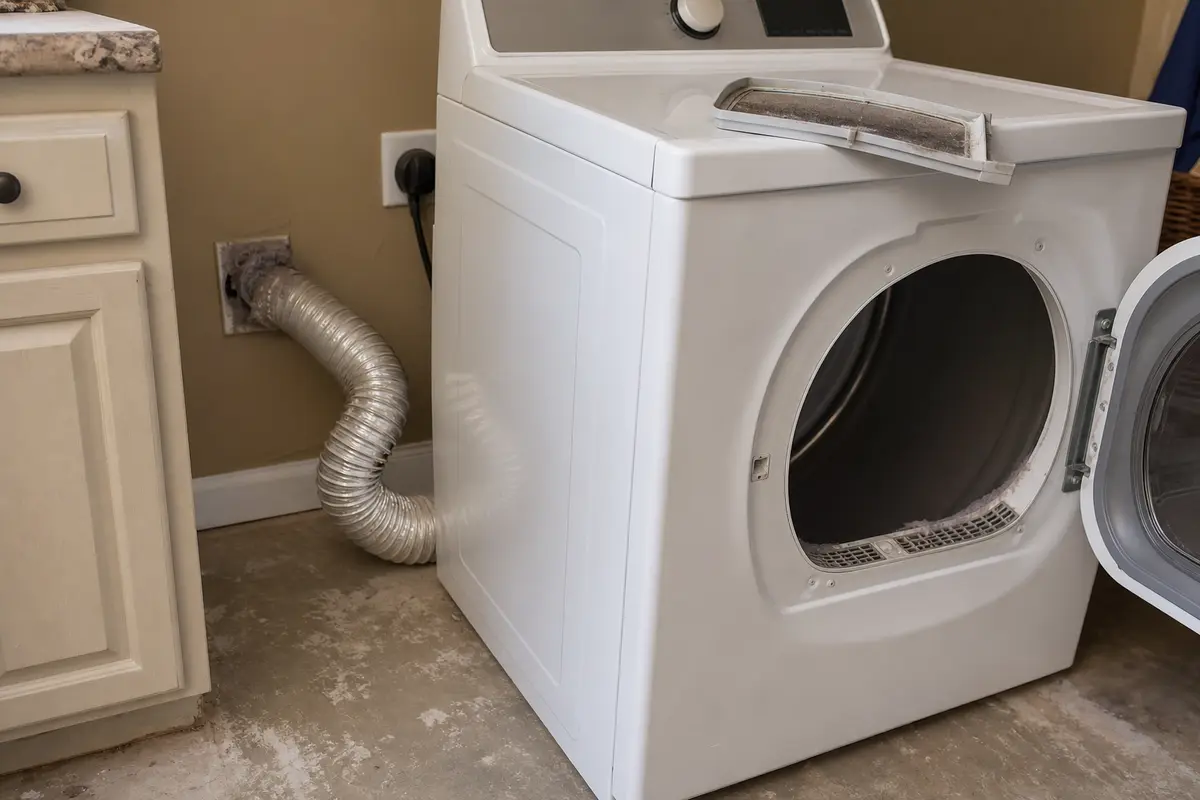
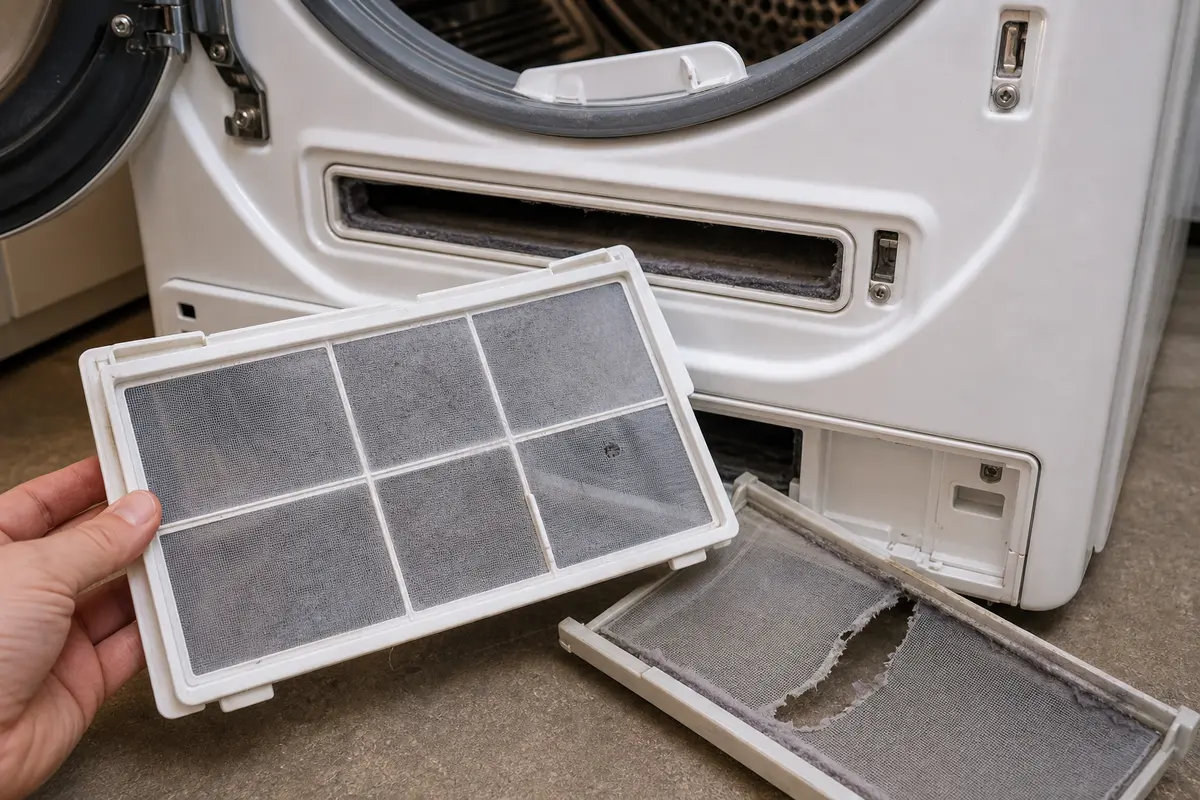
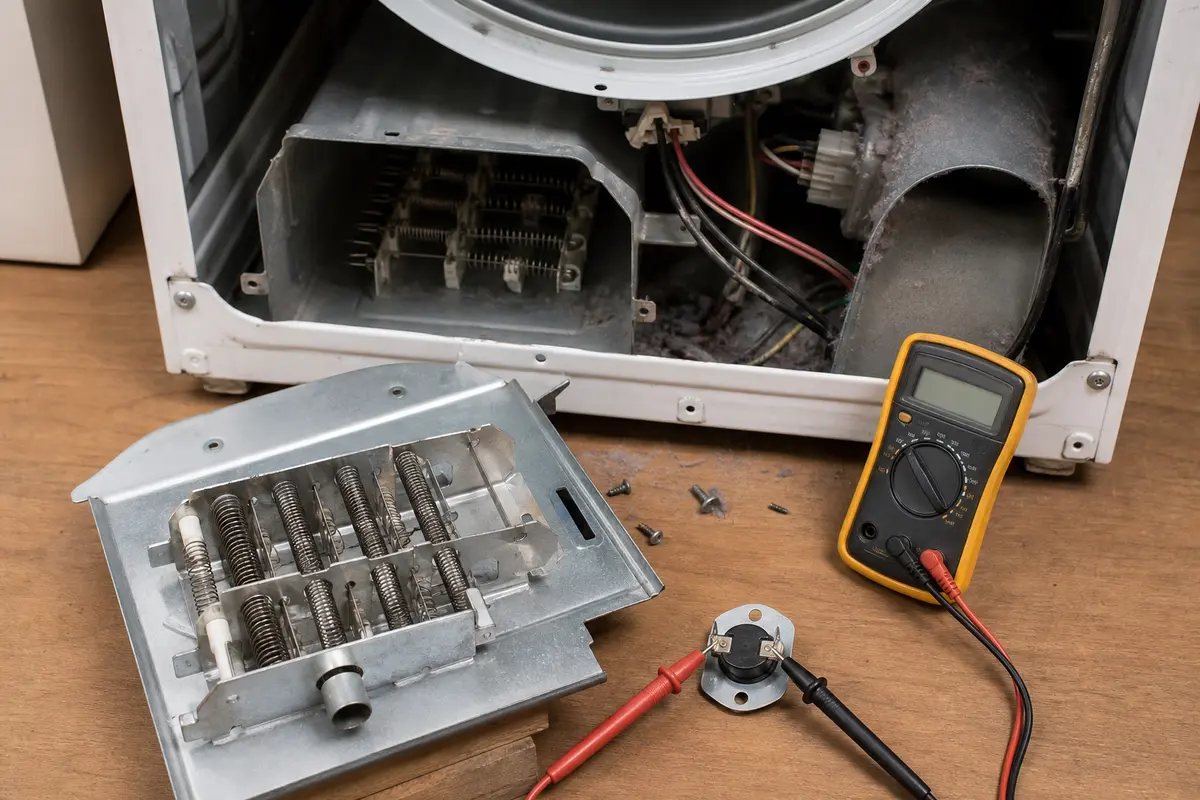
Before buying heat parts, prove the vent path is clear and copy the full LG model number. Match terminal style, bracket shape, rating, and mounting holes. Fix airflow first or a new heat-safety part can fail again.
If the drum turns but no heat reaches the load, check the vent and power clues before the heater. A good clue is the outside flap: weak movement usually means the dryer is choking on airflow.
Do not turn a no-heat symptom into a parts pile. Prove the cheap checks first.
Use these outcomes after the lint screen, rear hose, and outside hood have been checked.
| What you see | What it usually means | Next move |
|---|---|---|
| Weak outside airflow | The vent path is restricted. | Clear the screen, hose, wall duct, and hood before parts. |
| Strong airflow but cool air | The heat path is now more likely. | Unplug the dryer and sort electric heat parts from gas ignition. |
| Heat starts, then quits | The dryer may be overheating or opening a safety part. | Fix airflow, then test cutoff and high-limit parts. |
| Burning smell or scorched wiring | This is a safety stop, not a shopping clue. | Leave the dryer off and call a qualified technician. |
| Gas odor or rough ignition | This is a fuel-safety issue. | Shut the dryer off, leave the area if needed, and call the gas utility or a qualified technician. |
Watch for a flap that barely moves, a crushed hose, or lint packed at the collar. Those clues usually come before a failed heater.
The symptom sounds the same to the homeowner, but electric and gas dryers fail in different places.
Parts belong in the cart only when the result points past airflow.
These tools support unplugged checks and accessible lint cleanup. Skip tool work for gas odor, scorched wiring, repeated breaker trips, or hidden vent runs.
Paid links. As an Amazon Associate I earn from qualifying purchases. Repair Riot may earn a commission at no extra cost to you.
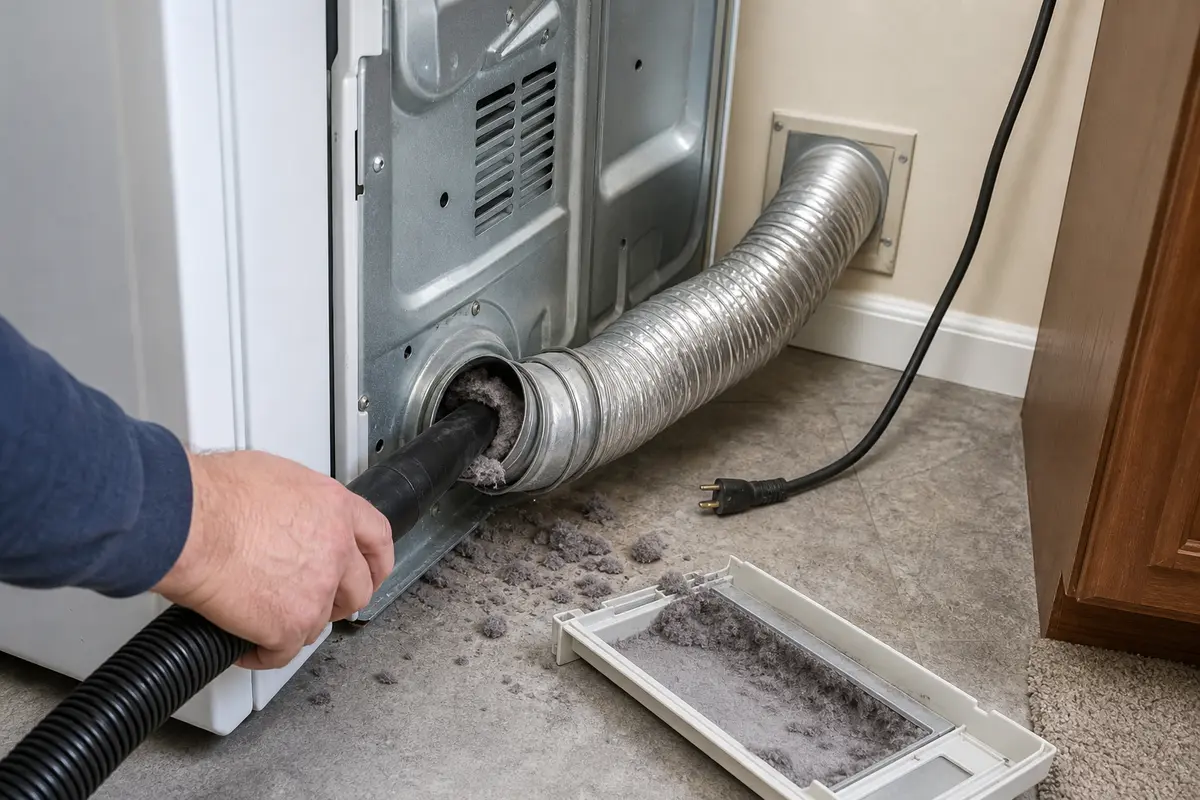
Helps when: Loose lint is visible at the rear outlet, lint housing, floor, or accessible vent opening.
Skip it when: The blockage is hidden in a wall, ceiling, crawlspace, or roof exit.
Compare vacuum hose attachments on Amazon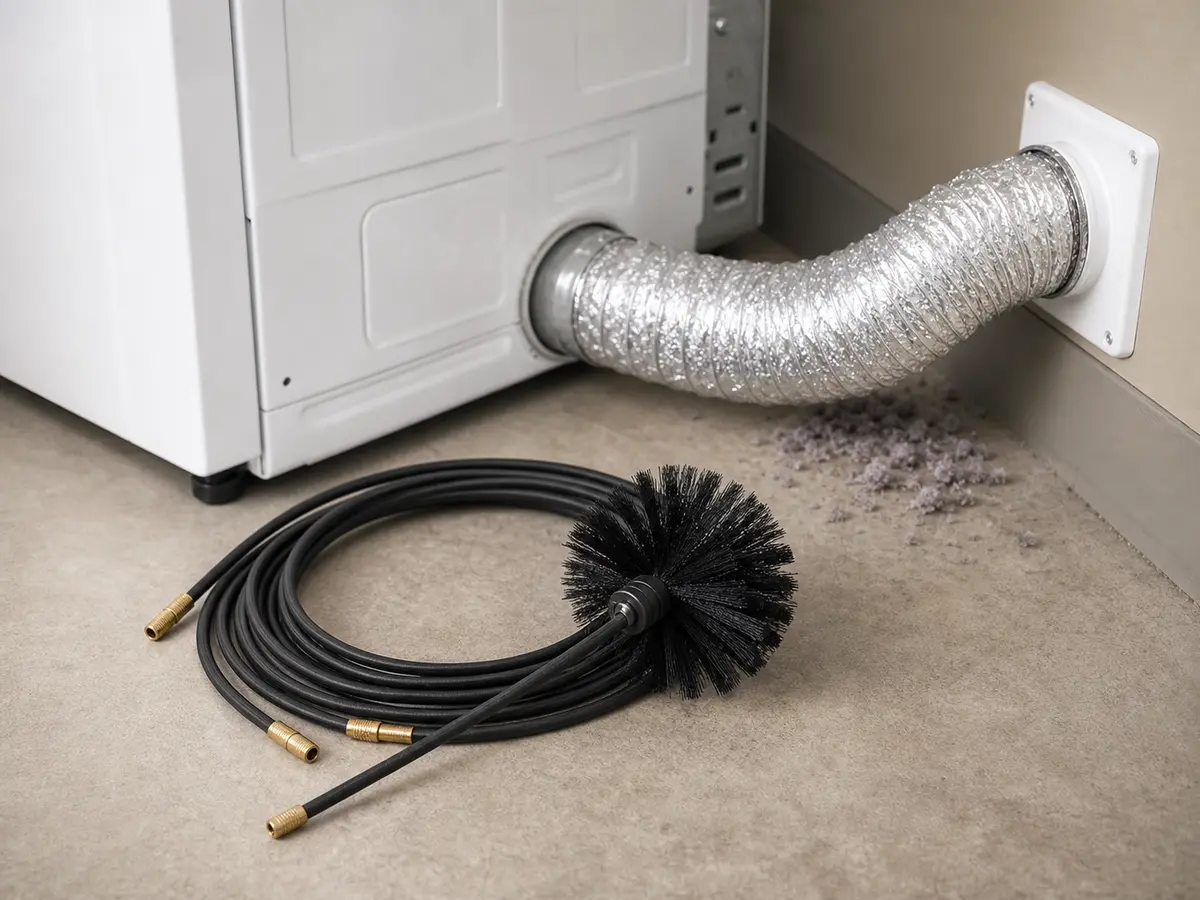
Helps when: You have a short accessible vent section or exterior hood with visible lint buildup.
Skip it when: The vent exits the roof, disappears into a long hidden run, or the dryer shows overheating or gas-safety signs.
Compare dryer vent cleaning kits on Amazon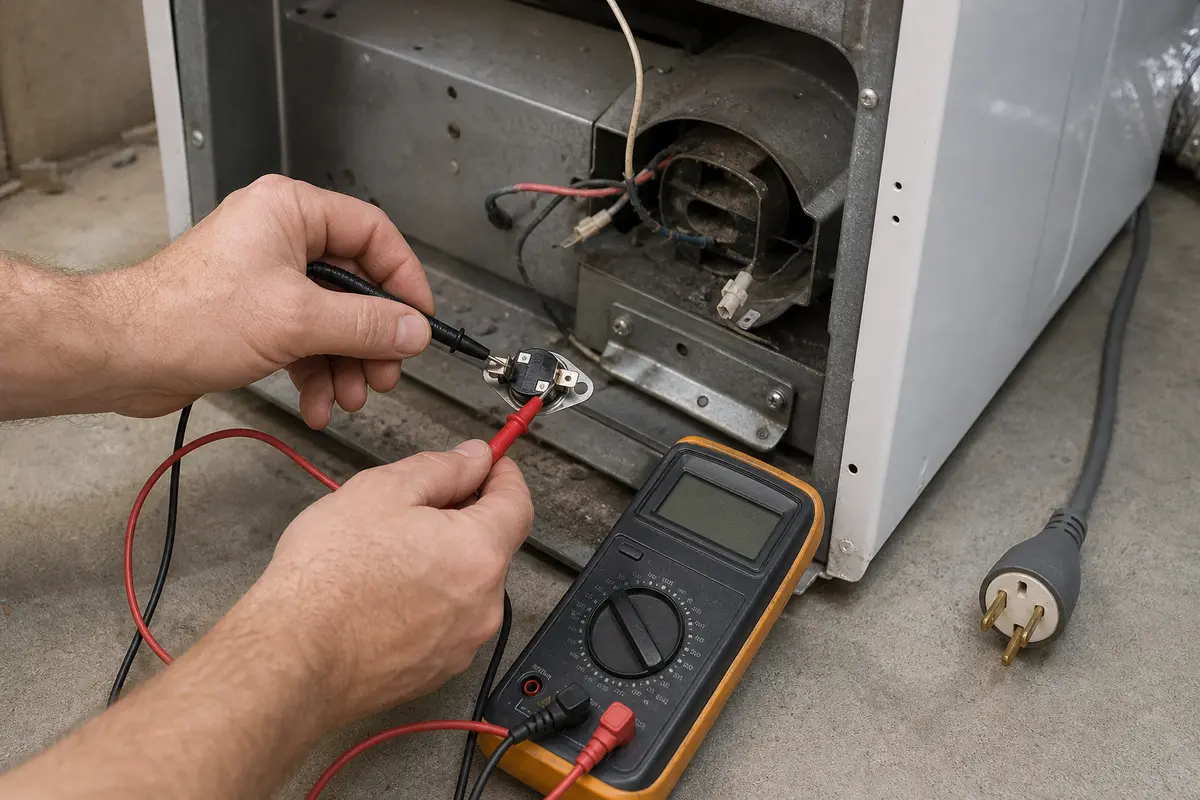
Helps when: You are checking continuity on unplugged heat parts after airflow checks.
Skip it when: The next step requires dryer-outlet testing, gas-line work, or tracing burned wiring.
Compare digital multimeters on AmazonUse these only after the result map points to the heat path. LG dryer parts are model-specific.
Paid links. As an Amazon Associate I earn from qualifying purchases. Repair Riot may earn a commission at no extra cost to you.
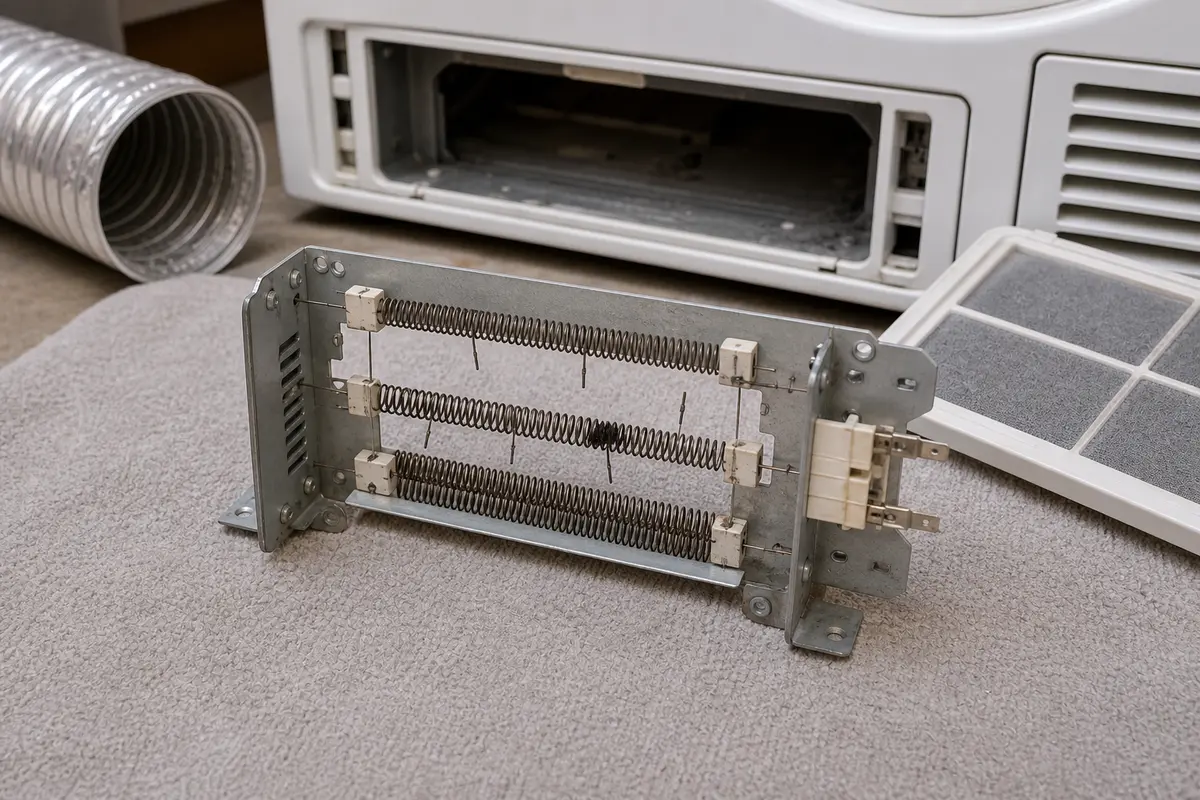
Helps when: An electric dryer has strong airflow and the element is visibly broken or tests open.
Skip it when: The dryer is gas, airflow is weak, supply checks are not settled, or you smell gas.
Compare dryer heating elements on Amazon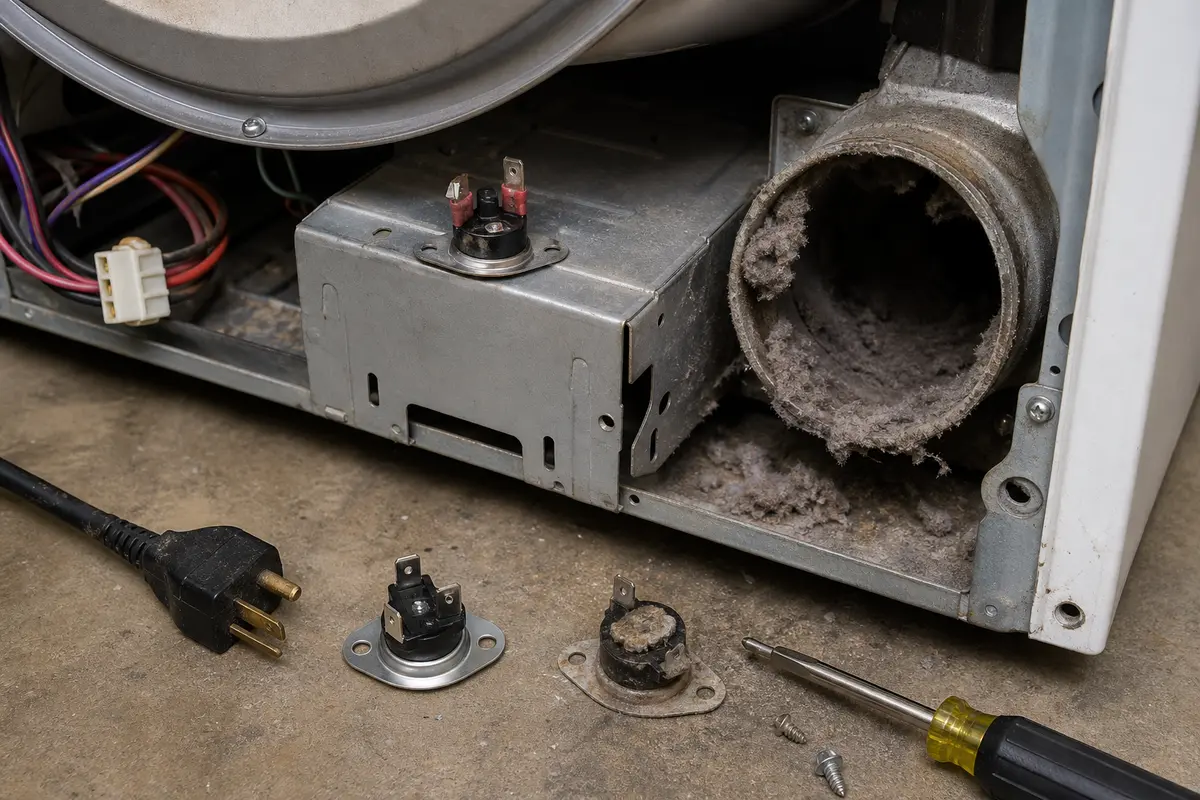
Helps when: The dryer lost heat after overheating or poor airflow, and the cutoff tests open.
Skip it when: The vent problem is not corrected or the no-heat clue points elsewhere.
Compare dryer thermal cutoffs on Amazon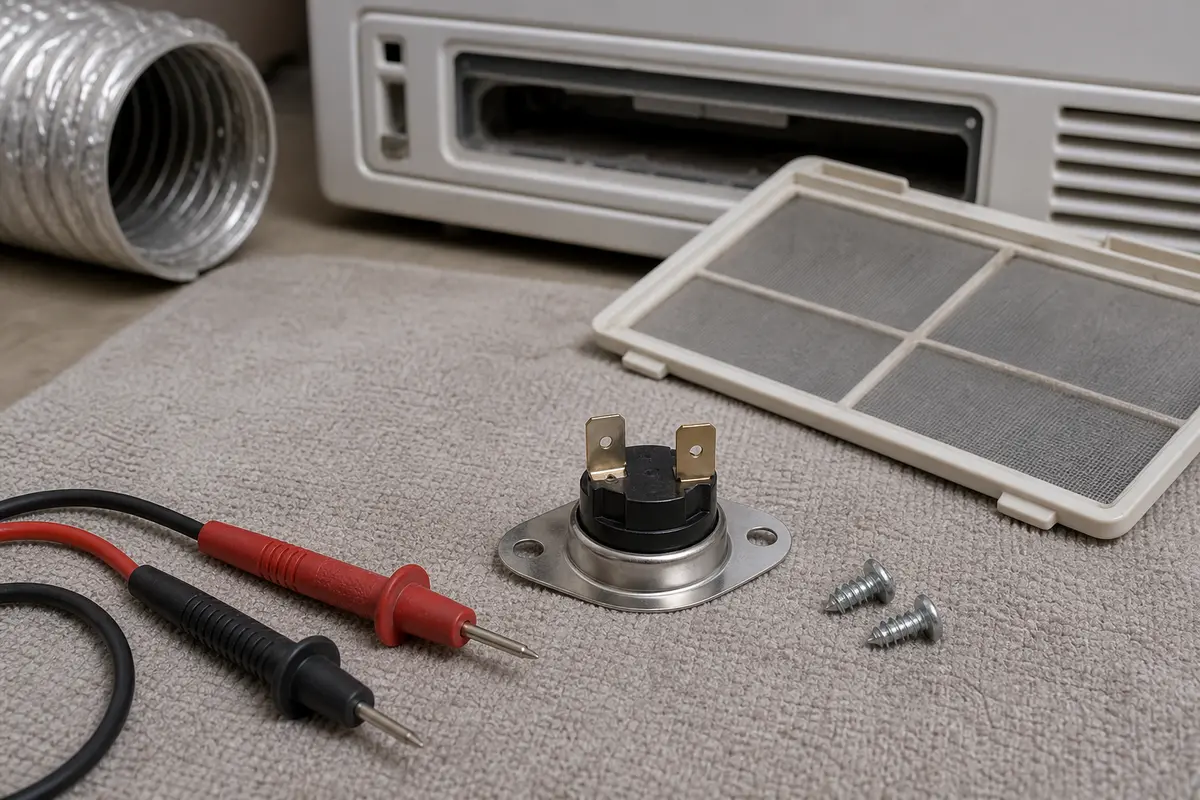
Helps when: Testing supports a failed high-limit thermostat after airflow checks.
Skip it when: You are using it as the first guess or the old-part rating does not match.
Compare high-limit thermostats on Amazon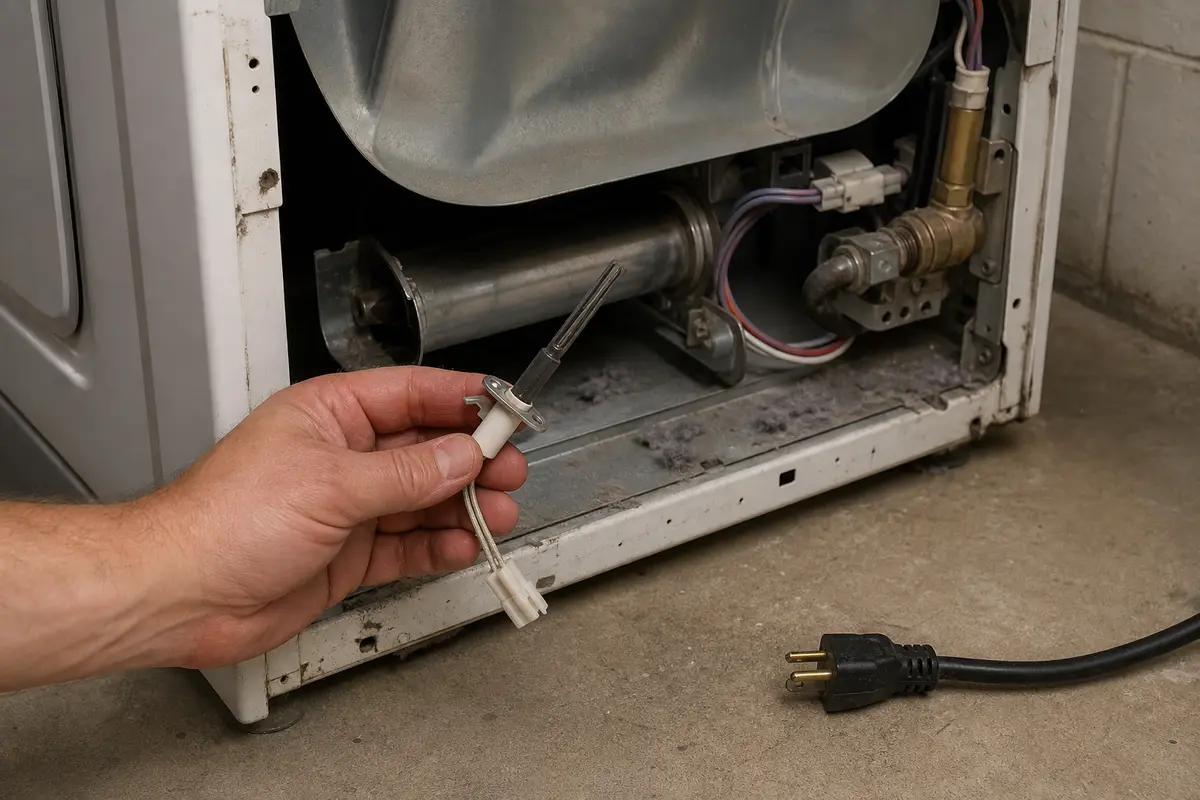
Helps when: A gas dryer has clear airflow but no steady ignition, and the igniter is cracked, not glowing, or tests failed.
Skip it when: You smell gas, hear delayed ignition, or have not ruled out airflow.
Compare dryer igniters on AmazonStart with airflow and power clues. A weak outside vent, coated lint screen, or crushed hose can make a good heater act bad, and an electric dryer can tumble without making heat when the heat supply path is not right.
Yes. Restricted airflow can make the dryer overheat and open a safety cutoff. Correct the vent before replacing a cutoff or thermostat.
No. A heating element belongs in the cart only after airflow is strong and the electric element is visibly broken or tests open with the dryer unplugged.
That pattern often points back to airflow or a heat-safety part. Check the lint screen, hose, and outside flap before parts.
After airflow checks, an igniter can move up the list. Stop immediately for gas odor, delayed ignition, or unusual burner behavior and call a qualified technician.
Use only short diagnostic runs. Stop for burning smell, gas odor, repeated breaker trips, or a hot outlet or cord.
Use the full model number and compare terminals, brackets, length, mounting holes, connector style, and stamped rating.
Only if the cause is fixed too. If airflow overheated the dryer, the new cutoff can fail again until the vent path is corrected.
Repair Riot built this page around LG dryer checks a homeowner can see before ordering parts: lint screen condition, rear hose shape, outside flap movement, timed-heat behavior, gas odor, and model-number fit. The source links support dryer lint, load, airflow, efficiency, and fire-risk context; the repair sequence is original guidance.