Is the tank near overflow?
Use bypass, protect the floor, and treat it as an active water-control problem before diagnosing suction.
If a Kinetico water softener is not drawing brine, start at the brine tank. Look for a salt bridge, a clogged pickup area, a kinked brine line, or a loose fitting before you blame the control head.
A good clue is a brine level that stays put during draw. That points toward a kink, air leak, blocked pickup, or valve-head suction problem.
A little water in the tank can be normal. Start diagnosing when salt is not being used or hard water comes back.
Don’t start with: Do not buy a seal kit or open the valve body until the salt bed, brine well, tubing, and drain route have been checked.
Use bypass, protect the floor, and treat it as an active water-control problem before diagnosing suction.
Break up the bridge and clear loose salt sludge from the brine well. A blocked salt bed can hide the real water level.
If it drops, the softener can pull brine. If it stays put, trace the brine line, pickup, drain route, and valve suction path.
Fix the visible line problem first. A small suction-side air leak can stop draw without showing a big water leak.
Now the problem moves toward internal Kinetico valve service. Match the model and avoid generic parts guessing.
Watch the tank and tubing first. Do not rely on cycling sounds by themselves; use the brine level and drain discharge as the next clues.
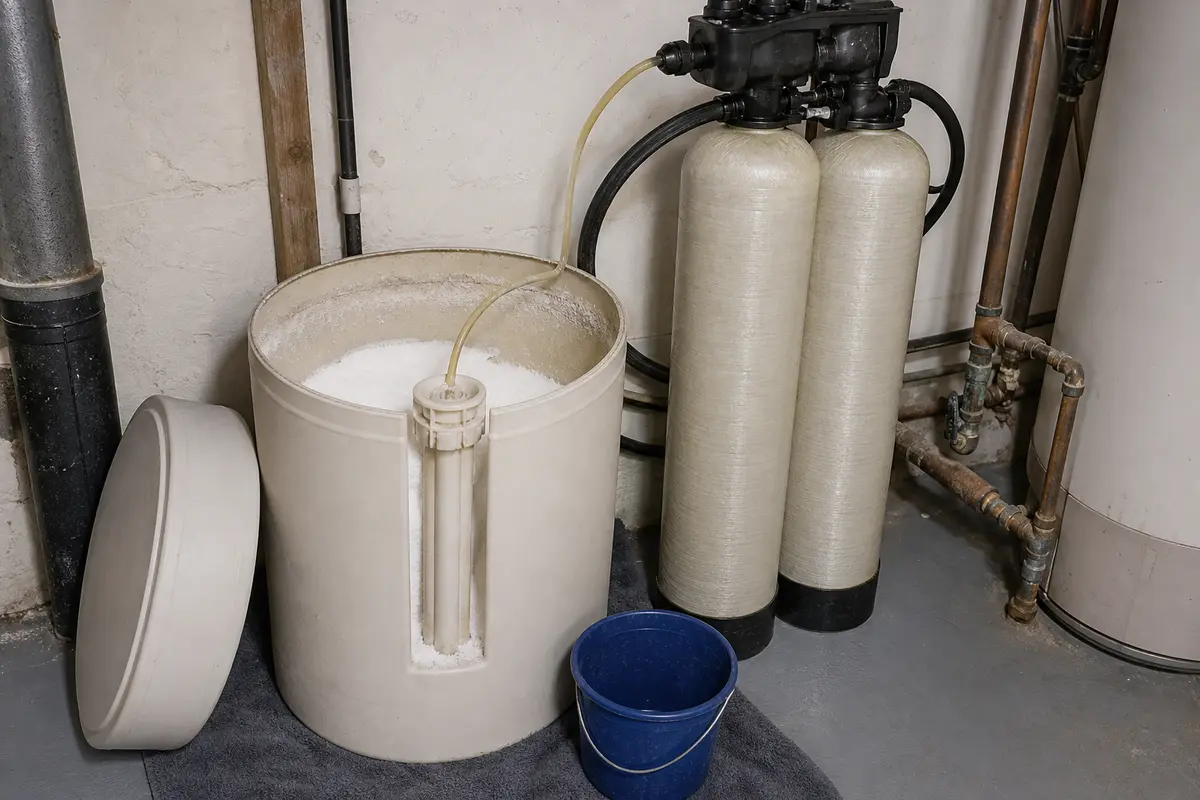
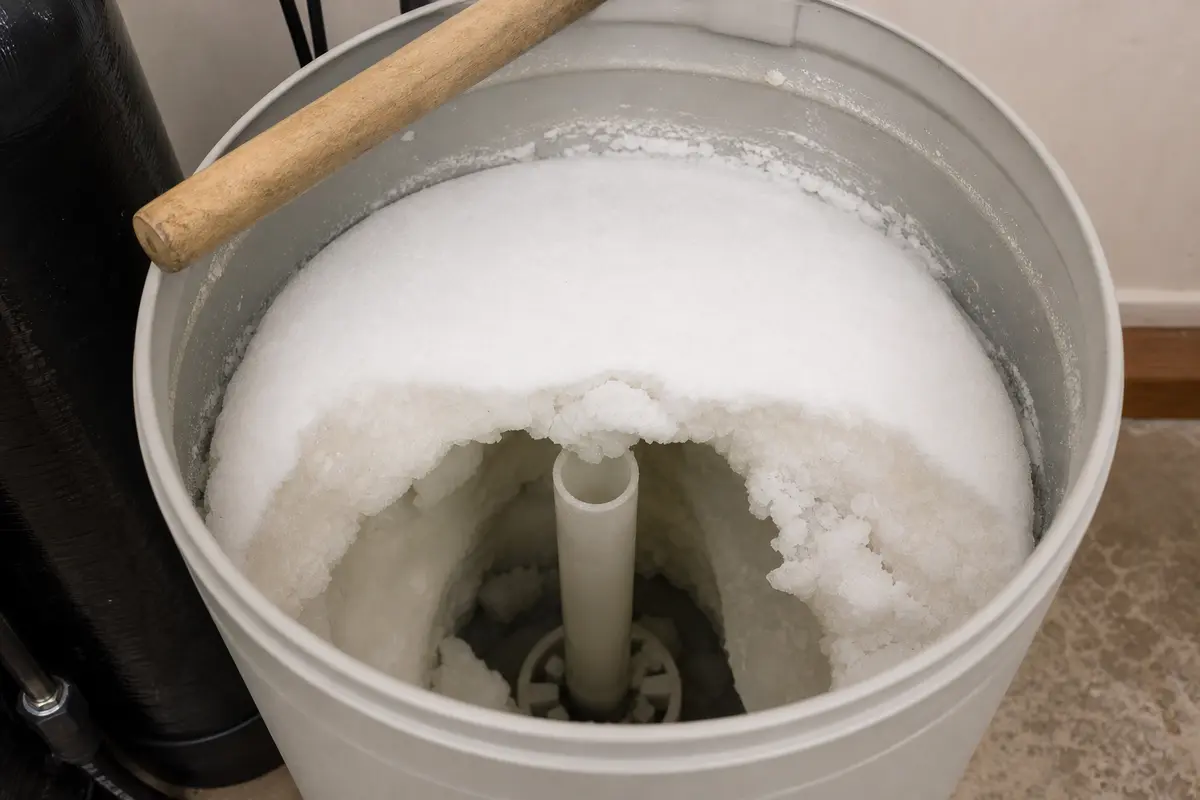
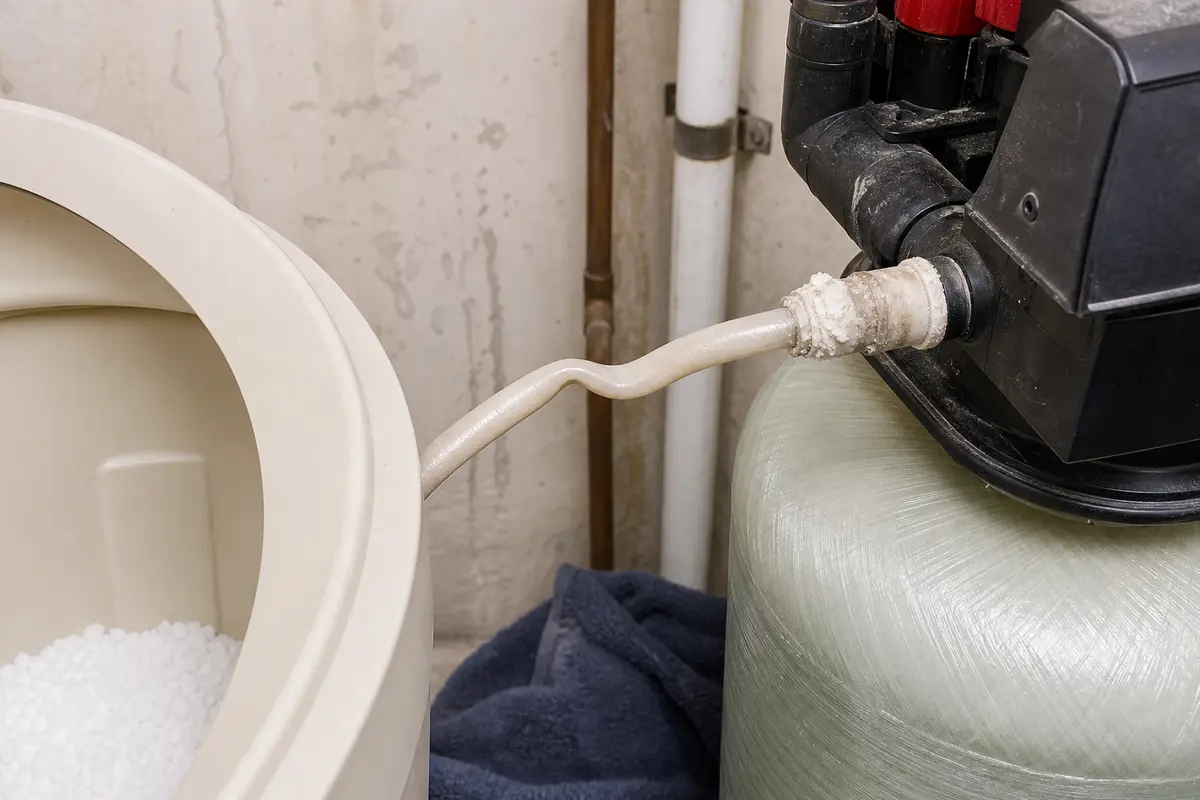
Copy the exact Kinetico model and serial numbers, then write down the water level, salt condition, brine-line condition, drain behavior, and whether the level drops during a watched regeneration. Kinetico valve and seal work is model-sensitive.
No brine draw is a water-movement problem. The question is whether the tank cannot supply brine, the tubing cannot carry it, or the valve head cannot create suction.
Start with the visible clues before you open the Kinetico head. A salt bridge, kinked tube, or loose fitting is easier to prove and a lot easier to undo.
Work from the outside in. These checks keep the water controlled and leave model-specific valve work for the point where it actually makes sense.
Use the result before touching another part. The water level pattern is usually more useful than the sound of the softener cycling.
| What you see | What it usually means | Next move |
|---|---|---|
| Water is near the rim or still rising. | Active overfill or uncontrolled fill. | Use bypass and protect the floor before more checks. |
| Salt feels hollow, crusted, or packed into mush. | Salt bridge or blocked pickup area. | Break up the bridge gently and clear loose sludge around the brine well. |
| Float scrapes, hangs, or sits in salt sludge. | Float or brine valve restriction. | Clean loose debris and recheck float movement without forcing it. |
| Brine line is kinked, cracked, loose, or salty at a fitting. | Restriction or suction-side air leak. | Repair the visible line issue before buying valve parts. |
| Drain flow looks good but the brine level never drops. | No brine draw through the valve path. | Copy the model numbers and plan model-specific service. |
Kinetico systems should not be treated like generic cabinet softeners once the diagnosis reaches the control head.
These are for inspection, cleanup, and gentle checks. They are not permission to force brittle fittings or open the valve head.
Paid links. As an Amazon Associate I earn from qualifying purchases. Repair Riot may earn a commission at no extra cost to you.
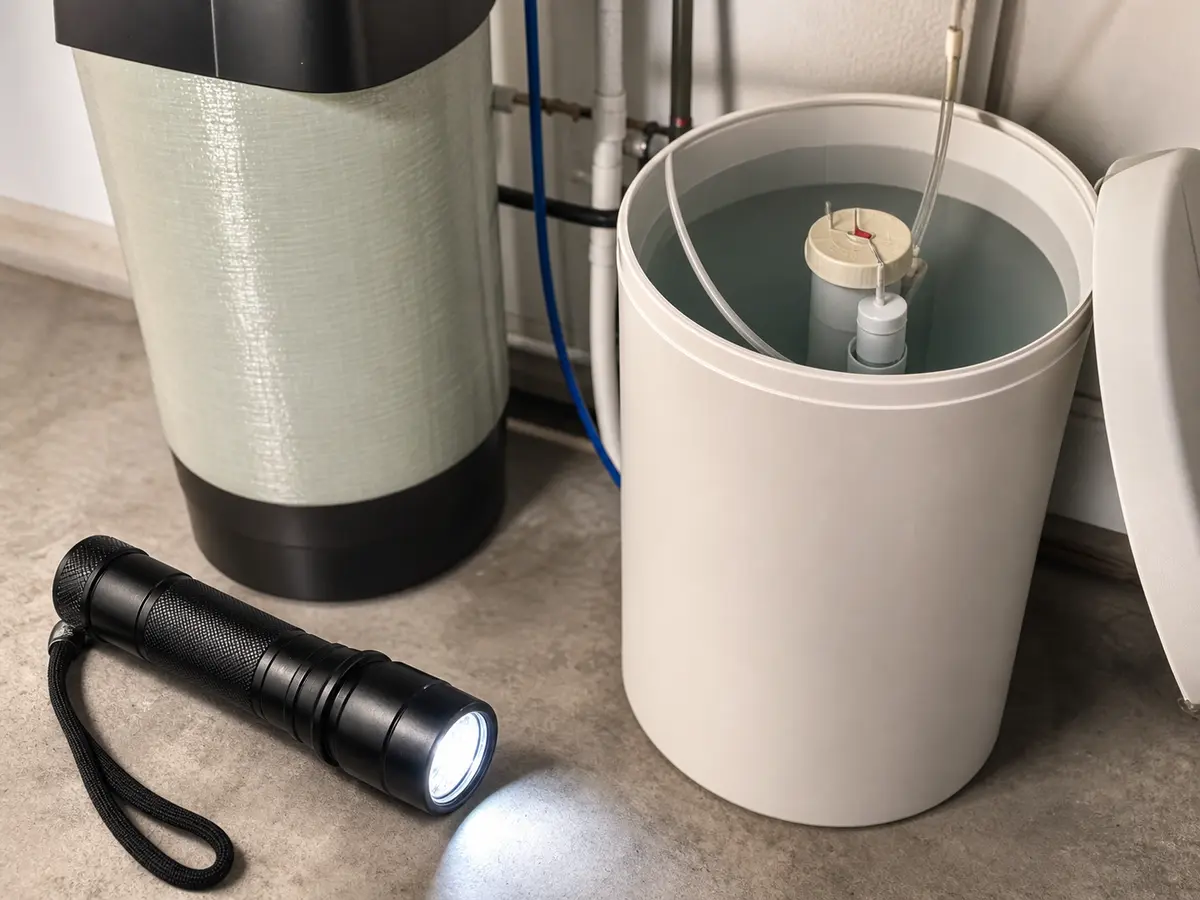
Helps when: The brine tank is open and you need to see the float, brine well, tubing route, salt bridge clues, and tank bottom without reaching into hidden spaces.
Skip it when: Skip the inspection and call for help if water is already close to electrical equipment or a fitting is actively leaking.
Compare inspection flashlights on Amazon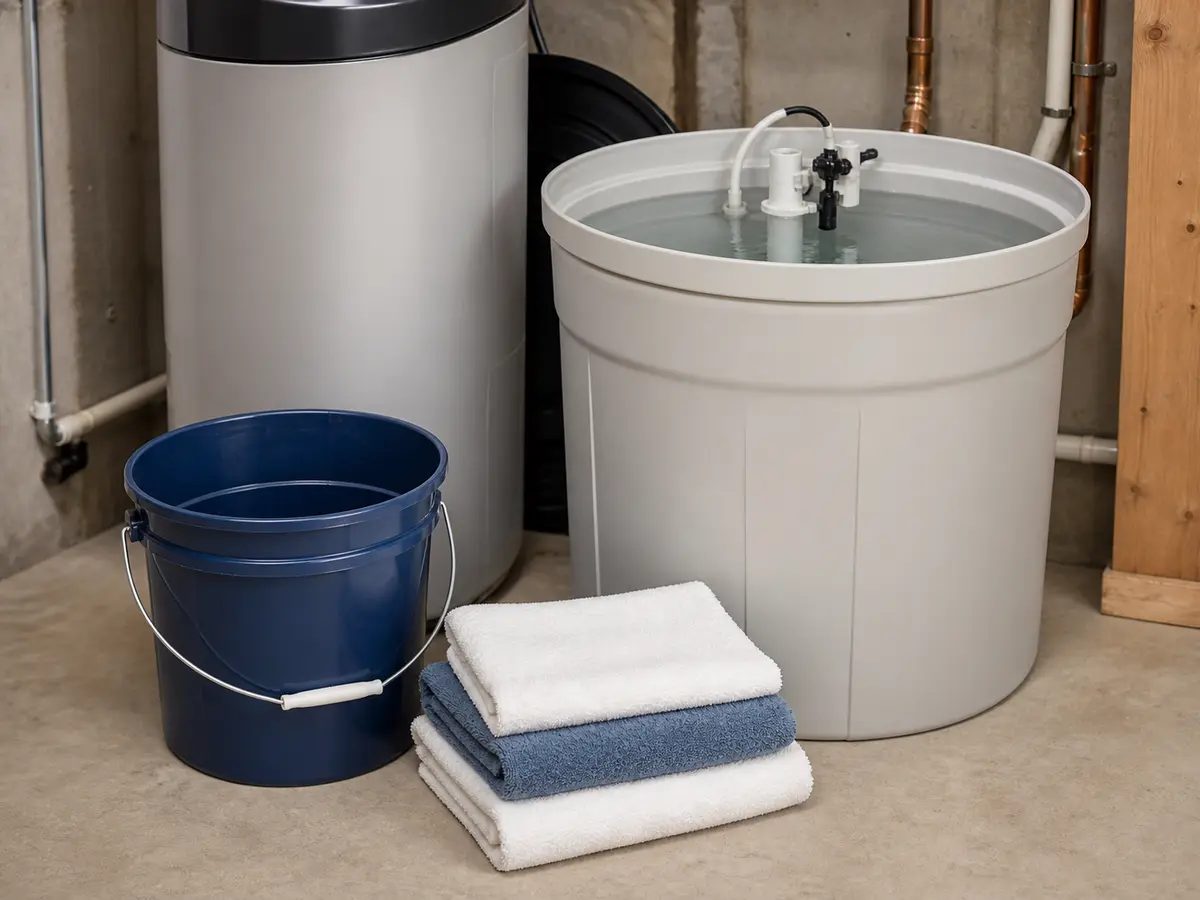
Helps when: You are catching a small brine spill, drying the floor beside the tank, or keeping salt water away from nearby finishes during tubing checks.
Skip it when: Skip a DIY cleanup if the tank is overflowing, water is spraying, or the leak gets worse when touched.
Compare cleanup supplies on Amazon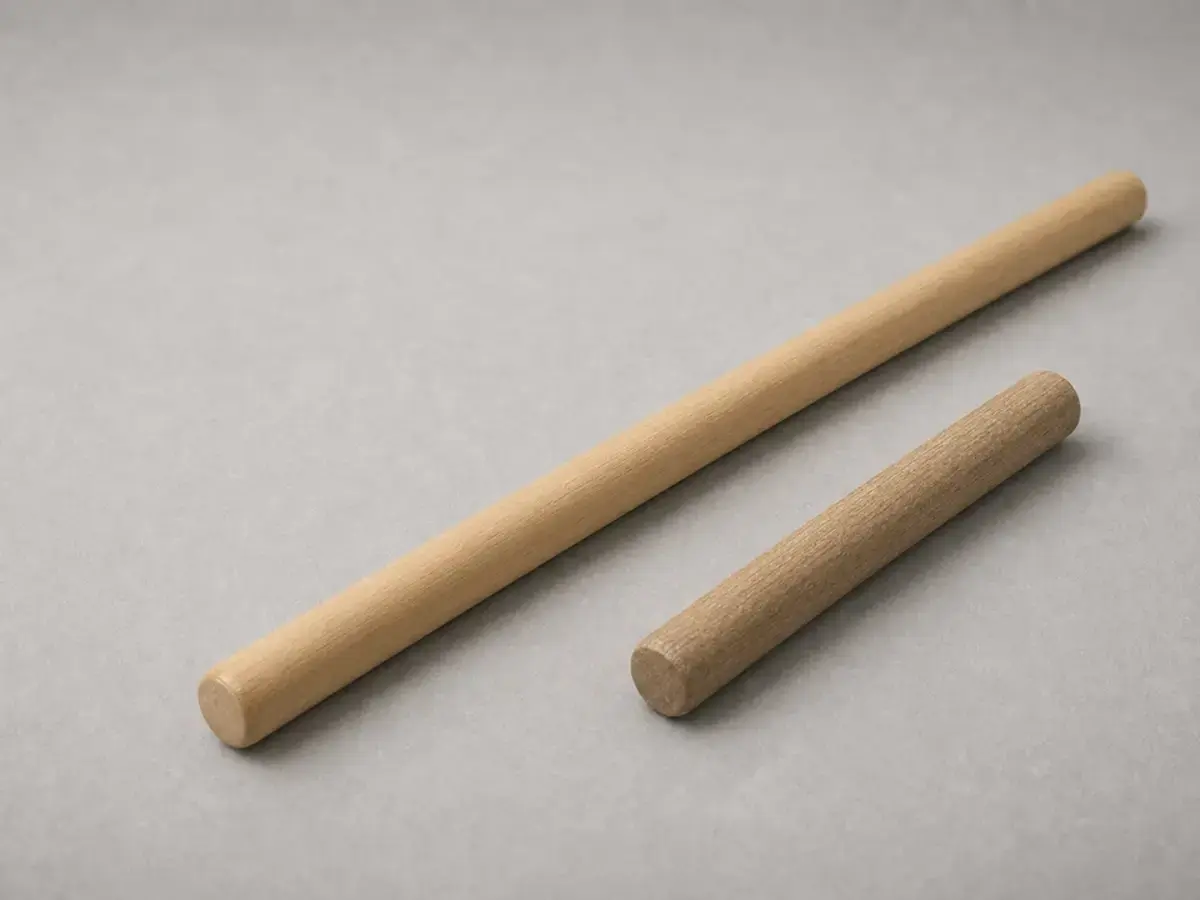
Helps when: Use a blunt handle to probe for a salt bridge without reaching into brine or striking the tank wall.
Skip it when: Skip it if the float assembly is exposed, loose, cracked, or positioned where probing could damage it.
Compare wooden handles on AmazonParts come after proof. Buy only when the failed area points to the part, and match the exact Kinetico model before ordering anything internal.
Paid links. As an Amazon Associate I earn from qualifying purchases. Repair Riot may earn a commission at no extra cost to you.
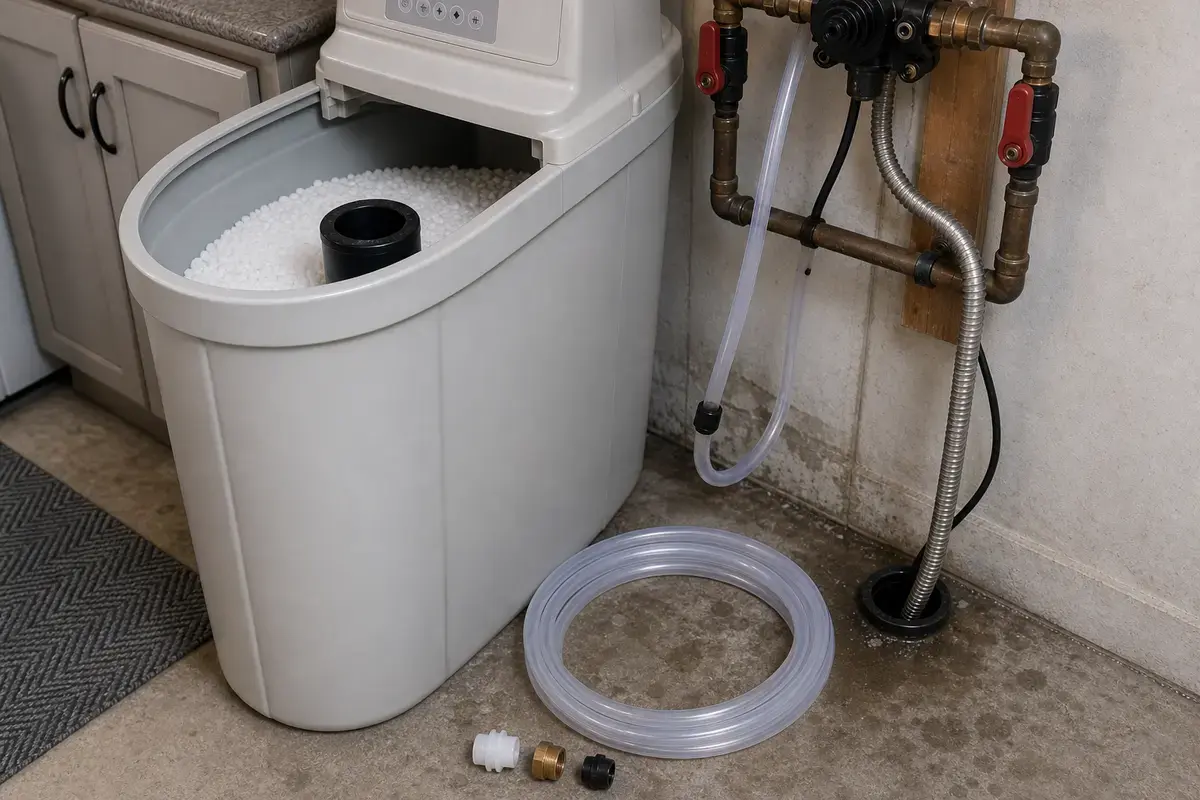
Helps when: Compare this only if the tube is cracked, kinked, brittle, loose at a fitting, or leaving salt trails where air can leak in.
Skip it when: Skip it when the existing brine line is open, fully seated, and not cracked; the remaining clue may be in the float, drain route, or valve head.
Compare brine lines on Amazon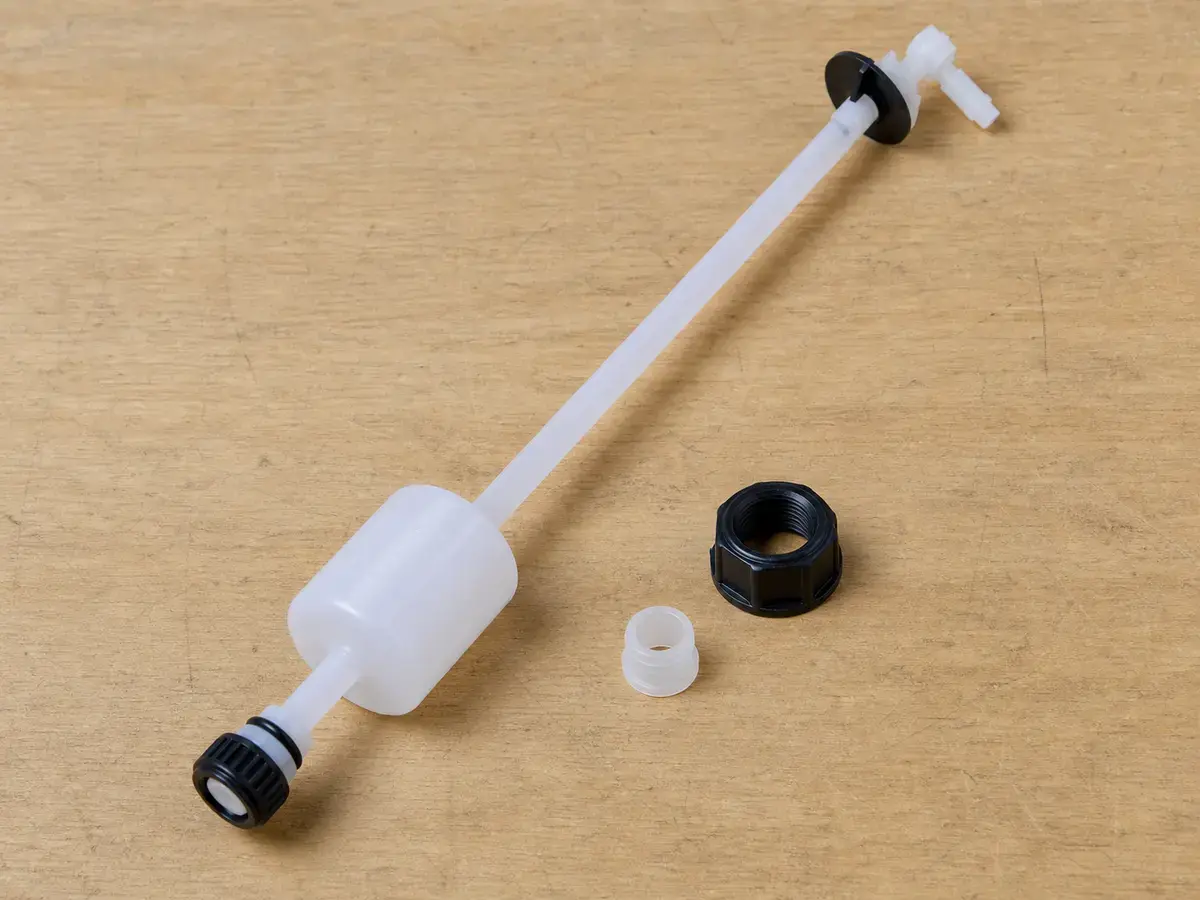
Helps when: Compare a float assembly only if the float scrapes, hangs, cracks, or will not move after loose salt sludge is cleaned away.
Skip it when: Skip it when the float moves freely and the level still will not drop during regeneration; that points beyond the float assembly.
Compare brine float assemblies on Amazon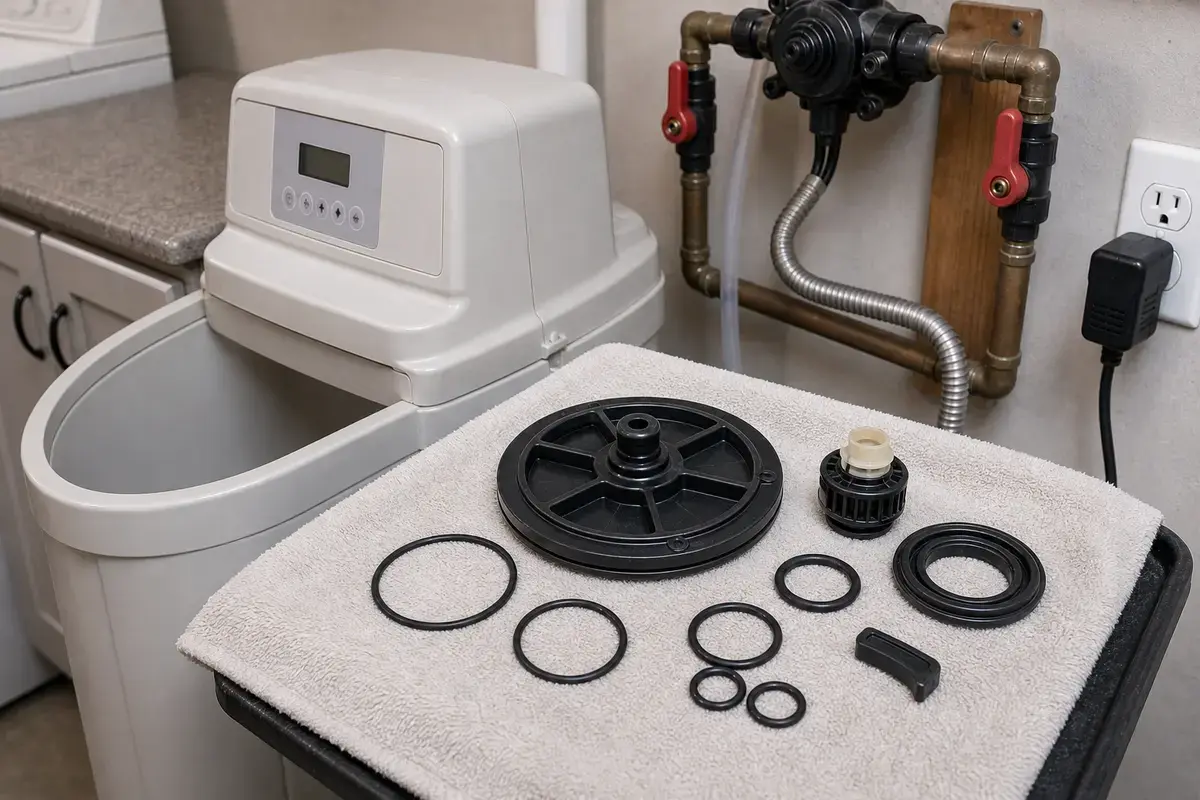
Helps when: The tank, float, drain route, and brine line checks are clean, the unit still will not draw brine during a watched cycle, and the kit is matched from the exact model information.
Skip it when: You have not copied the exact model and serial numbers, or the outside checks still point to the brine line, float assembly, drain route, salt bridge, or dealer-only valve service.
Compare softener seal kits on AmazonYes. Some water at the bottom can be normal. The concern is water above the salt or regenerant, water near the rim, a level that keeps rising, or a level that does not drop during regeneration.
A hard salt bridge, salt mush, a blocked pickup, a kinked brine line, or a suction-side air leak can keep the unit from pulling usable brine even when the tank looks full.
Add salt only when the tank is simply low on regenerant and the level is not rising or near overflow. Do not hide an active draw or overfill problem under another bag of salt.
The brine line becomes the suspect when it is kinked, cracked, loose, clogged, or crusted with salt at a fitting. If the line is open and tight, keep tracing the float, drain route, and valve suction path.
Yes. A hard salt shelf can leave a hollow wet pocket underneath and block brine from reaching the pickup. Probe gently with a blunt handle and stay clear of the float assembly.
Move the diagnosis inside the valve head only after the tank is clear, the float moves freely, the drain route is open, and the brine line is intact but the level still will not drop during a watched cycle.
No. Match the exact model and serial numbers before ordering anything. Brine lines, float assemblies, seals, and valve parts can look similar while fitting differently.
Call when the tank is overflowing, fittings are brittle or seized, the valve head may need to be opened, or clean outside checks still leave no brine draw.
Repair Riot built this page around homeowner-visible checks: salt condition, water level, brine-well float movement, tubing condition, drain behavior, and the point where Kinetico-specific service is safer than guessing.