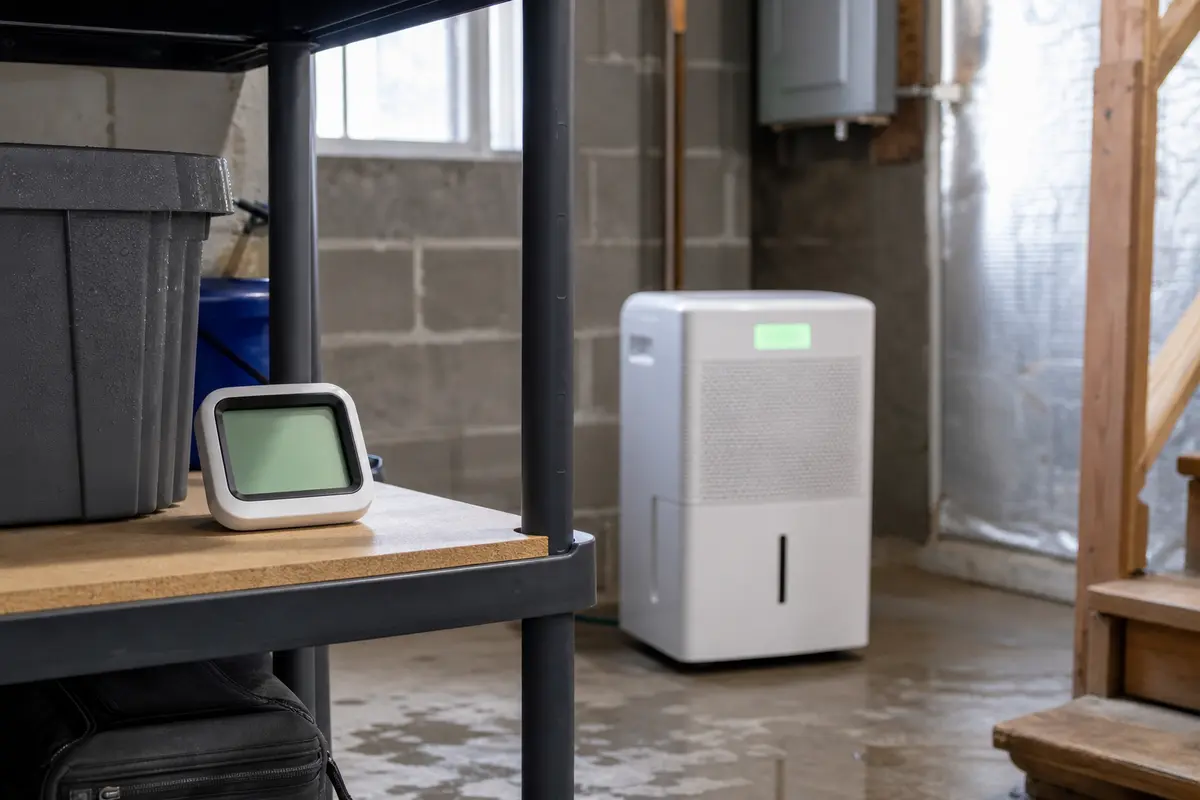
Is the room actually humid and warm enough?
Use a room humidity meter if you have one, close doors and windows, lower the setpoint, and run a short test. A cool or already-dry room may not make much water.
If a Honeywell dehumidifier runs but the tank stays dry, start with the set humidity, actual room humidity, bucket seating, filter airflow, and frost clues. Those checks prove most no-water complaints before parts make sense.
Most dry-tank calls come from a room that is not calling for dehumidifying, a bucket that is not seated squarely, a dust-packed filter, or frost choking the coil.
Use the first few minutes to separate a normal low-humidity condition from a real collection failure.
Don’t start with: Do not force the bucket switch, open the cabinet with power connected, or order compressor, board, pump, or sensor parts from a dry tank alone. Get a real clue first: a seated bucket still read as full, weak airflow after a clean filter, repeated frost, or no cooling in a warm damp room.
Use a room humidity meter if you have one, close doors and windows, lower the setpoint, and run a short test. A cool or already-dry room may not make much water.
Remove the bucket, check the float, wipe the rails and sensor area dry, then reinstall the bucket squarely until it sits flush.
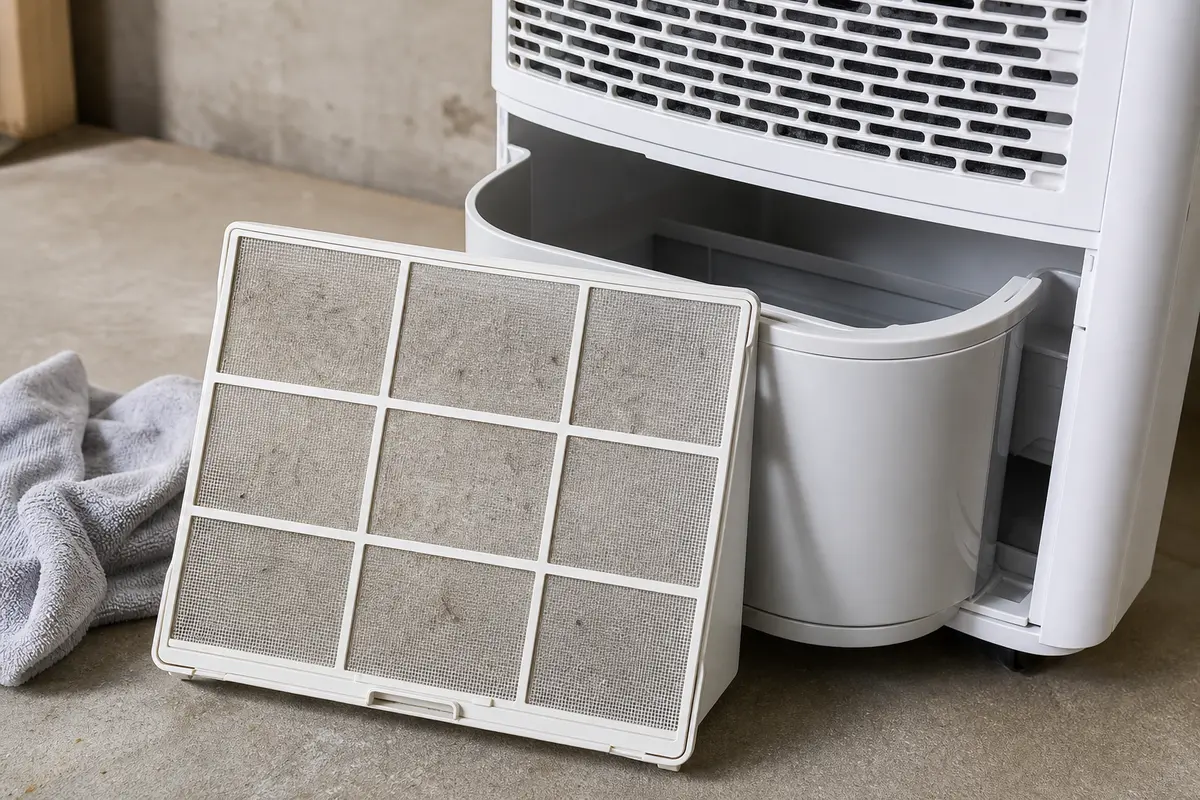
Unplug the unit, clean the washable filter if your model allows it, clear lint from the intake and outlet, and retest with open space around the cabinet.
Turn the dehumidifier off and let it thaw completely. Repeated icing after filter and clearance checks points away from simple bucket parts.
The tank may stay empty by design. Test bucket mode with the hose removed, then inspect the hose for kinks, uphill runs, or a submerged end.
A bucket switch can be reasonable if the symptom points there. Poor cooling, repeated icing, hot smells, or compressor trouble is a service-or-replace decision.
A dry tank is not one failure. Use the visible clues first: whether the room is humid enough, whether the bucket sits squarely, whether the filter is packed, and whether frost is blocking the coil.
Do not buy a compressor, control board, pump, fan motor, sensor, bucket switch, water level switch, or filter until the room, bucket, airflow, frost, and drain checks point there. Copy the full model number and match the old part by shape, connector, mounting, and size.
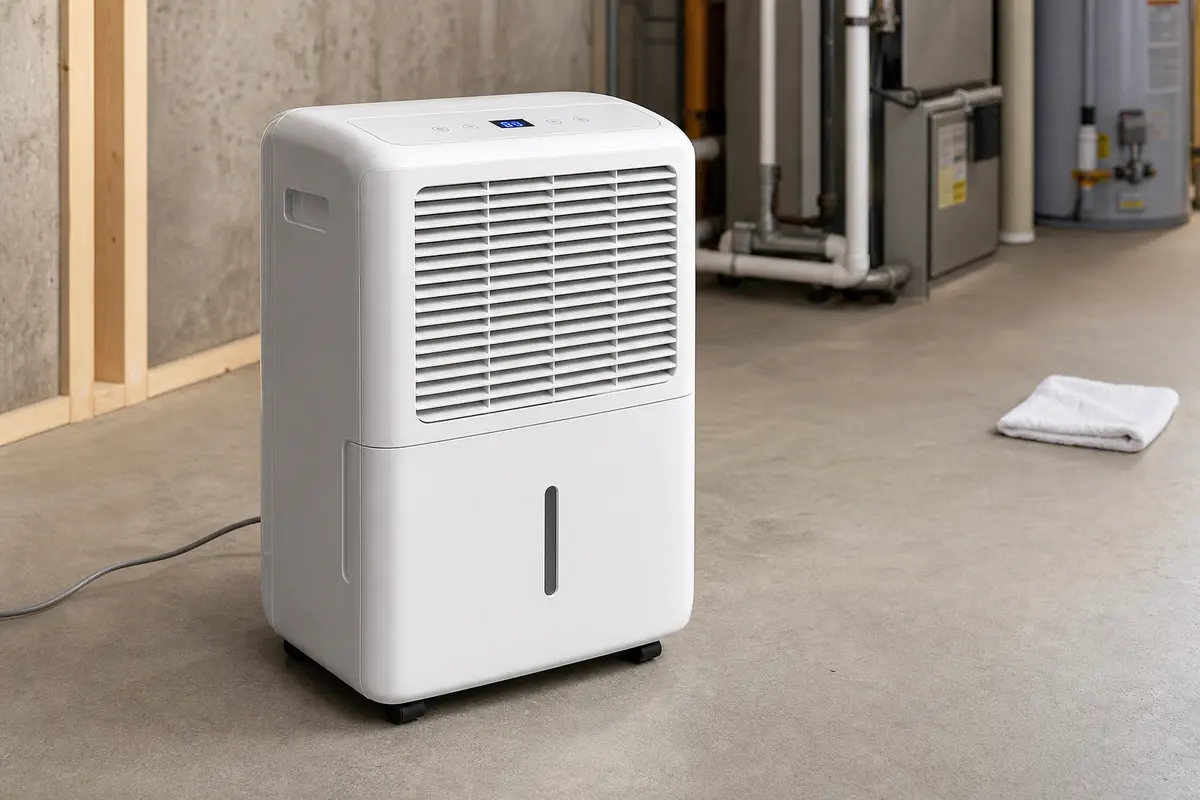
A Honeywell dehumidifier can run while the tank stays dry for two different reasons. The room may not be warm or humid enough to make water, or the machine may be held back by bucket fit, weak airflow, frost, drain mode, or sensing. Prove the room and bucket first, then move to airflow and frost.
The dry tank is a clue, not a part number. Work through the checks you can see before you spend money or open the cabinet.
Run one clean test before parts: close the room, lower the setpoint, seat the bucket, and give the dehumidifier a short watched run. Then match the result below.
| What you see | What it usually means | Next move |
|---|---|---|
| Room humidity is near or below the setpoint | The dehumidifier may not have much moisture to collect. | Lower the setpoint or test in a warmer, damper room before buying parts. |
| Bucket-full light appears with an empty tank | The bucket, float, or bucket switch area is being misread. | Reseat the bucket, free the float, clean the rails, then consider a switch only if the clue repeats. |
| Filter is gray, matted, or airflow feels weak | The coil is not getting enough air to condense water well. | Clean and dry the filter, clear the grilles, and retest with open space around the cabinet. |
| Frost appears behind the grille | Airflow, room temperature, or cooling control trouble is blocking moisture removal. | Shut the unit off, let it thaw, clean airflow paths, and stop if ice returns quickly. |
| Drain hose is attached and the bucket stays empty | Water may be routed away from the bucket or trapped in a poor hose run. | Test bucket mode without the hose, then fix kinks, uphill runs, or a submerged hose end. |
| Warm humid room, clean filter, seated bucket, and still no water | The failure is no longer a simple homeowner setup issue. | Consider a confirmed bucket switch problem, warranty support, appliance service, or replacing the unit. |
A fair test keeps the room, setting, and bucket from giving you a false dry-tank result.
Airflow problems are easy to miss because the fan can still make noise. The repair clue is how much air moves through the grille and whether frost forms after the filter is clean.
Parts belong after the clue repeats in a fair test. If the room is damp, the bucket sits flush, the filter is clean, and the tank still stays dry, small bucket or airflow parts are the homeowner-level suspects. Repeated frost, no cooling, or hot electrical smells point away from the expensive internal cooling side and toward service or replacement.
These tools support the safe checks on this page. Skip tool work if the unit smells hot, trips power, has water near electrical parts, or needs internal live testing.
Use parts only when the result map points to them. Honeywell model families can look similar, so match the model tag and the old part before ordering.
Most of the time, the room is not humid enough, the setpoint is too high, the bucket is not seated squarely, the filter is dirty, or frost is blocking airflow. Check the room reading if you have a meter, reseat the bucket, clean the filter, and look for frost before suspecting a compressor or control problem.
In a warm damp room, a seated bucket and clean filter should usually show some collection within 30 to 60 minutes. If the basement is cool or already near the set humidity, the bucket may stay nearly dry even with a good unit. Lower the setpoint or test in a warmer, damper room before buying parts.
Yes. A dust-packed filter cuts airflow across the cold coil, so less moisture condenses and frost can start. Clean the filter and let it dry fully before judging the next run.
That points to bucket fit, float movement, residue on the rails, or a bucket switch/water level switch problem. Reseat and clean the bucket area before replacing a switch.
Yes. Compressor-style dehumidifiers collect less water in cool rooms, and frost can form when conditions are too cold or airflow is weak. Thaw frost completely before retesting.
That can be normal in continuous drain mode because water is routed away from the bucket. To test collection, remove the hose, reinstall the bucket, and check for kinks or an uphill hose run.
Not as a first move. A pump only moves water after the dehumidifier makes it, and fan diagnosis comes after filter, grille, frost, and airflow checks. Do not guess at either part from a dry tank alone.
Yes, but only after the bucket test points there. The bucket should sit squarely, the float should move freely, and the machine should still act full or change behavior when you press on the bucket. If those clues are not present, keep looking at fit, airflow, frost, or drain mode.
Replacement often makes more sense when a portable unit repeatedly ices after a clean-filter test or never cools in a warm humid room. The same is true for compressor clicking, hot smells, or sealed-system and live electrical diagnosis outside warranty. At that point, stop guessing at parts and compare repair cost with a replacement unit.
Repair Riot rebuilt this page around homeowner-visible Honeywell dehumidifier clues: room humidity, setpoint, bucket seating, filter airflow, frost, drain mode, and when a small switch repair is reasonable. The source links support manufacturer troubleshooting, model-manual lookup, and general dehumidifier operating context; the repair sequence is original Repair Riot guidance.