Does E3 come back fast after startup?
Unplug it and clean the filter, intake grille, discharge grille, and visible lint first. A fast return usually means heat is building again right away.
A Honeywell dehumidifier E3 code usually means the unit is running hot or the control is seeing a bad internal temperature signal. Start outside the cabinet: unplug it, clean the filter and grilles, give it open air, then prove the fan is moving a steady stream.
A blocked filter, dusty coil, tight wall clearance, or weak fan fits this symptom better than a control board on the first pass.
The useful question is simple: can the machine breathe and cool itself?
Don’t start with: Do not keep resetting a hot unit or order a board because E3 is on the display. Clean the air path first, then run a short fan check; weak discharge air or fast cabinet heat keeps the diagnosis on airflow before controls.
Unplug it and clean the filter, intake grille, discharge grille, and visible lint first. A fast return usually means heat is building again right away.
Stop running the unit. Heat plus odor, a hot cord, or a tripped outlet is a service stop, not another reset.
Treat the fan branch as the lead clue. Clean the outside air path once, then stop if the fan still barely moves air or scrapes.
Unplug it and vacuum only reachable dust with a soft brush. Do not spray cleaner into the cabinet.
The easy checks are done. Internal temperature sensor, wiring, or control diagnosis is next and should not be guessed from the display alone.
E3 usually needs an airflow check before an electronics guess. Start where air enters, leaves, and moves past the coil.
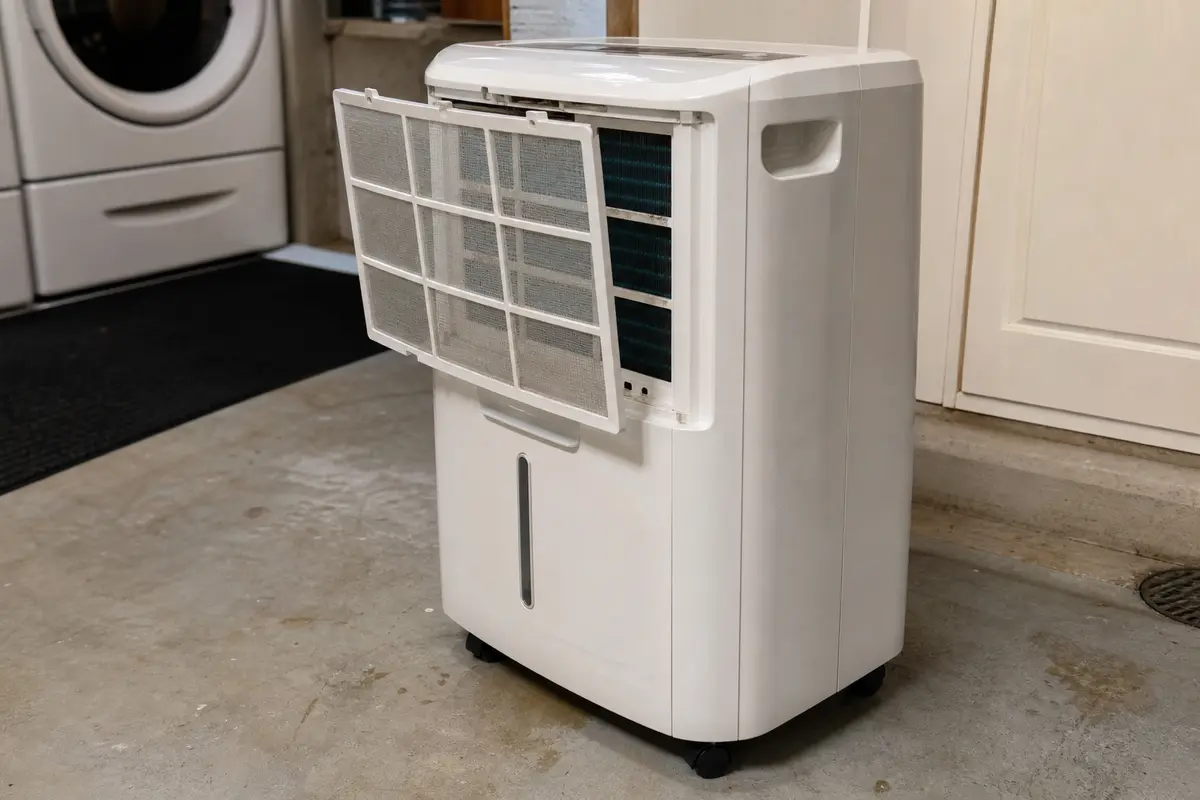
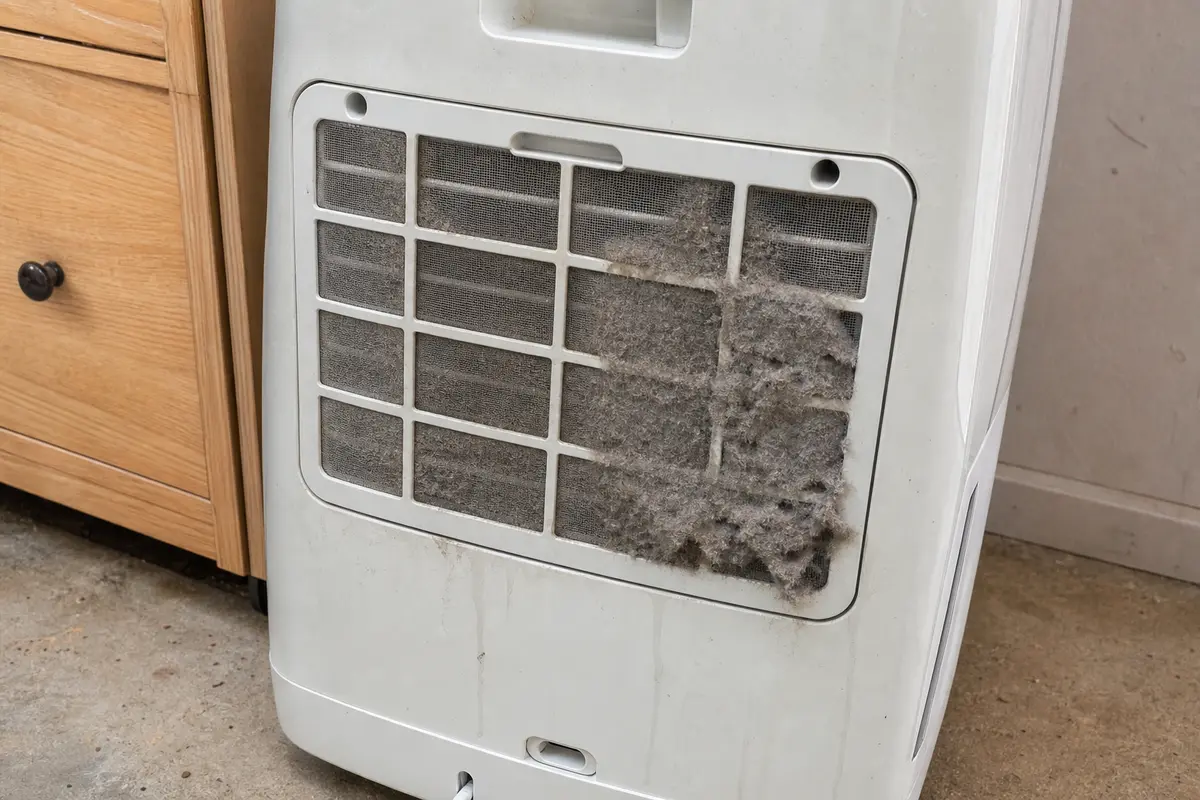
Buy a filter only when the old one is torn, warped, missing, or still clogged after washing and drying. Skip control boards, sensors, fan motors, and sealed-system parts until the air path is clean, the fan behavior is clear, and the part matches the exact model number on the rating tag. E3 by itself is not a parts diagnosis.
E3 is useful because it tells you the unit is unhappy, but the display does not prove which part failed. Sort the heat clue first.
A clogged filter is the best first repair because it is common, cheap to correct, and directly tied to heat buildup.
The filter can look acceptable while fine dust is already packed on the coil face. Keep this check visual and gentle.
A weak fan can fool you because it still makes sound. The test is whether the discharge air is steady and strong enough to carry heat out of the cabinet.
Use the result of each check to decide whether you have a maintenance fix, a fan clue, or a clean stop before internal diagnosis.
| What you find | What it usually means | Next move |
|---|---|---|
| Code clears after cleaning the filter and grilles | The unit was likely overheating from restricted airflow. | Run a normal cycle and keep the filter on a shorter cleaning schedule. |
| Cabinet gets hot again within a few minutes | Heat is still building faster than the unit can shed it. | Stop repeated resets and recheck coil dust, clearance, and fan airflow. |
| Airflow is weak or fan sounds rough | Fan trouble is more likely than a sensor guess. | Stop running it hot; service the fan path or compare repair cost with replacement. |
| Coil looks fuzzy through the grille | Dust may be choking the heat exchange surface. | Unplug it and clean only reachable dust; do not soak or spray inside. |
| Airflow is strong and clean but E3 returns | The remaining fault is likely internal temperature sensing, wiring, or control logic. | Stop buying parts from the code alone and use model-specific service diagnosis. |
The expensive mistake on an E3 page is treating the code as a shopping list. Let the visible clue decide: dirty filter, fuzzy coil, weak discharge air, or strong airflow with a returning code.
These tools support outside checks only. Skip any step that requires probing wiring, opening sealed refrigerant areas, or running the unit while disassembled.
Paid links. As an Amazon Associate I earn from qualifying purchases. Repair Riot may earn a commission at no extra cost to you.
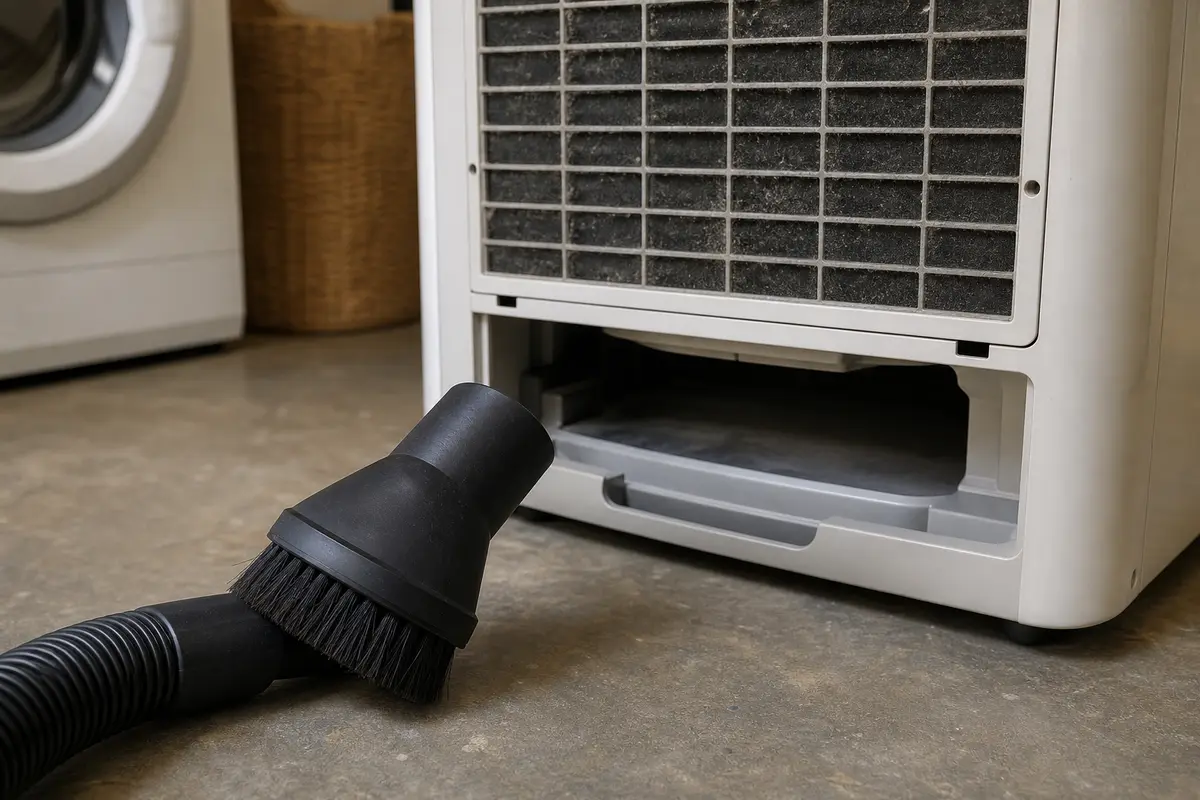
Helps when: Removes loose lint from the filter frame, grille, bucket opening, and reachable coil face without scraping plastic or bending fins.
Skip it when: Skip hard nozzles or deep probing if dust is wrapped around a fan you cannot safely reach.
Compare vacuum brush attachments on Amazon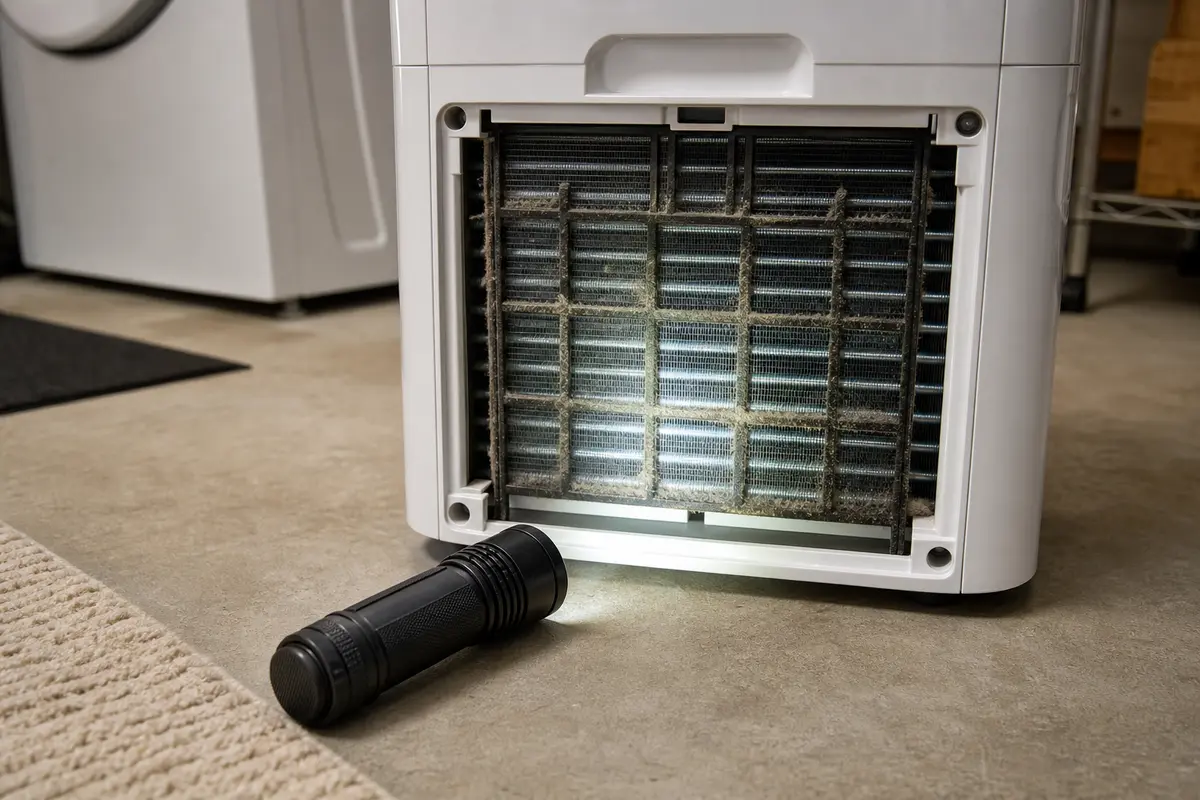
Helps when: Shows coil dust, lint mats, fan rubbing marks, and heat damage through normal grille openings.
Skip it when: Do not use a flashlight check as a reason to remove wiring covers or reach into a powered unit.
Compare compact flashlights on AmazonParts come after the airflow check, not before it. Match the full model number and the old part shape before ordering anything for a Honeywell dehumidifier.
Paid links. As an Amazon Associate I earn from qualifying purchases. Repair Riot may earn a commission at no extra cost to you.
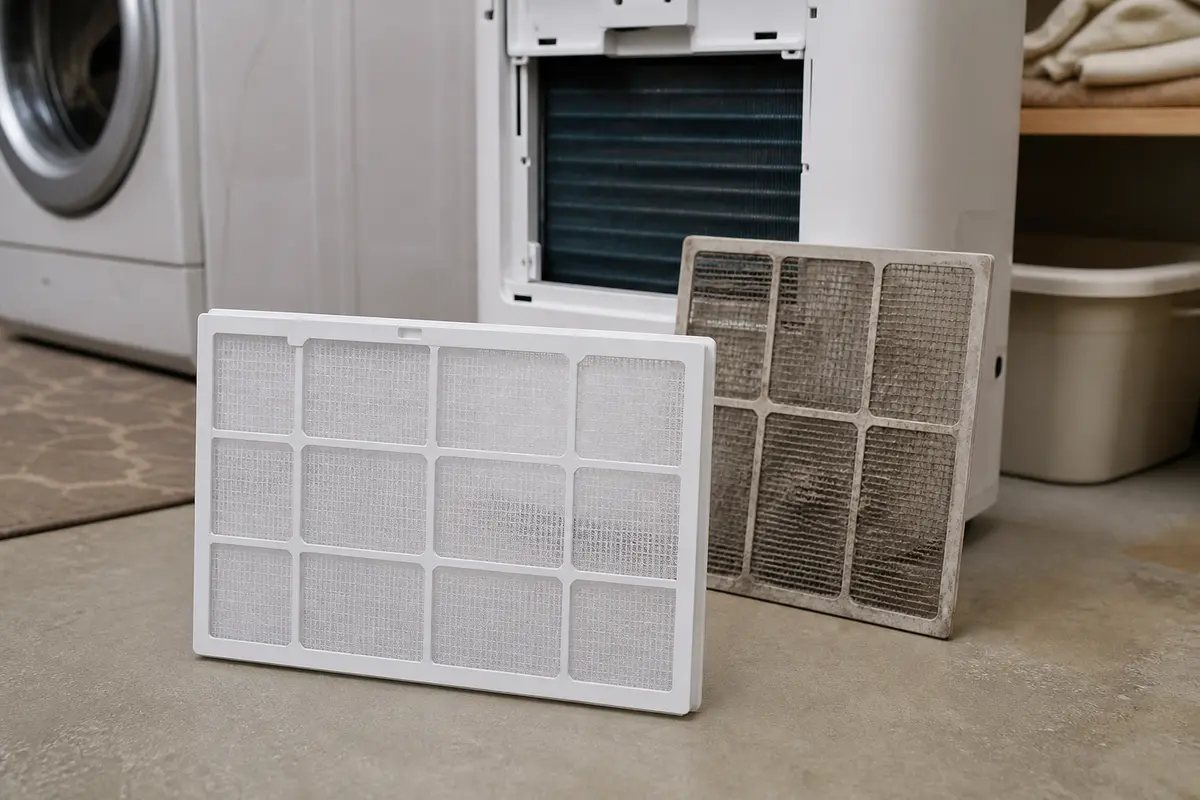
Helps when: The old filter is torn, warped, missing, or still blocks light and airflow after cleaning.
Skip it when: The filter washes clean, dries flat, seats firmly, and airflow improves after reinstalling it.
Compare dehumidifier air filters on AmazonOn this repair path, treat E3 as an overheating or internal temperature-reading fault until the checks prove otherwise. Start with filter restriction, grille dust, coil dust, clearance, and fan airflow.
Yes. A clogged filter can cut airflow enough for heat to build inside the cabinet. Clean and fully dry a washable filter before running the unit again.
The reset clears the display, not the condition. If the unit still cannot move air or the fan is weak, heat builds again and the code can return quickly.
No. Turn it off and unplug it, especially if the cabinet is hot, airflow is weak, the cord feels warm, or you smell hot plastic or electrical odor.
Do not start there. A dirty filter, blocked grille, dusty coil, tight clearance, or weak fan is a better first check. A board or sensor moves up only after the air path and fan check out.
After cleaning the filter and grille, run a short test and feel the discharge air. Weak airflow, scraping, pulsing, delayed startup, or fast cabinet heat points toward the fan path.
No. Do not spray cleaner or water into the cabinet. Unplug the unit and vacuum only reachable dust with a soft brush, keeping moisture away from wiring, controls, and the fan motor.
Call for service if E3 returns with a clean air path and strong fan airflow. Stop sooner if you find hot wiring smell, melted plastic, breaker trips, fan grinding, or anything that requires internal electrical testing.
A filter is the only common first part, and only if the old one is torn, warped, missing, or will not clean up. Match the exact model number and filter frame before ordering.
This page keeps the diagnosis on checks you can see and feel: filter restriction, grille dust, coil visibility, cabinet heat, clearance, and fan airflow. If those checks pass and E3 returns, internal temperature sensors, wiring, controls, and sealed refrigerant work stay outside the guess-and-buy path.