Front-load washer showing H2O Supply?
GE names the water valves, pressure sensing, and rarely very low pressure. If the supply is on and the message returns, GE recommends service.
H2O Supply can trigger a three- or four-minute drain and control lockout. Let it finish. Unplugging can restart the timer. Then match the exact message to your washer type.
Top-load guidance starts with the house supply. Front-load guidance also names pressure sensing, while SmartDispense H2O can mean empty bulk tanks.
Stay outside the cabinet until the result points to plumbing, a supply restriction, a dispenser issue, or service.
Don’t start with: Do not buy an inlet valve from the message alone. Confirm the model, exact message, hose flow, and approved screen checks first.
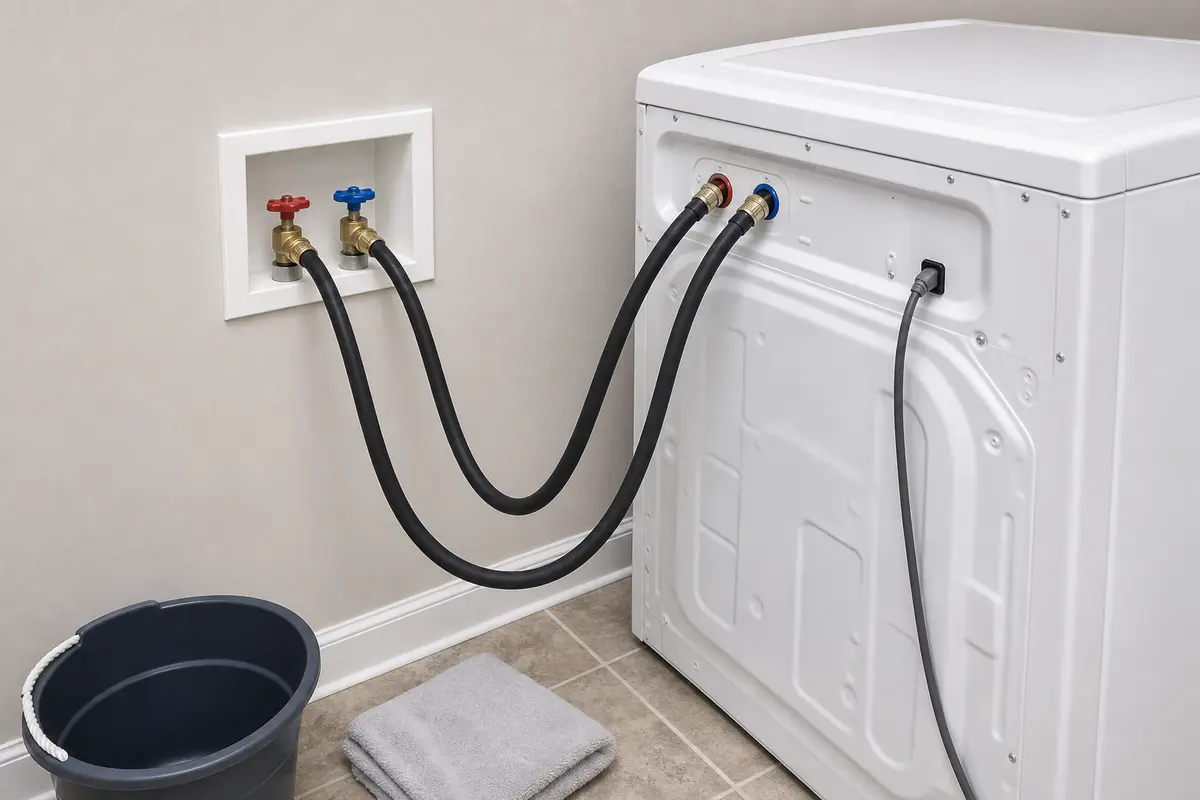
GE names the water valves, pressure sensing, and rarely very low pressure. If the supply is on and the message returns, GE recommends service.
Check the house supply and both laundry valves. Let the three- or four-minute lockout finish before retrying.
Empty detergent and softener bulk tanks can cause H2O. Turn both bulk dispensers off and test a cycle before checking hoses.
Confirm water reaches the appliance, then use the full model number and exact manual. Combo guidance differs from a standard washer.
These unbranded reference images show the homeowner-safe checks. Port and screen designs vary, so use your model's H and C markings and owner manual.
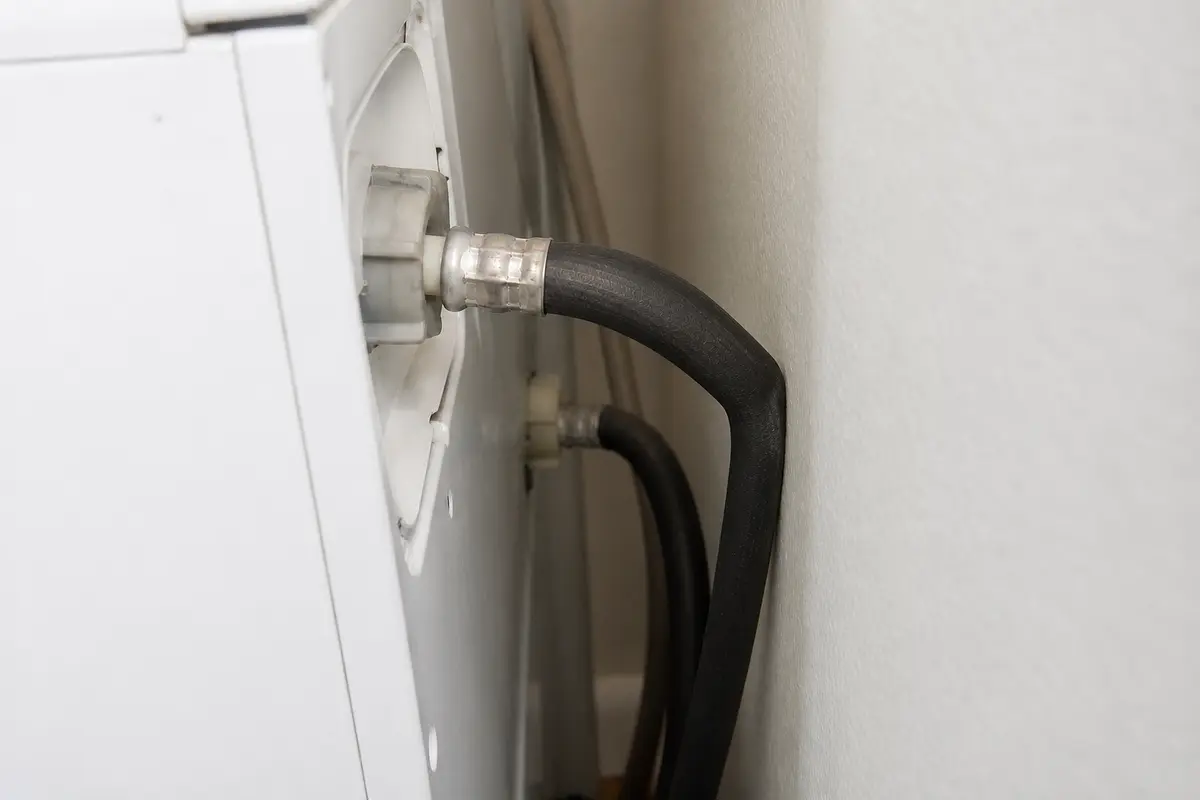
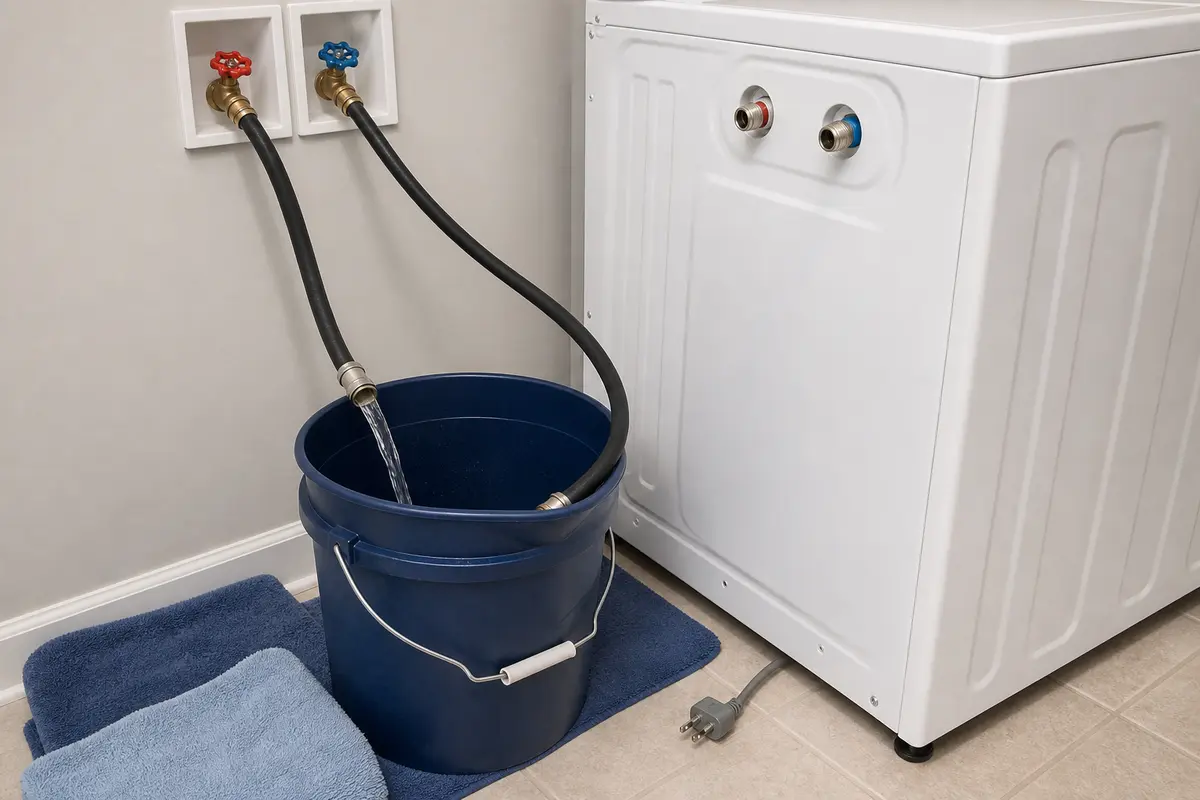
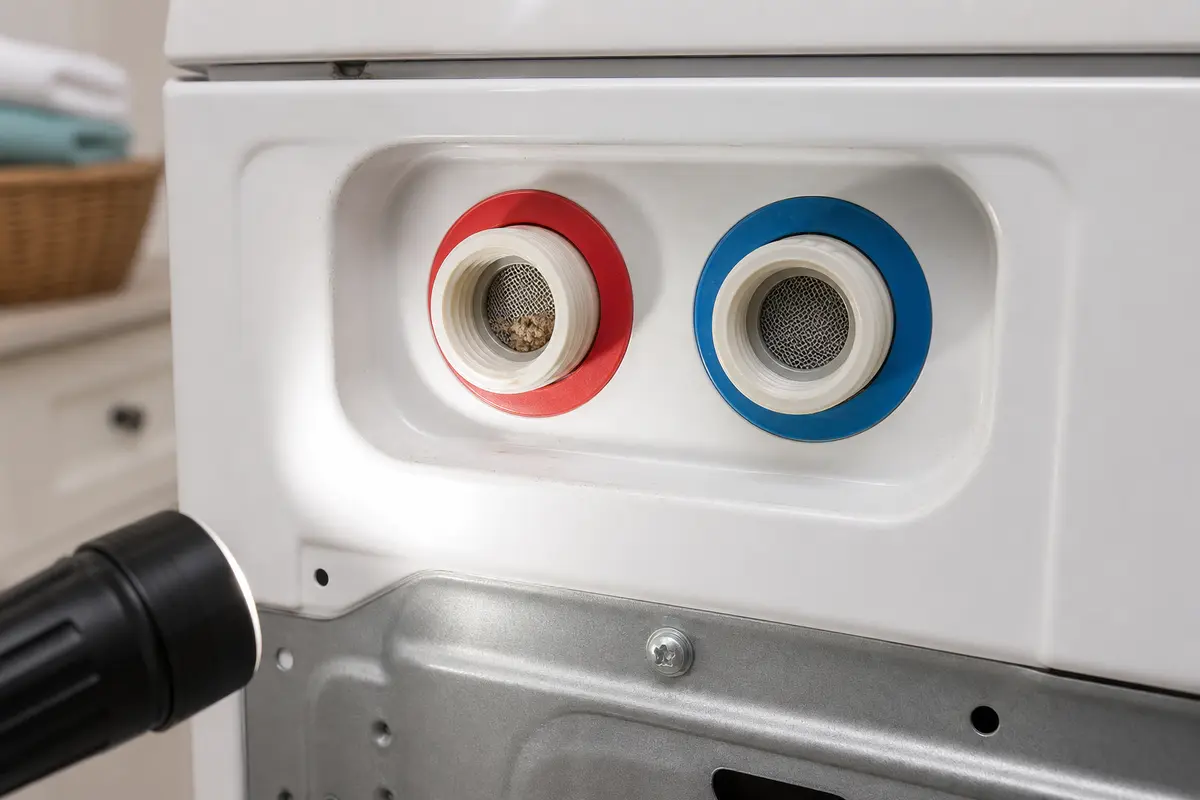
A washer fill hose is the only broadly compatible purchase on this page, and only when inspection finds damage or age makes replacement due. Internal valves, sensors, wiring, and controls must be matched and diagnosed by the full model number.
The drain pump running after H2O Supply can be the washer's normal response to the message, not a second failure.
GE uses similar water wording across washer families, but the next step is not identical.
These checks cost nothing and do not require opening the cabinet.
A controlled hose test separates the house supply and hoses from the washer itself.
GE says screens may be located in the inlet hoses, the washer's inlet connections, or both. Screen construction and removal vary.
Stop as soon as the evidence points to a different branch. The display message alone does not identify a replacement part.
| What you see | Most likely path | Next move |
|---|---|---|
| Drain pump runs and controls ignore input after H2O Supply | Normal safety lockout may be active | Wait three or four minutes; do not keep unplugging the washer. |
| No flow from either disconnected hose | House supply or both laundry valves | Restore the water supply or call a plumber if valves are stuck or leaking. |
| Only hot or cold hose flow is weak | That side's shutoff, hose, or hose screen | Follow the weak side; do not buy a washer part yet. |
| Both hoses flow strongly but a front-load H2O Supply message returns | Pressure sensing or another internal water-system fault remains possible | Follow GE's service recommendation instead of guessing at an inlet valve. |
| H2O appears on a SmartDispense model and a cycle starts with bulk dispensers off | Bulk detergent or softener dispenser path | Refill or service the dispenser system; leave the fill hoses alone. |
| A laundry valve leaks, will not close, or has a seized handle | House plumbing needs attention | Stop the test and call a licensed plumber. |
| Both hose streams are strong, approved screens are clear, and the message returns | A model-specific internal fault remains possible | Use the exact model service path; do not guess at an internal part. |
| Water reaches wiring, a breaker trips, or a connector looks burned | Electrical or water-damage hazard | Leave the washer unplugged and arrange appliance service. |
Use what you already own. These optional tools each support a specific external check; none is a reason to open the washer cabinet.
Paid links. As an Amazon Associate I earn from qualifying purchases. Repair Riot may earn a commission at no extra cost to you.
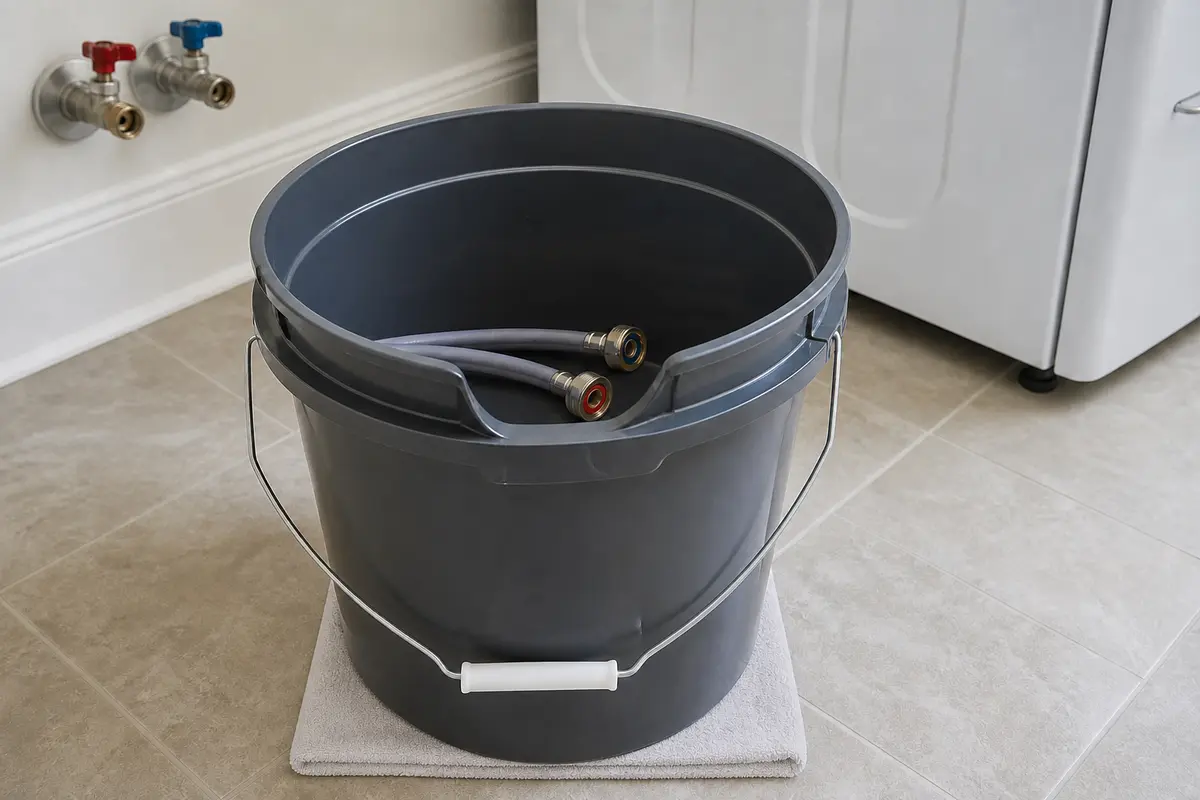
Helps when: You can safely disconnect both washer-end hoses and need a deep, stable container for a controlled hot-versus-cold flow comparison.
Skip it when: You already have a deep bucket, cannot secure both hose ends, or either laundry valve leaks or will not close.
Compare deep utility buckets on Amazon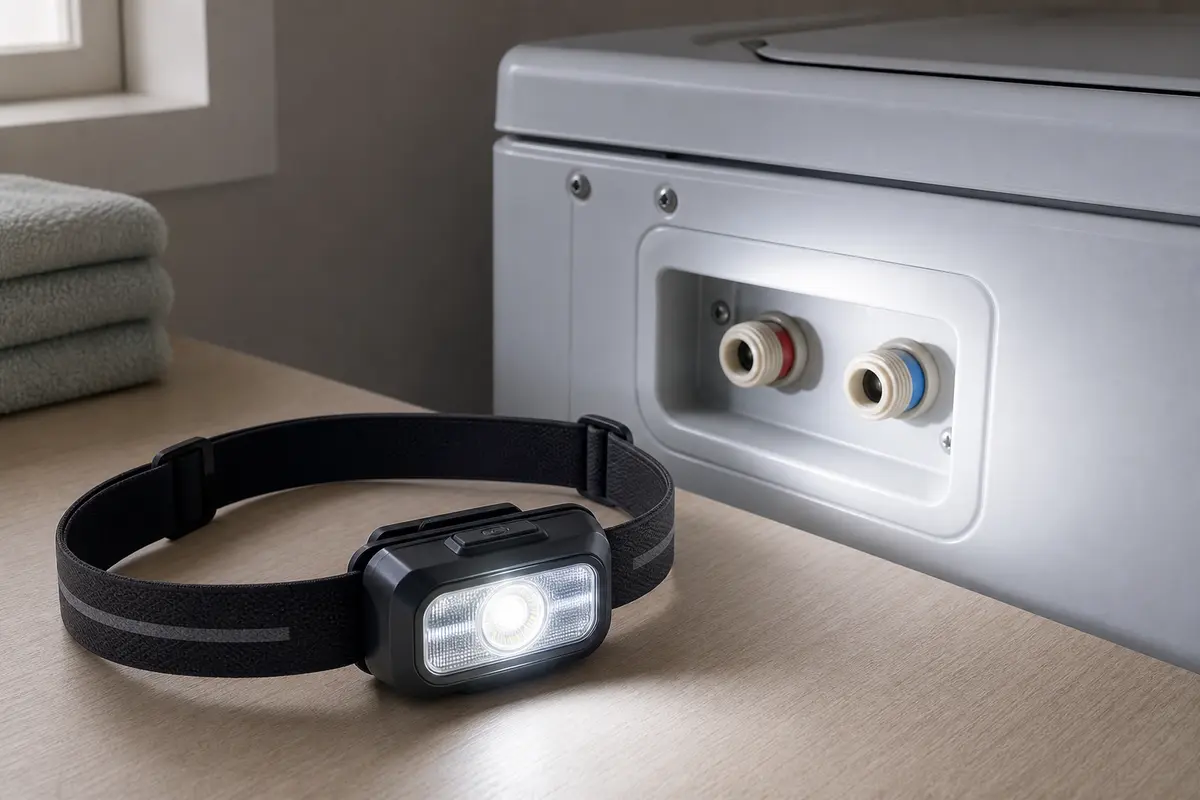
Helps when: The washer is in a dim alcove and you need both hands free to inspect hose routing, valve handles, and inlet screens.
Skip it when: Your existing light gives a clear view, or reaching the inlet area would require moving the washer unsafely.
Compare rechargeable headlamps on Amazon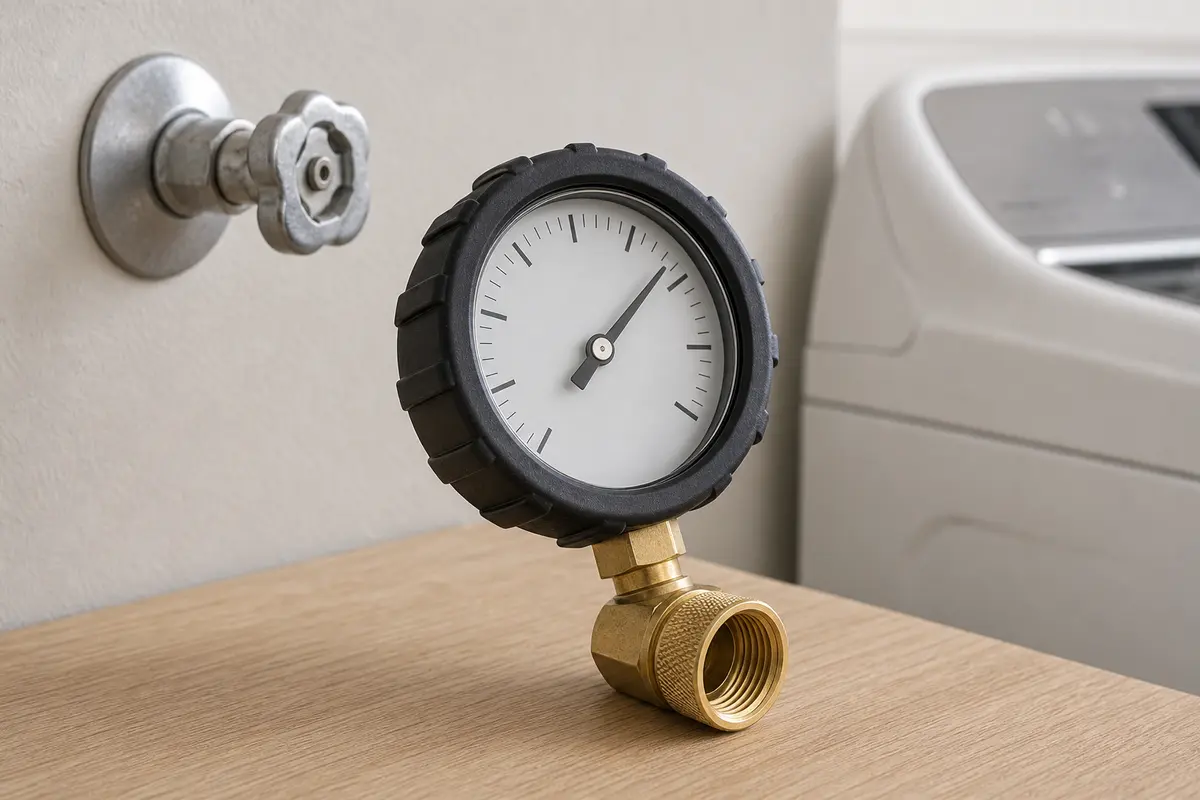
Helps when: Both hose streams seem weak and you want a static-pressure reading to compare with the model's GE specification or share with a plumber.
Skip it when: Only one side is weak, a valve leaks or is seized, or you are not comfortable attaching a gauge to a laundry outlet.
Compare hose-thread pressure gauges on AmazonGood clue: visible damage or a restriction that follows the hose justifies replacement. GE says washer fill hoses use standard 3/4-inch connections and recommends replacement every five years. Confirm the needed length before ordering.
Paid links. As an Amazon Associate I earn from qualifying purchases. Repair Riot may earn a commission at no extra cost to you.
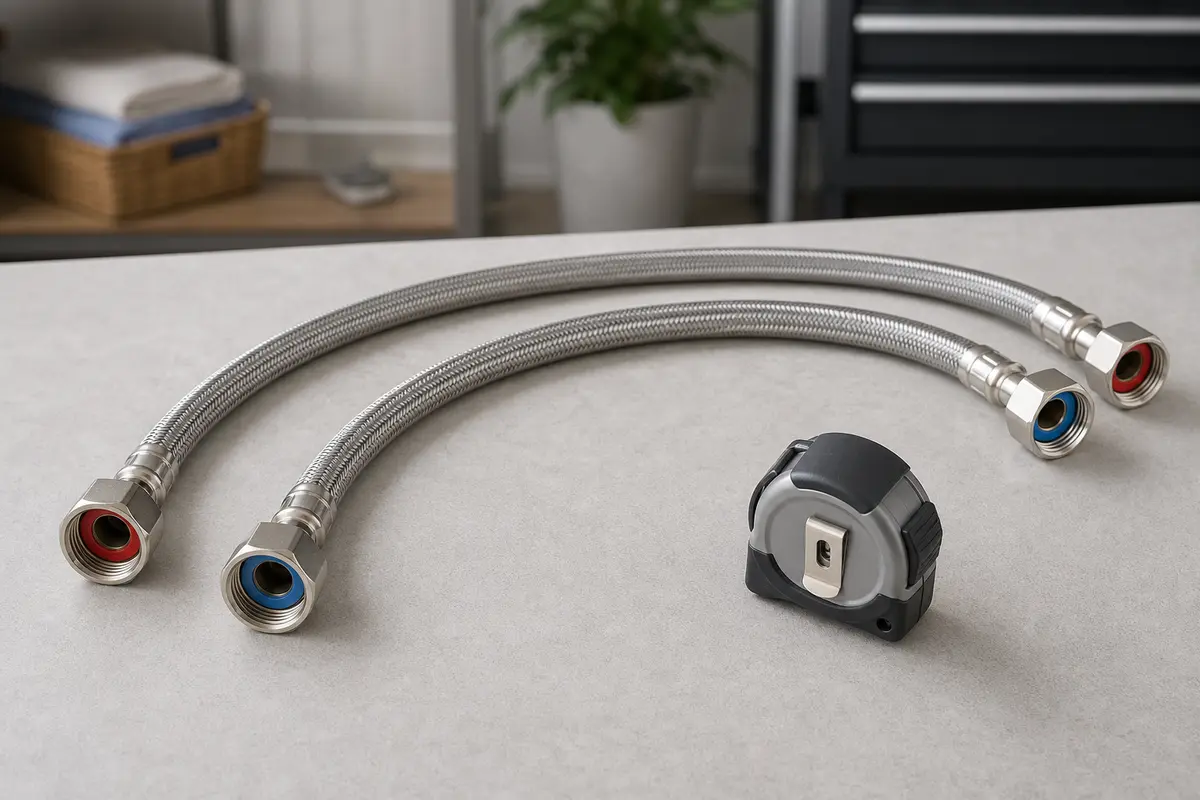
Helps when: The existing hoses are damaged, restricted, leaking, or at the five-year replacement point and four feet reaches without tension.
Skip it when: The hoses are sound, the required length is different, or the complaint points to a lockout, SmartDispense, pressure-sensing, or other internal fault.
Compare 4-foot stainless hose pairs on AmazonThe meaning depends on the washer family. GE's front-load guidance says the message can involve the water supply valves or pressure sensing, while top-load guidance sends owners to the house supply first. Match the exact message and full model number before choosing a repair path.
That can be the normal three- or four-minute safety lockout GE uses after the message. Let the pump stop and the controls respond. Unplugging the washer during the wait can restart the timer.
No, not from the message alone. Strong hose flow only rules out part of the external supply path; pressure sensing, screens, wiring, valve operation, and controls remain model-specific possibilities. Use the full model number and a diagnosis that identifies the valve before ordering one.
Yes. On some SmartDispense top-load washers, empty bulk detergent and softener tanks can stop the cycle with an H2O message. Turn both bulk dispensers off and test a cycle; if it starts, use the dispenser guidance instead of the water-inlet path.
Yes. A cycle may call for one temperature more than the other, so one weak laundry valve, restricted hose, or blocked screen can appear only on certain settings. Compare the two hose streams separately and follow the weak side.
Start with the external path. A valve may not have been reopened fully, a hose may be trapped behind the cabinet, or disturbed grit may have reached a hose or inlet screen. Those clues are more useful than the timing alone.
Only if the model instructions allow it. GE distinguishes between screen locations and screen types; forcing or prying the wrong screen can damage the inlet assembly. Inspect with a light first, then use the full model number to find the correct manual.
Call a plumber for a leaking, seized, or weak laundry valve. Follow GE's service recommendation when a front-load H2O Supply message returns with the water on. Arrange appliance service for breaker trips, burned wiring, water near electrical parts, or a persistent model-specific fault after the external checks.
Repair Riot prepared this guide from GE Appliances support material and limits the repair path to model routing and visible external water-supply checks. It does not claim technician review or replace the owner manual for your exact model.