Does water leave quietly while the pump stays silent?
Measure drain height and insertion depth, check the high-loop or anti-siphon clip, and restore an open air gap at the standpipe.
Measure the drain hose before opening the washer. GE says fill-and-drain-at-once is siphoning when the drain is too low or the hose is buried too far. An audible pump changes the diagnosis: cancel the cycle and check why drain was commanded.
Start with drain height, insertion depth, hose support, and an open air gap at the standpipe. A moved or newly installed washer often exposes the setup error.
Good clue: quiet drain flow fits siphoning. A distinct low-cabinet pump sound means active drain; use the exact-model sequence.
Don’t start with: Do not order an inlet valve, drain pump, pressure sensor, or control board before the hose setup and empty-fill observation separate gravity flow from a powered drain.
Measure drain height and insertion depth, check the high-loop or anti-siphon clip, and restore an open air gap at the standpipe.
Look for a hose pushed deeper, dropped lower, kinked behind the cabinet, or sealed into the drain opening.
Cancel the cycle. Confirm the selected cycle, lid or door state, error code, and GE's exact-model diagnostic sequence before any part order.
Stop the washer. That is a house-drain capacity or blockage problem, not proof that the washer pump or control has failed.
Measure before moving parts. The hose needs the model-specified height and shallow insertion, plus open space around it so the standpipe can breathe.
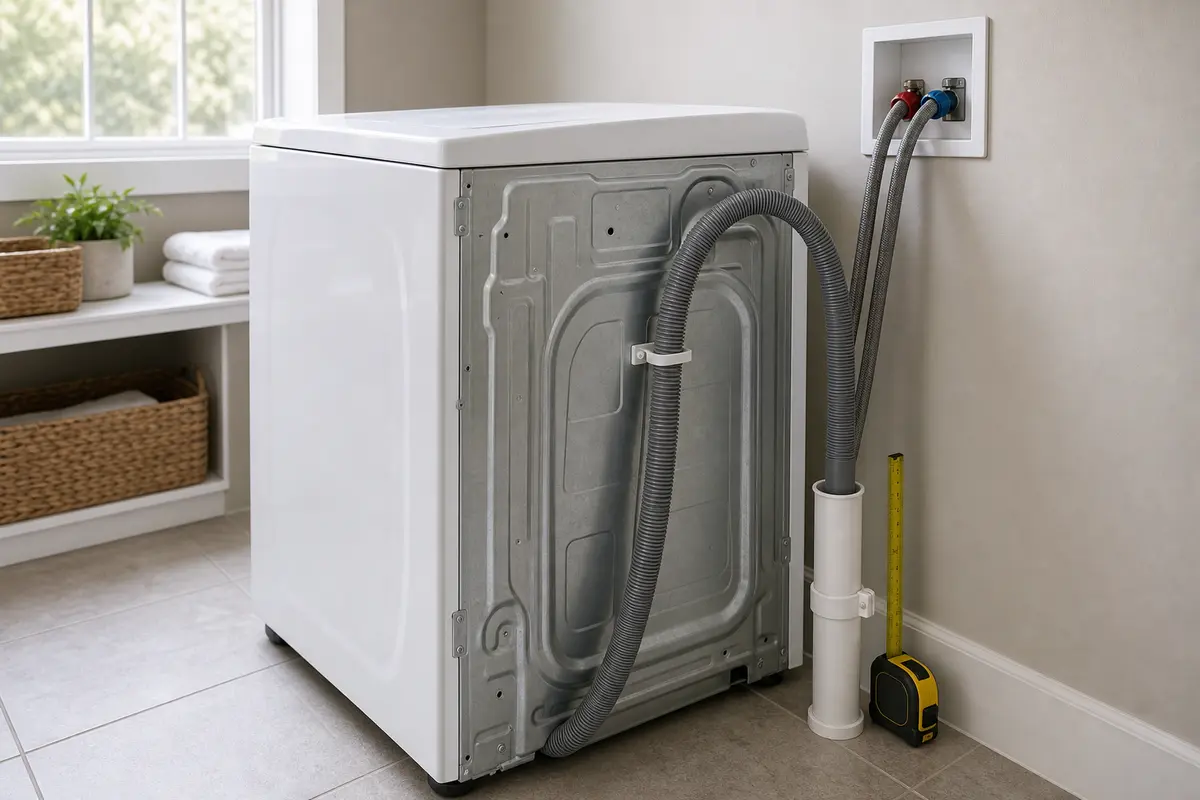
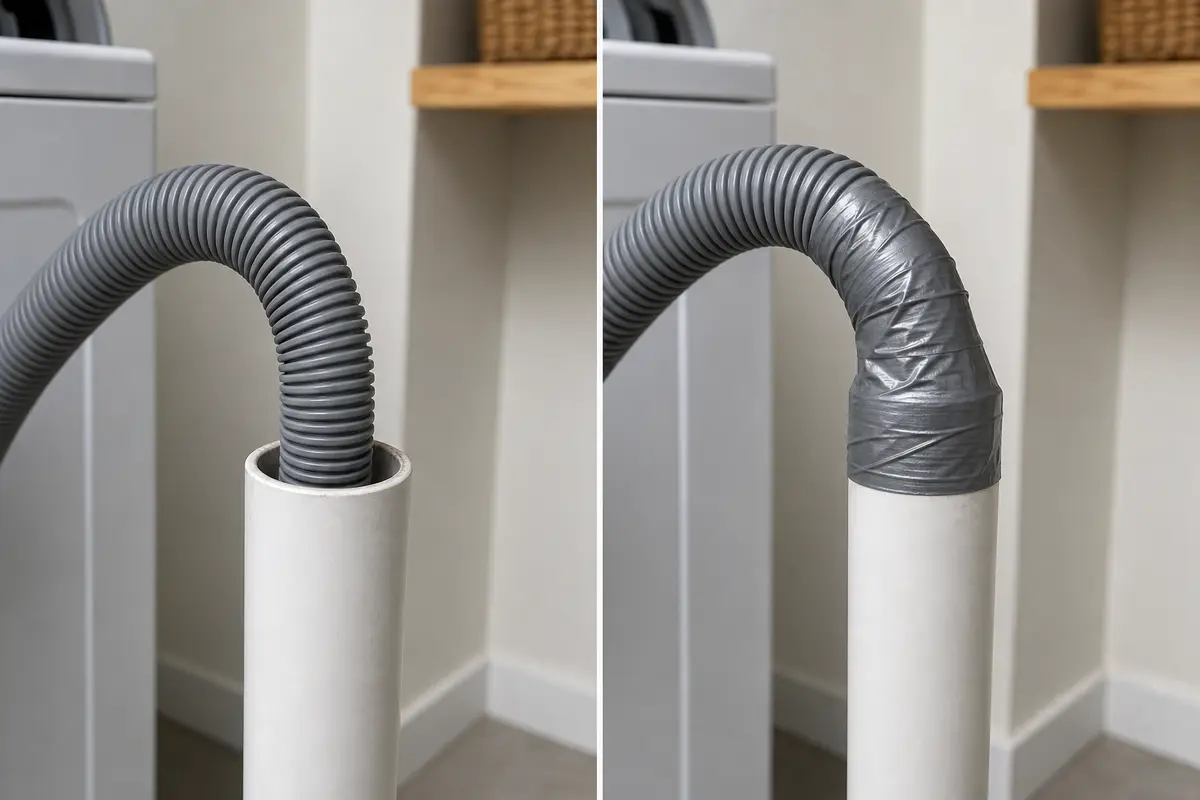
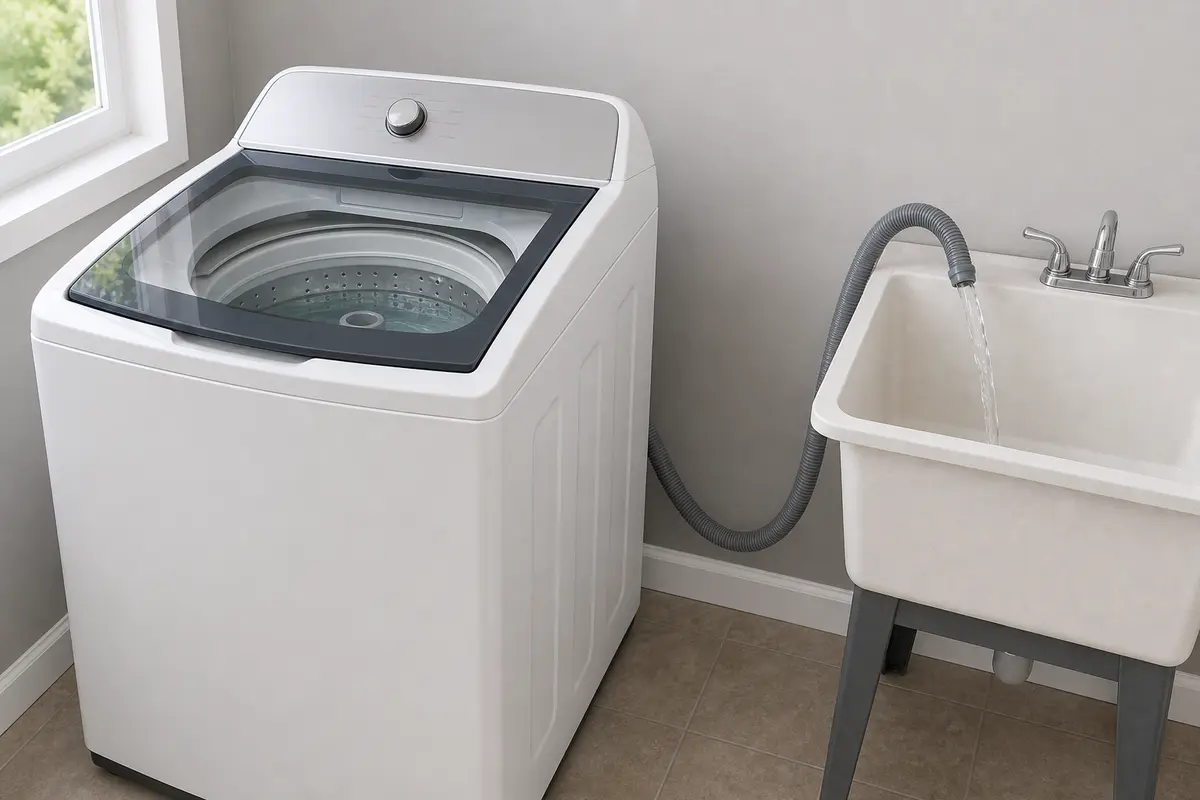
Record the full model number and whether the washer is top-load or front-load. Measure drain height and hose insertion. Note the air gap, clip position, pump sound, error code, lid or door state, and visible outlet flow during an empty fill. Those observations decide whether any washer part belongs in the cart.
First check: watch the standpipe during fill and listen low on the cabinet. A few common first moves can hide that clue or create a new leak.
GE publishes different general limits for top-load and front-load washers. Use the installation instructions for the full model number when they differ.
| GE general setup | Top-load washer | Front-load washer |
|---|---|---|
| Minimum drain height | 30 inches from floor | 24 inches from floor |
| Maximum drain height | Less than 8 feet | Less than 8 feet |
| Maximum hose insertion | 5 inches for new models | 7 inches |
| Low-drain support | Use supplied/model-approved anti-siphon clip when specified | Follow the exact front-load installation guide |
The goal is not to finish a cycle. It is to see whether water leaves during fill and whether the drain pump is audibly running.
Once siphoning and house-drain backup are ruled out, stop treating the symptom as a hose-only problem—but do not jump to a pump order.
One measurement tool can solve the common installation fault. Internal electrical tools are deliberately not recommended for this first-line diagnosis.
Paid links. As an Amazon Associate I earn from qualifying purchases. Repair Riot may earn a commission at no extra cost to you.
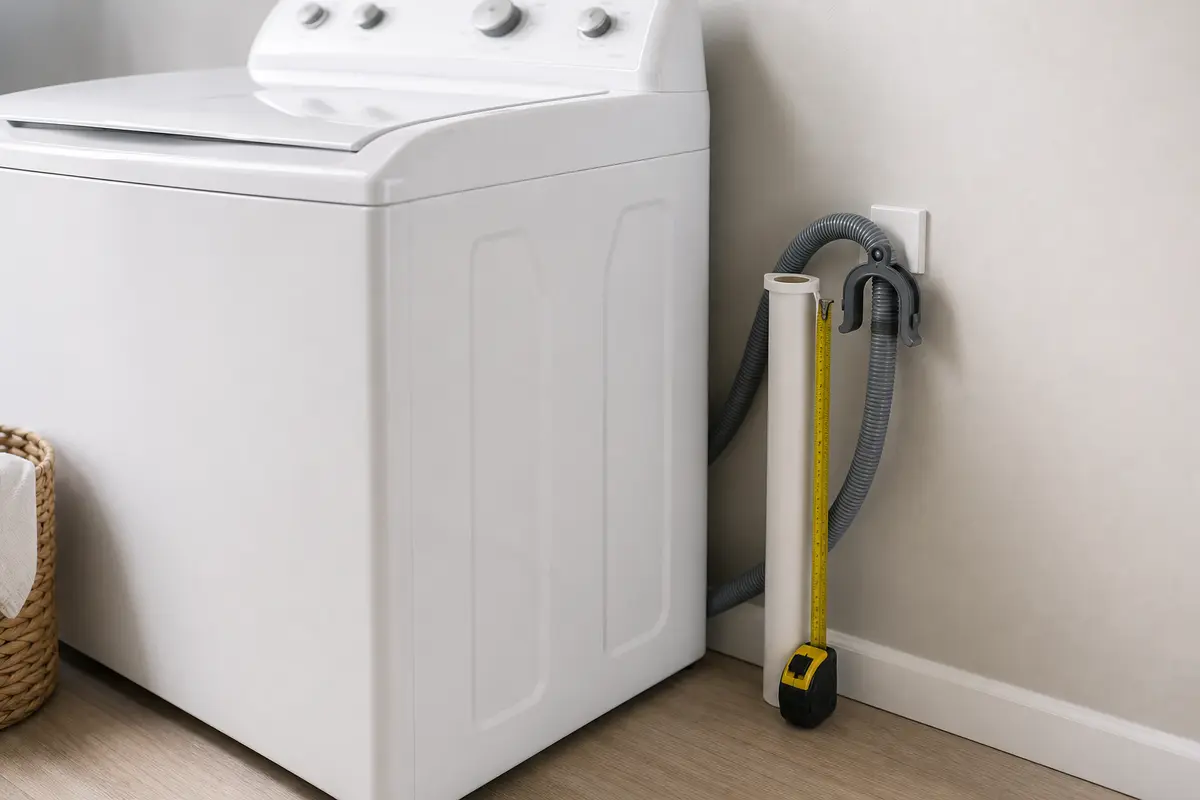
Helps when: You need the floor-to-drain height and hose insertion depth instead of an eyeballed setup.
Skip it when: Skip a purchase if a reliable tape measure is already available.
Compare compact tape measures on AmazonThese parts belong in the cart only after the installation measurement proves the need. Neither one fixes a powered drain command.
Paid links. As an Amazon Associate I earn from qualifying purchases. Repair Riot may earn a commission at no extra cost to you.
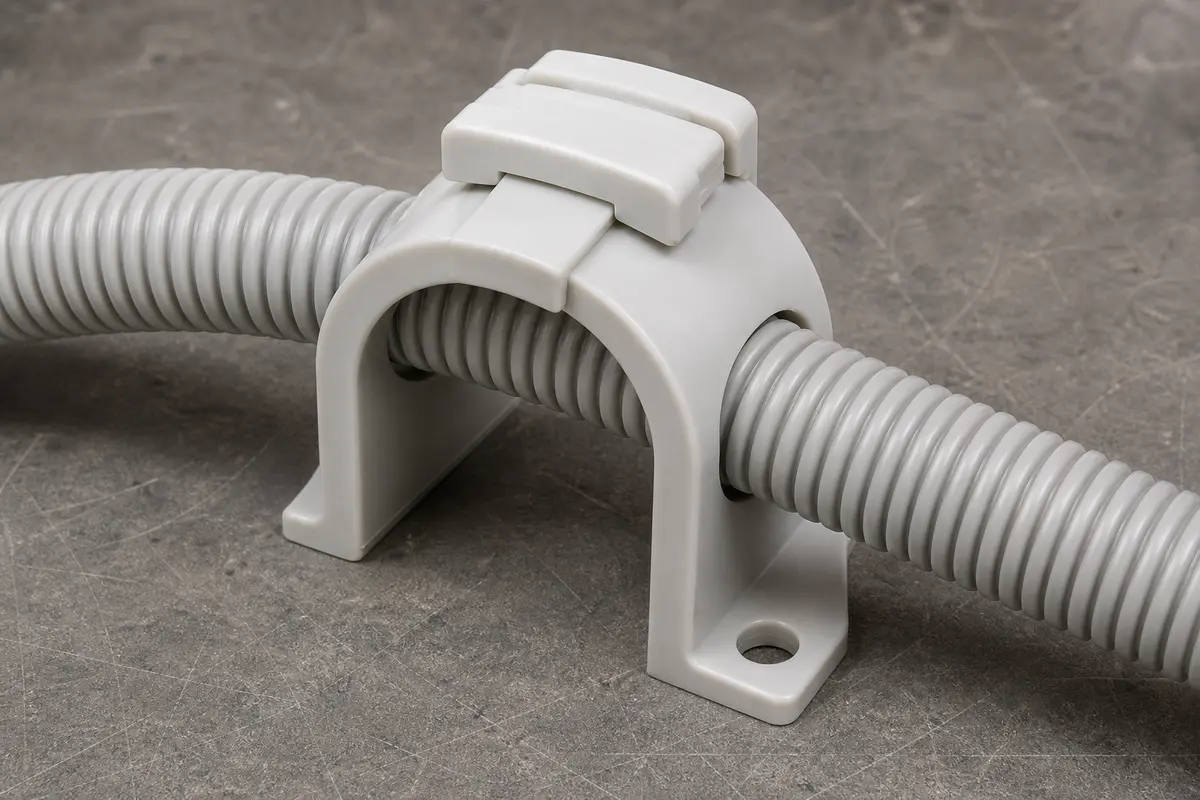
Helps when: The top-load washer's drain is below GE's general 30-inch minimum and the exact installation guide calls for the supplied clip to lift and support the hose.
Skip it when: Skip it for front-load designs, drains already at the required height, or any model whose instructions use a different support method.
Find a model-approved anti-siphon clip on Amazon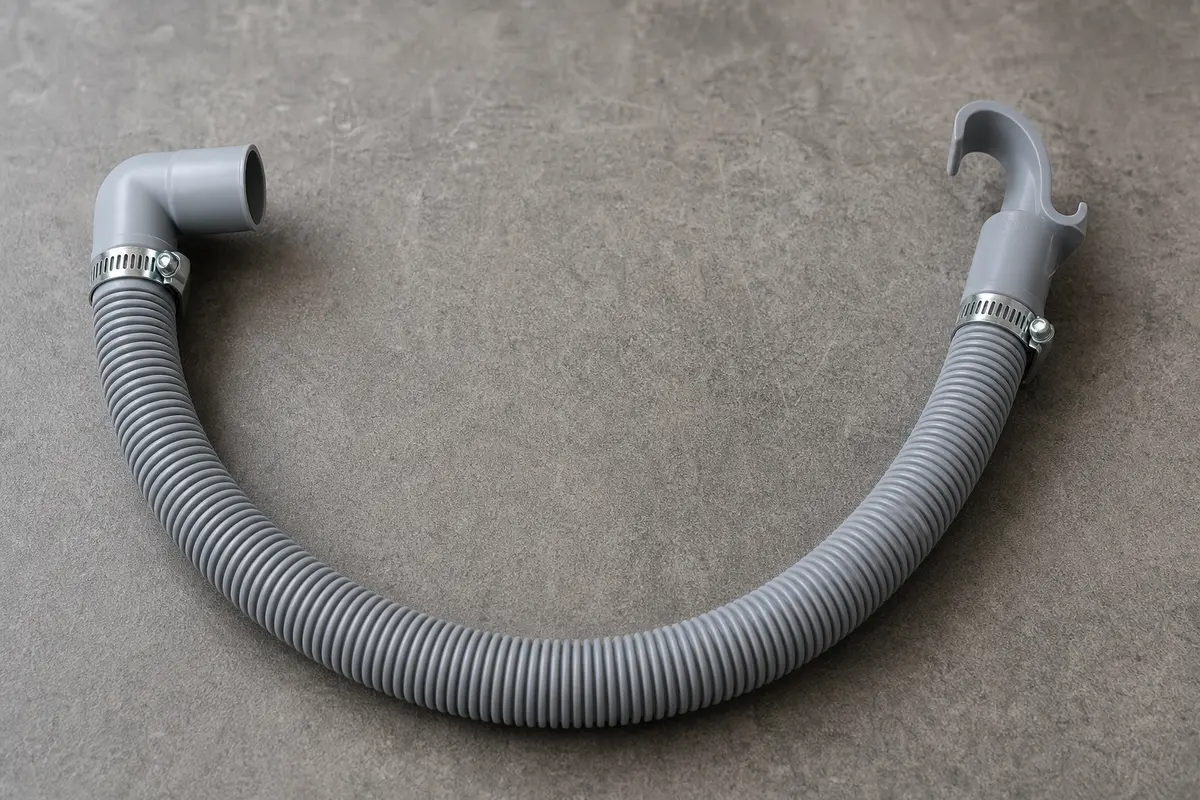
Helps when: The existing hose is cracked, leaking, permanently crushed, split at an end, or too short to meet the exact installation route safely.
Skip it when: Skip it when the hose is sound and only needs correct height, shallow insertion, an air gap, or proper support.
Find a model-matched GE washer drain hose on AmazonThe tub should gain water during fill, the drain should stay quiet until commanded, and the hose should remain in position when the washer is pushed back.
Most often the water is siphoning out through the drain hose because the drain is too low, the hose is pushed too far into the standpipe, or the opening is sealed too tightly. An audible pump means the washer is actively draining, so cancel and use the exact-model diagnostic sequence.
A clogged house drain usually causes backing up or overflow, not a true fill-and-drain-at-once symptom. If the washer is quietly losing water during fill, the drain hose setup is still the first thing to check.
Usually no. A bad washer water inlet valve can cause overfilling or slow filling, but it is not the usual reason water leaves the tub while the washer is filling. Check for siphoning and pump operation first.
Siphoning usually happens without a separate pump motor sound. You hear fill water, but the tub level stays low and water may be flowing out the drain by gravity. If you hear a steady hum or whir from low on the washer during fill, that points more toward the washer drain pump running.
No. It wastes water, can overwork the pump, and can lead to overflow if the drain setup or standpipe is marginal. Fix the hose setup or confirm the internal fault before regular use.
GE's general guidance uses a 30-inch minimum for top-load washers and 24 inches for front-load washers, with both below 8 feet. The full model's installation instructions take priority and may specify a particular hose clip or route.
A washer hose is smaller than the drain pipe so air can enter around it. Burying the hose or sealing the opening can sustain siphoning and let the tub lose water by gravity while it fills.
No. An audible pump proves it is running, not why it is running. Record the cycle timing, lid or door state, error code, and whether it stops on cancel, then use GE's exact-model diagnostics before ordering a pump or control.
Repair Riot built this page from GE Appliances guidance for siphoning, drain height, hose insertion, hose restraint, and automatic drain behavior. The installation instructions and diagnostics for the full model number take priority.