Is only one burner affected?
Stay focused on that burner position. If several burners changed, treat it as power, control, gas supply, or service trouble instead.
If one GE Profile stove burner stays cold, first separate electric heat trouble from gas ignition trouble. If you smell gas or a breaker trips, stop testing. For one cold burner, check the element, receptacle, cap, ports, igniter, or burner switch before the main board.
For one electric coil, the failure often follows the element or stays with the receptacle. For one gas burner, the clue is cap position, port debris, spark location, and whether gas odor lingers.
Use the burner type, matching-burner comparison, and visible damage before ordering anything.
Don’t start with: Do not keep clicking a gas burner if you smell gas, and do not open the range until power is off. Skip control-board shopping until the burner-level checks point there.
Stay focused on that burner position. If several burners changed, treat it as power, control, gas supply, or service trouble instead.
Power off, reseat the coil, inspect the terminal ends, then compare with a same-size working coil.
Look for a zone that never glows, heats only on one setting, cycles oddly, or sits under cracked glass. Stop at cracked glass or burned wiring.
Let it cool, clean and dry the cap and ports, center the cap, then watch whether spark lands near the burner head.
Compare it with another burner. No spark at one burner after cleaning points toward that igniter path or switch circuit. Stop if gas odor lingers.
If a removable coil fails in another same-size position, the coil is suspect. If the failure stays in one position, look at the receptacle, switch, or ignition hardware.
One cold burner is not one diagnosis. Electric coils, glass radiant zones, and gas burners fail in different places, so let the visible clue choose the first check.
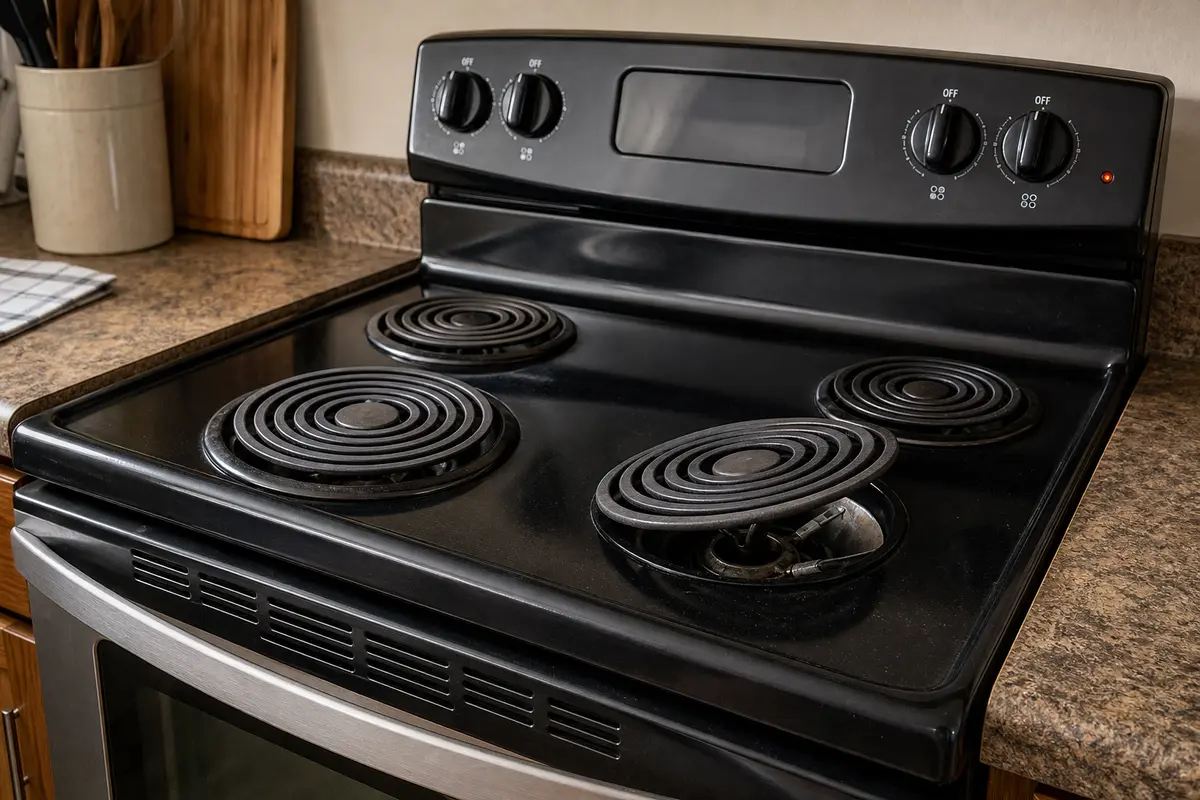
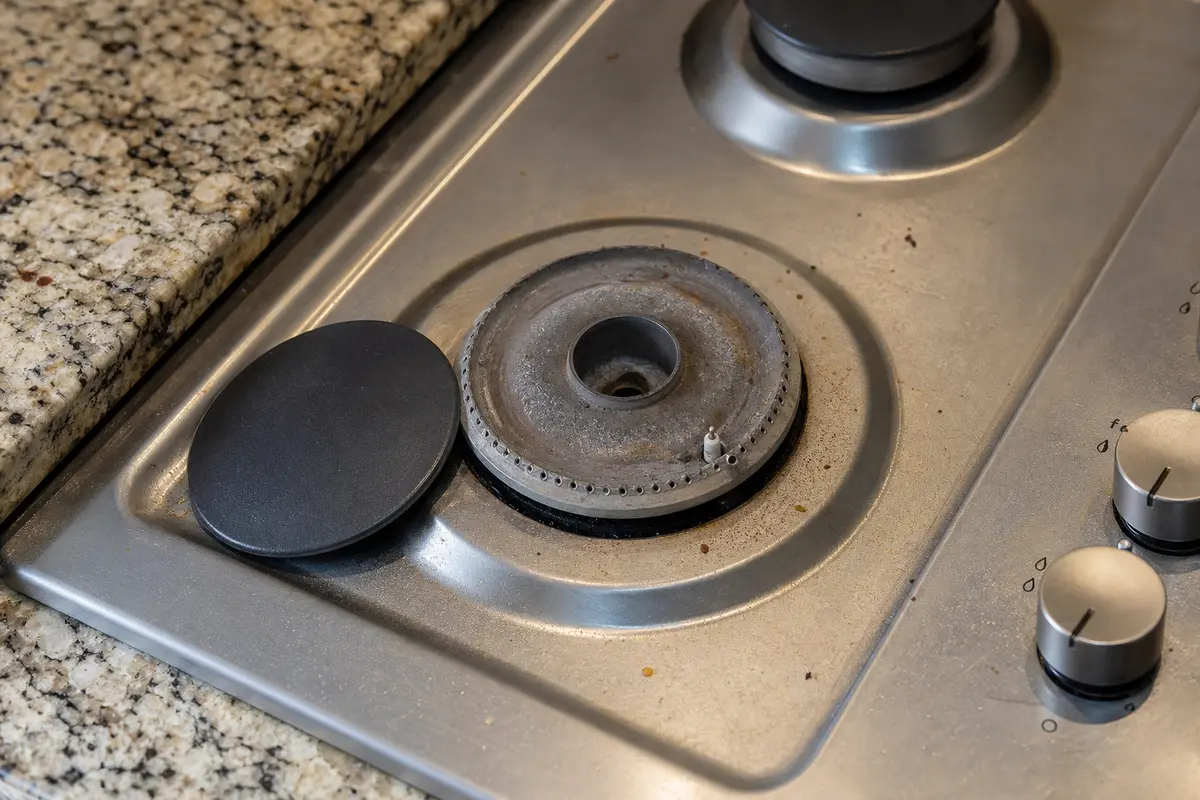
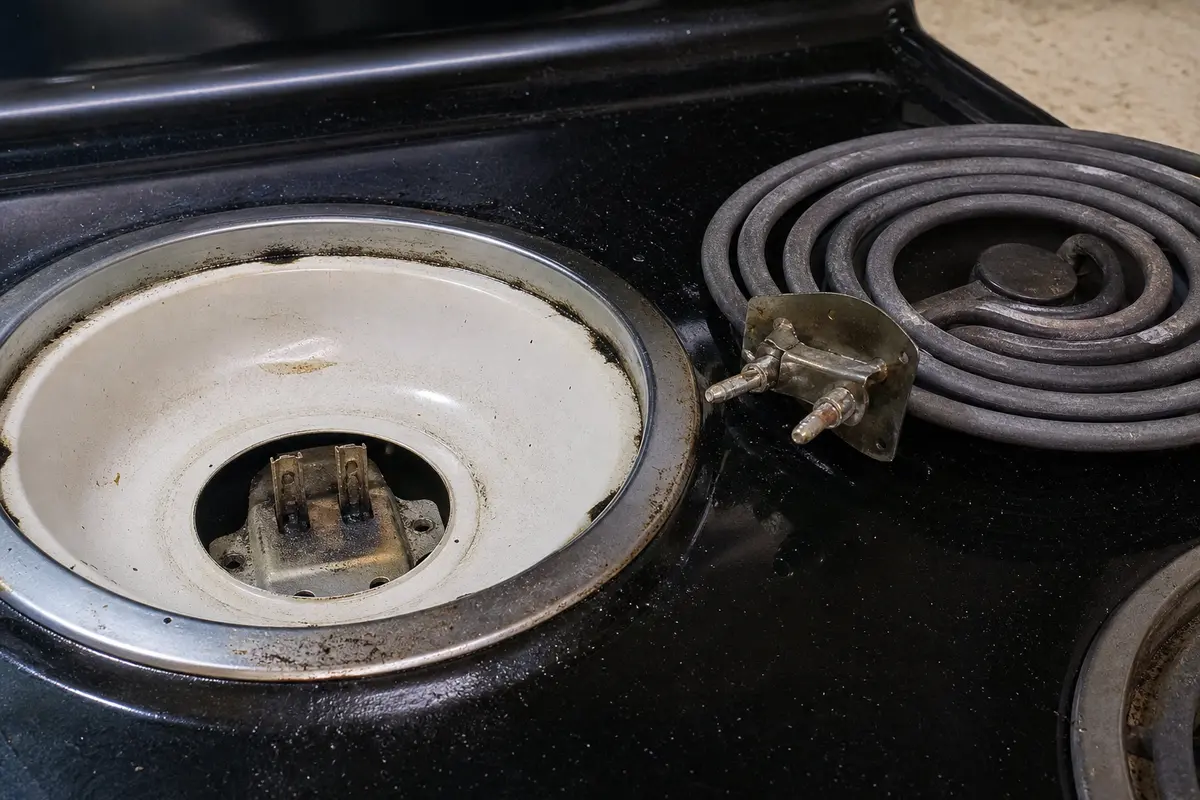
Copy the full model number from the range label before shopping. Buy a surface element only after a same-size swap. Buy a receptacle after heat damage or a known-good coil fails in that spot. Use gas ignition parts only after cap, port, and spark checks; stop if gas odor lingers.
Usually the clue is local. One GE Profile burner can stay cold while the rest of the range works because that burner has its own element, cap, ports, igniter path, receptacle, and switch.
A cold burner invites expensive guessing. Slow down at the places where the repair path changes.
Work from the top of the cooktop inward. These checks do not require live-voltage testing or opening gas tubing.
| What you see | What it usually means | What to do next |
|---|---|---|
| Electric coil fails in another same-size spot. | The coil element is the likely failed part. | Match the element by model, size, terminal style, and burner position. |
| Known-good coil stays cold in the same spot. | The receptacle, wiring, or burner switch is more likely. | Leave power off if there is heat damage. Service may be the safer path. |
| Gas burner lights after cleaning and cap alignment. | Residue, moisture, or cap seating blocked ignition. | Let parts dry fully after future cleanups and keep ports clear. |
| Gas burner clicks but spark misses the burner head. | Igniter alignment or ignition hardware needs closer diagnosis. | Stop before disassembly if you are not trained for gas cooktop service. |
The useful electric clues are visible: how the coil sits, whether the terminal end is damaged, and whether the failure moves with the removable element.
Look first at the cap, ports, and spark. Clean and dry the parts, align the cap, then compare the spark to a working burner.
These tools support inspection and light cleaning only. They are not permission to work on live wiring or open gas tubing; call a licensed appliance tech for that work.
Paid links. As an Amazon Associate I earn from qualifying purchases. Repair Riot may earn a commission at no extra cost to you.
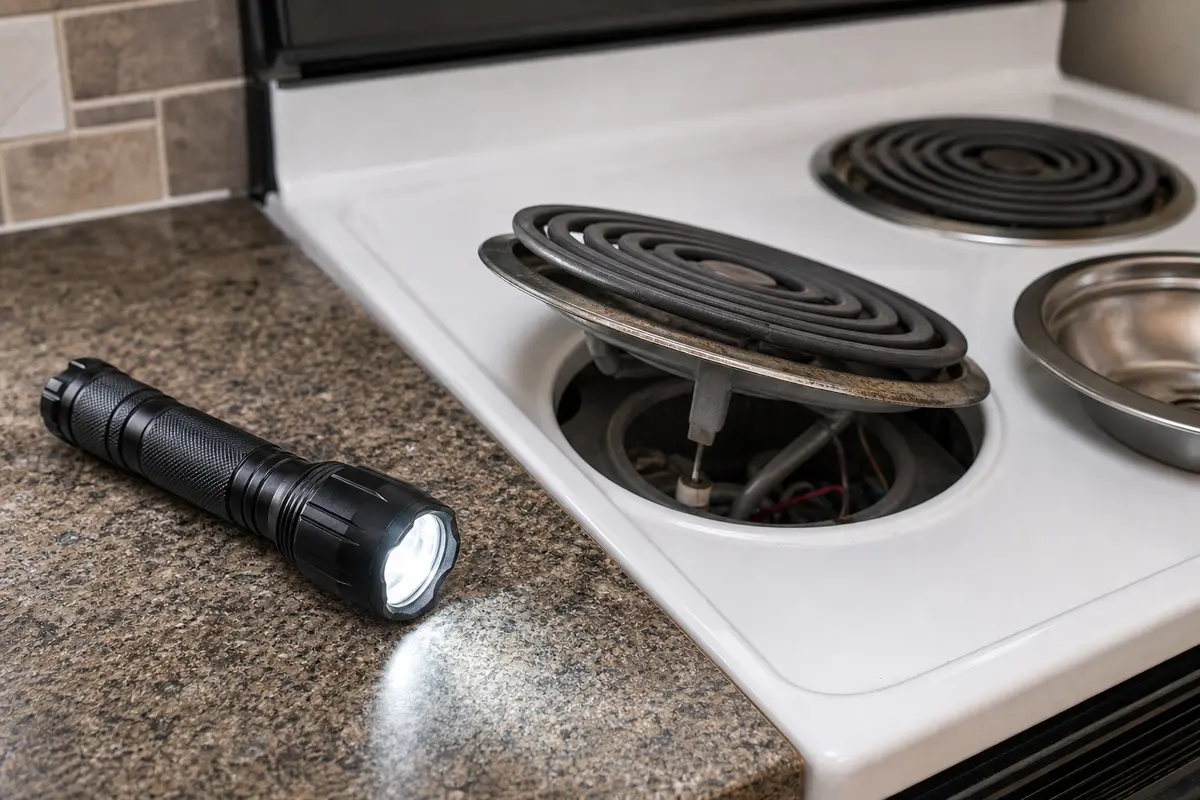
Helps when: Use it to see burner ports, coil terminals, receptacle darkening, and the model-number label without taking the range apart.
Skip it when: Skip it if the next step requires reaching into live wiring or moving gas connections; call a licensed appliance tech instead.
Compare inspection flashlights on Amazon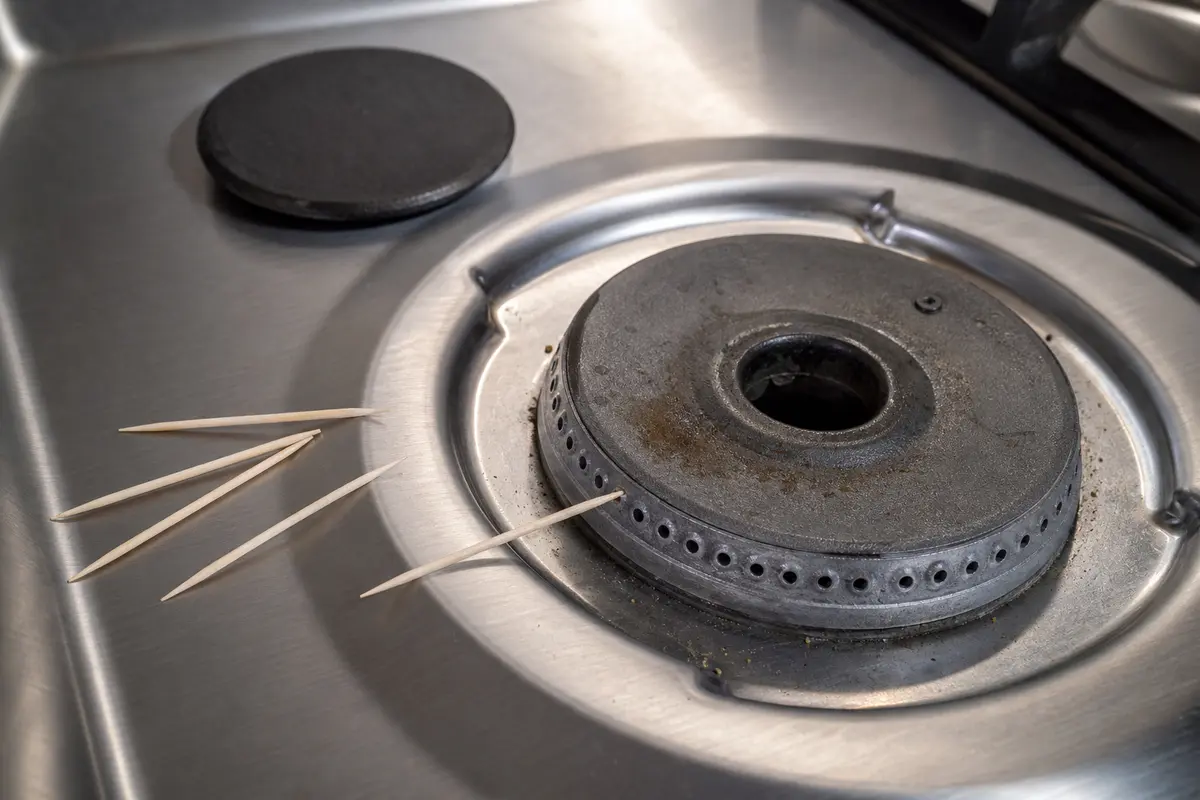
Helps when: Use a wooden toothpick or soft nonmetal pick to clear visible dry debris from gas burner ports while the burner is off and cool.
Skip it when: Skip metal picks, drill bits, needles, or anything that can scrape or change the port size.
Compare nonmetal cleaning picks on Amazon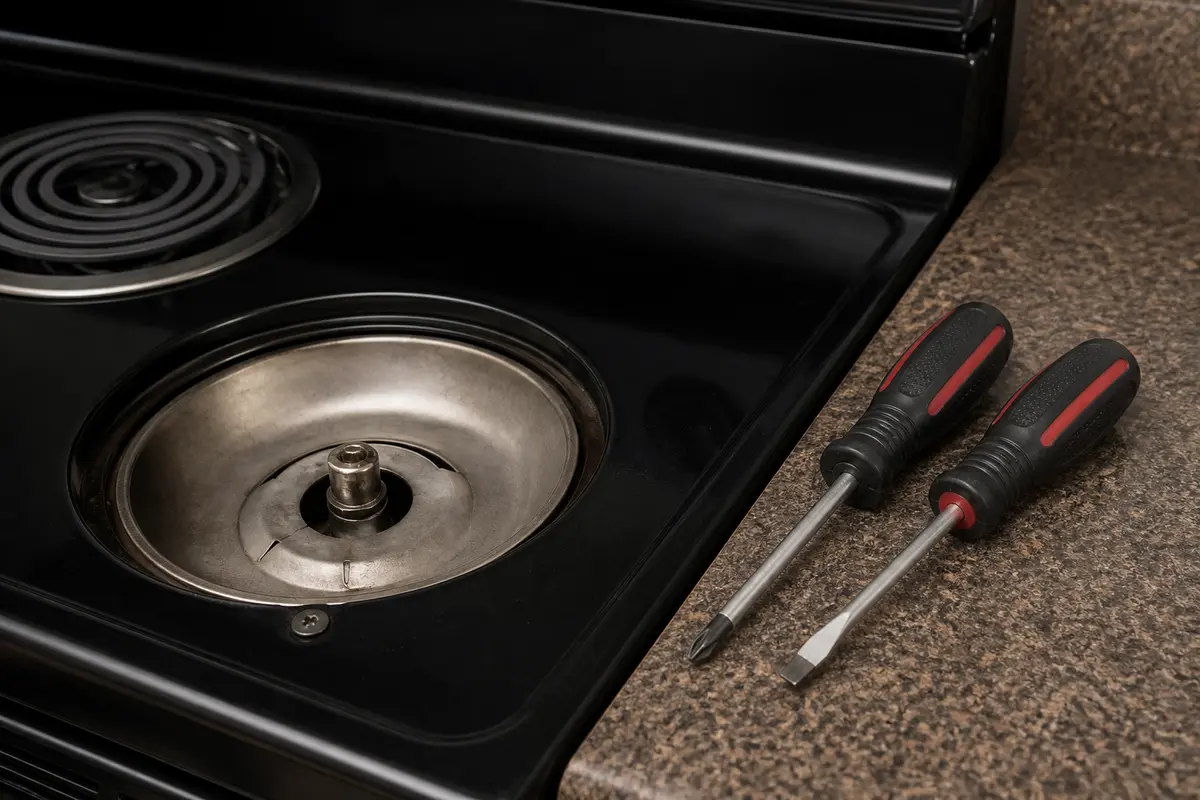
Helps when: Useful only when the manual allows a cooled, powered-off cover or trim piece to be removed for inspection.
Skip it when: Skip it if the work would expose wiring, switches, gas tubing, or anything you are not comfortable servicing.
Compare screwdriver sets on Amazon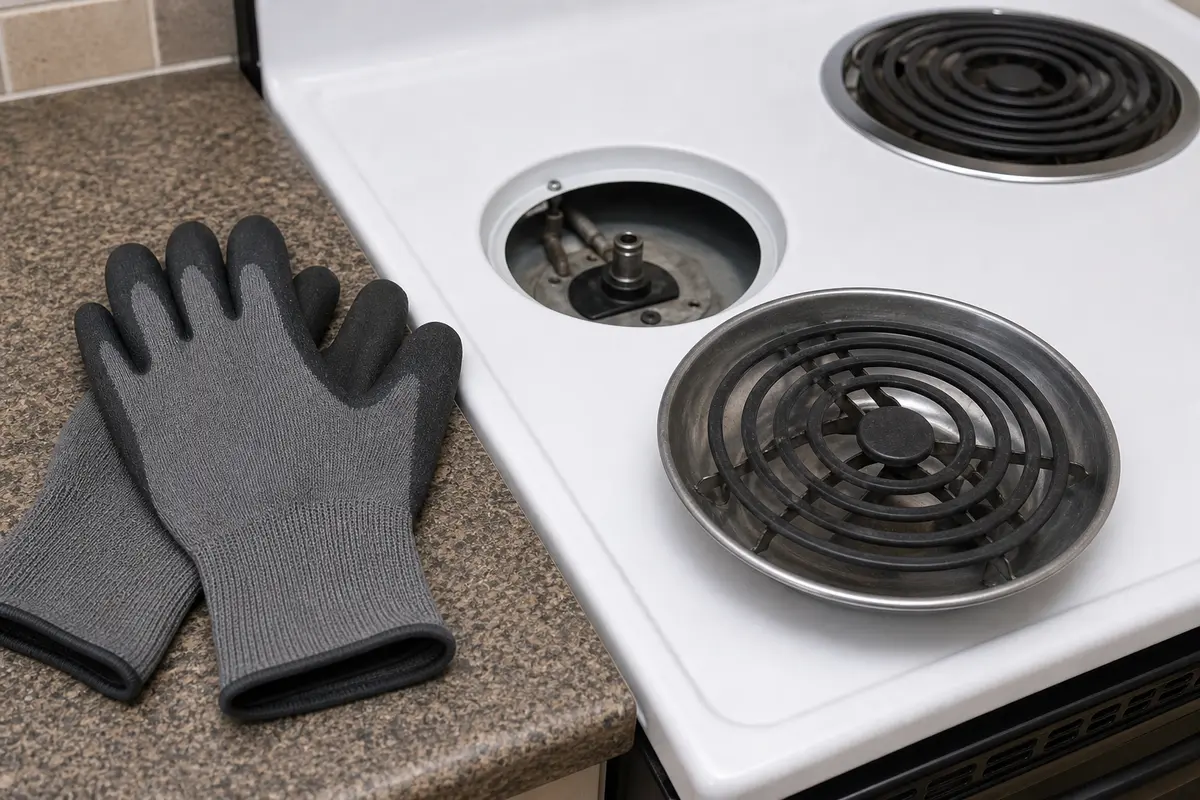
Helps when: Protect your hands from rough grates, burner caps, drip bowls, and sharp sheet-metal edges during cooled inspection.
Skip it when: Skip the repair instead if gloves are needed because parts are still hot, sparking, or damaged.
Compare work gloves on AmazonParts make sense after the burner tells you where the failure lives. GE Profile ranges use model-specific elements, receptacles, switches, igniters, and burner parts; a lookalike part can still be wrong.
Paid links. As an Amazon Associate I earn from qualifying purchases. Repair Riot may earn a commission at no extra cost to you.
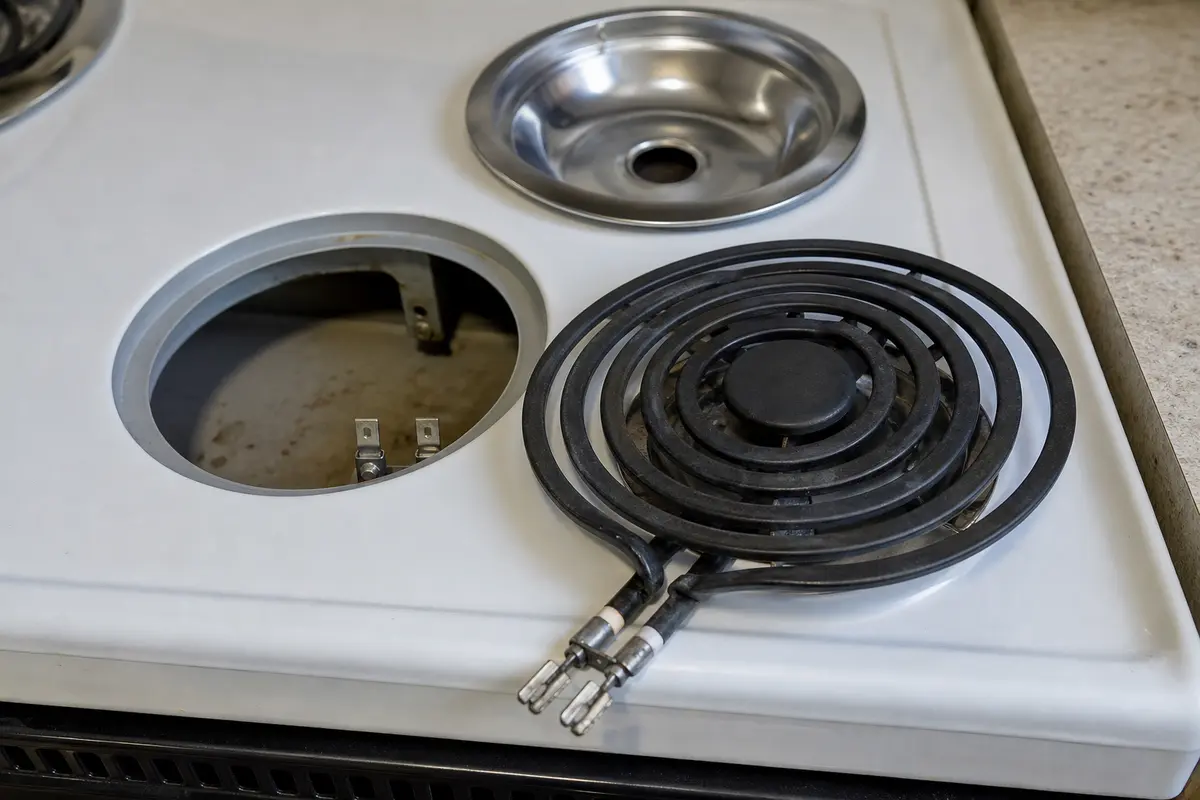
Helps when: Buy it when a removable coil fails in another same-size burner position or has visible blistering, splitting, or burned terminals.
Skip it when: Skip it when a known-good coil also stays cold in that original burner position.
Compare range surface elements on Amazon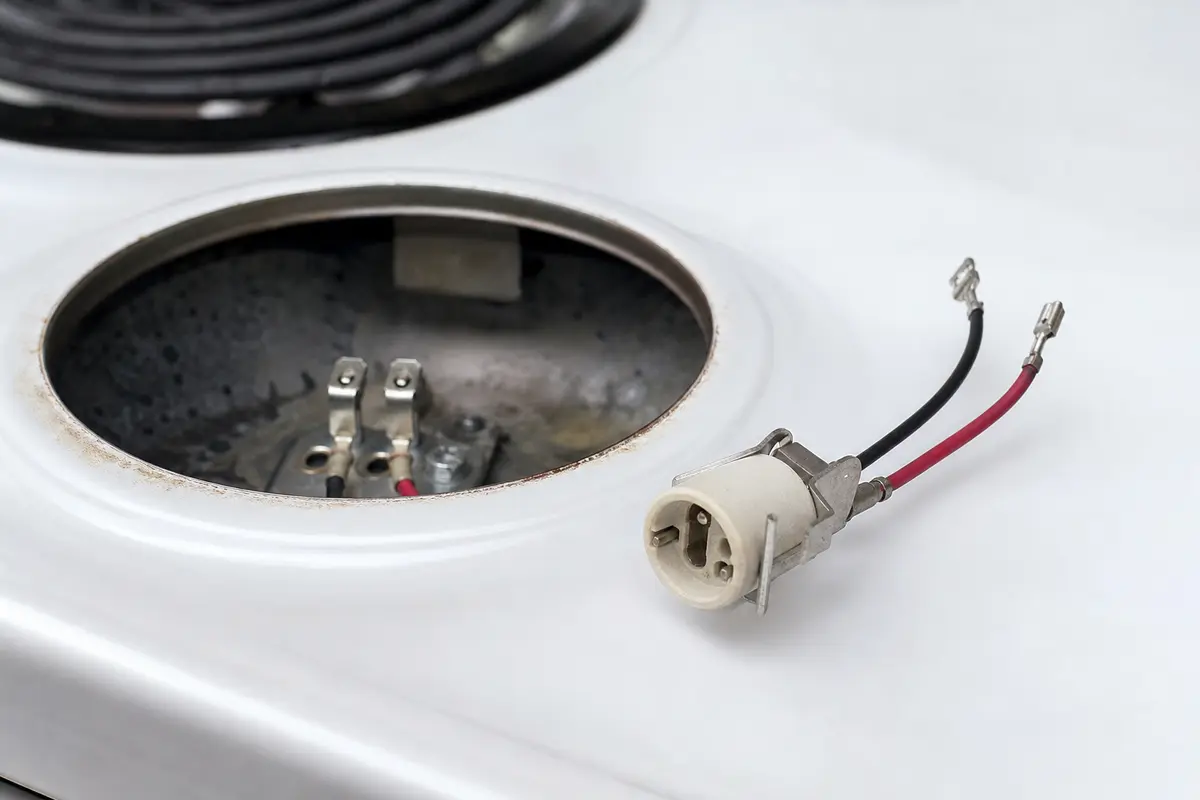
Helps when: Compare this part when the plug-in socket is loose, charred, melted, or will not heat a known-good coil.
Skip it when: Skip it for glass-top radiant burners or when the coil itself clearly failed the same-size comparison.
Compare surface element receptacles on Amazon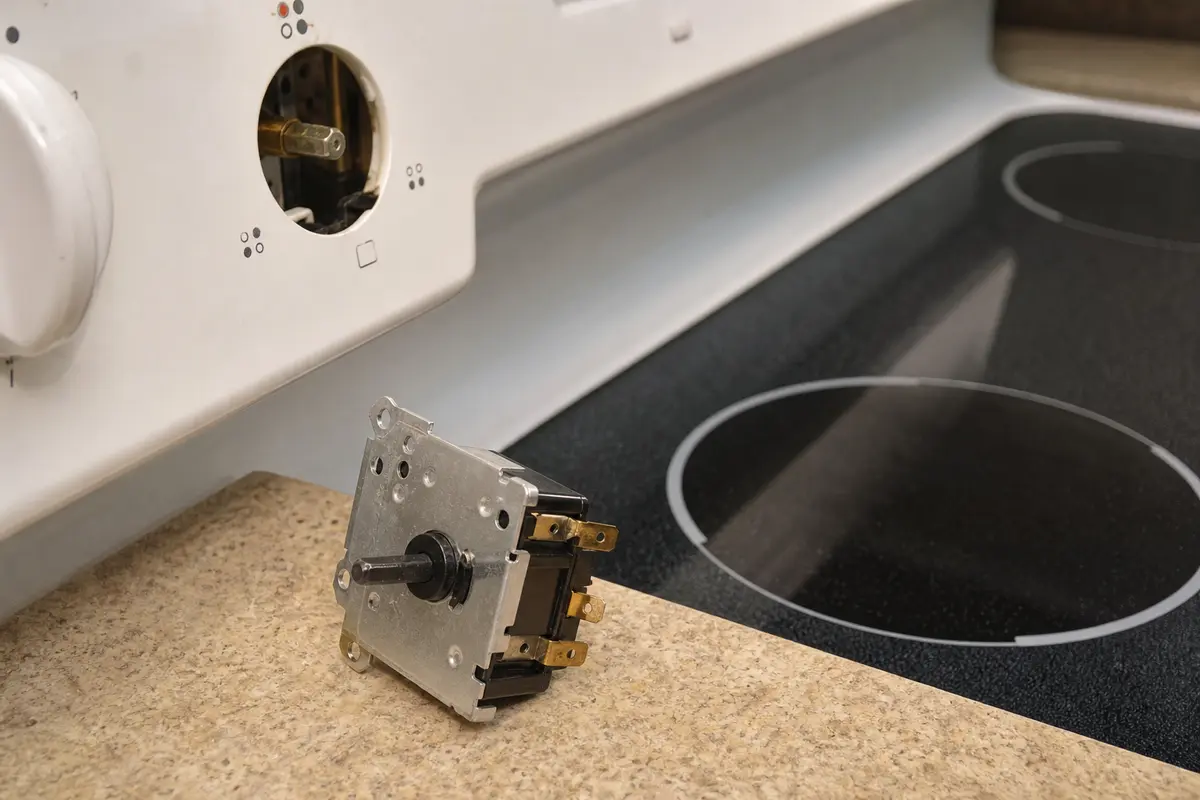
Helps when: Consider it after the element and receptacle check out but the same electric burner position still stays cold.
Skip it when: Skip it when the failure follows a removable coil or there is visible receptacle heat damage.
Compare range burner switches on Amazon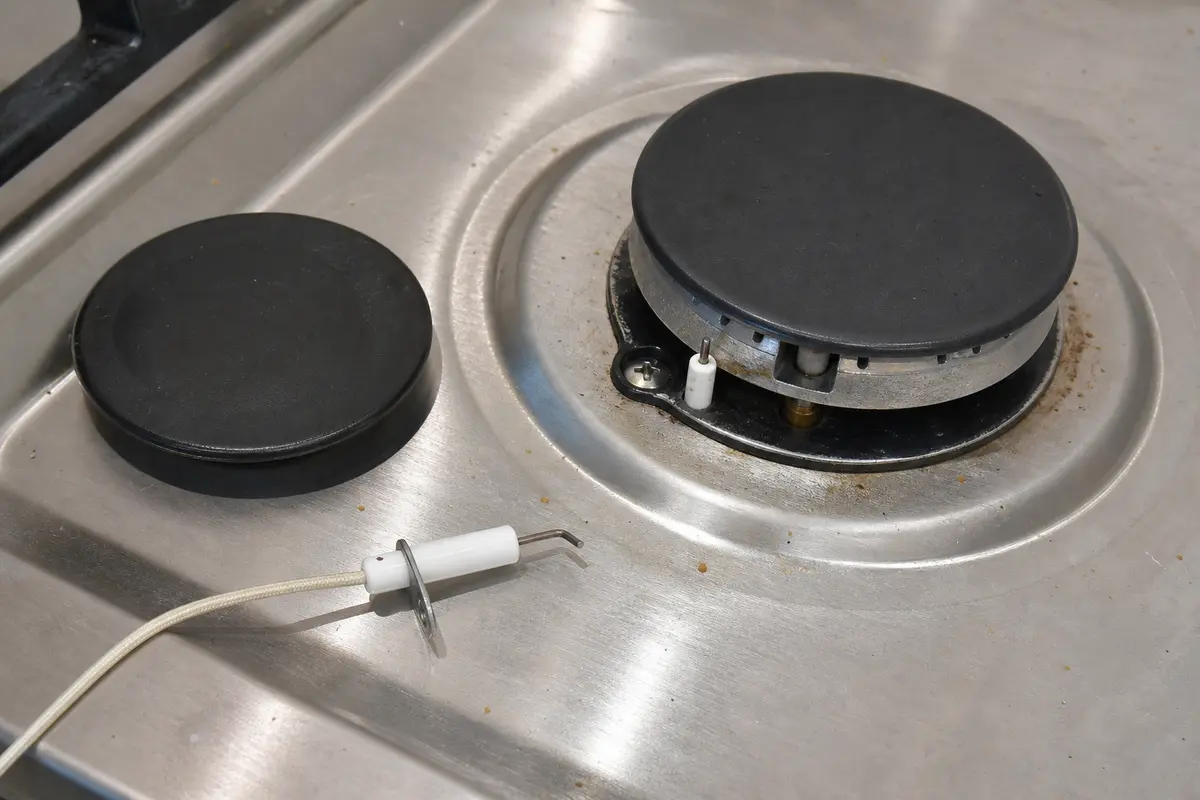
Helps when: Compare it only after the cap is centered and dry, the ports are clean, and spark is missing or off target.
Skip it when: Skip it when cleaning, drying, or reseating the burner cap restores normal flame; call a licensed appliance tech if gas odor lingers.
Compare gas burner igniters on AmazonOne burner by itself usually points to that burner position, not the whole range. On electric models, look at the coil, receptacle, and burner switch. On gas models, start with the cap, ports, spark, and ignition path.
With power off, compare it with another same-size working coil. If the no-heat symptom follows the coil, the element is the likely failed part. Burned terminals, blistering, or a split coil support the same call.
Then the fixed burner position moves up the list. Look for a loose or charred receptacle first. If the receptacle looks clean and tight, the burner switch or wiring needs deeper diagnosis.
The cap may be wet or off-center, or the burner ports may be partly blocked by boilover residue. Clean, dry, and reseat the parts first. If it still clicks without flame, watch where the spark lands. If gas odor lingers after the knob is off, stop and call a licensed appliance tech.
No. A couple of short tries is enough. If you smell gas after turning the knob off, stop testing, ventilate if you can do that safely, and call the gas utility or a licensed pro.
Yes. A burner switch becomes more likely when the element and receptacle check out but that same burner position still will not heat. Match any replacement switch by exact model and burner position.
Glass-top radiant burners do not give you the same easy coil swap. Look for cracked glass, a zone that never glows, or a burner that heats on only one setting. Stop at cracked glass, arcing, or burned wiring.
Weak or uneven heat can come from cookware contact, a radiant zone issue, a loose electric connection, or a gas cap and port problem. If a GE coil burner cycles, also check whether your model uses Sensi-Temp technology.
Stop using that burner. A breaker trip, arcing, burned smell, or melted wiring is not a normal surface-element clue. Leave power off and call appliance service or a licensed electrician if the circuit itself is involved.
Yes. Surface elements, receptacles, switches, igniters, and burner caps can look similar but fit different ranges. Use the model tag and the parts diagram before ordering.
Repair Riot built this page around homeowner-visible burner clues: one burner versus many, electric versus gas, swap results, cap seating, port residue, and safe stop points.