Is only one faucet cold?
Use a faucet, shower valve, or mixing-valve path. A bad local valve can mimic no hot water while the tank is fine.
For a gas tank with no hot water, check gas odor first, then shutoff position, pilot or status flame, and burner response. Stop for gas smell, soot, rollout, or a pilot that will not hold.
The usual visible clues are no pilot or status flame, a shutoff handle across the pipe, or a dial left low. A steady pilot with no burner response needs service diagnosis before parts come off.
Work from the outside in: whole-house cold water, heater type, gas smell, shutoff position, pilot flame, then burner response. Stop before opening gas controls.
Don’t start with: Do not start by ordering a gas valve, removing the burner assembly, or improvising a relight. Gas smell, soot, rollout, or a pilot that will not hold is the stop point.
Use a faucet, shower valve, or mixing-valve path. A bad local valve can mimic no hot water while the tank is fine.
Stop immediately. Leave the area for gas odor, and call service for soot, scorch marks, rollout, or odd burner behavior.
The heater may simply be shut off. Do not force a stuck valve; if other gas appliances are also out, treat it as a supply issue.
Follow the heater label only if there is no gas smell. A pilot that will not light or hold moves this into service territory.
Set the dial to a normal hot-water setting and watch through the viewing area once. If the pilot stays steady but the main burner never lights, have the gas-control side diagnosed before shopping for a valve.
Look at three clues before any part comes off. Check the shutoff handle position, the pilot or status flame in the lower viewing area, and the main burner response when the tank calls for heat.
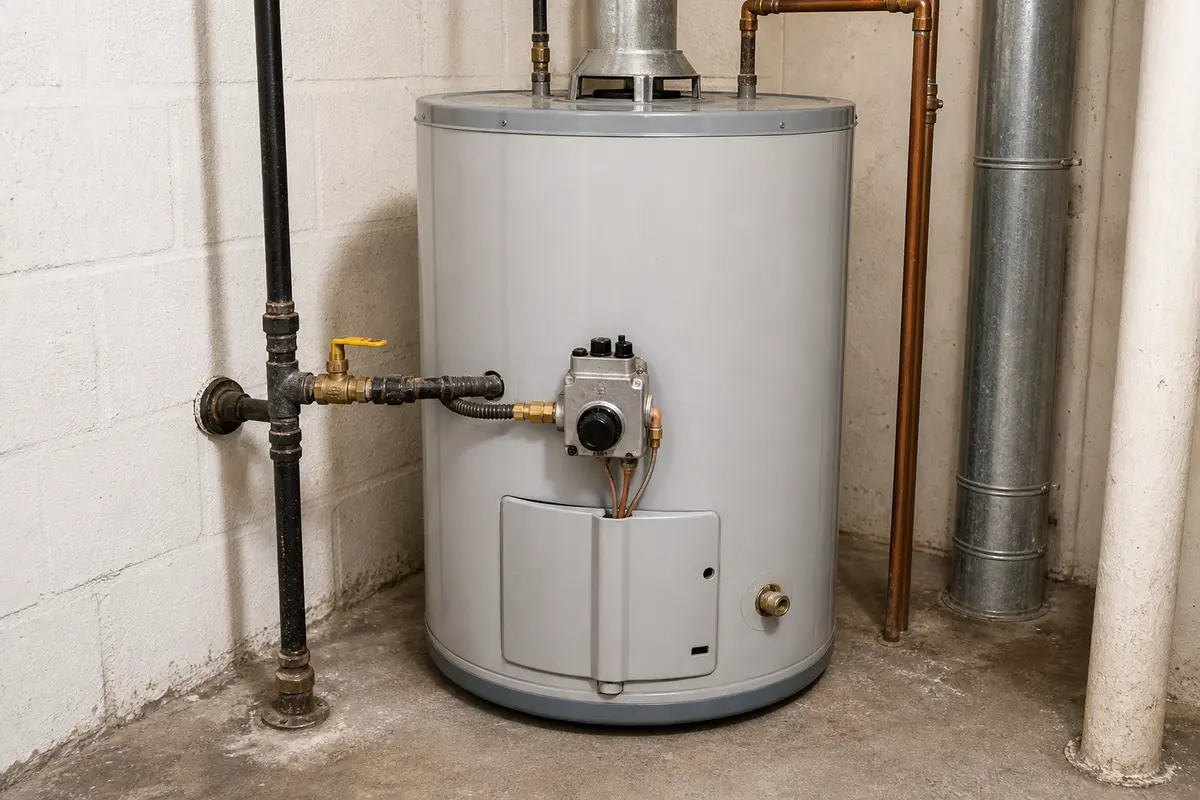
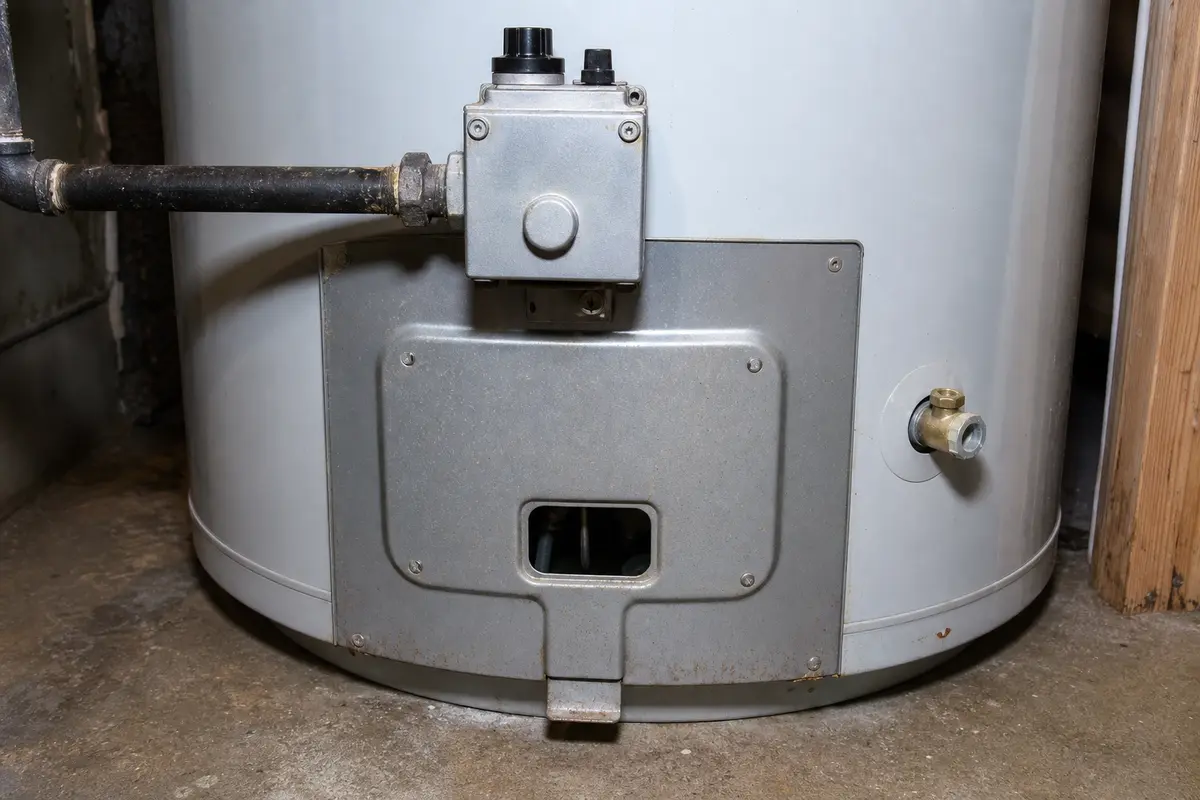
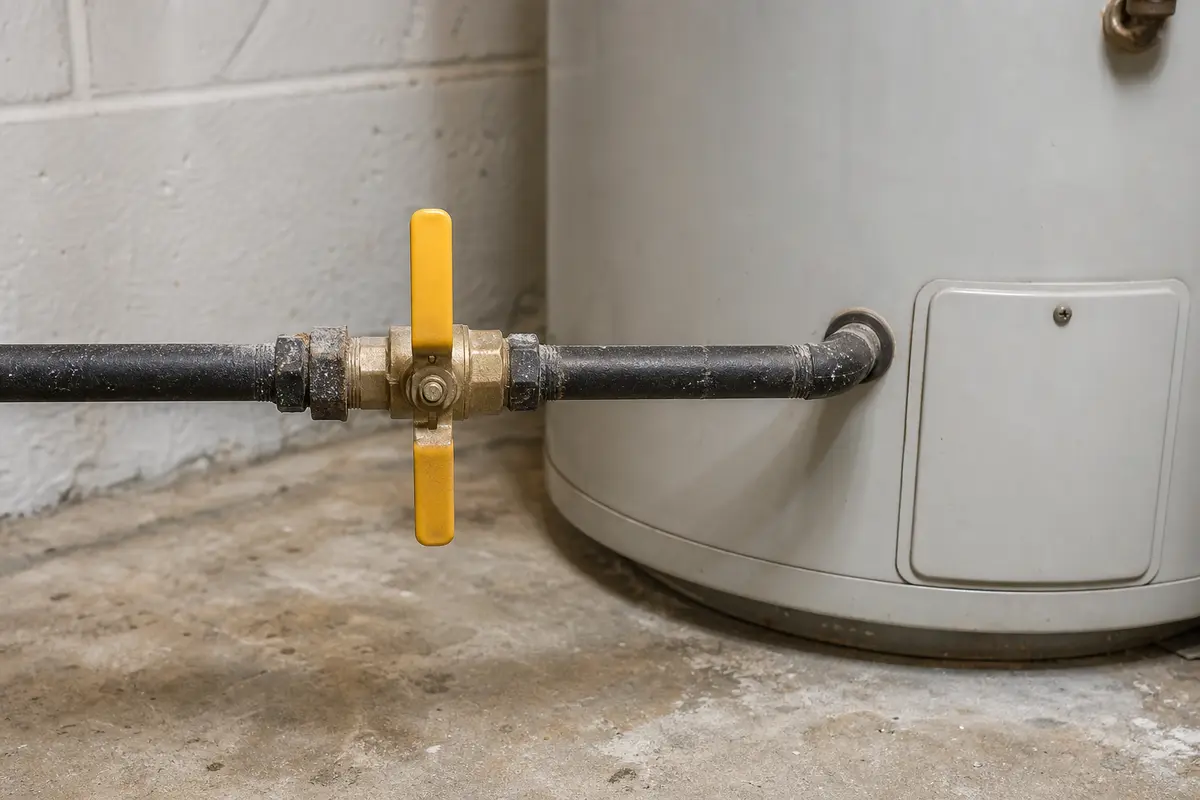
Copy the full model and serial number from the water heater label before comparing parts. Gas-control, pilot, thermocouple, burner-door, and gasket parts are model-specific, and many require leak testing or licensed service after installation.
A gas tank that stays cold usually lost one of three basics: gas flow, a pilot or ignition flame, or a burner call from the control. Look for a flame and check the shutoff handle before touching parts.
No hot water is not enough evidence to shop from, especially on a gas appliance. First separate a safe relight, a supply issue, and a control-side failure.
Stay outside the gas train. The useful homeowner work is sorting the symptom, reading visible clues, and stopping when the next step needs gas-side service.
One careful look can keep you from buying the wrong part. Match what you see to the branch below instead of treating every cold tank the same.
| What you see | What it usually means | Next move |
|---|---|---|
| No pilot or status flame | The heater has no ignition source right now. | Use the printed relight instructions only when there is no gas smell. |
| Pilot lights, then drops out | The flame-sensing safety circuit or pilot assembly may not be proving flame. | Stop after the proper relight attempt and book service. |
| Pilot is steady, main burner never lights | The tank is not getting burner gas when it calls for heat. | If the pilot is steady and the burner still never lights, do not buy a gas valve on that clue alone. Have the control side diagnosed first. |
| Shutoff handle is across the pipe | Gas may be off at the heater. | Open only if the valve moves normally and you know why it was closed; otherwise call service. |
| Soot, rollout, rumble, or lazy yellow flame | Combustion is not behaving normally. | Stop using the heater until it is inspected. |
| Burner runs but water fades fast | The heater may be firing, but recovery or tank internals are suspect. | Move away from pilot diagnosis and look at sediment, dip tube, or replacement age. |
These tools are for observation and faucet-side confirmation. They are not for opening gas controls, removing burner parts, or working around a gas leak.
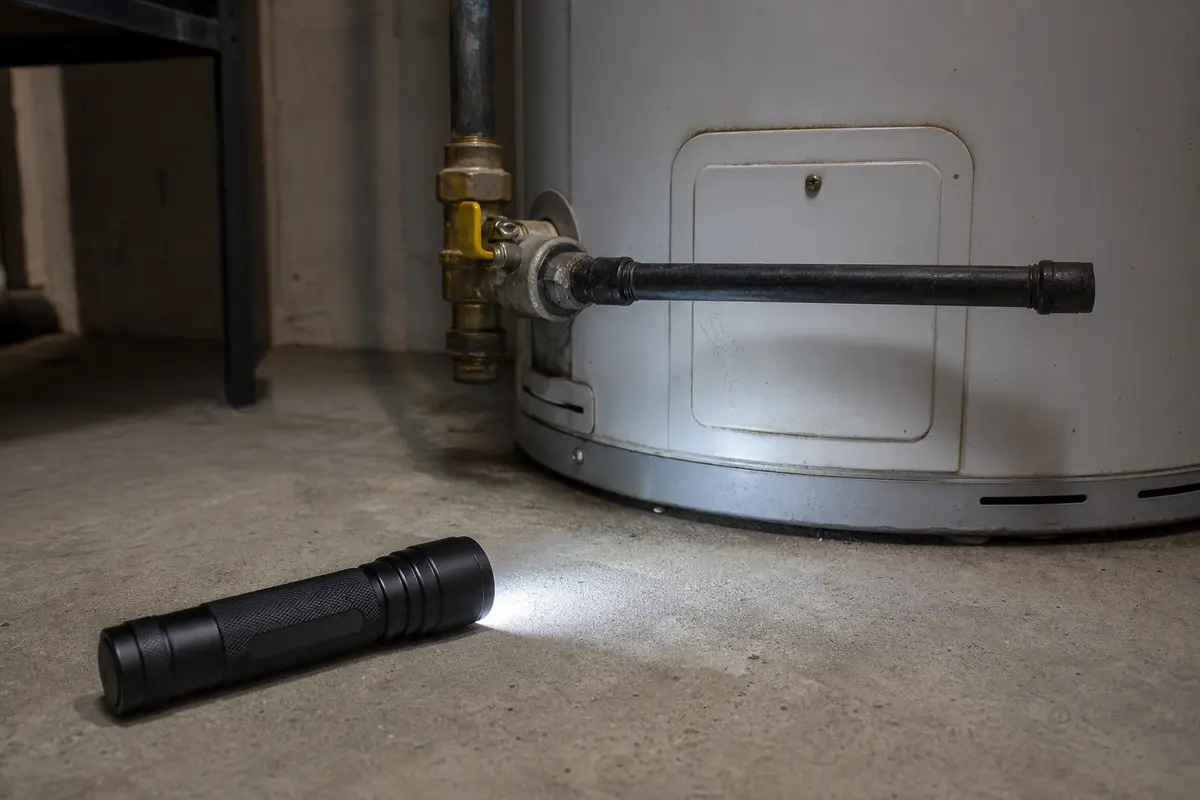
Helps when: You need a clear look at the gas shutoff, lower viewing area, printed lighting label, or soot clue without opening gas controls.
Skip it when: You smell gas, see scorch marks, or the next step requires removing burner or gas-control parts.
Compare inspection flashlights on Amazon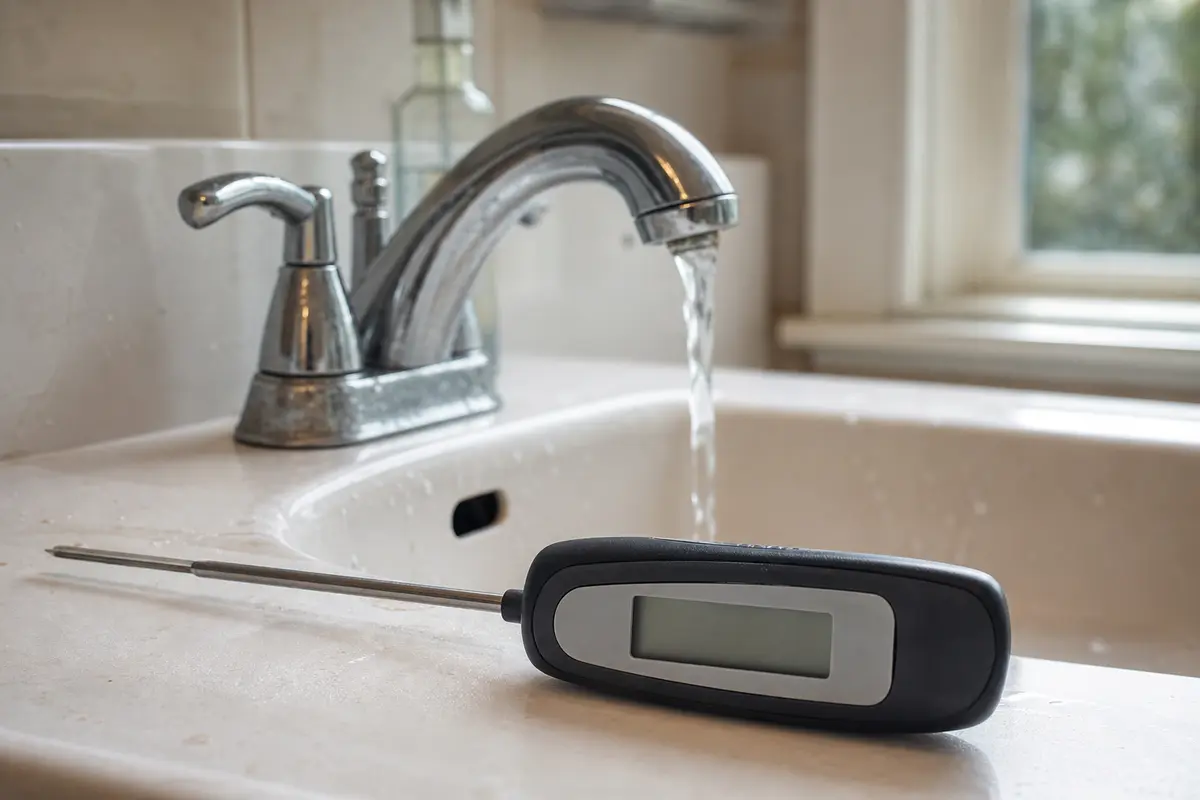
Helps when: You want a simple water-temperature reading at a tub or sink after the heater completes a burner cycle.
Skip it when: The pilot will not stay lit, the burner never fires, or there is any gas or combustion warning sign.
Compare faucet thermometers on AmazonAs an Amazon Associate I earn from qualifying purchases. Repair Riot may earn a commission at no extra cost to you.
Use this section to avoid the wrong cart, not to turn gas work into a casual order. Gas valves and burner controls belong behind confirmed diagnosis, exact model fit, and leak testing.
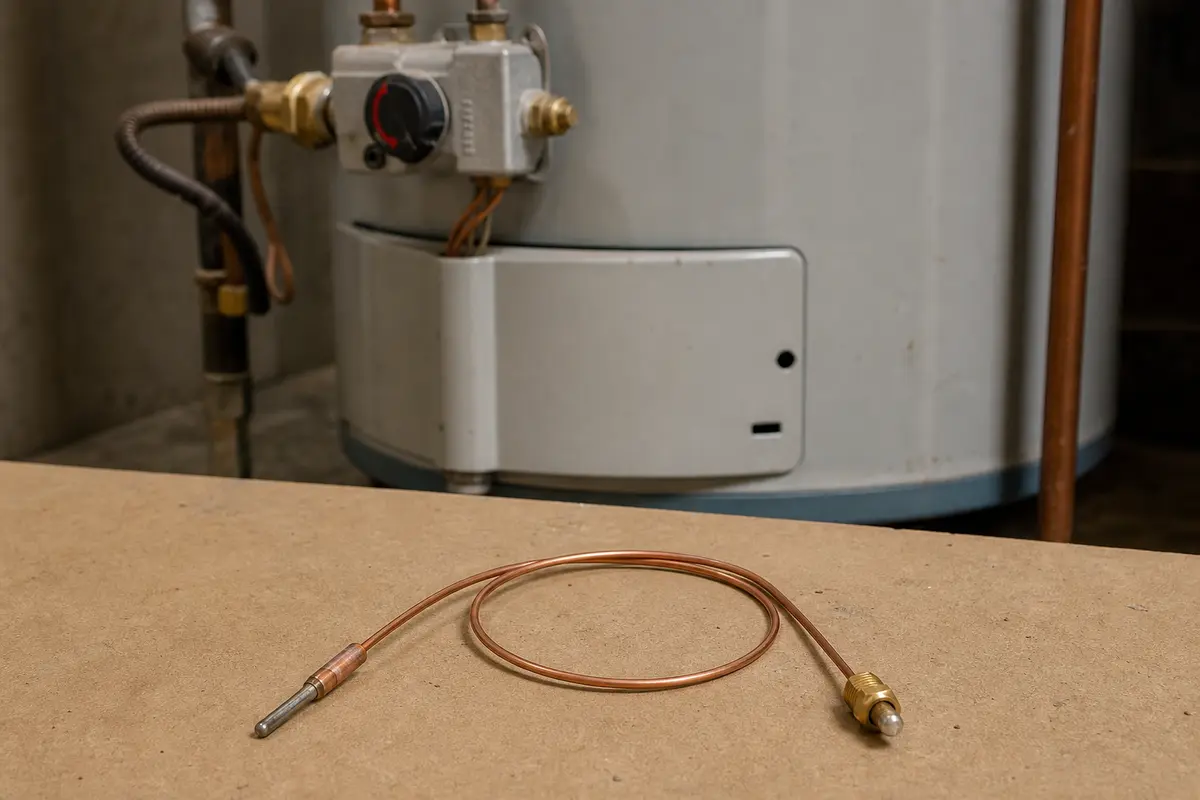
Helps when: On a serviceable standing-pilot heater, the pilot lights and then drops out after the proper relight attempt. Check the manual or technician diagnosis before you compare thermocouples.
Skip it when: Your heater uses a sealed pilot assembly, the pilot has not been diagnosed, or any gas smell, soot, or rollout is present.
Compare water heater thermocouples on Amazon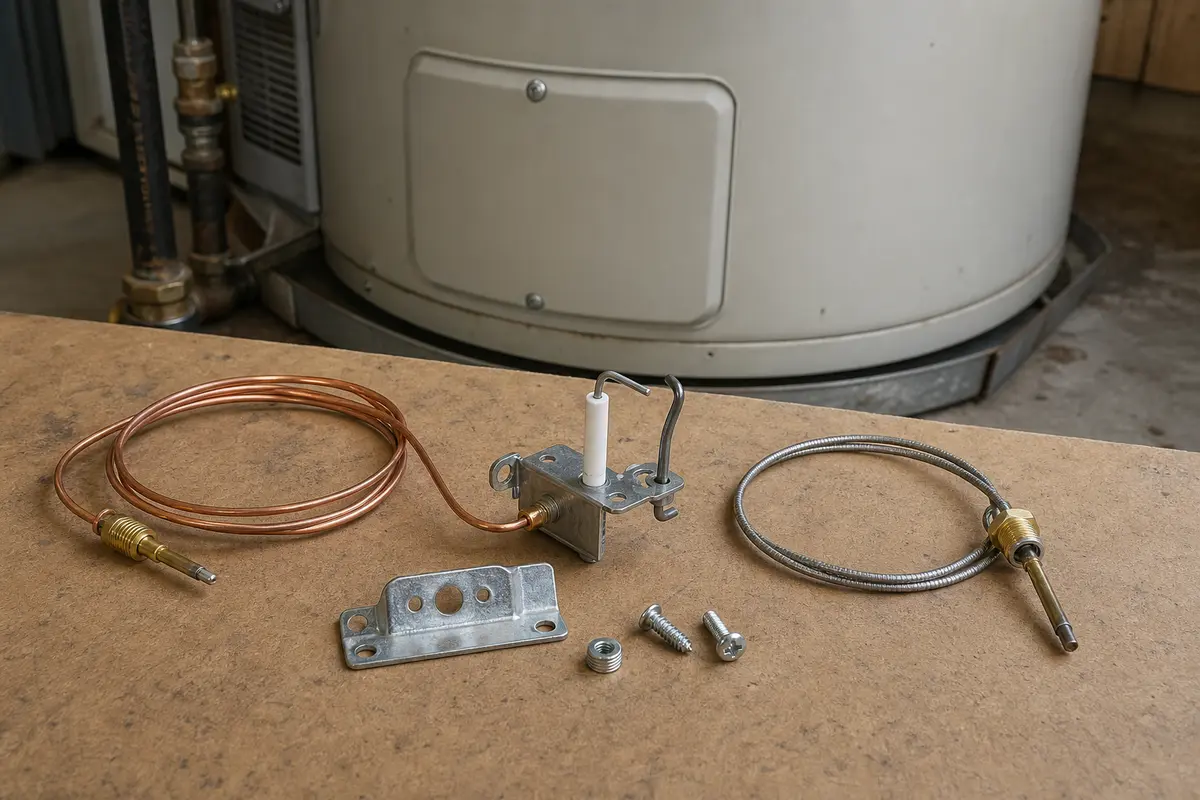
Helps when: The exact model sells the pilot, sensor, and tubing as one matched kit and diagnosis has confirmed that assembly path.
Skip it when: You are guessing from no hot water alone, or the repair requires opening sealed gas components you are not qualified to reseal and test.
Compare pilot assemblies on AmazonAs an Amazon Associate I earn from qualifying purchases. Repair Riot may earn a commission at no extra cost to you.
A clean service call is faster when you can describe the exact clue. Write down what happened before parts come off or more resets muddy the trail.
A sudden full loss, with cold water at every hot tap, is usually a pilot outage, closed gas shutoff, low temperature setting, or a burner that is not being allowed to fire. Look for a pilot or status flame and read the shutoff handle before assuming the tank is dead.
Only relight when you do not smell gas and the heater label is readable. Check the printed steps against the control and pilot area, then follow that label exactly. Missing instructions, odd flame behavior, repeated failure, or any gas odor means stop and call service.
Do not relight the pilot, do not use switches, and do not keep troubleshooting. Leave the area and call the gas utility or a licensed pro from outside or another safe location.
The pilot is only the ignition source. The main burner still has to open and run when the tank calls for heat. A steady pilot with no burner response points toward the gas-control side.
If the pilot lights and then drops out after the printed relight attempt, the flame-sensing safety circuit, thermocouple-style part, pilot assembly, or control may not be proving flame. Stop after that attempt and book in-person diagnosis.
Not from the no-hot-water symptom alone. A thermocouple makes sense only on a serviceable standing-pilot heater with a pilot that drops out and a model match that confirms the part. Many newer heaters use different assemblies.
Yes. A manual shutoff turned across the pipe can leave the burner with no fuel. If the valve is stiff, unclear, or another gas appliance is also out, do not force it; treat that as a gas-supply issue.
A cold storage tank needs a normal recovery cycle, so hot water is not instant. Let the burner run normally, then test at a tub faucet before deciding the heater still has a fault.
A vacation or very low setting can leave the tank lukewarm or cold after use. Move the dial only to a normal hot-water setting, then watch whether the burner responds and the tank recovers.
Replacement moves up when the tank body leaks or the burner compartment has been wet. Also price replacement before major gas-control work on an older tank near the end of its service life.
Repair Riot built this page around visible homeowner checks: heater type, gas odor, shutoff position, pilot flame, burner response, and unsafe combustion clues. Manufacturer instructions and public CO safety guidance set the stop points.