Does it hum, buzz, or barely move before the reset pops?
Start with a jam. Shut off power, look for hard debris, then turn the bottom wrench slot back and forth.
A garbage disposal reset button keeps tripping when the motor overheats or stalls. Start with power off, clear a jam, and prove the drain flows before you blame the motor.
Humming before the trip points to a stuck turntable; check the bottom wrench slot and listen for smooth movement. A brief run followed by shutdown points to heat, drain load, or a tired motor.
One trip after a bad jam is normal. If the chamber is empty, the turntable moves freely, and the sink drains fast, repeated trips point toward replacement.
Don’t start with: Do not keep pressing reset or reach into the chamber by hand. Cut power first and use tools to remove debris.
Start with a jam. Shut off power, look for hard debris, then turn the bottom wrench slot back and forth.
Check whether water and ground waste are backing up. A slow discharge can make a good motor overheat.
Try one no-load test after the turntable moves freely. If it still trips, the motor is probably drawing too hard internally.
Assume a hard object is wedged near the grind ring. Remove only what you can grab safely with tools.
Stop the disposal repair path. Those clues move the job into replacement, plumbing, or electrical diagnosis.
The useful clues are visible: the chamber, the bottom turning slot, the reset button area, and the drain path leaving the disposal.
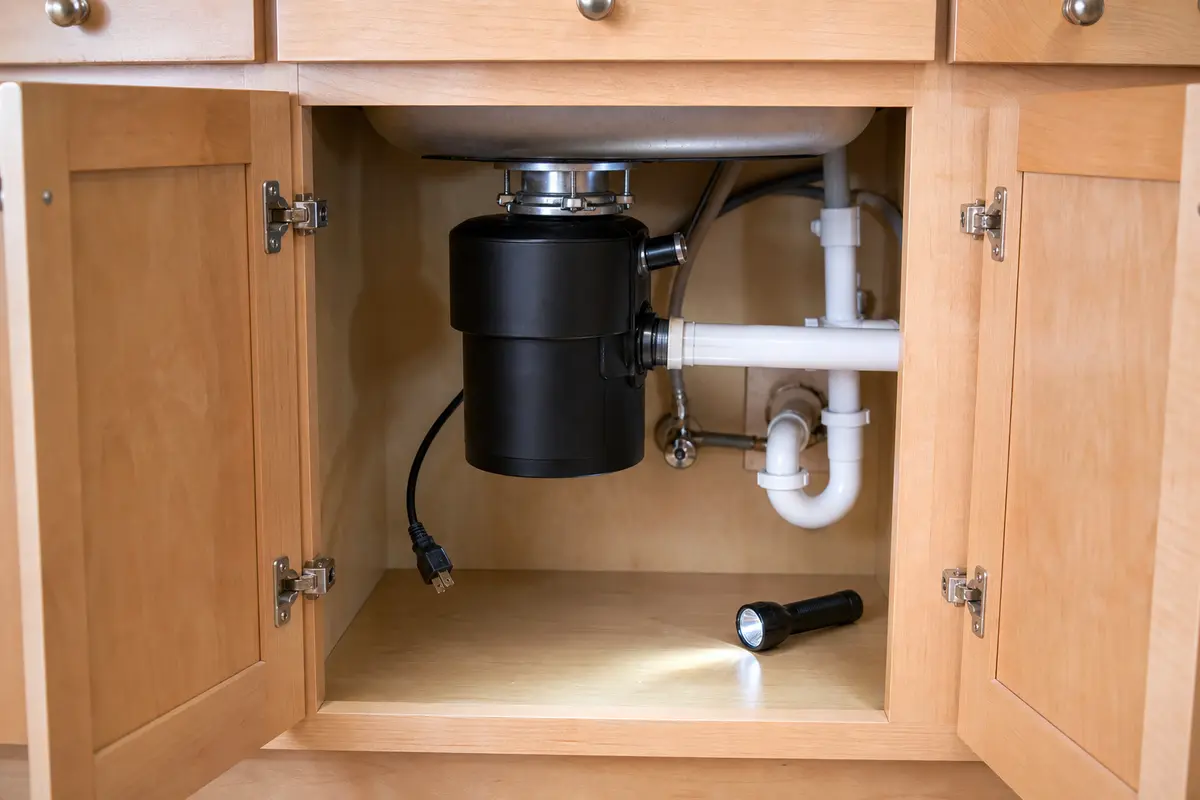
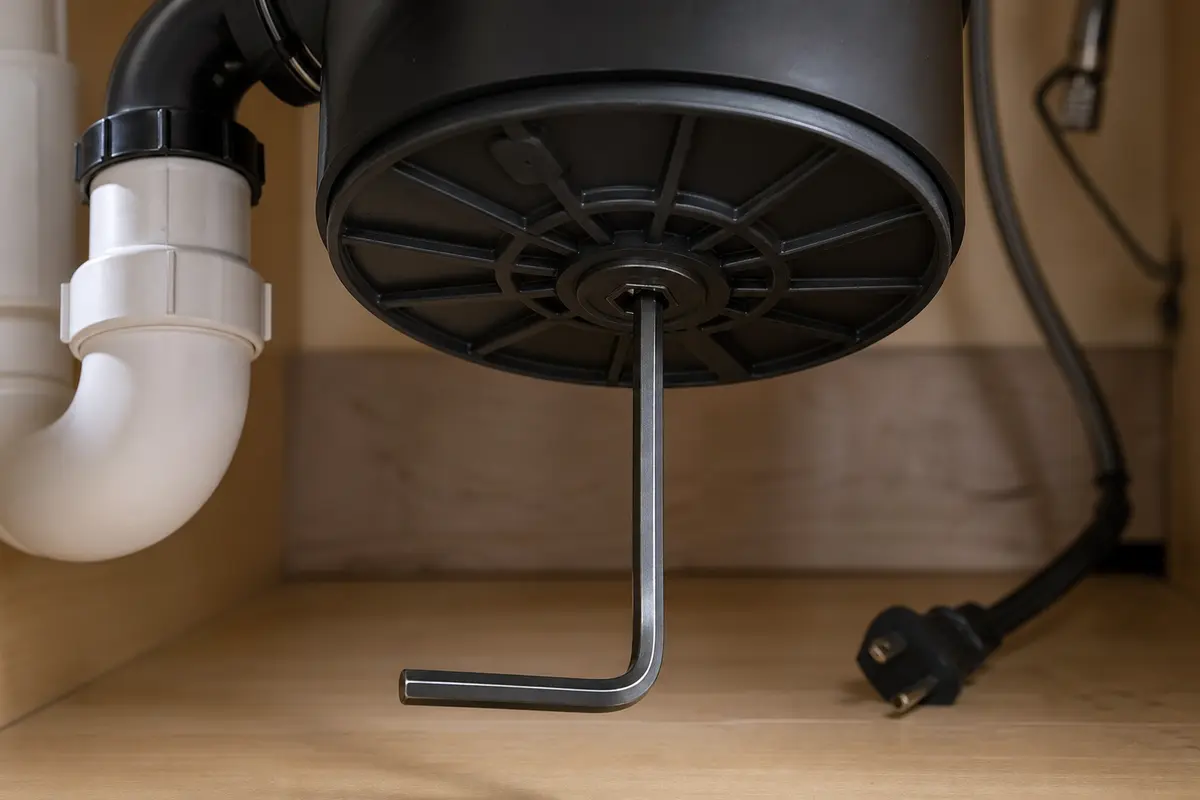
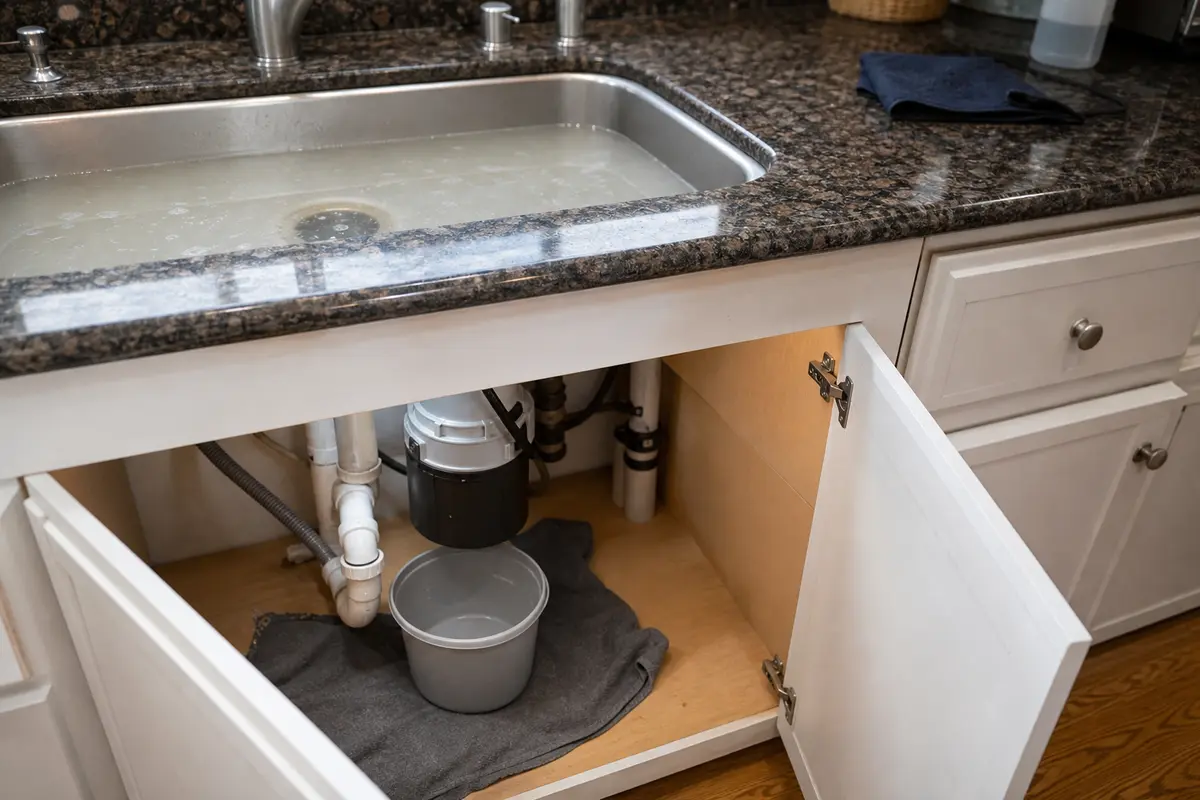
Do not buy a reset switch, splash guard, mount, or whole disposal until you have three clues: the chamber is clear, the turntable moves from the bottom slot, and the sink drains normally. Match any replacement to the exact model, mount, power setup, and confirmed diagnosis; the reset button is usually the messenger, not the failed part.
The red reset button is a thermal overload. It trips because the motor got hot while trying to run, not because the button itself usually needs replacement.
Do the first pass without tools in the chamber and without repeated reset attempts. The sound on one brief test tells you where to spend the next five minutes.
Use the first repeatable clue, not the part name, to choose the next check.
| What you notice | What it usually means | Next move |
|---|---|---|
| Low hum, no spin, then reset pops | The turntable is jammed or partly seized. | Power off, remove visible debris with tools, then use the bottom wrench slot. |
| Runs briefly, then shuts off hot | The unit is overheating under load. | Check for slow draining, packed discharge piping, and heavy food waste before replacing the disposal. |
| Trips again with an empty chamber | The motor may be worn or binding internally. | Stop repeated resets and plan for replacement if the drain is clear and the turntable moves freely. |
| Sink backs up while the disposal runs | The disposal is working against a drain restriction. | Stop feeding scraps and clear the sink drain path before testing the motor again. |
| Burning smell, sparks, leak, or breaker trip | This is no longer a normal reset-button symptom. | Stop DIY and bring in a licensed electrician or plumber based on the clue. |
Most repeat trips after a bad noise or swallowed object come from a hard obstruction between the impellers and grind ring.
The bad shortcuts are simple: repeated resets, blind part buying, and treating a drain problem like a motor problem.
A disposal can trip even when the motor is not the first failure. If water and ground waste cannot leave, the unit churns in a heavy slurry and heats fast.
Keep the cart small. A humming disposal needs the jam key first: power off, turn the bottom slot, and feel whether the turntable frees up. Shine a light into the chamber before every reset, and use long-grip tools for visible debris.
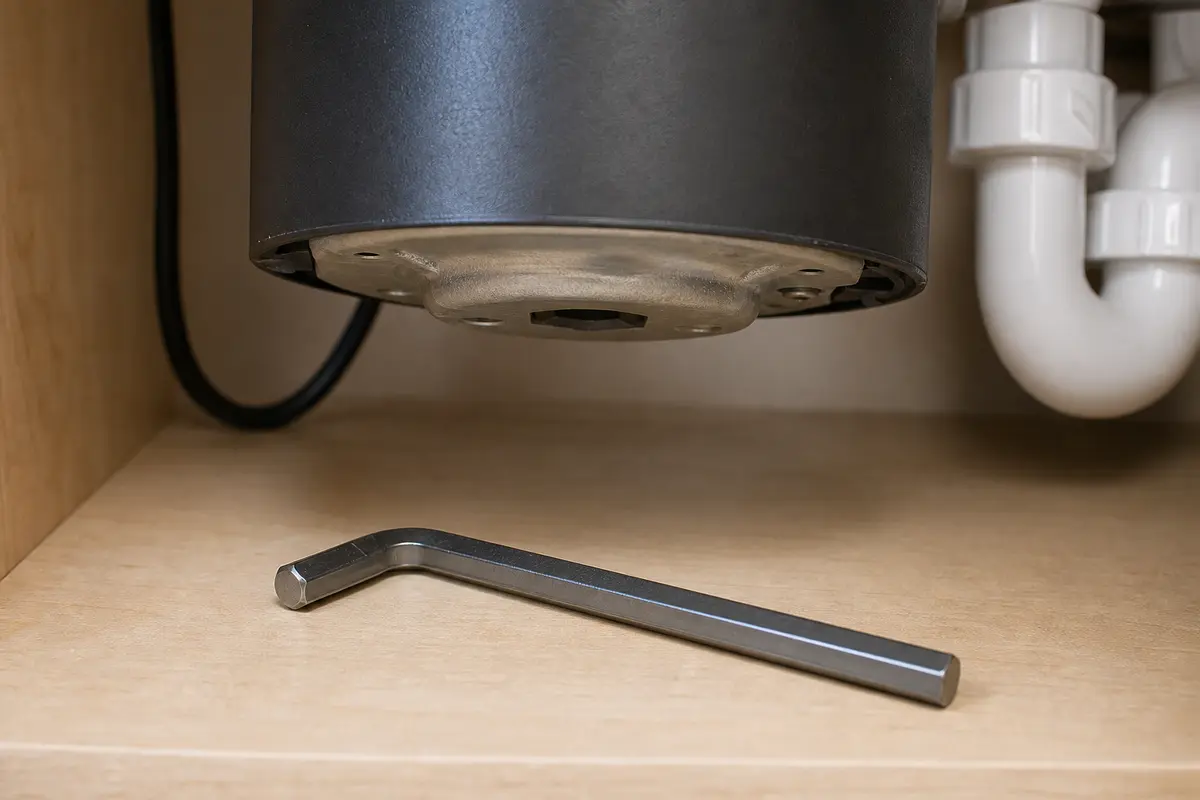
Helps when: Turns the motor from the bottom slot so you can prove whether the turntable is jammed or moving freely.
Skip it when: Your disposal has no bottom turning slot or the key will not move with reasonable hand pressure.
Compare disposal jam keys on Amazon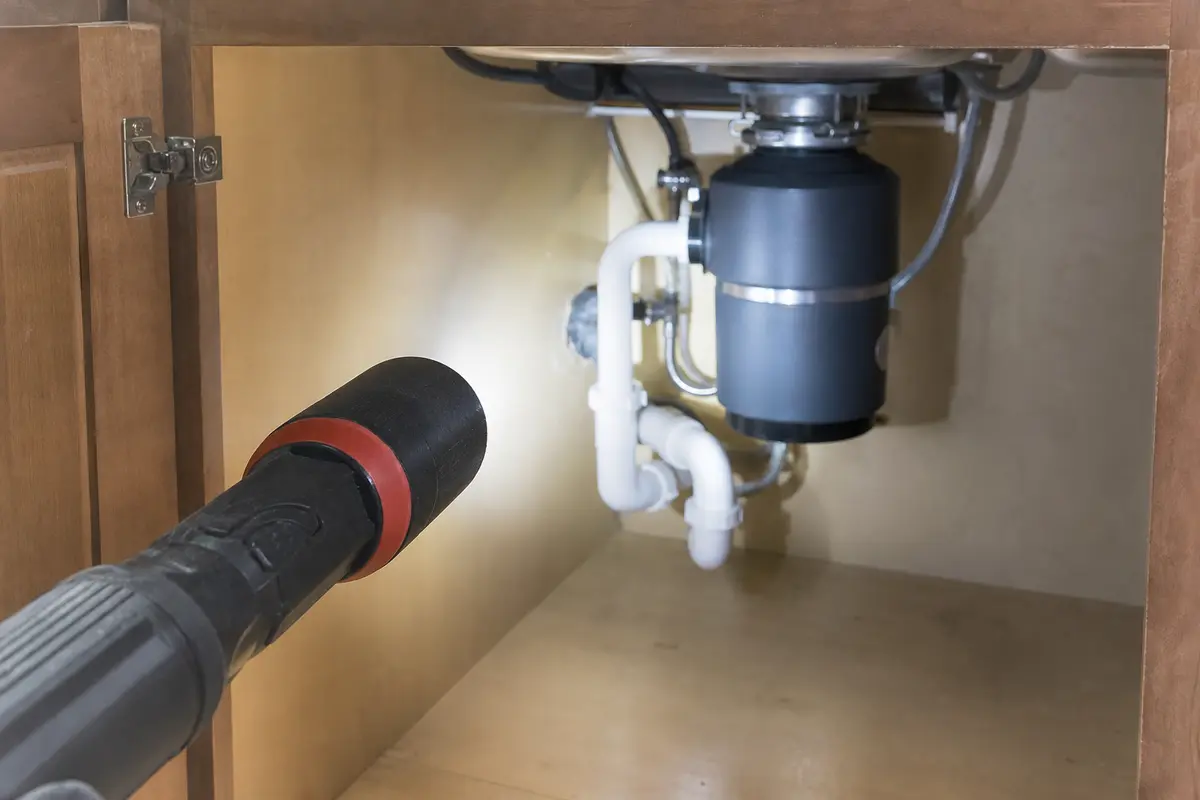
Helps when: Shows glass, bone fragments, bottle caps, and metal pieces wedged near the grind ring.
Skip it when: You cannot safely disconnect power or the chamber contains sharp debris you cannot reach with tools.
Compare inspection lights on Amazon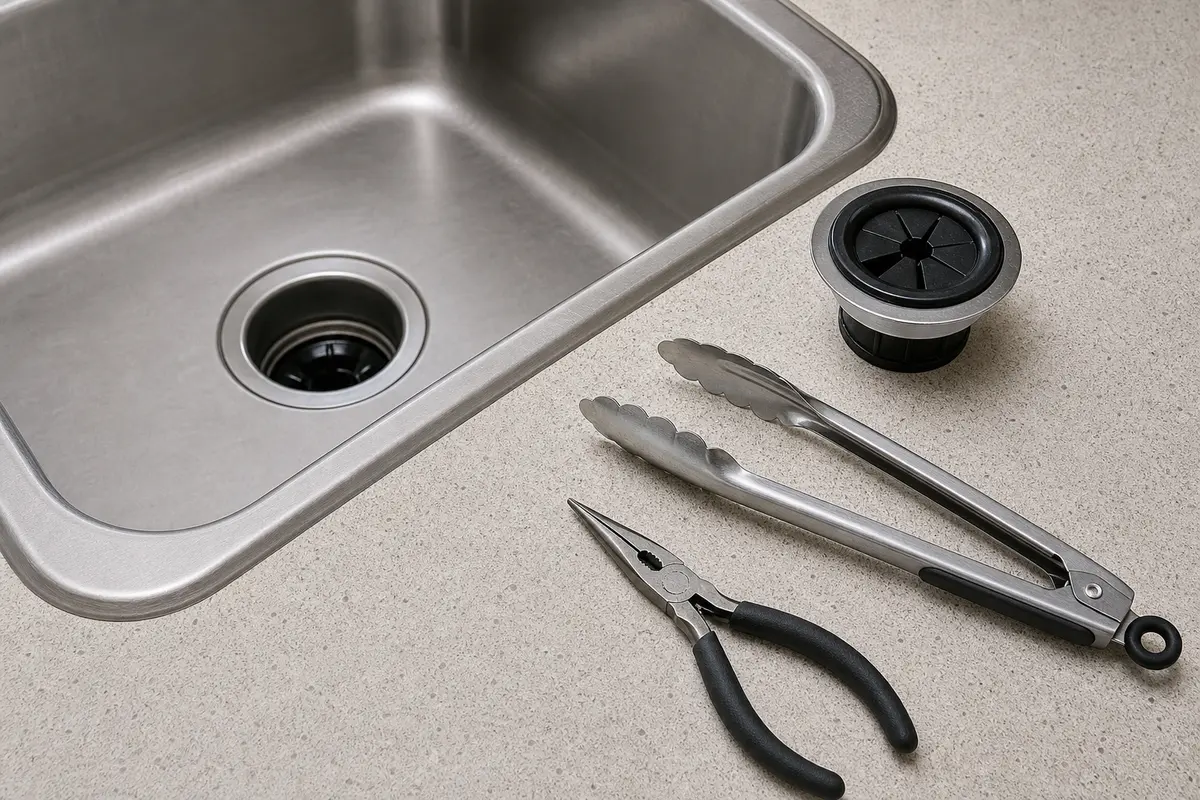
Helps when: Removes visible hard debris without putting your hand in the disposal opening.
Skip it when: The object is buried, glass is shattered in the chamber, or you would have to force the tool.
Compare tongs and pliers on AmazonAs an Amazon Associate I earn from qualifying purchases. Repair Riot may earn a commission at no extra cost to you.
After the jam and drain checks pass, repeated trips point away from small parts. A clear chamber, smooth bottom-slot movement, and fast drainage leave the motor as the likely failure.
The reset is tripping because the motor is overheating or drawing too much current. First check for a jam, a stiff turntable at the bottom wrench slot, and slow drainage; those are more likely than a bad reset button.
No. Repeated resets while the disposal hums or stalls can overheat the motor. Clear the jam or load problem first, then test it once.
A hum means the motor is getting power, but it does not prove the motor is healthy. Cut power, free the turntable from the bottom slot, then test with cold water. If it still hums and trips with no jam, the motor is likely failing.
Yes. If waste water cannot leave fast enough, the disposal churns in heavy slurry and can run hot. Watch the sink while water runs; slow draining and repeat trips often show up together.
Usually no. The reset button is an overload protector reacting to heat or current draw. Replace parts only after the chamber is clear, the turntable has been checked from below, and the drain behavior points to a real failure.
Replace it when it keeps tripping with an empty chamber, smooth bottom-slot movement, good drainage, and no removable jam. Also stop repairing if it sounds rough, starts weak, leaks from the body, or trips the house breaker.
Skip it if you may need to open the trap or disposal discharge. Chemical cleaner can sit in the piping and splash during the next repair step.
That usually means the disposal is overloaded by the material or the drain is not clearing fast enough. Feed smaller amounts, run cold water, and check the drain path before replacing the unit.
Repair Riot built this page around homeowner-visible clues: hum versus spin, whether the turntable moves from the bottom slot, drain speed, heat after a short run, leaks, and electrical stop signs. The source links support disposal safety, jam-clearing context, and drain/waste guidance; the sequence and wording are original Repair Riot guidance.