Does the moisture wipe off the room-side glass?
Start with indoor humidity and airflow. Open tight blinds, run bath or kitchen fans, and keep the sill dry while you watch the next cold morning.
Good clue for foggy glass: if the haze stays near spacer edge after both sides are clean, price glass or sash service. If it wipes off room-side glass, improve humidity and airflow.
Most failed units need glass or sash service, not a whole new window. Wet trim, soft drywall, or a sash that will not lock changes the repair path.
Sort by wipe result: clears, stays between panes, or appears with wet trim. That decides humidity work, glass or sash pricing, or leak tracing around the opening.
Don’t start with: Do not start with caulk, drilling the glass, defogging shortcuts, or whole-window replacement until you know where the moisture is.
Start with indoor humidity and airflow. Open tight blinds, run bath or kitchen fans, and keep the sill dry while you watch the next cold morning.
If haze remains after both glass faces are clean, inspect the spacer edge for a buried cloudy band, droplets, or mineral spots.
If one sash stays cloudy while nearby windows stay clear, compare the model label and price that glass unit first.
Stop calling it a glass-only problem. Look for water getting around the window opening, trim, flashing, or wall before replacing glass.
If the frame is dry, solid, square, and locks, price glass-unit or sash service before whole-window replacement. Move to full replacement for rot, leaks, bad fit, or poor operation.
Do not pry or handle the glazing yourself. Have a glass shop or window contractor inspect it in person.
Look at the glass before you shop. Surface moisture, trapped haze, and wet trim can look similar from across the room, but they send you to different fixes.
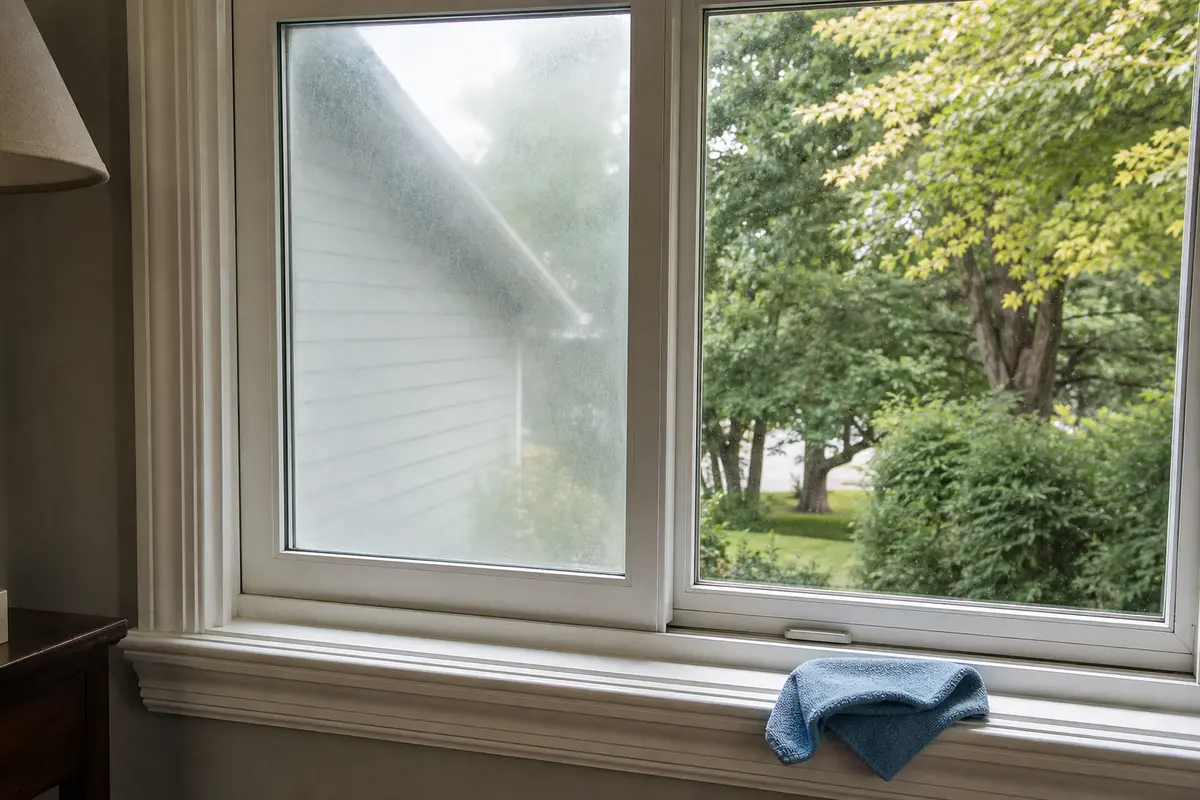
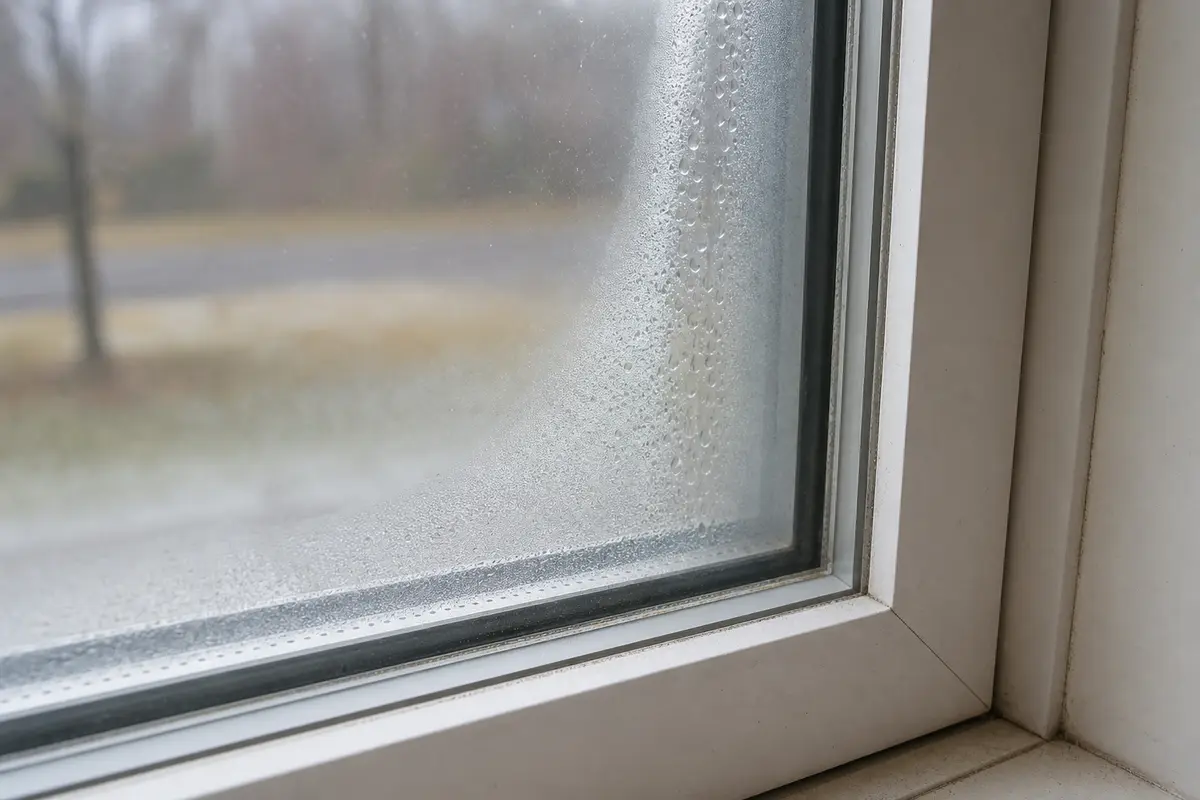
Do not buy from the word foggy. Match the exact diagnosis first: wipe result, spacer-edge haze, wet trim, model, brand, series, glass size, and warranty before pricing glass or sash work.
A foggy double pane window is not one diagnosis. The location of the moisture is the clue.
Use a dry microfiber cloth before any cleaner, caulk, or parts order. Cleaning both exposed surfaces tells you whether the moisture is reachable.
| What you see | Likely path | Next move |
|---|---|---|
| Fog wipes off and the glass looks clear | Room-side condensation | Lower humidity, improve airflow, and keep the sill dry. |
| Both exposed surfaces are clean but haze stays inside | Failed insulated glass seal | Check warranty and price insulated glass or sash service. |
| Cloudy band or droplets sit near the spacer edge | Glass-unit failure is stronger | Do not caulk the sash and expect it to clear. |
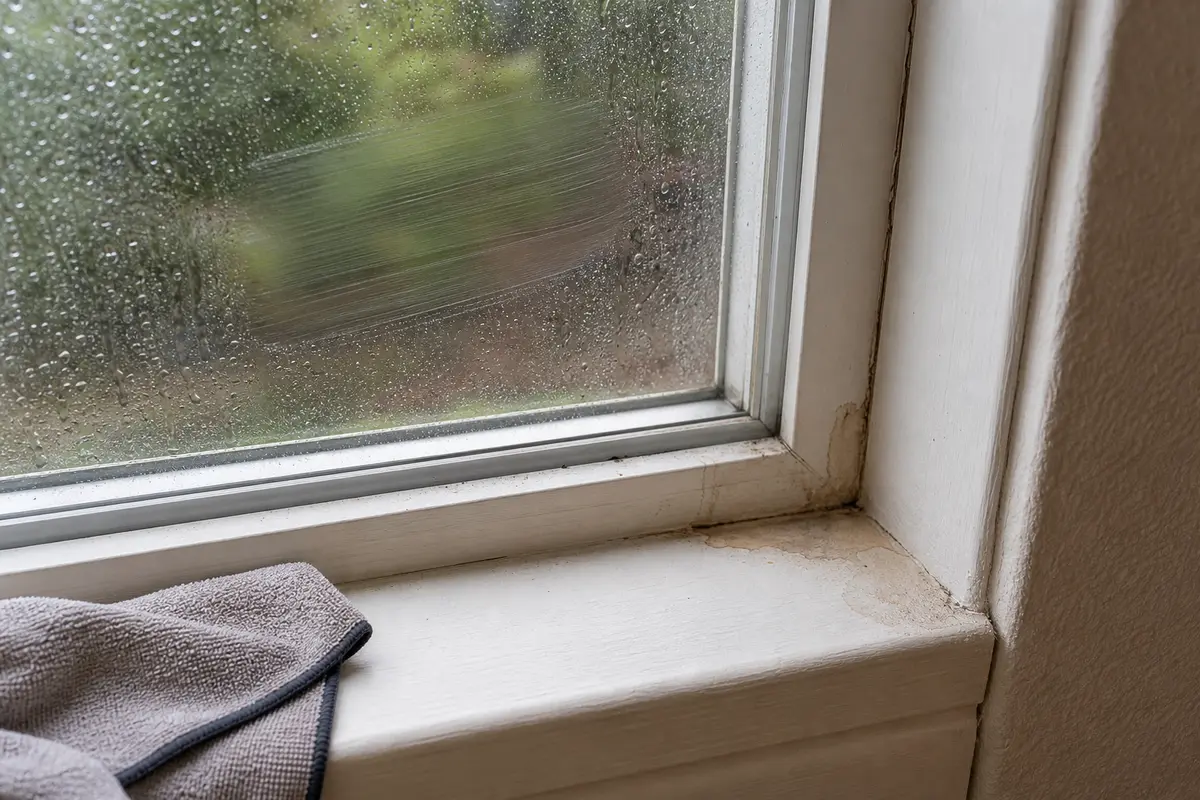
| Damp trim or drywall appears after rain | Window-opening leak | Find the leak path before cosmetic glass work. |
| Glass is cracked or sash feels loose | Safety and service issue | Stop DIY handling and call a glass or window pro. |
Foggy glass tempts people into repairs that either do nothing or hide the real damage.
When the fog wipes off, treat the room conditions before you blame the window.
A leaking opening and a failed glass unit can happen on the same window. The wall leak gets priority.
These tools support inspection. They do not make glass removal, lead paint disturbance, or high-window work safe.
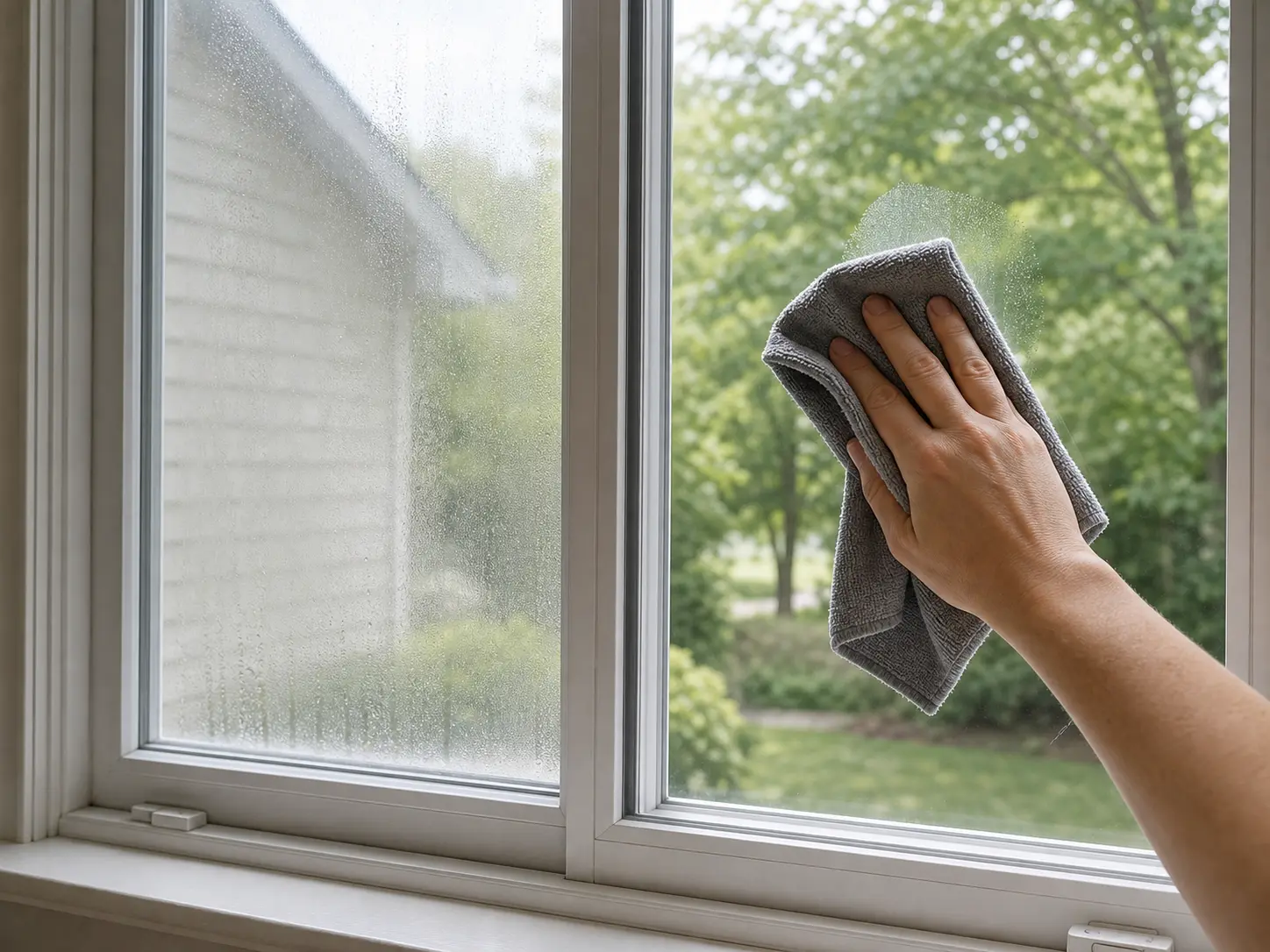
Helps when: The first check is wiping the room-side glass clean without scratching coatings or leaving lint that looks like haze.
Skip it when: The glass is cracked, loose, or too high to reach safely.
Compare microfiber cloths on Amazon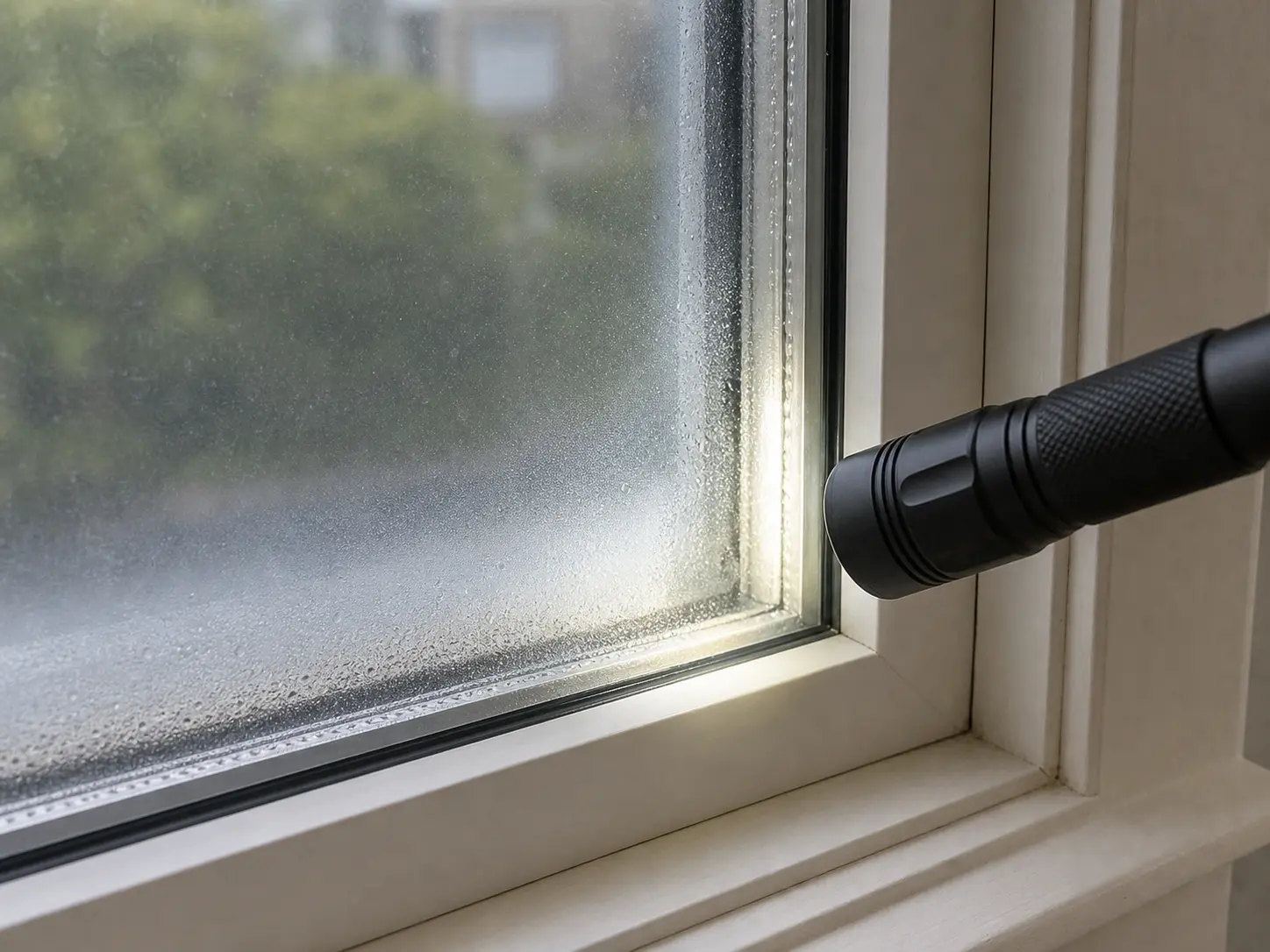
Helps when: A side light makes spacer-edge haze, mineral spotting, damp corners, and staining easier to see.
Skip it when: You would need to lean out, climb unsafely, or pry trim to get the view.
Compare inspection flashlights on Amazon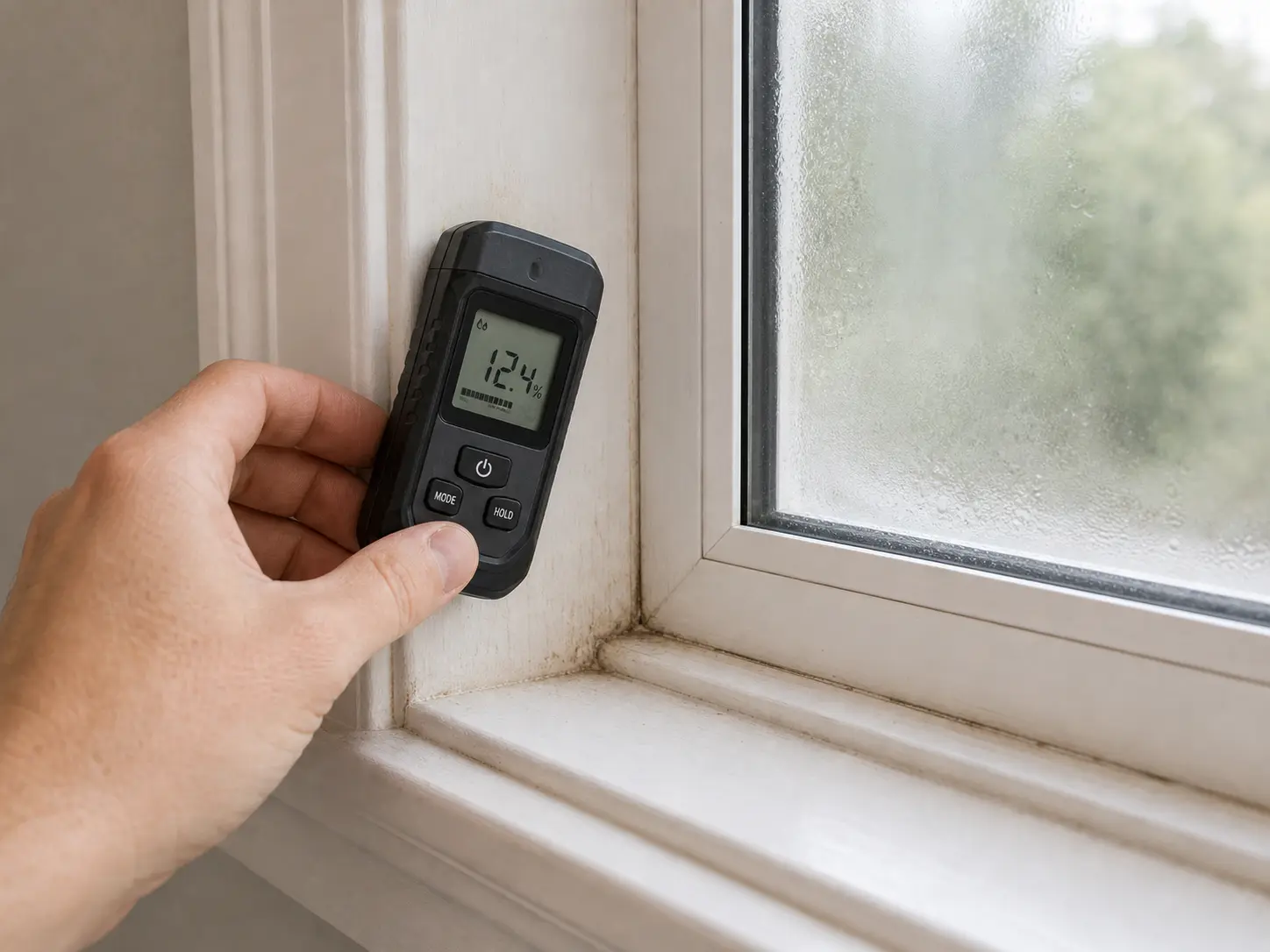
Helps when: Check damp trim, sill corners, or drywall after rain before calling the fog a glass-only failure.
Skip it when: You are using the reading as proof that the glass seal failed; it only reads surrounding materials.
Compare moisture meters on AmazonAs an Amazon Associate I earn from qualifying purchases. Repair Riot may earn a commission at no extra cost to you.
Parts come after diagnosis. Most fog between panes needs an insulated glass unit or serviceable sash matched to the window, not random hardware.
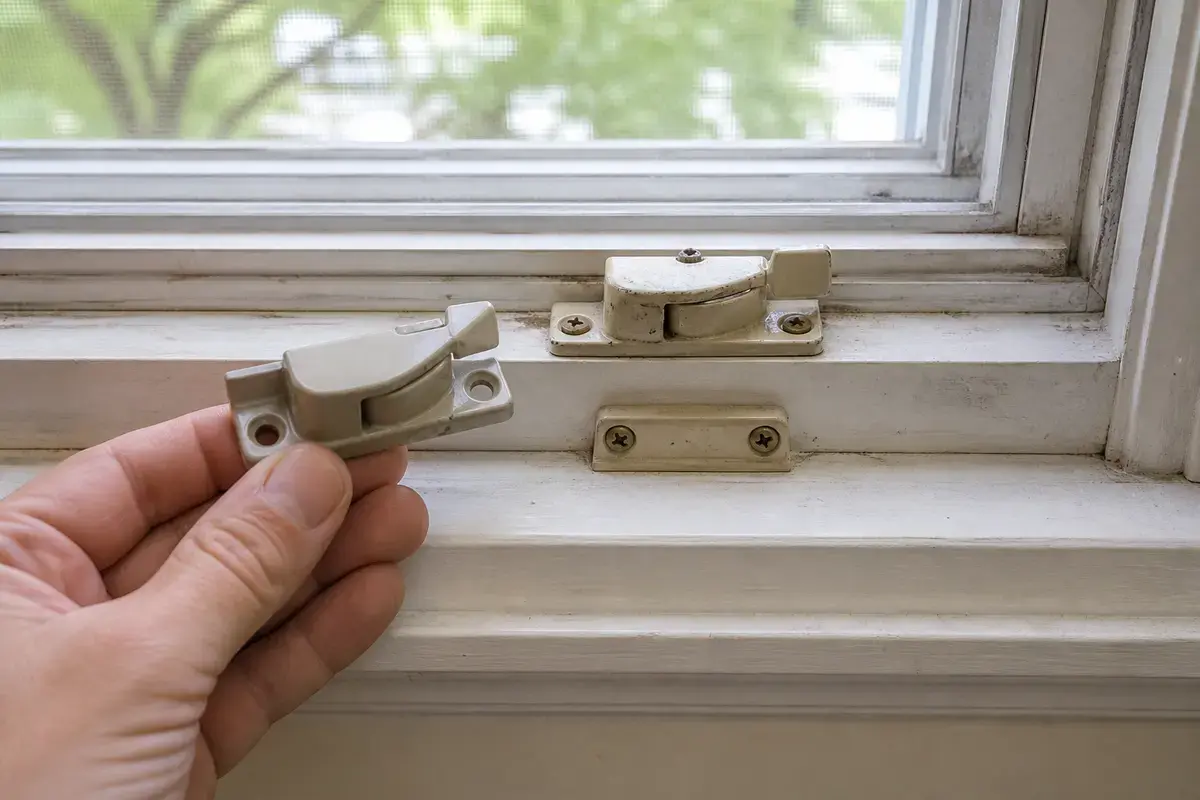
Helps when: The glass fog is separate, but the sash also will not pull tight or lock evenly and you can feel air at the meeting rail.
Skip it when: The only symptom is trapped haze between panes. A lock will not clear failed insulated glass.
Compare sash locks on Amazon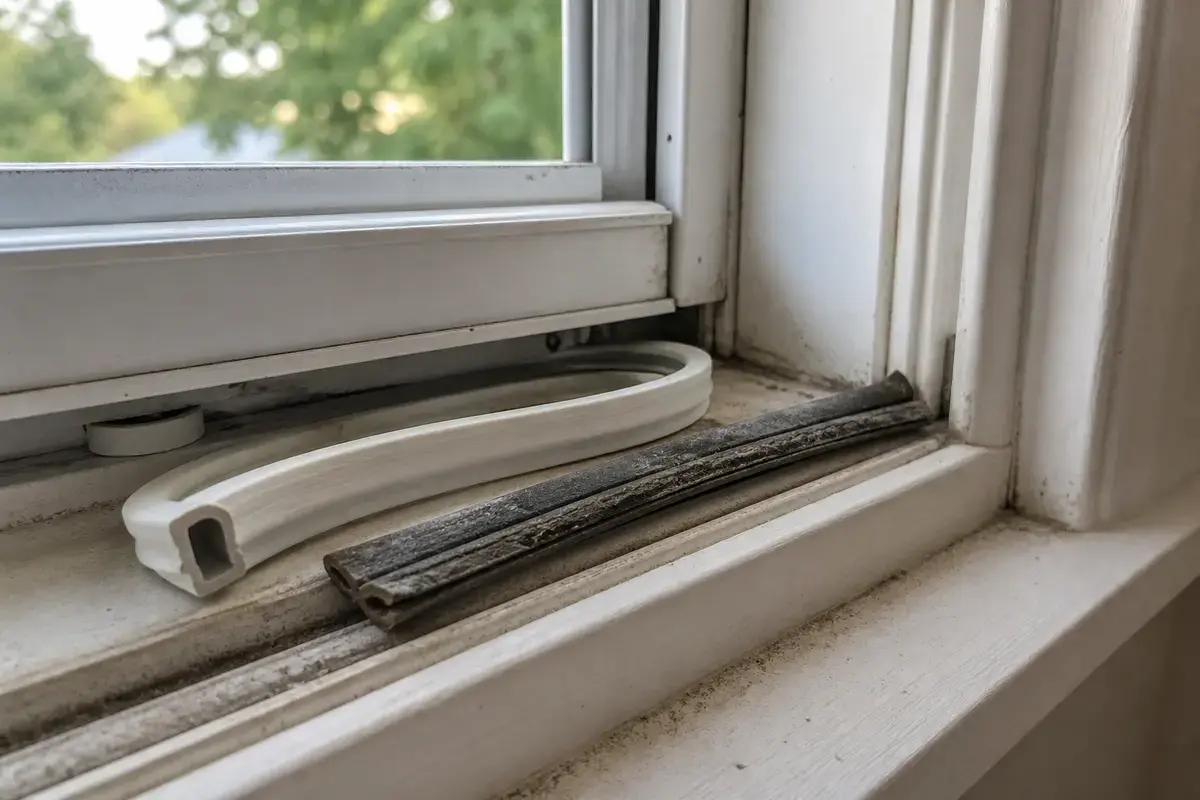
Helps when: The pane clears when wiped, the frame is dry, and torn or flattened sash seals are contributing to drafts and room-side condensation.
Skip it when: The fog is sealed between panes or the wall around the window is wet.
Compare weatherstripping on Amazon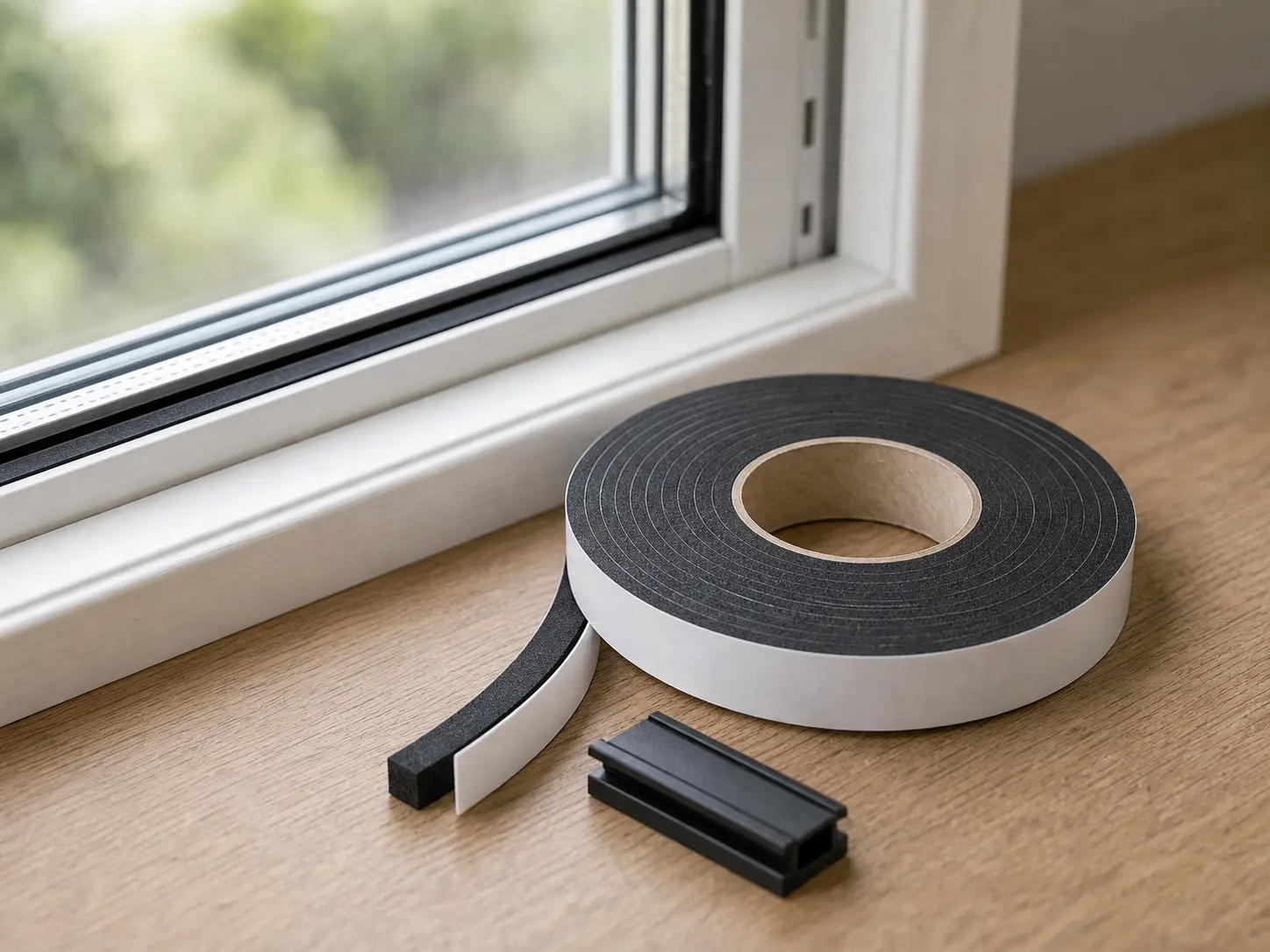
Helps when: A matched insulated glass unit or sash procedure specifically calls for double-sided glazing tape during reassembly.
Skip it when: The goal is to clear fog between panes, the glass unit is not matched yet, or the local glass shop handles the install materials.
Compare window glazing tapes on AmazonAs an Amazon Associate I earn from qualifying purchases. Repair Riot may earn a commission at no extra cost to you.
Write down wipe result, cloudy sash, model label, and wet-trim clues so a glass shop can quote glass or sash work before whole-window replacement.
If the frame and sash are dry, square, and locking normally, replace the insulated glass unit or serviceable sash. Choose whole-window replacement for rot, leaks, loose frames, or bad operation.
Do the wipe test. If a dry cloth clears the moisture, it is on the room side. If both exposed glass surfaces are clean and the haze still looks trapped inside, the insulated glass seal has likely failed.
If moisture is between panes, skip caulk. Use caulk only for confirmed exterior joint gaps; it cannot restore a failed insulated glass seal.
Defogging can improve appearance for a while, but it does not restore sealed-glass performance. For durable repair after the wipe test confirms trapped haze, price glass-unit or sash replacement.
One sash can fail before neighboring windows. Compare same-wall windows; if only one panel stays cloudy after the wipe test, start with that glass unit.
Yes, if it wipes off room-side glass. Check cold mornings, bathroom or kitchen humidity, closed blinds, and blocked airflow before pricing glass.
Use glass-unit or sash service when the frame is solid, dry, square, and locks. Choose whole-window replacement for rot, leaks, poor operation, bad fit, or a worn-out frame.
Only if you know that window's service method and can control the glass safely. Stop for cracked glass, large panes, upper-story windows, brittle stops, lead-paint concerns, or any sash that feels unstable.
Repair Riot checks wipe result, spacer-edge haze, sash operation, wet trim, safety stops, model labels, and warranty clues before glass or sash pricing.