Does the low spot feel soft, spongy, or crunchy?
Start with subfloor damage. Look above and below for leaks, dark staining, swollen plywood, delamination, or a spot that dents under light probing.
A sagging floor usually starts below the finish surface: wet subfloor, weak joists, or a shifted support. First field check: map the low spot with a level, then press it with your foot to separate a soft spot from a firm slope.
If a soft dip is near a bathroom, exterior door, kitchen, or crawl space, press the spot and inspect below for staining or swollen subfloor. If a wide slope feels firm, sight along joists, beams, and posts from below.
In practice, soft or spongy sends you toward moisture and subfloor damage. A firm room-wide slope sends you below to joists, beams, posts, and bearing points.
Don’t start with: Do not start with floor leveler, extra underlayment, new flooring, or a threshold strip until the floor is dry, firm, and supported from below.
Start with subfloor damage. Look above and below for leaks, dark staining, swollen plywood, delamination, or a spot that dents under light probing.
Look below before touching the finish floor. A firm wide slope usually points to joists, beams, posts, or settlement rather than flooring alone.
Look for staining or swelling near plumbing, an entry door, or wet crawl-space soil. Check from below and stop floor-covering work until the leak or water source is dry.
Those are movement clues. Watch for a line that follows a joist, beam, or support below before you buy surface patch materials.
Stop top-side repair. Keep weight off the area and get structural help before new flooring hides the condition.
Now parts make sense. Choose subfloor panel, floor patch, or transition material only after the layer that failed is confirmed.
Look at the floor from above and below before you buy anything. A soft spot, wet subfloor, or sagging support line sends the repair in different directions.
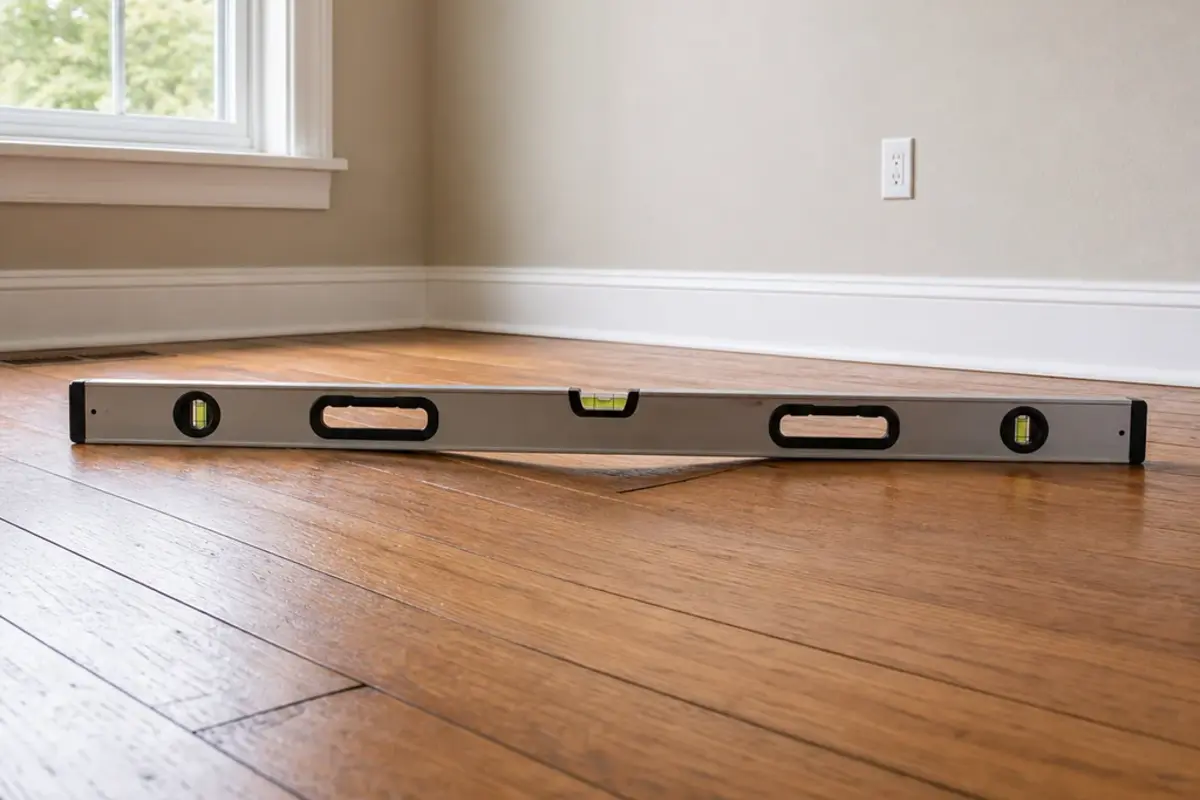
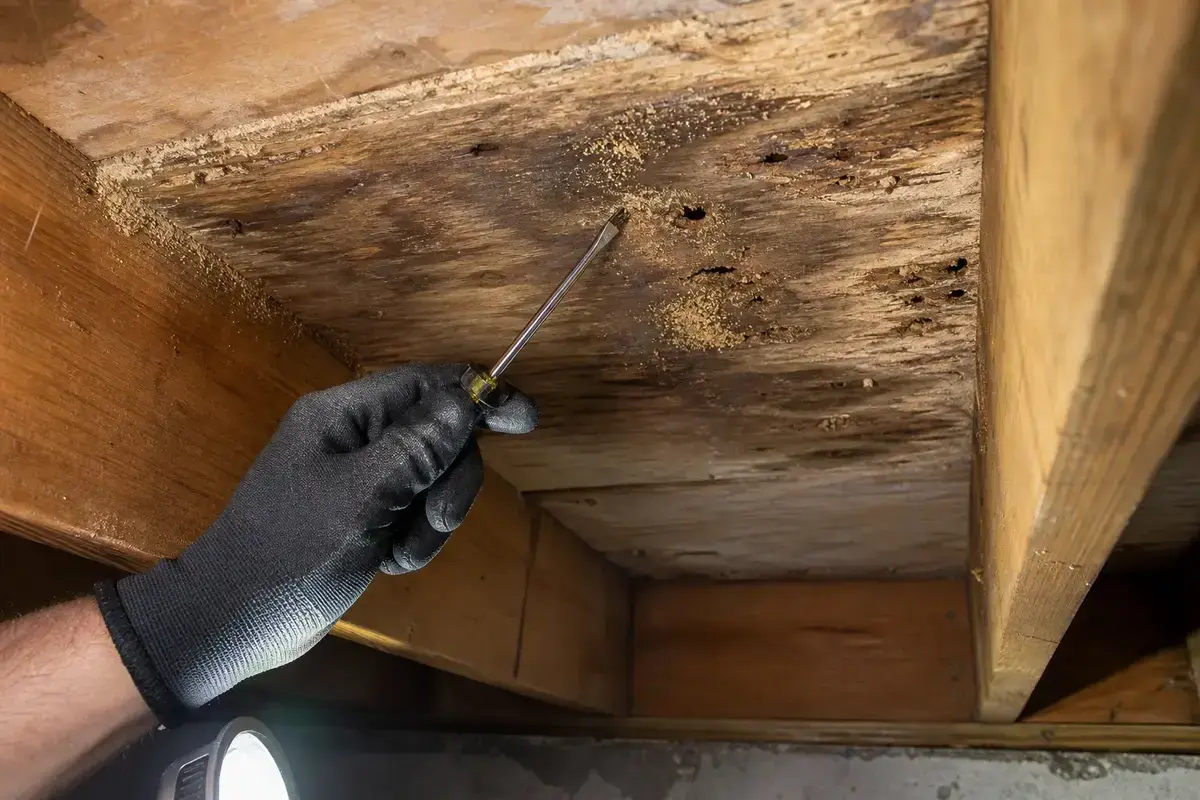
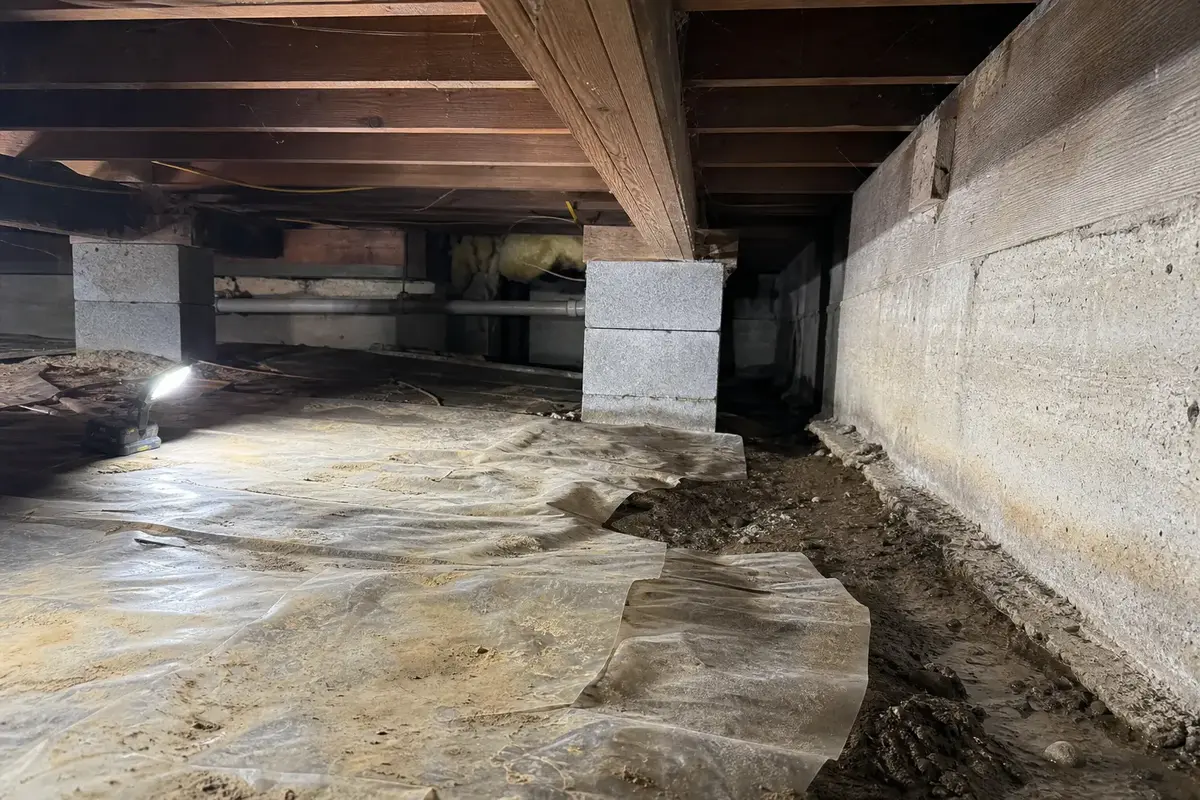
Do not buy self-leveler, subfloor panels, screws, underlayment, flooring, or transition strips from the word sagging alone. Match the exact diagnosis first: soft wet subfloor, firm framing slope, damaged support, or a small surface correction over a dry solid base.
A sagging floor is not automatically a flooring problem. The feel of the dip and the view below tell you which layer is failing.
Use a level, straightedge, and your foot before pry bars. In practice, the first pass is about sorting soft versus firm and local versus wide.
| What you find | Likely path | Next move |
|---|---|---|
| Small soft spot | Subfloor or underlayment damage | Look for water, rot, delamination, and the nearest solid edge. |
| Wide firm slope | Framing deflection or settlement | Inspect joists, beam lines, posts, and crawl-space supports. |
| Low spot near plumbing or exterior opening | Moisture source is likely | Find the leak or water entry before floor materials. |
| Tile cracks, trim gaps, doors rub | Movement is affecting adjacent finishes | Treat it as more than a floor-covering issue. |
| Floor feels unsafe or drops suddenly | Possible structural or severe subfloor failure | Keep weight off and call a qualified pro. |
Most durable floor repairs start with water control. If the wood is still wet, you cannot trust the feel, the fasteners, or the patch material.
A firm sag can still be serious. The finished floor may be doing its job while the support below is low, split, or moving.
Sagging floors tempt people into products that flatten the top while the weak layer stays weak.
These tools help with inspection and small opening work. They do not make structural jacking, major rot, or unsafe crawl-space work a DIY job.
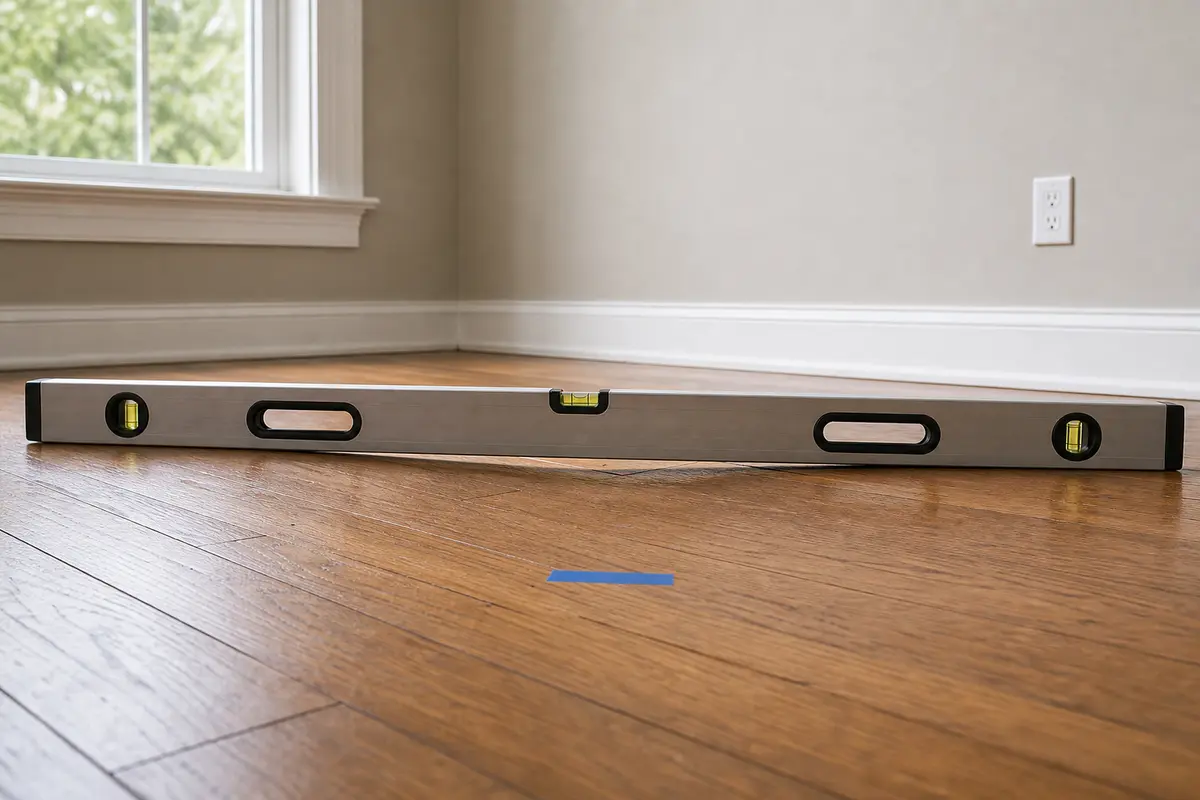
Helps when: You need to map the dip and tell whether the low area is local, room-wide, or lined up with framing below.
Skip it when: The floor feels unsafe to stand on or you already see structural movement below.
Compare levels and straightedges on Amazon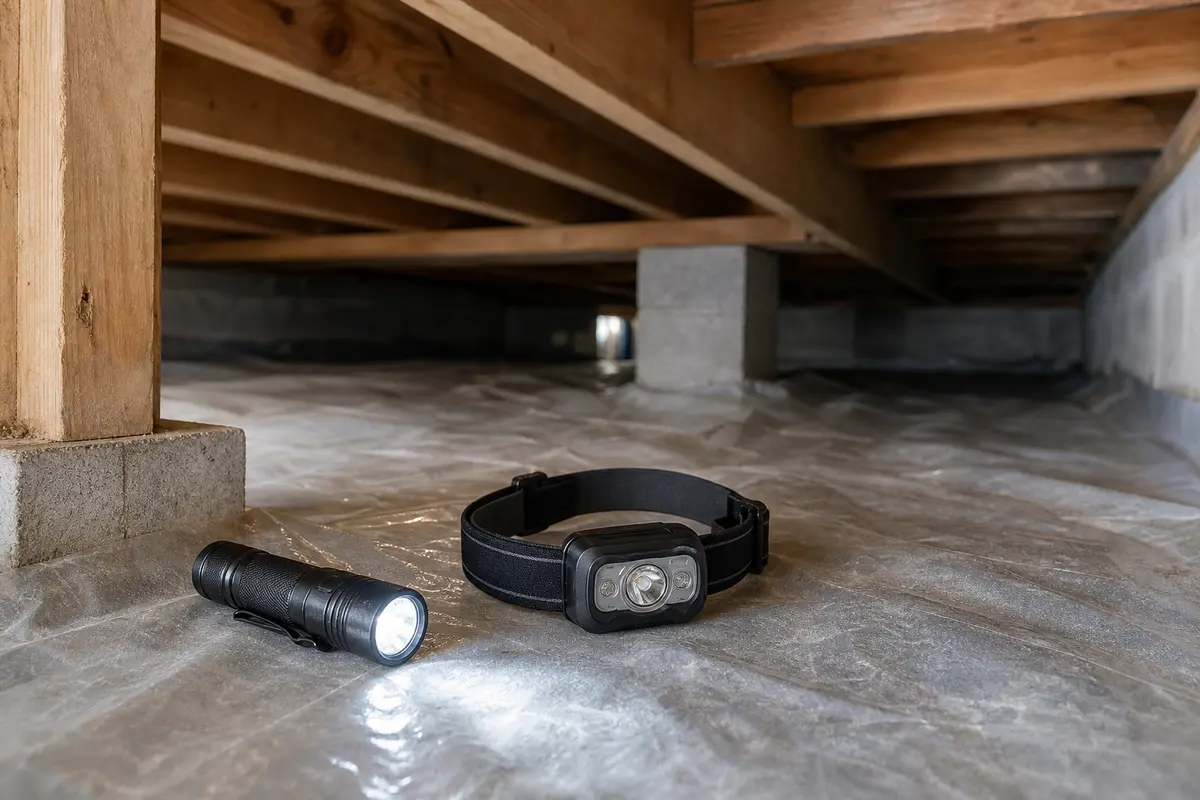
Helps when: A good light lets you inspect joists, subfloor stains, fasteners, beams, and crawl-space supports from below.
Skip it when: The crawl space has standing water, unsafe wiring, pests, or clearance too tight to enter safely.
Compare headlamps on Amazon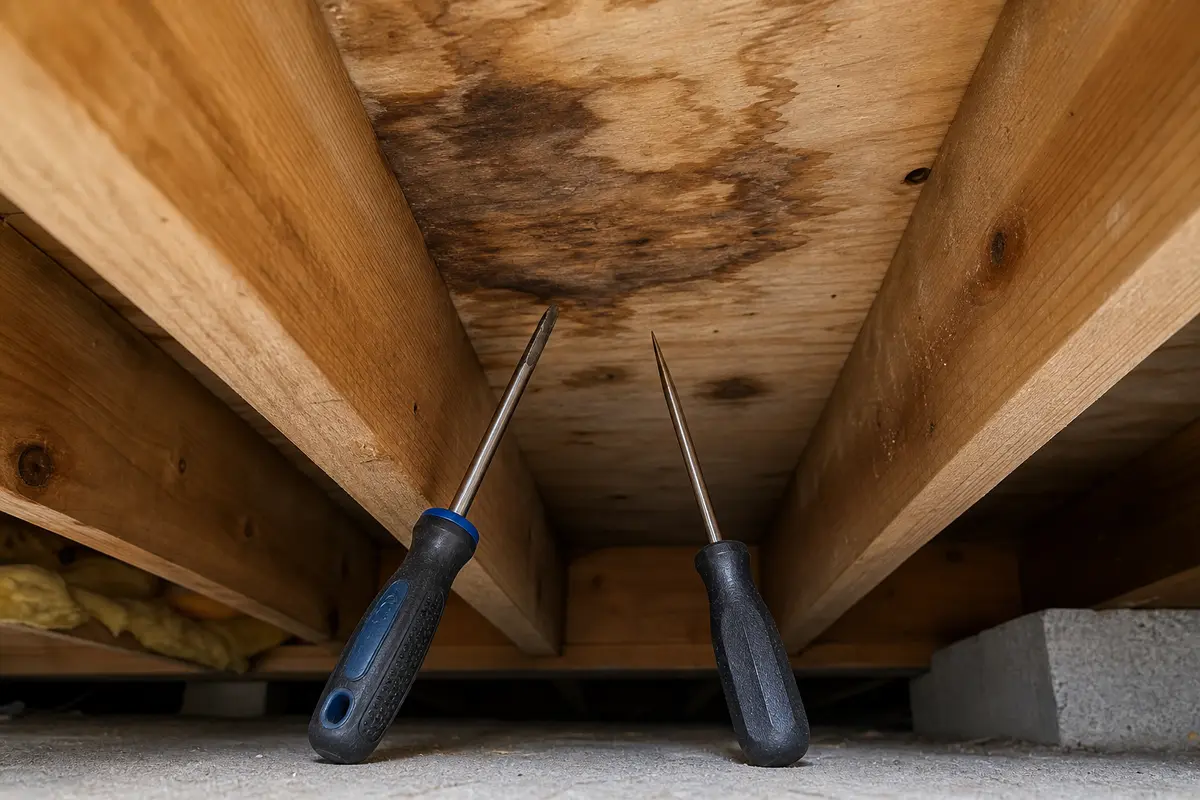
Helps when: Use a light probe to find soft wood, delaminated subfloor, or the point where damaged material turns solid.
Skip it when: The wood is moldy, sewage-contaminated, or so weak that probing could break through; stop, wear PPE, and do not disturb it further.
Compare awls and screwdrivers on Amazon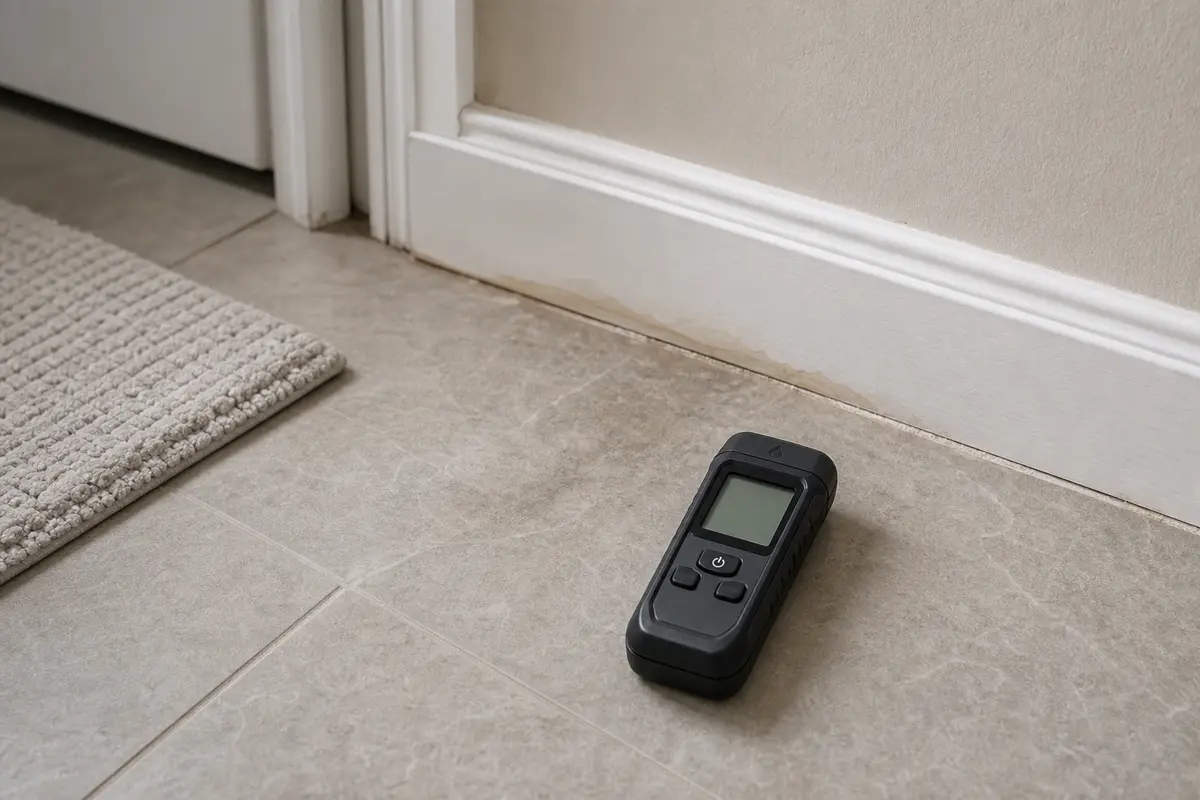
Helps when: Use it when you suspect wet subfloor, trim, or framing; compare readings at the dip and nearby dry floor before closing the floor.
Skip it when: You are using the reading as permission to ignore stains, softness, or active water.
Compare moisture meters on Amazon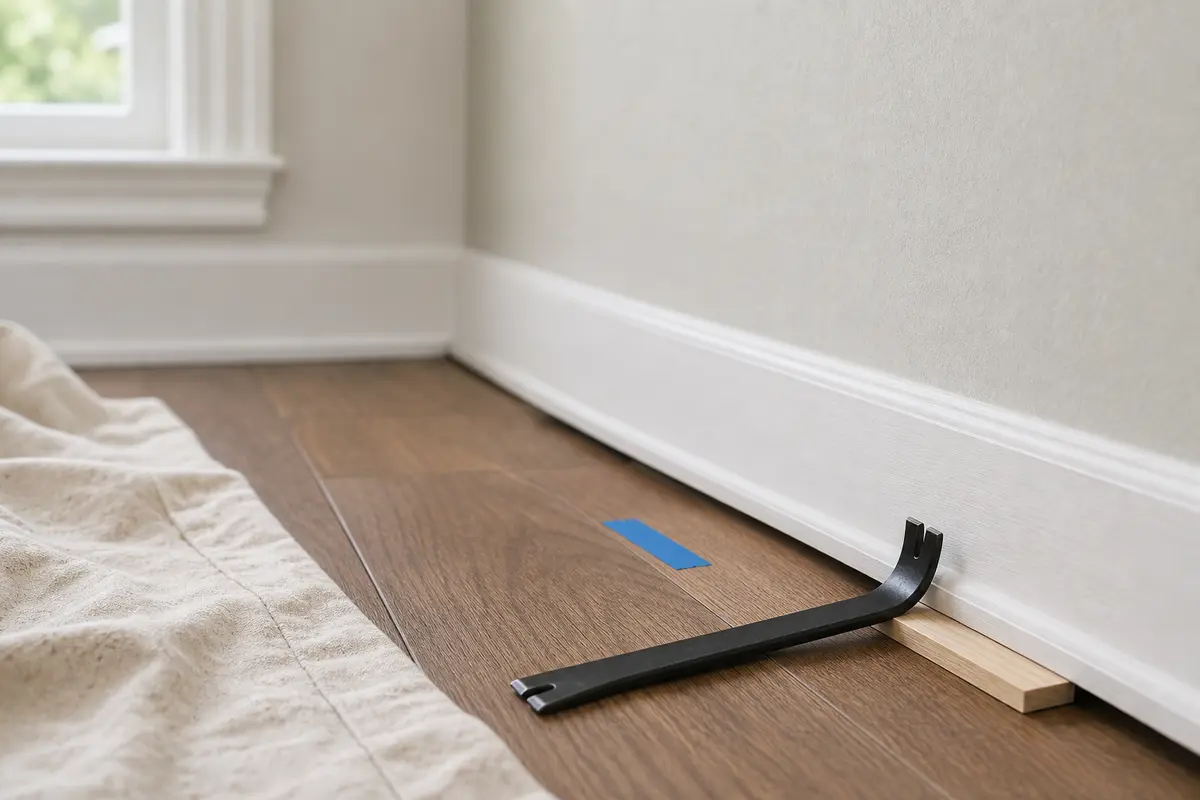
Helps when: You need to lift trim or open a small inspection edge after the floor is safe, dry, and mapped.
Skip it when: The floor might break through, the damage runs under fixtures or walls, or you have not checked below yet.
Compare pry bars on AmazonAs an Amazon Associate I earn from qualifying purchases. Repair Riot may earn a commission at no extra cost to you.
Parts belong after diagnosis. A soft wet floor needs source control and bad material removed. A firm structural sag needs support work before top-side products.
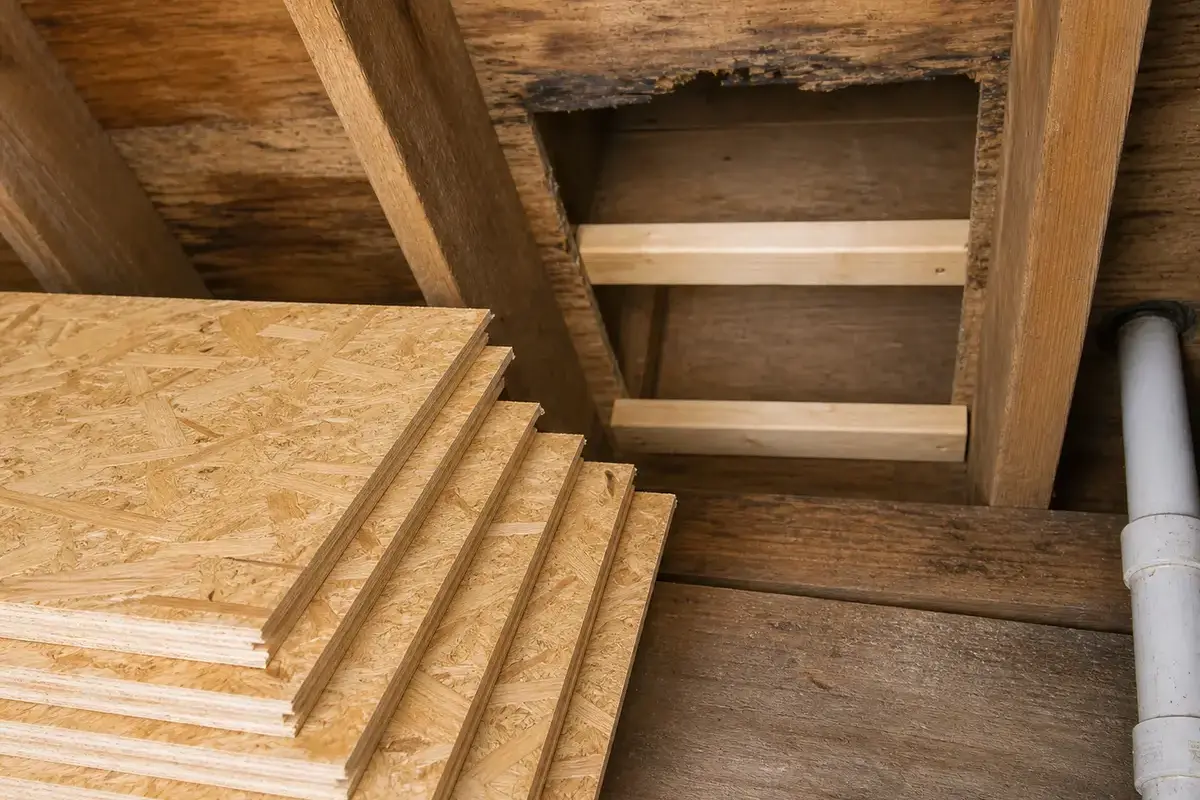
Helps when: The damaged area is confirmed, dry enough to repair, and you can cut back to solid framing and sound subfloor edges.
Skip it when: The moisture source is active, the damage runs under load-bearing walls or fixtures, or the framing below is moving.
Compare subfloor panels on Amazon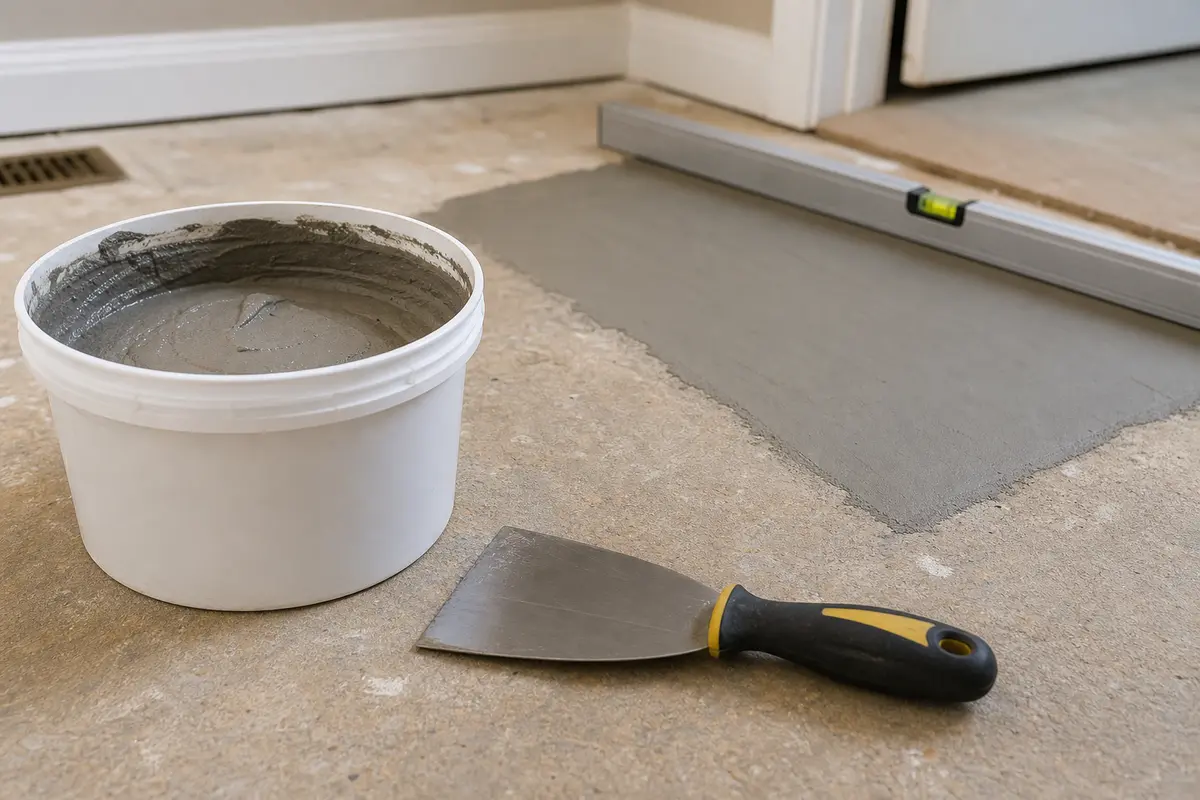
Helps when: The floor assembly is dry, firm, supported, and only needs a small surface correction before finish flooring.
Skip it when: The sag comes from rot, a soft subfloor, a joist issue, or any movement below the finish surface.
Compare floor patch materials on AmazonAs an Amazon Associate I earn from qualifying purchases. Repair Riot may earn a commission at no extra cost to you.
Good notes help a carpenter, plumber, foundation pro, or engineer avoid guessing from one visible dip.
It can be. Mark the low point and compare it over time if the slope is old and firm. If it feels soft, has recently dropped, or keeps worsening, keep weight off and inspect below for moisture, cracked joists, or shifted supports.
Only after you check below and the base is dry, supported, and sound. If probing finds rotten subfloor or sighting shows sagged joists, top-only patch or new flooring will fail.
A bouncy floor moves up and down under load; watch a level or furniture leg shift as you step. A sagging floor sits lower than surrounding areas. Some floors have both symptoms, so mark the low point and inspect joists below.
Not by itself. It can flatten a solid, dry floor before new flooring goes in, but it will not repair rot, weak subfloor, dropped framing, or a support that has shifted.
Bathrooms are common trouble spots because slow leaks around toilets, tubs, showers, and supply lines can damage the subfloor for a long time before the finish floor shows it. If the area feels soft, look for moisture damage first.
Yes. In a crawl space, first look for damp soil, missing vapor barrier, stained subfloor, or insulation hanging wet. Then sight along piers, beams, and joists for a low support line.
Do not start there. Mark the sag and inspect supports first. Jacking changes loads and can crack finishes or shift framing if it is too fast or unsupported. Use a pro when joists, beams, posts, or foundation supports are involved.
Confirm the moisture source is fixed, the bad area is mapped, and you can cut back to solid edges with proper support. Panel thickness, fastener pattern, and edge support matter after the floor is opened.
Repair Riot built this page around visible homeowner checks: floor feel, dip shape, moisture clues, subfloor condition, joist lines, and support movement. Public references below informed the moisture and wood-damage cautions; structural decisions still depend on the exact framing and loads in your home.