Is the dryer on Air Fluff, No Heat, Eco, or a delicate cycle?
Switch to timed high heat with a few damp items. If heat returns, the dryer was following the selected cycle.
If the dryer runs but stays cold, check the heat cycle, lint path, outside airflow, and electric power before buying a heating element. Weak airflow and a half-tripped double breaker are easier to prove than internal parts.
Long dry times before the heat quit point to restricted airflow. Completely cold electric dryers also deserve a breaker and outlet check before you open the cabinet.
Start outside the cabinet. The first useful clue is whether air leaves the dryer strongly and whether the dryer is electric or gas.
Don’t start with: Stop a gas dryer that smells abnormal, clicks without steady ignition, or shows unusual flame behavior. Do not bypass cutoffs or buy a control board before airflow checks.
Switch to timed high heat with a few damp items. If heat returns, the dryer was following the selected cycle.
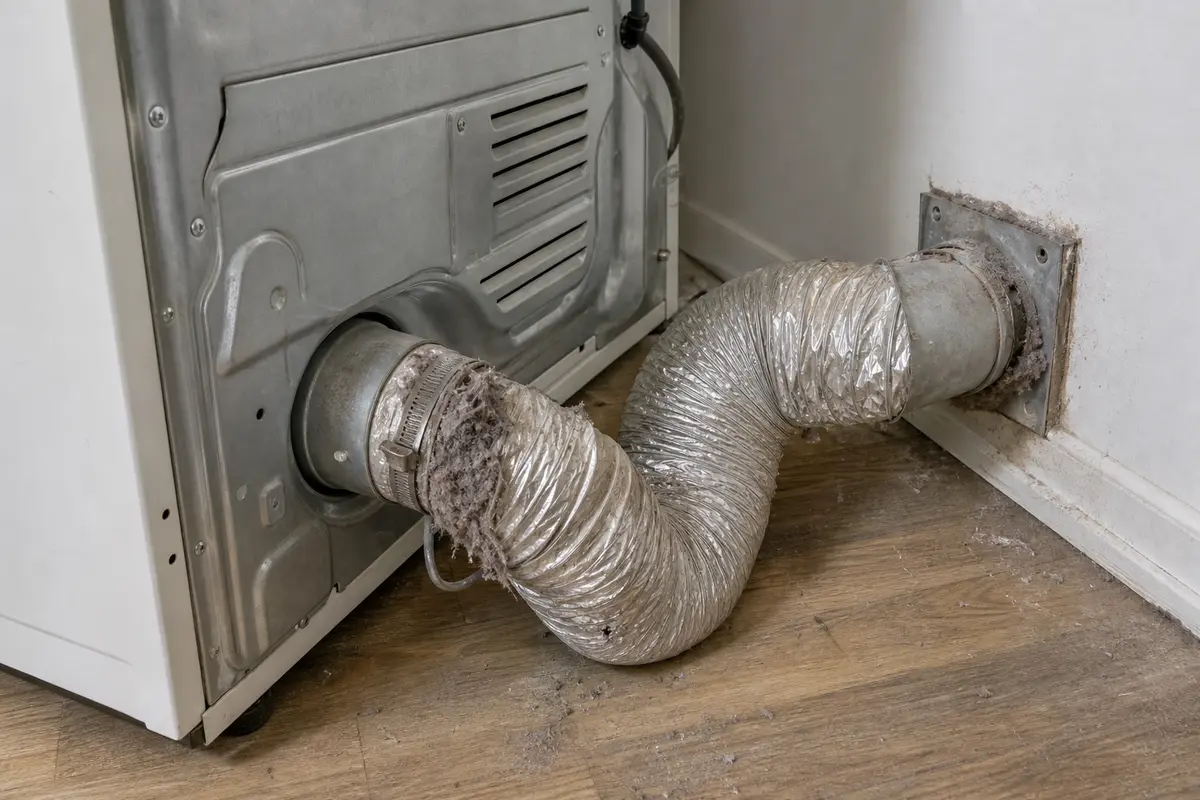
Start with the lint screen and rear hose, then check the crushed flex duct and exterior hood. Poor airflow can cause weak heat and repeat cutoff failures.
Reset the double breaker once and inspect the cord and outlet for heat damage. If heat returns but the breaker trips again, stop.
Treat vent restriction as the lead clue. Clear airflow before any cutoff, thermostat, or element replacement.
Shut it off if there is gas odor, delayed ignition, or unusual flame behavior. After airflow checks, ignition parts belong to careful service diagnosis.
Now parts make sense: electric heating element, thermal cutoff, high-limit thermostat, or gas igniter, matched to the model and confirmed by testing.
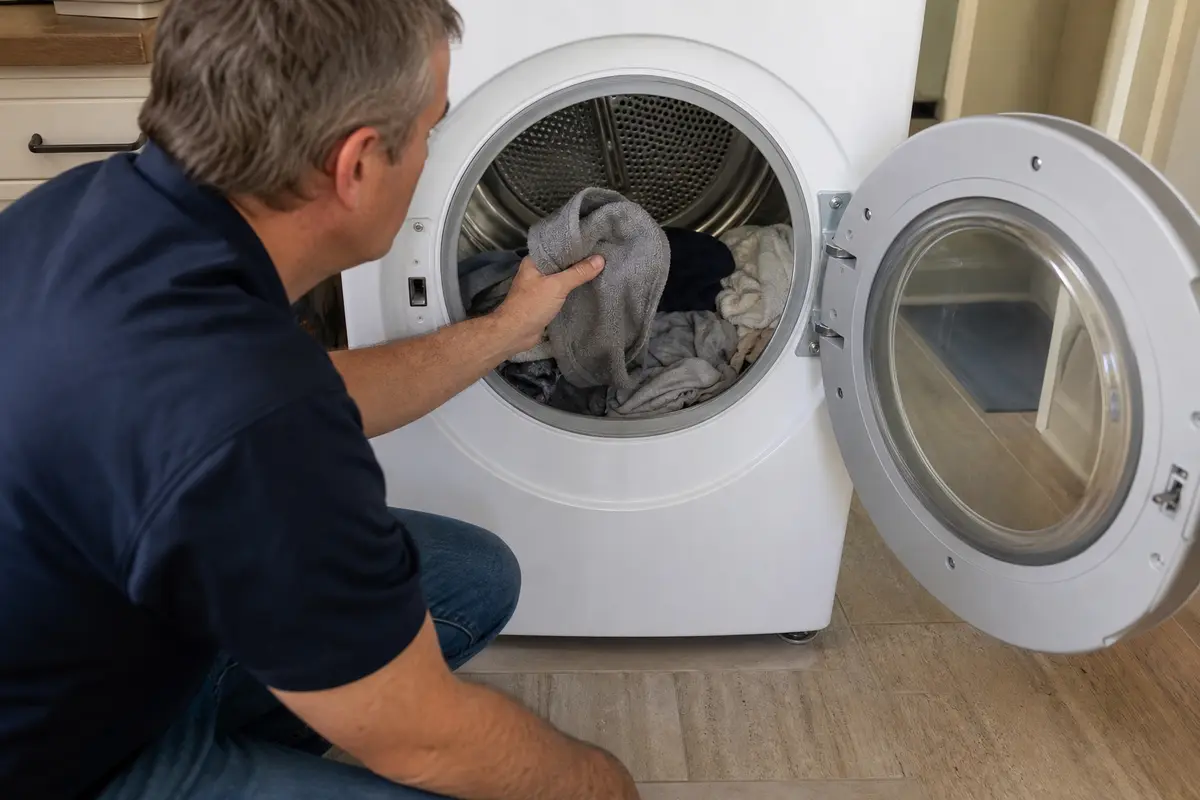
A dryer that tumbles but stays cold can be a cycle, vent, power, or heat-part issue. Start with a timed heat cycle and normal damp load, then check the rear hose and outside airflow before opening the heat compartment.
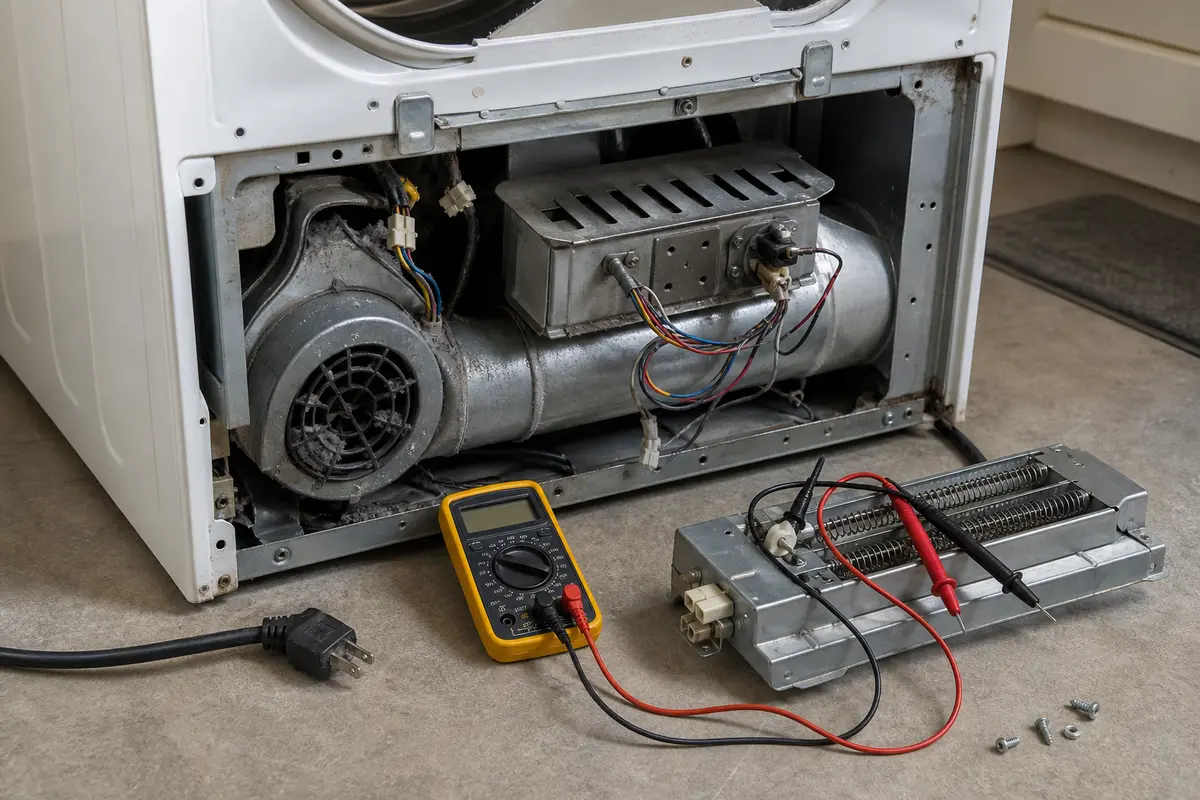
Do not buy a heating element, thermal cutoff, high-limit thermostat, igniter, gas valve, or control board until the cycle, airflow, and supply checks point there. Copy the full model number from the dryer tag, compare the old part shape and terminal layout, and fix any airflow problem first.
A dryer can tumble normally while heat is missing for different reasons. The first job is to separate cycle behavior, airflow, supply power, and the actual heat parts.
Most no-heat mistakes start when the drum still turns and the cart gets ahead of the clue. Check the cycle setting, lint screen, rear hose, outside airflow, and breaker behavior first; stop at gas odor or electrical damage.
Run a timed high-heat cycle with a few damp items, then compare the result with the dryer type and outside airflow. One row should tell you where to work next.
| What you see | What it usually means | Next move |
|---|---|---|
| Heat returns on timed high heat | The earlier cycle, load size, or sensor behavior was misleading. | Use the proper heated cycle and a normal load before buying parts. |
| Outside airflow is weak or the hood flap barely opens | The vent path is restricted. | Clear the lint screen, rear hose, and exterior hood; call for hidden vent cleaning if airflow stays weak. |
| Electric dryer is cold and the double breaker was partly tripped | The heater may not have been getting full supply. | Reset the breaker once. Stop if it trips again or the outlet, cord, or plug looks scorched. |
| Dryer warms briefly, then goes cold or the cabinet feels too hot | Airflow restriction or a heat safety part is likely. | Fix airflow first, then test the thermal cutoff, thermal fuse, or high-limit thermostat. |
| Gas dryer clicks or glows but does not keep steady heat | Ignition or burner-side diagnosis is more likely after airflow checks. | Shut it off for gas odor or rough ignition. Otherwise, have the igniter and safety circuit checked. |
| Airflow and supply checks are good but the dryer stays cold | The remaining suspect is inside the heat circuit. | With the dryer unplugged, match the model number and test the supported part before ordering. |
Poor airflow can make a good dryer act broken, and it can also overheat the dryer enough to open a safety device. Handle the easy lint path before the parts list.
Once airflow looks strong, the dryer type matters. Electric and fuel-burning dryers can look alike from the laundry room, but the next safe check is different.
The cart comes after the clue. Buy the smallest part the diagnosis supports, match it to the full model number, and correct airflow before installing any heat-safety part.
These tools support the checks on this page. Skip tool work when the dryer shows gas odor, scorched electrical parts, severe lint overheating, or a hidden vent run you cannot reach safely.
Parts are reasonable only after the result map points to them. Match by model tag and old-part layout; similar dryer heat parts can look close and still fit the wrong machine.
Start with the visible checks: wrong heat setting, coated lint screen, weak outside airflow, or a partially tripped electric dryer breaker. If those are clear, the likely suspects are the dryer heating element, thermal cutoff, high-limit thermostat, or gas dryer igniter.
Yes. A restricted vent can cause weak drying, overheating, and eventually an open safety cutoff that leaves the dryer tumbling with no heat. Fix airflow before replacing any heat-safety part.
Many electric dryers can still run the motor while the heater does not get the full supply it needs. Reset the double breaker once and look for a scorched outlet or cord. If the breaker trips again, stop using the dryer.
No. A heating element belongs in the cart only after an electric dryer has good airflow, a good supply check, and an element that is visibly broken or tests open.
Use only brief test runs for diagnosis. Stop immediately if you smell gas, burning lint, hot plastic, see scorch marks, hear rough ignition, or the cabinet gets unusually hot.
That pattern often points back to airflow or a heat-safety part. Check the lint screen, rear hose, and outside hood first. If airflow is strong, test the thermal cutoff, thermal fuse, or high-limit thermostat before buying parts.
After airflow checks, clicking or a brief glow can point toward the igniter or another burner-side safety issue. If there is any gas odor, delayed ignition, or unusual flame behavior, shut it off and call for service.
With the dryer unplugged, test the supported part for continuity if you know how to use the meter safely. A broken electric element coil or an open cutoff after an overheating history is stronger evidence than guessing from the symptom alone.
Almost never first. Control boards move up only after cycle, airflow, supply, heater, cutoff, thermostat, igniter, wiring, and model-specific checks point away from the simpler heat path.
Repair Riot built this page around homeowner-visible dryer clues: cycle setting, load behavior, lint screen, outside airflow, electric supply, ignition behavior on fuel-burning models, and model-matched heat parts. The source links support lint-filter, load-size, efficiency, and dryer-fire context; the repair sequence is original guidance.