Does water drip from one seam or rivet line?
Dry the elbow and check that seam for a shallow overlap, missing screw, split metal, rust hole, or cracked plastic bend.
If a downspout elbow leaks, check where the water appears first and look for flow at the outlet. A drip from one seam points to a loose or split elbow; water spilling above the bend means you should inspect the lower run next.
Look below the elbow before replacing the whole run. Leaves, roof grit, a crushed extension, or a shallow joint overlap usually leaves a clue: slow outlet flow, water backing up at the bend, or a joint that shifts by hand.
Sort the leak by pattern first: seam drip, overflow, cracked elbow, or slow outlet.
Don’t start with: Do not smear caulk over the outside first. If the elbow is overflowing, check outlet flow, clear the lower path, and retest; sealant hides the water path and usually lets go in the next hard rain.
Dry the elbow and check that seam for a shallow overlap, missing screw, split metal, rust hole, or cracked plastic bend.
Treat it as backup first. Check the lower downspout, extension, and outlet before blaming the elbow.
Remove the extension if it comes off cleanly and look for leaves, mud, shingle grit, or a crushed section below the bend.
Look for a twisted run, loose strap, opened seam, or elbow pulled partly out of its overlap.
Now the elbow or connector is a fair suspect. Replace only the cracked, rusted, or distorted section.
Stop the test and control the drainage path. If the source is high, hidden, or tied to a buried line that will not drain, call a pro.
Use the water path to separate a bad elbow from a backed-up lower run. The first place water escapes is the clue.
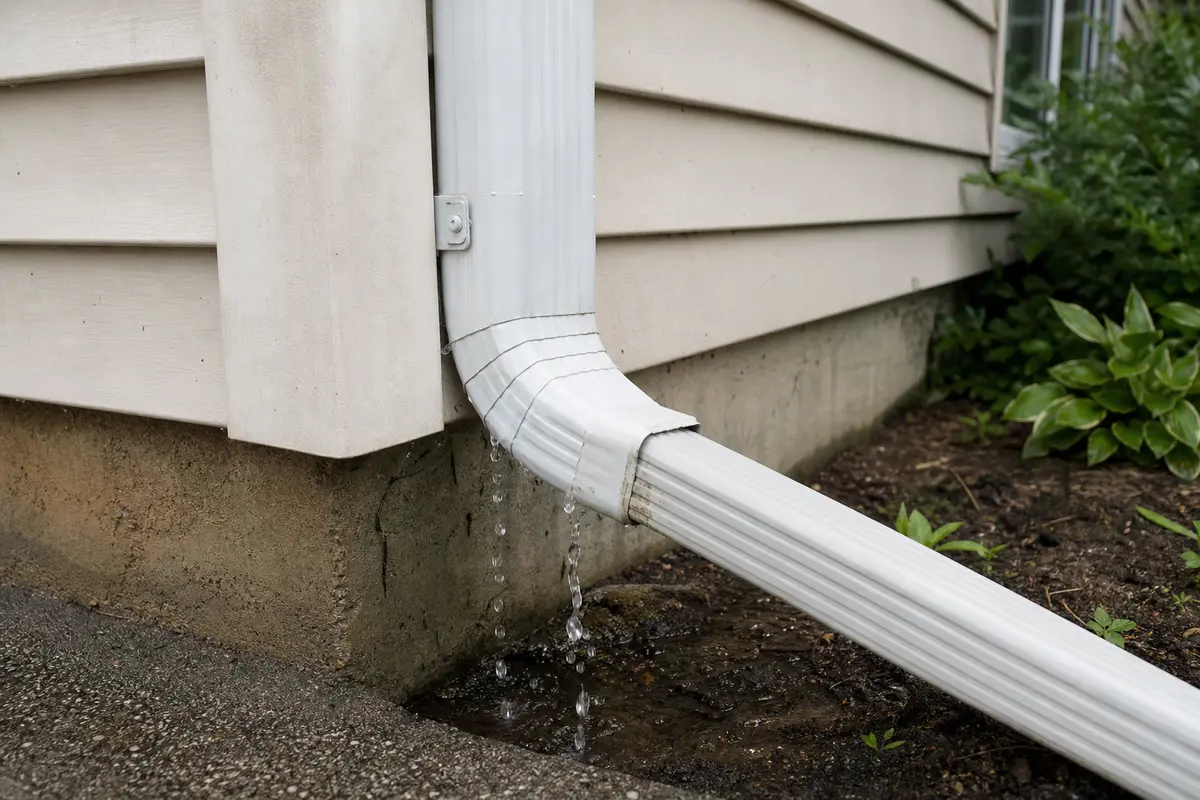
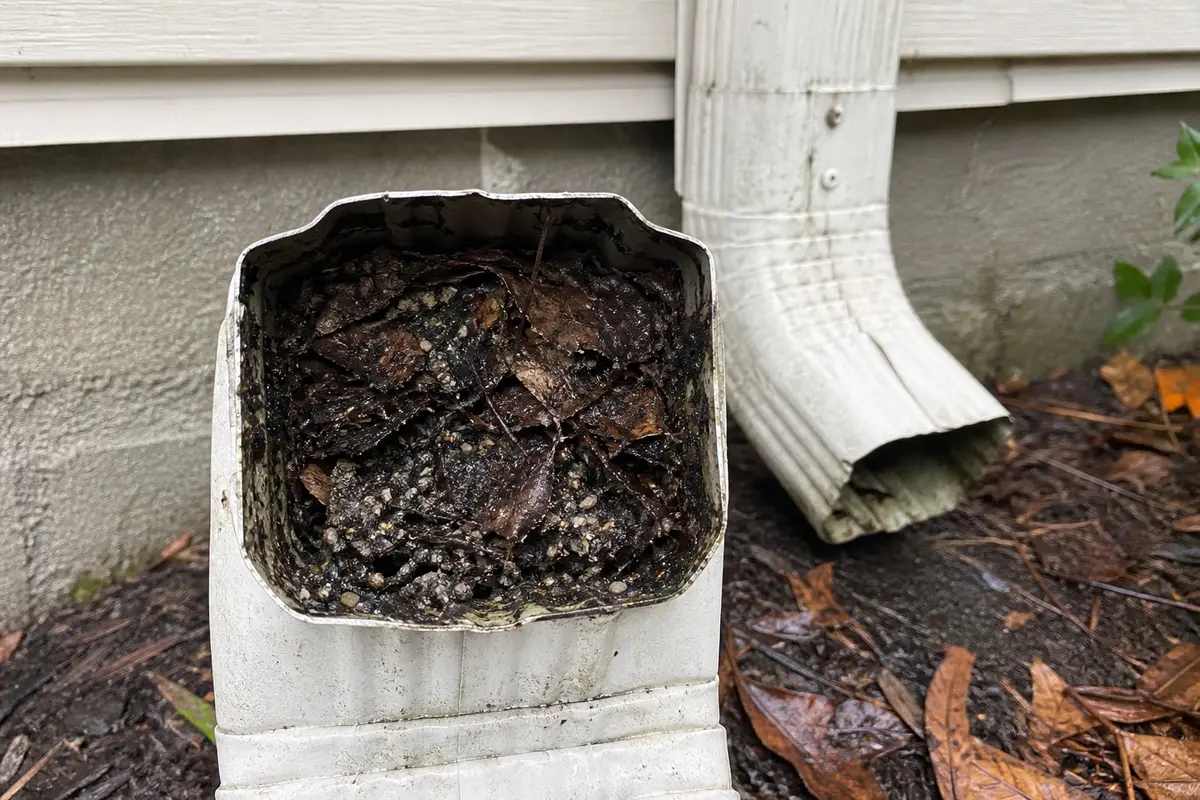
Make the leak repeat with a controlled hose test, prove the lower run drains, and match the exact downspout profile, size, elbow direction, and diagnosis before ordering. The wrong part does not fix a buried outlet, crushed extension, or loose wall support.
A downspout elbow is a bend in a water path, so it shows trouble early. The bend may be cracked, but backup below it is just as common.
Do not turn the first wet seam into a parts order. If the outlet flow is weak or delayed during a hose test, the elbow may only be showing a slow lower run.
Use a moderate hose flow and watch the elbow before, during, and after water reaches the outlet. The timing tells you which part of the run is guilty.
| What you see | What it usually means | Next check |
|---|---|---|
| Water drips from one dry seam after flow starts | Loose overlap, split seam, rust hole, or cracked elbow | Dry the bend, check the seam, and resecure or replace only that section |
| Water rises and spills above the elbow | Restriction below the bend | Remove the extension if accessible and flush the lower run |
| Bottom elbow leaks and the extension stays dry | Blocked, crushed, or uphill extension | Clear or replace the extension before buying an elbow |
| New elbow leaks in the same way | The elbow was only the overflow point | Follow the water path to the buried outlet or discharge end |
The lower path is the first cheap check because it can make a good elbow leak.
After the water path drains freely, the elbow becomes the focus. Dry inspection matters because small splits disappear when everything is wet.
Use only what helps you see or clear the next clue. Skip any tool that pushes you into unsafe ladder reach or sealed buried drainage work.
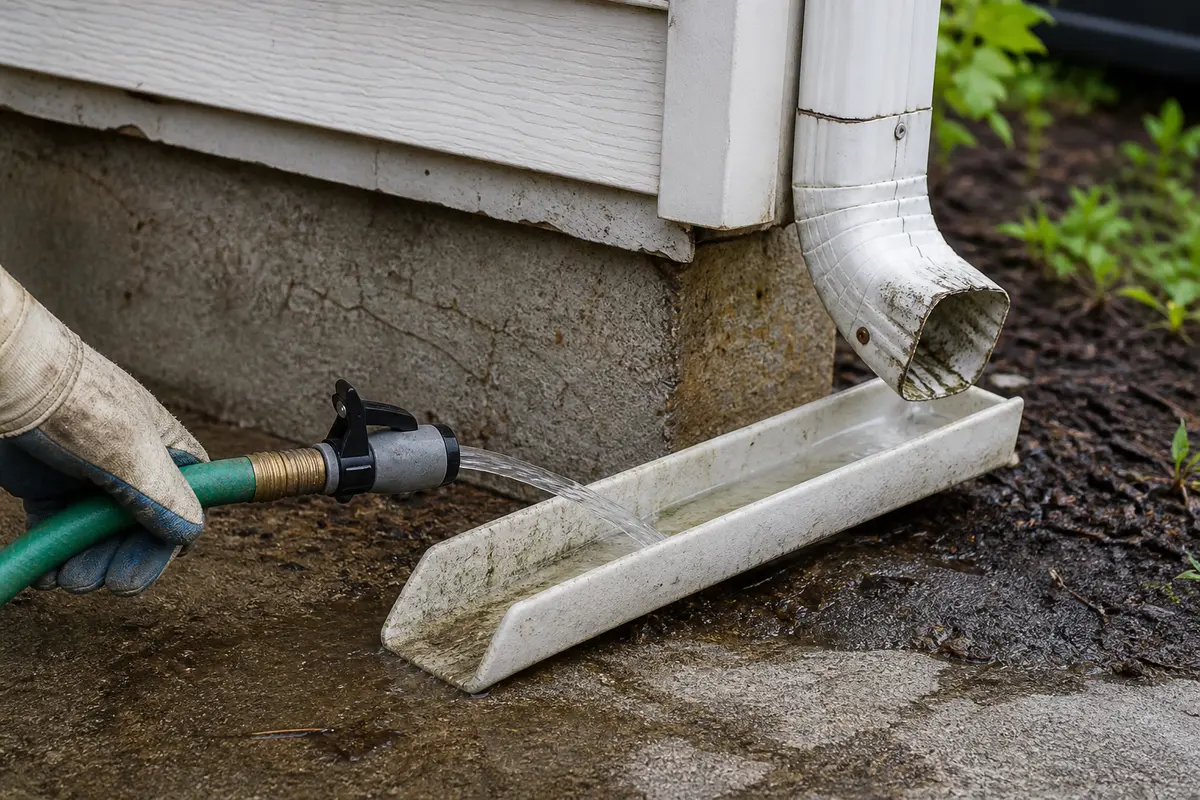
Helps when: Runs a controlled water test and flushes loose debris from the lower downspout.
Skip it when: The test sends water behind siding, into the soffit, or against the foundation.
Compare hose nozzles on Amazon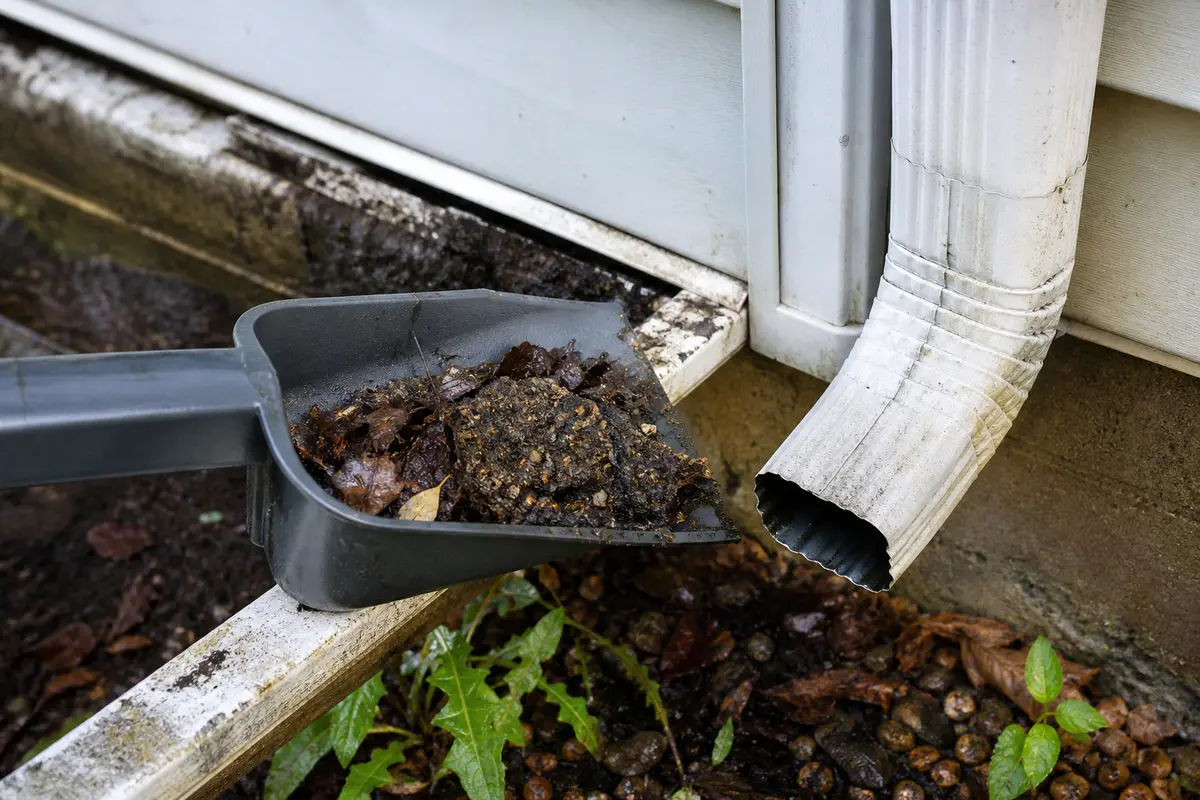
Helps when: Clears leaves and roof grit before they wash into the elbow again.
Skip it when: The gutter is too high to reach from a stable ladder position.
Compare gutter scoops on Amazon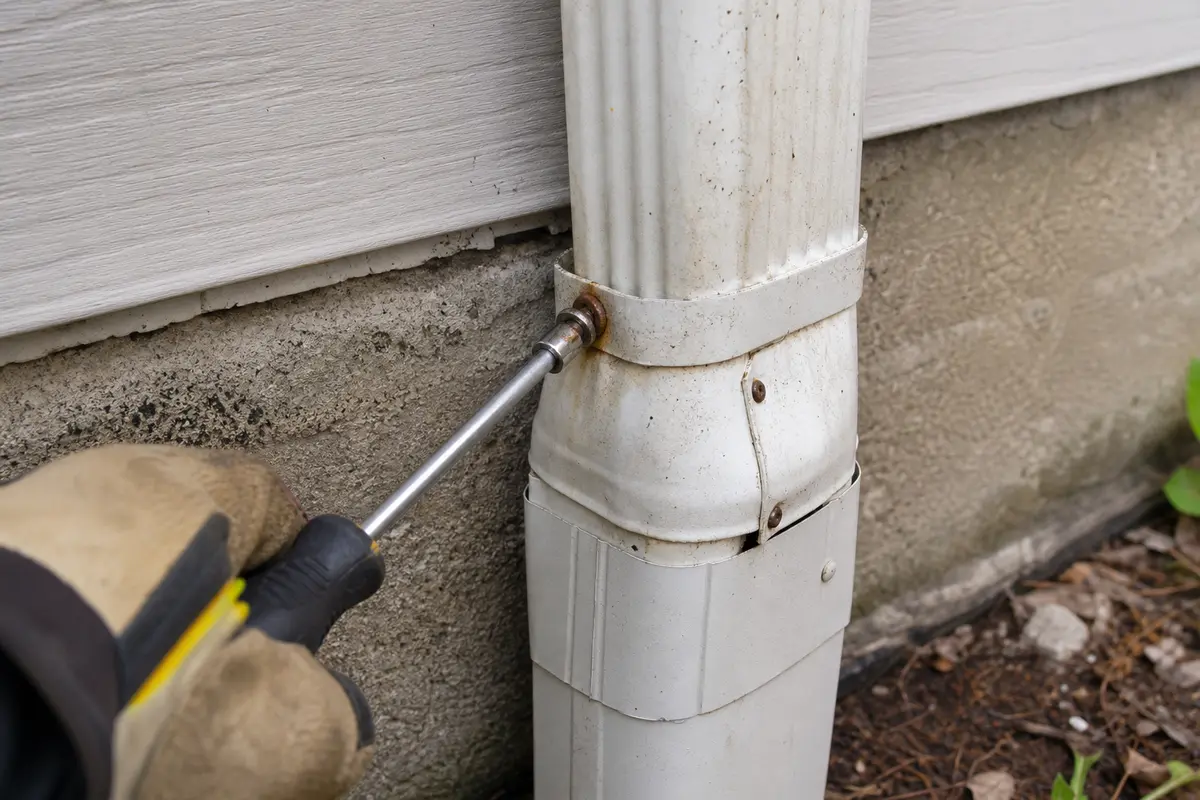
Helps when: Removes common downspout screws and lets you resecure a shallow overlap.
Skip it when: Fasteners are rusted into thin metal that starts tearing as you turn them.
Compare nut driver sets on Amazon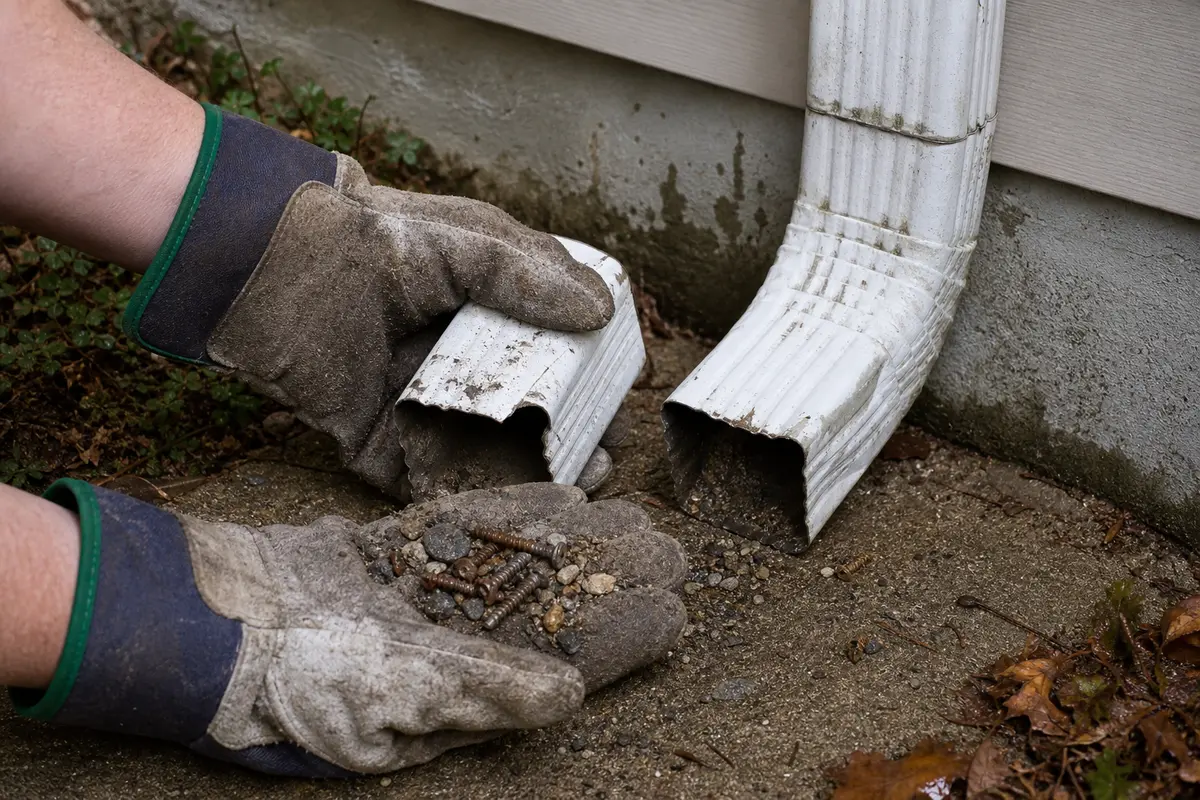
Helps when: Protects your hands from sharp cut metal, screws, and grit packed inside the elbow.
Skip it when: The metal is collapsing or jagged enough that the section should be replaced carefully.
Compare work gloves on AmazonAs an Amazon Associate I earn from qualifying purchases. Repair Riot may earn a commission at no extra cost to you.
Buy the part that matches the failure, not the wettest spot. Bring the old section or measure the downspout profile before ordering.
Helps when: The elbow has a visible split, crack, rust hole, or seam that leaks after the outlet drains freely.
Skip it when: Water is backing up from a blocked extension or buried outlet.
Compare downspout elbows on Amazon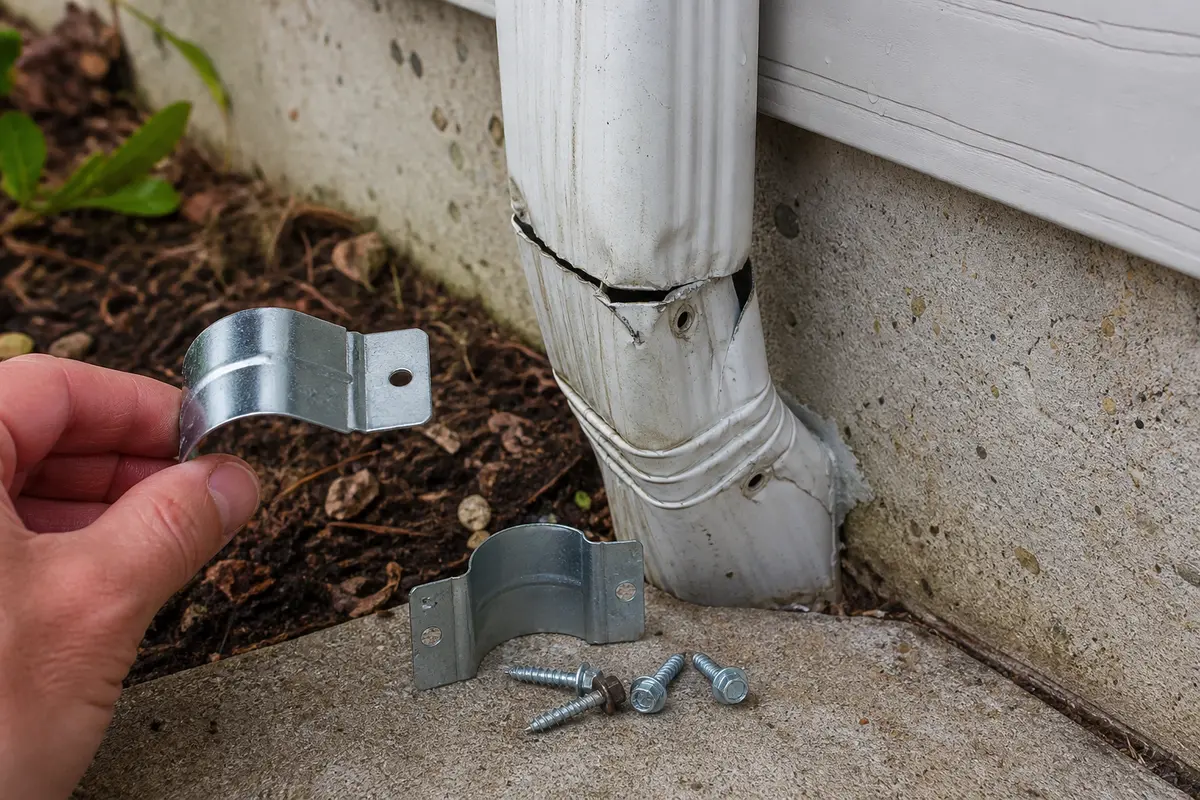
Helps when: The leak is at a distorted overlap that will not stay nested and tight.
Skip it when: The elbow body is cracked or the lower run is blocked.
Compare downspout connectors on Amazon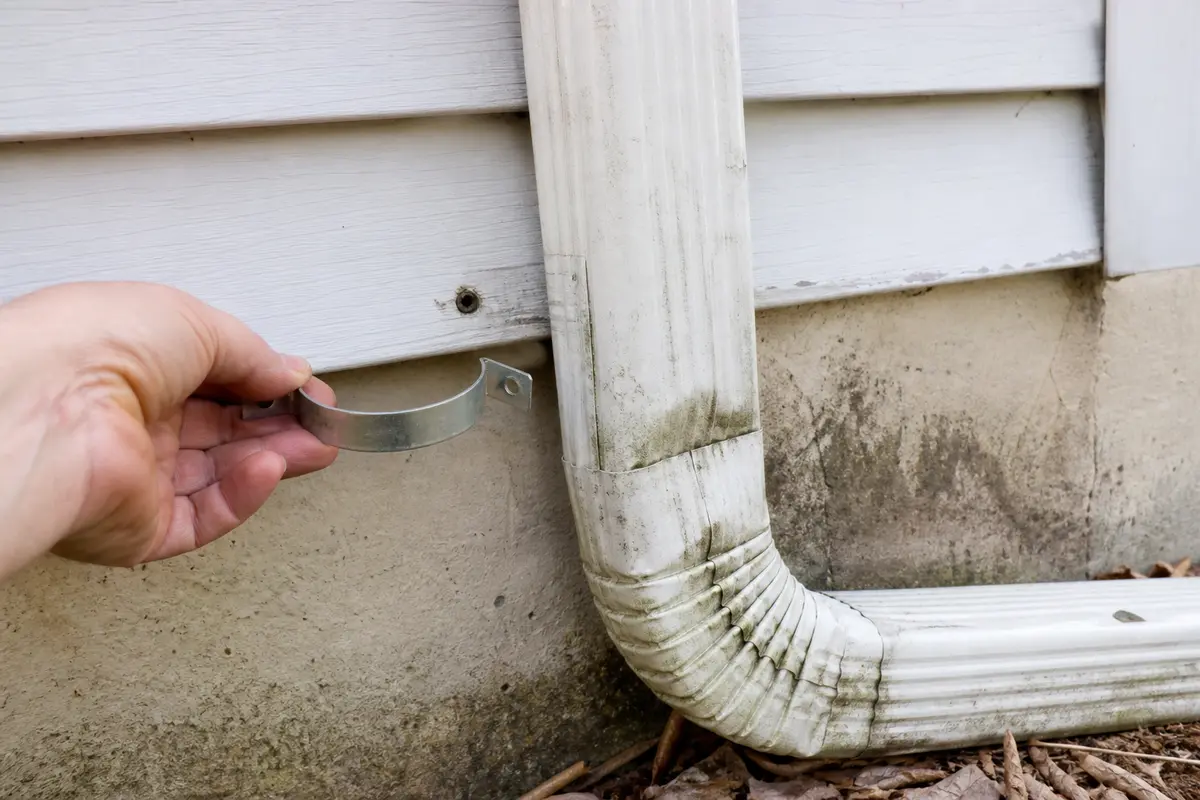
Helps when: The run moves, sags, or pulls the elbow sideways under the weight of the extension.
Skip it when: The wall trim or masonry anchor point is rotten, loose, or crumbling.
Compare downspout straps on Amazon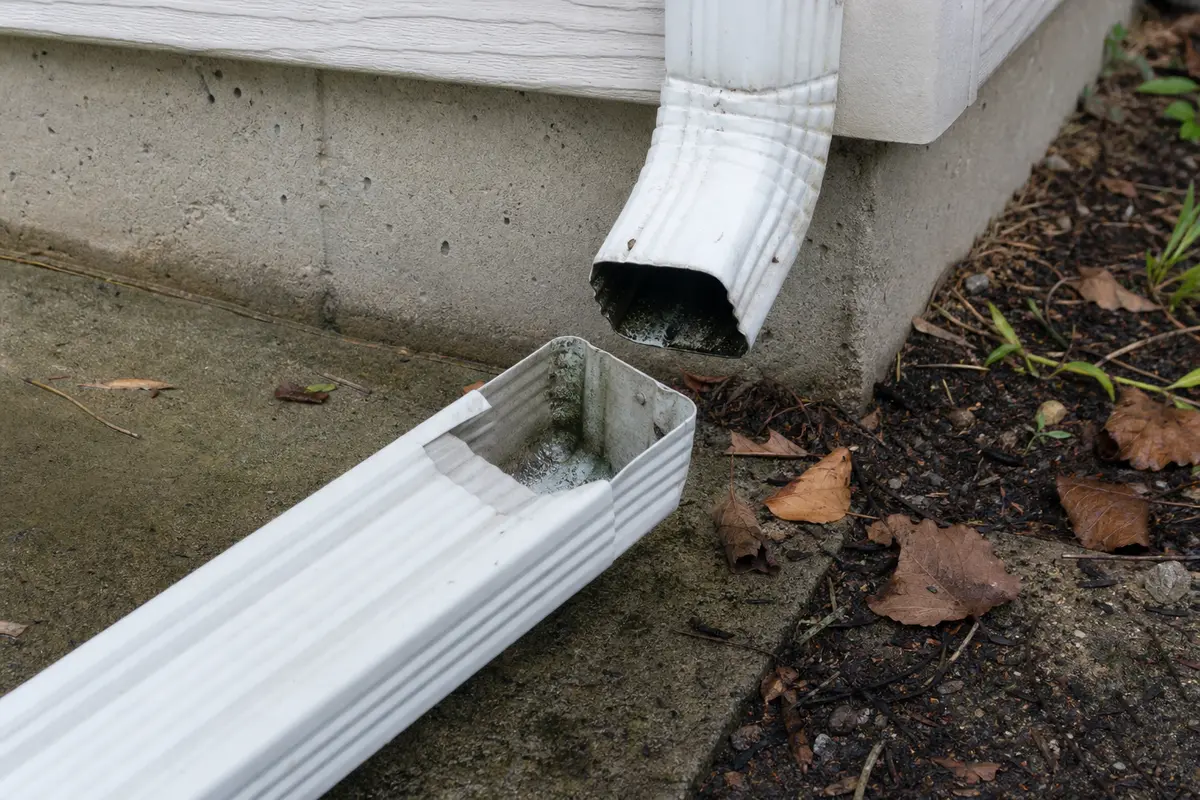
Helps when: The extension is crushed, kinked, packed with debris, or pitched so water backs up into the elbow.
Skip it when: The buried line is the part that stays full after the extension is removed.
Compare downspout extensions on AmazonAs an Amazon Associate I earn from qualifying purchases. Repair Riot may earn a commission at no extra cost to you.
That usually means the elbow is becoming the overflow point when the lower run cannot keep up. Check for a clogged extension, a blocked buried outlet, or a section that is pitched badly before replacing the elbow.
Only as a very short-term patch, and only after a hose test shows the lower run drains freely. If water stacks up behind the elbow or spills above the bend, clear the extension or outlet first. Sealant will not hold for long against backed-up water and can hide the real problem.
Dry the elbow with a rag, then inspect the seam, bend, and lower edge. Check for a visible line, opening, or pinhole that marks a crack or rust hole. A loose joint usually leaks at the overlap and often shifts or opens when you move the two sections by hand.
The bottom elbow is the first spill point when the extension is crushed, the outlet is blocked, or the buried line is slow. It also takes more strain from lawn work, foot traffic, and a heavy extension pulling near the ground. Check the extension end before blaming the elbow.
Not usually. If the rest of the run is sound, replace only the failed elbow, connector, strap, or extension your inspection points to. Replace more of the run only if the hose test still backs up after clearing the outlet, or if multiple sections are bent, rusted, or pulling apart.
Check the lower run, the extension, and the outlet first. If water does not leave the bottom freely, the elbow may only be the spill point. Buy an elbow only when you find a crack, split seam, rust hole, or joint that will not stay nested.
Water shooting out usually means the lower path is restricted. During a hose test, watch the discharge end: weak or no flow while the elbow spills points below the bend. Packed leaves, shingle grit, mud in the extension, a crushed corrugated tube, or a buried outlet that stays full can force water backward.
It can patch a small seam leak only after a hose test confirms the downspout drains freely and the joint stays tight. Skip sealant if water is backing up, the elbow is cracked, or the parts move when you touch them.
Stop if you cannot check the leak from a stable ladder position. Stop if water is getting behind siding or soffit. Call a pro if the buried line will not clear after you remove the extension and flush the accessible end, or if the downspout is pulling trim or fasteners loose.
Repair Riot built this page around visible leak pattern, controlled hose testing, outlet flow, lower-run clearing, safe ladder limits, and diagnosis-first parts advice. Public stormwater references support the drainage-path and downspout-redirection context; the elbow repair sequence is original Repair Riot guidance.