Does the top latch-side corner rub?
Start with hinge sag. Tighten the top hinge and look for stripped screws before moving the strike plate.
Start by watching where the door stops: wood-to-wood rub, latch hitting the strike, a swollen edge, or seal compression. Most doors that will not close are alignment problems, not failed handles.
The common fixes are tightening or anchoring the top hinge, moving the strike plate slightly, reseating weatherstripping, or correcting a seasonal rub after the moisture clue is clear.
Close the door slowly and watch the top, latch side, and hinge side. A rub, latch mark, or springy seal points to the first repair.
Don’t start with: Do not plane the door, bend hardware hard, or buy a lockset first. Removing wood too early can make the door loose or drafty when the opening shifts back.
Start with hinge sag. Tighten the top hinge and look for stripped screws before moving the strike plate.
Trace the latch-to-strike contact. A tape mark or rub mark tells whether the strike opening is high, low, or sideways.
Look at weatherstripping, door sweep drag, and threshold pressure before touching the latch.
Suspect swelling or a moisture problem at an unfinished edge. Fix the moisture clue before removing wood.
Stop chasing hardware. The opening, jamb, or framing may need carpentry work.
Avoid cutting, drilling, or hardware changes until you confirm the assembly can be modified.
Close the door slowly and mark the first contact. Check the reveal, latch mark, and seal pressure before buying parts or removing wood.
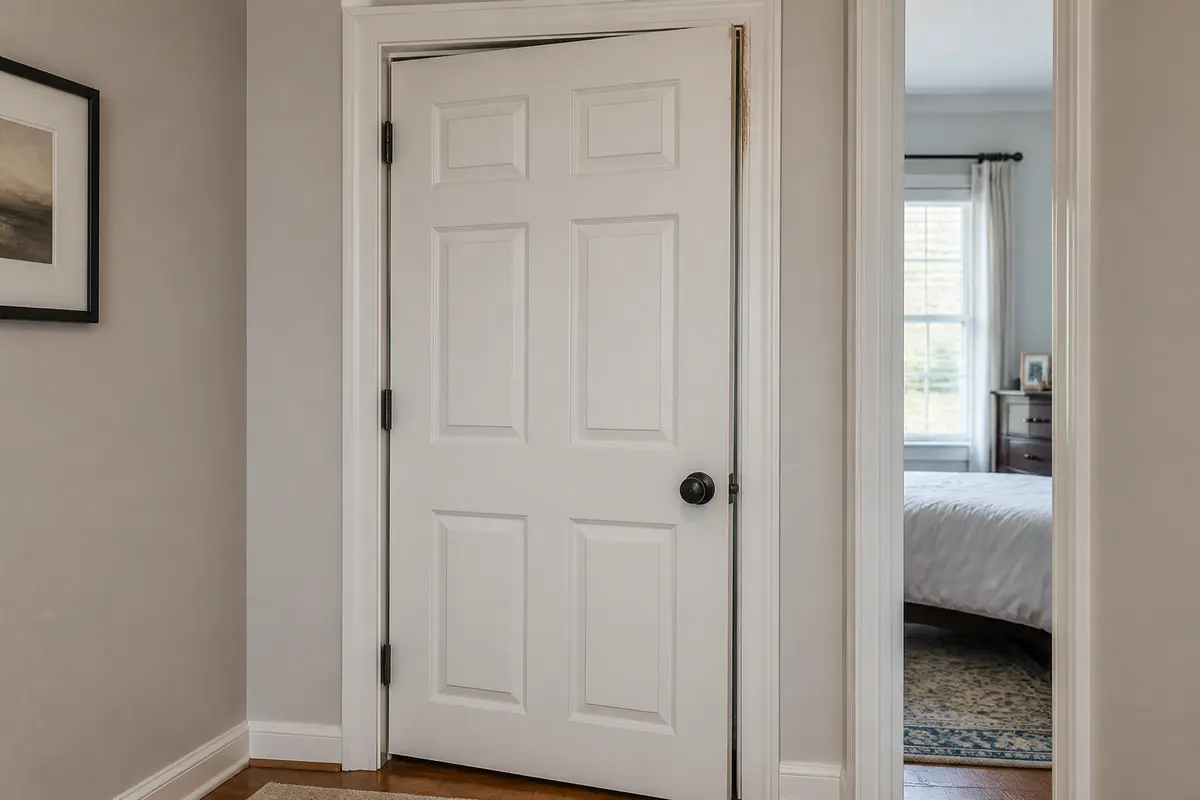
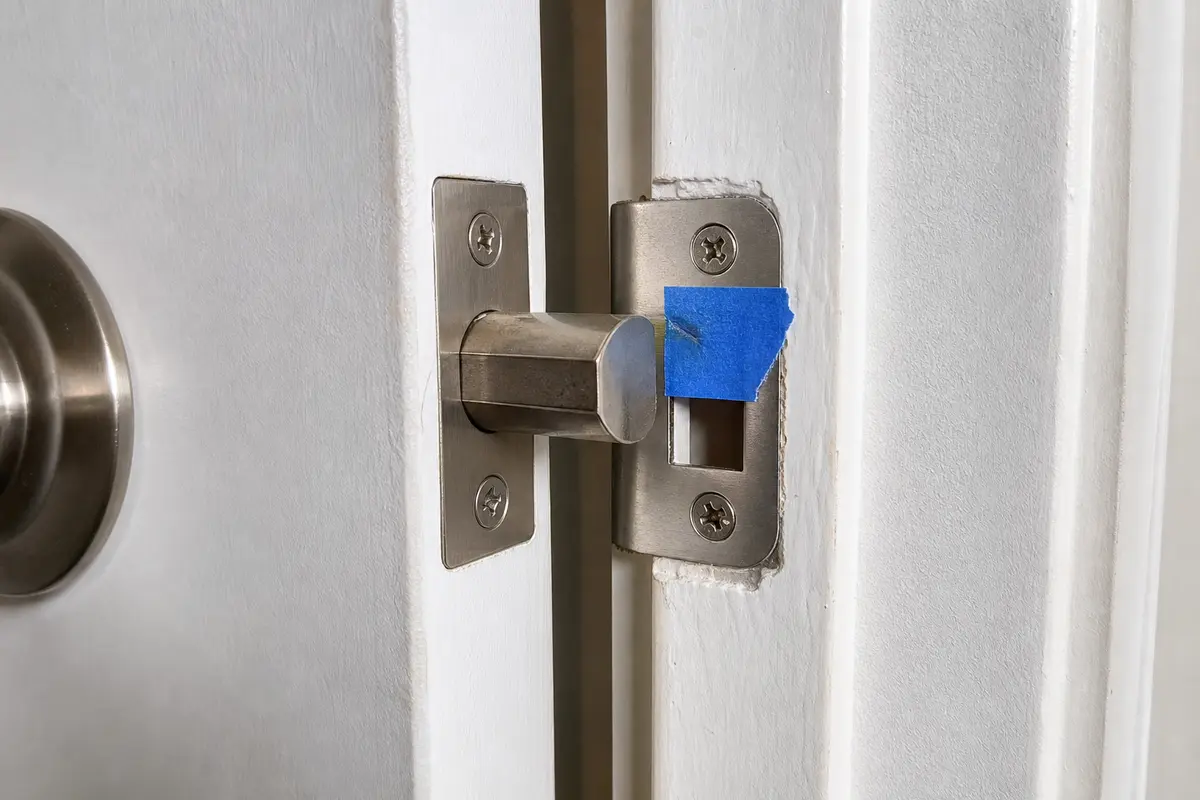
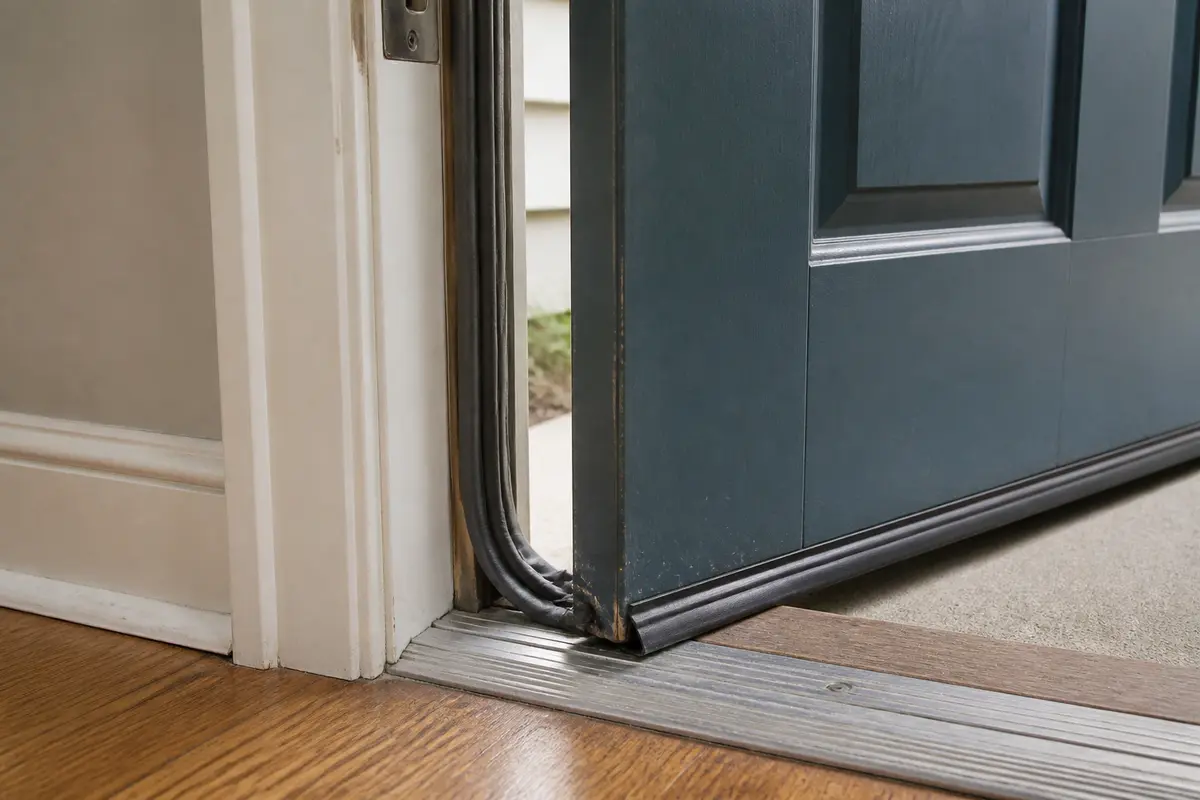
Match the exact diagnosis before buying. Use hinge screws after the hinge leaf moves, a strike plate after a small tape mark miss, and weatherstripping after the seal is folded or torn.
A door that will not close is usually telling you about alignment, contact, or pressure.
Most door-fit mistakes come from removing material before reading the failure pattern.
Mark the first contact, then choose the repair. Check the latch mark, reveal gap, and seal compression before judging handle force.
| What you see | Likely meaning | Next move |
|---|---|---|
| Top latch-side corner rubs | Hinge sag or loose top hinge | Support the slab, tighten screws, and replace stripped hinge screws only if needed. |
| Latch hits above or below the strike opening | Strike alignment or door sag | Mark the latch path, compare the reveal, then shift the strike only if the door hangs square. |
| Door binds after humidity or rain | Swelling or finish failure | Find the swollen edge and moisture source before sanding or planing. |
| Door feels cushioned or bounces open | Weatherstripping, sweep, or threshold pressure | Reseat folded seals and look for sweep drag at the threshold. |
| Jamb is cracked, twisted, or moving | Opening or frame problem | Stop hardware adjustments and get the opening assessed. |
The hinge side is the least destructive place to begin when the top corner rubs or the reveal looks uneven.
When the slab reaches the stop but will not latch, the contact mark matters more than the handle feel.
A swollen edge feels different from seal pressure. The repair changes depending on the type of resistance.
Buy parts only after the contact pattern points there. Most door-close repairs use one targeted part, not a full handle or slab replacement.
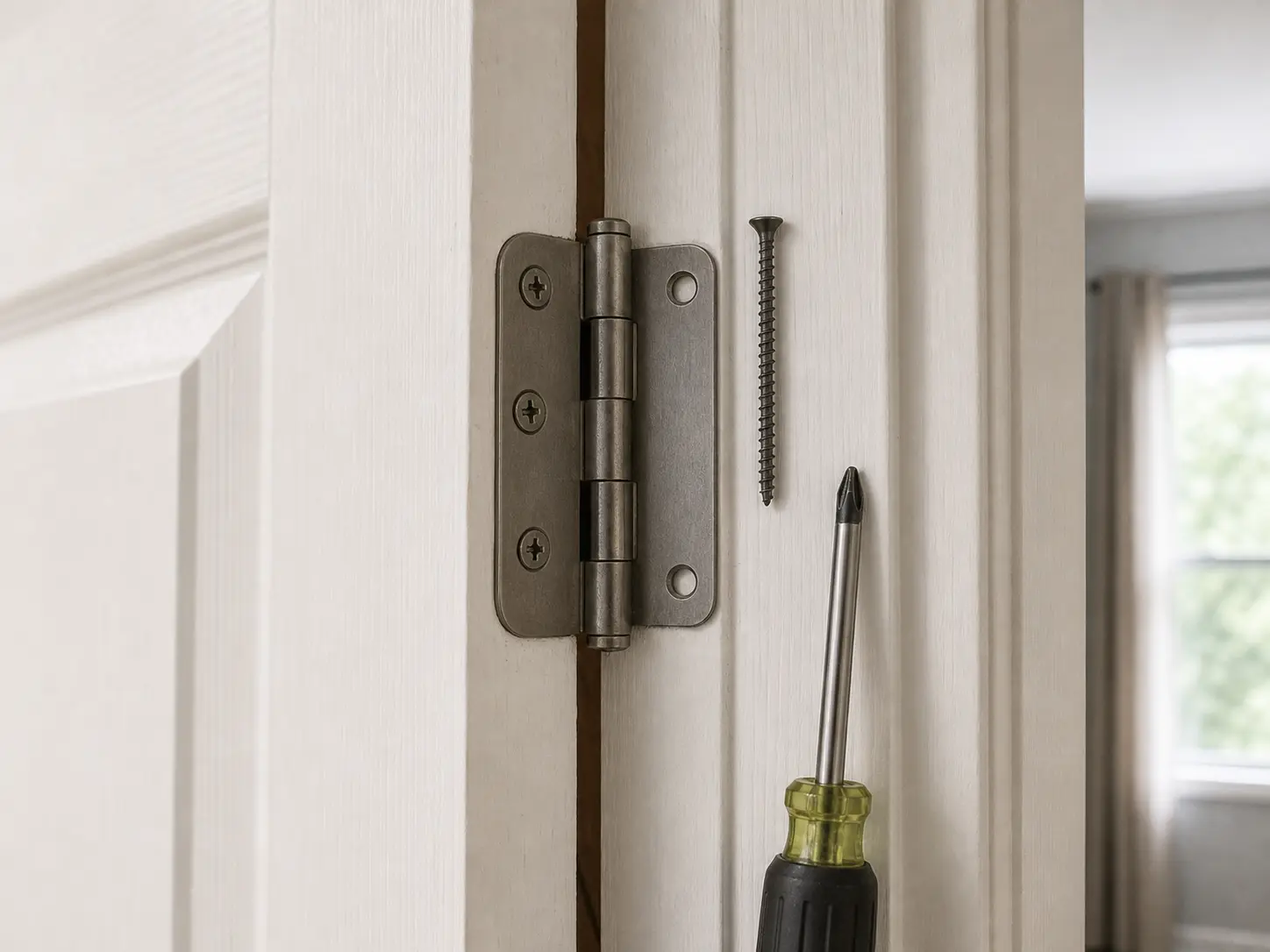
Helps when: Top hinge screws spin, pull loose, or let the latch-side corner sag when you lift the handle side.
Skip it when: The hinge is tight, the reveal is even, or the latch mark shows a small strike-only adjustment.
Compare door hinge screws on Amazon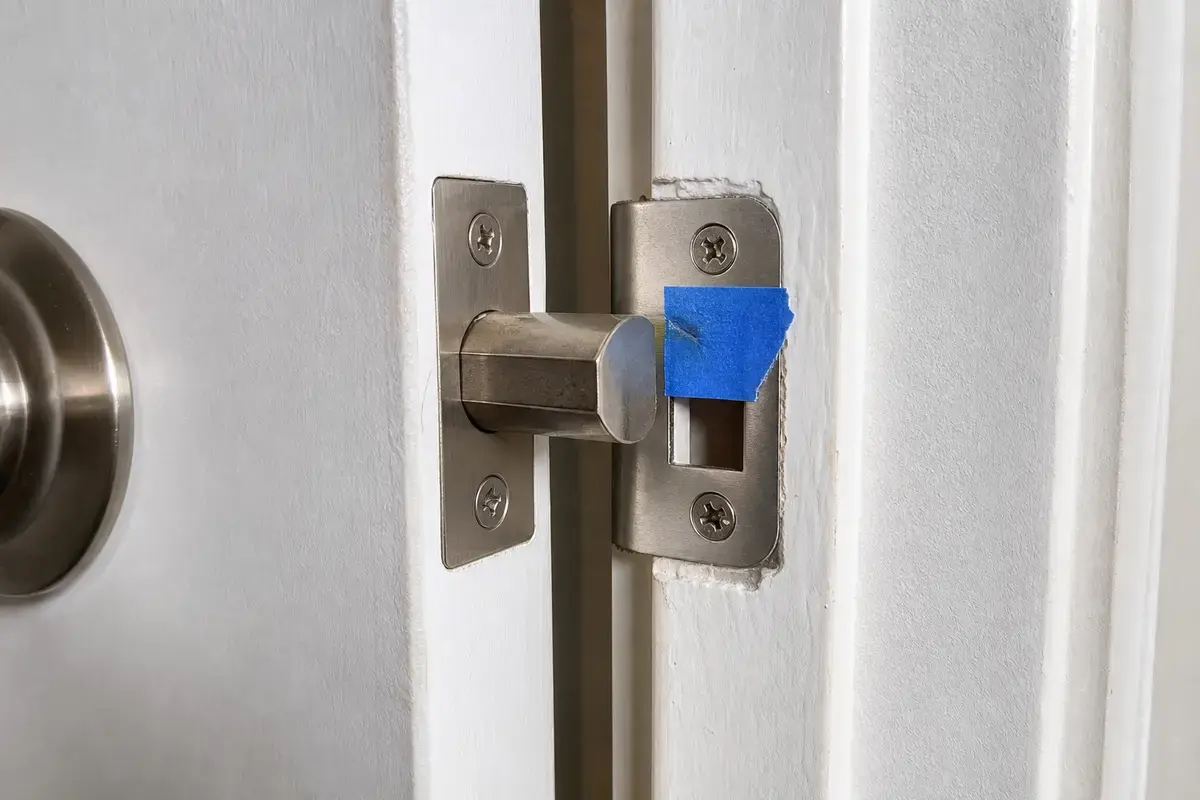
Helps when: The door hangs square, but the latch mark lands just outside a worn, damaged, or slightly misplaced strike opening.
Skip it when: The reveal is uneven, the hinge side moves, or the jamb wood around the strike is split.
Compare door strike plates on Amazon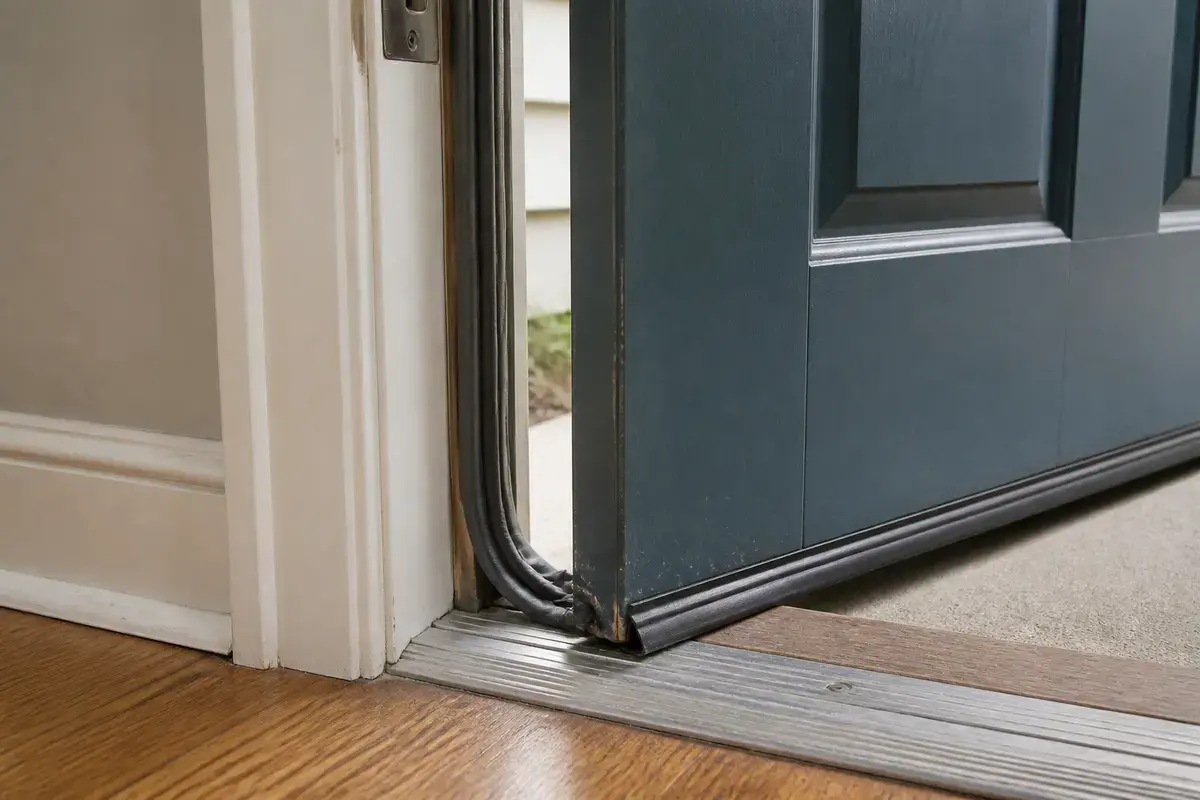
Helps when: The door bounces back, feels cushioned, or the existing seal is folded, torn, flattened, or the wrong style.
Skip it when: There is hard wood rubbing, hinge sag, a loose threshold, or a security latch that no longer aligns.
Compare door weatherstripping on AmazonAs an Amazon Associate I earn from qualifying purchases. Repair Riot may earn a commission at no extra cost to you.
These tools help diagnose and support the door without changing the opening. Skip tool work when the frame is cracked, fire-rated, or visibly shifting.
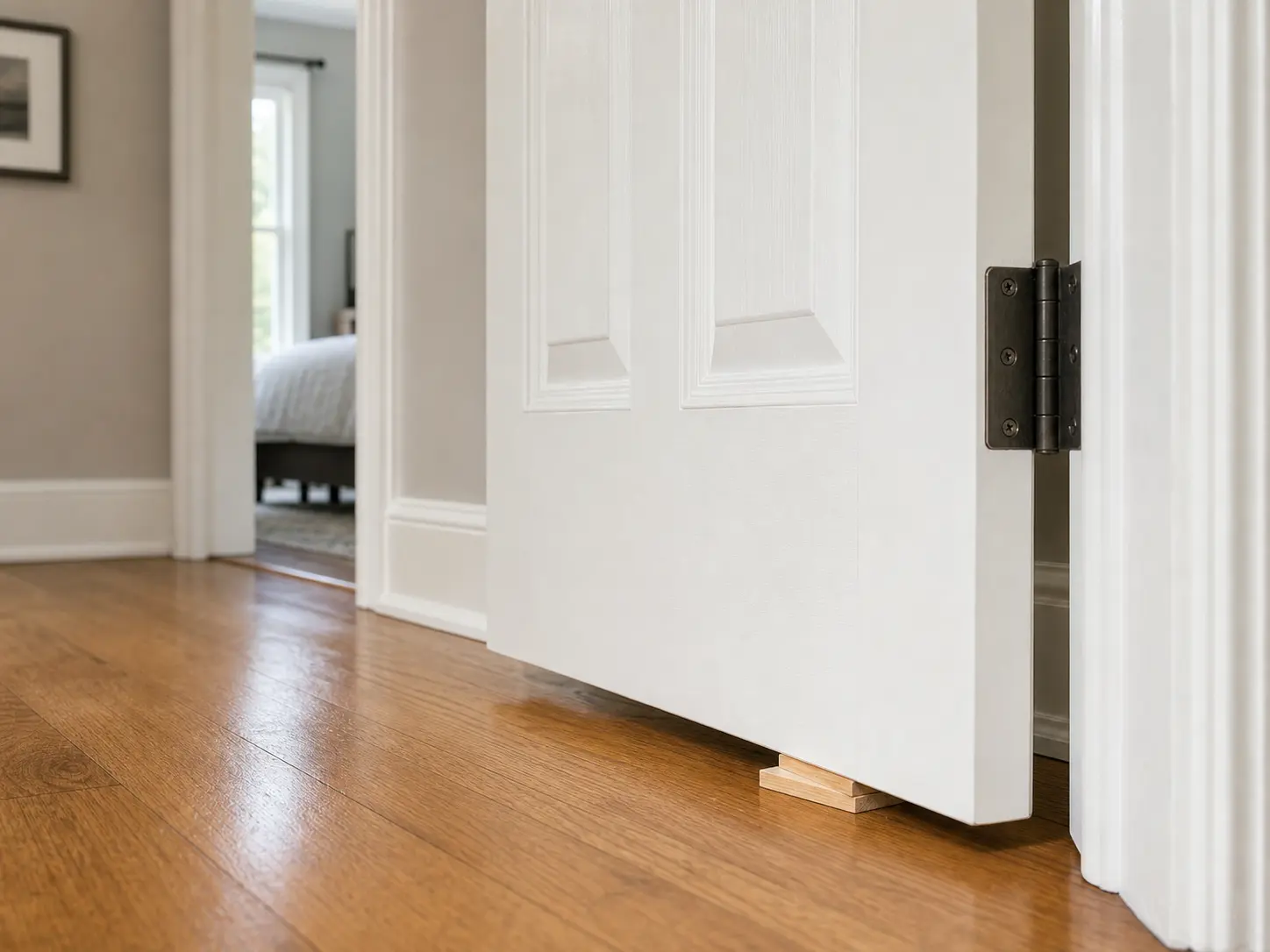
Helps when: Supporting the slab while tightening hinge screws or watching whether the door drops at the top hinge.
Skip it when: The door is too heavy to support safely or glass panels make movement risky.
Compare door wedges and shims on Amazon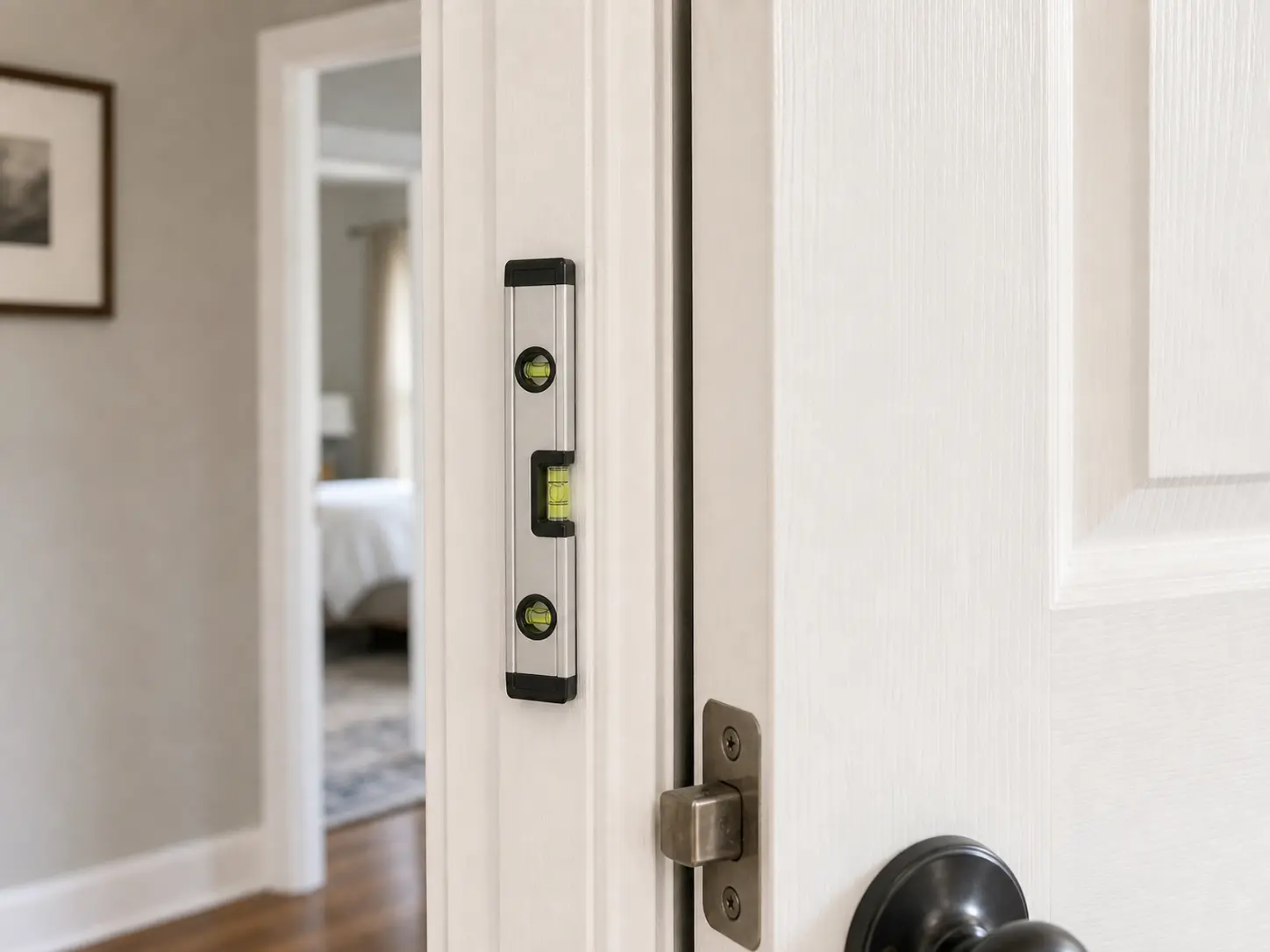
Helps when: Comparing the hinge side, latch side, and head jamb when the reveal looks uneven.
Skip it when: The problem is only a small latch mark and the reveal is already visibly even.
Compare small levels on Amazon
Helps when: Finding tight gaps, protecting painted edges, and tracing a rub point before any adjustment.
Skip it when: The edge is swollen, soft, or water damaged enough that the door needs carpentry assessment.
Compare thin shims on AmazonAs an Amazon Associate I earn from qualifying purchases. Repair Riot may earn a commission at no extra cost to you.
Usually the latch is not lining up with the strike plate, or the door has sagged just enough to move the latch path. Watch where the latch touches the strike. If it is only slightly high or low, a hinge or strike adjustment usually fixes it.
Not first. Check hinge screws, strike alignment, and weatherstripping before removing material. If the problem is sag or seasonal swelling, trimming too soon can leave you with a loose, drafty door when conditions change back.
Yes. Inspect thick replacement weatherstripping, folded corners, and sweep drag at the threshold. Soft springy resistance means seal pressure; hard scuffs on the door edge mean wood rub.
Wood doors and jambs can swell with moisture, especially if the finish is worn on the top, bottom, or latch edge. If the door only acts up in damp weather, look for fresh rub marks and check for water exposure before you start trimming.
Call a pro if the frame is cracked, the jamb is pulling loose, the slab is warped, or the opening is out of square. For exterior doors, stop when the latch or deadbolt will not line up securely after basic hinge and strike work.
That usually means the door has sagged on the hinge side. Tighten the top hinge first and look for stripped screws before moving the strike or trimming wood.
Close the door slowly and look for the latch mark. If the latch touches just above, below, or beside the strike opening while the reveal looks even, a small strike adjustment may solve it.
Do not cut, plane, drill, or change hardware layout on a fire-rated assembly unless the work is allowed by the door rating and local requirements. Get qualified help for that door.
Repair Riot built this page around homeowner-visible door clues: reveal shape, hinge movement, latch-to-strike contact, seasonal swelling, weatherstrip compression, sweep drag, frame movement, and fire-rated-door limits. The source links support weatherstripping and fire-door caution; the diagnostic sequence is original guidance.