Bottom latch-side corner hits first?
Top hinge sag moves to the front. Inspect the top hinge screws and the reveal above the latch side.
If a door rubs at the bottom, start by separating hinge sag from swelling, sweep drag, or threshold contact. A latch-side bottom scrape usually points to the top hinge before the door needs trimming.
Most of the time, a loose top hinge lets the latch-side bottom corner drop just enough to scrape.
Move the door slowly, mark the first rub point, then match the fix to the wear pattern.
Don’t start with: Do not plane or cut the slab until the hinge screws hold, the door is dry, and the sweep or threshold is ruled out.
Top hinge sag moves to the front. Inspect the top hinge screws and the reveal above the latch side.
Look at swelling, a high threshold, new flooring, or a sweep that is taking the hit.
Treat moisture and a swollen bottom edge as the better clue before any permanent trimming.
Watch the sweep and threshold. A folded sweep can drag even when the slab clears.
The opening may be moving. Stop before cutting the door and plan for frame diagnosis.
The mark tells you whether hinge sag, swelling, or bottom hardware is to blame. Use the photos to separate a slab scrape from a sweep or threshold drag.
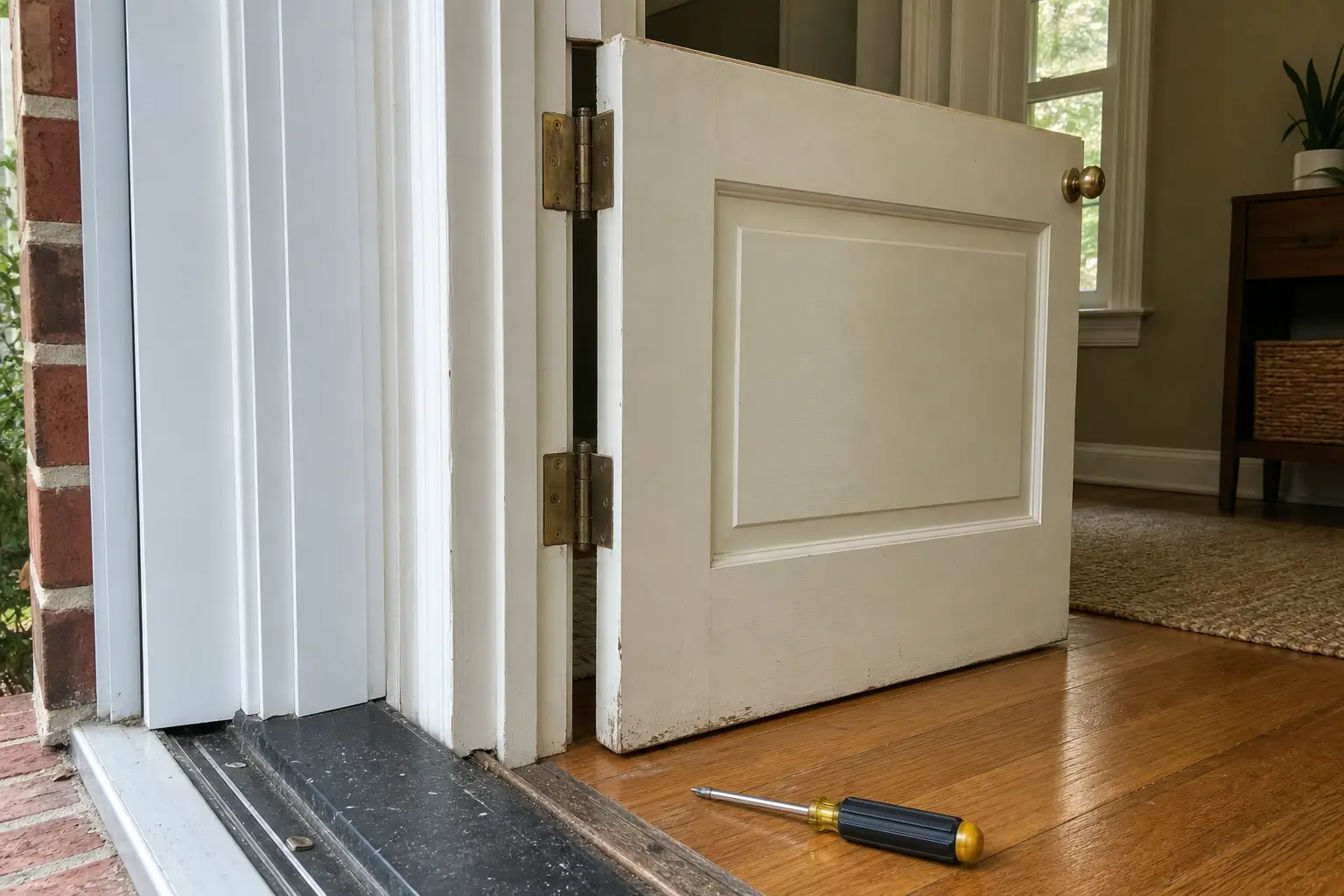
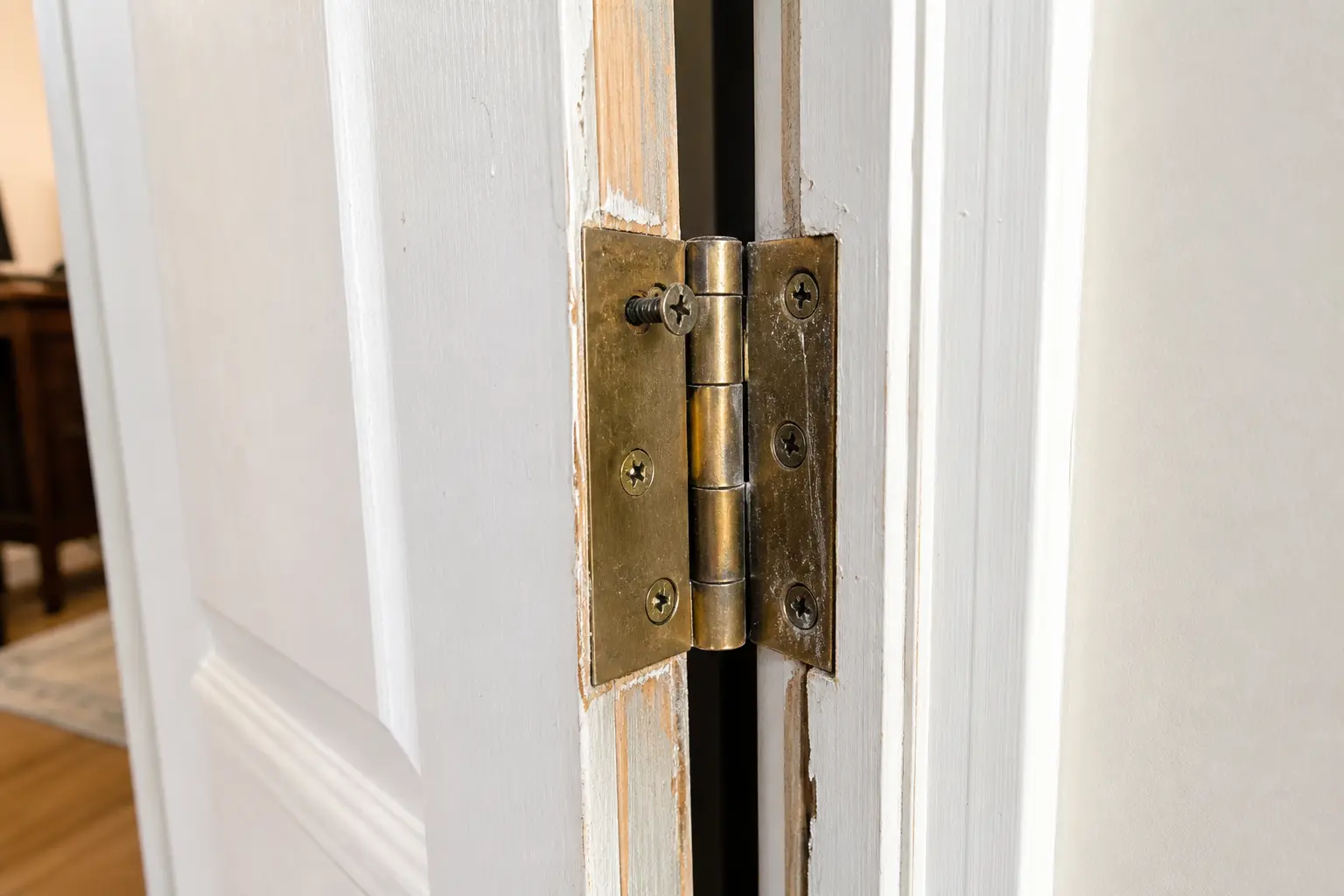
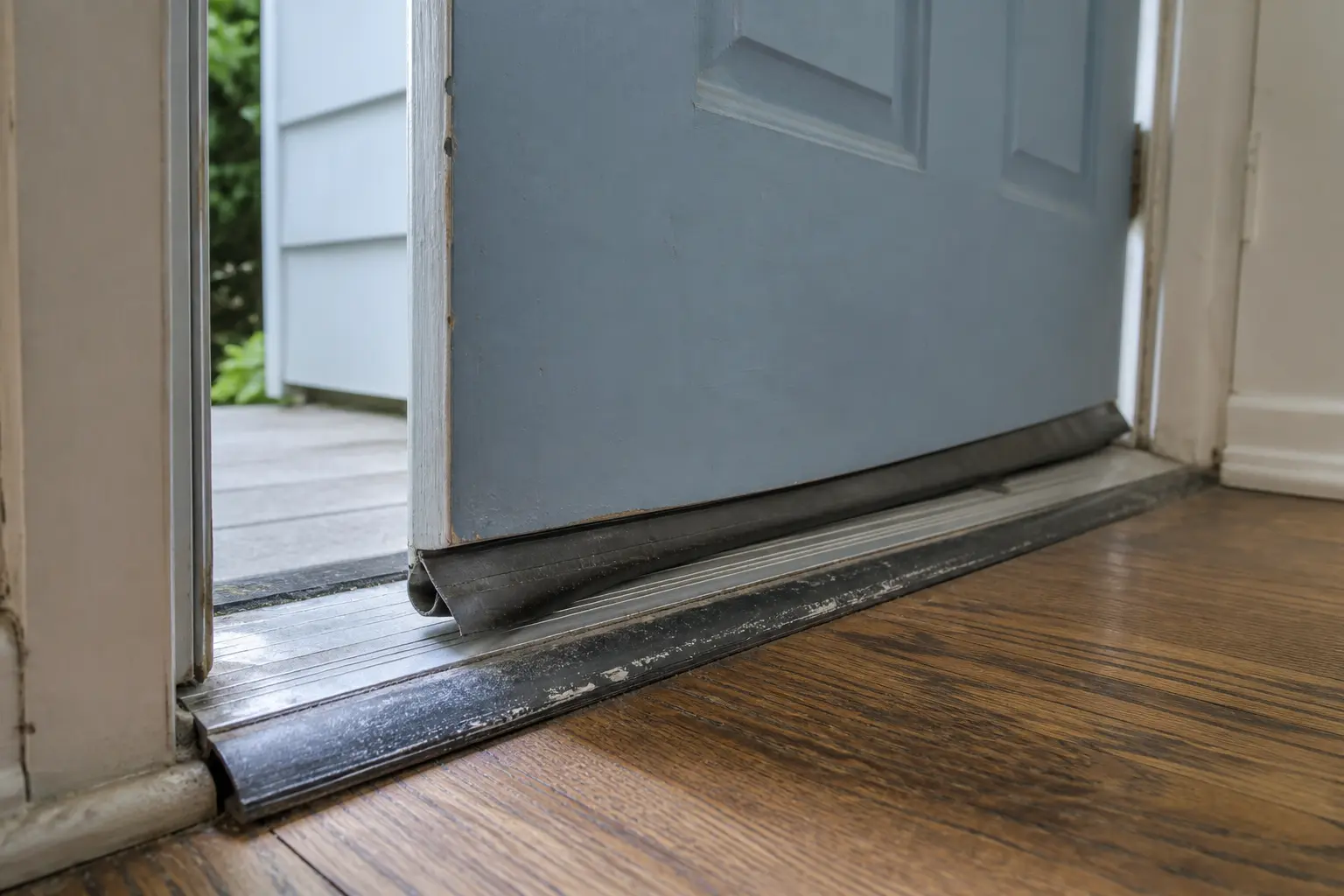
Before you buy parts, write down the door type and match the exact hinge size, screw style, sweep profile, and threshold shape. If an exterior door uses a branded sweep system, use the model label or manufacturer diagram before ordering.
The first scrape matters more than the loudest scrape. A dropped corner, a broad scuff, and a sweep that curls under all lead to different repairs.
| What you see | What it usually means | Next move |
|---|---|---|
| Latch-side bottom corner hits first | Top hinge sag or loose hinge screws | Snug the hinge screws and repair stripped holes. |
| Broad scuff across the bottom | Swelling, high threshold, new flooring, or sweep contact | Inspect moisture and bottom hardware before cutting. |
| Sweep folds under near the latch | Door sweep is dragging | Adjust or replace the sweep. |
| Gaps wedge at the top and side | Door or frame is out of square | Stop if the frame is cracked, loose, or rotten. |
Cutting the bottom is the last permanent move, not the first one. Most bottom rubs have a simpler clue above or below the slab.
A sagging slab usually shows up as a latch-side bottom scrape and a crooked gap above the door. Work on one hinge at a time so the door stays controlled.
A bottom rub is not always the slab. The sweep, threshold, or a new floor edge can be the only part touching.
When the rub comes and goes with weather, the door may be swelling. When the latch and deadbolt are off at the same time, the opening may be moving.
These tools are for visible checks and light adjustment. They are not a reason to fight a heavy door or open a damaged frame.
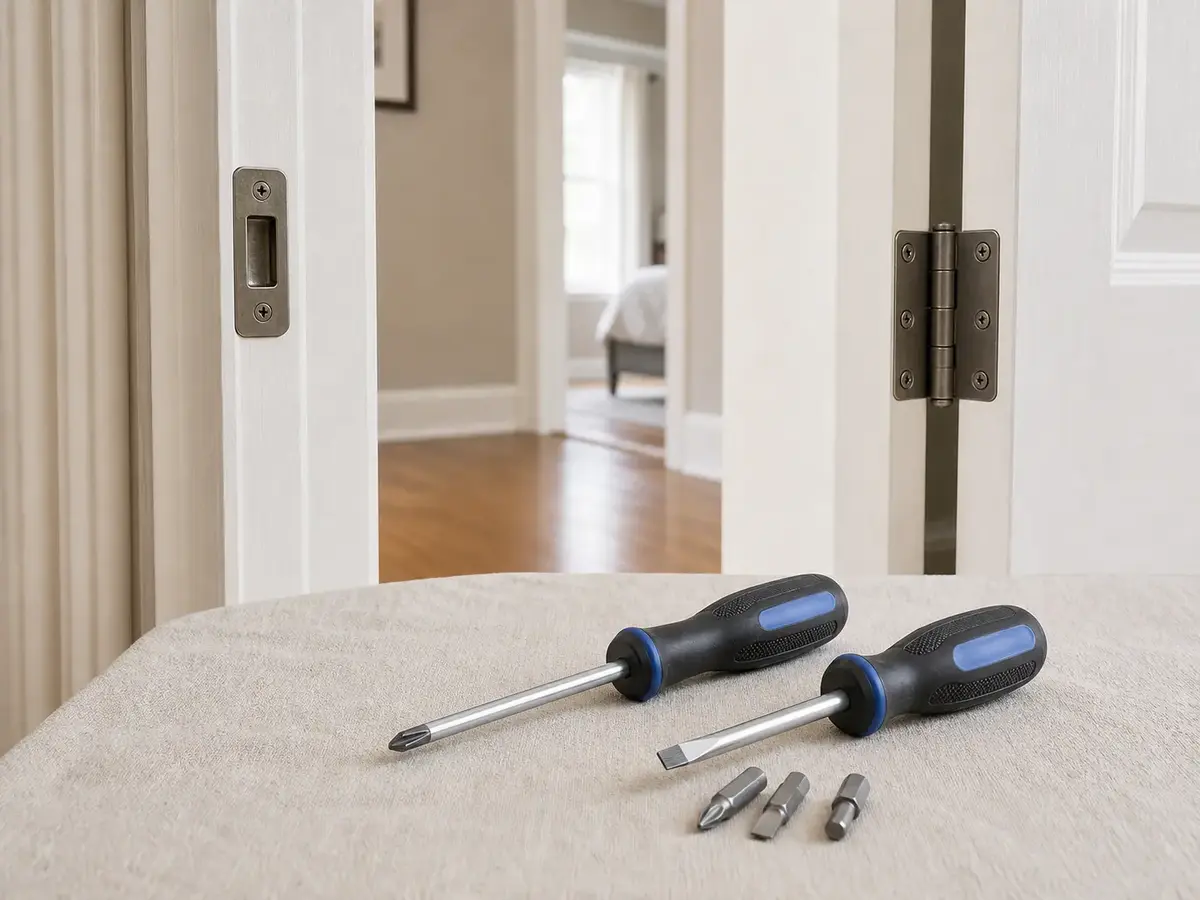
Helps when: Snugs hinge screws, sweep screws, and threshold screws without immediately reaching for a drill.
Skip it when: Skip it when the door is heavy and unsupported, the hinge area is split, or screw heads are badly stripped.
Compare screwdriver sets on Amazon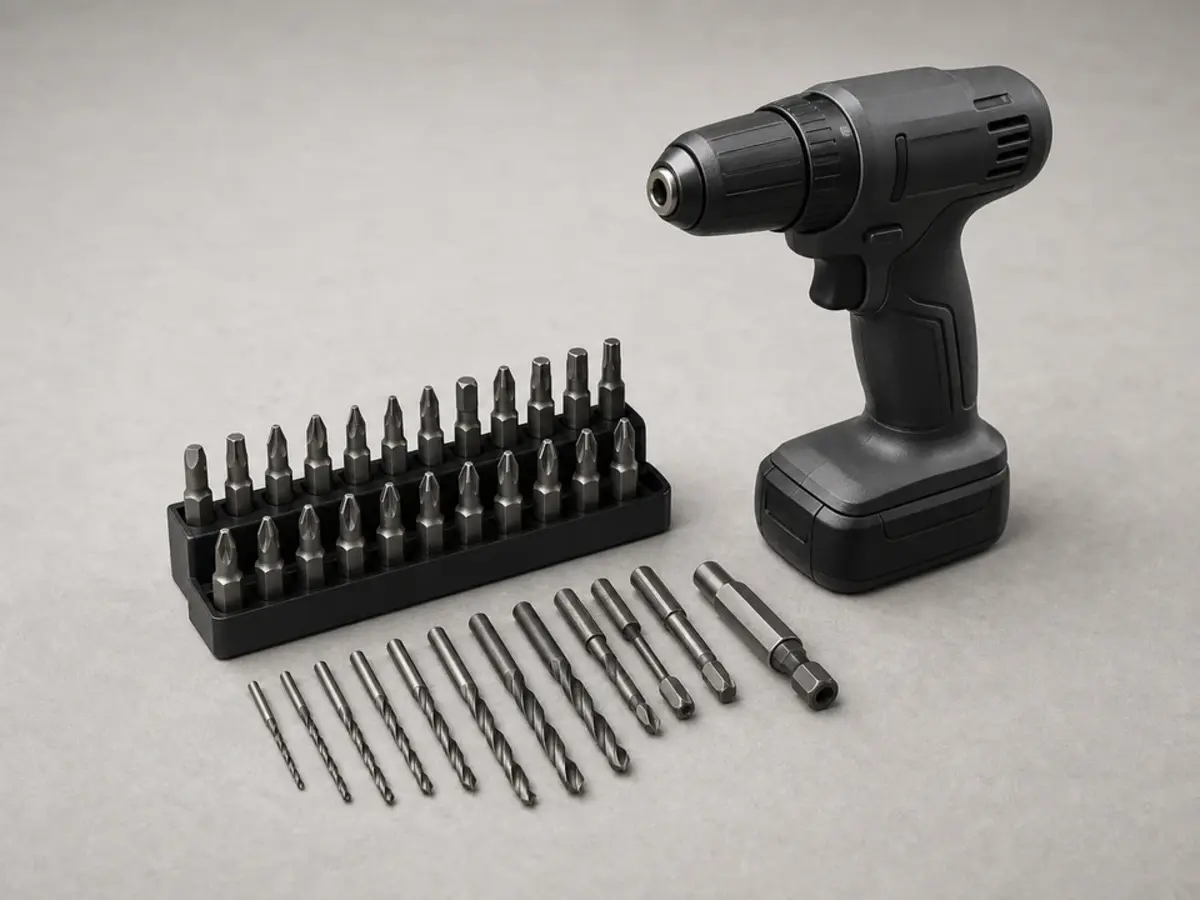
Helps when: Installs a replacement hinge screw cleanly after the rub pattern and loose screw point to hinge sag.
Skip it when: Skip it when the jamb is split, the hinge mortise is damaged, or you would be drilling without supporting a heavy slab.
Compare drill driver bit sets on Amazon
Helps when: Marks the first rub point so you can separate slab contact from sweep or threshold drag.
Skip it when: Skip it when the door drops, the frame is damaged, or the rub is already tied to a clear safety stop.
Compare marking supplies on Amazon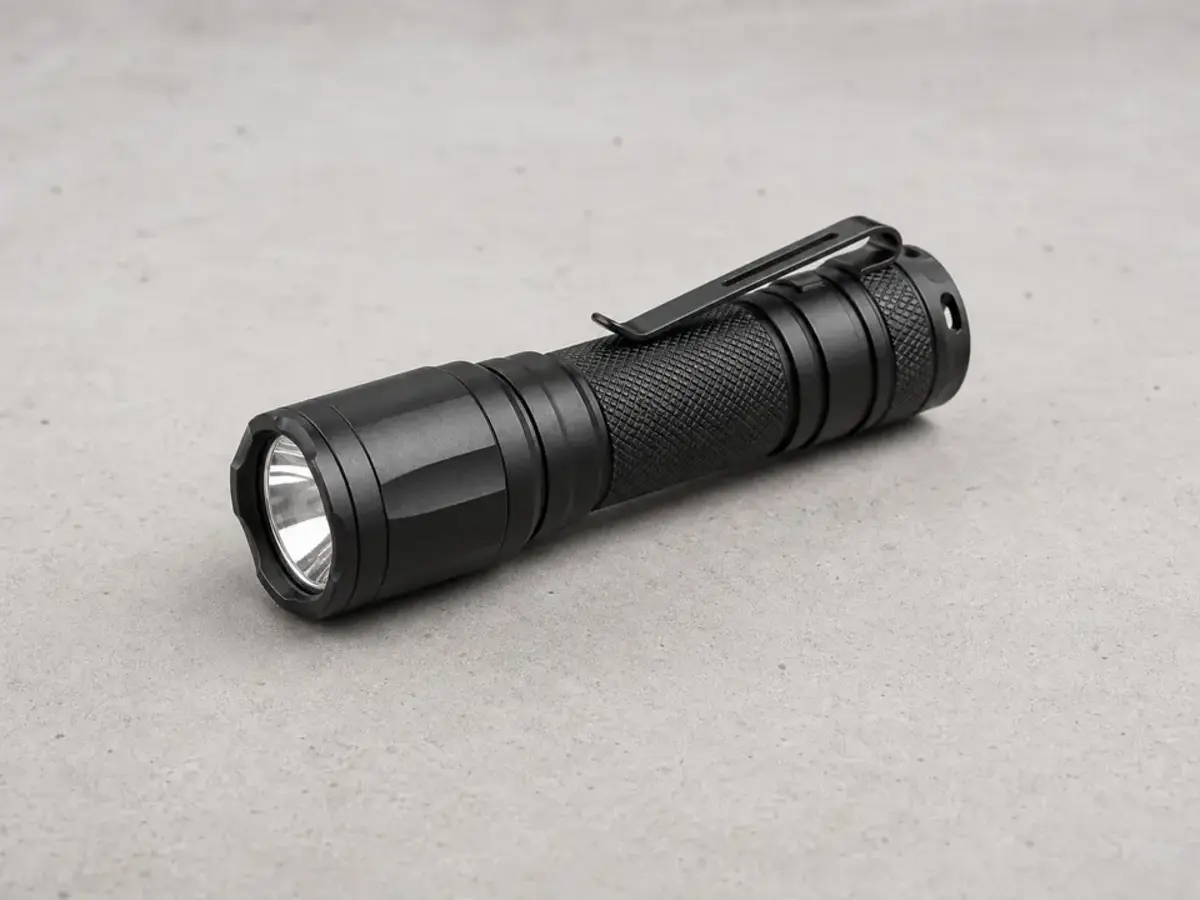
Helps when: Shows fresh scuffs under the door, folded sweep edges, loose threshold screws, and dark moisture marks.
Skip it when: Skip deeper work if better light shows rot, a cracked jamb, or a threshold that moves under pressure.
Compare inspection flashlights on AmazonAs an Amazon Associate I earn from qualifying purchases. Repair Riot may earn a commission at no extra cost to you.
Parts belong after the rub pattern points to a failed part. Match the exact size and shape; door hardware that looks close can still sit wrong.
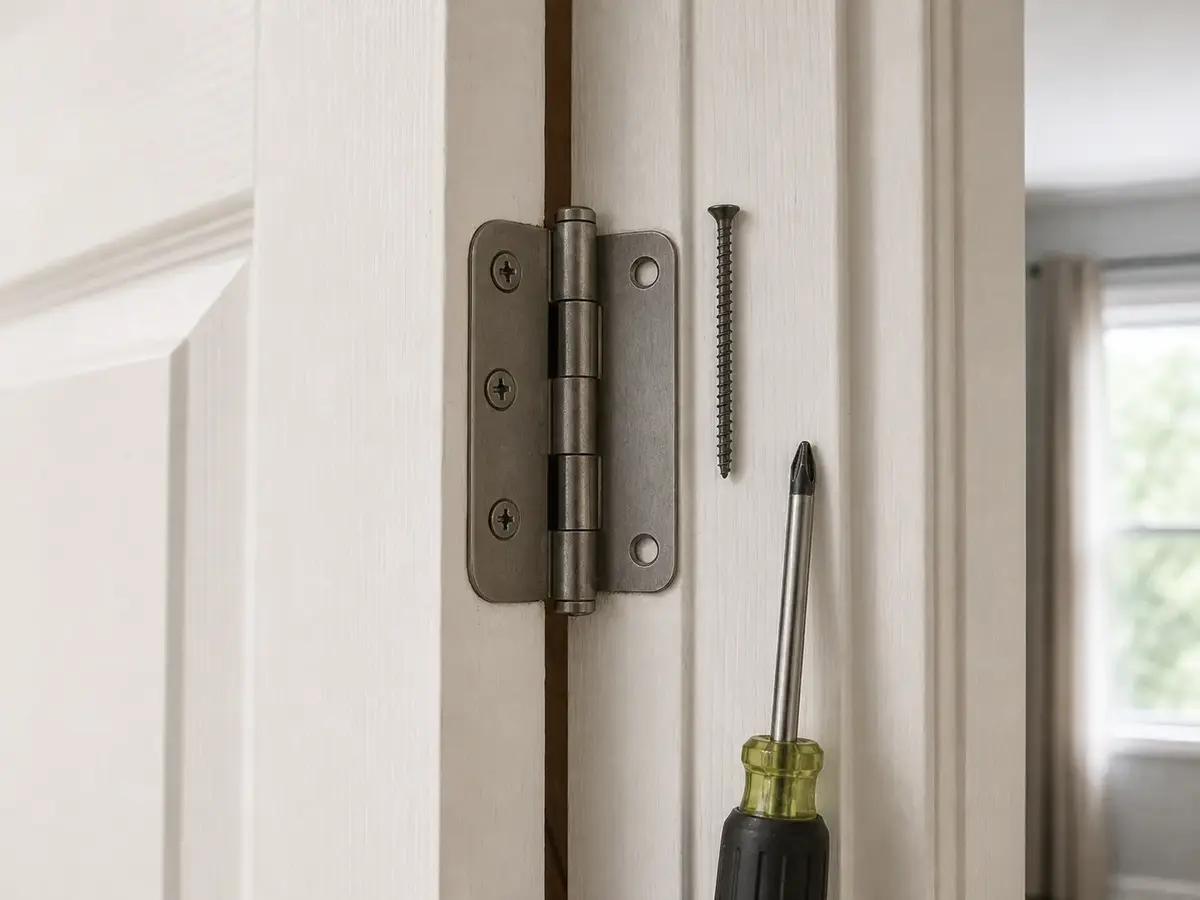
Helps when: The top hinge screw spins, is missing, or is too short to pull the hinge leaf tight against the jamb.
Skip it when: Skip it when the reveal is even and the sweep, threshold, or moisture pattern explains the bottom rub.
Compare door hinge screws on Amazon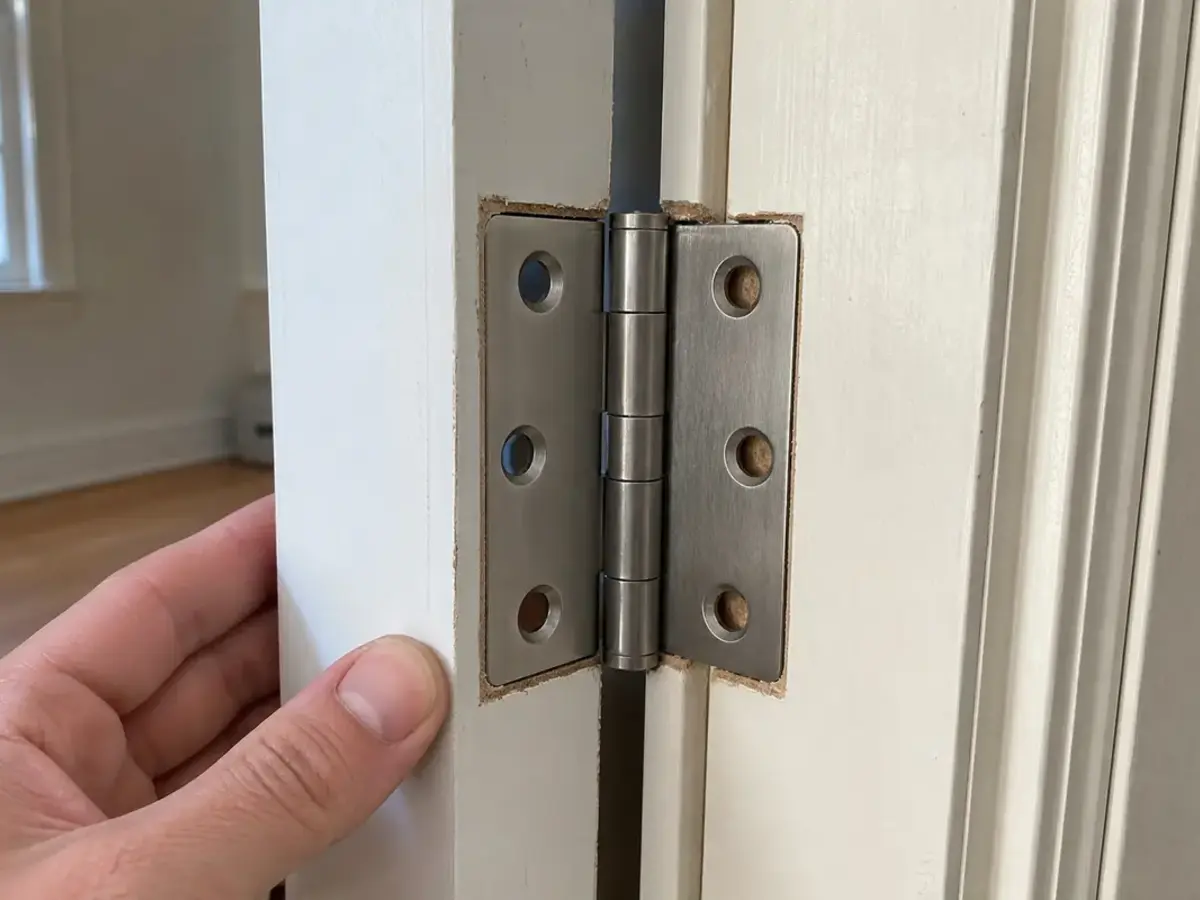
Helps when: The hinge leaf is bent, the pin is worn, or the hinge will not hold alignment after screw repair.
Skip it when: Skip it when only the screw holes are stripped and the hinge leaf still sits flat and square.
Compare door hinges on Amazon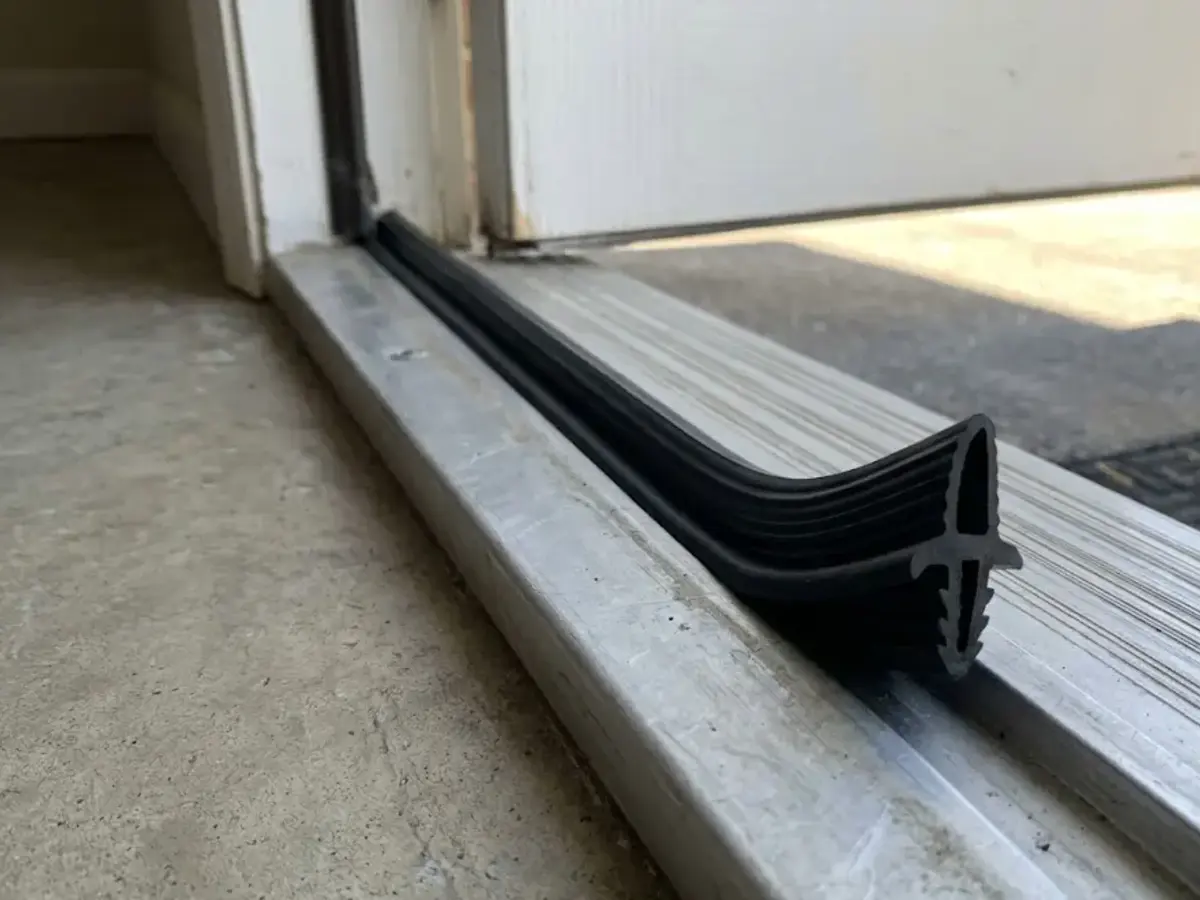
Helps when: The sweep is torn, hardened, folded under, or clearly dragging while the door slab clears the threshold.
Skip it when: Skip it when the slab itself scrapes after the sweep is held clear, or the door has no sweep.
Compare exterior door sweeps on AmazonAs an Amazon Associate I earn from qualifying purchases. Repair Riot may earn a commission at no extra cost to you.
That usually points to hinge sag. The top hinge loses hold, the slab drops slightly, and the bottom latch-side corner catches before the rest of the door.
Only after the door is dry, the hinges hold, and the sweep or threshold is not the contact point. Cutting too early can leave a permanent gap when the real issue was sag or swelling.
Yes. Wood doors can swell enough to tighten in the opening, especially after rain or during humid seasons. If the rub comes and goes with weather, look for moisture marks and raised grain before trimming.
That often means the threshold or door sweep is catching near the end of the swing. Watch from floor level during the last few inches and see whether the sweep folds under.
The wear will be on the rubber or vinyl sweep, and the slab edge may clear the threshold. If holding the sweep clear stops the drag, replace or adjust the sweep instead of cutting the door.
No. Longer screws help only when the top hinge has lost hold and the screw can bite solid framing. They will not fix swelling, a bent sweep, a high threshold, or a racked frame.
Replace the hinge if the leaf is bent, the pin is worn, or the hinge will not hold alignment after the screw holes are repaired. If the hinge is flat and sound, the screw hold may be the only failure.
You may have fixed part of the sag while leaving a second issue. Look again at the sweep, threshold, bottom edge, and reveal before making any permanent cut.
Call a door pro or finish carpenter if the frame is cracked, the sill or threshold is soft, the door drops while you handle it, or the latch, deadbolt, and bottom edge are all out of line.
Repair Riot built this page from visible door clues: rub mark, reveal, hinge movement, sweep contact, moisture marks, and frame damage. The source links support weatherstripping and moisture-control context; the diagnostic order is original Repair Riot guidance.