Is water actively spilling?
Turn cooling off, contain the water, and protect the area below before clearing anything.
If a condensate drain is overflowing, turn cooling off first, contain the water, and check the pan, drain outlet, trap, and float switch. A full pan usually means the drain path is blocked; a wet joint with an empty pan points to a leaking fitting.
Most overflows come from slime at the trap, cleanout, outlet, or first bend. Poor slope or a stuck float switch can make the same backup repeat.
Sort it while the system is off: full pan, wet fitting, dry outlet, raised float, or water coming from somewhere above the drain.
Don’t start with: Do not keep the AC running, pour drain opener into the line, hold down the float switch, or buy a trap or switch until the water path proves it failed.
Turn cooling off, contain the water, and protect the area below before clearing anything.
Treat it as a blocked or slow drain path first. Check the outlet, cleanout, trap, and pump area if accessible.
That points to a blockage before the outlet, not a reason to buy a float switch.
Dry the joint and watch it. A cracked trap, loose fitting, or split tubing may be the leak source.
Poor pitch can make a cleared drain overflow again. Correct only visible, simple support problems.
The drain may still be clogged, but the float switch or its position needs inspection before restart.
An overflow is easier to sort when you compare where water is collecting with where the line should discharge.
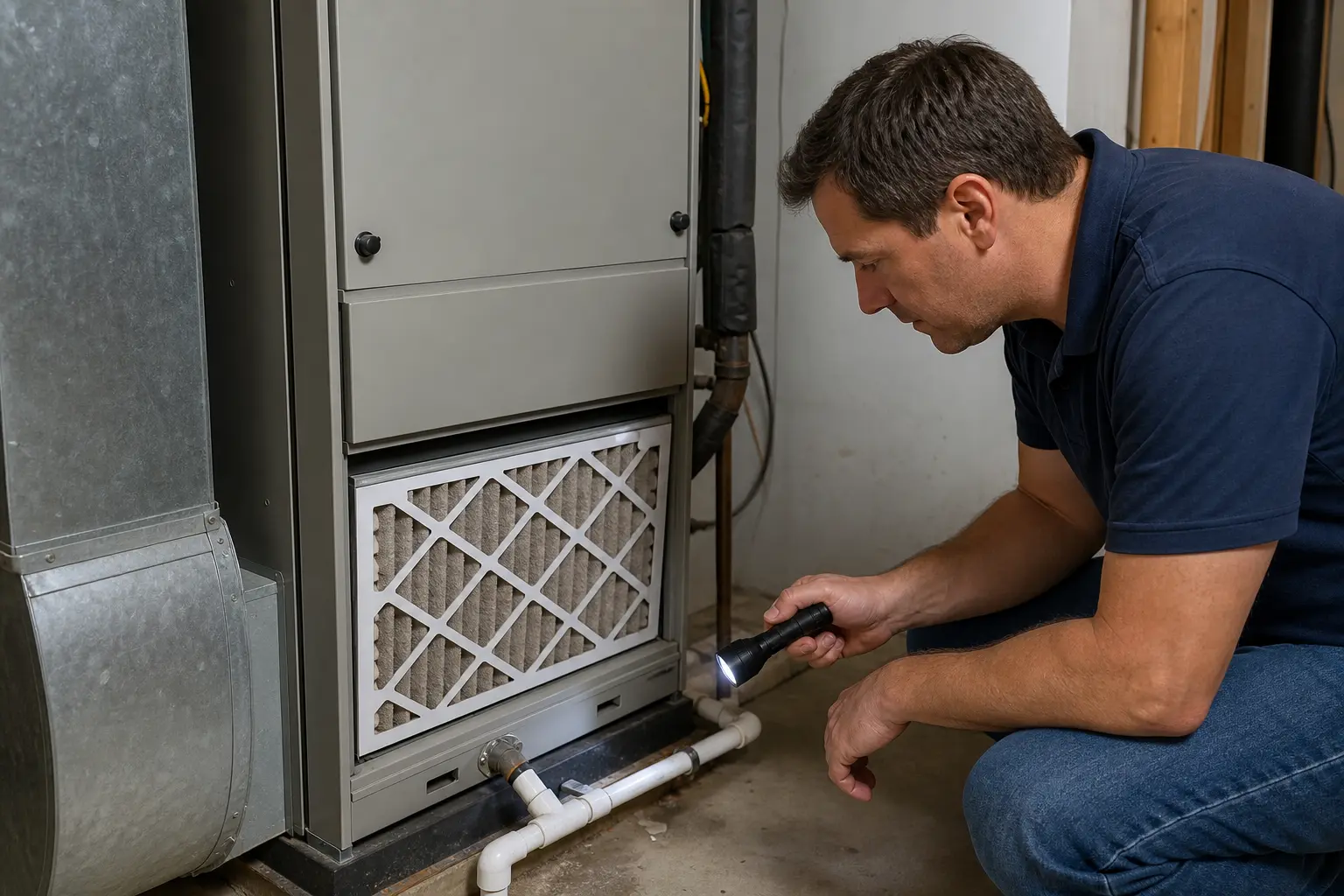
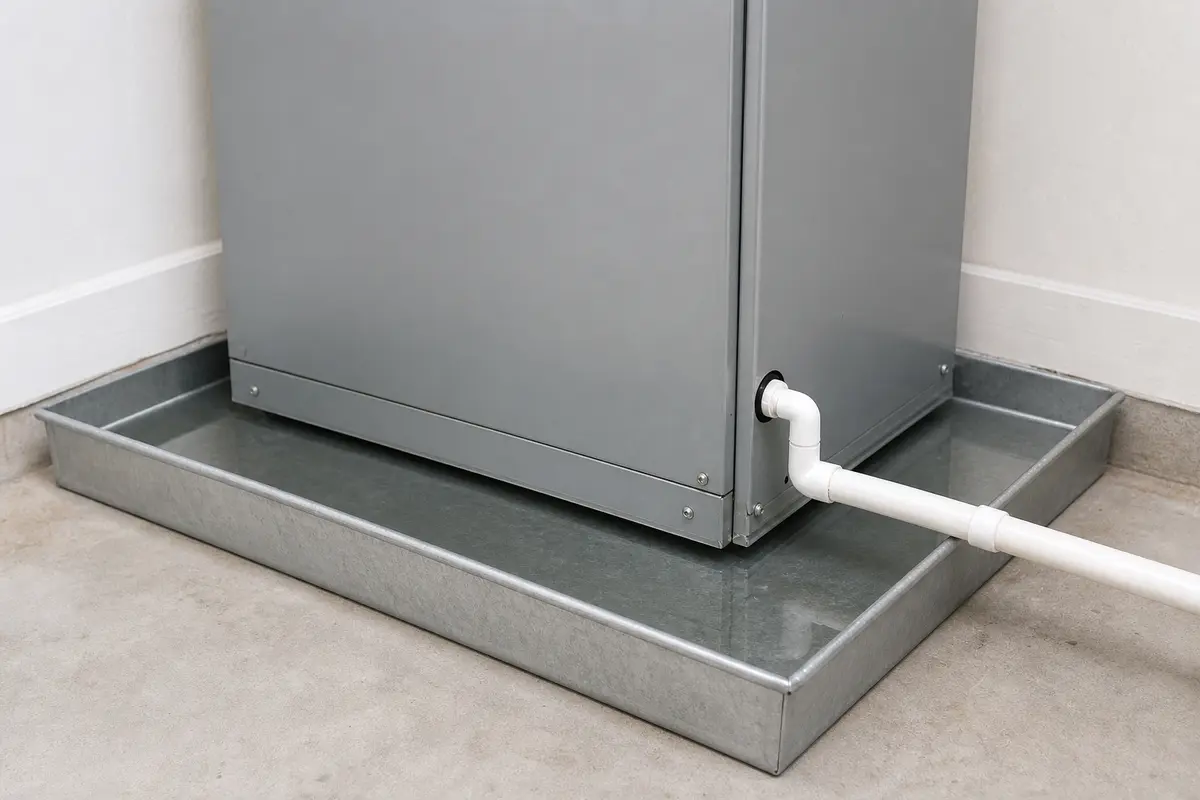
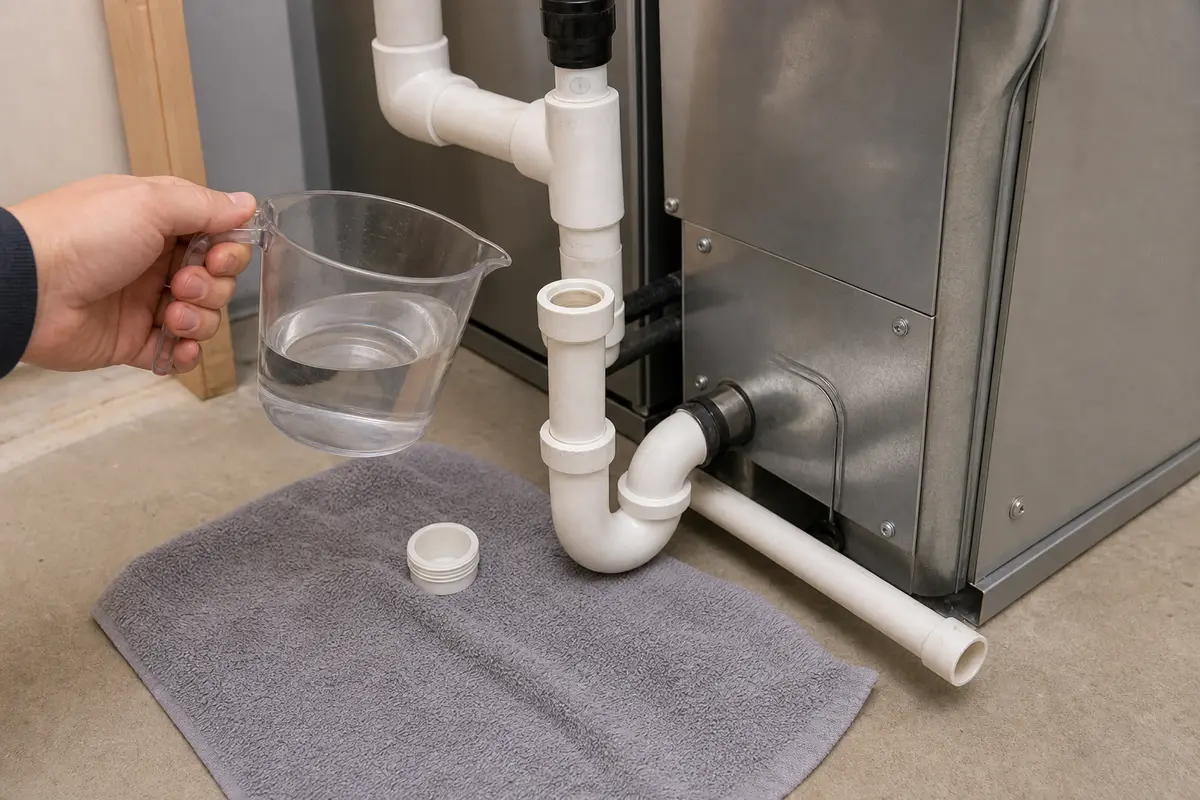
Buy only after the visible clue fits the exact diagnosis: a cracked trap, split tubing, poor line pitch, stuck float, failed pump, or a switch that did not stop cooling when water rose. Match pipe size, trap layout, switch style, pump setup, and the equipment model tag before ordering.
An overflow starts as a water-path problem until the clues prove otherwise.
The wrong shortcut can turn a small overflow into ceiling, cabinet, or wiring damage. Good clue: the part belongs in the cart only after the pan, outlet, fitting, or float result points to it.
Use this table after cooling is off and the wet area is protected.
| What you see | What it usually means | Next move |
|---|---|---|
| Full pan, no outlet flow | Blocked trap, cleanout, outlet, or drain run | Clear only the accessible outlet, trap, or cleanout. |
| Pan wet, outside outlet dry | Water is backing up before it reaches the discharge point | Use outlet suction or an accessible cleanout, then stop if water backs up. |
| One fitting wet, pan not full | Loose joint, cracked trap, split tubing, or pan connection leak | Dry the area and watch for fresh wetness before replacing anything. |
| Line sags or runs uphill | Poor pitch can hold water and sludge | Support or re-pitch only visible sections you can restore safely. |
| Pan refills after clearing | Deeper blockage, damaged line, pump issue, ice melt, or layout problem | Leave cooling off and call service with your pan and outlet notes. |
Do this before vacuuming, flushing, or removing a trap. You want to prove the water is really condensate.
Most homeowner-safe clearing happens outside the air handler cabinet.
The first clearing is not the finish line. A short restart shows whether the drain can keep up.
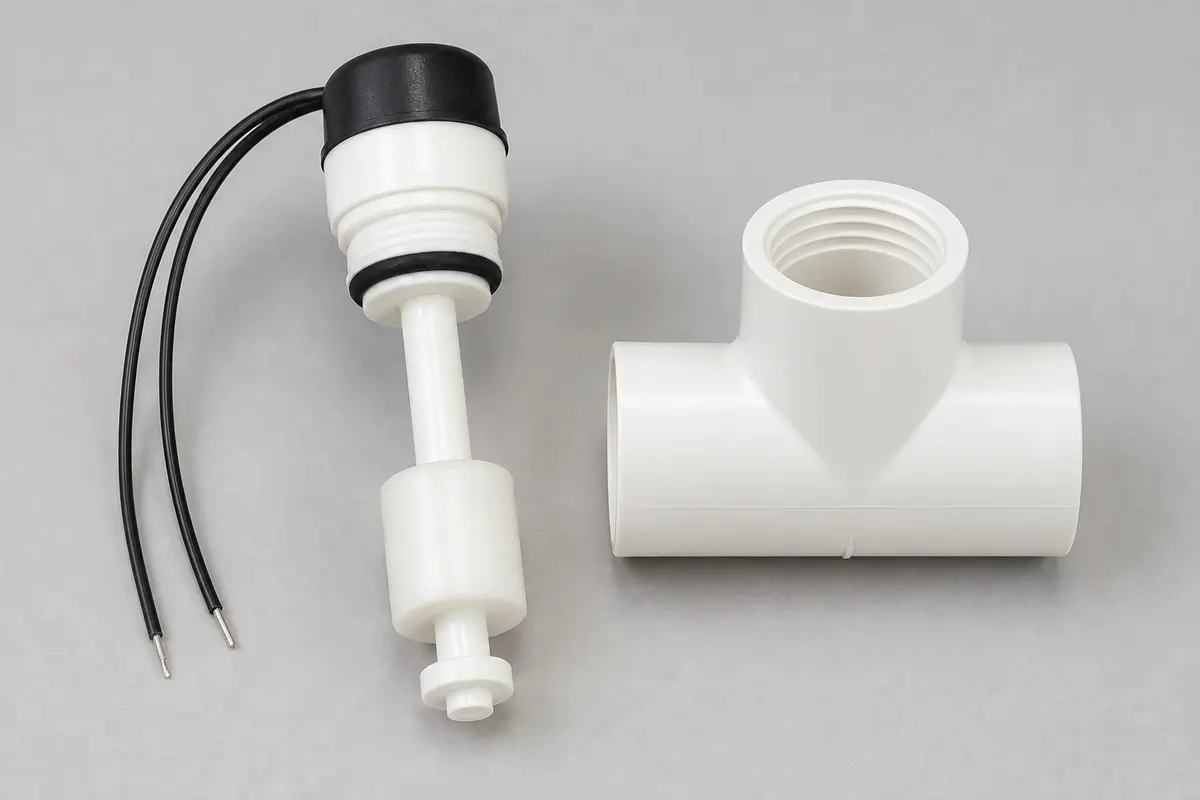
Keep parts tied to the visible failure. A backed-up line needs clearing before shopping.
These tools support cleanup and visible drain checks. Skip tool work when water is near controls or the line is hidden.
Slime, dust, or algae can build up quietly until the trap, cleanout, outlet, or first bend cannot pass water fast enough. A sagging line, cracked trap, or float switch that did not stop cooling can make the overflow show up fast.
No. Cooling makes more condensate. Turn the thermostat off first, protect the wet area, then clear only the accessible drain path or call service.
No. A full pan points toward a clog or poor drainage. A wet joint with a mostly dry pan points more toward a cracked trap, loose fitting, split tubing, or pan connection leak.
That usually means water is not reaching the normal discharge point. Start with the outlet, cleanout, trap, or pump area before buying a float switch.
The drain may be clogged, but the safety switch also needs attention. The float may be stuck, misplaced, damaged, or wired in a way that did not stop cooling.
Avoid bleach, drain opener, and mixed cleaners. Plain warm water belongs only at an accessible cleanout after the pan is controlled, and you should stop if it backs up.
A visible line that sags, holds water in low spots, or runs uphill can re-clog after clearing. Condensate needs a steady fall toward the outlet.
Only when the evidence points there: water rose high enough to trip the safety but cooling kept running, or the float is physically stuck or damaged. A raised float with a full pan usually means it is doing its job.
Call when water is near wiring, the line is hidden, the pan refills after clearing, ice or weak airflow is involved, or any next step would require electrical testing or cutting pipe.
Repair Riot built this page around homeowner-visible condensate clues: pan level, outlet flow, wet fittings, line pitch, float-switch behavior, repeat overflow, and stop points near wiring or finished surfaces. The source links support HVAC maintenance and indoor moisture context; the repair sequence is original guidance.