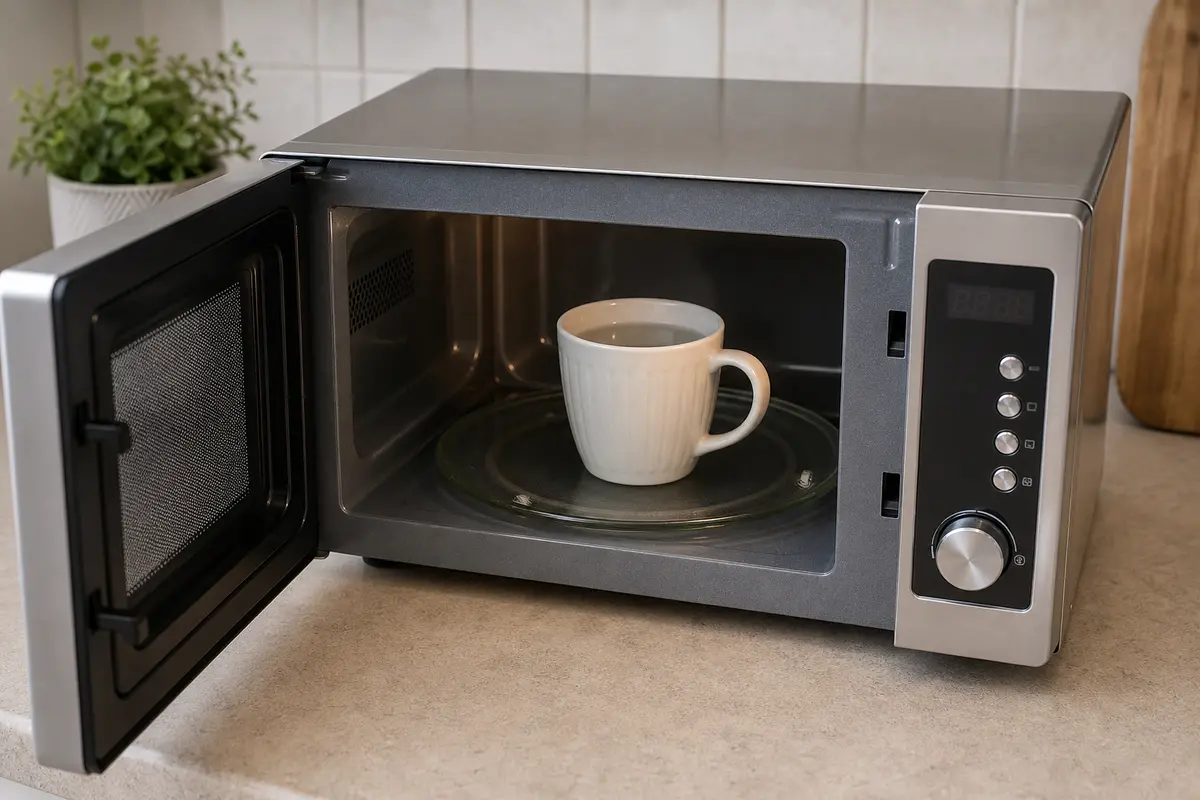
Does one cup of water stay cold after one minute on high?
Confirm a true no-heat problem, then move to mode, door, and outlet checks before blaming internal parts.
If your Breville microwave runs but does not heat, do one mug-of-water test on full power. If the mug stays cold, check the mode, latch feel, door alignment, and wall outlet before stopping.
A wrong mode, poor outlet, dirty latch area, sagging door, or door interlock problem can be checked from outside. If those clues do not explain it, the next diagnosis is high-voltage service work.
Use the water test to confirm the symptom, then keep every homeowner check outside the cabinet.
Don’t start with: Do not remove the cover, test internal parts, or order a magnetron from this symptom alone. Microwaves can hold a dangerous high-voltage charge even after they are unplugged.
Confirm a true no-heat problem, then move to mode, door, and outlet checks before blaming internal parts.
The issue was likely a setting, sensor mode, or control state rather than a failed heating part.
Stop DIY parts guessing. Door latch or interlock behavior is involved, and cabinet-off testing is not homeowner work.
The original outlet, cord fit, or circuit load is the problem to fix before replacing microwave parts.
Unplug it and stop. That is beyond safe outside checks.
Keep the diagnosis outside the cabinet. The water test, door fit, latch area, and outlet are the checks a homeowner can do without getting into high-voltage microwave work.
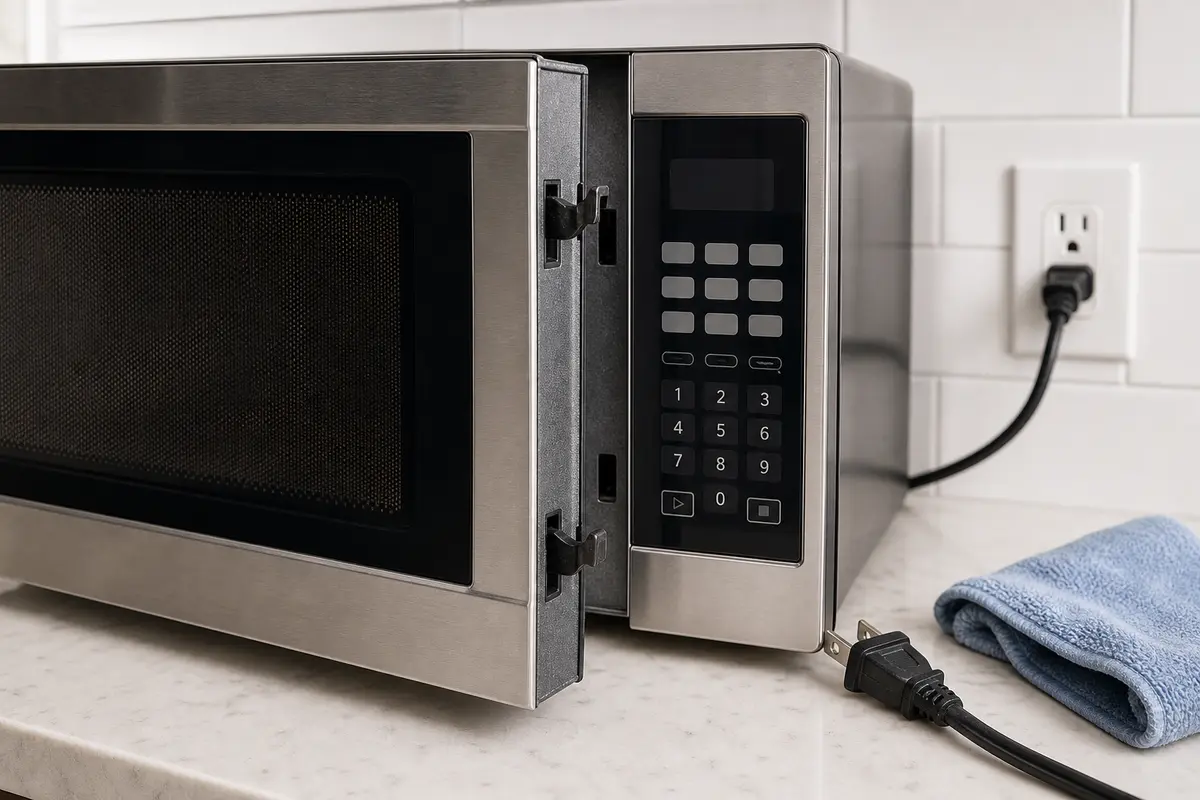
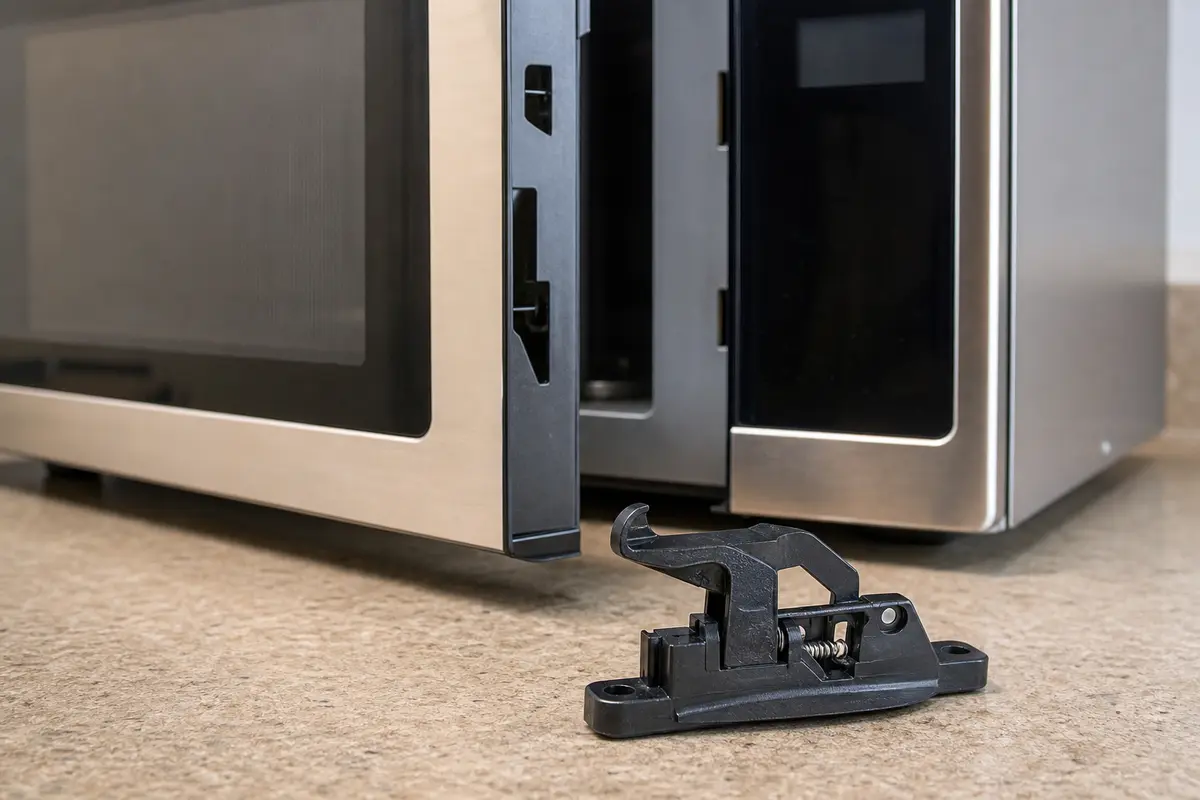
Do not buy a magnetron, capacitor, diode, transformer, or control board from a no-heat symptom; stop and call a pro before any high-voltage parts diagnosis. The only part this page supports as a homeowner-side buy is a door latch assembly, and only when the latch hooks are damaged or door position clearly changes operation. Match the exact model tag and part diagram before ordering.
Use one plain test so you know whether this is really a heating failure. Food shape, frozen spots, sensor cycles, and reduced-power settings can make the symptom look worse than it is.
These are the safe checks worth doing before service. You are looking for a door that does not close squarely, a latch area that is dirty or damaged, or an outlet setup that cannot support the load.
A running microwave with no heat makes people jump straight to magnetron talk. That is exactly where the repair can become unsafe and expensive.
Use the test result to decide whether this stays a safe outside check or moves to professional service.
| What happens | What it usually means | Next move |
|---|---|---|
| Water heats normally | The microwave can heat; the earlier result may be mode, load, or timing related. | Clear the controls and test the original food setup again. |
| Water stays cold but the unit sounds normal | Outside checks are not done yet, or the heating circuit has failed internally. | Check door close, latch area, direct outlet, and circuit load. |
| Heating changes when you press or lift the door | Door latch, hinge, or interlock behavior is involved. | Stop DIY diagnosis and consider service or replacement depending on age and value. |
| A different direct outlet restores heating | The first outlet, extension cord, adapter, or circuit load was the problem. | Use a proper outlet and correct any loose or overheated receptacle. |
| Stop if buzzing, arcing, burn smell, or breaker trip appears | High-risk internal or electrical fault is possible. | Unplug the microwave and stop using it. |
These are only for outside checks. Skip any tool path that would require taking the microwave cover off.
Paid links. As an Amazon Associate I earn from qualifying purchases. Repair Riot may earn a commission at no extra cost to you.
Helps when: Use a plain microwave-safe mug for one controlled water-heating test on full power.
Skip it when: Skip repeated no-heat tests if the first mug stays cold, the unit buzzes harshly, sparks, or smells hot.
Compare microwave-safe mugs on Amazon
Helps when: Use a soft microfiber cloth to wipe residue from the door latch hooks, strike area, and keypad exterior after unplugging the microwave.
Skip it when: Skip spraying cleaner into vents, controls, switches, or latch openings.
Compare microfiber cleaning cloths on Amazon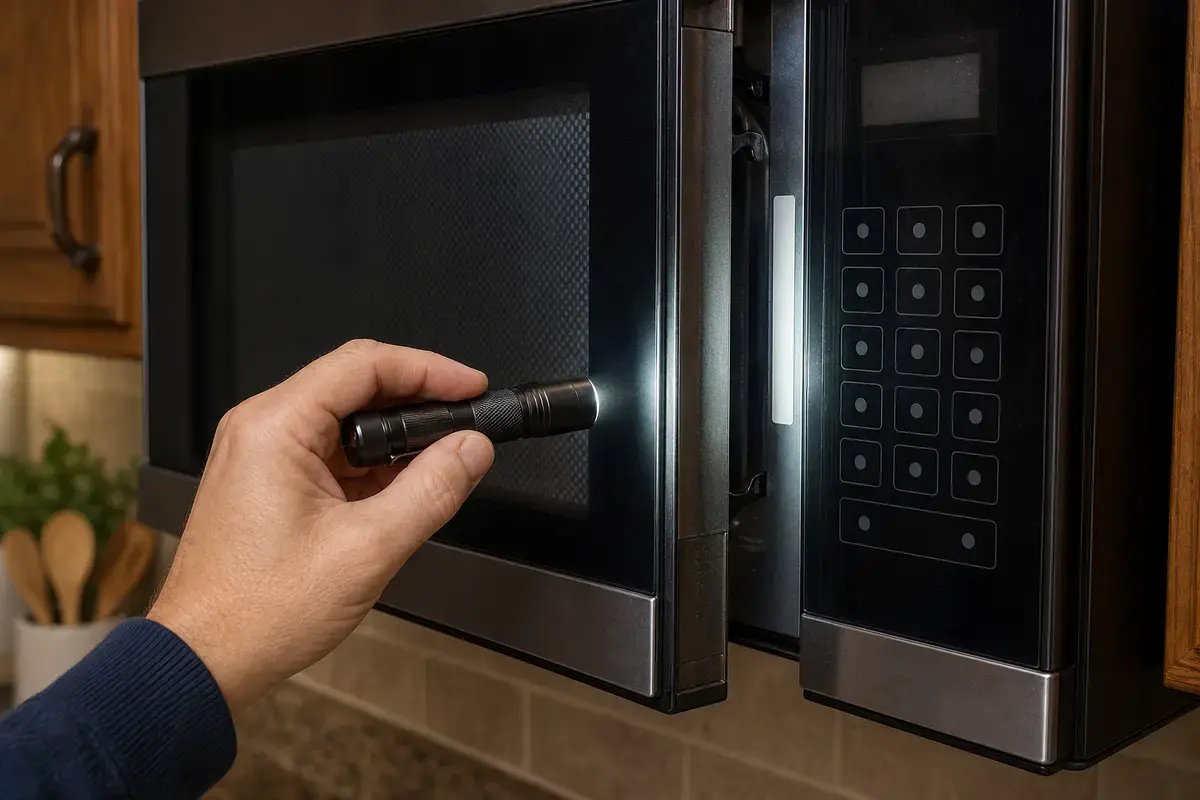
Helps when: Use a compact flashlight to inspect latch hooks, door gaps, scorch marks, plug fit, and outlet condition from outside the cabinet.
Skip it when: Skip any inspection that requires removing the microwave cover or reaching inside service openings.
Compare compact inspection flashlights on AmazonThis page only supports a door-latch buy when the outside symptoms point there. Stop and call a pro before any internal high-voltage parts diagnosis.
Paid links. As an Amazon Associate I earn from qualifying purchases. Repair Riot may earn a commission at no extra cost to you.
Helps when: Use a door latch assembly only when the latch hooks are damaged, the door will not catch cleanly, or door position changes operation.
Skip it when: Skip latch parts if the door closes squarely and the no-heat result does not change with door pressure or alignment.
Compare microwave door latch assemblies on AmazonIf the light, fan, and turntable work but food stays cold, start with one cup of water on high, a clean door latch area, and a direct wall outlet. If those are ruled out, the problem is usually in the internal heating circuit, which is the stop-and-call-a-pro point.
Yes. A microwave can look like it is running normally while the door interlock side is not allowing proper heating. If pressing, lifting, or re-closing the door changes the result, stop there and treat it as a door-latch or interlock issue.
No. Even unplugged, a microwave can store a dangerous electrical charge. Internal no-heat repairs are not a good homeowner project unless you are specifically trained and equipped for microwave high-voltage service.
Yes. A loose receptacle, extension cord, adapter, or circuit already carrying another heavy load can let the display count down while heating stays weak. Test only on a direct wall outlet and stop if the plug or outlet gets hot.
Use the outside clues. A newer unit with a square door, clean latch, solid outlet, and no burn smell may be worth professional diagnosis. Stop using an older unit with door trouble, arcing, burning smell, or breaker trips, and compare the service quote against replacement.
The fan, light, display, and turntable can still run while the heating circuit is not producing microwave energy. If one controlled water test stays cold after the outside checks, stop before cabinet-off diagnosis.
Not as a normal homeowner repair. Microwave capacitors and high-voltage parts can be dangerous after unplugging. If the next step requires cover removal or internal testing, stop and call a qualified appliance tech or compare replacement.
Stop using it that way. Pressing or lifting the door changing the result points to latch, hinge, or interlock trouble. Do not force the door closed or defeat any safety switch.
Repair Riot keeps microwave no-heat guidance focused on safe outside checks. Internal high-voltage diagnosis is treated as a stop point, not a homeowner parts list.