Is water still sitting in the drum?
Drain it slowly through the lower filter area before opening the door or moving the machine.
A Bosch washer E18 or F18 error means drain water is not leaving fast enough. First manage standing water, clean the lower pump filter and cavity, then check the hose and standpipe.
The usual cause is a blocked drain path: a packed filter, a coin at the impeller, a kinked hose, or a restricted standpipe connection.
Good clue: debris in the filter or impeller pocket explains the code before a pump replacement.
Don’t start with: Do not order electronics or a drain pump first. Unplug the washer, drain the tub slowly, and prove the filter and hose path before buying parts.
Drain it slowly through the lower filter area before opening the door or moving the machine.
Look for a blocked filter, a jammed impeller pocket, a kinked hose, or a plugged hose end.
Clean the filter and hose path first. If they are clear, the pump, wiring, or control side needs closer diagnosis.
The house drain or siphon connection may be the restriction, not the washer.
Now a model-matched drain pump is a fair parts candidate, especially if it is silent, seized, or weak.
The useful clues are low and wet: the filter cavity, the impeller pocket, the hose run, and the standpipe connection. A blocked path can make a good pump sound weak.
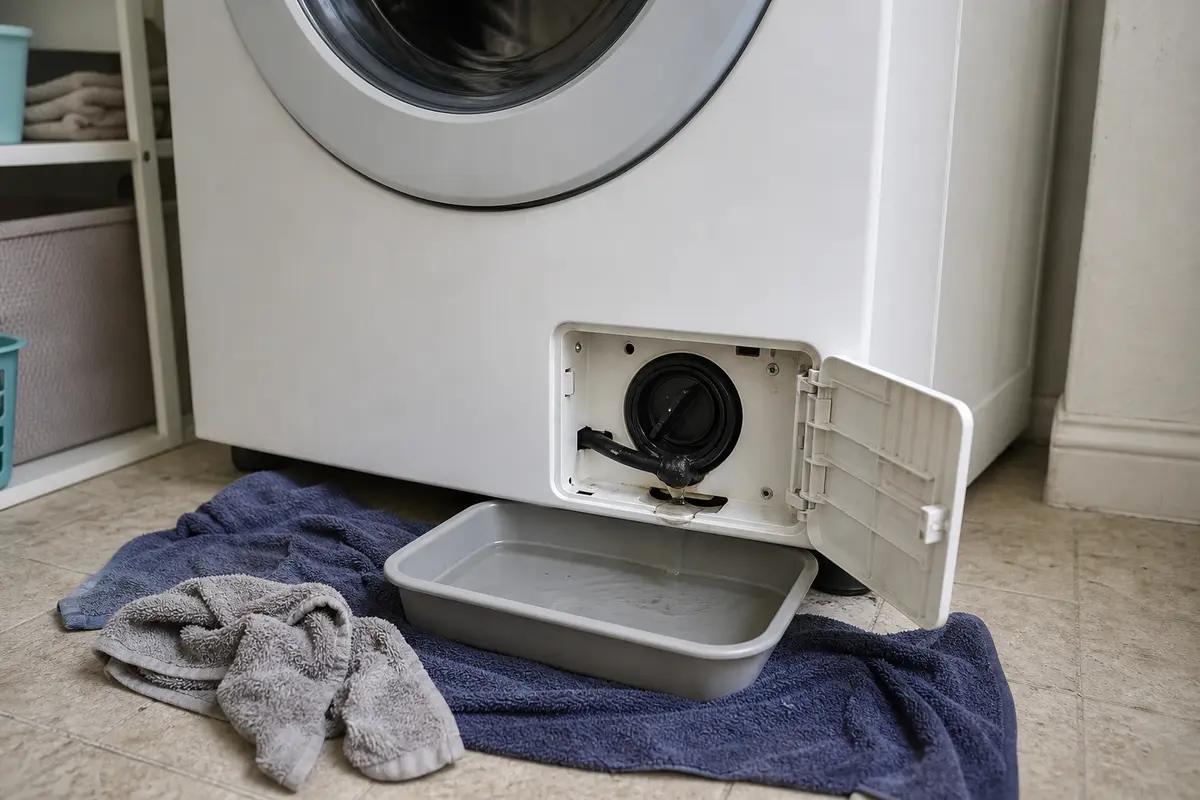
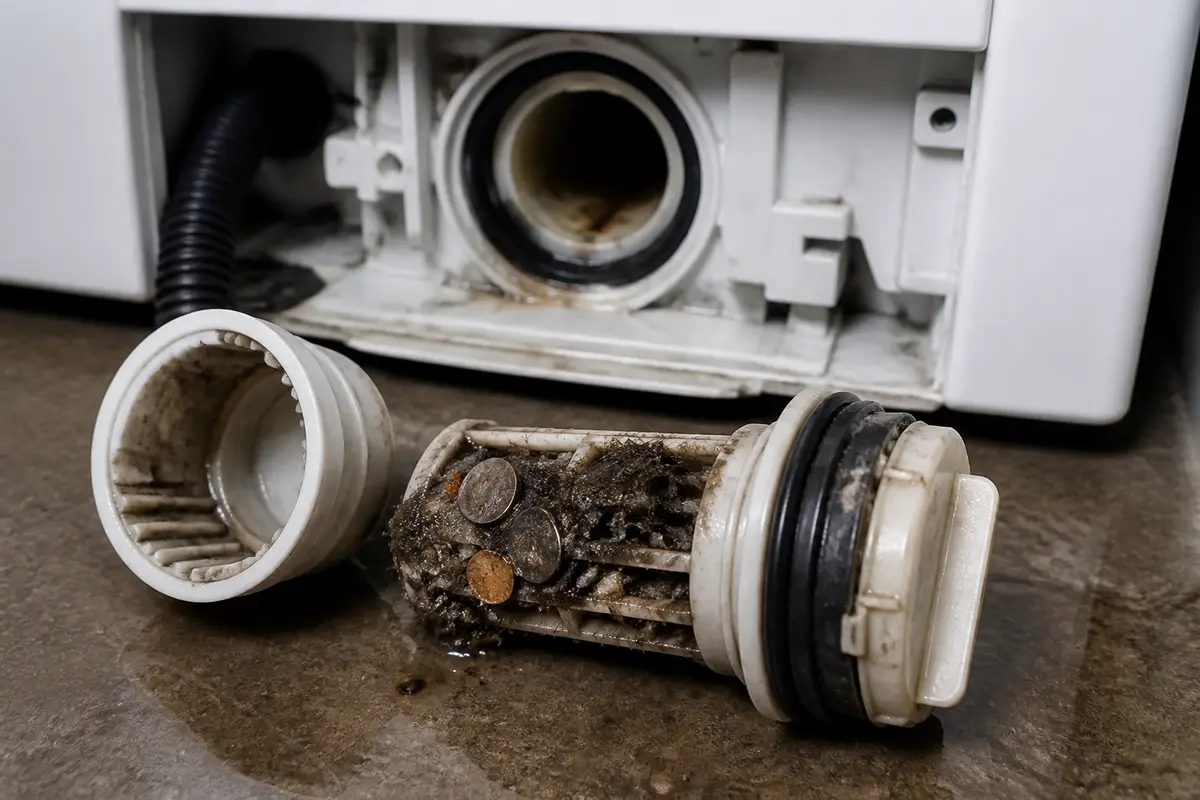
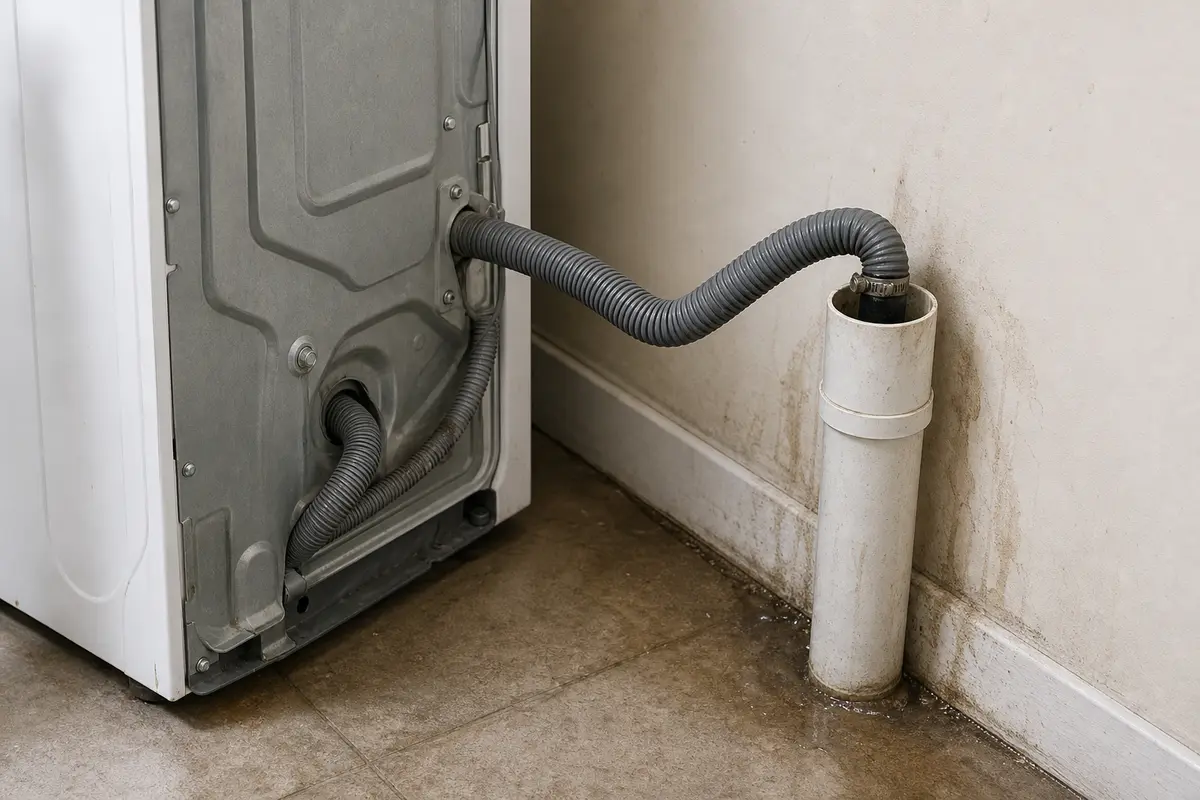
Copy the full Bosch model number from the washer label and prove the drain path first. A pump, filter cap, or hose should go in the cart only after the filter, impeller pocket, hose routing, and house drain connection point that way.
Bosch treats E18 and F18 as drain-side faults. The washer expected water to leave, and the water did not move fast enough.
The bad move is replacing parts while water and lint are still sitting in the drain path. Start with the messier checks because they tell you the most.
This is the slow part of the job. The washer can hold more water than the lower filter area looks ready for.
The filter is not clean until the cavity behind it is clean too. Small hard items can sit past the screen and stop the impeller.
A clean filter does not help if the discharge path is pinched or blocked. Watch the hose end, not just the pump sound.
| What you see | What it usually means | Next move |
|---|---|---|
| Filter packed with lint, coins, or small fabric | The washer could not move water through the pump inlet | Clean the filter, cavity, and cap threads, then run a drain-only cycle |
| Pump hums and the impeller is blocked | The pump may be good but jammed | Remove the debris, retest, and listen for a steady drain sound |
| Hose is kinked or hose end is packed with sludge | The discharge path is restricted after the pump | Straighten, clean, or replace the hose only if it stays damaged or blocked |
| Standpipe or sink connection backs up | The house drain cannot take the washer discharge | Stop and clear the plumbing side before blaming the washer |
| Path is clear but pump is silent, seized, or weak | Drain pump failure is now plausible | Match the pump by full model number before ordering |
A drain pump is a reasonable repair only after the water has a clear route out of the washer. That keeps a simple blockage from turning into a wrong part.
These tools are for draining, seeing, and catching water. Skip any step that would put your hands near wet wiring or require major cabinet teardown.
Paid links. As an Amazon Associate I earn from qualifying purchases. Repair Riot may earn a commission at no extra cost to you.
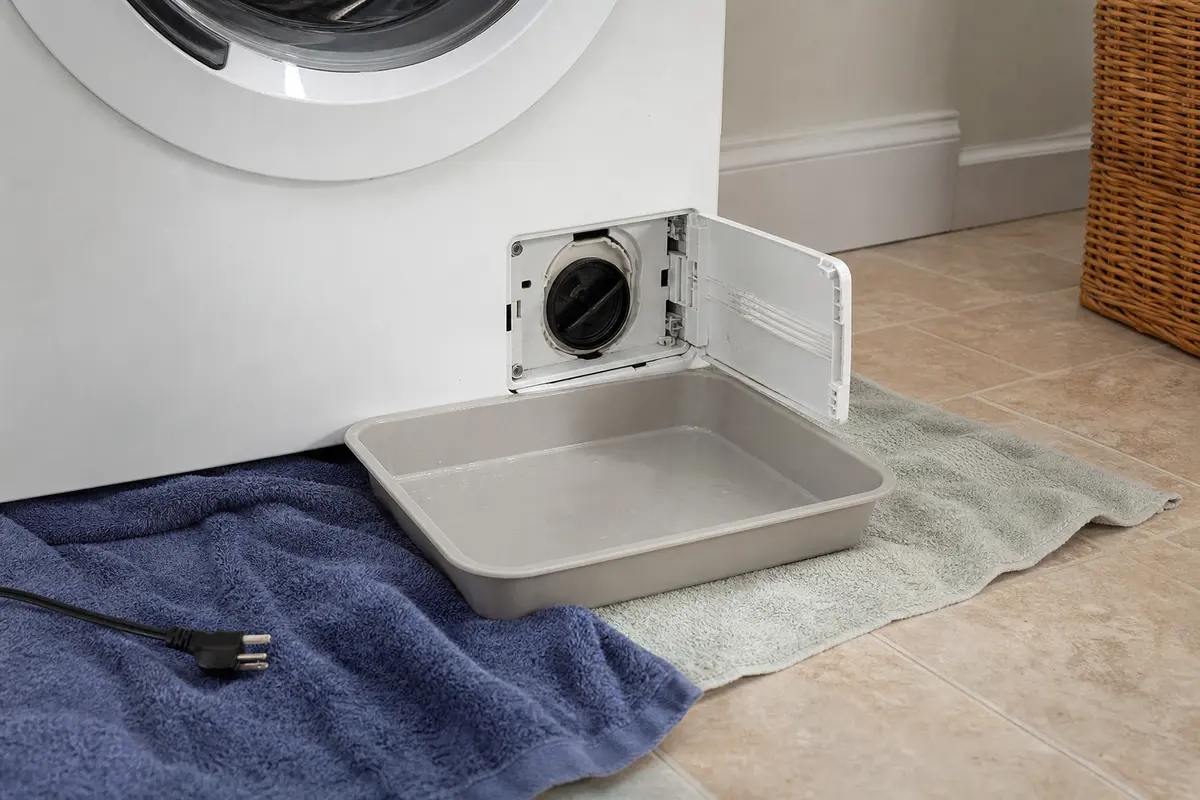
Helps when: Use a shallow drain pan to control water while opening the Bosch lower pump filter slowly.
Skip it when: Skip filter work if you cannot manage standing water safely.
Compare shallow drain pans on Amazon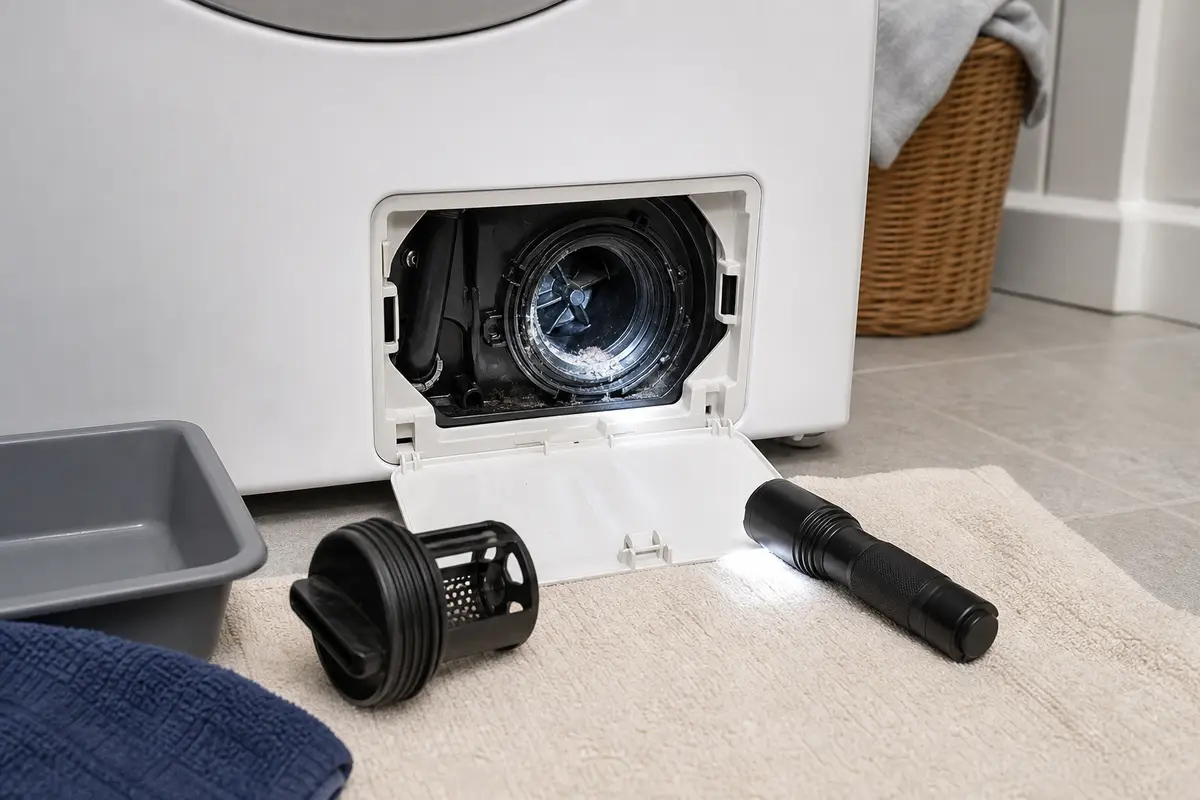
Helps when: Use an inspection flashlight to find hair, trap sludge, code timing clues, or the first wet point without guessing.
Skip it when: Skip work until the area is dry, accessible, and safe to inspect.
Compare inspection flashlights on Amazon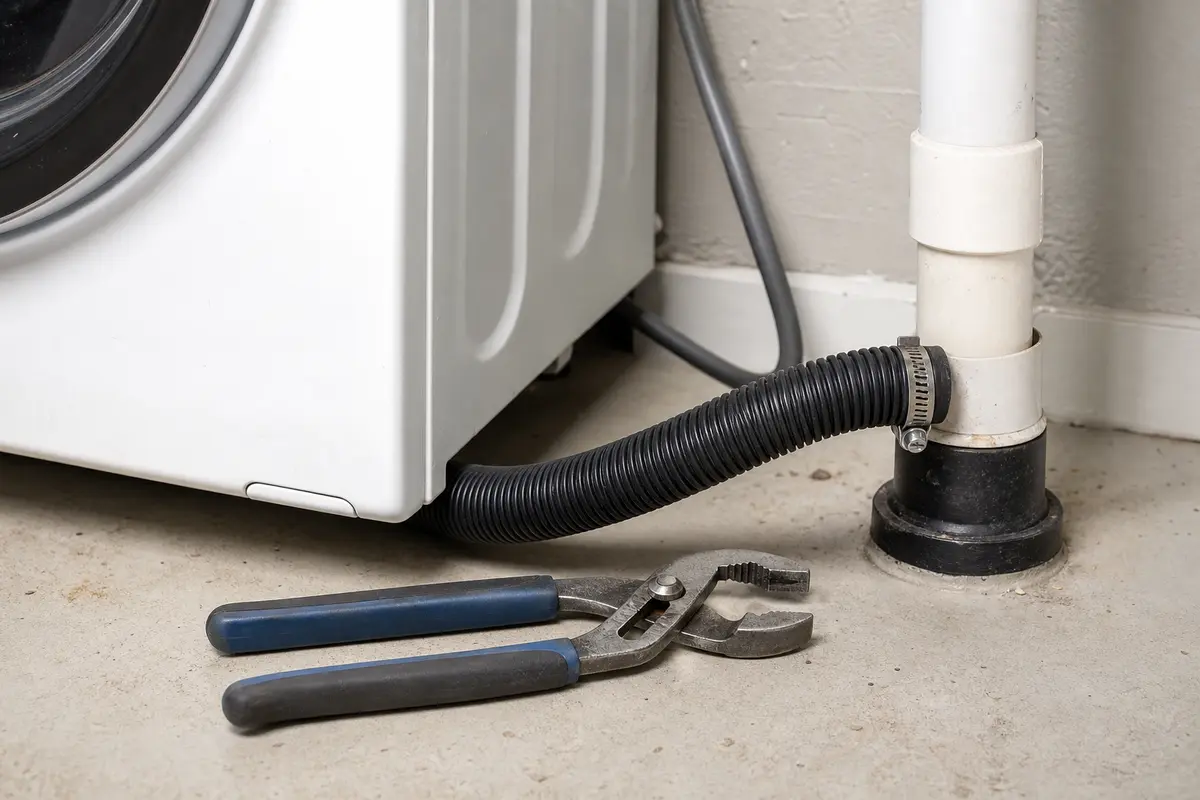
Helps when: Use slip-joint pliers on accessible hose clamps only after the washer is unplugged and water is controlled.
Skip it when: Skip forcing clamps or hoses that require cabinet teardown or expose wet wiring.
Compare slip-joint pliers on AmazonParts are later-stage decisions. Match every washer part to the full Bosch E-Nr or model number, not just to the E18 or F18 code.
Paid links. As an Amazon Associate I earn from qualifying purchases. Repair Riot may earn a commission at no extra cost to you.
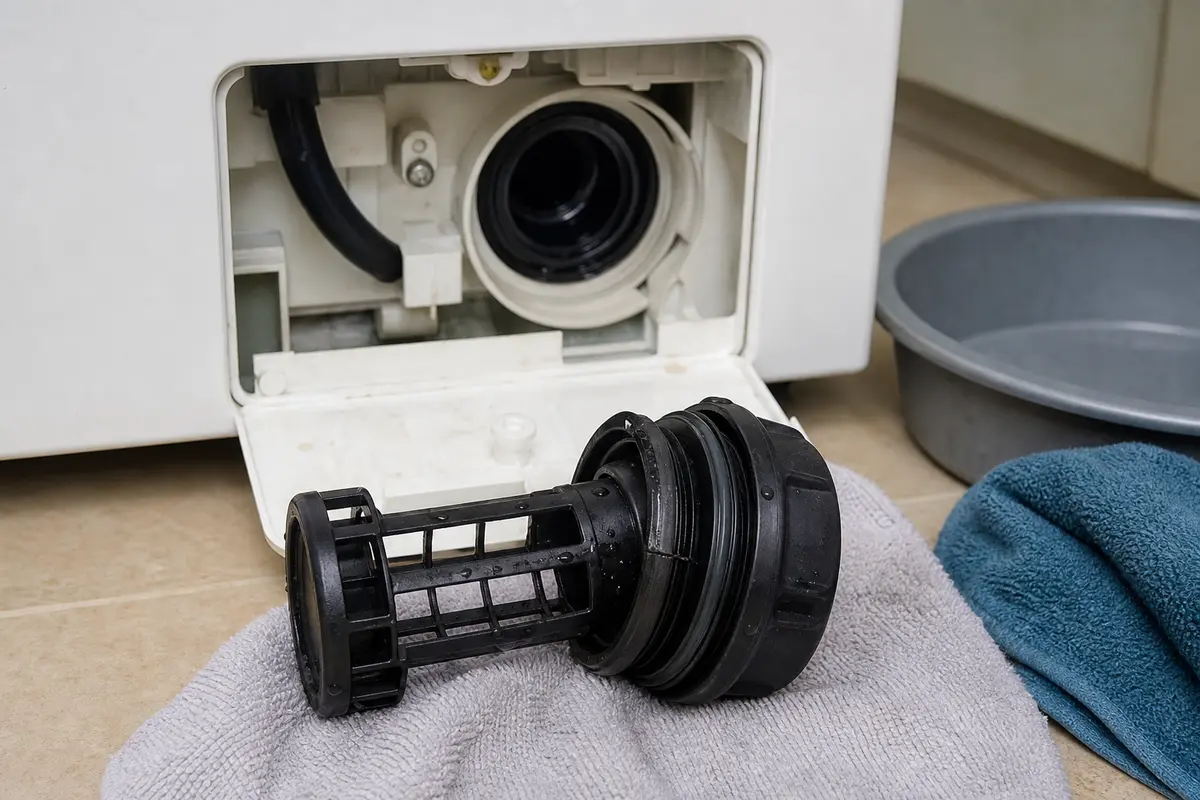
Helps when: Use a washer drain pump filter cap only if the original is damaged, cracked, or will not seal after cleaning.
Skip it when: Skip replacing it before cleaning the filter cavity and checking for trapped debris.
Compare Bosch washer drain pump filters on Amazon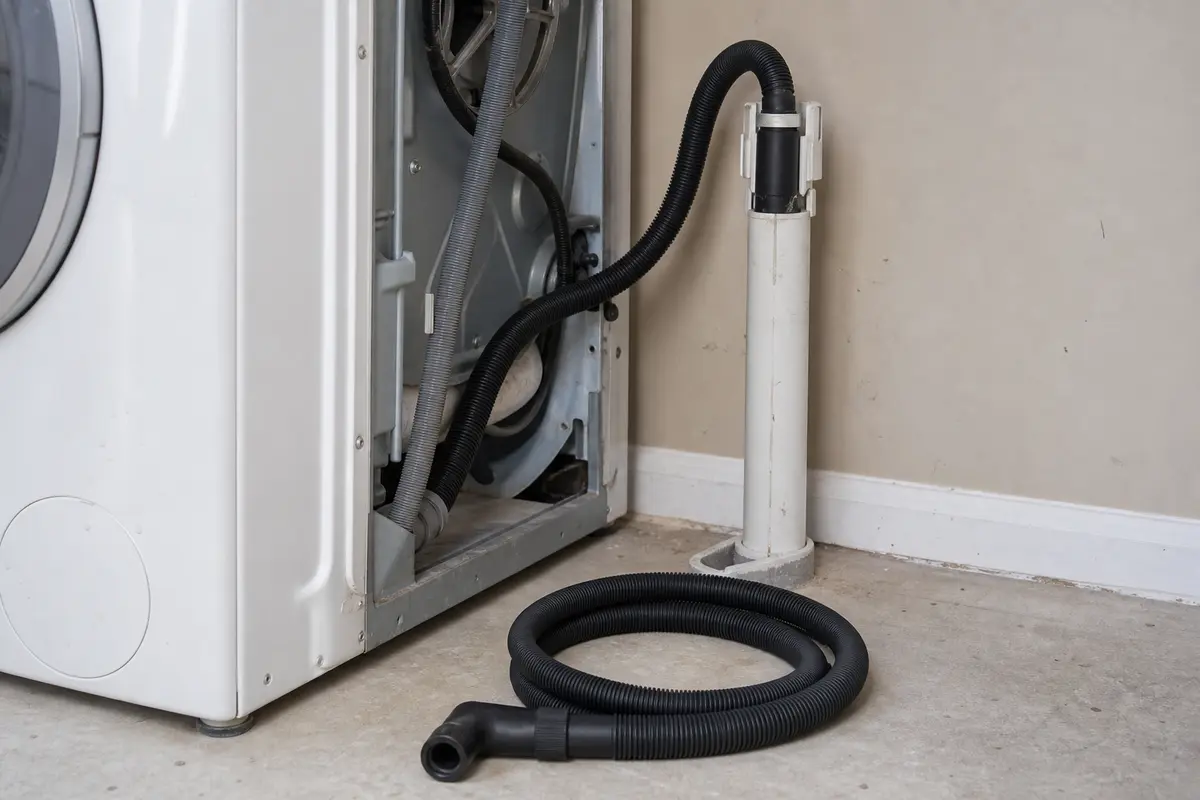
Helps when: Use a washer drain hose when the hose is kinked, blocked, split, or incorrectly routed after inspection.
Skip it when: Skip hose replacement if the blockage is in the filter cavity or standpipe.
Compare Bosch washer drain hoses on Amazon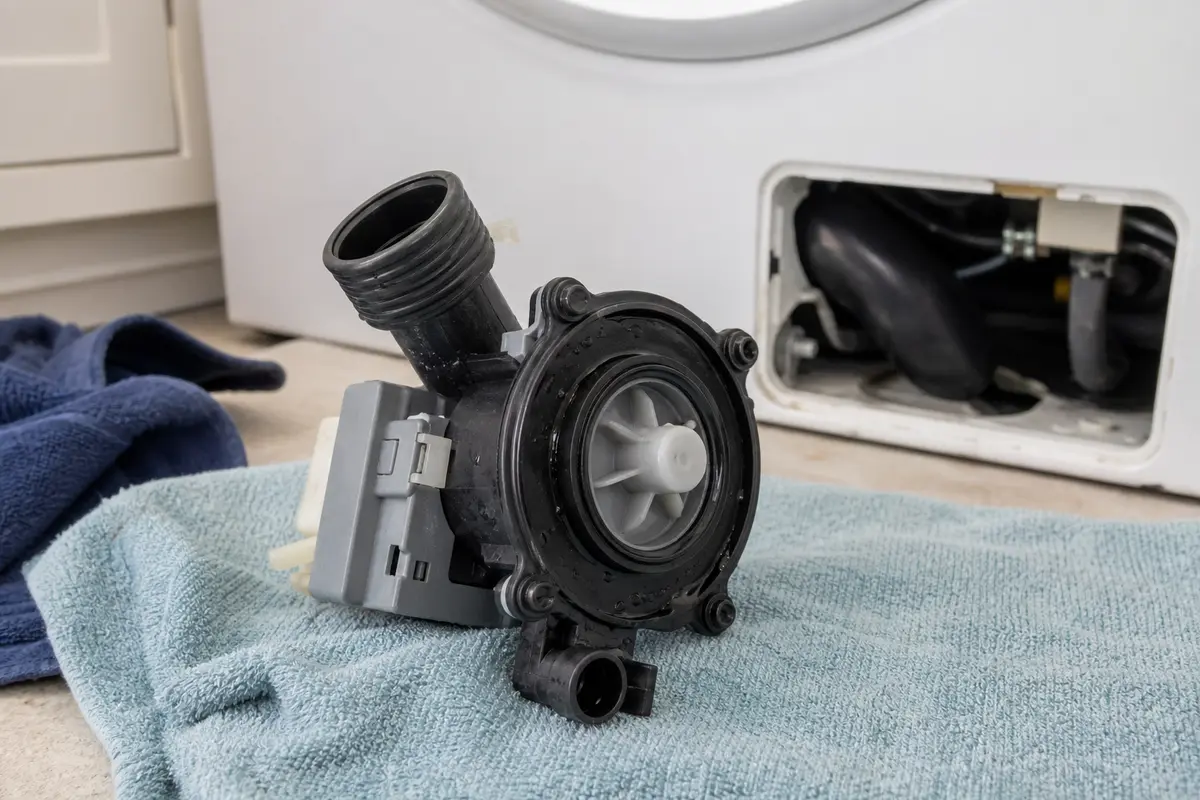
Helps when: Use a washer drain pump only after the filter, impeller pocket, hose, and standpipe are clear and the pump still fails.
Skip it when: Skip pump replacement from E18 or F18 alone; match by Bosch E-Nr or full model.
Compare Bosch washer drain pumps on AmazonIt usually means the washer is not draining water out fast enough. The most common causes are a clogged washer drain pump filter, debris in the pump, or a restricted washer drain hose.
For practical troubleshooting, yes. Both point you toward a drain problem first, so start with standing water, the filter, the pump cavity, and the drain hose.
You can try unplugging it for a few minutes, but if water is still in the drum or the code comes back, a reset will not fix the blockage or weak pump causing the problem.
That usually means the washer drain pump is trying to run but something is blocking the impeller or the pump is failing mechanically. Check the filter and pump cavity before replacing the pump.
Usually no. A clogged filter or hose is more common than a bad pump. Replace the washer drain pump only after you confirm the filter and hose are clear and the pump is still silent, seized, or too weak to move water.
Yes. If the standpipe or sink drain is backing up, the washer may not be able to discharge water properly. In that case the washer may be fine and the drain line needs attention.
Look one step past the filter. Debris can sit in the impeller pocket, the drain hose can be kinked behind the washer, or the standpipe connection can be restricted even after the filter looks clean.
The pump is a better candidate after the filter, impeller pocket, hose, and house drain are clear. A silent pump, seized impeller, rough grinding, or very weak flow with a clear path points toward pump repair.
Do not keep restarting spin or drain cycles while the tub is holding water. Drain the washer slowly through the lower access area first, then clean the filter and hose path before a controlled drain cycle.
Use the washer's rating label or Bosch manual lookup to get the full E-Nr or model number. Drain pumps, filter caps, and hoses can look similar but use different mounts, seals, and connectors.
Repair Riot built this page around the visible drain path: standing water, filter debris, impeller movement, hose routing, and the point where a pump becomes a supported repair.