Is the oven face or cabinet still warm?
That points to normal cool-down or trapped heat. Keep the vent clear and time how long the fan takes to stop.
A Bosch oven fan that keeps running after shutoff is usually normal while the oven face and cabinet are still warm. If it runs from a cool oven or restarts after reset, clear the exterior vent path first, then use baking-temperature clues to separate sensor trouble from control relay trouble.
Most repeat run-on comes from trapped heat at the vent path, a temperature sensor reading too hot, or a relay that keeps the cooling fan command on.
Use the warm-or-cold split first. That single clue prevents most wasted oven parts.
Don’t start with: Do not start with a control board. Prove whether the oven is still shedding heat first.
That points to normal cool-down or trapped heat. Keep the vent clear and time how long the fan takes to stop.
Longer fan time is expected after high heat. Treat it as suspicious only after the oven is fully cool.
That points away from normal cool-down and toward a false heat signal or relay fault.
A drifting oven temperature sensor moves higher on the list.
Watch the next cycle. A one-time logic hiccup is different from a repeat command.
Stop parts guessing. The control side needs testing before more use.
The useful clues are visible at the oven face: cabinet heat, blocked vent slots, and whether the fan behaves the same from a cold start.
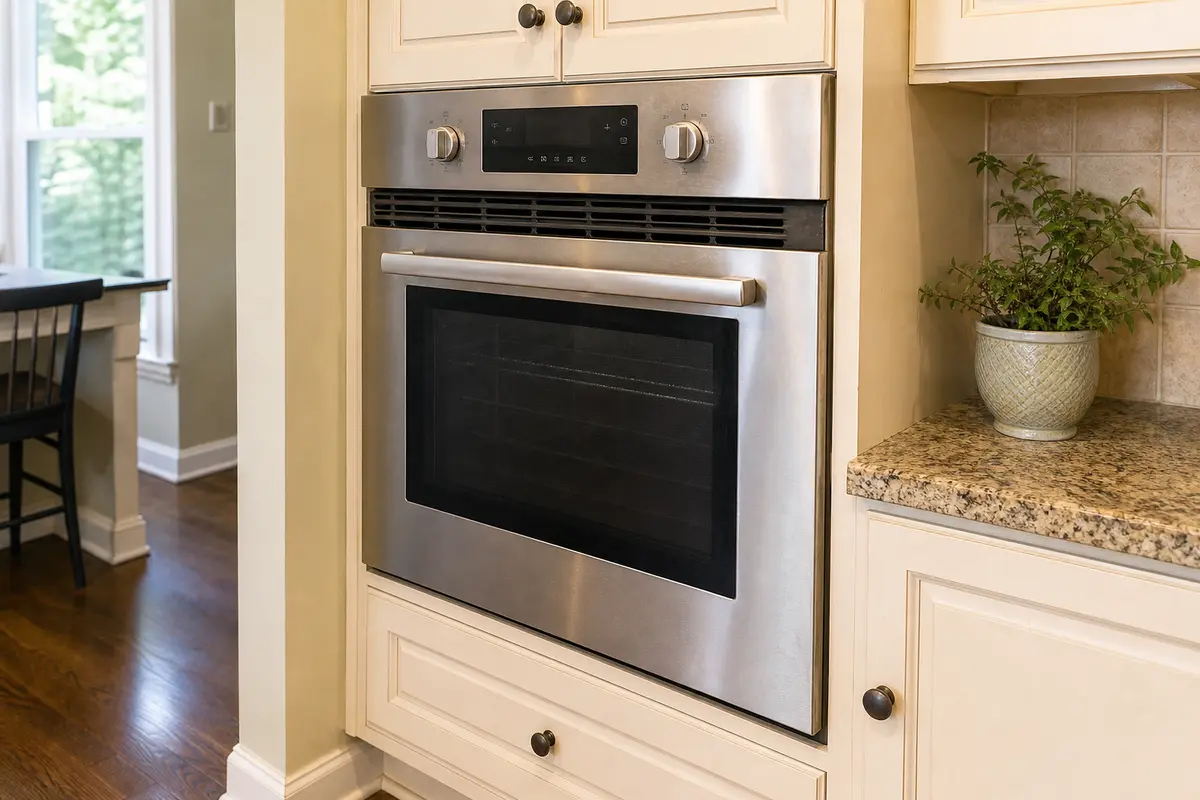
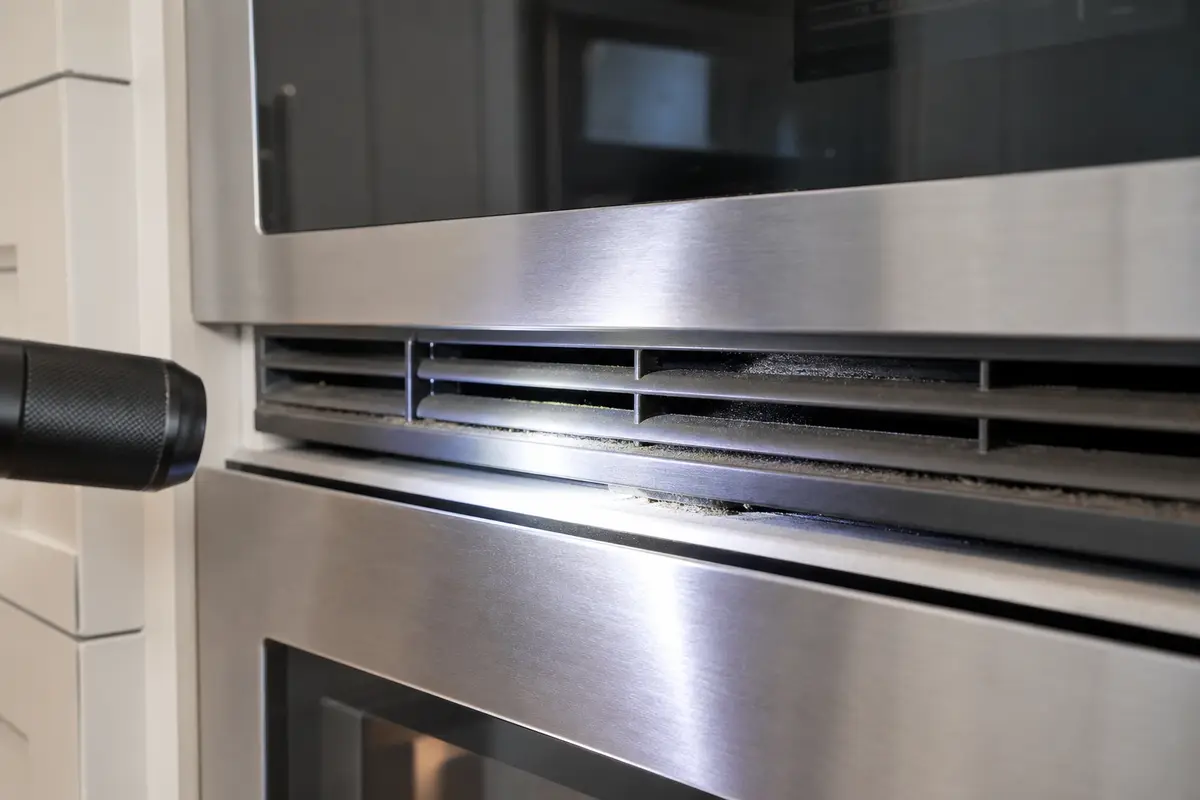
Before buying an oven temperature sensor, let the oven cool fully and clear the exterior vent path. If the fan still runs from a cool oven and baking temperature has drifted, match the exact model tag, connector shape, and mounting position before ordering.
The cooling fan protects the control area and surrounding cabinet. The first question is whether the oven is still warm enough to need that airflow.
This symptom gets expensive when parts are ordered before the warm-or-cold split is clear.
Time the fan from oven-off to fan-off once after a normal bake and once after high heat. That pattern tells you where to go next.
| What you notice | What it usually means | Next move |
|---|---|---|
| Fan stops while the oven is still warm | Normal cool-down behavior | Keep vents clear and monitor. |
| Fan runs much longer after broil or self-clean | High cabinet heat load | Let it cool fully before diagnosis. |
| Fan runs after the oven is cool | False heat signal or stuck command | Inspect airflow, then sensor/control clues. |
| Fan returns right after a cold reset | Control-side fault is likely | Leave power off and arrange testing. |
| Fan run-on comes with poor baking temperature | Sensor trouble becomes more likely | Confirm model fit before buying a sensor. |
The exterior vent check is the safe homeowner step. It often explains long fan time without removing the oven.
A sensor is not a fan part. It becomes relevant when the control thinks the oven is still hot or when cooking temperature clues line up.
These support exterior checks only. Built-in oven service and live electrical diagnosis belong to a qualified technician.
Paid links. As an Amazon Associate I earn from qualifying purchases. Repair Riot may earn a commission at no extra cost to you.
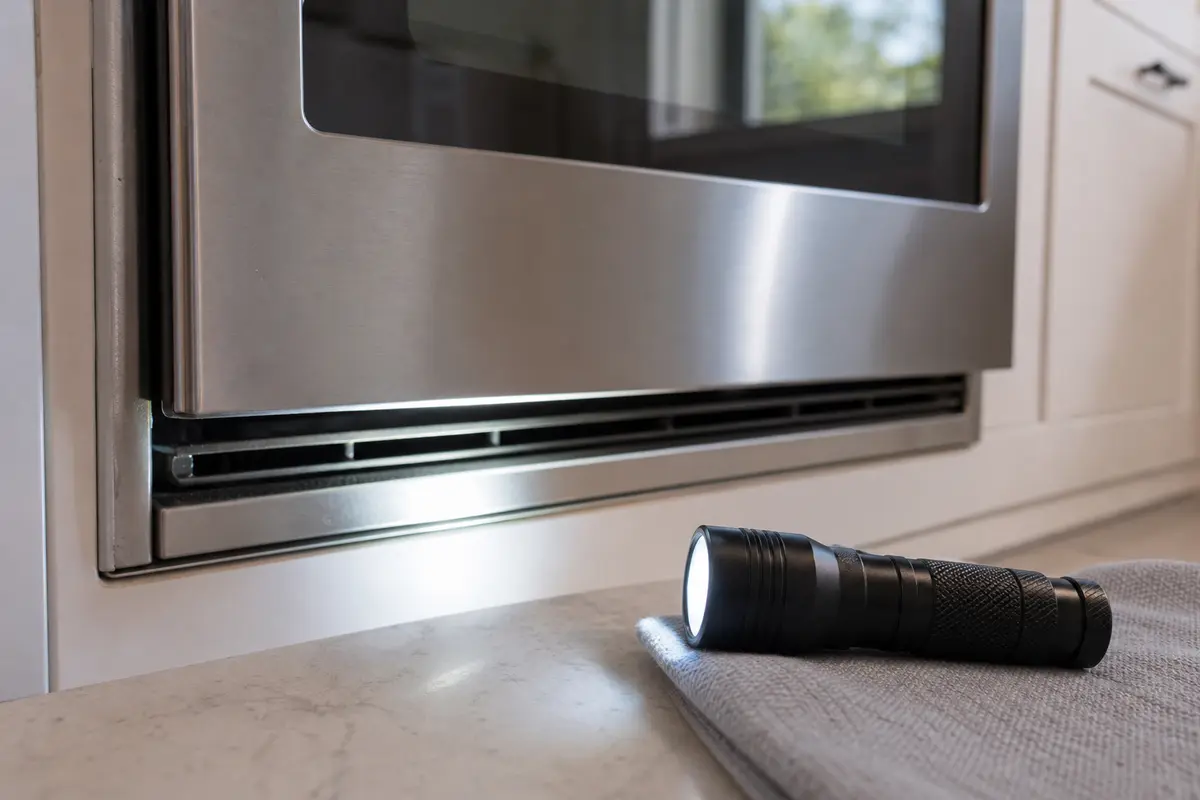
Helps when: Use it to see vent slots and trim gaps without moving the wall oven.
Skip it when: The oven needs live electrical testing or cabinet removal.
Compare inspection flashlights on Amazon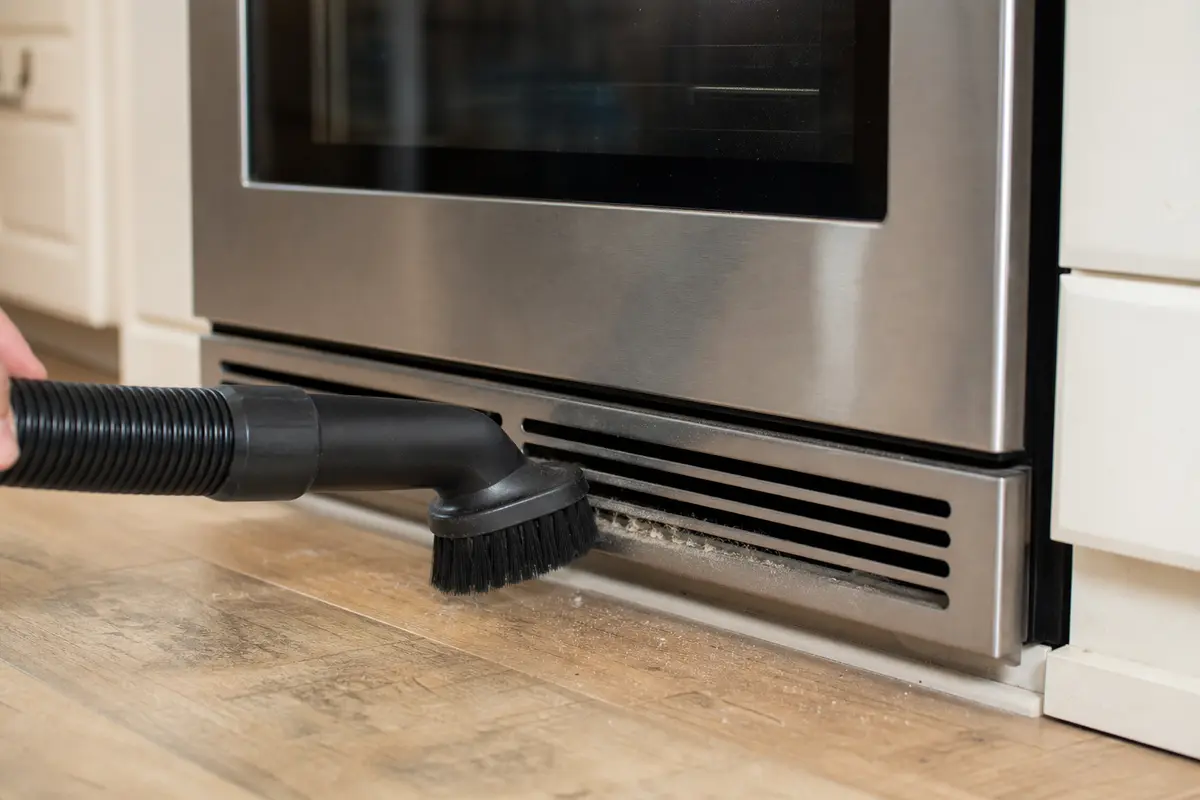
Helps when: Use it only at exterior vent slots to remove loose dust and lint.
Skip it when: Grease or debris is inside the control area or fan housing.
Compare vacuum brush attachments on AmazonBuy parts only after the fan pattern points away from normal cool-down and blocked airflow. Observable clues should come first: cool-oven fan run, false-hot behavior, or poor baking temperature.
Paid links. As an Amazon Associate I earn from qualifying purchases. Repair Riot may earn a commission at no extra cost to you.
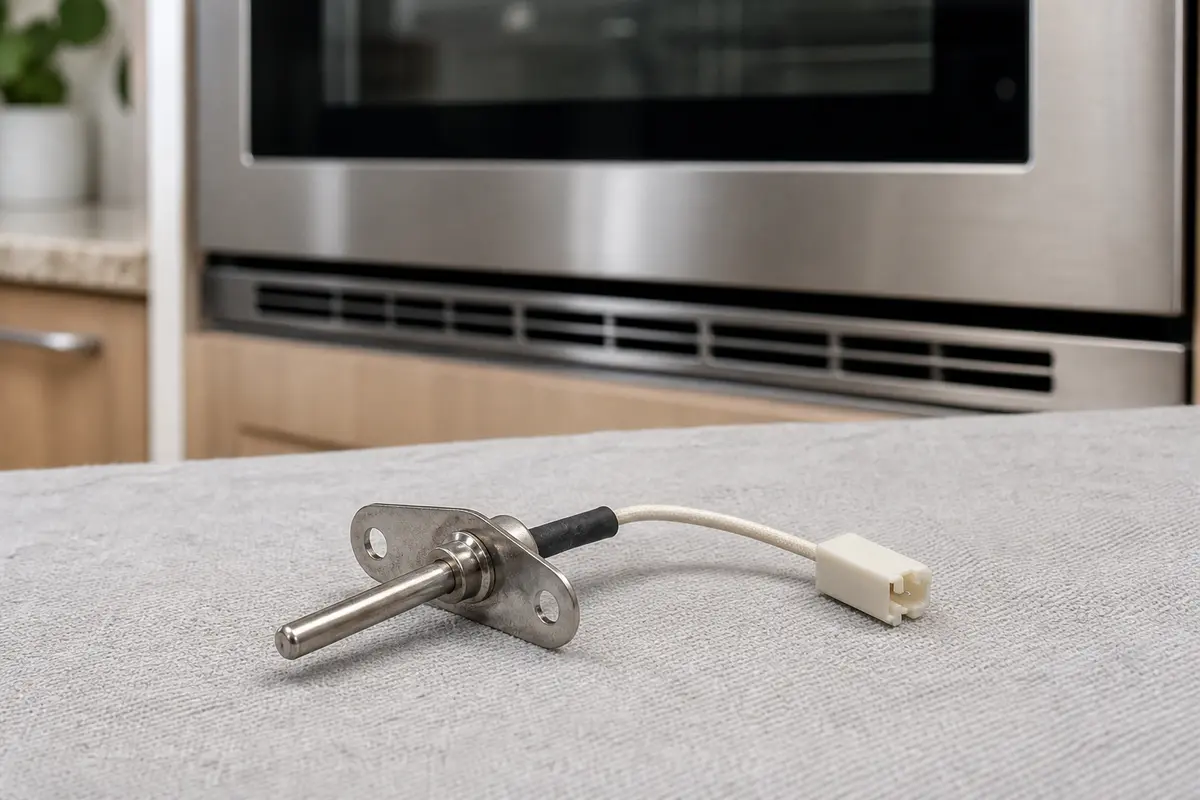
Helps when: Compare only after false-hot behavior or baking temperature drift points to the sensor.
Skip it when: The fan only ran long after high heat or the vent path was blocked.
Compare oven temperature sensors on AmazonYes, while the oven and cabinet are still warm. It is suspicious when the oven is cool and the fan still runs or restarts from a cold start.
Run time depends on heat level, cabinet airflow, and cooking mode. High heat and self-clean can make the fan run much longer than a normal bake.
The likely paths are trapped heat near the control area, a sensor reading too hot, or a relay that keeps the fan command on.
One cold reset can help sort a control glitch from repeat behavior. Do not use the breaker as the normal way to stop the fan.
Yes. Grease film, dust, tight trim, or items near the vent can slow cabinet cooling and keep the fan running.
Usually no. A bad cooling fan motor more often sounds rough, weak, or seized. If the fan sounds steady but keeps running from a cool oven, check the exterior vent path first. If that is clear, look for false-hot sensor clues or a relay command that comes back after reset.
Compare the sensor only when the oven acts hot while cool, baking temperature has drifted, or the fan pattern follows false heat clues.
Call when the oven is hardwired, the fan runs from cold, heat continues with controls off, or diagnosis requires moving the oven or opening electrical compartments.
Repair Riot built this page around homeowner-safe sorting: cool-down timing, exterior airflow, baking-temperature clues, and when a built-in oven should move to service.