Is water under the cabinet?
Dry the floor, then watch the drain outlet. A loose fitting or cracked hose is different from a blocked internal outlet.
If an Aprilaire whole house dehumidifier is not draining, check the drain route before replacing parts. Good clue: a heavy hose, wet outlet, dirty trap, or full pump tank tells you where the water stopped.
Usually the problem is a partial clog, sagging drain hose, dirty trap, bad pitch, or pump-side backup, not a failed internal switch.
First sort the symptom: water under the cabinet, no flow at the drain, or a unit that shuts down like it is full. That split tells you whether to inspect the outlet, line slope, trap, pump, or float area.
Don’t start with: Don’t start by ordering a pump or opening electrical compartments just because water is backing up. Most no-drain calls end up being a simple drain path problem.
Dry the floor, then watch the drain outlet. A loose fitting or cracked hose is different from a blocked internal outlet.
A gravity drain needs steady fall to the floor drain, condensate drain, or standpipe. Any low spot can hold water and start the repeat backup.
A trap can clog, and a pump adds a second failure point. If water reaches the pump tank but does not discharge, move away from hose-only diagnosis.
Clean the outlet and first hose section gently. That first few inches is where slime and fine debris often stop the drain.
Then a float or level switch is more believable, but only after slope, clog, and pump checks are finished.
The useful split is simple: water is either backing up at the dehumidifier outlet, trapped in the drain run, or waiting for a pump to lift it.
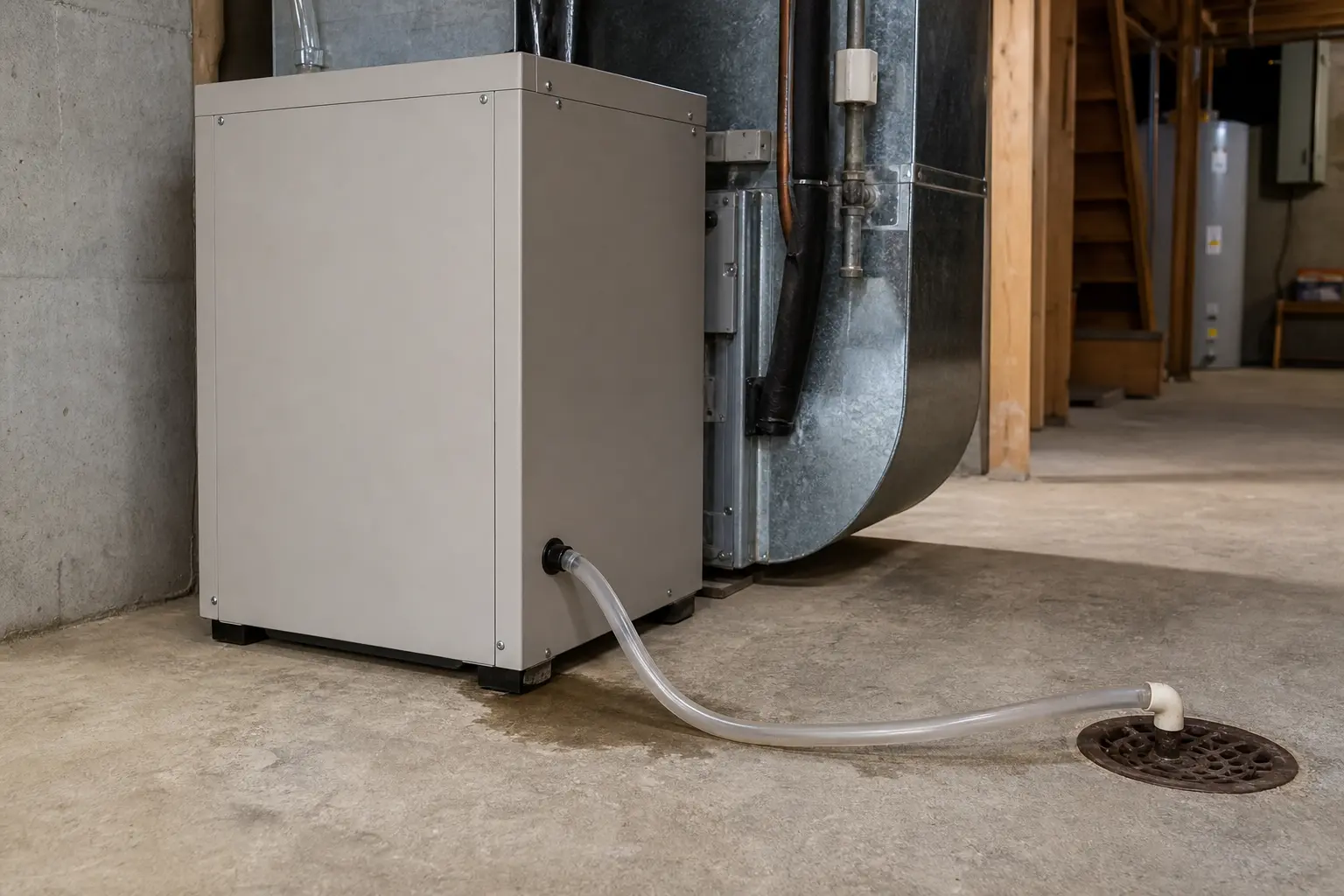
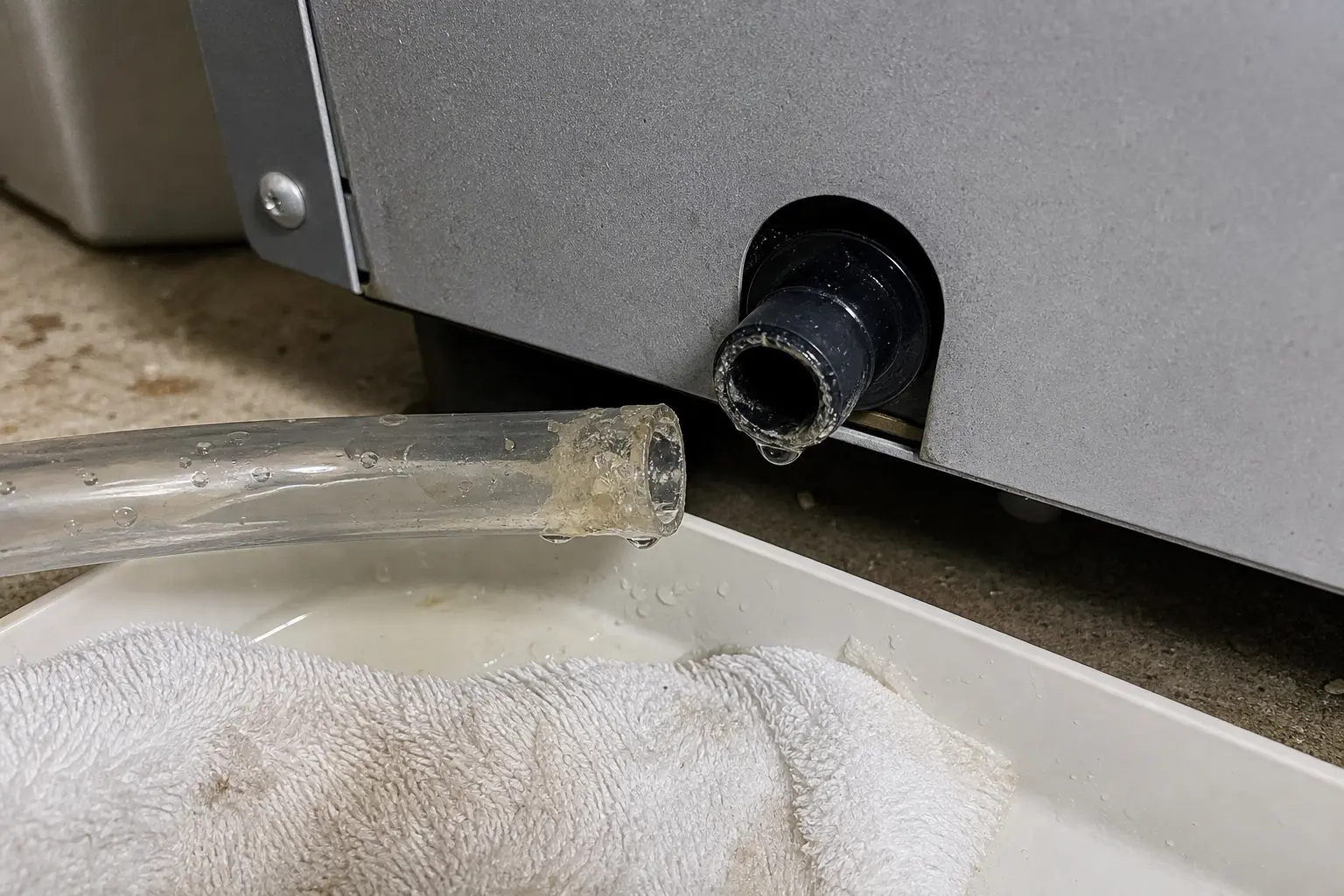
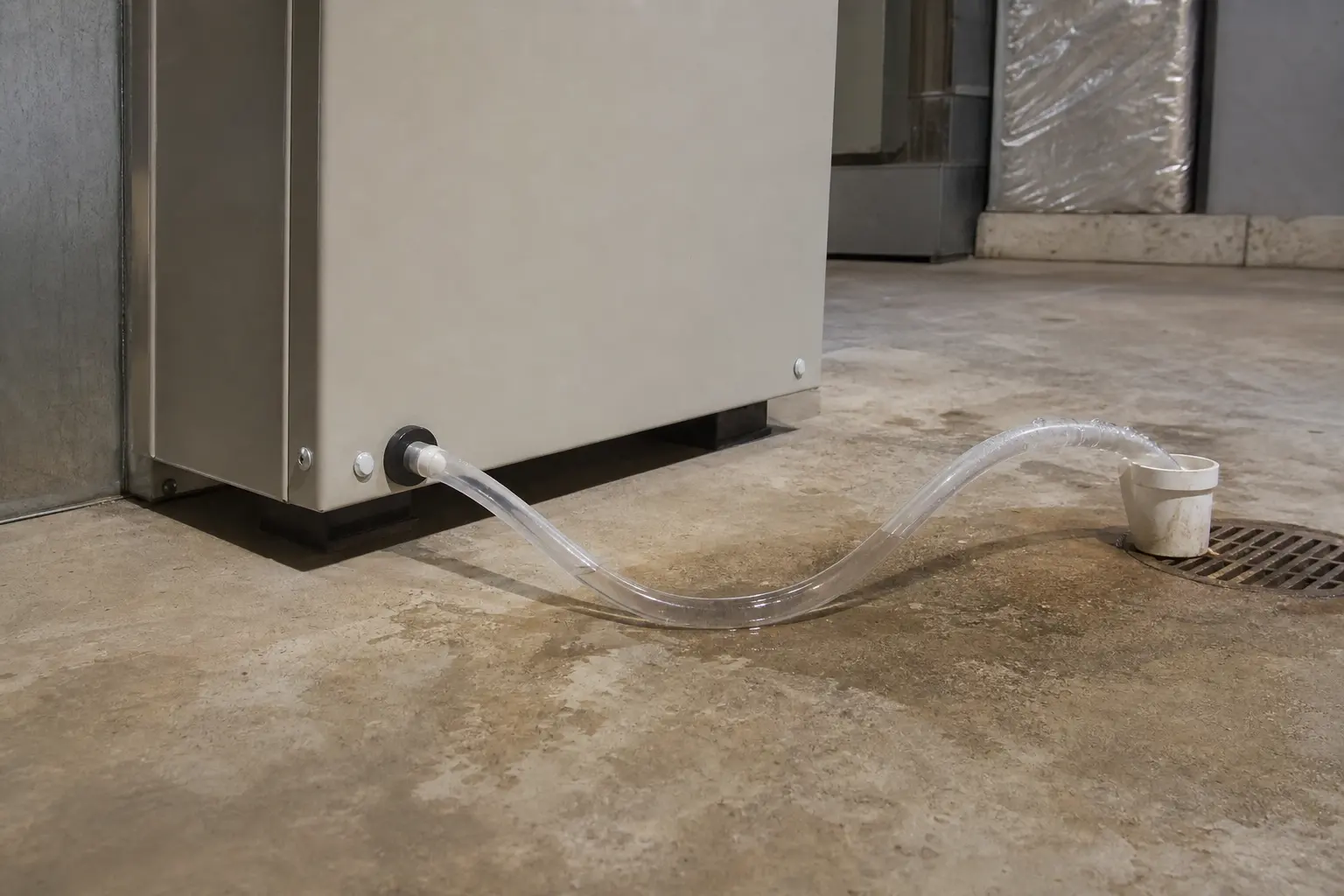
Aprilaire whole-house units can be installed with different drain layouts. Match the exact model and the proven failure point before buying tubing, a trap, a pump, or a float switch.
Most Aprilaire no-drain complaints are not a mystery failure inside the dehumidifier. The water has a short trip from the drain outlet to the building drain, and a small restriction can stop that trip.
The wrong first move can damage a plastic fitting, soak controls, or send debris deeper into the condensate system.
Use this table before buying anything. The same symptom can mean a cheap hose fix, a dirty trap, a pump problem, or a service call depending on where the water stops.
| What you see | What it usually means | Next move |
|---|---|---|
| Water drips at the hose connection | Loose fitting, cracked hose, or poor clamp position | Reseat or replace the hose before opening the cabinet. |
| Water sits at the dehumidifier outlet | Slime, sediment, or outlet restriction | Clean the outlet gently and flush the first hose section. |
| Hose has a sag or uphill section | Water is trapped in the run | Support the line so it keeps a steady downhill pitch. |
| Trap is dirty or holds debris | Condensate cannot leave fast enough | Clean or rebuild the trap only if you can match the original layout. |
| Pump tank fills but discharge stays dry | Pump, check valve, tubing, or power issue | Stop treating it as a hose clog and diagnose the pump side. |
| Drain is clear but unit still reads full | Float or water-level switch branch | Inspect for residue first; replace only by exact model fit. |
A whole-house dehumidifier is part appliance and part HVAC drain system. Confirm the installation style, then use the right rule for that style.
These are for inspection and cleanup, not for live electrical testing. Stop if access requires disturbing wiring or sealed panels.
Paid links. As an Amazon Associate I earn from qualifying purchases. Repair Riot may earn a commission at no extra cost to you.
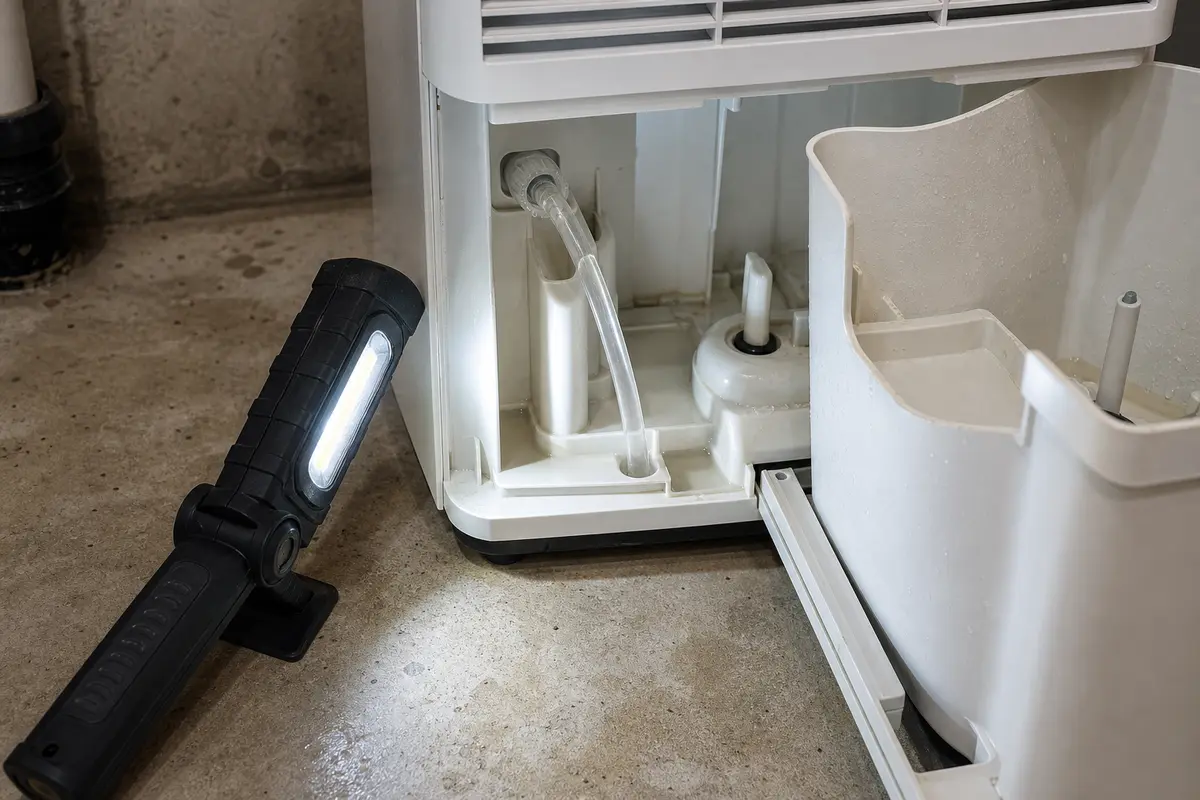
Helps when: Use it to see the drain outlet, hose slope, trap, pump reservoir, and fresh water track without reaching blindly.
Skip it when: Skip the inspection if you cannot shut power off or if water is already near electrical parts.
Compare inspection flashlights on Amazon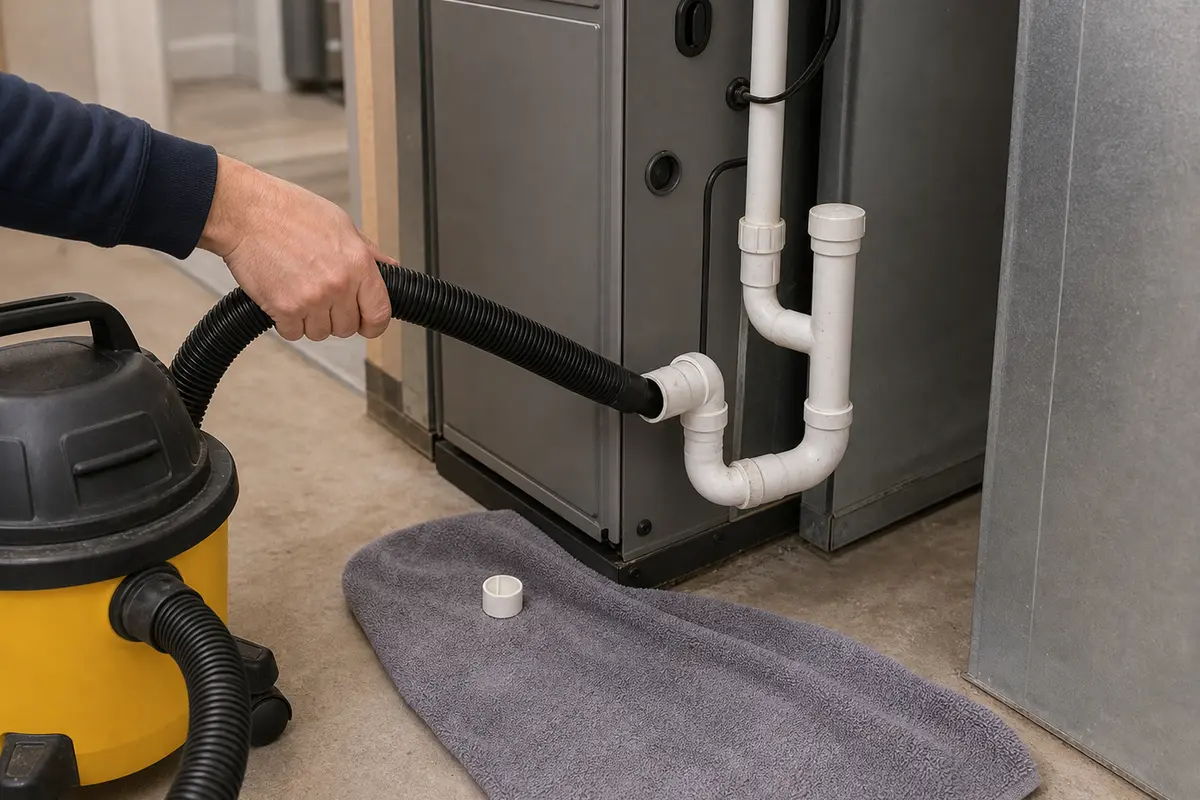
Helps when: Use it at a safe cleanout or discharge point when the drain line is clogged and the exit path is known.
Skip it when: Skip it if suction would pull through the cabinet, wiring, a glued trap you do not understand, or an unknown shared drain.
Compare wet/dry vacuums on Amazon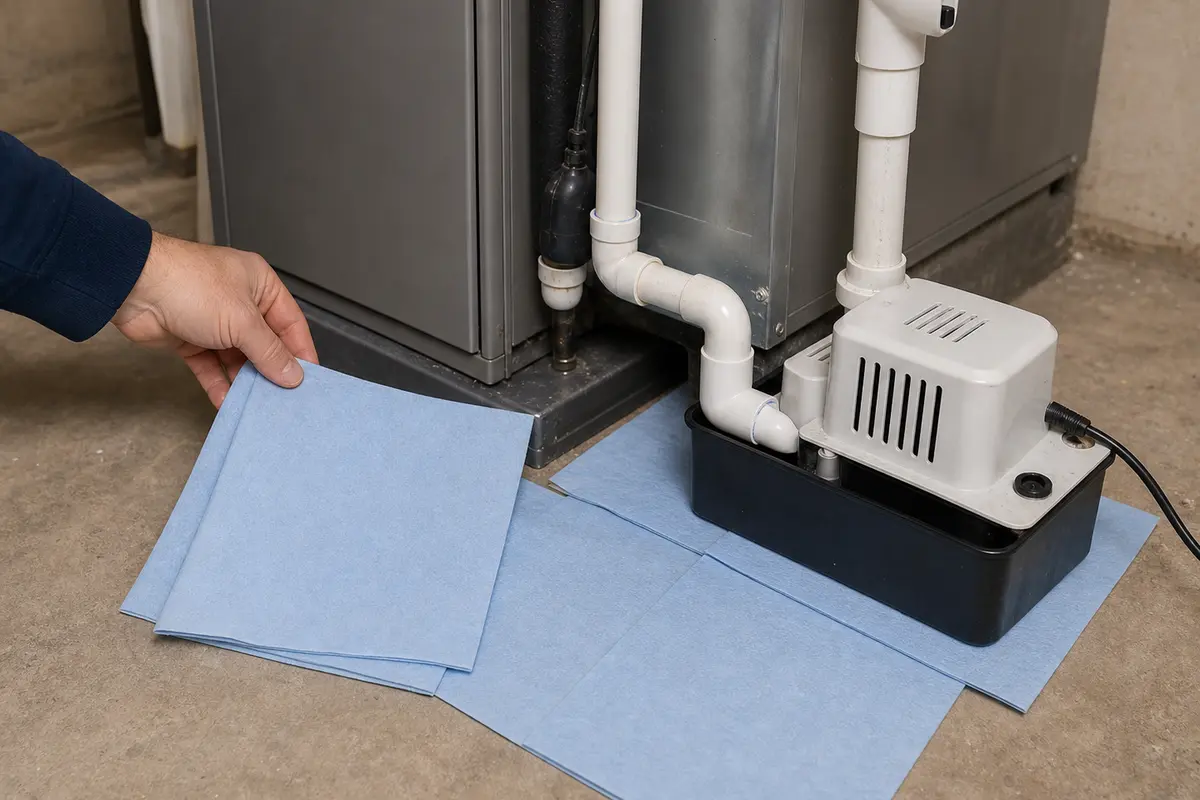
Helps when: Use them to dry the cabinet base and catch water when you disconnect a short drain section.
Skip it when: Skip DIY cleanup if the water is entering controls, finished ceilings, insulation, or a furnace cabinet.
Compare towels and pans on AmazonShop only after the failure point repeats. Drain tubing, traps, pumps, and level switches are not interchangeable, and Aprilaire model numbers matter.
Paid links. As an Amazon Associate I earn from qualifying purchases. Repair Riot may earn a commission at no extra cost to you.
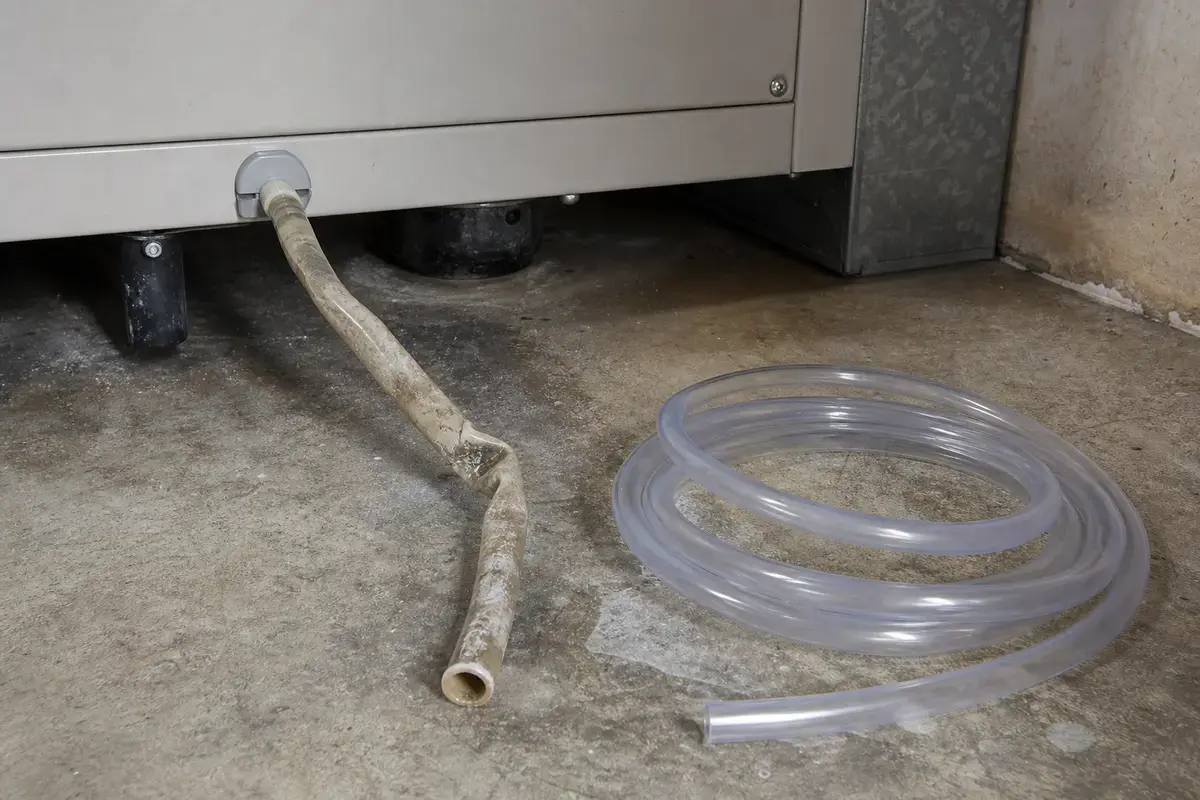
Helps when: Use it when the existing flexible run is kinked, brittle, cracked, too short, or holding water in a sag.
Skip it when: Skip it when the installed drain is rigid PVC, a trap is clogged, or the pump side is the real failure.
Compare condensate drain tubing on Amazon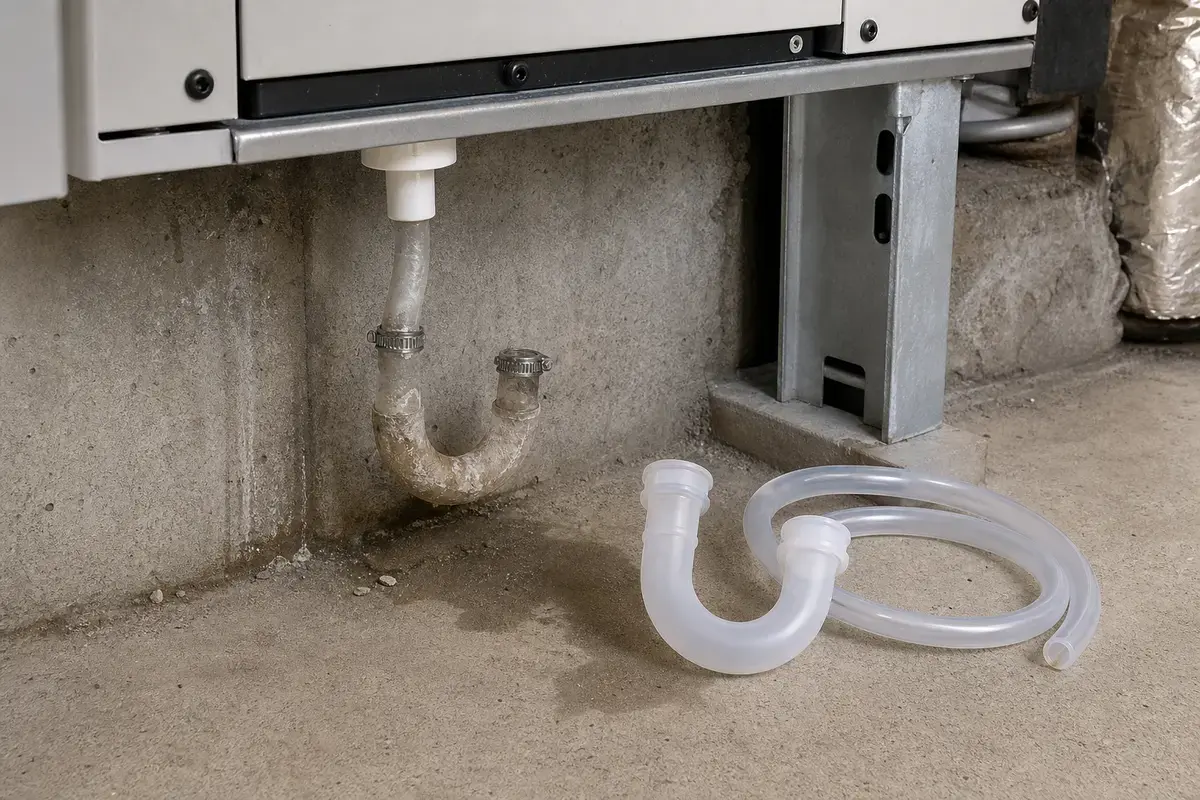
Helps when: Use it only when the original trap is cracked, clogged beyond cleaning, or missing from a layout that requires one.
Skip it when: Skip it if you have not checked the manual, the trap is not part of your installation, or the problem is upstream at the unit outlet.
Compare condensate trap kits on Amazon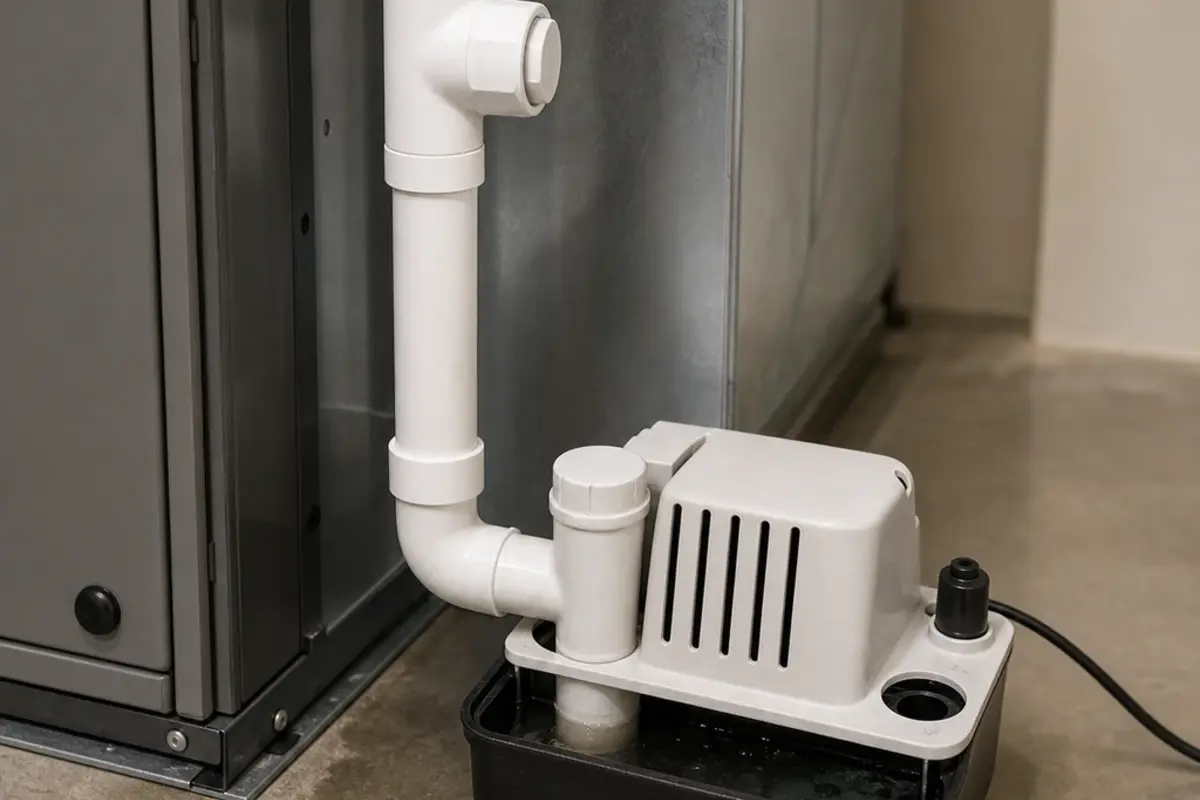
Helps when: Use it when the installation must lift water and the reservoir fills but the discharge line does not move water.
Skip it when: Skip it for a gravity drain, a clogged hose, a dirty trap, or any setup where pump power and controls have not been checked safely.
Compare condensate pumps on Amazon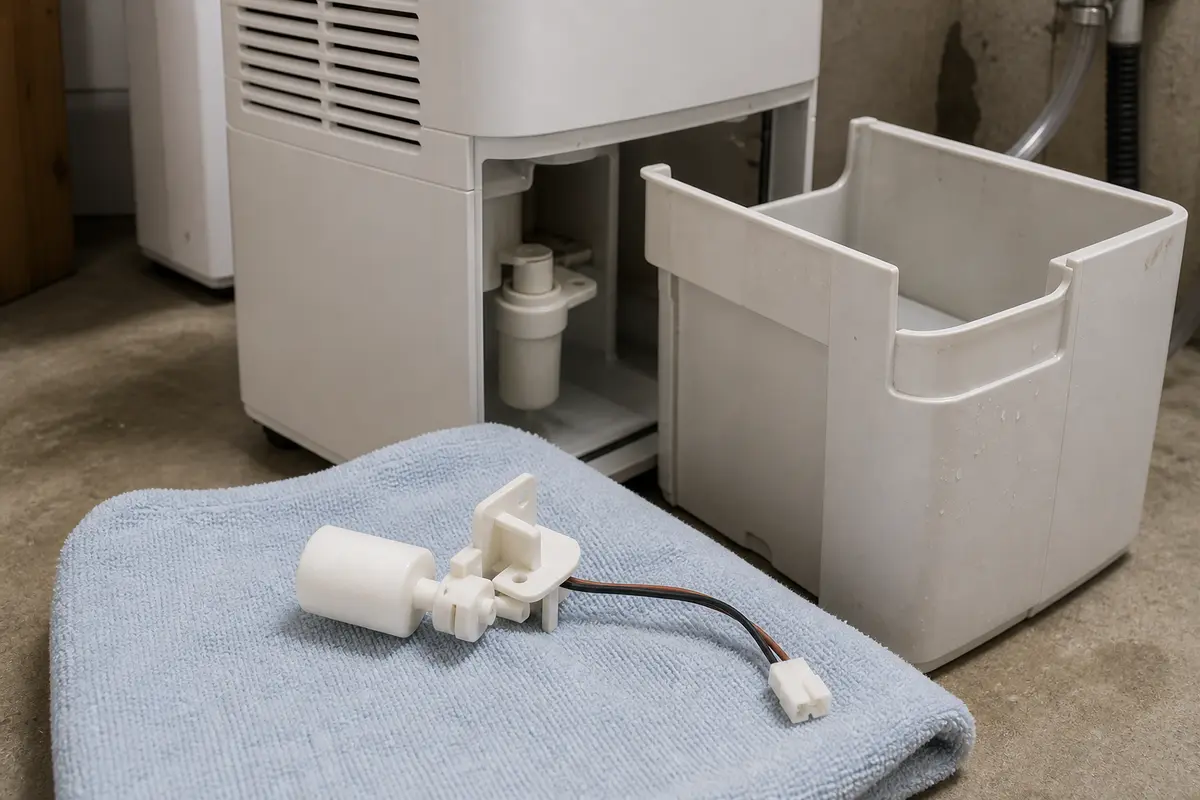
Helps when: Use it when the drain path is clear, the float area is clean, and the unit still acts like it is full.
Skip it when: Skip it if the outlet is slimy, the hose sags, the pump has not been checked, or you cannot match the exact switch and connector.
Compare dehumidifier float switches on AmazonMost of the time the drain line is partially clogged or routed badly. The unit can still run and pull moisture, but the water cannot leave fast enough, so it backs up or trips the float-related shutoff.
Yes. A partial clog is common. You may see a slow trickle at the end of the hose while water still collects inside the unit during heavier humidity loads.
No. Start with warm water and mild soap only where it is safe to clean by hand. Harsh chemicals can damage components, and you do not want to push residue into parts you cannot rinse well.
If the hose is clear, properly sloped, and the drain port is open, but the unit still shuts down like it is full, the float switch or water-level switch moves up the list. A dirty or sticking float can act the same way, so clean and inspect it first.
Then the problem may not be the dehumidifier drain hose at all. If water reaches the pump reservoir but never gets discharged, the pump or its controls need diagnosis. That is usually the point where many homeowners are better off calling for service.
Some installations use a trapped condensate drain and some drain arrangements differ by model and layout. Check the manual for your exact model before adding, removing, or rebuilding a trap.
A partial clog or shallow sag can pass a little water during light operation but back up when the unit is removing moisture steadily. Heavy humidity makes weak slope and slime buildup show up faster.
Call when water is near wiring, the drain requires pump diagnosis, the trap layout is unclear, the fitting may break, or the unit still reads full after the visible drain path is clean and pitched correctly.
This page separates homeowner-safe drain checks from model-specific service work. Use the official model manual for trap, tubing, pump, and service-panel details before changing parts.