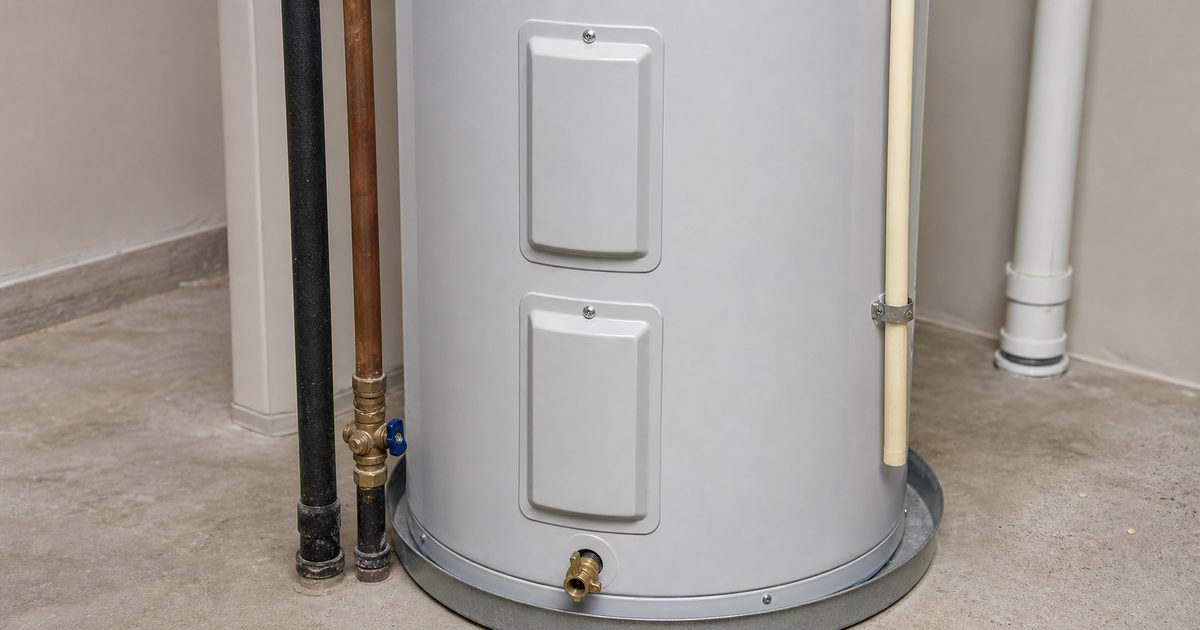
What no hot water looks like on an A. O. Smith water heater
No hot water anywhere in the house
Every hot tap runs cold, even after several minutes, and the tank does not seem to recover.
Start here: First confirm whether the heater is electric or gas, then check its power or fuel status before touching parts.
Used to work, then suddenly went fully cold
Hot water stopped all at once after normal operation, often after a breaker trip, power outage, or reset event.
Start here: Check the breaker, local disconnect, and any reset button or status light before assuming a failed component.
Electric unit has power nearby but no heat
Lights or nearby outlets work, but the heater is not making hot water.
Start here: Look for a tripped upper reset and signs that one water heater heating element or thermostat has failed.
Gas unit is cold and burner does not seem to run
You do not hear burner ignition or see normal burner operation, and the water stays cold.
Start here: Check for obvious gas shutoff or status-light issues, then stop if diagnosis points to ignition, combustion, or gas control.
Most likely causes
1. Tripped breaker, disconnect, or lost power on an electric water heater
A fully cold tank with no recovery is very often just not getting 240-volt power, especially after storms, recent electrical work, or a nuisance trip.
Quick check: At the panel, look for a tripped double breaker. Then check the water heater disconnect if your setup has one.
2. Tripped high-limit reset on the upper thermostat
If the reset button has opened, the heater will stop heating until it is reset. That usually happens because of overheating or a thermostat problem.
Quick check: After shutting off power, remove the upper access cover and look for the red reset button on the upper thermostat.
3. Failed water heater heating element on an electric unit
A burned-out element can leave the tank cold or barely warm, especially if the upper element fails or both elements have aged out.
Quick check: If power is present and the reset holds but the tank still does not heat, an element failure moves near the top of the list.
4. Failed water heater thermostat on an electric unit
A thermostat that does not send power where it should can leave the elements off even when the tank is cold.
Quick check: If the reset keeps tripping or one section of the tank never heats despite good power, suspect a thermostat rather than guessing at random parts.
Step-by-step fix
Step 1: Identify the heater type and the exact failure pattern
You want to separate the common electric fixes from the higher-risk gas path right away, and make sure this is truly no hot water rather than short hot water.
- Check the label area or visible connections to confirm whether the unit is electric or gas.
- Run the hot side at one sink for two to three minutes and note whether the water stays fully cold or starts warm and fades.
- Look around the base for leaking water, scorch marks, melted wire insulation, or a strong gas smell.
- If the unit is a heat pump style and shows an error, use the error-code path instead of guessing from this page.
You now know which troubleshooting path fits and whether the problem is truly no hot water. If you cannot safely identify the heater type or you notice leaking, burning, or gas odor, stop here and get service.
A fully cold electric tank usually points to power, reset, element, or thermostat trouble. A fully cold gas tank with no burner operation is usually not a basic DIY repair.
Stop if:- You smell gas.
- You see active leaking from the tank or fittings.
- You find burned wiring, melted insulation, or soot.
Step 2: Check the simple supply issues first
A lot of no-hot-water calls end up being a tripped breaker, switched-off disconnect, or turned-down control rather than a failed tank part.
- For an electric unit, check the double-pole breaker and reset it once if it is tripped.
- Check any nearby disconnect or switch serving the water heater and make sure it is on.
- For a gas unit, make sure the gas shutoff handle is in the open position and the control is not set to vacation or off.
- Confirm the temperature setting is in a normal range, not turned all the way down.
Give the heater recovery time. A tank that was fully cold can take a while to make usable hot water again. If supply looks normal and you still have no hot water, move to the heater-side checks.
If the heater comes back after restoring power or settings, the problem was upstream. If not, the fault is likely inside the water heater.
Step 3: On electric units, check the upper reset before replacing anything
The high-limit reset is the cleanest next check on an electric water heater with no heat, and it often tells you whether a thermostat problem is brewing.
- Turn off the water heater breaker.
- Remove the upper access panel and insulation carefully.
- Press the red reset button on the upper water heater thermostat.
- Reinstall the insulation and cover before restoring power.
- Wait for recovery and test hot water later rather than expecting instant heat.
If hot water returns and stays normal, the reset had tripped. Keep an eye on it, because a repeat trip usually means a thermostat issue. If the reset was not tripped or it trips again soon, continue to the component-failure checks.
Step 4: Decide whether an electric element or thermostat is the likely failed part
Once power is confirmed and the reset is handled, the next realistic checks are the water heater heating elements and thermostats.
- Shut power off again before opening any access covers.
- If you have no hot water at all and the heater has confirmed power, put the upper water heater heating element and upper water heater thermostat at the top of the list.
- If the reset keeps tripping or temperatures have been erratic before total failure, lean toward a water heater thermostat problem.
- If the tank is older and you have had slow recovery, rumbling, or previous heating trouble, a water heater heating element is a strong candidate.
- Do not buy both parts blindly unless you have clear reason to do so and are prepared to verify fitment by heater model information.
You have narrowed the repair to the most likely electric heater components without guessing at unrelated parts. If the unit is gas, tankless, heat pump based, or still unclear, schedule service.
Step 5: Make the repair decision and know when to call a pro
This keeps you from wasting money on the wrong part and draws a hard line around gas and unsafe electrical work.
- If you confirmed an electric no-heat problem after power and reset checks, replace the failed water heater heating element or water heater thermostat with a fit-matched part.
- If the heater is gas and will not ignite or stay lit, stop DIY and book service for burner, ignition, or gas-control diagnosis.
- If the breaker keeps tripping, the reset keeps popping, or wiring shows heat damage, have an electrician or water-heater tech inspect it before further use.
- After any repair, restore power, allow full recovery time, and test at several faucets.
A good result: You should get steady hot water back after the tank has had time to recover.
If not: If the tank still makes no hot water after the likely electric repair, the problem is beyond a simple homeowner parts call and needs in-person diagnosis.
A successful repair confirms the heater-side failure. No change after the likely fix usually means a deeper electrical issue, a misdiagnosed gas problem, or a unit-specific control fault.
Replacement Parts
As an Amazon Associate I earn from qualifying purchases. Repair Riot may earn a commission at no extra cost to you.
FAQ
Why does my A. O. Smith water heater have no hot water all of a sudden?
On an electric unit, the most common sudden causes are a tripped breaker, a tripped high-limit reset, a failed water heater heating element, or a failed water heater thermostat. On a gas unit, sudden no hot water often means the burner is not lighting or staying lit, which is usually a pro call.
How long should I wait after resetting the breaker or thermostat?
Do not expect instant hot water. A fully cold tank needs recovery time. Check again after the heater has had a fair chance to heat the tank, then test at a faucet for a few minutes.
If the reset button trips again, can I just press it one more time?
You can confirm the symptom once, but repeated trips are a warning sign. A thermostat may be overheating the tank, or there may be an electrical fault. Repeated resetting is not the fix.
Is no hot water usually the heating element on an electric water heater?
Very often, yes, but not always. Lost power and a tripped reset are common and easier to fix. That is why it pays to confirm supply and reset status before buying a water heater heating element.
Should I replace both thermostats and both elements at the same time?
Not automatically. If diagnosis clearly points to one failed part, start there and match the replacement carefully. Replacing multiple parts without a solid reason can waste money and muddy the diagnosis.
What if I have some warm water, but not enough?
That is usually a different complaint. Short hot water, weak recovery, or warm-then-cold behavior fits the not-enough-hot-water path better than a true no-hot-water failure.